Safe pallet jack operation starts long before you pump the handle. This guide walks you through design basics, inspections, and step‑by‑step techniques so you know exactly how to lift a pallet jack, move it, and lower loads without damage or injury. You will see practical tips on speed, fork height, ergonomics, and slopes, plus when to choose manual vs. electric equipment. Use it as a field-ready reference to boost both safety and efficiency in any material handling environment.
Fundamentals Of Pallet Jack Design And Safety
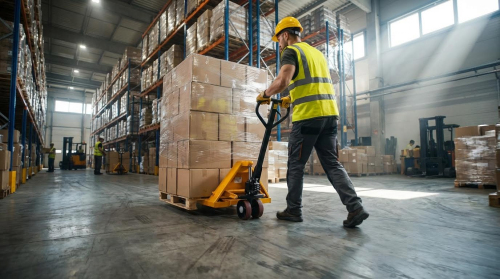
Understanding how a pallet jack is built and labeled is the foundation of safe operation. When you know each component, control, and capacity label, you can decide exactly how to lift a pallet jack, how far to raise the load, and when to say “no” to an unsafe lift. This section links basic design features to OSHA/ANSI safety expectations so operators can move more weight with less risk.
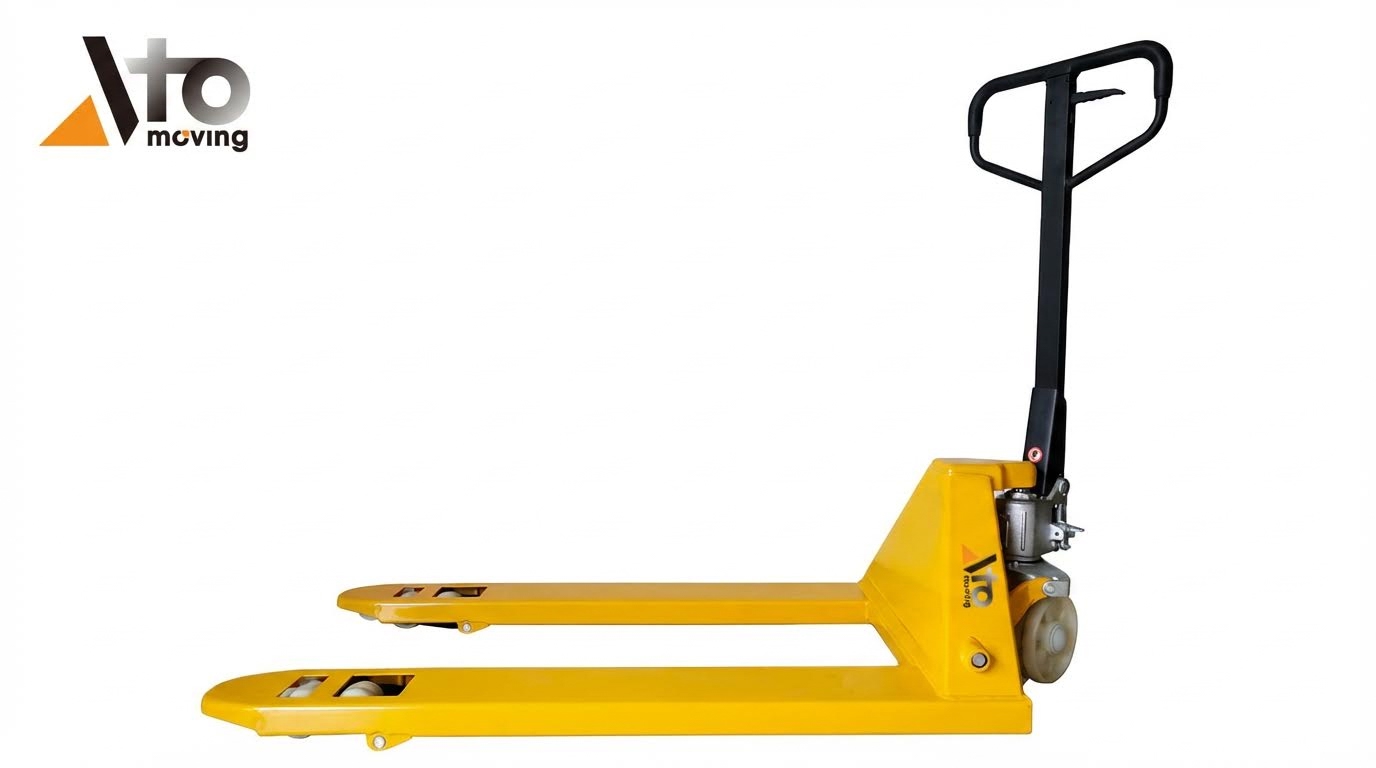
Key components and operating controls
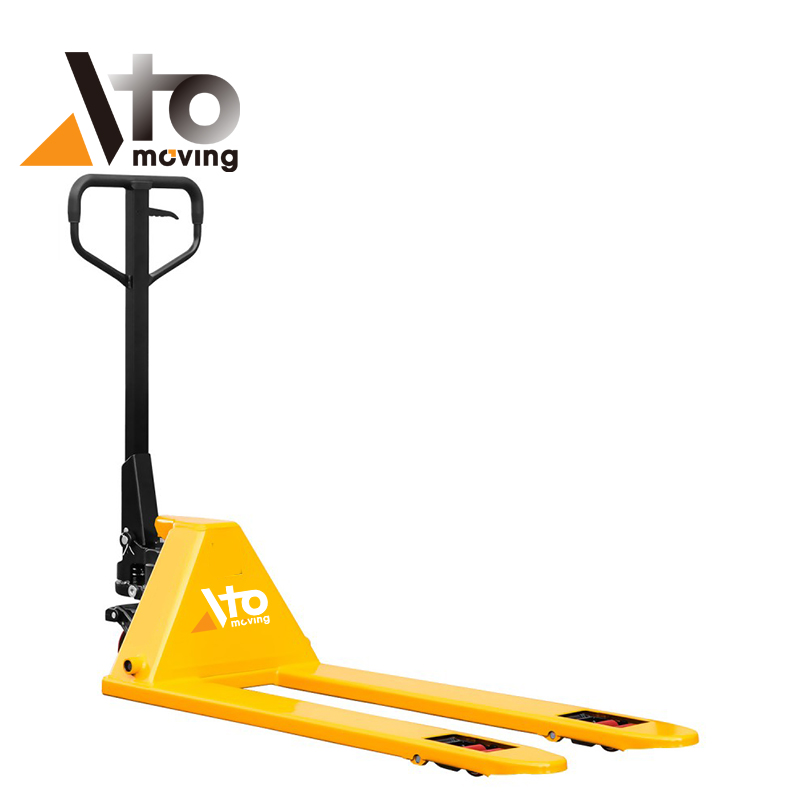
Every control and moving part on a pallet jack exists to manage force, steering, and stability. Knowing what each part does is the first step in learning how to lift a pallet jack safely and consistently.
| Component / Control | Function | Safety relevance |
|---|---|---|
| Handle / tiller | Used to steer and apply push / pull force | Correct hand position reduces wrist and shoulder strain; maintain clear line of sight |
| Pump / control lever | Selected position raises, lowers, or neutralizes the hydraulic system | Smooth pumping controls how to lift a pallet jack without shock-loading the load or forks |
| Hydraulic unit | Converts handle pumping into fork lift | Leaks or damage can cause sudden lowering; must be checked during inspections |
| Forks (tines) | Slide under pallet and support the load | Fork straightness and full insertion are critical for load stability and rated capacity |
| Load wheels | Small wheels under fork tips that carry pallet weight | Damaged wheels increase push force and can cause sudden stops or tipping during travel |
| Steer wheels | Main wheels under the handle end for direction control | Provide stability and maneuverability; defects affect stopping and cornering |
| Chassis / frame | Main structural body tying forks, hydraulics, and wheels together | Cracks or deformation reduce strength and can invalidate capacity rating |
| Parking / neutral position | Handle and valve position where forks neither rise nor fall | Prevents unintended movement while staging or parking |
To operate these controls safely:
- Stand behind the pallet jack with feet clear of the steer wheels.
- Select the “raise” position on the lever, then use smooth, full strokes to pump the handle. This is the core of how to lift a pallet jack without shock-loading the pallet. Smooth motions keep the load stable.
- Move the lever to “neutral” before transporting so the forks stay at a fixed travel height.
- Use the “lower” position only when the pallet is fully supported and the area around the forks is clear.
Inspection points before using the controls
Before operating, inspect wheels for cracks or flat spots, forks for bends, and the hydraulic area for leaks. Confirm the handle and lever move freely and return to neutral. Any visible damage or stiff controls should be reported and the jack tagged out until repaired. Routine pre-operation checks are a core safety requirement.
Load ratings, labels, and OSHA/ANSI compliance
Capacity labels and safety markings tell you what the equipment can safely handle and how to lift a pallet jack load without exceeding its design limits. Ignoring these ratings increases the risk of structural failure, loss of control, or ergonomic injury.
| Label / Rating | Typical information shown | Why it matters |
|---|---|---|
| Rated load capacity | Maximum allowable load (often in kg or lb) | Manual units commonly handle around 2000–2500 kg; specialized models can be higher depending on design |
| Model / type identification | Model number, serial number, and configuration | Links the truck to the correct manual, parts, and training materials |
| Warning labels | Hazard pictograms and text (crush points, pinch points, no riders) | Summarize key OSHA/ANSI expectations for safe use and prohibited practices |
| Maintenance / inspection tags | Last inspection date, service notes | Show that regular checks and repairs were completed and documented |
Key safety and compliance practices tied to these labels include:
- Verify the pallet weight before lifting; never exceed the marked capacity. Overloading can cause equipment failure or injury. Staying within the rating is a basic compliance requirement.
- Center the load on the forks and ensure full fork insertion so the rated capacity applies to the actual load position. Uneven or partial support reduces stability.
- Keep travel fork height low, typically about 2–5 cm (1–2 inches) off the floor, to maintain a low center of gravity and avoid catching on surface defects. This range is widely recommended for safe transport.
- Follow site-specific training that aligns with OSHA guidance on powered and non-powered industrial trucks, including inspection routines, safe operating speeds, and ramp / dock procedures.
How labels link to OSHA/ANSI expectations
OSHA and ANSI standards require that material handling equipment be used within its design limits, kept in good repair, and operated only by trained personnel. Capacity labels and warning decals are part of the manufacturer’s way of communicating those limits. Employers are expected to ensure that labels remain legible, that operators can interpret them, and that pre-use inspections and maintenance schedules are enforced to keep the equipment in a condition that matches its rated capacity.
Step-By-Step: Lifting, Transporting, And Lowering Loads
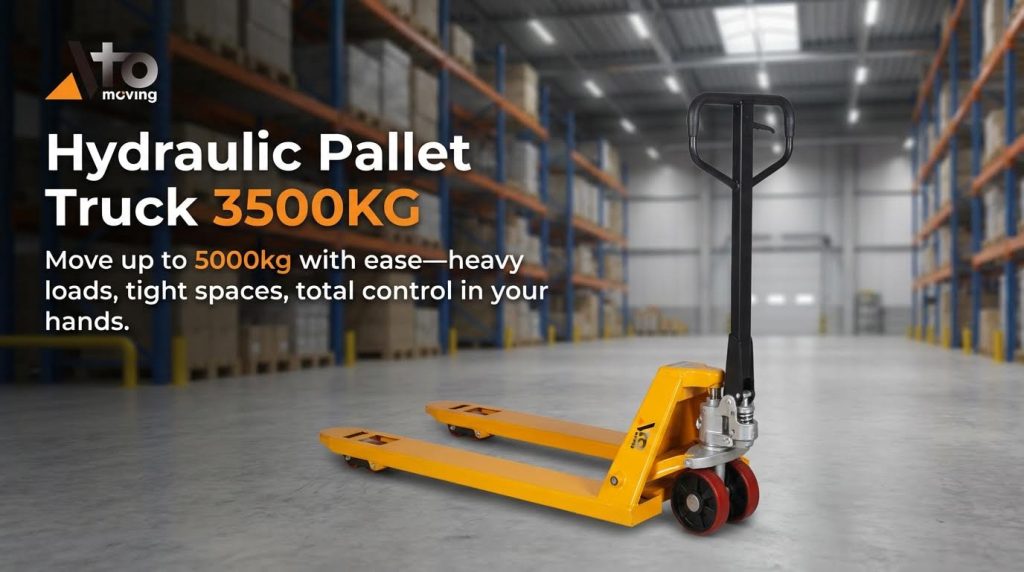
Pre-use inspection and route assessment
Safe operation starts before you touch the handle. A fast, repeatable inspection and route check prevents most manual pallet jack incidents and supports any procedure that teaches new operators how to lift a pallet jack correctly.
- Check hydraulic system for leaks, damaged seals, or sluggish lifting response (daily hydraulic inspection).
- Inspect wheels and load rollers for flat spots, cracks, or excessive wear; confirm they rotate freely without wobble (wheel condition check).
- Verify forks are straight, undamaged, and not spread or twisted; look for bent tips or cracked welds (fork integrity).
- Cycle the handle and pump/relief controls to confirm smooth, positive raising and lowering with no sticking or free play (control function test).
- Confirm the load weight is within the rated capacity on the jack’s label; typical manual units handle roughly 2000–2500 kg, with some specialized models higher (capacity check).
- Scan the floor and route for debris, spills, broken concrete, steep slopes, tight turns, and blind intersections before moving the load (route assessment).
Quick pre-use checklist (copy for training)
- No visible leaks, cracks, or bent parts.
- Handle, pump, and release lever operate smoothly.
- Capacity label readable; load estimated and within rating.
- Path to destination clear, dry, and free of obstacles.
- Ramps, docks, and edges identified and planned for.
Correct fork positioning and lifting technique
Correct fork placement is the heart of how to lift a manual pallet jack safely and keep loads stable. Follow a consistent sequence so every operator handles pallets the same way.
- Approach the pallet square to the entry side so forks are centered on the pallet openings (pallet alignment).
- Adjust fork spread (if adjustable) to match pallet width and fully support stringers or blocks under both sides of the load (width matching).
- Roll forward until forks are inserted completely under the pallet; tips should extend just short of the far edge to avoid piercing stretch wrap or product (full insertion).
- Center the load on the forks; avoid heavy overhang on one side, and secure irregular loads with wrap or straps if needed (even distribution).
- Stand behind the jack with feet staggered, knees slightly bent, and back straight to avoid twisting while pumping (ergonomic stance).
- Use smooth, controlled strokes on the pump handle to raise the pallet just clear of the floor; avoid rapid, jerky pumping that can rock the load (smooth lifting).
| Step | Key control/position | Engineering reason |
|---|---|---|
| Align forks | Forks square to pallet, centered | Prevents racking forces on pallet and uneven wheel loading. |
| Insert fully | Fork tips near far deckboard | Maximizes support span and reduces bending of pallet boards. |
| Lift slightly | Forks just off floor | Minimizes center-of-gravity rise and tipping risk. |
This sequence standardizes how to lift a manual pallet jack with a load so operators avoid side loading, pallet breakage, and sudden instability.
Safe travel speeds, fork height, and maneuvering
Once the pallet is up, dynamic forces dominate the risk profile. Speed, fork height, and steering angle directly affect stability and operator strain.
- Keep forks low during travel, typically 2–5 cm (1–2 inches) above the floor, so the load clears bumps but the center of gravity stays low (recommended fork height).
- Push instead of pull whenever the layout allows; pushing keeps your body behind the load, reduces arm strain, and improves braking control (push vs. pull).
- Travel at a walking pace that allows stopping within your clear line of sight; slow further in congested or blind areas (speed control).
- Use wide, smooth turns; avoid sharp steering at speed, which can shift the load or overload a single wheel set (cornering technique).
- On mild slopes, keep the load uphill; for manual jacks descending, back down so the jack is between you and the load, and never turn on the ramp (slope navigation).
- Slow down gradually before stopping; sudden stops can cause the load to slide or lean, especially with shrink-wrapped or stacked goods (controlled braking).
Typical travel parameters (manual pallet jack)
| Parameter | Good practice range | Why it matters |
|---|---|---|
| Fork travel height | 2–5 cm (1–2 in) | Limits tip-over moment while clearing minor floor defects. |
| Walking speed | Comfortable walk, no running | Maintains reaction time and control in shared aisles. |
| Steering angle in motion | Moderate, not full lock at speed | Reduces lateral load shift and wheel side loading. |
Controlled lowering, pallet placement, and parking

Most foot injuries and pallet damage occur at the end of the move, not the beginning. Treat lowering and parking as defined steps, not afterthoughts.
- Position the pallet square and level in the target area, leaving clearance for forks to exit straight without dragging the pallet (placement alignment).
- Warn nearby coworkers if visibility is limited, then slowly actuate the release control to lower the forks; avoid “dumping” the load by fully opening the valve at once (controlled lowering).
- Confirm the pallet is fully supported by the floor or rack; check that no deckboard is hanging or bridging over gaps.
- Once the weight is off the forks, pull the jack straight back so wheels do not catch and shift the pallet (fork withdrawal).
- After the final move, park the manual pallet jack in a designated area, forks fully lowered and flat on the floor to remove trip hazards (parking protocol).
- Store the handle in an upright or manufacturer-recommended position so it does not project into walkways or roll unexpectedly (handle position).
| End-of-use action | Safe condition | Risk controlled |
|---|---|---|
| Forks lowered | Blades flat on floor | Eliminates trip hazard and unwanted rolling under loads. |
| Location | Designated parking zone, away from doors and exits | Prevents impact and egress blockage. |
| Orientation | Handle tucked in, not protruding into aisles | Reduces collision and snagging with pedestrians or equipment. |
Embedding these final steps into training on how to lift a manual pallet jack, move it, and park it closes the loop on safe material flow and reduces repetitive damage to pallets, floors, and equipment.
Advanced Practices: Slopes, Ergonomics, And Equipment Choice
Operating on ramps, docks, and uneven floors
Slopes, docks, and bad floors turn a simple pallet jack move into a high‑risk task. Treat them as exceptions, not routine. These rules apply whether you are learning how to lift a pallet jack safely or refining advanced techniques.
- Avoid ramps and inclines whenever a flat route is available. Using pallet jacks on inclines should be minimized.
- Keep the load on the uphill side so it cannot run away from you.
- Never turn on a ramp; line up straight before going up or down. Guidance warns against turning on slopes.
- On manual jacks, descend slopes walking backward with the load in front and under control. Backward descent is recommended for manual trucks.
- On electric units, follow the manufacturer’s slope instructions and speed limits.
| Condition | Key practice | Typical fork height | Main risk if ignored |
|---|---|---|---|
| Normal flat travel | Forks just clear the floor | 2–5 cm (1–2 in) off floor Recommended transport height | Forks striking debris, losing stability |
| Short ramp or dock plate | Increase height slightly to clear lip | About 4–6 in above surface Higher height suggested for ramps | Forks catching on ramp, sudden stop |
| Uneven / damaged floor | Walk slower, shorten route, avoid holes | Minimum height that avoids scraping | Load shift, jack tipping, operator strain |
Extra precautions on docks and platforms
On docks and elevated platforms, keep the pallet jack and load at least one pallet length away from edges. Avoid oversteering and sudden movements on these surfaces. Guidance on pallet jack safety stresses special care on inclines, docks, and elevated platforms to prevent falls and tip‑overs. Training materials highlight incline and dock hazards
Before entering any ramp or rough area, reassess your route. If you are unsure how to lift a pallet jack load safely on a slope, stop and get assistance or different equipment.
Reducing operator strain and improving ergonomics
Most pallet jack injuries come from poor body mechanics, not dramatic accidents. Design your tasks to keep forces low and joints in neutral positions.
- Push rather than pull whenever possible to reduce back and shoulder load and improve visibility. Pushing is recommended over pulling and training resources support this.
- Use two hands on the handle and walk close to the jack to avoid overreaching.
- Keep travel speed at a comfortable walking pace to prevent sudden stops and jerks.
- Plan routes to minimize long pushes, slopes, and tight turns.
Ergonomic improvements at the load level are just as important as how to lift a pallet jack handle.
| Ergonomic tactic | How it works | Evidence / guidance |
|---|---|---|
| Use height‑adjustable or high‑lift jacks where feasible | Raises pallet so boxes are handled nearer to waist height, reducing bending | Some pallet jacks can elevate forks up to about 10 in, higher than standard units, which reduces ergonomic stress. OSHA notes benefits of higher fork elevation |
| Stack extra empty pallets under the working pallet | Raises the working surface, cutting down on deep trunk flexion | Stacking extra pallets on the jack elevates the load base and reduces bending. OSHA recommends this method |
| Use palletizers or lift tables on forks | Keeps cases at roughly waist height as the stack grows | Using a palletizer on the forks helps maintain products at waist height, improving ergonomics. OSHA highlights palletizers for ergonomics |
Hand force, posture, and maintenance
Loads in grocery and cold‑storage work often weighed 80–100 lb per case, forcing operators into poor postures while stacking and unstacking. OSHA documented significant ergonomic stress in these tasks. Smooth‑running wheels and well‑maintained hydraulics reduce the hand, arm, and finger force needed to move loads. Regular maintenance helps keep required forces low and lets operators spot early signs of mechanical problems. Ergonomic guidance emphasizes maintenance and training
Combine these ergonomic tactics with good basics—neutral spine, short steps, and avoiding twisting under load—to keep operators safe through thousands of cycles.
Manual vs. electric pallet jacks and when to upgrade
Choosing between manual and electric pallet jacks is a risk and productivity decision. The right choice depends on weight, distance, floor conditions, and operator exposure.
| Factor | Manual pallet jack | Electric pallet jack |
|---|---|---|
| Typical rated capacity | About 2000–2500 kg for common units Typical manual capacity range | Can reach up to roughly 5000 kg on some models Higher capacities available |
| Primary power source | Operator muscle for pumping and pushing | Electric drive and lift reduce manual force |
| Best use case | Short moves, moderate weights, occasional use | High‑volume moves, heavy loads, long distances, frequent slopes |
| Ergonomic impact | Higher strain, especially with heavy or frequent loads | Lower strain; better for long shifts and older or smaller operators |
| Control on slopes | Depends on operator strength and footing | Often includes braking and speed control; still requires training |
- Never exceed the rated capacity on either type; overloading risks equipment failure and injury. Overloading is a known hazard.
- Upgrade from manual to electric when operators regularly move heavy pallets over long distances or on mild slopes.
- Consider electric if injury reports show back, shoulder, or wrist strain linked to pallet handling.
- Ensure training covers the specific model, its load limits, and emergency procedures. Operator training is a core safety requirement.
Practical upgrade checklist
Consider moving to electric pallet jacks when three or more of these apply: frequent trips over 30–40 m, routine use near the top of manual capacity, recurring slopes or dock plates, multiple strain complaints, or high‑turnover picking operations. Even then, operators still need to know how to lift a pallet jack load correctly, position forks, and control speed—power assist does not remove the need for sound technique.
Match the equipment to the job, then enforce safe methods for lifting, lowering, and moving. That combination delivers both safety and efficiency in pallet handling.
Final Thoughts On Safe And Efficient Pallet Jack Use
Safe pallet jack use depends on a tight link between design limits, inspection, and operator technique. Geometry, load rating, and fork position set the physical envelope. Travel speed, fork height, and route choice decide whether those limits hold in real work. When operators respect labels, center loads, and keep forks low, they keep the center of gravity inside a stable base and avoid sudden tipping or pallet failure.
Daily checks close the gap between theory and reality. Wheels, hydraulics, and frames must match their rated condition or the printed capacity no longer applies. Good ergonomics then protects the person supplying the force. Pushing instead of pulling, keeping joints neutral, and using electric or high‑lift options where exposure is high all cut strain over thousands of cycles.
For operations and engineering teams, the best practice is clear. Treat pallet jacks as engineered load systems, not simple carts. Standardize a step‑by‑step method for lifting, traveling, and lowering. Restrict slopes, upgrade to powered units where loads and distances justify it, and back this with training and maintenance. Combined with suitable equipment from Atomoving, this approach delivers higher throughput with fewer injuries, damaged pallets, or unplanned stoppages.
Frequently Asked Questions
How do I raise a pallet jack?
To raise a pallet jack, ensure the handle is in the correct position and use the lever to activate the hydraulic lift. Start slowly to avoid sudden movements that could destabilize the load. Never overload the pallet jack beyond its rated capacity, as this can prevent it from lifting properly. For more details on safe operation, refer to Pallet Jack Safety Tips.
Can one person lift a pallet?
A typical wood block pallet weighs between 75 and 80 pounds, which is generally too heavy for one person to lift safely. It’s recommended that two people work together to lift such loads to avoid injury. Always keep your back straight and lift with your legs, not your back. For proper lifting techniques, check out Proper Lifting Guide.
Why won’t my pallet jack lift up?
If your pallet jack isn’t lifting, it could be due to several reasons: overloading, low hydraulic fluid, or mechanical issues. Ensure the load is within the jack’s capacity and inspect the hydraulic system for leaks or air bubbles. Regular maintenance can prevent most operational problems. For additional troubleshooting tips, visit Pallet Jack Maintenance.