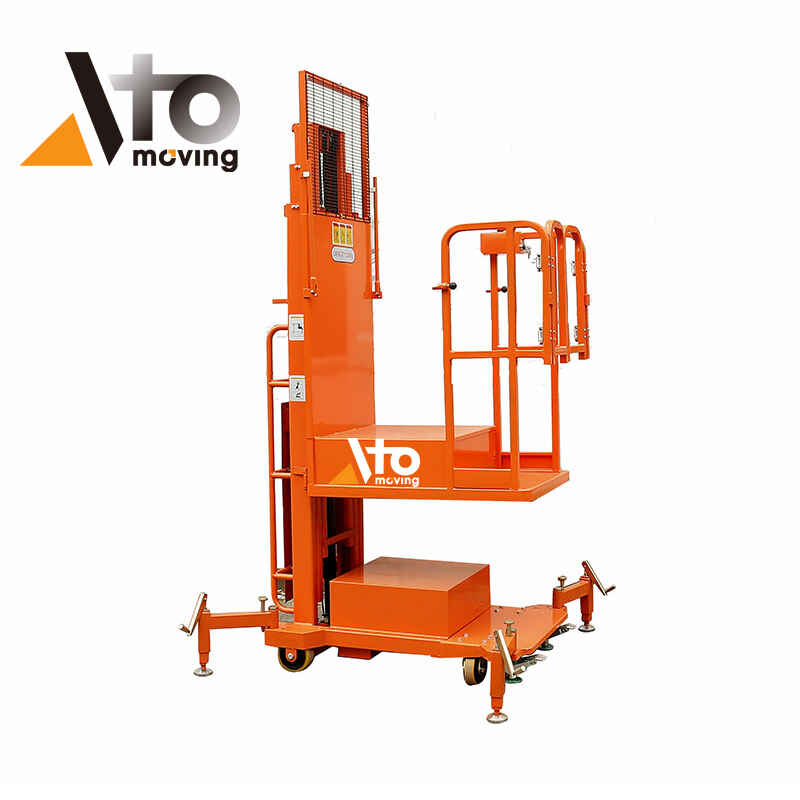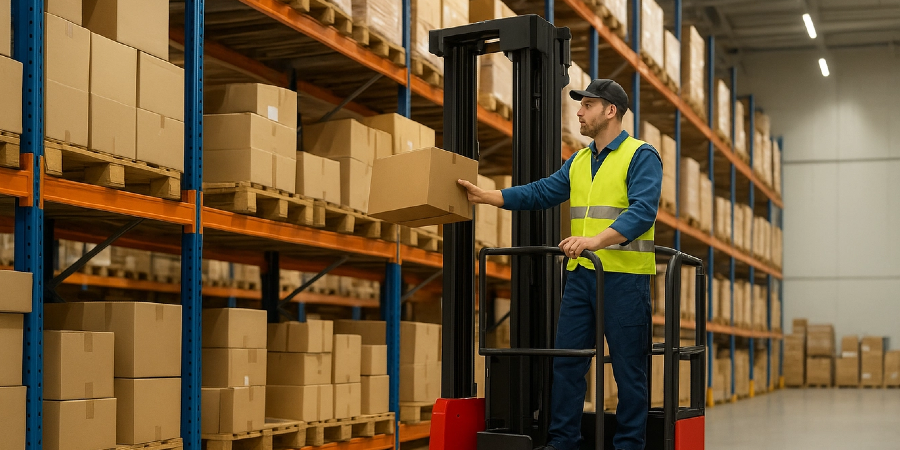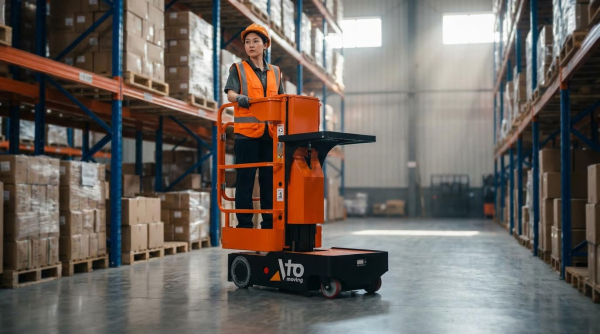
Choosing the right order picking machines is one of the fastest ways to cut labor hours, improve safety, and increase storage density in a warehouse. This guide walks through core machine types, how they are designed, what they cost to run over their life, and where each option fits best. You will see how lift height, aisle width, automation level, and ergonomics translate into throughput, TCO, and ROI. Use it as a practical engineering playbook to match equipment to your volume, SKU profile, and safety requirements.
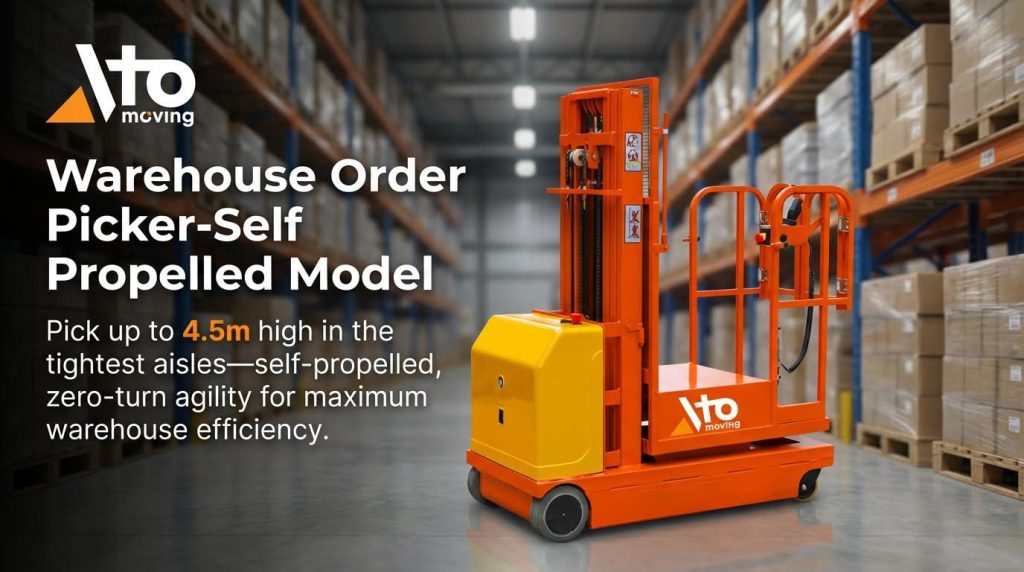
Core Types Of Order Picking Machines Explained
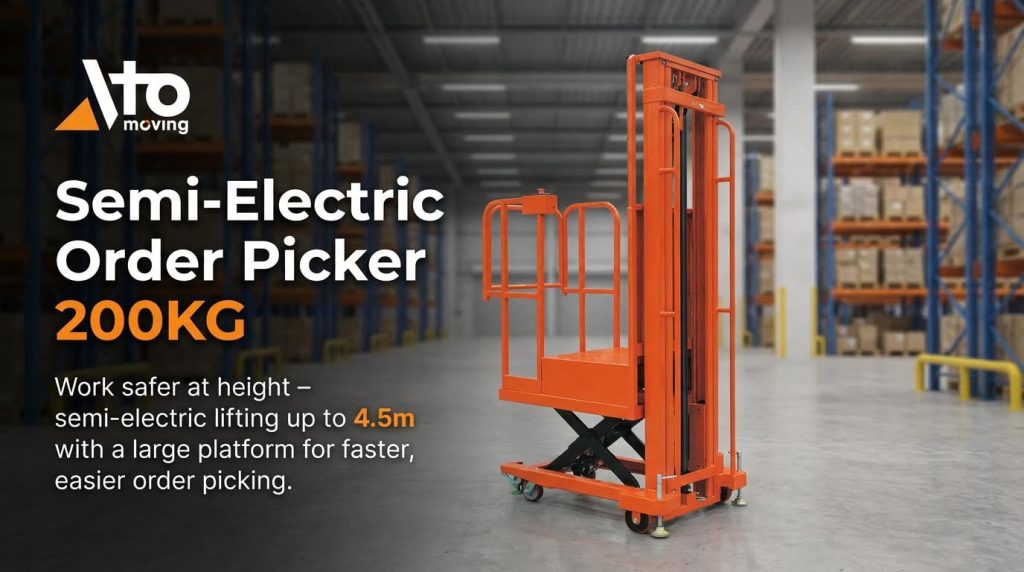
Order picking machines fall into two main buckets: how high they pick and how much power assists the operator. Understanding these types helps you match equipment to ceiling height, SKU mix, and labor profile. The sections below break down the core machine families so you can shortlist the right concepts before looking at detailed specs.
Low‑Level Vs High‑Level Order Pickers
Low‑level and high‑level order picking machines solve very different storage and throughput problems. Use the comparison below to align each type with your racking layout and safety strategy.
| Parameter | Low‑Level Order Pickers | High‑Level Order Pickers |
|---|---|---|
| Typical pick height range | Floor level up to ≈2.5 m (ground to first/second beam) | Up to ≈12 m into upper racking (multiple beam levels) |
| Operator position | Walk‑behind or stand‑on at/near floor level | Operator platform rises with forks/load |
| Typical aisle type | Standard or wide aisles | Narrow or very narrow aisles for dense storage (high storage density) |
| Best suited for | Fast‑moving SKUs at lower racking levels; short travel distances | High‑bay warehouses, slow/medium movers stored high, space‑constrained sites |
| Throughput behavior | Very fast between pick points at low height; minimal vertical movement time | Efficient when many picks occur at higher levels in one run; slower at floor‑only work |
| Operator training level | Basic training; simpler controls; shorter certification time | Advanced training with focus on elevated work, stability, and rescue procedures (higher safety demands) |
| Safety risk profile | Lower fall risk due to limited elevation | Higher fall and collision risk; requires strict fall protection and aisle guidance |
| Capex and running cost | Lower purchase price and operating costs (simpler design) | Higher upfront cost, higher maintenance, more expensive operator training |
| Storage strategy impact | May require more horizontal space as vertical capacity is under‑used | Maximizes vertical cube; allows high storage density and smaller footprint (especially in high‑bay) |
When choosing between these order picking machines, match the design to your rack profile and pick pattern.
- Choose low‑level if most picks are below ≈2.5 m and you value speed and simplicity over cube utilization.
- Choose high‑level if you run high‑bay racking, narrow aisles, and need to access many levels in a single trip.
- Model the trade‑off between extra vertical storage and higher training, safety, and equipment costs.
Engineering and safety considerations by height class
High‑level order pickers increase overturning and fall risk due to higher center of gravity and operator elevation. They often require engineered aisle guidance (rails or electronic systems) and strict fall‑arrest PPE policies. Low‑level units simplify rescue and emergency procedures but can drive up walking distance if SKUs are spread horizontally. In both cases, align machine class with rack design, floor flatness, and emergency egress routes.
Manual, Semi‑Electric, And Electric Pickers
Manual, semi‑electric, and electric order picking machines share the same basic function but distribute the work differently between the operator and the machine. The right power level depends on travel distance, pick frequency, and labor cost.
| Aspect | Manual Pickers | Semi‑Electric Pickers | Electric Pickers |
|---|---|---|---|
| Power source | Human push/pull and lifting (no drive or lift motor) | Typically powered lift with manual travel, or vice versa | Powered lift and often powered travel (drive + hydraulics) |
| Typical use case | Small warehouses, low volume, short routes, seasonal peaks | Medium volume; some vertical work; moderate distances | High‑volume, multi‑shift operations; long runs; frequent lifting |
| Operator effort | Highest physical effort; fully dependent on human strength (more fatigue) | Reduced effort in either lifting or travel, depending on configuration | Lowest effort; automated propulsion can cut energy expenditure by more than half (less strain) |
| Productivity potential | Limited by human walking speed and fatigue; slower pick rates | Intermediate; gains in either vertical or horizontal cycle time | Highest; powered lifting and travel shorten each pick cycle (faster item access) |
| Ergonomic risk | Higher risk of overexertion, especially with heavy loads or long shifts | Moderate; risk depends on which function is motorized | Lower, as lifting and propulsion are machine‑driven (fewer ladder climbs) |
| Equipment complexity | Simplest; minimal components; easy to maintain | Moderate complexity (battery, motor, controls) | Highest complexity; integrated electronics and safety systems |
| Upfront cost | Lowest purchase price; ideal for tight capital budgets (cost‑effective entry) | Mid‑range | Highest capex due to motors, batteries, and options |
| Operating cost drivers | Labor time and injury risk dominate total cost | Mixed: some energy plus labor savings | Energy and maintenance costs offset by labor efficiency gains (higher throughput) |
| Typical options | Basic platforms, simple shelves | Powered lift masts, small batteries | Integrated scales, barcode scanners, and custom platforms (accuracy features) |
- Manual pickers are best where order volumes are low, travel distances are short, and labor is inexpensive or highly flexible. They offer high maneuverability and need minimal training but lack the speed of powered order picking machines.
- Semi‑electric pickers are a compromise when you want to remove the heaviest element of the task (usually lifting) without paying for full electric drive performance.
- Electric pickers shine in high‑throughput environments. Powered lifting lets operators reach multiple shelf levels quickly, while motorized travel reduces fatigue and injury risk from pushing, pulling, or climbing ladders (improved safety).
How power level affects ROI for order picking machines
As you move from manual to electric order picking machines, capital cost rises but labor hours per pick usually fall. Studies on powered material handling equipment showed that electric models could boost handling efficiency by around 30% and support higher loads per hour compared with manual units (more pallets per hour). The sweet spot typically appears in operations with longer travel distances, multi‑shift use, or tight shipping cut‑offs, where labor savings and reduced injuries outweigh the extra energy and maintenance costs.
Technical Design, Performance, And Cost Trade‑Offs
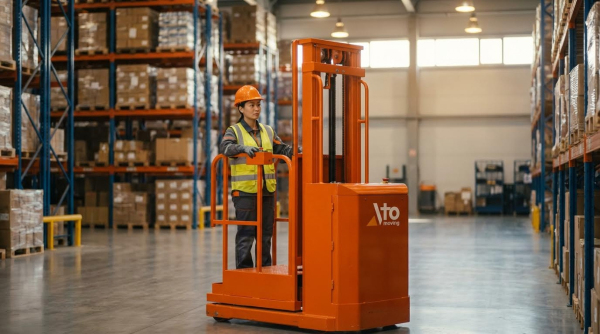
Lift heights, capacities, and aisle requirements
Lift height, capacity, and aisle width determine which order picking machines fit your layout and safety envelope. Think in terms of vertical reach, load per pick, and how tightly you can space racking without killing throughput.
| Machine concept | Typical lift height range | Typical capacity range | Aisle width implication | Best‑fit use case |
|---|---|---|---|---|
| Low‑level order picker | Floor to ≈ 2.5 m (ground to 2.5 m) | Light–medium cases (typically 500–1,000 kg platform rating) | Standard or wide aisles; needs more horizontal storage | Fast case picking at ground / first level |
| High‑level order picker | Up to ≈ 12 m (up to 12 m) | Similar to low‑level, but check derating at height | Often narrow‑aisle with guidance systems | High‑bay racking, dense storage, multi‑level picking |
| Manual picker (trolley / pallet jack) | Floor only | Depends on cart design; usually lower than powered units | Very flexible; works in tight spaces | Small sites, short runs, low daily volume |
| Electric order picker | Multiple shelf levels; typically low‑ to mid‑level | Higher and more consistent than manual, suited to frequent lifting | Needs clear, flat aisles; good in medium to narrow aisles | Medium–high volume, repetitive routes, multi‑shift |
Key engineering checks before you lock in a design:
- Maximum rack height today and planned future expansion.
- Heaviest unit load per pick and per platform.
- Minimum aisle width your racking and fire code allow.
- Required travel speed and stop/start frequency.
- Operator visibility and escape routes at full height.
Why aisle width matters so much
Narrow aisles increase storage density but force you toward guided high‑level order picking machines and tighter safety margins. Wider aisles reduce capacity but allow simpler equipment, easier passing, and lower training demands.
TCO, ROI, and lifecycle operating costs
Choosing order picking machines on purchase price alone usually backfires. Total cost of ownership (TCO) and ROI depend far more on labor efficiency, injury rates, and uptime than on the invoice value.
| Cost factor | Manual equipment baseline | Electric / powered equipment | Impact on TCO / ROI |
|---|---|---|---|
| Purchase price | Low | Higher | Electric needs ROI justification via productivity and safety gains. |
| Annual maintenance | ≈ $300–$600/year in some fleets (manual range) | ≈ $150–$400/year typical, plus ≈ $120/year energy (electric ranges) | Maintenance share of TCO: ≈ 40% manual vs 25% electric over 10 years (long‑term trend) |
| Labor productivity | ≈ 12–20 loads/hour typical (manual throughput) | ≈ 25–35 loads/hour; up to 30–45% higher efficiency (electric throughput) | Labor savings of 18–35% reported on longer routes and higher volumes. |
| Operator fatigue / injuries | ≈ 23% higher fatigue and 18% more musculoskeletal injuries, with claims ≈ $15,000 each (manual risk) | Automated propulsion can cut energy expenditure by ≈ 62% (fatigue reduction) | Lower injury and fatigue costs are major hidden ROI drivers. |
| Cycle time | Slower over distance; more speed loss as operators fatigue. | 100 m cycles ≈ 22 s faster; consistent speed all shift (cycle time data) | Shorter cycle time supports same‑day cut‑offs and peak coverage. |
| Best‑fit volume | < 20 pallets/hour or short runs (low volume) | ≈ 50 pallets/hour can give ≈ 1.5‑year ROI (ROI example) | High‑volume sites often mix both to cut cost per pick by ≈ 19% (blended strategy) |
For order picking machines, you can use a simple ROI frame:
- Quantify current labor hours per day and cost per hour for picking.
- Estimate throughput gain (often 30–45% for powered vs manual in similar tasks). (efficiency uplift)
- Add avoided injury and downtime costs using your historical claims and lost‑time data.
- Compare annual savings to incremental annualized equipment cost (finance + maintenance + energy).
- Target a payback period under 2 years for high‑usage equipment.
When manual can still win on cost
Manual solutions often have lower TCO when volumes are low, travel distances are short, and labor is flexible or seasonal. In those cases, the extra capital and maintenance of powered order picking machines may not pay back within the expected lifecycle.
Safety, standards, and ergonomic engineering
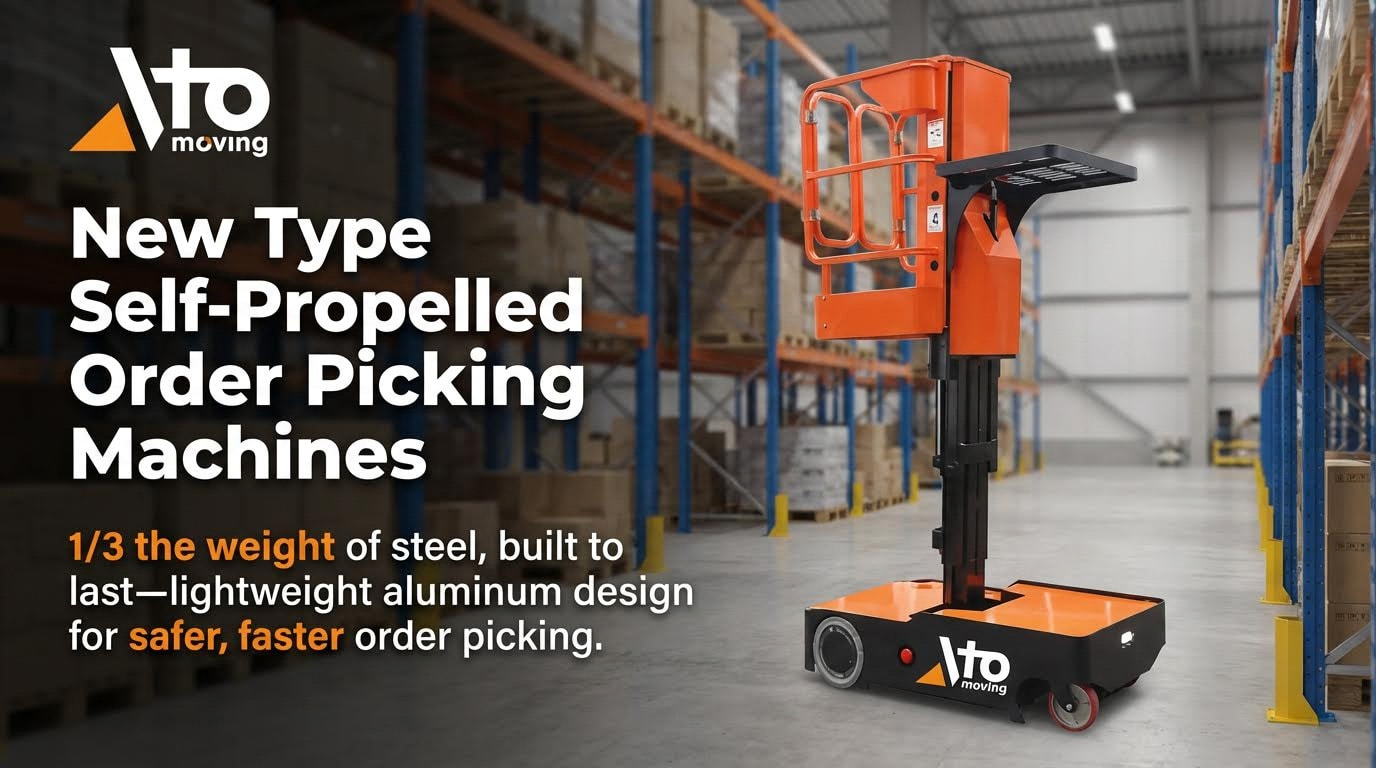
Technical design of order picking machines must align with safety rules, platform behavior at height, and ergonomic load handling. Poor choices here show up later as accidents, claims, and unplanned downtime.
- Operators need formal, truck‑specific training and certification that covers load stability, pedestrians, and narrow‑aisle driving (operator training).
- Mandatory PPE typically includes hard hat, safety glasses, steel‑toed boots, and high‑visibility clothing (PPE guidance).
- Elevated platforms above ≈ 36 in should be speed‑limited to about 2.5 mph, and travel above ≈ 152 in may require rail guidance (speed limits).
- Flashing warning lights between 4–6 ft should auto‑activate when platforms exceed 6 ft and trucks are moving (visual alerts).
- Guide rails or electronic guidance in storage aisles help prevent rack impacts for high‑level units (collision prevention).
- Fall‑protection harnesses, lanyards, and arrest systems are essential for elevated picking positions (fall protection).
Ergonomic engineering should focus on reducing push/pull forces, awkward reaches, and climbing. Electric order pickers with powered lift and travel reduce heavy lifting, cut ladder use, and support add‑ons like scales and scanners to minimize re‑handling (ergonomic benefits).
Maintenance and automation‑specific safety
Daily inspections of order picking machines and automated systems should verify lights, alarms, and guards before use (inspection practice). In more automated environments, define robot and human zones with sensors to prevent collisions, and back them up with power redundancy and fire detection tied to suppression systems (automation safety).
When you compare order picking machines, treat safety and ergonomics as design constraints, not options. The right specification will lower your long‑term TCO and protect both people and throughput.
Automation, Robotics, And Equipment Selection
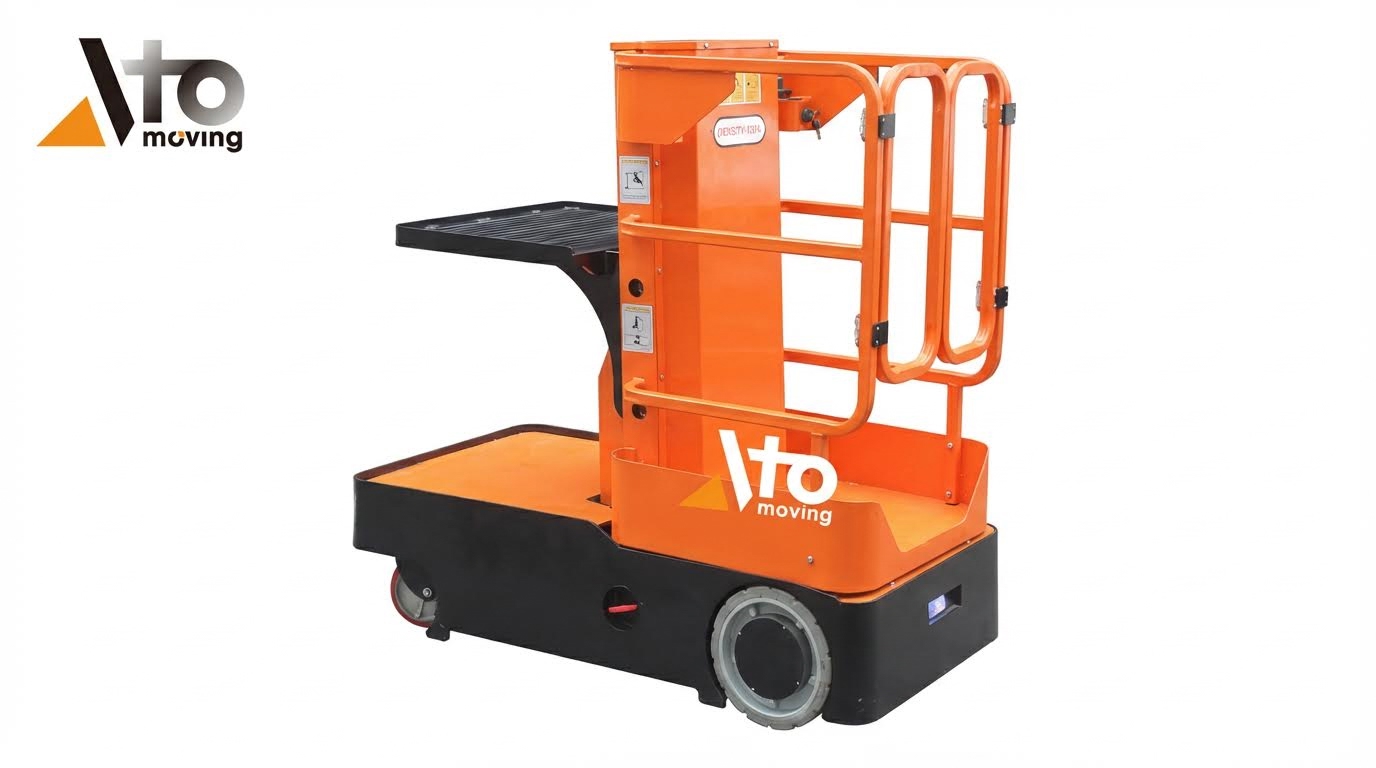
AGVs, AMRs, and goods‑to‑person systems
Automated systems extend the capabilities of traditional order picking machines by taking over travel, transport, and sometimes the actual picking. The right choice depends on route predictability, layout stability, and required flexibility. Use the comparison below to align technology with your warehouse profile.
| Technology | Primary role in picking | Navigation method | Best for | Key pros | Key limitations |
|---|---|---|---|---|---|
| AGV (Automated Guided Vehicle) | Moves pallets/totes between zones or to pick/pack areas | Predefined paths using tape, markers, or guides on the floor | Highly repetitive flows and stable layouts | Lower cost than AMRs; predictable, safe routes; easy to standardize | Not flexible to layout changes; detours are difficult; sensitive to blocked paths |
| AMR (Autonomous Mobile Robot) | Moves items, totes, or shelves between storage and pick stations | Sensors, cameras, and onboard software for free navigation and obstacle avoidance with dynamic routing | Facilities with changing layouts, SKUs, or routes | High flexibility; can reroute around congestion; scalable fleet management | Higher upfront cost; more complex integration and IT support |
| Goods‑to‑Person (GTP) systems | Bring shelves or containers to a stationary picker | Usually AMR‑type robots or shuttles under racking or shelves in structured storage | High‑volume, high‑SKU operations needing dense storage | Drastically cuts walking time; supports high pick rates; good ergonomics | Requires engineered storage layout; higher capital cost; less suited to very low volume |
| Piece‑picking robots | Automatically pick individual units from bins or shelves | Vision and AI to recognize and grasp items, including irregular shapes at the workstation | Highly repetitive SKUs or environments needing very high accuracy | Removes manual small‑item picking; consistent speed and quality | Complex to deploy for very mixed SKUs; gripper limitations for some products |
When you add AGVs or AMRs around manual or electric order picking machines, they usually handle horizontal transport while humans focus on vertical access and decision‑making. GTP systems go further by removing most walking and truck driving from the process, turning pickers into station operators instead of drivers.
Where each technology fits in a typical warehouse
AGVs work well as “conveyor on wheels” between receiving, storage, and shipping. AMRs shine in multi‑zone pick operations where routes change through the day. GTP is strongest in e‑commerce or spare‑parts operations with many SKUs and short order cycles. Piece‑picking robots are best placed where the same items are picked many times per shift and can be presented consistently.
Matching machine type to volume and SKU profile
Choosing between manual, electric, or robotic order picking machines depends on throughput, travel distances, and SKU complexity. Use the matrix below to narrow options before detailed ROI work.
| Warehouse profile | Typical order volume | SKU profile | Recommended primary picking equipment | Role of automation (AGV/AMR/GTP) |
|---|---|---|---|---|
| Low‑volume, low‑complexity | Up to ~200 order lines/day | Few SKUs, many lines per SKU | Manual order picking machines and carts; basic low‑level pickers | Optional: small number of AGVs for pallet moves if labor is scarce |
| Medium‑volume, mixed SKUs | 200–2,000 order lines/day | Hundreds to a few thousand SKUs | Mix of manual and electric order picking machines for main aisles and higher bays | AMRs to shuttle totes/shelves between zones; AGVs for long‑haul pallet or carton moves |
| High‑volume e‑commerce or spare parts | 2,000+ order lines/day | Tens of thousands of SKUs, many single‑line orders | Electric order pickers for reserve storage; high‑density pick modules | GTP systems as the main picking engine; AMRs feeding stations; possible piece‑picking robots on top |
| Peak‑heavy or seasonal operations | Very uneven daily volume | Mixed SKUs, frequent promotions | Flexible electric order picking machines that can be redeployed | AMR fleets that can be scaled up or down; limited fixed GTP to avoid under‑utilization off‑peak |
For low‑volume sites, manual carts and basic order picking machines remain cost‑effective because capital is low and labor travel time is acceptable. As volume rises, electric pickers plus AMRs or GTP reduce walking and fatigue, which is where most hidden cost sits. In very high‑volume environments, GTP and robots often become the core system, with man‑up or high‑level order pickers mainly used for replenishment.
- Use manual solutions where labor is cheap, distances are short, and safety risks are modest.
- Shift to electric order picking machines once operators walk or drive long routes and handle frequent vertical lifts.
- Layer AGVs or AMRs on top when horizontal transport becomes a bottleneck or a safety concern.
- Consider GTP and piece‑picking robots when walking time dominates cost and you need predictable, very high pick rates.
Across all scenarios, design clear robot and human zones, and keep safety systems, warning devices, and daily inspections in place so that automation enhances, rather than compromises, safe warehouse operation.
Final Considerations For Warehouse Decision‑Makers
The right order picking machines turn layout limits, labor cost, and safety rules into a coherent engineering solution. Lift height, capacity, and aisle width define what is physically possible. Power level and automation define how much human effort you remove from each pick. Safety, standards, and ergonomics define how reliably you can run that system every shift.
Low‑level, manual concepts keep capital light and suit short routes and low volume. As reach, distance, and order lines grow, electric pickers with guided aisles and strong ergonomic design usually deliver lower cost per pick. At high volume, AGVs, AMRs, and goods‑to‑person systems remove most walking and truck driving, while man‑up or high‑level machines focus on replenishment.
Treat safety features, operator training, and daily inspections as fixed design constraints, not optional extras. They protect people and also protect TCO by cutting downtime, injuries, and damage. The best practice is to map your current and future demand, model a few technical concepts, and run full lifecycle ROI comparisons. Then work with a specialist such as Atomoving to lock in equipment that fits your cube, throughput targets, and safety envelope for the next decade, not just this budget year.
Frequently Asked Questions
What is an order picker machine?
An order picker machine is a specialized type of forklift, classified under Class II – Electric Motor Narrow Aisle Trucks. It is designed to help workers retrieve items from warehouse shelves efficiently and safely Order Picker Guide.
What skills are needed to operate an order picker machine?
To operate an order picker machine effectively, you need several key skills:
- Strong attention to detail and accuracy.
- Basic math and reading comprehension skills.
- Physical ability to lift up to 50 lbs and stand for extended periods.
- Good time management and organizational abilities.
- Familiarity with warehouse operations or order picking systems.
These skills ensure efficient and safe operation within the warehouse environment Order Picker Skills.
Is operating an order picker machine difficult?
Operating an order picker machine can be challenging due to factors like high order volumes and variability in item sizes, weights, and storage needs. However, proper training and experience can mitigate these challenges, making the job manageable Order Picking Challenges.
How physically demanding is working with an order picker machine?
Working with an order picker machine is physically demanding. Employees often walk 6 to 10 miles per day on hard concrete floors and make high-reach moves, which can be exhausting over time Warehouse Physical Demands.