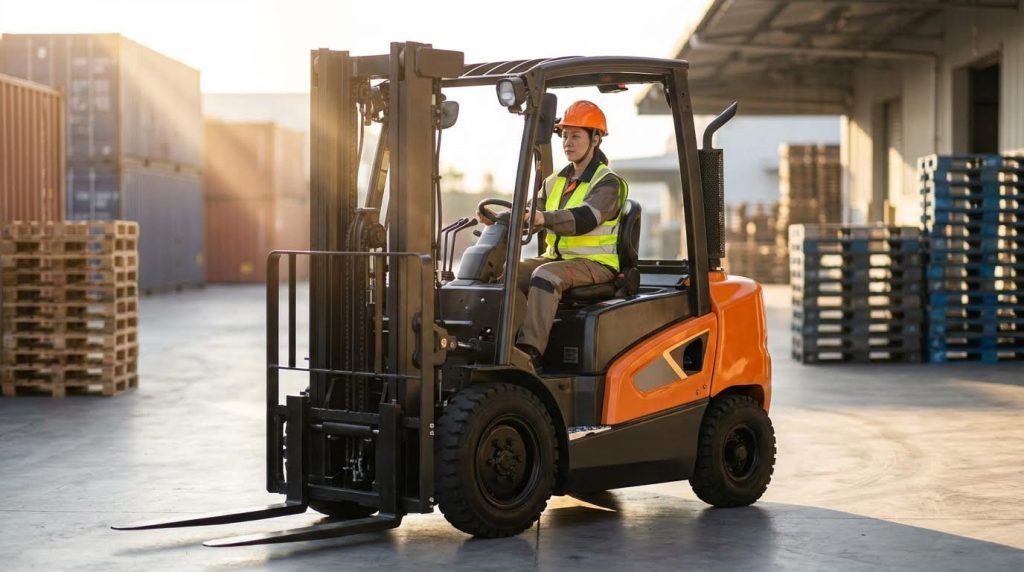
Knowing exactly how to start a diesel forklift in different weather conditions protects people, equipment, and uptime. This guide walks operators and supervisors through practical pre-start checks, correct key-start and glow plug use, and safe warm-up routines for engines and hydraulics. You will also see how fuel, coolant, and condensation management change between winter and summer, plus long-term storage and shutdown practices. Use it as a step-by-step reference to cut cold-start wear, prevent no-starts, and keep every shift safer and more efficient.
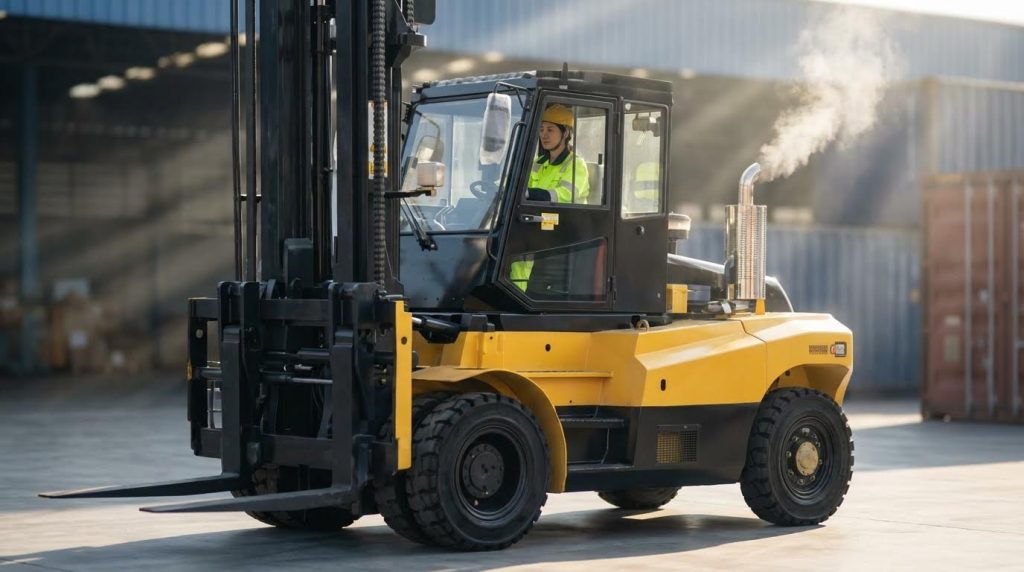
Pre-Start Safety And System Checks
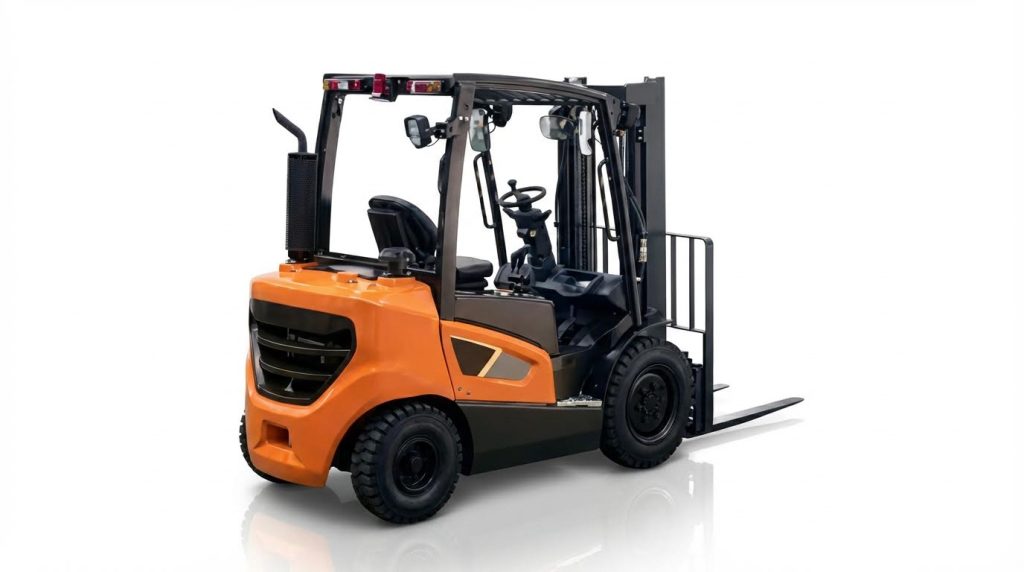
Operator walk-around and fluid inspection
Before focusing on how to start a diesel forklift safely, verify that the truck itself is mechanically sound. A fast, consistent walk-around reduces breakdowns and prevents most start-up incidents.
- Park on level ground, key off, forks lowered, and chocks in place if needed.
- Wear high-visibility clothing and safety footwear; keep three-point contact when climbing on/off.
Key exterior checks during the walk-around
Use this as a repeatable loop around the truck.
- Forks and mast: look for cracks, bent forks, damaged heels, loose or missing pins.
- Carriage and backrest: confirm locking pins are engaged and guards are intact.
- Overhead guard and chassis: check for impact damage, loose panels, missing fasteners.
- Counterweight and nameplate: verify capacity plate is readable and matches the attachment fitted.
- Lights, horn, and alarms: confirm lenses are intact; note anything to test from the seat.
- Tyres: check for cuts, chunks missing, cord showing, flat spots, or low inflation on pneumatics.
Next, inspect all critical fluids and look for leaks. Stable fluid levels are essential for reliable starting and to avoid damage during warm-up.
| System | What to Check | Why it Matters Before Start |
|---|---|---|
| Engine oil | Dipstick level between marks; oil not milky or full of metal particles. | Low or contaminated oil can cause rapid wear during cold starts. |
| Engine coolant | Level in reservoir; correct antifreeze mix for climate. | Prevents overheating in hot weather and block cracking in freezing conditions. Coolant and antifreeze management |
| Fuel | Diesel level adequate for the shift; cap and vent intact. | Low fuel encourages condensation in the tank and may cause stalling. Impact of condensation on forklifts |
| Hydraulic oil | Sight glass or dipstick at correct mark; no foaming. | Low level can introduce air and cause erratic mast and steering. |
| Brake fluid (if fitted) | Reservoir at proper level; no external leaks at wheels. | Ensures predictable stopping once the truck is moving. |
In cold climates, drain water from specified drain points at the end of each day to prevent freezing that can affect the next start. This includes coolant, brake air tanks, and the fuel tank bottom where water settles. Water drainage to prevent fuel system freezing
Daily fluid and leak checklist
- Look under the truck for fresh oil, coolant, or fuel spots.
- Confirm fuel cap and hydraulic tank cap are tight and seals are intact.
- Check radiator and hoses for cracks, swelling, or white/green stains.
- Inspect hydraulic hoses for rubbing, blisters, or wet fittings.
- Report and tag out any visible leak before deciding how to start a diesel forklift safely for the shift.
Parking brake, controls, and mast positioning
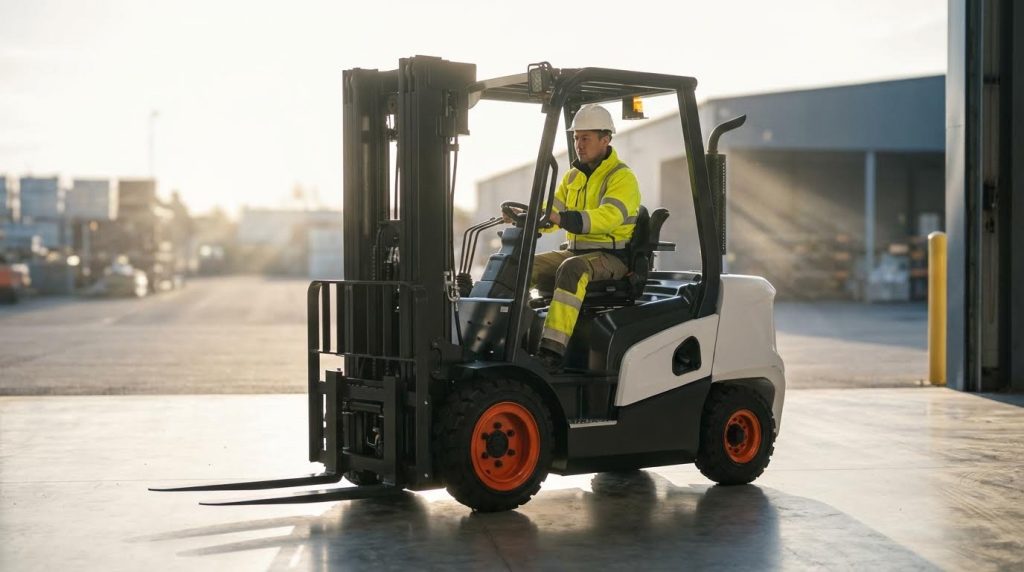
Correct control and mast positions are non‑negotiable before turning the key. They protect you, nearby people, and the machine during cranking and initial warm-up.
- Climb into the seat using three-point contact and adjust the seat and steering column.
- Fasten the seat belt before any start attempt.
Before you start the engine, the truck must be stable and unable to move unexpectedly. This is especially important when you teach someone else how to start a diesel forklift for the first time.
| Item | Correct Pre-Start Position | Reason |
|---|---|---|
| Parking brake | Fully applied. | Prevents roll-away during cranking and warm-up. |
| Direction lever | Neutral. | Avoids sudden lurching if engine fires at high idle. Daily safety checks before operation |
| Fork height | Approximately 15–20 cm above ground. | Provides ground clearance while keeping the load carriage low for stability. Recommended fork height |
| Mast tilt | Mast fully or slightly tilted back. | Improves truck stability and keeps forks from projecting forward into walkways. Mast tilt guidance |
Now confirm that all primary controls work freely and return to neutral. This avoids surprises once the engine is running and hydraulics are pressurized.
- Move lift, tilt, and auxiliary levers lightly to feel for sticking or unusual resistance.
- Press the service brake pedal and inching pedal (if fitted) to confirm firm, consistent feel.
- Test the horn, lights, and any warning beacons as soon as the key is in the ON position.
Pre-start cab and control checklist
- Check that mirrors are clean and adjusted for rear and side visibility.
- Confirm no loose items are in the cab that could jam pedals or levers.
- Ensure any attachment controls are in neutral and locked out if not in use.
- Verify that all safety decals and load charts are readable from the seat.
- If any control feels abnormal, stop and request maintenance before proceeding with how to start a diesel forklift under load.
Standard And Cold-Weather Start Procedures
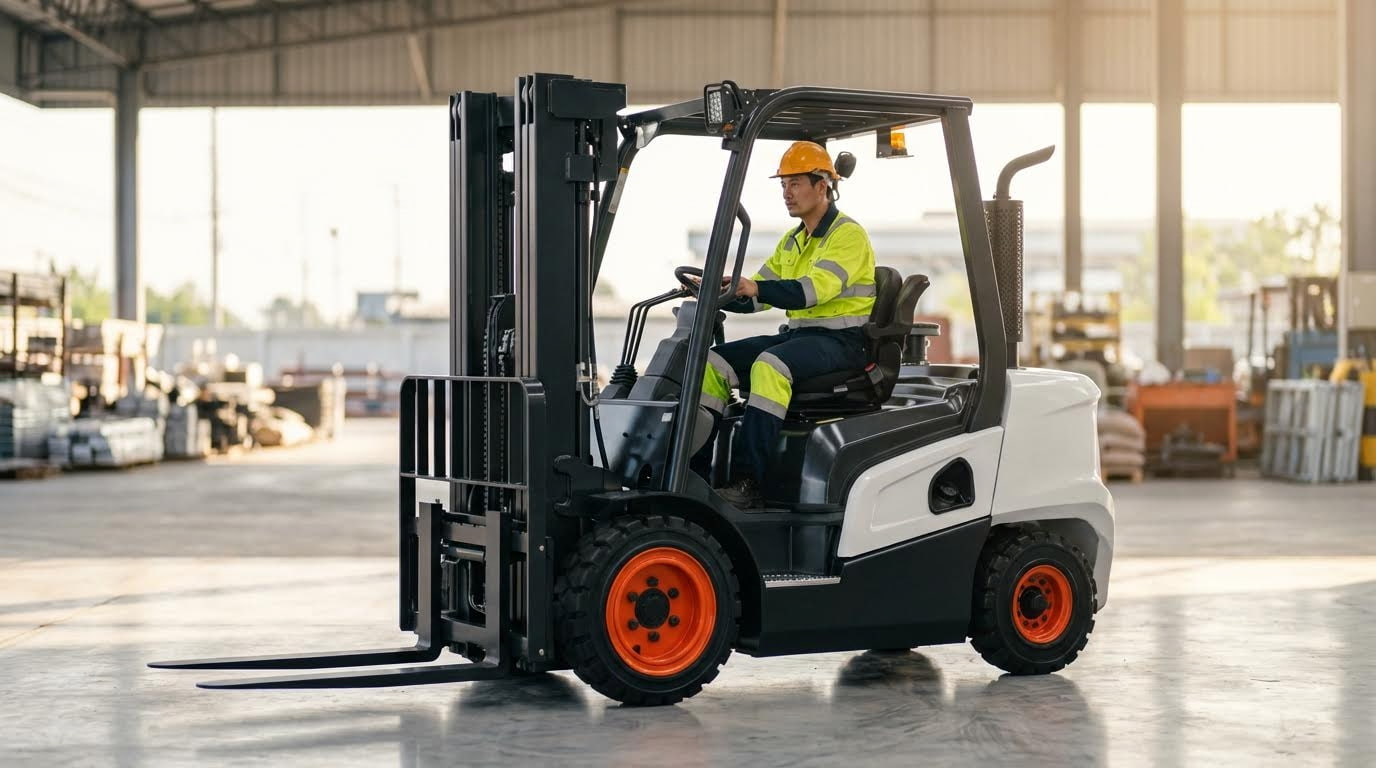
Glow plug preheat and key-start sequence
If you want to know how to start a diesel forklift safely and reliably, follow a consistent glow plug and key-start routine. Modern diesel systems need proper preheating before cranking, especially in cold weather.
- Seat, neutral, and brake check: Sit properly, fasten the seat belt, confirm direction lever in neutral, and verify parking brake is fully applied.
- Electrical check: Turn key to ON. Confirm warning lights and gauges cycle as normal.
- Glow plug preheat: Keep key in ON until the glow plug indicator light goes out, confirming preheat is complete according to diesel equipment guidelines.
- Key to START: Turn key to START and crank the engine, but limit each attempt to a maximum of 10 seconds to protect the starter and battery.
- Release key: Once the engine fires, release the key so it returns to ON and confirm normal oil pressure and charging indications.
- Cold-weather tip: In very low temperatures, repeat the glow plug ON phase once more before the first crank to improve ignition, instead of cranking longer.
Why preheating matters for diesel forklifts
Diesel engines rely on compression heat to ignite fuel. When metal and air are cold, compression temperature drops, and unheated combustion chambers cause hard starts, white smoke, and fuel wash on cylinder walls. Glow plug preheating raises chamber temperature so fuel atomizes and ignites cleanly, reducing wear and emissions.
Start attempt limits and troubleshooting no-starts
Clear limits on crank time and attempts are essential if you want a repeatable method for how to start a diesel forklift without damaging electrical components. Over-cranking overheats the starter and drains the battery.
| Item | Recommended practice | Reason / effect |
|---|---|---|
| Max crank time per attempt | ≤ 10 seconds per start attempt | Prevents overheating and mechanical wear of the starter motor. |
| Pause between attempts | ≥ 60 seconds cool-down before retry to let components recover | Allows battery voltage to rebound and starter to cool. |
| Max consecutive attempts | 3 attempts, then stop and investigate before further cranking | Avoids repeated stress on engine and electrical system. |
If the engine still will not start after following the correct glow plug and crank limits, switch from “keep trying” to diagnosis. This is where many operators damage otherwise good machines.
- Check simple causes first: fuel level, emergency stop, battery terminals, and main fuses.
- Observe exhaust: no smoke often points to no fuel; white smoke suggests poor combustion or low compression; black smoke points to over-fueling or restricted air.
- Verify fuel shutoff: ensure any mechanical or electric fuel shutoff is in the RUN position.
- Suspect air in fuel: if the engine tried to fire then died repeatedly, air may be in the fuel system and professional bleeding is required to restore normal operation.
- After repeated winter no-starts: inspect for water or wax in fuel, clogged filters, or low cold-cranking battery capacity.
When to call maintenance instead of cranking again
Stop attempts and call maintenance if you hear abnormal grinding from the starter, see major fuel leaks, smell strong burning insulation, or the crank speed becomes very slow even with full preheat. Continued cranking in these conditions risks starter failure, ring gear damage, or a dead battery that can immobilize other equipment.
Engine idle warm-up and hydraulic system heating
A correct warm-up routine protects the engine, transmission, and hydraulics, especially after a cold start. It is a critical part of how to start a diesel forklift and actually get it ready to work under load.
| System | Initial warm-up action | Typical time / method | Purpose |
|---|---|---|---|
| Engine | Idle at low speed after start | At least 3 minutes; longer in cold weather to stabilize temperatures | Ensures oil circulation, reduces wear, and prevents thermal shock. |
| Hydraulic system | Cycle functions slowly | After engine idle, gently raise/lower mast and tilt in/out to generate fluid heat | Warms hydraulic oil and seals; restores normal response speed. |
| Drive train | Slow travel in open area | Short, low-speed moves forward and reverse to warm gear oils | Brings transmission, differential, and final drives up to operating temperature. |
- Do not rev a cold engine: avoid immediate high-speed operation right after start to prevent scuffing and bearing damage as cold oil flows slowly.
- Hydraulics do not warm at idle alone: the pump must move oil under light load, so always include slow mast and tilt cycles in your routine to bring the system to temperature.
- Hydrostatic or hydraulic drive: slowly drive in both directions to warm drive motors and wheel ends evenly before handling heavy loads.
Extra cold-weather warm-up considerations
In severe cold, oil viscosity increases and clearances shrink. Extending idle beyond 3 minutes and lengthening the slow cycling of mast, tilt, and travel helps bring all components into a safe temperature band. Operators should also verify that cold-rated engine oil and hydraulic fluids are used so that even a careful warm-up can provide full film lubrication.
Extreme Weather Practices And Long-Term Care
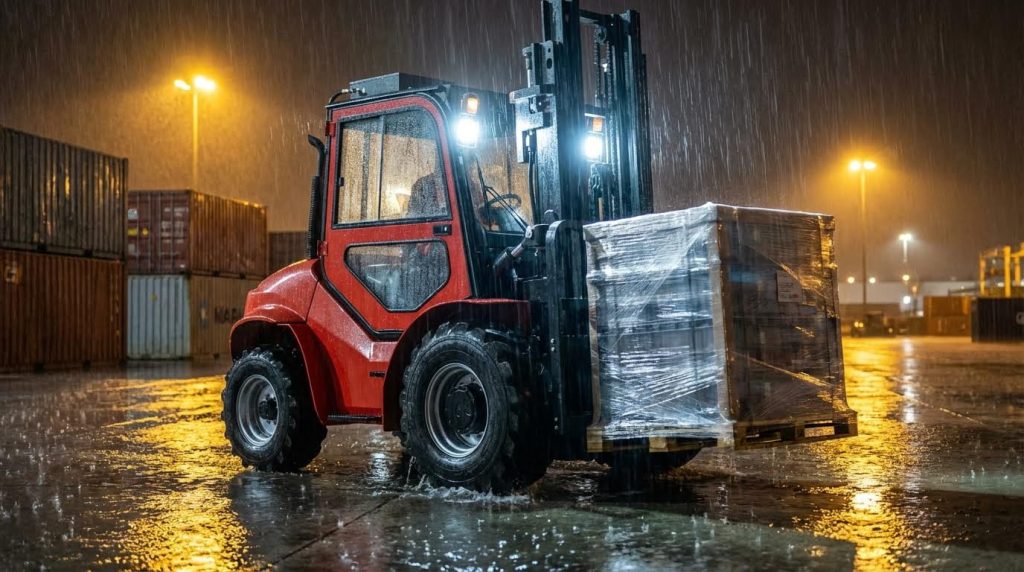
Cold climate fuel, coolant, and condensation control
Cold climates make how to start a diesel forklift safely much harder. Fuel gelling, frozen coolant, and internal condensation all increase no‑start risks and long‑term damage. Use these practices to keep winter starts reliable and protect the engine and hydraulics.
Key cold‑weather risks to manage
In low temperatures you must control:
- Fuel gelling and ice in lines and filters
- Coolant freezing and block cracking
- Water in tanks and air systems turning to ice
- Condensation in fuel and crankcase during repeated short runs
Focus first on fuel quality, water removal, and correct coolant protection level. Then add operating habits that reduce moisture buildup inside the machine.
Fuel, water drainage, and condensation prevention
Clean, dry diesel is critical for reliable winter starting and long component life. Water in the system can freeze, block flow, and damage injectors and pumps.
- Keep the fuel tank as full as practical at shutdown to reduce air space and internal condensation in cold‑to‑warm temperature swings.
- Use season‑appropriate diesel fuel to reduce gelling risk in low temperatures for cold weather operation.
- Drain water from the fuel tank bottom drain valve at the end of each workday to minimize freezing and fuel line blockage.
- Inspect and clean fuel filters regularly; replace if you see ice, sludge, or rust contamination to prevent water accumulation and freezing.
- Use only clean, uncontaminated diesel; high water content or dirt accelerates wear and reduces performance in the fuel system.
| Fuel & Water Task | When to Do It | Main Purpose in Cold Weather |
|---|---|---|
| Drain fuel tank bottom | End of each shift | Remove water before it freezes in lines and filters and blocks flow |
| Clean / replace fuel filters | Per maintenance schedule or when flow drops | Prevent ice, sludge, and contaminants from starving the engine |
| Keep tank near full | Before overnight parking | Reduce condensation inside tank during temperature swings that can cause sputtering or stalling |
| Use cold‑weather diesel | Entire winter season | Limit gelling so the engine can start and run smoothly in low temperatures |
Condensation inside the machine
Short, cold runs with no full warm‑up allow water vapor to stay in the crankcase, exhaust, and fuel tank. Over time this leads to:
- Corrosion of internal engine surfaces
- Milky oil from water contamination
- Ice crystals in fuel filters and lines
To reduce this, let the engine and hydraulics reach full operating temperature regularly, not just idle for a minute and shut down.
Coolant, antifreeze, and system protection
Coolant freezing can crack the engine block and radiator, permanently disabling the forklift. Proper antifreeze concentration is essential wherever temperatures drop below freezing.
- Confirm the coolant mixture provides freeze protection below your site’s lowest expected temperature.
- For equipment stored outdoors without proper antifreeze, either drain coolant or add an appropriate antifreeze blend to prevent block cracking in severe cold.
- Drain water from the engine coolant water drain valve daily in very cold conditions if specified by the manufacturer to avoid internal ice formation.
- Inspect hoses and clamps; replace any that are soft, cracked, or swollen before freezing weather.
| Coolant Practice | Why It Matters for Winter Starts |
|---|---|
| Correct antifreeze mix | Prevents coolant from freezing and blocking passages, so the engine can warm evenly |
| Outdoor storage checks | Avoids block or radiator cracking when parked in severe cold without proper protection |
| Daily water drainage (where specified) | Removes free water that can freeze in low points and restrict flow |
Good fuel and coolant management does not replace correct starting technique. It supports it. When you follow the glow‑plug sequence and start‑attempt limits, a well‑prepared machine will crank and fire much more reliably in winter.
Hot weather cooling, tires, and emissions management
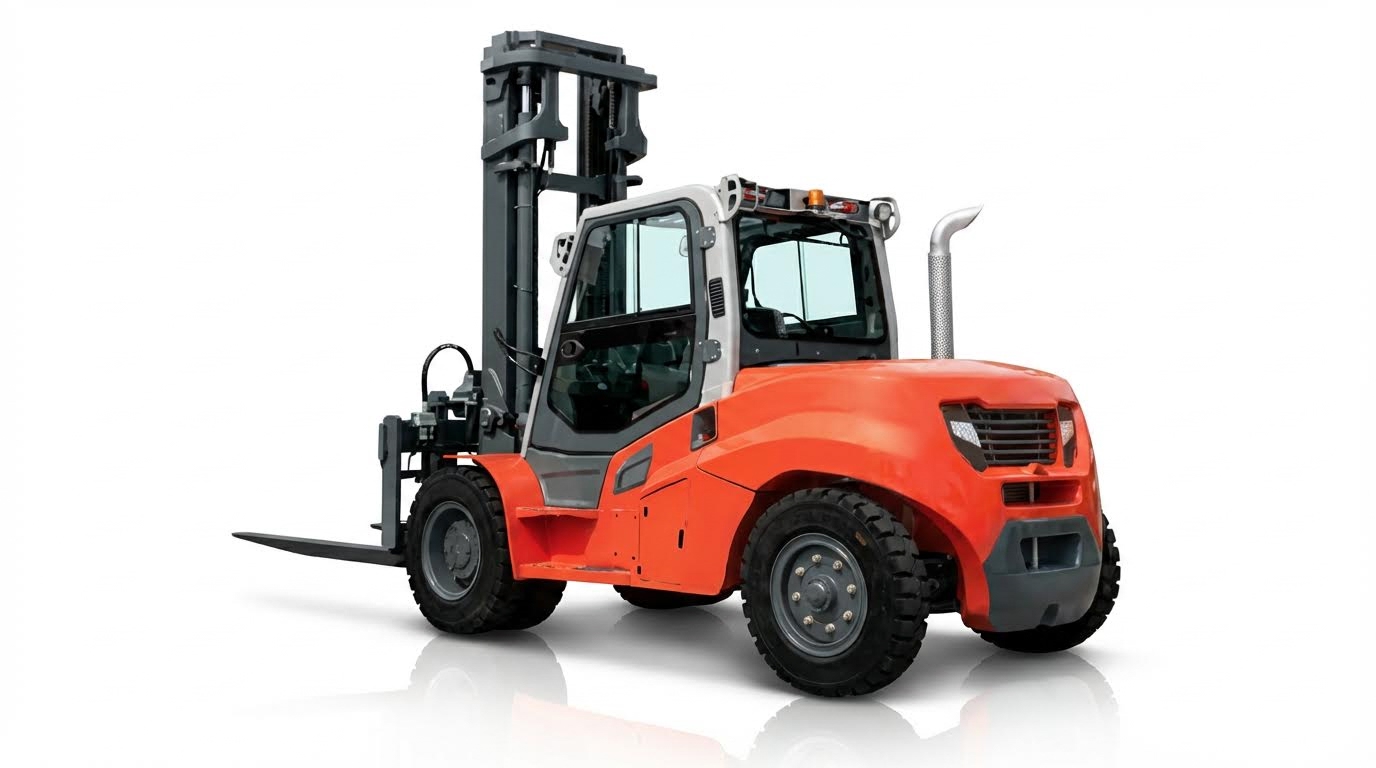
High temperatures stress the cooling system, tires, and exhaust after‑treatment. Poor practices here can cause overheating, blowouts, or emissions faults, even when you know how to start a diesel forklift correctly.
Engine cooling and overheating prevention
In extreme heat, the cooling system must dissipate more energy to keep the engine in its safe temperature band. Operators should monitor gauges and adapt driving style to avoid heat‑soak.
- Watch the engine temperature gauge continuously in hot weather and respond early to rising readings to prevent overheating.
- Keep radiator fins, guards, and screens clean so air can flow freely through the core.
- Check coolant level and cap condition; low coolant or a weak cap reduces boiling margin.
- Avoid long, high‑load pushes at low travel speeds that reduce airflow through the radiator.
| Hot‑Weather Cooling Check | Effect on Reliability |
|---|---|
| Clean radiator and grill | Improves heat rejection and keeps temperatures in the normal range even in high heat |
| Monitor temperature gauge | Allows early action (idle, cool‑down) before actual overheating damage occurs |
| Maintain coolant level | Ensures full contact with hot surfaces so the system can carry heat away efficiently |
Operating adjustments in extreme heat
Small changes in technique can reduce thermal load:
- Plan short cool‑down idles between heavy cycles.
- Avoid unnecessary idling in direct sun when parked; choose shade where possible.
- Keep engine bay closed while operating so airflow follows the designed path through the radiator.
Tires, traction, and surface temperatures
Hot pavement and heavy loads raise tire temperatures and pressures, increasing the risk of failure. Proper inflation and inspection are essential for safe handling and load stability.
- Check tire pressure when cold and adjust to specification; expect pressure to rise in operation to avoid blowouts.
- Inspect tread and sidewalls for cuts, bulges, or separation before each shift.
- Reduce speed and cornering forces on very hot surfaces to limit heat build‑up in the tire carcass.
| Tire Control Item | Hot‑Weather Risk Managed |
|---|---|
| Correct cold inflation pressure | Prevents over‑pressure as temperature rises, reducing blowout risk under extreme heat |
| Daily visual inspection | Finds damage that could fail when rubber softens in high temperatures |
| Moderate speed and load | Lowers internal tire temperature and improves stability |
Emissions, DEF systems, and shutdown in heat
Modern diesel forklifts often use DEF and after‑treatment to control emissions. Incorrect shutdown can cause crystallization and long‑term system damage, especially when combined with high operating temperatures.
- After work, let the engine idle briefly to stabilize internal temperatures before shutdown rather than stopping immediately from full load.
- Use a two‑step shutdown: turn off ignition and wait about 3 minutes for the DEF pump to depressurize and reverse flow, then switch off main power to prevent crystallization in lines.
- Maintain regular oil, fuel, and air filter changes; clogged filters raise exhaust temperatures and emissions and reduce engine life.
Why emissions care matters for start‑up
A clean, properly maintained emissions system reduces backpressure and helps the engine breathe. That improves cranking speed, combustion quality, and overall reliability when you start in both hot and cold weather. Poor emissions maintenance adds load and heat, which shortens component life and makes future starts less dependable.
By combining these extreme‑weather practices with correct glow‑plug use, start‑attempt limits, and proper warm‑up, you build a complete, season‑proof approach to how to start a diesel forklift safely and keep it reliable for thousands of hours.
Final Recommendations For Safe, Reliable Starts
Safe, reliable diesel forklift starts come from a complete system approach, not one single action. The walk‑around and fluid checks confirm that the structure, tyres, brakes, and oil and coolant circuits can survive cold friction and hot loads. Correct parking brake, neutral selection, and mast position lock the truck in a stable state so the first crank never turns into an unplanned movement.
Glow plug timing, crank limits, and controlled warm‑up then protect the engine, starter, and hydraulics from abuse. Operators who respect the 10‑second crank rule and use slow cycling to heat hydraulic oil avoid hard internal impacts and erratic steering. Fuel quality, water drainage, and antifreeze control close the loop in winter, while cooling system care, tyre management, and emissions discipline keep the truck healthy in heat.
Operations and engineering teams should turn these steps into simple, non‑negotiable checklists, backed by training and spot audits. Standardize daily inspections, start sequences, and warm‑up routines across every diesel truck, including Atomoving units. When every operator follows the same process in every season, sites cut no‑starts, extend component life, and reduce incident risk while keeping uptime high.
Frequently Asked Questions
How to Start a Diesel Forklift
Starting a diesel forklift involves a series of steps to ensure safe and efficient operation. First, perform a pre-operation inspection to check for any visible damage or leaks. Ensure the parking brake is engaged and the gear selector is in neutral. Next, turn the key to the “on” position to check the dashboard for any warning lights. If everything looks good, turn the key further to start the engine. Allow the engine to warm up for a few minutes before driving. Always refer to the manufacturer’s manual for specific instructions related to your equipment.
What are the Key Safety Checks Before Starting a Diesel Forklift?
Before starting a diesel forklift, it’s crucial to conduct safety checks. Inspect the tires for proper inflation and signs of wear. Check the fuel and oil levels to ensure they are adequate for operation. Examine the forks for any cracks or bends, and test the brakes and steering. Finally, ensure that all safety devices, such as lights and horns, are functioning correctly. These steps help prevent accidents and maintain equipment longevity.