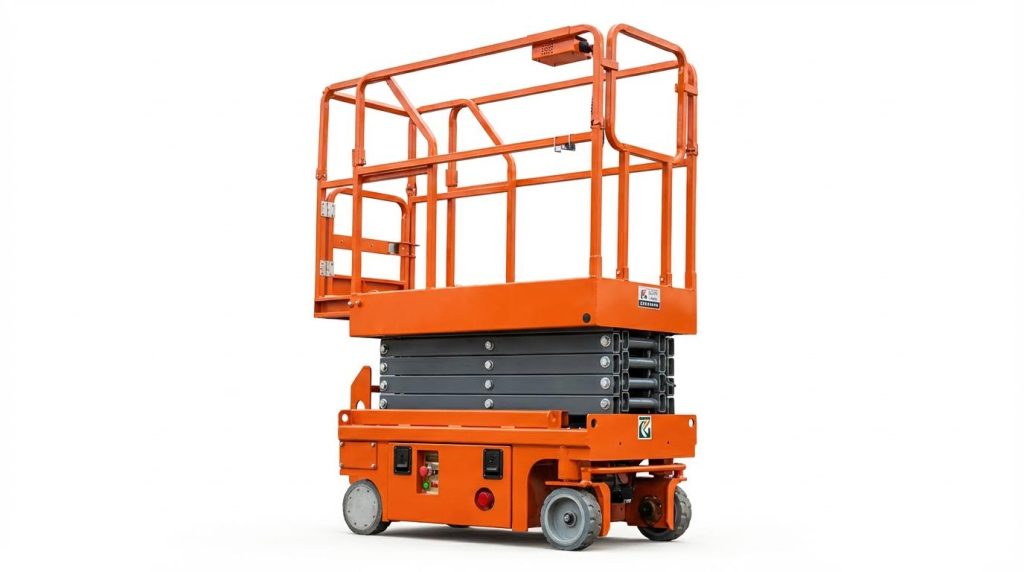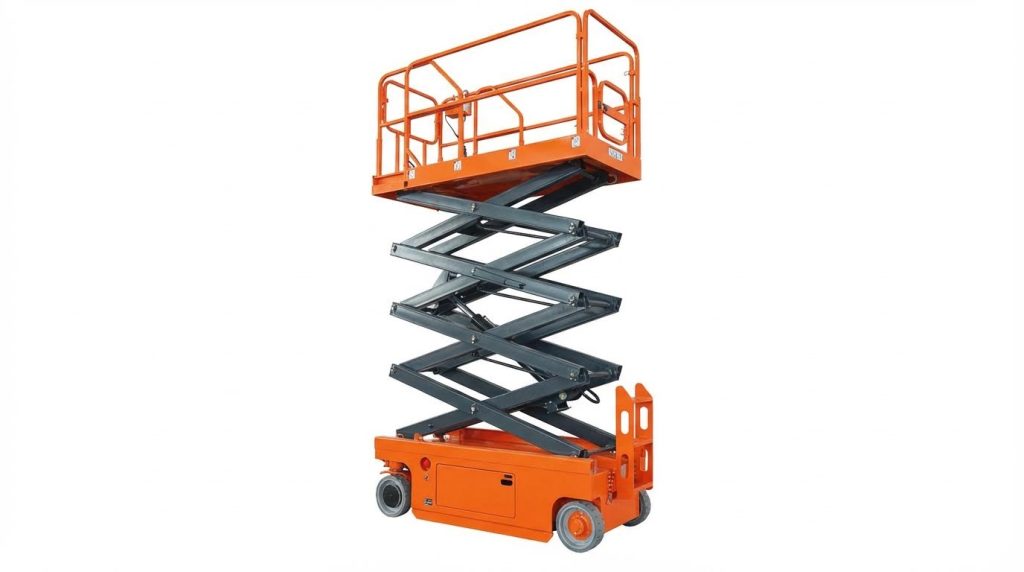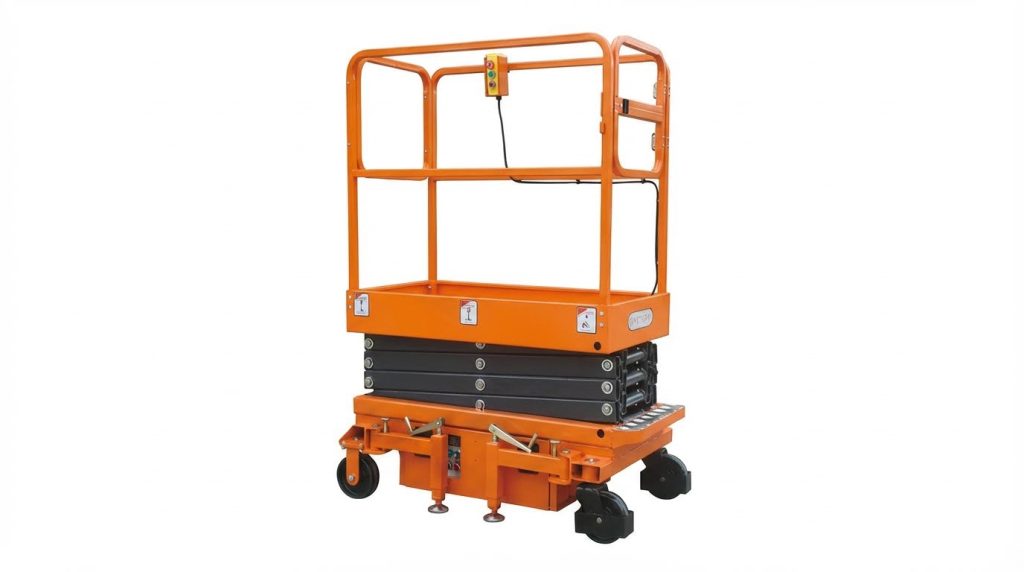
Electric scissor lifts work by combining battery power, hydraulic actuation, and smart electronic controls to raise people and tools safely to height. This guide explains how do electric scissor lifts work from the inside out, covering power sources, structural design, control logic, and charging. You will see how batteries, motors, hydraulics, and sensors interact, and what this means for safety, runtime, and maintenance in real job sites. Use it as a practical engineering reference when selecting, operating, or managing a fleet of scissor platform lift.
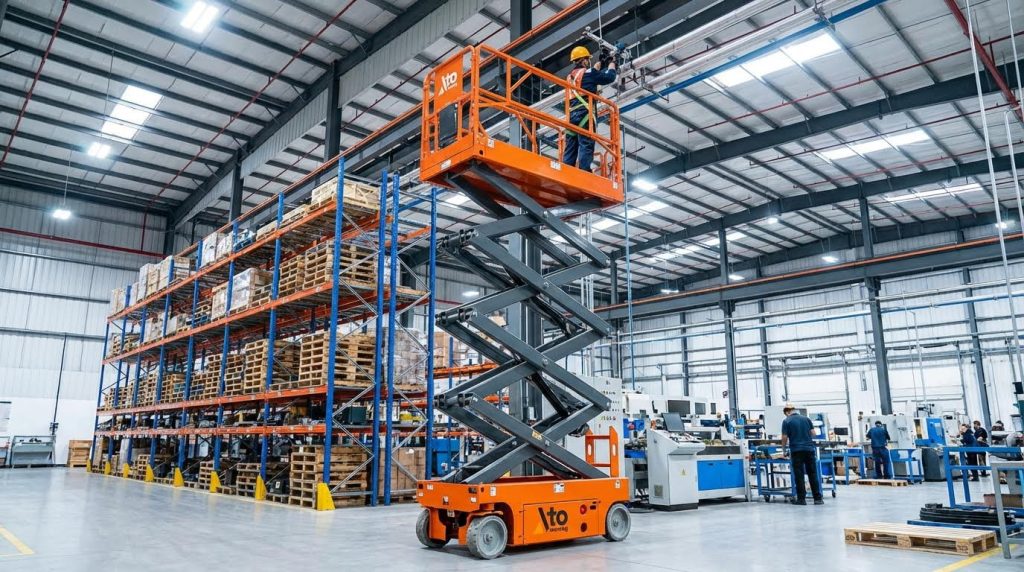
Core Architecture Of Electric Scissor Lifts
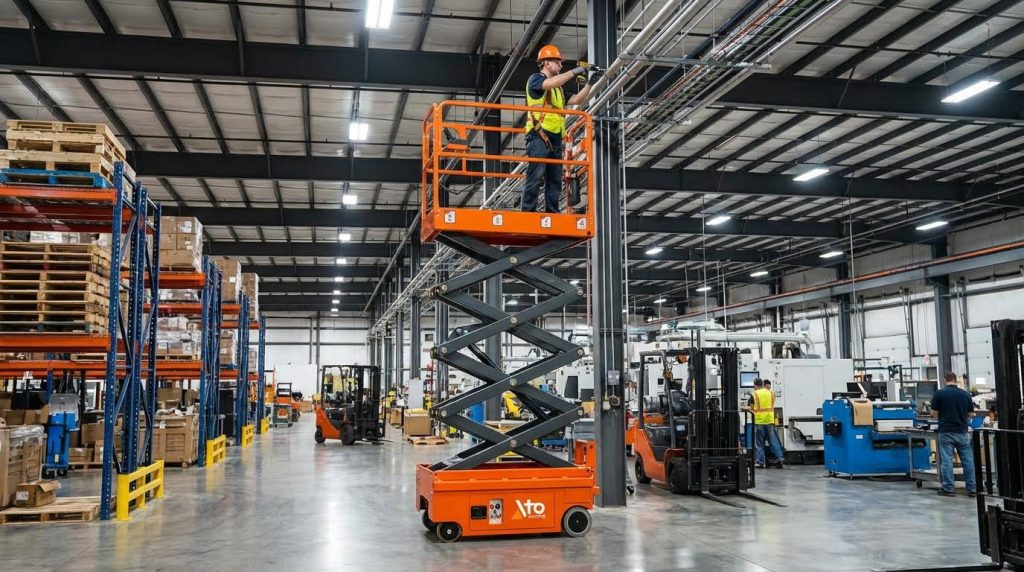
The core architecture of electric scissor lifts explains how do electric scissor lifts work from battery to wheels to platform, turning electrical energy into smooth, vertical motion with a compact scissor structure and controlled hydraulic force.
At a high level, an electric scissor lift has three main subsystems: the power source and drive, the hydraulic lifting circuit, and the steel scissor platform that carries the platform and load. Understanding these building blocks lets you predict real run-time, lifting speed, and safe working load on your site.
Power source, drive, and hydraulic actuation
This section explains how do electric scissor lifts work in practice: batteries feed electric motors, which drive wheels and a hydraulic pump that pressurizes cylinders to raise the platform.
Modern electric scissor lifts use rechargeable battery packs to supply DC power to traction and hydraulic pump motors, delivering a full shift of indoor operation between charges. The hydraulic system then converts that electrical energy into linear force at the lift cylinders.
| Subsystem | Typical Engineering Choice | Key Metric / Range | Operational Impact |
|---|---|---|---|
| Battery type | Lithium-ion or lead-acid pack power source data | 8–10 h run-time per charge (typical indoor duty) | Covers a full shift on flat floors with planned overnight charging. |
| Traction / pump motors | AC asynchronous or permanent magnet synchronous motors with variable frequency drive motor data | Stepless 0.1–0.5 m/s travel speed | Precise positioning in tight aisles and smooth approach to work areas. |
| Hydraulic actuation | Electric motor-driven hydraulic pump feeding lift cylinders hydraulic system | Pressure sized for rated load (≈230–1,150 kg electric class) | Delivers controlled lift speed while maintaining safety factor on cylinder stress. |
| Noise emission | Electric drive with hydraulic pump in compact power pack | <70 dB(A) at operator position noise data | Suitable for warehouses, hospitals, schools, and low-noise zones. |
| Emissions | Battery-electric, no combustion engine | Zero point-of-use exhaust emissions | Safe for indoor use with limited ventilation and green-building requirements. |
| Load capacity | Electric slab scissor lift | ≈230–1,150 kg platform capacity capacity range | Covers most indoor maintenance and installation tasks with two people plus tools. |
| Energy efficiency | Battery plus efficient motor drives | Lower energy per hour vs. diesel units efficiency | Lower operating cost; overnight recharge cheaper than daily fueling. |
The hydraulic pump, driven by an electric motor, pushes oil into one or more lift cylinders attached to the scissor stack. Engineers size cylinder bore, pump flow, and relief valve pressure so lift speed stays acceptable while keeping stresses and oil temperature within limits under maximum rated load. During lowering, valves meter flow back to tank so the platform descends at a controlled speed, often with energy recovery in newer designs that back-feed power to the battery during descent energy-saving control.
- Battery pack: Feeds DC power to traction and pump motors – Defines run-time and how many lift cycles you get per shift.
- Electric drive: Uses variable frequency or similar control for stepless speed – Improves positioning accuracy and reduces jerk.
- Hydraulic pump + cylinders: Convert rotary motion into linear lift force – Carry the platform and load safely to working height.
- Relief valves: Open at about 110% of rated pressure – Protect pump and structure from overload in fault conditions.
How the powertrain answers “how do electric scissor lifts work?”
From the operator’s joystick command, the control unit powers the pump motor, building hydraulic pressure in the cylinders. The scissor arms open, pushing the platform up. When you release the control, valves close, holding the platform at height with minimal drift.
💡 Field Engineer’s Note: In cold storage or outdoor winter work, battery capacity and hydraulic oil viscosity both drop. Plan for reduced run-time and slower lift speeds below about 0°C, and consider low-temperature hydraulic oil plus slightly oversized battery packs for multi-shift fleets.
Structural design and load paths
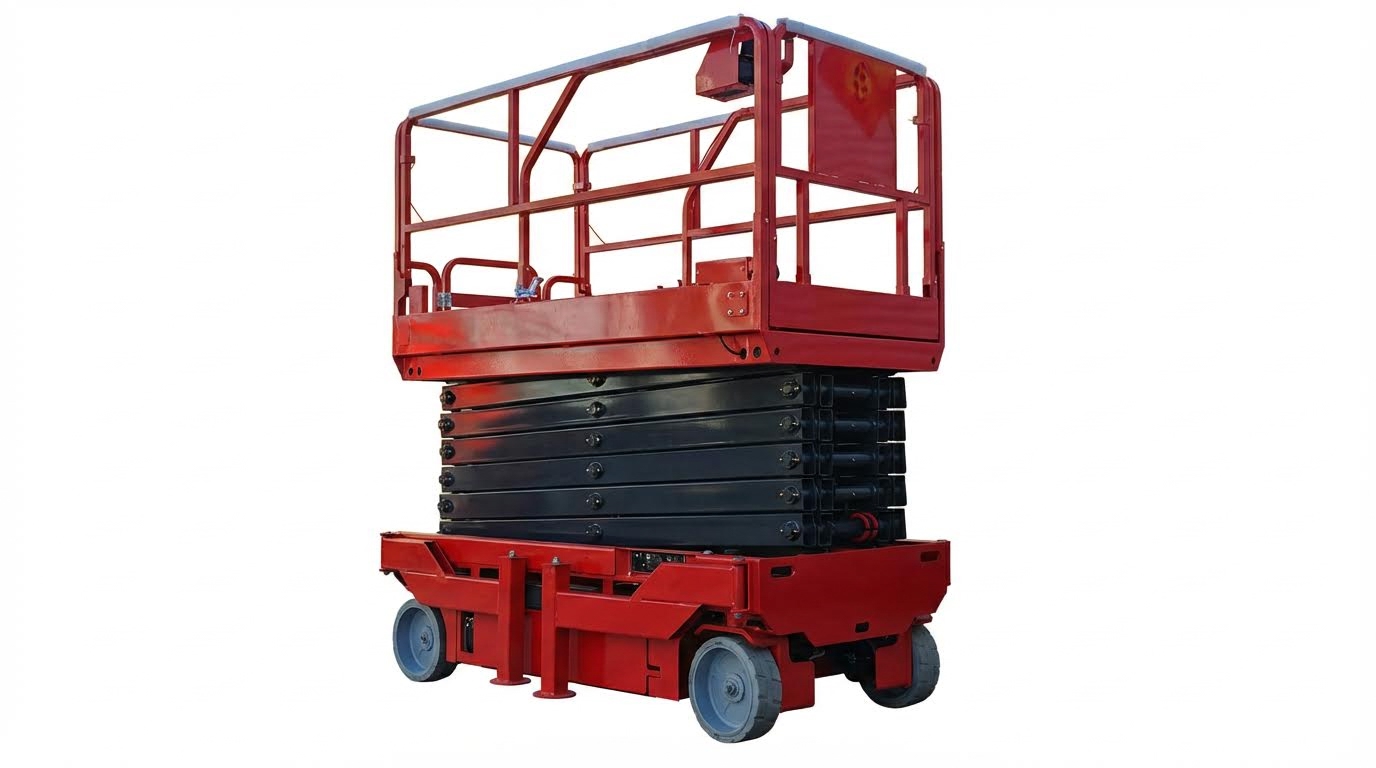
The structural design and load paths explain how do electric scissor lifts work mechanically: the scissor stack and chassis spread platform loads safely into the floor while resisting bending, buckling, and side loads.
Electric scissor lifts rely on a compact “X-frame” stack of steel arms, pinned at the ends and midpoints, to turn cylinder stroke into vertical motion. The platform, rails, and chassis form a closed load path that carries people, tools, and dynamic loads back into the floor slab.
| Structural Element | Function In Load Path | Typical Design Focus | Operational Impact |
|---|---|---|---|
| Platform deck | Supports workers, tools, and materials | Deflection limits under ≈230–1,150 kg rated load capacity range | Stable working feel; less bounce under foot traffic and tool impact. |
| Guardrails | Contain personnel within platform | Height and strength to meet fall-protection standards | Reduces fall risk without needing separate harness anchorage in many tasks. |
| Scissor arms | Carry compressive and bending forces | Buckling resistance, pin joint wear, weld fatigue | Determines maximum platform height and stiffness at full extension. |
| Lift cylinder mountings | Transfer hydraulic force into scissor stack | Shear and bearing strength at pins and brackets | Prevents cracking at high cycle counts and shock loads. |
| Chassis frame | Distributes load to wheels or outriggers | Torsional stiffness and local reinforcement at wheel mounts | Controls tilt and rocking when driving raised on flat floors. |
| Wheelbase and track | Define stability envelope | Geometry vs. platform height and rated load | Sets allowable side slope and wind limits in the manual. |
- Vertical loads: Platform weight, payload, and self-weight travel down through the scissor arms into the chassis – Critical for sizing arm sections and pins.
- Side loads: Wind, tool push, and worker movement act at platform level – Drive guardrail design and chassis width.
- Dynamic effects: Starting, stopping, and minor impacts add transient forces – Influence fatigue life and weld detail selection.
Because electric scissor lifts often work indoors on smooth slabs, designers optimize the structure for high cycle counts and low noise rather than extreme rough-terrain abuse. However, rated capacities up to about 1,150 kg still demand conservative safety factors on buckling, especially at maximum platform heights where any side load creates high bending moments in the scissor arms capacity and application notes.
Why floor conditions matter to structural behavior
The load path assumes a firm, level floor. On soft or sloped ground, wheel loads become uneven, increasing local stress in the chassis and making the lift more sensitive to side loads. That is why standard electric slab scissors are specified for smooth, level surfaces only.
💡 Field Engineer’s Note: When you see repeated cracking at scissor arm welds or pin bosses in a fleet, it is often a sign the machines are being driven raised over floor joints or potholes. Even small vertical steps in the slab can spike dynamic loads well beyond the static 1,000 kg rating, so enforce “platform lowered before travel over rough spots” in your site rules.
Electrical Powertrain, Controls, And Safety Logic
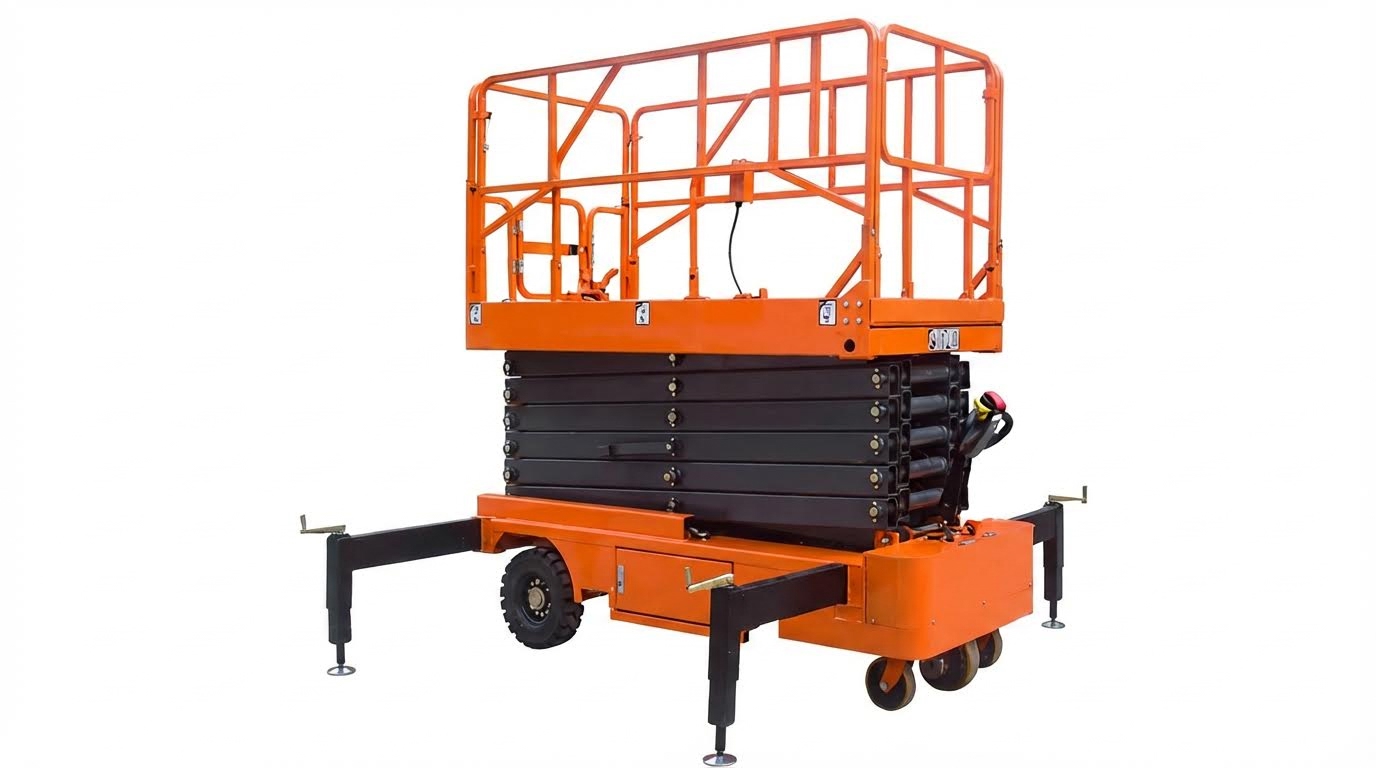
The electrical powertrain, control electronics, and safety logic explain most of the real answer to “how do electric scissor lifts work” in day‑to‑day use. Batteries feed electric motors, motors drive hydraulics and wheels, and layered controls keep motion safe and predictable.
- Battery pack: Supplies DC power for traction and lifting – Defines run‑time and charging strategy.
- Motor and hydraulics: Convert electrical energy into lifting force – Determine lift speed and smoothness.
- Inverters and controllers: Regulate motor torque and speed – Enable precise, jerk‑free positioning.
- Sensors and interlocks: Watch load, height, and tilt – Stop unsafe movements before damage occurs.
💡 Field Engineer’s Note: When troubleshooting “slow” or “weak” lifts, check voltage under load at the battery and motor controller before blaming the hydraulics—low voltage sag often mimics a hydraulic fault but is much cheaper to fix.
Battery technologies and duty-cycle performance
Battery chemistry and sizing dictate how do electric scissor lifts work over an 8–10 hour shift, including lift frequency, travel distance, and time spent on charge versus in service.
Most modern electric scissor lifts use rechargeable battery packs to supply DC power to traction and hydraulic pump motors, delivering about 8–10 hours of operation per charge on flat indoor floors. Source Higher‑energy chemistries like lithium‑ion increase usable capacity and shorten charging time compared with traditional lead‑acid packs.
| Battery Type | Typical Use in Scissor Lifts | Charge Time (approx.) | Duty-Cycle Characteristics | Operational Impact |
|---|---|---|---|---|
| Flooded lead-acid | Common in indoor slab lifts | 6–8 hours, up to 16 hours for some units Source | Good for single-shift if charged overnight; sensitive to deep discharge and opportunity charging | Plan overnight charging; avoid repeated top‑ups during breaks to preserve life. |
| Sealed AGM / Gel | Low-maintenance indoor use | Similar to flooded lead-acid (6–10 hours typical) | No watering; still vulnerable to over/under‑charging | Reduces maintenance time; ideal where electrolyte access is restricted. |
| Lithium-ion | Advanced all‑electric models | Can recharge from empty to full in about 3.5 hours in some designs Source | High energy density; supports opportunity charging and long service life | Supports multi‑shift operation with short charge windows and fewer replacements. |
Typical fleet practice is to charge batteries for 6–8 hours at the end of each shift, letting the charger complete its full algorithm rather than frequent “sip” charges that accelerate sulphation. Source Battery temperature and ambient conditions also affect how do electric scissor lifts work; cold environments reduce available capacity and run‑time, so engineers upsize packs or add charging infrastructure for winter use. Source
- Correct charger matching: Use only chargers rated for the battery voltage and chemistry – Prevents overheating and electrical faults. Source
- Ventilation during charge: Lead‑acid batteries release hydrogen and oxygen – Requires well‑ventilated charging areas to control explosion risk. Source
- Charge discipline: Avoid routine opportunity charging and deep discharge – Extends battery life and stabilizes daily run‑time. Source
How battery monitoring systems change day-to-day operation
Advanced battery monitoring systems log charge history, state‑of‑charge, depletion, fluid level, and charger performance directly on the machine controller, then share diagnostics with operators and maintenance teams. Proprietary algorithms even recommend when to add water based on usage and ambient temperature, turning what used to be guesswork into scheduled, data‑driven maintenance. Source
💡 Field Engineer’s Note: If you see lifts consistently coming back “dead” before shift end, log real run‑time and check for chronic under‑charging or cold‑soaked batteries before assuming you need more machines.
Motor drives, hydraulics, and energy recovery
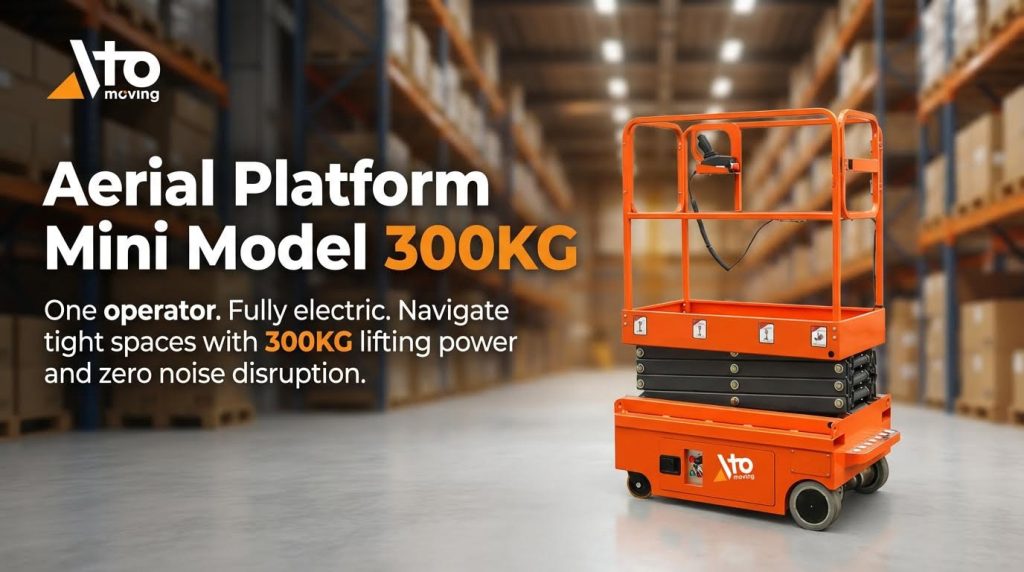
Electric motors, hydraulic pumps, and energy recovery systems convert battery energy into vertical lift and then claw some of it back during lowering, which is central to how do electric scissor lifts work efficiently.
Electric scissor lifts use hydraulic actuation for elevation: a hydraulic pump sends pressurized fluid to lift cylinders attached to the scissor stack. Engineers size pump displacement, relief valve settings, and cylinder bore to hit target lift speeds and rated platform loads with appropriate safety factors. Source AC asynchronous motors or permanent‑magnet synchronous motors, driven by variable‑frequency drives, provide stepless speed regulation in the 0.1–0.5 m/s range for smooth platform movement. Source
| Subsystem | Key Technology | Typical Performance | Operational Impact |
|---|---|---|---|
| Traction / lift motors | AC or permanent-magnet synchronous motors | Stepless speed 0.1–0.5 m/s via VFDs Source | Allows precise approach to work areas and gentle starts/stops. |
| Hydraulic actuation | Pump + cylinders with relief valves | Configured for rated loads of roughly 230–1,150 kg on electric units Source | Defines lift capacity and speed; relief valves protect against overload. |
| Vector control | Advanced VFD algorithms | Motor efficiency up by ~25%, energy use down by ~30% in some systems Source | Extends battery run‑time and reduces heat in confined indoor spaces. |
| Energy recovery | Motor in generator mode on descent | Energy‑saving control can cut power use by about 15% over a 10 m cycle Source | More lifts per charge; lower CO₂ emissions for the same work done. |
During descent, some designs switch the motor into generator mode and route recovered energy back into the battery through an energy‑recovery device, trimming power consumption by around 15% over a 10 m lift‑and‑lower cycle. Source All‑electric architectures that remove hydraulics entirely push this further, pairing a single lithium‑ion battery with energy recovery and opportunity charging to cut power consumption by about 70% and achieve very long battery life. Source
- Forward/reverse control: Contactors or solid‑state relays switch motor phase sequence – Enables smooth direction changes without mechanical clutches. Source
- Acceleration management: VFD programs ramp speed from 0 to around 0.3 m/s in roughly 1.5 seconds at full load – Limits starting shock on the structure and occupants. Source
- Brushless upgrades: Permanent‑magnet brushless DC motors can extend service life from about 2,000 to 10,000 hours – Reduces downtime and maintenance cycles from months to years. Source
💡 Field Engineer’s Note: On units with energy recovery, operators who “feather” the controls for smooth, continuous lowering often see noticeably longer run‑time than those who repeatedly bump the platform up and down.
Control electronics, sensors, and protection systems
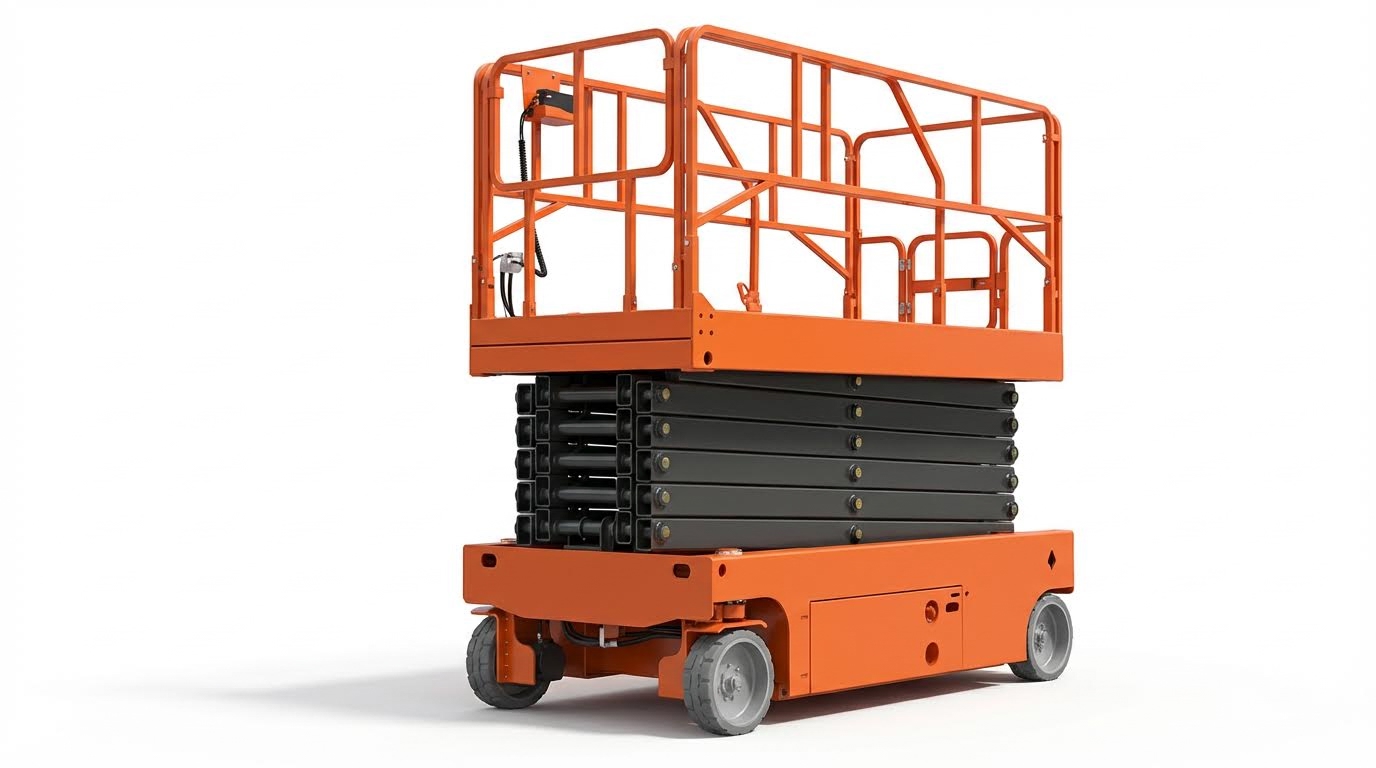
The control unit, sensors, and interlocks form the safety backbone of how do electric scissor lifts work, translating joystick inputs into motion only when conditions are within safe limits.
The electrical control system is built around a central control unit—often a PLC or dedicated motherboard—with millisecond‑level processing, integrating multiple lifting and safety signals with response delays of ≤50 ms. Source When an operator commands a lift, the controller reads load, height, and inclination data, then calculates motor parameters to avoid harsh starts, especially on tall platforms around 10 m.
<Charging Systems, Maintenance, And Fleet PlanningCharging, maintaining, and planning fleets for electric scissor lifts determines real uptime, battery life, and total cost, and is a core part of understanding how do electric scissor lifts work in daily operations.
- Charging system design: Defines how fast you recover from a shift – directly impacts machine availability and shift scheduling.
- Battery maintenance: Keeps capacity and safety margins stable – avoids sudden loss of height or drive.
- Fleet planning: Matches chargers, power, and machines – prevents bottlenecks at the plug instead of at the job.
💡 Field Engineer’s Note: In most warehouses the “hidden” constraint is not battery size, it is too few correctly matched chargers on too few circuits, which silently caps how many lifts you can run per shift.
Charging methods, times, and infrastructureCharging methods for electric scissor lifts revolve around overnight full charges, controlled opportunity charging, and correctly sized infrastructure to keep every unit ready at the start of shift.In practical terms, how do electric scissor lifts work over a full day depends on matching battery capacity to duty cycle and then restoring that energy with the right charger, in the right place, for the right duration.
- Use full overnight charges: Let the charger complete bulk, absorption, and equalize stages – this restores deep capacity instead of just surface charge.
- Avoid habitual “coffee‑break” charging: Do not plug in for 10–20 minutes several times a day – this accelerates plate sulphation and shortens life.
- Inspect before every charge: Check cables, plugs, and ports for damage or corrosion – reduces arcing, fires, and nuisance charger faults.
- Designate charging bays: Keep them free of flammables and with good airflow – protects against hydrogen ignition on lead‑acid systems.
- Use smart chargers where possible: Capture charge history and alarms – lets fleet managers see which lifts are abused or undercharged.
How charging ties back to “how do electric scissor lifts work”
Electric scissor lifts convert stored DC energy into hydraulic and traction power. The charger is what resets that energy store every shift. Poor charging habits quietly reduce run time, which operators perceive as “weak lift power” or “slow drive,” even though the motors and hydraulics are fine.
💡 Field Engineer’s Note: If a site complains that lifts “only run 3–4 hours,” the first thing I check is the charge logs; nine times out of ten the chargers are being unplugged long before the algorithm finishes.
Battery care, environmental limits, and lifecycle costBattery care for electric scissor lifts focuses on correct watering, corrosion control, temperature management, and avoiding deep discharge so that capacity and safety stay within design limits over many years.This is where the physics of how do electric scissor lifts work meets cost: batteries are usually the single highest replacement expense, so small maintenance habits compound into thousands of currency units saved or lost across a fleet.
- Train operators on SOC limits: Teach them to park and charge when warning levels appear – this is cheaper than replacing sulphated packs every 12–18 months.
- Standardize PPE and tools: Use insulated tools and mandatory eye/hand protection – reduces the severity and frequency of battery‑related incidents.
- Log every battery change or fault: Capture date, hours, and failure mode – helps you choose better chemistries or charger setups in the next procurement cycle.
Environmental limits and cold‑weather considerations
Battery capacity drops in low temperatures, which shortens run‑time in cold storage or winter outdoor work. As ambient temperature falls, internal resistance rises, so the same current draw causes higher voltage sag and earlier low‑voltage cut‑off. Engineers compensate by upsizing battery capacity, reducing duty per shift, or scheduling mid‑shift charges in a warmer bay. This is a critical part of fleet planning for sites with large unheated areas.
💡 Field Engineer’s Note: On cold sites, I plan as if each battery only delivers 60–70% of its rated amp‑hours; if you size chargers and shift lengths to that, operators stop calling in “dead lift” complaints on frosty mornings.
 Final Considerations For Specifying Electric Scissor LiftsElectric scissor lifts only deliver safe, low‑cost work at height when you treat them as integrated systems, not just platforms on batteries. Powertrain design sets how fast and how long you can lift. Structural geometry and wheelbase define stability and where you can drive raised. Control electronics, sensors, and interlocks decide whether a risky movement happens at all.Charging strategy and battery care then close the loop. Good charger matching, full end‑of‑shift charges, and clean, watered lead‑acid cells keep voltage sag under control. That preserves lift speed and prevents nuisance shutdowns. Poor habits quietly shorten battery life and push up fleet cost, even when the mechanical parts remain healthy.For engineering and operations teams, the best approach is simple. Start from load, height, floor quality, and shift pattern. Choose lift models and battery chemistries that match that duty, then size chargers and circuits to support the plan. Train operators on charging rules, floor limits, and “platform down before travel over rough spots.” Finally, use monitoring tools and service data—whether from Atomoving units or others—to adjust fleet size, charger count, and maintenance intervals before problems reach the job site.Frequently Asked QuestionsHow Do Electric Scissor Lifts Work?An electric scissor lift operates by using a power source to fill hydraulic cylinders with fluid or compressed air. The hydraulic fluid or air is then pushed into the cylinder, causing it to extend outward. This extension forces the scissor legs to push apart, which raises the platform. Scissor Lift Working Principle.What Are the Common Problems With Electric Lifts?Common issues with electric lifts include hydraulic fluid leaks, motor malfunctions, and problems with the control system. Regular maintenance helps prevent these issues. For more details on troubleshooting, refer to guides like Electric Lift Maintenance Tips.How to Raise and Lower a Scissor Lift?To raise a scissor lift, turn on the power source and allow the hydraulic system to extend the cylinders, pushing the legs apart to elevate the platform. To lower it, reverse the process by releasing the hydraulic pressure. Always follow safety protocols when operating. Operating Guide.
| Battery Aspect | Key Practice / Limit | Best For… / Operational Impact |
|---|---|---|
| Flooded lead‑acid electrolyte level | Plates just covered before charge; top to bottom of fill tube only after full charge and cool‑down reference | Prevents exposed plates (capacity loss) and overflow (corrosion and ground contamination). |
| Water quality | Use distilled water only; no tap water reference | Reduces mineral contamination and plate degradation. |
| Inspection frequency | At least monthly for daily‑used lifts reference | Keeps cell imbalance and early failure under control. |
| Sealed (AGM/gel) checks | No watering; inspect for bulging, leaks, overheating, and terminal condition reference | Detects internal damage before sudden failure. |
| Corrosion and cable health | Clean deposits, neutralize, dry, protect; check for kinks, broken strands, cracked insulation reference | Reduces voltage drop, heat, and fire risk; maintains full power to motors. |
| Depth of discharge limit | Avoid going below typical cut‑off (~20% state of charge); rely on auto‑shutoff reference | Prevents active material shedding and grid corrosion; extends cycle life. |
| Temperature control | Monitor for excessive rise during charge; use chargers with temperature compensation reference | Reduces risk of thermal runaway and electrolyte loss. |
| PPE during maintenance | Goggles, acid‑resistant gloves, no jewelry, avoid live‑terminal contact reference | Prevents chemical burns, arcs, and short‑circuit injuries. |
| Advanced monitoring systems | Real‑time state‑of‑charge, fluid level, and charge history logging reference | Supports predictive maintenance and optimized replacement timing. |