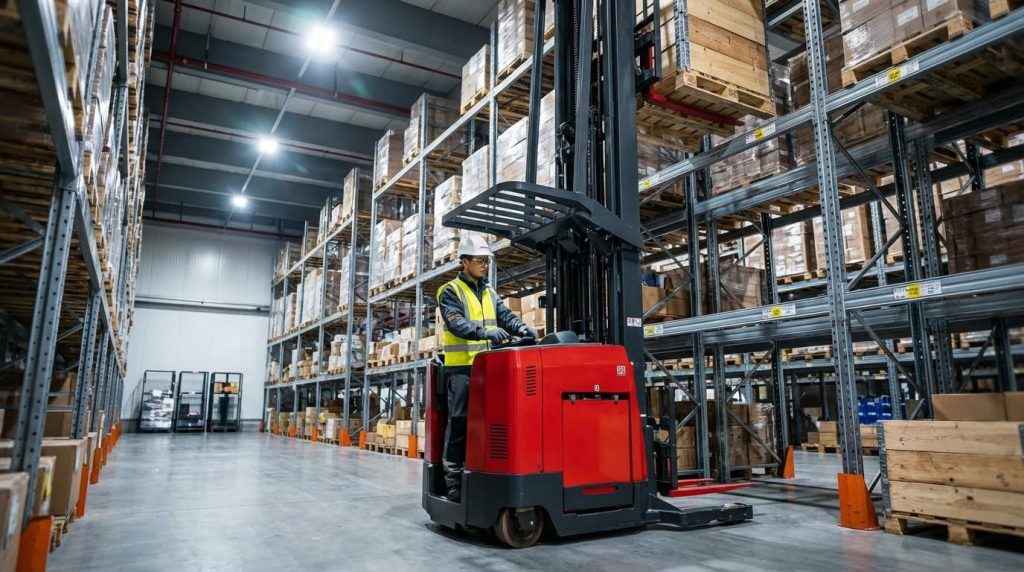
Learning how to drive an electric forklift starts with understanding safety, stability, and the limits printed on the truck, not just the pedals and levers. This guide explains how to drive an electric forklift step by step, from daily inspections and speed control to OSHA-compliant training and documentation. You will see how small details—like 200–300 mm travel height, 3–5 km/h speed limits, and correct battery charging—directly affect accident risk and truck life. Use this as a practical field manual to build a safer, more efficient electric forklift program.
Core Principles Of Safe Electric Forklift Operation
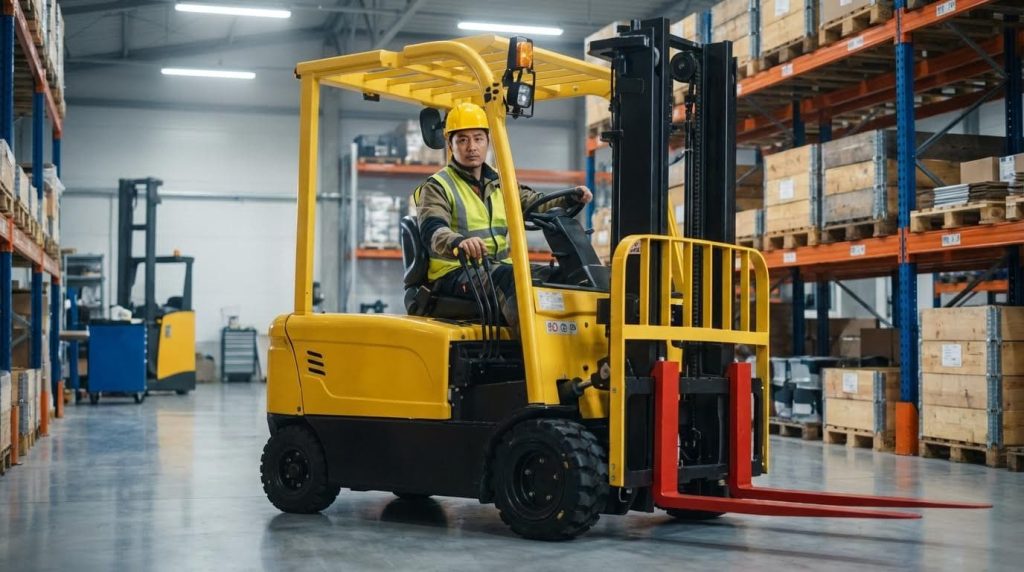
Core principles of safe electric forklift operation explain how to drive an electric forklift without tipping, overloading, or damaging batteries and hydraulics. If you get these fundamentals right, every advanced maneuver becomes safer and easier to control.
- Know your machine: Understand every control, indicator, and safety device – you react faster under stress.
- Protect the stability triangle: Keep the load center short and low – you avoid side‑tip and forward‑tip accidents.
- Respect rated capacity: Follow the capacity plate, not “gut feel” – you stop overload failures before they start.
- Treat batteries as critical systems: Charge, inspect, and cool correctly – you prevent sudden power loss and fires.
💡 Field Engineer’s Note: Most “mystery” near‑tip events I investigated came from operators lifting high with a long load center, not from excess weight. Geometry beats guesswork—always read the capacity plate for that lift height and attachment.
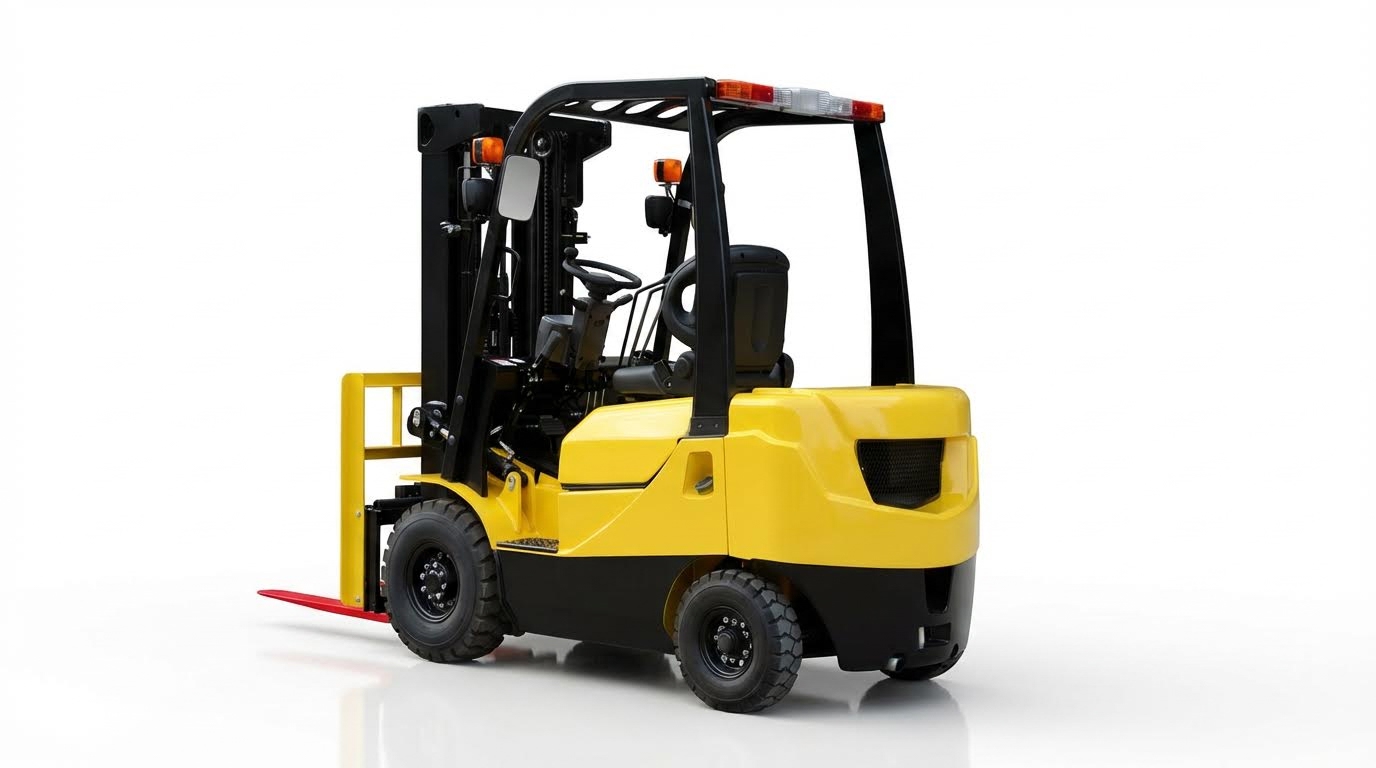
Electric forklift components and controls
Electric forklift components and controls are the core systems you must master before deciding how to drive an electric forklift in any warehouse or yard. Think in systems: power, traction, lifting, and safety.
- Battery and power system: Traction battery, cables, connectors, BMS, and indicator – supplies stable DC power for drive and hydraulics.
- Drive and steering: Drive motor(s), steering axle, steering wheel, and direction selector – controls travel direction and turning radius.
- Lifting system: Mast, carriage, forks, tilt cylinders, and hydraulic circuits – raises, lowers, and tilts the load.
- Operator compartment: Seat, seat belt, pedals, levers/joysticks, display, horn – your main interface with the truck.
- Safety and lighting: Lights, alarms, mirrors, back‑up alarm, safety decals – increase visibility and warn pedestrians.
| Component / Check | What To Verify | Standard / Source | Operational Impact |
|---|---|---|---|
| Battery & cables | Charge above 20%, no corrosion or damaged insulation | Daily checks recommended for electric forklifts battery system guidance | Prevents voltage sag, shutdowns, and fire risk during lifting |
| Hydraulic system | No visible oil leaks, smooth lift and tilt function | OSHA pre‑operation checks require leak inspection for hydraulics | Maintains full lifting capacity and avoids sudden mast drop |
| Brakes & parking brake | Responsive service brake, parking brake holds on slope | Brake responsiveness emphasized in electric truck checks for safety | Allows controlled stops at 3–10 km/h without drift |
| Steering & tires | Free steering, no abnormal noise, tires undamaged | OSHA requires tire condition and steering checks before use each shift | Prevents loss of control, improves turning in 2.5–3.0 m aisles |
| Forks & attachments | No cracks, deformation, or excessive wear at heel and pins | Fork and backrest inspection required in OSHA checklist for safe lifting | Ensures rated load in kg can be safely carried at design load center |
| Safety devices | Seat belt, horn, lights, alarms all functional | OSHA calls for all safety devices to be operational before use or remove truck from service | Improves pedestrian awareness at blind corners and docks |
How the main driving and lifting controls typically work
Direction selector: Chooses forward, neutral, or reverse. Always select direction with the truck stopped to protect the drive motor and gearbox.
Accelerator pedal: Controls travel speed. Electric trucks deliver instant torque, so apply gently to avoid jerky starts that destabilize tall loads.
Service brake pedal: Slows and stops the truck. Combine with regenerative braking where fitted to reduce brake wear.
Parking brake: Holds the truck when parked or on slight slopes. OSHA requires setting brakes and neutralizing controls when unattended. Unattended truck rules
Lift control: Raises and lowers the forks. Best practice is to lift the load only 100–300 mm for travel and avoid sudden movements during lifting or lowering to maintain stability.
Tilt control: Tilts the mast forward and back. Slight back‑tilt during travel helps keep the load against the backrest and inside the stability triangle.
Stability triangle, load center, and capacity plate

The stability triangle, load center, and capacity plate define the physical limits that control how to drive an electric forklift without tipping. You are always trading between weight, height, and distance from the mast.
- Stability triangle: The three support points form a triangle; keep the combined center of gravity inside it.
- Load center: The horizontal distance from the fork face to the load’s center of gravity, usually 500 mm for metric trucks.
- Capacity plate: The official chart that tells you the safe kg at specific load centers and lift heights.
Regulations explain this using load‑moment: capacity (force) × load center (distance). If the load center increases, allowable weight must drop so the moment stays within the truck’s design limit under OSHA 29 CFR 1910.178.
| Concept | What It Means | Typical Value / Rule | Operational Impact |
|---|---|---|---|
| Stability triangle | Triangle between front wheels and pivot of rear axle | Truck + load CG must stay inside triangle | Avoids side‑tip on turns and forward‑tip when braking with high loads |
| Rated load center | Distance from fork face to load CG used for rating | Commonly 500 mm (approx. 24 in) for pallets | Longer loads (e.g., 1 200 mm deep) increase load center and reduce safe kg |
| Load moment | Capacity × load center | Example from OSHA: 3 000 lb at 24 in → 72 000 in‑lb max moment illustration | Any combination of weight and distance must stay below this limit |
| Capacity at height | Safe capacity reduces at higher mast elevations | Shown on capacity plate for key heights | May handle 2 000 kg at 3 m but much less at 6 m |
| Attachments | Clamp, sideshift, etc., add weight and move CG forward | Capacity plate must reflect attachment and new capacity | Reduces available kg; overloading is easy if plate is ignored |
How to read the capacity plate before lifting
Step 1: Find the rated capacity in kg at the standard load center (often 500 mm). This is the maximum under ideal conditions, forks only.
Step 2: Check the chart for your planned lift height (for example 3 000 mm, 4 500 mm, 6 000 mm). Note the reduced capacity at each height.
Step 3: Estimate your actual load center. A 1 000 mm deep pallet typically puts the center at about 500 mm from the fork face. Long loads like 2 400 mm pipes may push it to 1 200 mm.
Step 4: If your load center is longer than the rating, assume the safe capacity is lower than the plate value. Never “round up.”
Step 5: If an attachment is fitted, make sure the plate matches that attachment. If not, stop and get an updated plate from engineering before lifting.
- Keep loads low when traveling: Lift only 100–300 mm above the floor for travel, and avoid travel with the mast fully raised to maintain stability.
- Center the load on the forks: Adjust fork spacing so the pallet or crate is centered, keeping the center of gravity on the truck’s longitudinal centerline for balanced lifting.
- Stay within speed limits: Respect 3–5 km/h indoors and up to 10 km/h outdoors, slowing to ≤3 km/h at corners and ramps to reduce tip risk.
💡 Field Engineer’s Note: When in doubt, assume your real capacity is 20–30% lower than the plate if you have a long, uneven, or shrink‑wrapped load. That safety margin has saved more masts and lives than any clever maneuvering ever did.
Step-By-Step Driving, Load Handling, And Inspections
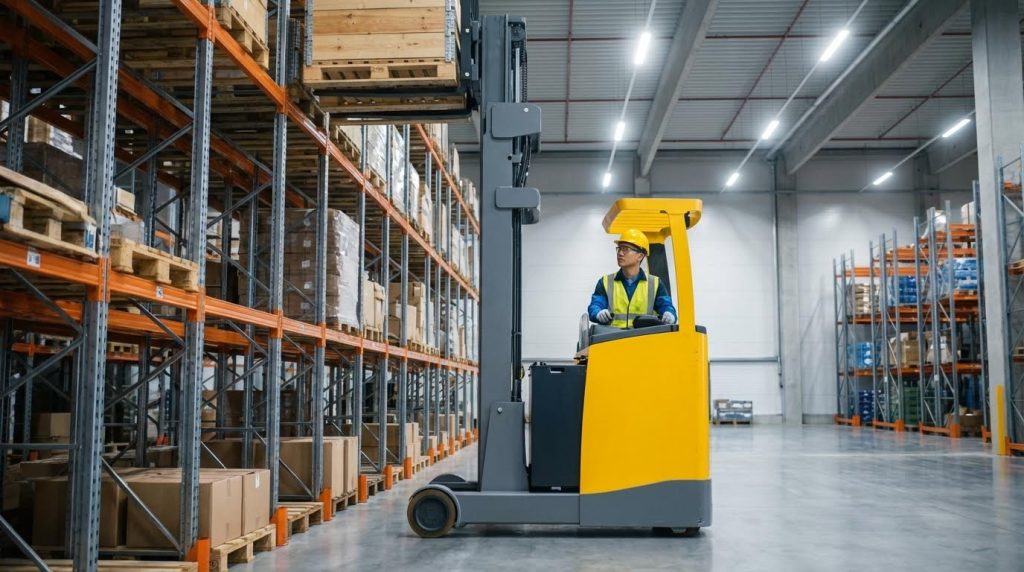
This section explains how to drive an electric forklift step by step: daily checks, smooth maneuvering, safe speeds, and correct load handling so operators avoid tip-overs, damage, and downtime.
- Goal: Give new and experienced operators a clear, repeatable routine – this is the practical core of how to drive an electric forklift safely every shift.
- Focus: Inspections, driving technique, and load handling – the three levers that prevent 90% of avoidable incidents.
💡 Field Engineer’s Note: Treat this whole section as a checklist you can walk through on the truck. If you cannot practically do it in your aisle, dock, or ramp, your procedure is wrong or your truck is the wrong spec.
Daily pre-operation inspections and checklists
Daily pre-operation inspections make sure the electric forklift is mechanically safe and legally compliant before you move a single pallet.
For electric trucks, this is where most problems are caught early: batteries, hydraulics, tires, and safety devices. A consistent 3–5 minute walk‑around and functional test is far cheaper than a mast failure, fire, or battery incident.
| Inspection Area | What To Check | Typical Standard / Guidance | Operational Impact |
|---|---|---|---|
| Daily examination | Overall truck condition before use each day or shift | Powered industrial trucks must be examined at least daily and after each shift if used continuously (29 CFR 1910.178) | Prevents unsafe trucks entering service and reduces unexpected breakdowns mid‑shift. |
| Battery & cables (electric) | Charge level, damage, loose or corroded connections, cable insulation, electrolyte level | Recharge when charge drops below about 20% to avoid damage and performance loss (battery guidance) | Ensures full-shift runtime and avoids voltage sag that weakens lift and travel. |
| Fluid levels | Hydraulic oil, coolant (if applicable), washer water | Check before starting every shift; low hydraulic fluid is a removal-from-service condition (OSHA pre-op) | Prevents weak lifting, mast chatter, and pump damage. |
| Hydraulic system & mast | Leaks, damaged hoses, chain condition and tension, mast structure | Inspect visually; do not place hands in mast while checking chains (OSHA guidance) | Avoids sudden mast failure and uncontrolled load drop. |
| Tires & chassis | Tread, cuts, bulges, air leaks, loose wheel bolts, debris around chassis | Check for cuts, gouges, bulges, and damage each shift (OSHA pre-op) | Maintains stability, proper ground clearance, and predictable steering. |
| Forks & attachments | Cracks, bent forks, top clip pin, fork heel wear, backrest, finger guards | Inspect condition and securement before use (OSHA pre-op) | Prevents fork failure under rated load and load slip-through. |
| Safety devices | Seat belt, horn, lights, backup alarm, mirrors, warning beacons | All safety devices must function correctly; safety decals and nameplates must be legible and match truck configuration (OSHA) | Improves visibility and communication to pedestrians and other trucks. |
| Controls & instruments | Steering, service brake, parking brake, travel direction, lift/tilt, gauges, hour meter | Test with truck running; report any abnormal noise or vibration immediately (OSHA operational check) | Confirms the truck responds predictably before entering traffic areas. |
| Removal from service | Any critical defect, leaks, overheating, unsafe condition | Unsafe trucks must be removed from service until repaired by authorized personnel (OSHA) | Prevents operators being pressured to “just use it” when the truck is dangerous. |
Practical 2–3 minute pre-op sequence
- Step 1: Walk once around the truck – look under for leaks, around for damage or debris.
- Step 2: Check battery level and cables – confirm charge above about 20% and no exposed wires.
- Step 3: Inspect tires and forks – no cuts, bulges, bent forks, missing pins, or cracked welds.
- Step 4: Sit in seat, adjust position, fasten belt – ensures ergonomic posture and restraint.
- Step 5: Power on, listen 1–2 minutes at idle – watch for alarms and abnormal sounds.
- Step 6: Test steering, brakes, lift, tilt, horn, and lights in a clear area – confirms control before entering aisles.
💡 Field Engineer’s Note: If your operators “don’t have time” for inspections, you have a staffing or scheduling problem, not a time problem. Build pre-op into paid time and audit checklists randomly.
Starting, maneuvering, and speed control
Safe starting, maneuvering, and speed control keep the electric forklift stable and predictable in tight warehouse spaces.
Once the truck passes inspection, how you move it matters more than how powerful it is. Smooth inputs, low speeds, and disciplined visibility are the core of how to drive an electric forklift without incidents.
- Mounting and starting: Enter using three points of contact, adjust seat and steering, fasten seat belt, and ensure controls are neutral before powering on – prevents unintended movement.
- Initial check: After start, let the truck sit 1–2 minutes and gently test travel and lift – verifies no fault alarms and smooth control response (start-up guidance).
- Travel position: Keep forks low (about 100–200 mm above floor) and slightly tilted back – improves stability and avoids snagging floor joints.
- Speed indoors: Limit speed to about 3–5 km/h inside buildings and crowded areas (speed guidance) – roughly a fast walking pace.
- Speed outdoors: On open, flat outdoor surfaces, keep speed ≤ 10 km/h (speed guidance) – enough to be productive but controllable.
- High-risk zones: At corners, doorways, intersections, docks, and ramps, slow to about 3 km/h and sound the horn (common mistakes) – pedestrians often appear suddenly.
- Turning: Turn with the load low and speed reduced before entering the turn – prevents lateral tip-over from centrifugal force.
- Visibility: Travel in reverse if the load blocks forward view, using mirrors and horn – maintains a clear line of sight.
- Parking: When leaving the truck, fully lower forks, neutralize controls, set parking brake, and shut off power – meets OSHA “unattended truck” requirements (warehouse guide).
Step-by-step: maneuvering in a 2.5–3.0 m aisle
- Step 1: Approach the aisle at ≤ 3–5 km/h – gives time to correct steering before racks.
- Step 2: Center the truck in the aisle before turning the rear end – avoids striking uprights with the counterweight.
- Step 3: Keep forks 100–150 mm above floor and tilted slightly back – prevents pallet tips and fork gouging.
- Step 4: Use small, smooth steering inputs – abrupt steering can destabilize a raised or heavy load.
- Step 5: Stop fully before reversing direction – protects drive motors and prevents “whip” of the load.
💡 Field Engineer’s Note: If you need to “correct with throttle” to make a turn, you are going too fast. Train operators to set speed before the turn, not during it—this alone slashes racking impacts.
Load lifting, travel height, stacking, and ramps

Correct lifting, travel height, stacking, and ramp technique keep the center of gravity inside the stability triangle so the electric forklift does not tip.
This is the part of how to drive an electric forklift that most directly affects tip-over risk. The truck may feel powerful, but it is easy to overload or destabilize it with poor fork position, excessive height, or wrong ramp orientation.
- Respect the capacity plate: Never exceed the rated capacity or allowed load center on the truck’s nameplate – capacity drops as the load center increases (load-moment example).
- Fork spacing and entry: Adjust fork spacing to support the load evenly and fully insert forks under the pallet – prevents broken boards and falling loads.
- Initial lift: Raise the load only 100–150 mm (about 10–15 cm) off the ground before moving (load handling) – keeps the center of gravity low.
- Travel height: Do not travel with the load higher than about 400–500 mm (≤ 0.5 m) above the floor (load handling) – higher loads dramatically reduce stability.
- Stacking alignment: Align forks level with the shelf or stack, then raise the load 50–100 mm (5–10 cm) above the target height before moving forward (stacking) – avoids impacts with beams.
- Placing the load: Move forward slowly, then lower the pallet gently onto the shelf and back out with forks level – prevents dragging or pushing racks.
- After unloading: Fully lower empty forks before travelling away from the rack Operator Training, Compliance, And Emerging Technologies
Operator training, documentation, and new technologies turn “how to drive an electric forklift” into a controlled, auditable, and increasingly automated safety system. This section links OSHA rules with modern battery and telemetry tools.
OSHA-compliant training, evaluation, and recertification
OSHA-compliant training defines who may drive an electric forklift, what they must learn, and how often employers must re‑evaluate them. It is the legal backbone behind every “how to drive an electric forklift” program.
- Minimum age: Operators must be at least 18 years old – Prevents inexperienced minors from operating powered industrial trucks in general industry. Age requirement details
- Training content: General safety, truck-specific controls, workplace hazards, and OSHA rules are mandatory – Covers both the machine and the environment where it runs. OSHA training topics
- Training format: Formal instruction plus hands‑on practice and evaluation – Operators must show they can actually drive, not just pass a quiz. Formal and practical training
- Evaluation interval: Performance evaluations at least every three years – Prevents “lifetime licenses” and catches bad habits before they cause accidents. Three‑year evaluation rule
- Refresher triggers: Required after unsafe operation, incidents, or major workplace changes – Aligns training with real events, not just calendar dates. Refresher training conditions
- Typical cost and time: About $50–$100 for 4–8 h online; $150–$300 for 1–3 day in‑person courses – Helps budget realistic training programs. Cost and duration ranges
Training Aspect Typical Range / Requirement Operational Impact Minimum operator age ≥ 18 years (general industry) Limits drivers to adults with adequate physical and cognitive maturity. Initial training time 4–8 h online; 1–3 days in‑person Plan 1–3 days off the floor per new operator for full theory + practice. Certification validity 3 years Schedule re‑evaluation cycles into HR and safety calendars. Refresher training After incidents, unsafe use, or workplace changes Resets bad habits and updates skills for new layouts or trucks. Typical direct cost $50–$300 per operator Low compared with injury, equipment, or legal costs from incidents. 💡 Field Engineer’s Note: When I audit sites after collisions, the root cause is often “trained once, years ago.” Treat the three‑year OSHA interval as a maximum; annual short refreshers keep operators sharp on new layouts, batteries, and attachments.
How this ties back to “how to drive an electric forklift”
OSHA training defines the minimum safe method for steering, braking, speed limits, load height, and ramp travel. Every site‑specific “how to drive an electric forklift” SOP should map directly to these required topics.
Documentation, legal risk, and TCO considerations
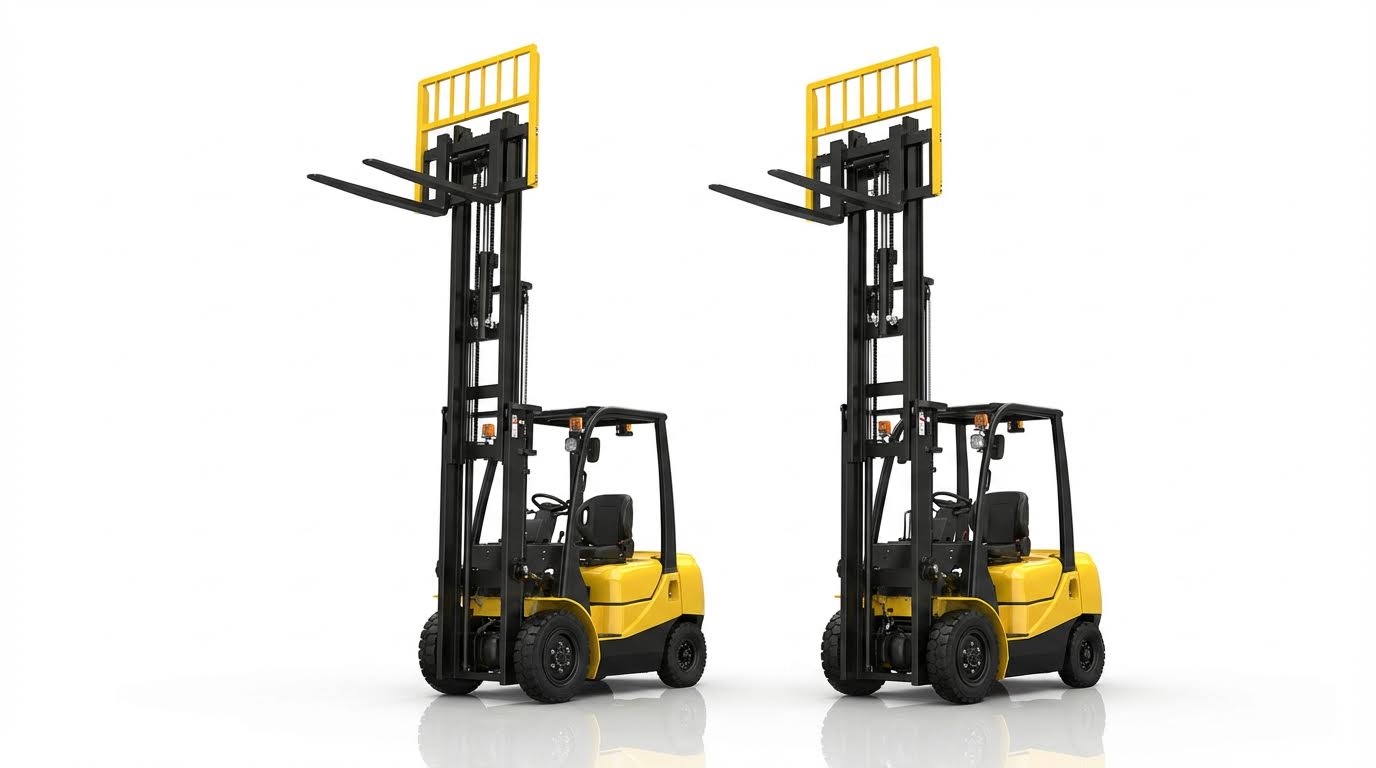
Good documentation and risk control reduce legal exposure and total cost of ownership (TCO) while proving that your “how to drive an electric forklift” rules are actually followed.
- Certification records: Keep operator name, training date, evaluation date, and trainer identity – Creates a traceable proof of competence. Required certification fields
- Daily truck exams: Document pre‑shift inspections at least once per day, or per shift if used continuously – Supports OSHA 29 CFR 1910.178 and catches defects early. Daily inspection rule
- Maintenance and battery logs: Track services, battery cycles, and fluid checks – Feeds into predictive maintenance and warranty support. Record‑keeping benefits
- Incident and near‑miss reports: Log collisions, tip risks, and damage – Supports retraining decisions and hazard corrections. Emergency and incident guidance
- Legal exposure: Poor or missing training records have led to lawsuits after injuries – Courts look for proof that employers trained and evaluated operators. Legal liability example
Documentation Type Key Data to Capture Best For… Operator certification file Name, dates, trainer, truck types Proving the operator was trained for that specific electric forklift. Daily inspection checklist Brakes, steering, forks, battery, safety devices Removing unsafe trucks from service before a shift starts. Maintenance history Service dates, parts replaced, technician Planning component replacements and negotiating service contracts. Battery log Charge cycles, water top‑ups, faults Optimizing charging strategy and extending battery life. Incident register Time, operator, truck ID, description, root cause Targeting retraining and layout changes where incidents cluster. 💡 Field Engineer’s Note: When a serious incident occurs, investigators ask for three things first: training records, inspection sheets, and maintenance logs. If any of those are missing or inconsistent, the assumption quickly shifts toward employer negligence.
How documentation affects total cost of ownership (TCO)
Consistent records reduce unplanned downtime, extend battery and component life, and support data‑driven fleet sizing. Over 5–10 years, this often saves more money than the initial purchase price difference between forklift models.
Li-ion batteries, telemetry, and predictive maintenance
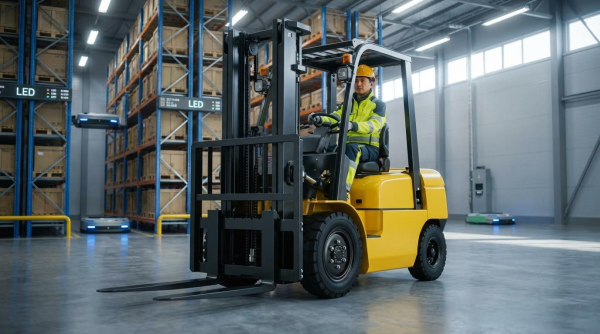
Modern Li‑ion batteries, telemetry, and predictive maintenance tools change how to drive an electric forklift from “follow a checklist” into “follow the data” for speed, charging, and component health.
- Battery monitoring: Onboard indicators show state of charge and faults – Operators know when to recharge before dropping below about 20% and damaging batteries. Battery system guidance
- Charging area controls: Designated, ventilated charging zones with spill control and no ignition sources – Protects against hydrogen buildup and electrolyte hazards. Charging area requirements
- Telematics / telemetry: Systems track travel speed, impact events, and utilization – Identifies aggressive driving and under‑ or over‑used trucks. Technology feature overview
- Safety alerts: Over‑speed and tilt alarms warn operators in real time – Reduces tip‑over and collision risks during tight maneuvering. Safety alert functions
- Predictive maintenance: Trend data on hours, faults, and battery cycles – Allows maintenance before failures instead of after breakdowns. Predictive planning support
Technology Feature What It Monitors Operational Impact Battery indicator State of charge, warnings Prompts timely charging; avoids deep discharge that shortens battery life. Speed monitoring Average and peak speeds Checks compliance with 3–5 km/h indoor and 10 km/h outdoor limits. Impact sensor Shocks above a set threshold Flags collisions for investigation and possible retraining. Usage hours Drive and lift time per truck Balances workload across the fleet and schedules service by hours. Fault code logging Repeated alarms or derates Feeds predictive maintenance and reduces sudden breakdowns. 💡 Field Engineer’s Note: When you add telemetry, make sure supervisors actually review the dashboards weekly. The hardware alone does nothing; the real savings come when you adjust routes, speed limits, or charging rules based on what the data shows.
Integrating tech into your “how to drive an electric forklift” SOP
Update your driving rules to include: obeying on‑screen speed or tilt alerts, respecting low‑charge lockouts, logging impacts reported by telematics, and following defined Li‑ion or lead‑acid charging procedures tied to your battery and ventilation setup.
“”
Final Thoughts On Building A Safe Forklift Program
A safe electric forklift program does not rely on operator “feel.” It relies on clear limits, repeatable routines, and hard data. Geometry, speed, and maintenance all connect: if you keep the load low, within the stability triangle, and inside the capacity plate, the truck stays upright even in tight aisles.
Daily inspections catch weak brakes, damaged forks, and battery faults before a shift starts. Correct starting, low travel speeds, and disciplined ramp technique then keep those components within their design loads. OSHA-compliant training turns these rules into learned habits, while documentation proves that Atomoving and site leaders manage risk, not luck.
Telemetry and Li-ion monitoring close the loop. They show where operators drive too fast, over‑discharge batteries, or strike racks. Maintenance teams can then fix the root causes, not just the damage.
The best practice is simple: write site-specific SOPs that match this guide, train and test every operator against them, log every check and incident, and use data to keep improving. Treat the capacity plate as law, the pre‑op as mandatory, and the battery as a critical system. Do that, and your electric forklift fleet will run safer, longer, and at lower total cost.
Frequently Asked Questions
How to Drive an Electric Forklift Safely?
Driving an electric forklift requires proper training and adherence to safety protocols. Here are the key steps:
- Always travel in a rearward direction, whether the forklift is loaded or empty.
- Lower the forks and position them under the load, then lift the load slowly off the ground.
- Maintain a steady speed and stay aware of other personnel in the area.
- Avoid sudden stops or sharp turns to ensure stability.
For more detailed guidance, refer to certified training programs like Pallet Jack Certification.
Do You Need Training to Operate an Electric Forklift?
Yes, operating an electric forklift requires proper training and certification. To become certified, you must complete formal instruction, practical training, and a performance evaluation. Online courses are available that allow you to complete the formal instruction portion at your own pace. For more information, visit OSHA Certification Guide.