Knowing how high can empty pallets be stacked manually is not just a space question; it is a safety, fire protection, and ergonomics problem. This guide links OSHA’s “stable and secure” requirement with NFPA height limits, sprinkler clearance, and real‑world engineering factors for pallet stacks. You will see typical safe height ranges for different pallet types, how tilt, center of gravity, and fire codes cap your stack, and what that means for manual handling. Use it as a practical reference to set site rules, train staff, and audit existing pallet storage.
Understanding Manual Stacking Limits For Empty Pallets
What OSHA And NFPA Actually Say About Stack Height
When people ask “how high can empty pallets be stacked manually,” they really need to separate what the law says from what is just good practice. OSHA focused on stability and fire protection, while NFPA guidance and industry practice add height numbers that safety professionals use as design limits.
- OSHA requires stacked materials to be stable and secure so they do not slide or collapse. Cargo, pallets, and other materials stored in tiers must be stacked to ensure stability against sliding and collapse.
- For general industry, 29 CFR 1910.176(b) requires that stored materials be “stable and secure”; it does not give a fixed pallet count or stack height.
- NFPA guidance used by many safety professionals recommends that idle pallet stacks not exceed about 15 ft in height in sprinklered buildings. NFPA guidance referenced in OSHA discussions cites a 15‑ft limit for idle pallet stacks.
- OSHA’s fire protection rules also require at least 18 in of vertical clearance below sprinklers, which applies to empty pallet stacks as well. 29 CFR 1910.159(c)(10) requires an 18‑in clearance below sprinklers.
How these rules apply to manual pallet stacking
For manually built stacks, OSHA cares that workers build stacks that are plumb, stable, and do not create a collapse or fire hazard. That means: keep stacks within the 15‑ft NFPA idle pallet guidance in sprinklered buildings, maintain the 18‑in sprinkler clearance, and immediately correct any leaning stack before it reaches full height. If you cannot maintain stability at a lower height due to pallet condition or floor slope, the safe limit is lower than 15 ft.
In short, OSHA does not give a single numeric answer to “how high can empty pallets be stacked manually,” but NFPA‑based practice and sprinkler clearance rules effectively cap indoor idle pallet stacks in most facilities.
Typical Safe Height Ranges By Pallet Type And Use
Because regulations focus on stability rather than a fixed number, facilities use engineering judgement and industry norms to decide how high to stack empty pallets by type and use. The table below summarizes typical safe ranges drawn from published guidance and common practice.
| Pallet type / situation | Typical manual stack height range | Key drivers / notes |
|---|---|---|
| Standard wooden warehouse pallets (indoor, sprinklered) | 8–15 ft (≈ 10–20 pallets, depending on thickness) | Driven by NFPA idle pallet guidance around 15 ft and OSHA stability requirement. NFPA‑referenced practice limits idle pallet stacks to about 15 ft. |
| EPAL / European style wooden pallets (idle stacks) | Up to ≈ 2.2 m (≈ 7.2 ft) where specifically recommended | One source recommended not exceeding 220 cm for stability in some European pallet applications. Guidance for EPAL pallets suggested a 220‑cm maximum stack height. |
| Small 600 × 800 mm handling pallets | Around 2.0 m total handling unit height (up to 4 layers in some systems) | One engineering guideline cited a standard handling height of 2,000 mm for these pallets, up to four layers, with minimum 200‑mm clearance to the ceiling structure. Guidance specified 2,000‑mm stacking height and 200‑mm ceiling clearance for 600 × 800‑mm pallets. |
| Standard 800 × 1200 mm pallets (in some racked/handled systems) | Engineered systems may allow up to ≈ 5.5 m handling height (not for casual manual stacking) | One source mentioned a 5,500‑mm standard handling height, up to four layers, with at least 200‑mm clearance to the ceiling. This assumes engineered handling equipment and is not a starting point for free‑standing manual floor stacks. The 5,500‑mm value was given for 800 × 1200‑mm pallets with defined handling conditions. |
| Outdoor idle stacks of empty pallets | Often limited to 10–15 ft by company policy | Risk drivers are wind load and collapse hazard onto people or vehicles. Many facilities match the indoor NFPA‑style 15‑ft limit even outdoors, then reduce further if wind exposure is high. |
| Manually stacked pallets in tight production areas (high people exposure) | Frequently limited to 5–8 ft | Lower limits reduce ergonomic strain and injury risk if a pallet falls. Where walkways are adjacent, safety managers often cap stacks at or below average head height. |
Some industry guidance written in plain language also echoed the 15‑ft concept specifically for empty pallets, stating that, according to industrial safety norms, empty pallets should not be stacked higher than about 15 ft to avoid tipping or collapse. A Dutch‑language safety article recommended not stacking empty pallets above roughly 15 ft.
- For most general‑industry warehouses, a conservative answer to “how high can empty pallets be stacked manually” is: keep free‑standing indoor stacks below about 15 ft, or lower if you cannot maintain perfect vertical alignment and 18‑in sprinkler clearance.
- Where pallet specifications or local guidelines recommend a lower limit (for example, around 2.0–2.2 m for some European pallet formats), follow the lower value.
- Always reduce the allowed height if pallets are damaged, mixed sizes are used, or floor conditions make the stack harder to keep plumb.
Engineering And Safety Factors That Define Max Stack Height
Stack stability, tilt limits, and center of gravity
Stack stability is the first hard limit when you decide how high can empty pallets be stacked manually. If the stack can slide, rack, or overturn, you are already beyond a safe engineering height, regardless of what any rule of thumb says.
- Stacks must be built so they will not slide or collapse under normal handling and vibration. OSHA requires tiered materials to be stable against sliding and collapse.
- Uniform pallet size and even weight distribution are key stability conditions. Stable stacks show no visible tilt and use uniform pallets with balanced loading.
- Heavier pallets or loads must go at the bottom of the stack to keep the center of gravity low. Guidance stresses heavier units at the bottom and even stacking.
- Leaning stacks are a red flag and must be corrected or broken down before more pallets are added. Leaning pallet stacks should be corrected immediately to avoid collapse.
Engineering guidance also uses a quantitative tilt limit. This gives a practical way to judge when a stack is too tall for its footprint and support conditions.
| Factor | Typical engineering guidance | What it means in practice |
|---|---|---|
| Maximum allowable tilt | ≈ 2% of stack height Standards specify a maximum tilt of 2% of height | Side offset at top should be ≤ 0.02 × stack height |
| Visual tilt check | No visible leaning or bowing of the stack face Stable pallet stacks show no visible tilt | If you can see lean by eye, you are beyond the safe range |
| Center of gravity (CG) | CG should project inside the footprint under all expected pushes and bumps | Keep heavier units low; avoid overhang that shifts CG outward |
| Use of support | Ropes, supports, or mutual leaning are not required but allowed Additional supports can be used but should not be necessary | If you “need” supports to keep it upright, the stack is too high or poorly built |
From a center-of-gravity standpoint, every extra pallet increases the overturning moment if the stack is pushed or struck. Empty pallets are light per piece, but a tall column of them can still generate high forces at the base during impact or when someone tries to straighten a leaning stack. This is why engineering practice limits height based on footprint, tilt, and handling method instead of only pallet weight.
Simple field check for stack tilt
Measure the horizontal offset of the top pallet relative to the bottom. If the stack is 2.5 m high and the top has moved more than about 50 mm from plumb (2% of 2.5 m), the stack should be reduced in height and rebuilt to restore vertical alignment before use.
Fire protection, sprinkler clearance, and NFPA guidance
Even if a pallet stack is mechanically stable, fire protection rules can force a lower maximum height. This is often the controlling factor when you decide how high can empty pallets be stacked manually in a sprinklered building.
- NFPA guidance for idle pallet storage recommends a maximum stack height of about 15 ft for many occupancies. Industry summaries note NFPA guidance that idle pallet stacks should not exceed 15 ft.
- Some industry safety guidance echoed this and recommended not stacking empty pallets higher than 15 ft to avoid toppling and fire spread. Industrial norms advise a 15 ft maximum for empty pallet stacks.
- OSHA requires at least 18 in (≈ 460 mm) of vertical clearance below sprinklers for all materials, including empty pallets. 29 CFR 1910.159(c)(10) sets an 18 in clearance below sprinklers.
- Guidance for stacked handling units also calls for at least 200 mm clearance below the ceiling or structure. Standard stacking rules specify at least 200 mm between the top of the stack and the ceiling.
| Fire protection factor | Typical requirement / guidance | Impact on max manual stack height |
|---|---|---|
| NFPA idle pallet stack height | ≈ 15 ft maximum recommended for many pallet types NFPA-based guidance limits idle pallet stacks to 15 ft | Manual stacks in warehouses usually must stay at or below this, even if stable |
| Sprinkler clearance | ≥ 18 in below sprinkler deflectors OSHA 29 CFR 1910.159(c)(10) | Measure from the highest pallet surface to the sprinkler; reduce stack if clearance is less |
| Ceiling / structure clearance | ≥ 200 mm from top of stack to ceiling or structure Stacking standards call for at least 200 mm of clearance | In low-roof areas, this can limit stacks to well under 15 ft |
| Common violations | Stacking too high, ignoring pallet overhang, or measuring clearance from the wrong point Warehouses often mis-measured sprinkler clearance | Always measure vertically from the highest stored point to the sprinkler deflector |
Because empty pallets are often stored in large blocks, they present a high fuel load and allow rapid vertical fire growth. That is why fire codes and insurer rules tend to be conservative on height, sometimes stricter than what pure structural stability would allow. In many facilities, the safe engineering answer to how high can empty pallets be stacked manually is “whichever is lower: the 15 ft idle pallet limit or the height that still leaves 18 in of sprinkler clearance.”
Simple fire-clearance check before stacking
Look up the height of the sprinkler deflector or ceiling, subtract 18 in (or 200 mm where that rule applies), and treat that as the absolute top of your pallet stack. If your standard pallet count would exceed this, reduce the number of pallets per stack until the clearance is restored.
Ergonomics, manual handling, and injury risk thresholds
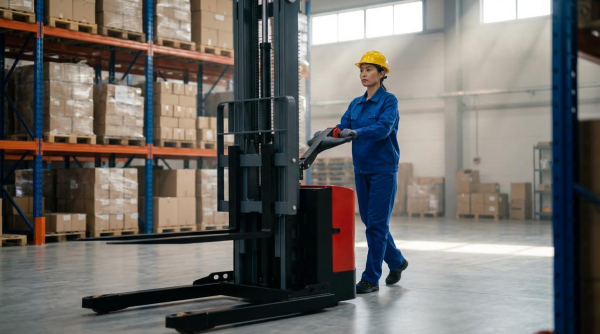
Ergonomics puts a much lower practical cap on how high can empty pallets be stacked manually than structural or fire limits. The goal is to keep lifting, pushing, and pulling forces within safe limits for the average worker, shift after shift.
- Manual pallet handling exposes workers to back, shoulder, and hand injuries if lifts are too high, too low, or too heavy.
- Safe technique calls for feet at shoulder width, bending at hips and knees, and keeping the pallet close to the body. Ergonomic guidance stresses proper stance and lifting posture.
- Two-person lifts are recommended once pallet weight or reach height exceeds what a single worker can safely control. Guidance suggests team lifting for heavier pallets.
- Gloves and safety shoes are essential to prevent cuts, splinters, and crush injuries during manual stacking. PPE such as gloves and safety footwear is critical for manual pallet handling.
| Ergonomic factor | Good practice for manual pallet stacking | Effect on maximum stack height |
|---|---|---|
| Hand height during lift | Keep lifts between mid-thigh and about shoulder height | Once the top pallet is near shoulder height of the shortest worker, stop adding pallets |
| Reach distance | Keep the pallet close to the torso; avoid extended reaches | Very tall stacks force overhead or extended reaches, increasing injury risk |
| Need for two-person lifts | Use two people for heavier pallets or awkward positions Two-person lifts reduce strain for heavy pallets | If pallets require two-person lifts at the top of the stack, consider limiting height or using equipment |
| Housekeeping | Keep areas swept and free of debris and loose nails OSHA-related guidance stresses good housekeeping to prevent trips and punctures | Trip hazards around tall stacks increase the chance of falls while carrying pallets |
Because most adults cannot safely lift and place pallets much above shoulder height without stepping or climbing, ergonomic limits usually keep manual stacking well below the 15 ft fire-protection ceiling. In practice, many facilities cap purely manual stacking at a few pallet layers, then use mechanical handling for higher tiers. That balance between human capability and engineering safety is central to any site-specific rule on how high can empty pallets be stacked manually.
Ergonomic checklist before increasing stack height
Before adding more layers, verify that workers can place the next pallet without going above shoulder height, without twisting while holding the pallet, and without stepping onto unstable objects. If any of these conditions fail, reduce the target height or switch to mechanical assistance.
Safe Procedures For Manually Stacking And Storing Pallets
Safe procedures answer the real question behind how high can empty pallets be stacked manually: they are only “high enough” when inspection, segregation, housekeeping, and layout controls make the stack stable and accessible. The following practices turn height limits into a repeatable, low‑risk system for everyday pallet handling.
Inspection, segregation, and housekeeping controls
Before you worry about how high can empty pallets be stacked manually, you must control what goes into each stack and the ground conditions around it. Poor inspection and housekeeping are the root cause of most pallet stack collapses and manual handling injuries.
Use this basic inspection and segregation checklist every time pallets are handled or stacked.
- Inspect each pallet for broken boards, loose blocks, protruding nails, cracks, or moisture before stacking to ensure they are clean, dry, and free from damage.
- Immediately remove damaged units from circulation and place them in a clearly marked “repair/scrap” area, away from usable stacks to avoid instability and injury risk.
- Stack only uniform pallet sizes and types together to keep weight paths and contact areas consistent from top to bottom as part of a stable stack.
- Reject pallets that show signs of overloading such as heavy creaking or visible bending of top boards because they may fail in a tall stack.
- Keep pallets stored off the ground on dunnage, racks, or a hard, flat surface to avoid moisture uptake and rot and to extend pallet life.
- Maintain good housekeeping: sweep chips, wrap, broken boards, and nails from pallet areas regularly to eliminate trip and puncture hazards as required by OSHA housekeeping expectations.
- Correct any leaning or visibly tilted pallet stack immediately; do not add more pallets on top of a stack that is already out of plumb to prevent potential collapse.
- Apply basic tilt criteria: if the top of the stack has moved more than about 2% of the stack height from centerline, stop and rework the stack in line with maximum allowable tilt guidance.
- Use simple visual tags or paint markings to distinguish good pallets, repairable pallets, and scrap so damaged units never “creep” back into tall stacks.
- Train workers on PPE and manual handling: gloves and safety shoes for splinters and impact, plus ergonomic lifting techniques and two‑person lifts for heavier units to reduce injury risk.
Why inspection and housekeeping change “safe height” in practice
A tall stack made from dry, uniform, undamaged pallets on a clean, flat floor behaves very differently from the same-height stack built on debris with mixed, cracked pallets. In real facilities, the answer to how high can empty pallets be stacked manually is often limited by inspection quality and housekeeping, not just by a theoretical height number.
Layout, spacing, and aisle design for pallet stacks
Even if each stack is stable, poor layout can turn a safe height into an unacceptable fire, access, or egress risk. Layout rules define where and how you place stacks so workers can move safely and fire protection systems can perform as designed.
Use the following layout and spacing controls when planning manual pallet stacking zones.
- Respect general OSHA material‑storage principles: cargo and pallets stored in tiers must be stacked to prevent sliding and collapse by maintaining stability of the pile.
- Plan clear aisles around pallet stacks so that workers and equipment can approach from at least one long side without stepping over debris or other materials as part of safe access.
- Maintain adequate space between pallet stacks for handling equipment and airflow; spacing reduces moisture problems and gives room to correct a leaning stack safely and improves maneuverability.
- Keep idle pallet stacks below typical recommended limits of about 15 ft where fire and industry guidance allow, and always maintain at least 18 in vertical clearance below sprinklers for any material to protect sprinkler effectiveness.
- Ensure that mutual leaning between stacks is not required for stability; each stack must stand on its own, even if light supports or ropes are used as an added safeguard in line with stacking safety rules.
- Respect predetermined aisle widths for pallet handling equipment so operators do not “clip” stacks and start progressive leaning or collapse when maneuvering.
- Lay out pallet storage so stacks are not built directly under low beams, lighting, or other obstructions; maintain at least 200 mm between the top of any handling unit and the ceiling structure where applicable to avoid impact and heat collection points.
- Keep exits, emergency equipment, and electrical panels free of pallet stacks; design dedicated pallet zones so ad‑hoc stacking never blocks egress routes.
| Design element | Why it matters for manual stacking | Practical guideline |
|---|---|---|
| Stack footprint and base | Controls ground pressure and resistance to tipping | Use full pallet footprint on flat floor; avoid stacking on debris or uneven surfaces. |
| Distance between stacks | Provides room to rework stacks and access fallen pallets safely | Leave enough space for a person or pallet jack to pass without contact with stacks. |
| Aisle width | Prevents contact between equipment and stacks | Match to site’s handling equipment template; never narrow aisles with “temporary” stacks. |
| Vertical clearance | Protects sprinklers and overhead services | Maintain at least 18 in below sprinklers for any stack; more where local rules require. |
| Stack height vs. location | Limits risk where people work constantly nearby | Use lower stacks near high‑traffic walkways; keep taller stacks in controlled storage zones. |
When you combine good inspection, segregation, and housekeeping with disciplined layout and spacing, you narrow the gap between the theoretical answer to how high can empty pallets be stacked manually and what is actually safe in your specific building, with your people and your equipment.
Final Guidance On How High To Stack Empty Pallets Manually
Manual pallet stacking sits at the intersection of structural stability, fire protection, and human limits. OSHA’s “stable and secure” rule, NFPA’s idle pallet guidance, and sprinkler clearance requirements set a hard safety envelope. Stack geometry, tilt, and center of gravity then decide how much of that envelope you can safely use on your floor, with your pallets.
In practice, the safe answer is almost always lower than the absolute code ceiling. Real pallets get wet, damaged, and mixed. Floors are not perfectly level. Workers have different heights and strengths. These factors reduce the true safe height long before you hit 15 ft.
For operations and engineering teams, treat manual pallet stacking as an engineered system, not an informal habit. Set a conservative maximum height by pallet type and location, usually well below 15 ft for hand stacking. Check it against sprinkler and ceiling clearance. Then lock it in with written rules, training, and regular audits.
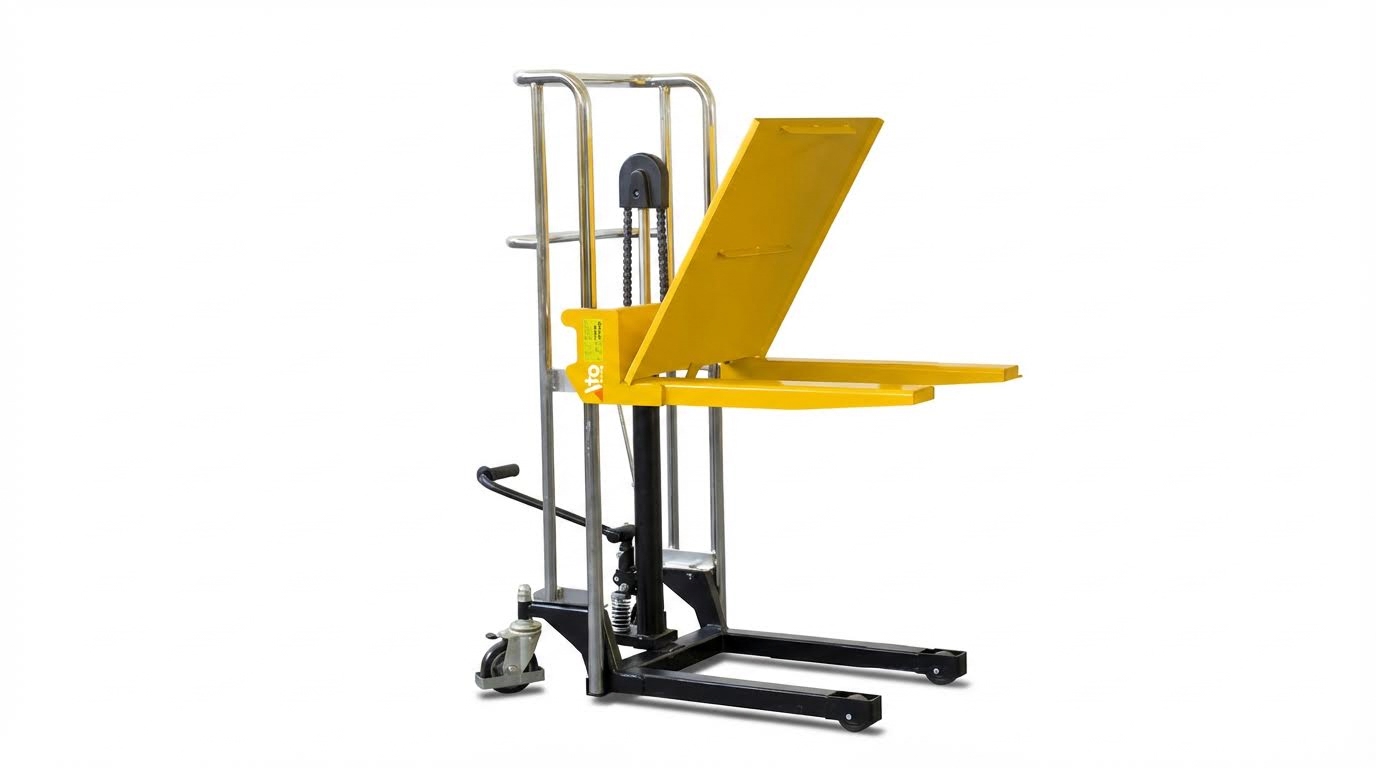
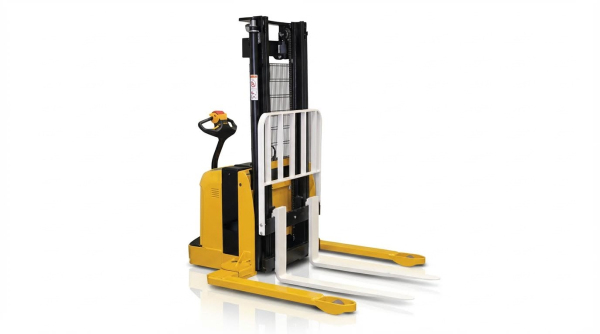
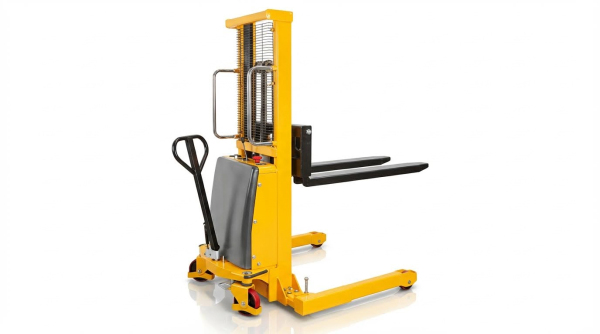
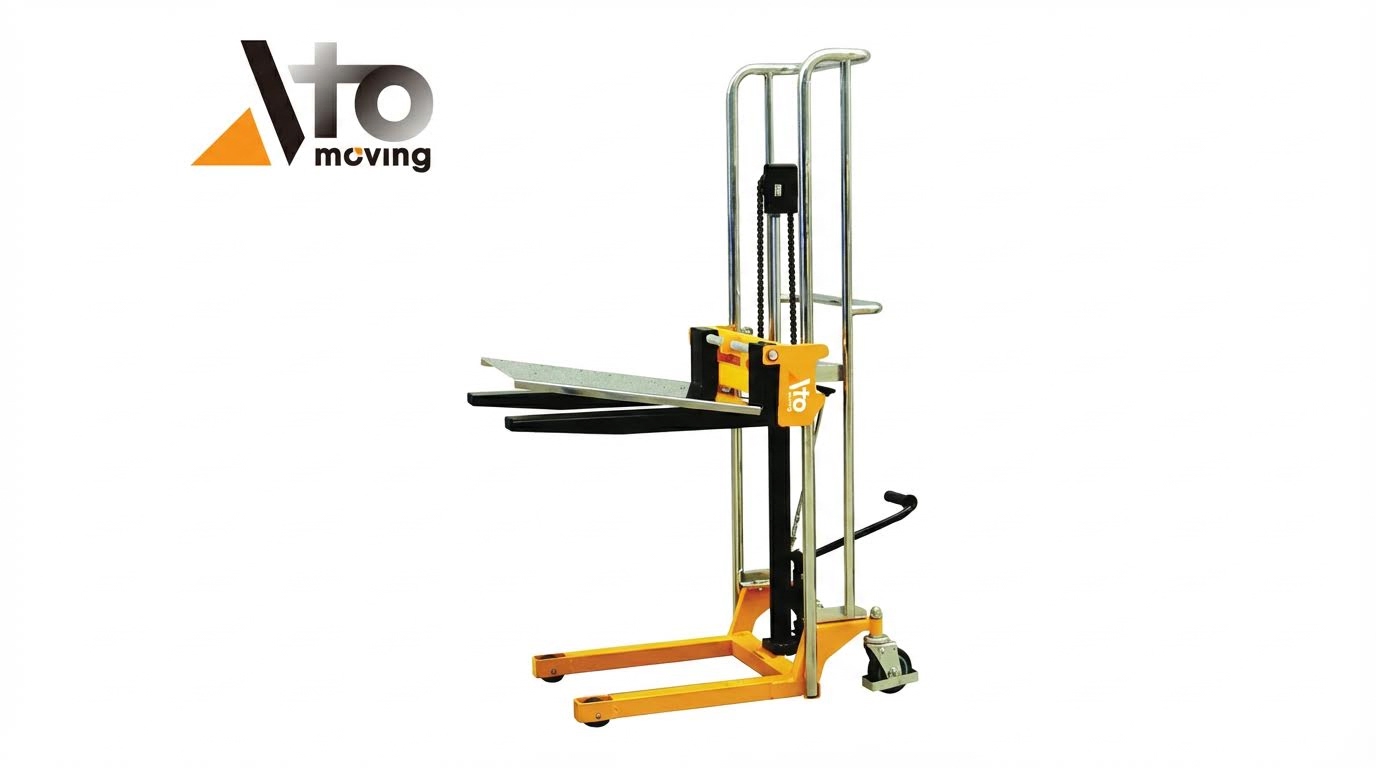
Use inspection, segregation, and housekeeping to keep only sound, uniform pallets in tall stacks. Use clear layout, marked aisles, and ergonomic limits to protect workers. Where you need higher stacks, move from pure manual handling to mechanical help such as Atomoving pallet stackers and pallet jacks. That combination delivers safe, repeatable pallet storage over the long term.
Frequently Asked Questions
How high can empty pallets be stacked manually?
The maximum recommended height for stacking empty pallets manually is typically around 15 feet (4.6 meters). This limit is based on safety guidelines to prevent accidents such as tipping or collapsing. Pallet Stacking Safety.
- Ensure the stacking surface is flat and stable.
- Only stack pallets of the same size together.
- Align pallets evenly to avoid leaning.
- Do not include damaged pallets in the stack.
What are the key safety practices for stacking empty pallets?
To safely stack empty pallets, always start with a flat surface and ensure that pallets are stacked evenly. Damaged pallets should be excluded, and a safe stack height must be maintained, typically not exceeding 15 feet (4.6 meters). Pallet Stacking Guide.
- Lay pallets flat rather than vertically.
- Secure stacks with straps or shrink wrap if necessary.
- Regularly inspect stacks for stability.