If you have ever asked yourself “what is a straddle stacker” and when it makes sense to use one instead of a counterbalanced stacker, this guide is for you. We will break down how straddle stackers are built, how the straddle legs actually carry and stabilize the load, and where they outperform other lift trucks in real warehouses. You will also see the key engineering specs that matter most—capacity, load center, mast type, batteries, and safety systems—so you can specify the right unit for your aisle widths, pallet types, and duty cycle. By the end, you will be able to match a straddle stacker configuration to your application with confidence, using data instead of guesswork.
When To Use Straddle Legs And How To Specify A Unit
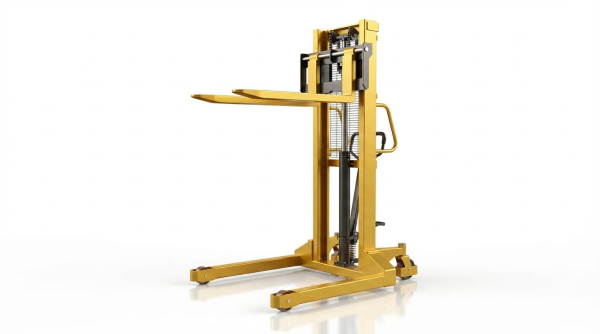
Applications, aisle widths, and pallet types
Before you decide what is a straddle stacker good for in your facility, match the straddle-leg geometry to your aisles, pallets, and load patterns. Straddle legs shine where you need stability in tight spaces and deal with mixed pallet styles or closed-bottom loads.
Typical use cases where straddle legs are a strong fit include:
- Narrow-aisle warehousing: Turning radii under about 6 ft allow work in aisles around 1.8–2.0 m wide, depending on load length and clearance Cited Text or Data.
- Retail backrooms and micro‑fulfilment: Frequent short moves, high selectivity, and limited floor space.
- Manufacturing lines: Feeding workstations, WIP storage, and line‑side rack access where counterbalance trucks are too bulky.
- Dock and staging areas: Moving pallets between receiving, inspection, and buffer storage without full-size forklifts.
- Space‑constrained cold rooms or mezzanines: Where floor loading and manoeuvring room are both tight.
Aisle width and pallet type drive whether straddle legs are practical:
| Design / Condition | Typical Range / Requirement | Why It Matters |
|---|---|---|
| Minimum working aisle (with straddle stacker) | ≈ 1.5–2.0 m for compact electric units Cited Text or Data | Defines achievable storage density vs. counterbalance trucks. |
| Typical turning radius | < 1.8 m (< 6 ft) Cited Text or Data | Determines how easily the truck can square up to racks. |
| Common straddle inner gaps | ≈ 1050 / 1150 / 1250 mm Cited Text or Data | Must clear pallet width and any load overhang. |
| Overall truck width (with legs) | ≈ 1250 / 1350 / 1450 mm Cited Text or Data | Feeds into minimum aisle and transfer‑aisle calculations. |
| Pallet type compatibility | Open or closed boards; perimeter‑base; CHEP‑style, etc. | Straddle legs support loads that normal pallet trucks cannot enter from below. |
Quick rules of thumb for applications
- If you regularly ask “what is a straddle stacker doing that a pallet truck can’t?” the answer is: higher lift, tighter aisles, and more pallet types.
- If aisles are wider than needed for counterbalance trucks and pallets are all standard open‑bottom, you may not need straddle legs.
- If you fight with mixed or closed‑base pallets, straddle legs usually pay back quickly in reduced handling workarounds.
Selection criteria and configuration trade‑offs
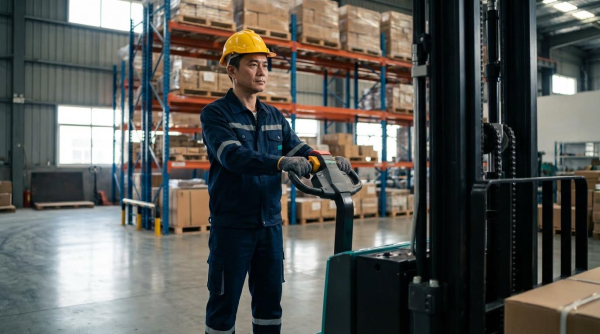
Once you know straddle legs fit your aisles and pallets, you still need to specify the right unit. Treat this as an engineering exercise: capacity, geometry, duty cycle, and safety features must all line up with your use case.
Key selection criteria for a straddle stacker (and how they trade off) include:
- Load capacity vs. truck size
- Typical straddle stacker capacities run from about 1000–2000 kg Cited Text or Data, with some designs up to roughly 1.5–3 t Cited Text or Data.
- Higher capacity usually means heavier chassis, larger legs, and slightly wider aisles.
- Specify capacity based on your heaviest pallet plus a margin, not on average load Cited Text or Data.
- Lift height vs. mast type and visibility
- Lift heights typically range from about 2.8 m up to 5.35 m Cited Text or Data.
- Duplex and triplex masts allow higher lift while keeping the collapsed height low for doorways and mezzanines Cited Text or Data.
- Taller masts reduce forward visibility; factor this into rack layout and traffic planning.
- Straddle leg width vs. pallet mix
- Choose leg inner gap to clear your widest pallet plus any typical overhang.
- Oversized gaps add stability but increase truck width and aisle requirement.
- If you handle both narrow and wide pallets, consider adjustable or multiple leg-width options.
- Power source and duty cycle
- Manual or semi‑electric: best for low‑throughput, short shifts, and occasional stacking semi electric order picker.
- Fully electric: preferred for frequent moves, higher lifts, or multi‑shift work; typical batteries span roughly 24 V / 60–240 Ah, with some designs up to 24 V / 500 Ah Cited Text or Data.
- Higher battery capacity increases run‑time but adds weight and cost; check your charging infrastructure Cited Text or Data.
- Speed and throughput requirements
- Travel speeds commonly run about 3.5–6.0 km/h Cited Text or Data; lifting speeds around 0.10–0.17 m/s with slightly slower lowering Cited Text or Data.
- Higher speeds increase productivity but demand stronger safety controls and better operator training.
- Safety, ergonomics, and “smart” features
- Look for overload protection, emergency stop, automatic braking, and cornering speed reduction Cited Text or Data.
- Advanced units add collision‑reversing bumpers, operator‑presence systems, and telematics for shock and battery monitoring Cited Text or Data Cited Text or Data.
- Ergonomic tillers, low‑effort controls, and good mast visibility cut fatigue and errors.
- Environment and special conditions
- For hazardous areas, specify explosion‑proof designs where required Cited Text or Data.
- For cold stores, confirm battery and hydraulic performance at low temperature.
- Check floor condition; straddle stackers spread load and typically cause less floor wear than larger forklifts Cited Text or Data.
| Decision Area | Lean Toward This Option If… | Watch Out For |
|---|---|---|
| Capacity | Choose next size up from current heaviest pallet. | Over‑spec adds cost and weight; under‑spec creates chronic overload risk. |
| Mast / Lift Height | Specify slightly above top rack beam height. | Check door lintels, sprinklers, and low beams vs. collapsed mast. |
| Straddle Width | Match to widest pallet + overhang. | Too wide forces wider aisles; too narrow hits pallets or racking legs. |
| Power & Battery | Size for longest shift without deep discharges. | Insufficient capacity leads to mid‑shift charging and lost throughput. |
| Safety / Smart Options | High‑traffic or mixed‑skill sites. | Skipping safety features to save cost usually backfires via incidents. |
Minimal data checklist before you specify a unit
- Heaviest pallet weight and typical weight range.
- Load dimensions (L × W × H) and overhang beyond pallet.
- Rack beam heights and lowest overhead obstructions.
- Narrowest aisle and transfer‑aisle widths in the building.
- Pallet types (open, closed, perimeter‑base, plastic, etc.).
- Daily lift cycles and hours of operation per shift.
- Any hazardous‑area, cold‑store, or cleanliness requirements.
Final Thoughts On Straddle Stacker Deployment
Straddle stackers deliver safe, dense storage when you treat their selection as an engineering problem, not a catalog choice. Leg geometry, aisle width, pallet style, and turning radius must work together. If any one of these is wrong, you get rack strikes, blocked aisles, or unstable lifts. Correct capacity and mast height then keep the truck inside its stability envelope at every rack level.
Power source and battery sizing decide whether the truck supports your shift pattern or becomes a bottleneck. Match battery amp‑hours to real duty cycle, not wishful thinking. Add safety and ergonomic features where traffic is heavy or operator skill is mixed. Those options reduce impacts, tip‑over risk, and fatigue, which protects people and product.
The best practice is simple. Measure your heaviest loads, pallet mix, aisle widths, and rack heights. Map these to leg width, capacity class, and mast type. Choose manual, semi‑electric, or fully electric based on daily cycles and terrain. Then add safety features to match site risk. If you follow this structured approach, an Atomoving straddle stacker will integrate cleanly into your layout, lift every planned load with margin, and run safely for years.
Frequently Asked Questions
What is a Straddle Stacker?
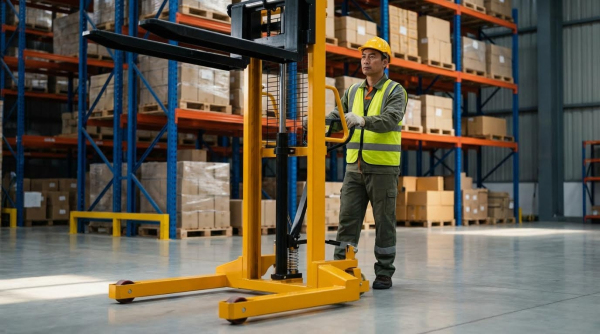
A straddle stacker is a specialized pallet-handling truck designed with two support legs that extend on either side of the pallet rather than directly beneath it. This design allows for easy maneuvering through tight and cramped floor spaces in warehouses or facilities Straddle Stacker Guide.
How Does a Straddle Stacker Differ from a Forklift?
A straddle stacker can be considered a type of forklift, but it is specifically designed for handling pallets in narrow aisles and confined spaces. Unlike traditional forklifts, the straddle stacker’s legs provide additional stability, making it ideal for precise stacking and retrieval tasks Warehouse Solutions.
What are the Load Capacities of a Straddle Stacker?
The load capacity of a straddle stacker depends on its type and model. Typically, manual stackers can lift up to around 500-700 kg, while powered stackers can handle up to 5000 kg or more. For example, a lithium-ion-powered straddle stacker can lift loads as high as 140 inches Raymond Basics.
Can a Straddle Stacker be Used on Inclines?
No, a straddle stacker should never be used on an incline due to stability and safety concerns. The equipment is designed for flat surfaces, and using it on slopes increases the risk of tipping over. Always follow manufacturer guidelines to ensure safe operation.