Handling a half‑ton load is routine in warehouses, but one mistake can bend steel, damage product, or injure people. This guide explains how to lift a 1,000‑pound pallet safely by matching the right equipment, clearances, and safety practices to the job. You will see how to convert that weight into engineering terms, compare pallet jacks, stackers, and forklifts, and set up your operating area correctly. If you are searching for how to lift 1000 pound pallet with minimum risk and maximum efficiency, the sections ahead give you a structured, data‑driven approach.
Defining Load, Environment, And Safety Limits
Converting 1,000 Pounds Into Engineering Terms
Before choosing equipment or planning how to lift 1000 pound pallet safely, convert that “1,000 lb” into engineering language. This means working in consistent units, adding safety factors, and checking how the load interacts with the floor and the equipment.
| Item | Typical Value / Range | Why It Matters For A 1,000 lb Pallet |
|---|---|---|
| Mass equivalent | ≈ 454 kg | Most industrial trucks and jacks are rated in kilograms, not pounds. |
| Static load on forks | 1,000 lb (454 kg) | Base weight the equipment must support at rest. |
| Recommended equipment capacity | At least 1,200–1,300 lb (≈ 540–590 kg) | Engineers recommend 20–30% capacity margin above maximum load for safe operation. |
| Typical manual pallet jack rating | 1,000–2,500 kg capacity range | Easily covers a 1,000 lb pallet, but you still apply a safety margin. |
| Typical electric pallet jack rating | Up to 3,500 kg for heavier loads | Suitable if you have frequent moves or ramps and need powered travel. |
| Stackers / forklifts | ≈ 1,000–20,000+ kg capacity range | Used when you must lift the 1,000 lb pallet to significant heights. |
For a 1,000 lb pallet, you do not size the truck exactly to 1,000 lb. You choose equipment whose rated capacity is comfortably higher, especially if you will lift the pallet off the floor or work on slopes. The higher the lift height, the more conservative you should be, because stability decreases as the center of gravity moves up and away from the truck. This effect is well documented for pallet trucks and stackers.
Quick engineering checklist for a 1,000 lb pallet
- Convert 1,000 lb to ≈ 454 kg for comparing to equipment nameplates.
- Apply 20–30% capacity margin when selecting equipment.
- Confirm the rating at the required load center and lift height (for stackers/forklifts).
- Consider dynamic effects: braking, uneven floors, ramps, and turning.
- Verify that attachments (clamps, extensions, telescopic forks) do not de‑rate capacity below your need.
Assessing Pallet Condition And Load Stability
Even perfectly sized equipment can fail if the pallet or load is unstable. A key step in planning how to lift manual pallet jack is to treat pallet integrity and load arrangement as part of your “load rating.”
- Inspect pallet structure before every lift
- Look for cracks, broken deck boards, loose or missing blocks, and crushed corners.
- Remove damaged pallets from service to prevent collapse under load as safety guidance recommends.
- Check for protruding nails or splinters that can catch forks or wrapping.
- Evaluate load stability on the pallet
- Ensure the load is arranged so it is safely stacked and cannot shift in transit per load-handling guidelines.
- Band or wrap loose items; do not move damaged or partial loads unless they are secured.
- Keep the heaviest items low and centered to reduce the combined center of gravity height.
- Match forks to pallet and load
- Insert forks as far as possible, at least two‑thirds of the load length, to support the pallet properly as recommended for safe fork positioning.
- Center the weight between the forks so each fork carries a similar share of the 1,000 lb load.
- Keep the heaviest part of the load as close as possible to the truck’s front wheels or carriage to reduce overturning moment per stability guidance.
Environment also defines your safety limits. Uneven floors, dock plates, and trailer beds can introduce twists into the pallet and dynamic shocks into the equipment. When lifting a 1,000 lb pallet across dockboards or into trailers, make sure dockboards are strong enough for the combined truck and load and are secured to prevent slipping, and that trucks or trailers are chocked and supported so they cannot move during loading. These controls are standard in powered industrial truck safety guidance.
Red-flag conditions: when NOT to lift a 1,000 lb pallet
- Pallet has visible cracks, broken boards, or missing blocks.
- Load is leaning, bulging, or not fully supported by the pallet footprint.
- Shrink wrap, banding, or strapping is loose, cut, or missing.
- Forks cannot be inserted far enough without striking another pallet or obstruction.
- Floor, dockboard, or trailer surface is visibly damaged, soft, or excessively sloped.
Comparing Pallet Jacks, Stackers, And Forklifts
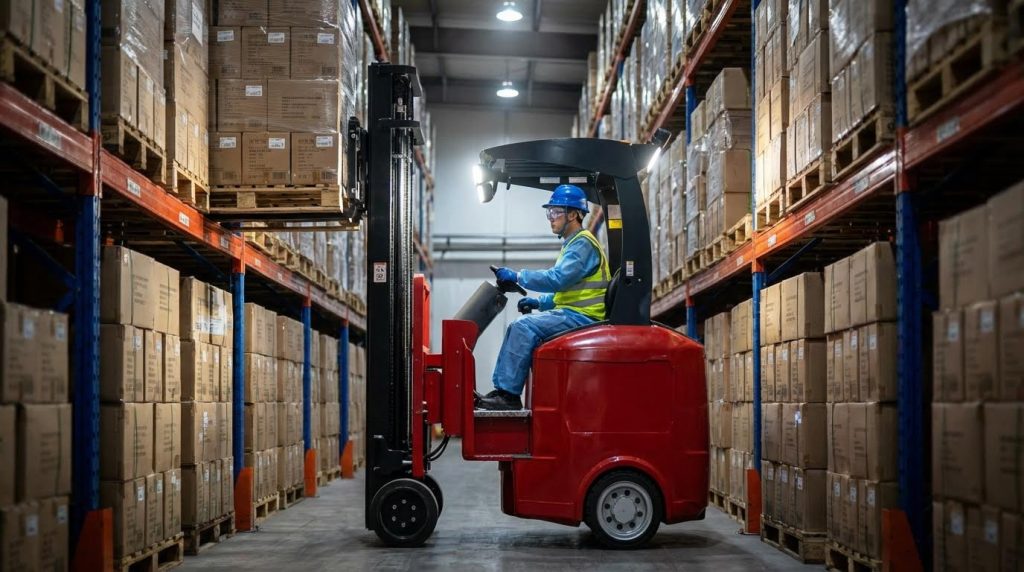
To decide how to lift 1000 pound pallet safely, you must match equipment type to capacity, lift height, and aisle layout. This section compares pallet jacks, stackers, and forklifts specifically around a 1,000 lb load so you can choose the safest, most efficient option for your site.
Capacity Margins And Load Charts For 1,000 Lb
A 1,000 lb pallet is not especially heavy for industrial equipment, but capacity margin is what makes it safe. Engineers normally size equipment 20–30% above the heaviest expected load to keep stresses within a safe range manuals recommended this margin. For 1,000 lb, that means choosing at least 1,200–1,300 lb rated capacity, and more if the load center is long or off‑center.
| Equipment type | Typical rated capacity range* | Suitable for 1,000 lb pallet? | Recommended safety margin practice |
|---|---|---|---|
| Manual pallet jack | ≈ 2,200–5,500 lb (1,000–2,500 kg) capacity ranges | Yes, on level floors and short moves | Capacity typically ≥ 2× the 1,000 lb load, so margin is built‑in |
| Electric pallet jack | Up to ≈ 7,700 lb (3,500 kg) documented values | Yes, ideal for frequent 1,000 lb moves | Comfortable margin for ramps and uneven floors |
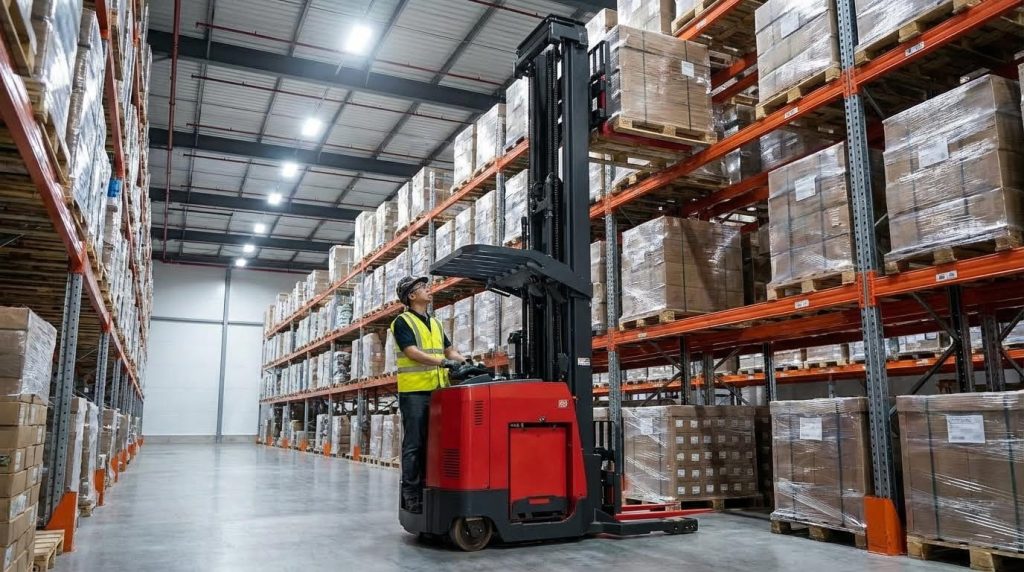
| Walk‑behind stacker | ≈ 2,200 lb and up (≥1,000 kg) noted ranges | Yes, if the load chart supports 1,000 lb at required height | Check load chart at the exact lift height and load center |
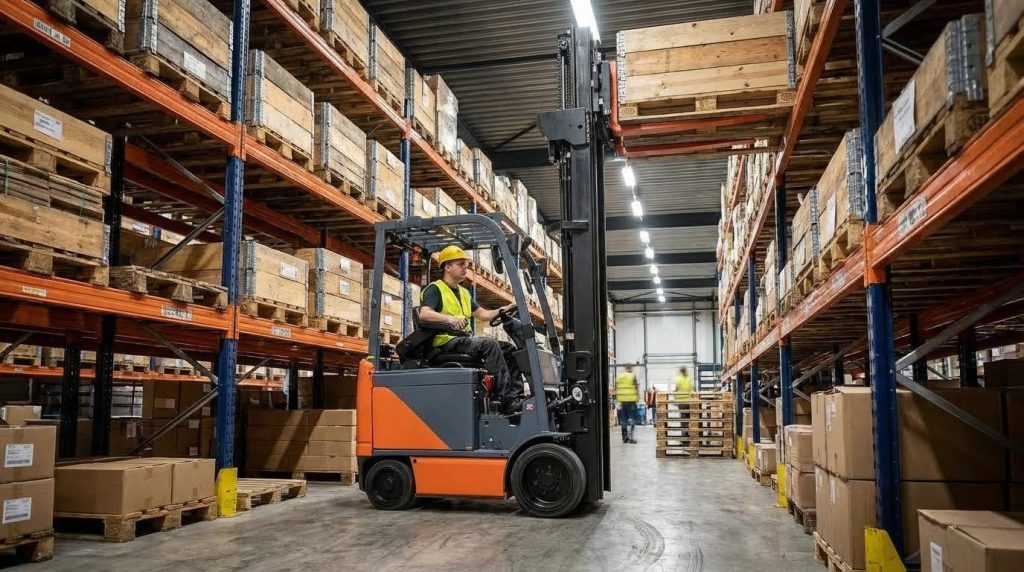
| Forklift / reach truck | ≈ 2,200–44,000 lb (1,000–20,000+ kg) capacity span | Yes, including high‑bay racking | Use the truck’s load chart; derate for attachments and mast extension |
*Ranges are typical engineering values from industry guidance; always verify the nameplate on the specific unit.
- For ground‑level moves only, a manual or electric pallet jack is usually sufficient for how to lift 1000 pound pallet.
- For stacking above floor level, a walk‑behind stacker or forklift is required because pallet jacks only raise a few inches.
- Never assume “it’s only 1,000 lb” – check that the rated capacity at the given load center and lift height is ≥ 1,200–1,300 lb.
Why load charts matter even at 1,000 lb
Load charts reduce rated capacity as the load center increases or as the mast extends. A truck rated for several thousand pounds at low height can reach its limit with a modest 1,000 lb pallet if the load is long, offset, or handled at maximum height. Always read the chart for the exact configuration: mast stage, tilt, attachment, and load center.
Lift Height, Stability, And Center Of Gravity
Lift height is the first filter when you choose equipment for a 1,000 lb pallet. Manual and electric pallet jacks only raise to about 200 mm (≈8 in), which is enough to clear the floor but not enough for racking height data. Stackers and forklifts reach several meters but lose stability as the center of gravity rises and shifts.
| Equipment type | Typical max lift height | Stability considerations with 1,000 lb | Best use case for 1,000 lb pallet |
|---|---|---|---|
| Manual / electric pallet jack | ≈ 200 mm (≈8 in) noted values | Very stable if floor is level and load is centered | Floor‑to‑floor moves, truck loading where dock height matches floor |
| Walk‑behind stacker | ≈ 3–6 m typical range | Stability reduces at top of mast; operator must keep load low while traveling | Low to mid‑level racking with moderate throughput |
| Forklift / reach truck | ≈ 10–12 m or more documented range | Most sensitive to center‑of‑gravity shift at full height; requires trained operator | High‑bay storage, deep racking, intensive handling of 1,000 lb pallets |
- Keep the load as low as practical while traveling; raise only when positioned in front of the rack or stack.
- For high tiering, reduce the load below the truck’s maximum capacity as the mast fully extends OSHA guidance.
- On forklifts, travel with the mast slightly tilted back so the heaviest part of the 1,000 lb pallet rests against the carriage, never tilted forward while moving.
From an engineering perspective, think of the truck and load as a lever around the front axle. A 1,000 lb pallet placed farther out (long forks, forward tilt, or reach extended) multiplies the overturning moment. That is why even “light” loads can cause tip‑over if you combine maximum height, forward reach, and poor mast positioning.
Practical stability tips for 1,000 lb pallets
Center the pallet on the forks, keep the heaviest side closest to the truck, and avoid sudden steering at speed. When using a reach truck at high levels, extend and retract the reach slowly, and avoid tilting forward more than necessary, especially with heavier or top‑heavy loads.
Fork Dimensions, Aisle Width, And Maneuvering
Fork dimensions and aisle width determine whether you can even get a 1,000 lb pallet to the target location. Standard forks are about 1,150 mm long with adjustable spread from roughly 500–1,200 mm common fork sizes. In narrow aisles, turning radius and truck length control how safely you can maneuver with a 1,000 lb load.
| Parameter | Typical engineering values | Impact on lifting a 1,000 lb pallet | Equipment notes |
|---|---|---|---|
| Fork length | ≈ 1,150 mm standard typical length | Must support at least two‑thirds of pallet length for stability | Too‑short forks increase tipping risk; too‑long forks reduce maneuverability |
| Fork spread (adjustable) | ≈ 500–1,200 mm range | Must match pallet openings so 1,000 lb load sits evenly on both forks | Incorrect spread can damage pallet or shift the center of gravity |
| Aisle width for pallet jacks | As narrow as ≈ 1.8 m noted minimums | Good for tight spaces with floor‑level handling | Operator walks, so visibility around a 1,000 lb pallet is high |
| Aisle width for reach trucks | ≈ 1.6–2.0 m in high‑bay racking documented range | Allows handling 1,000 lb pallets in very narrow aisles | Mast rotates or reaches instead of the whole truck turning |
- Calculate required aisle width using truck length, load overhang, and at least 200–300 mm clearance recommended clearance.
- Use telescopic forks or reach mechanisms only when needed; they shift the center of gravity forward and reduce capacity.
- Level the forks before entry, insert them as far as possible (at least two‑thirds of the load length), and center the 1,000 lb pallet between the forks OSHA technique.
In very narrow aisles, a manual pallet jack may be the safest way for how to lift 1000 pound pallet at floor level, because it combines small turning radius with direct operator visibility. For high‑bay or deep‑rack work, a reach truck or stacker with correctly sized forks and a verified aisle clearance offers better control, as long as operators respect reduced capacity when the mast is extended.
Quick equipment selection guide for a 1,000 lb pallet
- Short, level moves, no racking: manual or electric pallet jack.
- Up to mid‑height racking in moderate aisles: walk‑behind stacker.
- High‑bay storage or deep racking in narrow aisles: reach truck or forklift with reach attachment.
- Always confirm: rated capacity at your lift height, fork length vs pallet length, and aisle width vs turning radius.
Final Thoughts On Safe 1,000‑Pound Pallet Handling
Safe handling of a 1,000 lb pallet depends on how well you link engineering limits to real‑world practice. You must size equipment with clear capacity margin, verify pallet integrity, and respect how center of gravity shifts during every move. When you choose between pallet jacks, stackers, and forklifts, start with lift height, then check the load chart at the actual load center, not just the nameplate rating.
Fork length, spread, and aisle width then decide whether the chosen truck can maneuver without forcing risky angles or partial fork entry. Operators must keep loads low while traveling, tilt back where applicable, and avoid quick steering inputs that increase overturning moment. Floor, dock, and trailer conditions must support the combined weight of truck and load with secure chocking and dockboard restraint.
The best practice for operations and engineering teams is simple. Standardize capacity margins, inspection checklists, and aisle design rules. Train operators to read load charts and to treat unstable pallets as “do not move” until fixed. When you apply these controls and select well‑matched equipment from Atomoving, a 1,000 lb pallet becomes a routine, low‑risk task instead of a hidden hazard.
Frequently Asked Questions
What can I use instead of a forklift to lift a 1000-pound pallet?
If you need to lift a 1000-pound pallet without a forklift, there are several alternatives. You can use electric pallet trucks, pedestrian stackers, or reach trucks. These tools are designed for material handling and can safely handle heavy loads. For more details, check out this guide on forklift alternatives.
What are the four stages of lifting heavy pallets?
Lifting heavy pallets involves four key stages: Preparation, Lifting, Carrying, and Setting Down. Proper planning and execution during each stage ensure safety and efficiency. Learn more about these stages in this resource on lifting and material handling.
What is the proper technique for lifting heavy objects like pallets?
To lift heavy objects safely, keep the load close to your body, preferably between mid-thigh and shoulder height. Adopt a stable position and avoid twisting your body while lifting. If the object is too heavy, consider using mechanical aids like hoists or pallet jacks. For OSHA guidelines on lifting techniques, refer to this OSHA manual.
Which tool is best for heavy lifting in industrial settings?
For heavy lifting tasks, such as moving a 1000-pound pallet, industrial hoists are highly recommended. These tools use mechanical or powered mechanisms to lift and position heavy loads safely. They are essential for handling large or awkward equipment. Find more information in this article on tools for heavy equipment movers.