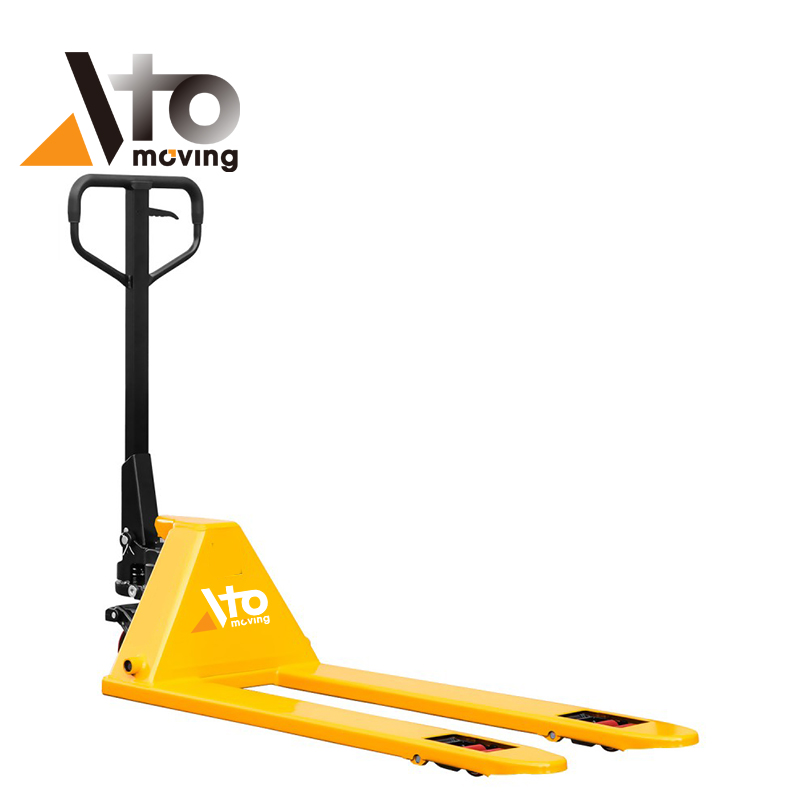
Safe, efficient use of electric pallet jacks starts long before you touch the throttle. This guide walks you through controls, operating modes, daily inspections, and maintenance so every operator knows exactly how to operate a battery pallet lift without damaging people, product, or equipment. You will see clear steps, checklists, and performance limits instead of vague advice. Use it as a practical reference for training, supervision, and day‑to‑day warehouse work.
Fundamentals Of Electric Pallet Jack Operation

Key Components And Control Layout
Understanding the main components and controls is the first step in learning how to operate a manual pallet jack safely and efficiently. Most walk‑behind electric pallet jacks share a common layout, even if details differ by model.
The table below maps each key component to its function and typical safety considerations.
| Component / Control | Typical Location | Main Function | Key Safety Points |
|---|---|---|---|
| Battery pack (e.g., 48 V class) | Inside main chassis | Supplies power for drive and lift systems, often for several hours of use Cited Text or Data | Check charge level and case condition before each shift; never operate with damaged cables or leaking battery. |
| Power key / main power button | On top of chassis or near control handle base | Turns truck electronics on/off before and after use Cited Text or Data | Remove key when parking to prevent unauthorized use. |
| Tiller / control handle | Rear of truck, operator side | Provides steering, travel, lift/lower, and safety switches within hand reach Cited Text or Data | Always keep both hands clear of pinch points; operate with the handle in the approved working angle range. |
| Throttle / travel rocker | On tiller head | Controls direction and speed: forward when pushed one way, reverse when pulled the other way Cited Text or Data | Use smooth inputs; stop fully before changing direction to protect gearbox and maintain stability. |
| Lift button (“Up”) | On tiller head | Activates hydraulic power unit to raise forks to typical heights around 100–120 mm Cited Text or Data | Raise only enough for floor clearance; excessive height reduces stability. |
| Lower button (“Down”) | On tiller head | Opens hydraulic lowering valve to gently lower forks, typically to ≤85 mm for pallet entry Cited Text or Data | Lower slowly under load to avoid shock to pallets, racks, or floor. |
| Horn button | On tiller head | Audible warning in intersections, blind spots, and doorways | Use before entering aisles, crossing doors, or when pedestrians are nearby. |
| Emergency reverse / belly switch | Rear of tiller head | Reverses truck briefly if the operator is pinned between truck and obstacle Cited Text or Data | Never lean your body between the truck and fixed objects; know where this switch is before moving. |
| Emergency stop button | On chassis top or cowl | Cuts power to drive and lift circuits instantly Cited Text or Data | Use only for emergencies; reset and inspect truck before resuming work. |
| Drive wheel and load rollers | Drive wheel under chassis; load rollers at fork tips | Support and transmit tractive effort; small rollers enter pallet openings for load support | Inspect for flat spots, damage, or debris to avoid vibration and floor damage Cited Text or Data |
| Forks (e.g., 550 or 685 mm width) | Front of truck | Carry the palletized load with fixed width and length Cited Text or Data | Check for cracks, bending, or chipped paint that might indicate overload or impact damage Cited Text or Data |
Basic control sequence when starting work
When you learn how to operate a low profile pallet jack, follow this simple sequence before moving a load:
- Confirm the battery has adequate charge for the planned shift.
- Insert the key and press the power switch to energize the truck.
- Stand in the walking position behind the tiller, with clear space to retreat.
- Test the horn, lift, lower, and a short forward/reverse travel in an open area.
- Only then approach the first pallet and start productive work.
Operating Modes And Typical Performance Limits
Electric pallet jacks have defined operating modes and performance limits that protect both the truck and the operator. Knowing these limits is central to safe driving, especially in tight warehouse aisles and on ramps.
The table below summarizes typical operating ranges and constraints drawn from common industrial practice and published examples.
| Operating Aspect | Typical Value / Range | How It Is Controlled | Safety / Application Notes |
|---|---|---|---|
| Rated load capacity | Around 2000 kg for many walk‑behind units Cited Text or Data | Fixed by design; shown on nameplate | Never exceed the stated capacity; reduce load when center of gravity is high or offset. |
| Travel speed – loaded | Up to about 4 km/h in example units Cited Text or Data | Modulated via throttle position and sometimes speed‑limit modes | In factories, many procedures limit speed to roughly 10 km/h in open areas and about 5 km/h at doors and tight spaces Cited Text or Data |
| Travel speed – unloaded | Often similar or slightly lower than loaded (e.g., 3.6–4 km/h) Cited Text or Data | Throttle and any “creep” or “turtle” mode | Use reduced speed in congested areas even when unloaded. |
| Lift height range | Approx. ≤85 mm lowered to about 115 mm raised for standard pallets Cited Text or Data | Push “Up” to raise, “Down” to lower | Only lift enough for floor clearance; do not use as a work platform. |
| Battery endurance | Several hours of continuous work from a full charge (e.g., up to ~5 h in one example) Cited Text or Data | Dependent on duty cycle, load, and driving style | Avoid deep discharge; recharge before the battery is completely drained to extend life Cited Text or Data |
| Gradeability (ramps) | Model‑specific; operators must stay within rated slope limits | Controlled by selecting correct direction (load uphill where specified) and low speed | Do not turn on slopes; keep speed low and maintain clear escape path Cited Text or Data |
| Braking mode | Automatic electromagnetic brake when throttle is released | Engages when you return throttle to neutral or hit emergency stop | Always plan stopping distance; avoid sudden direction reversals that shock the drivetrain. |
| Operating surface requirements | Dry, level, non‑slip floors free of debris Cited Text or Data | Verified during pre‑operation walk‑through | Remove loose wrap, broken boards, or spills before travelling under load. |
In day‑to‑day use, most operators effectively switch between three “practical” modes, even if the truck does not label them as such.
- Precision / creep mode: Very low speed, short throttle strokes, used for docking pallets in racks, entering trailers, or working near pedestrians.
- Normal travel mode: Moderate speed in clear, level aisles with stable loads and good visibility.
- Restricted mode on ramps or tight spaces: Lowest speed, load oriented uphill where required, no turning on slopes, and frequent use of horn at blind spots.
How operating limits tie into daily safety checks
Before deciding how fast to travel or whether a ramp is safe, operators should:
- Confirm the load is within the truck’s rated capacity and suits the fork length.
- Verify pallets are intact, with no broken boards or loose wrapping that can shift Cited Text or Data.
- Check that the planned route avoids steep grades beyond the nameplate rating.
- Reduce speed automatically when entering doors, workshops, or congested warehouse areas Cited Text or Data.
Integrating these checks into your routine is essential if you want to master how to operate a drum dolly while keeping both people and equipment safe.
Daily Safety Checks And Safe Driving Techniques

This section turns theory into practice. It shows operators exactly how to prepare the truck, read the workspace, and control speed and ramps so daily shifts stay safe and efficient. If you are learning how to operate a manual pallet jack, these routines form your core habit set.
Pre‑shift Truck And Battery Inspection
Pre‑shift checks are your first safety barrier. They prevent starting a shift with hidden mechanical, hydraulic, or electrical faults that can damage goods or injure people.
Use this quick visual and functional checklist before every shift.
- Confirm the truck is parked safely, with drive disabled and forks fully lowered.
- Disconnect the charger, then check the power and charger cables for cuts, crushed insulation, or exposed conductors. Daily inspection should verify charger disconnection and cable condition.
- Verify battery state of charge on the display or indicator; do not start a shift with low charge.
- Inspect the battery case for swelling, cracks, leaks, or loose terminals, and confirm vent caps are intact where used. Daily battery inspection helps avoid overheating and undervoltage trips.
- Check forks for bends, cracks, chipped paint that may indicate stress, and damaged tips. Forks should be straight and free from structural damage.
- Inspect wheels and rollers for flat spots, chunking, or embedded debris that could affect steering or braking. Damaged rollers increase vibration and motor loading.
- Look for oil on the floor, wet cylinder rods, or dirty seals that suggest hydraulic leaks.
Then perform a short functional test in a clear area.
- Power the truck and verify the tiller, throttle, and steering respond smoothly in both directions. Throttle and steering must be checked before operation.
- Test lift and lower controls through a partial stroke; lifting should be smooth and free of noise spikes.
- Check the horn, emergency reverse switch, and any belly or emergency stop buttons for instant response. Emergency reversal and braking are critical daily checks.
- Verify service brake or automatic braking engages when you release the throttle and when you apply any dedicated brake control.
Why this matters when learning how to operate a manual pallet jack
New operators often focus on drive controls and forget the inspection routine. Pre‑shift checks reduce the risk of mid‑shift breakdowns, uncontrolled rolling from failed brakes, and hydraulic failures that drop loads unexpectedly. They are a non‑negotiable part of safe training on how to operate a manual pallet jack.
Workspace, Load Assessment, And Stability
Even a perfect truck becomes unsafe in a poor workspace or with the wrong load. Stability depends on floor conditions, route planning, and how the load sits on the forks.
Before moving, scan and prepare your path.
- Ensure aisles and turning zones are clear of debris, loose wrap, broken pallets, or stray straps. Travel paths should be free of obstructions and loose packaging.
- Check that floors are dry, level, and non‑slip; mark or avoid wet or oily patches.
- Confirm you have enough aisle width for the truck and load to turn without clipping racks or columns.
- Verify overhead clearance for raised loads, especially at doors, mezzanines, and sprinkler lines. Adequate overhead and side clearances are part of pre‑operation checks.
Next, assess pallet and load stability before you even touch the controls.
| Check Item | What To Look For | Why It Matters For Stability |
|---|---|---|
| Pallet condition | No broken boards, missing blocks, or protruding nails | Weak pallets can collapse under lift, shifting the center of gravity |
| Load weight | Within the truck’s rated capacity plate | Overloading reduces braking and can cause tip‑over |
| Load dimensions | Length/width compatible with fork length and width | Oversized loads move the center of gravity outside the stability triangle |
| Stacking pattern | Evenly stacked, wrapped, or banded; no leaning items | Uneven stacking creates top‑heavy, roll‑over‑prone loads |
When you position the truck to pick up the pallet, follow a stable sequence.
- Approach the pallet squarely and slowly, keeping forks fully lowered. Forks must be lowered before entry into the pallet.
- Align the forks with the pallet openings and drive straight in until the pallet is fully supported along the fork length.
- Center the load laterally so the weight is balanced left‑to‑right on the forks.
- Raise only enough to clear the floor and any minor unevenness; avoid carrying loads at maximum lift height. Loads should be lifted just enough for safe transport.
At the destination, lower the pallet in reverse order.
- Stop fully, straighten the truck, and lower the load slowly until the pallet sits flat on the floor or support.
- Release the load completely before reversing; do not drag pallets while lowering.
- Back out straight to avoid catching a fork tip on pallet boards or rack posts.
Link to how to operate a manual pallet jack in tight spaces
In tight aisles, stability margins shrink. The same principles still apply: straight approaches, centered loads, low lift height, and slow, deliberate steering. When people search how to operate a manual pallet jack safely in narrow aisles, they are essentially asking how to preserve this stability triangle while maneuvering close to obstacles.
Travel Speed, Ramps, And Emergency Controls
Once the load is on the forks, risk shifts to motion. Speed control, ramp technique, and knowing your emergency options are central to safe operation.
Use conservative speed limits and smooth inputs.
| Condition | Recommended Behaviour | Reason |
|---|---|---|
| Straight travel in open factory areas | Keep speed low; do not exceed about 10 km/h | Allows stopping distance within clear line of sight Guidelines recommend ≤10 km/h in factory areas |
| Approaching doors, workshops, or warehouse entries | Reduce speed to walking pace, around 5 km/h | Visibility is reduced and cross‑traffic is likely Speeds near openings should be about 5 km/h |
| Turning with a load | Slow down before the turn; use smooth steering | Reduces lateral load shift and risk of tipping |
| Changing direction | Come to a full stop before reversing | Prevents drive‑line shock and loss of traction |
Ramps and slopes demand extra caution because gravity works against braking and traction.
- Know the rated gradeability of your manual pallet jack and never exceed it. Operators should not exceed the specified ramp capability.
- Where procedures require, travel with the load on the uphill side so the truck, not the operator, retains control of the mass.
- Do not turn on ramps or dock plates; align straight up or down the slope before moving.
- Use low speed and avoid sudden throttle changes that could cause wheel slip.
Finally, you must know and practice emergency responses before you need them.
- Identify the emergency stop and any belly or reverse buttons at the start of the shift; test them in a safe area. Daily checks include emergency reverse and braking controls.
- In a collision risk, release the throttle to trigger automatic braking, then apply the emergency stop if fitted.
- If you lose load stability, do not try to support a falling pallet by hand; move clear of the fall zone.
- After any impact with racking, doors, or structures, stop operation and report the incident so the truck can be inspected.
Connecting safe driving to how to operate a manual pallet jack
Most written guides on how to operate a manual pallet jack focus on which button to press. From an engineering and safety point of view, speed discipline, ramp technique, and emergency control drills are just as important. They convert a basic operator into a safe, predictable one who protects people, product, and equipment over the full life of the pallet jack.
Maintenance, Telematics, And Lifecycle Safety
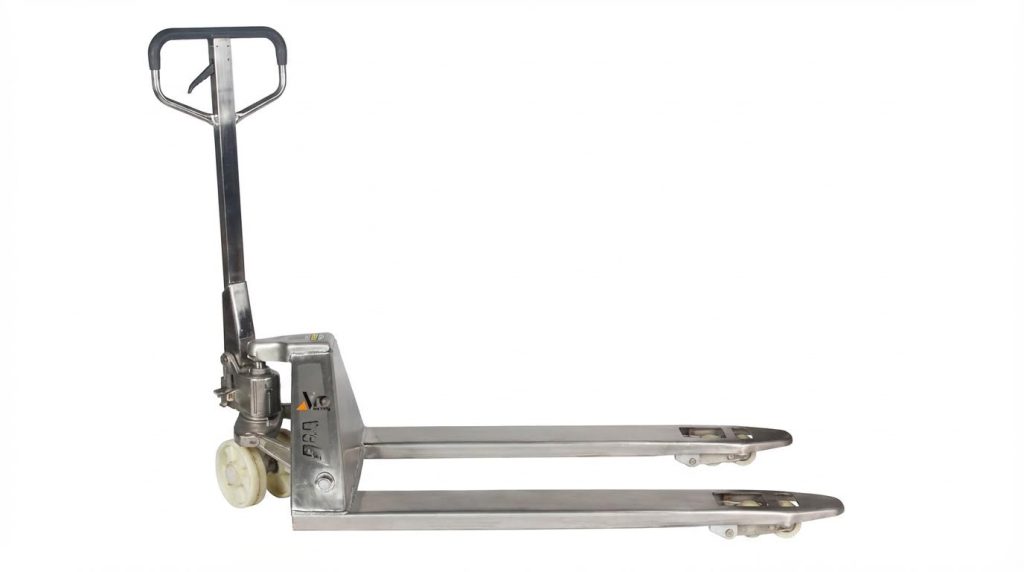
Good lifecycle safety starts long before a failure. It depends on disciplined mechanical maintenance, smart battery care, and data‑driven decisions. This section links practical service tasks to real‑world risks like loss of braking, fork drop, or thermal events, so operators who know how to operate a battery pallet lift can also keep it safe and productive for years.
Routine Mechanical And Hydraulic Maintenance
Mechanical and hydraulic upkeep protects lifting performance, braking, and steering. A structured schedule also reduces unexpected downtime and keeps trucks compliant with internal safety policies.
The table below groups typical tasks by interval and system.
| Interval | System / Area | Key Tasks | Typical Findings / Risks |
|---|---|---|---|
| Before each shift | Structure & running gear | Inspect forks for bending, cracks, chipped paint; check wheels/rollers for flat spots or damage; look for oil on floor around hydraulics and drive unit Daily inspection procedures | Undetected cracks, worn wheels, or leaks can lead to fork failure, poor tracking, and loss of lifting control. |
| Daily | General condition & electrics | Clean exterior surfaces and check power cord or external charger leads for damage Daily maintenance tasks | Dirt hides cracks and leaks; damaged cords increase shock and fire risk. |
| Weekly | Fasteners, mechanical, electrical | Check tightness of fasteners; inspect for oil leaks; look for unusual wear on mechanical parts; monitor electrical systems for overheating or sparks Weekly inspection tasks | Loose bolts and hot connections can escalate into structural failures or electrical fires. |
| Quarterly | Electrical system | Secure wire connections; test switch responsiveness; verify insulation resistance ≥ 0.5 MΩ Electrical system maintenance | Low insulation resistance or loose connections cause nuisance trips, overheating, or intermittent loss of drive. |
| Every 6 months | Mechanical drive & lifting | Check tightness of fasteners; verify smooth wheel rotation; test fork lifting smoothness; confirm operational noise does not exceed about 75 dB Mechanical system maintenance (every 6 months) | Noise or rough motion often indicates bearing wear, misalignment, or hydraulic restriction. |
| Annually | Hydraulic system | Check for internal/external leaks; confirm oil is clean; replace hydraulic oil with appropriate ISO grade (e.g., L‑HV32 for -5 °C to 40 °C, L‑HV15 for -10 °C to -5 °C) and dispose of used oil correctly Hydraulic system maintenance (annual) | Degraded or wrong‑viscosity oil causes slow lift, cavitation noise, and accelerated seal wear. |
Core mechanical tasks should be part of any program for how to operate a battery pallet lift safely, not an afterthought once performance drops.
Hydraulic and lifting system troubleshooting essentials
Typical hydraulic issues on electric pallet jacks have repeatable causes and fixes.
- Oil leakage: Often due to worn seals, minor surface damage on rods or housings, or loose fittings; solutions include replacing seals or damaged parts and tightening connections Hydraulic oil leakage solutions.
- Forks will not lift: Causes include oil too viscous or insufficient, contaminated oil, or hydraulic power unit failure; remedies are oil replacement, system cleaning and refill, or power unit replacement Forks unable to lift solutions.
- Forks will not lower: Often linked to an incorrectly adjusted manual release valve; adjusting the release valve screw restores normal lowering Forks unable to lower solution.
- Spongy or inconsistent lift: Air in the hydraulic circuit or low oil level; bleeding procedures and correct oil filling are required Hydraulic system servicing.
When adding oil, locate the cylinder fill port, remove the fill screw with the specified hex wrench size, and add only the recommended volume (around a few hundred milliliters for many walkies), then secure components before lifting Lubrication procedure.
Running gear also needs periodic replacement, not just inspection.
- Replace worn wheels and rollers promptly to avoid floor damage, vibration, and excessive drive motor loading Wheel and roller replacement protocol.
- During replacement, lay the truck safely, remove cotter pins or retaining rings, and install new, lubricated rollers with correct washers and spacers to maintain alignment and load distribution Wheel and roller replacement protocol.
Finally, integrate mechanical checks with operational symptoms. Unusual noise, slower lift, or tracking problems during normal driving are often the first indicators that maintenance is overdue.
Battery Care, Charging, And Emerging Li‑ion Options
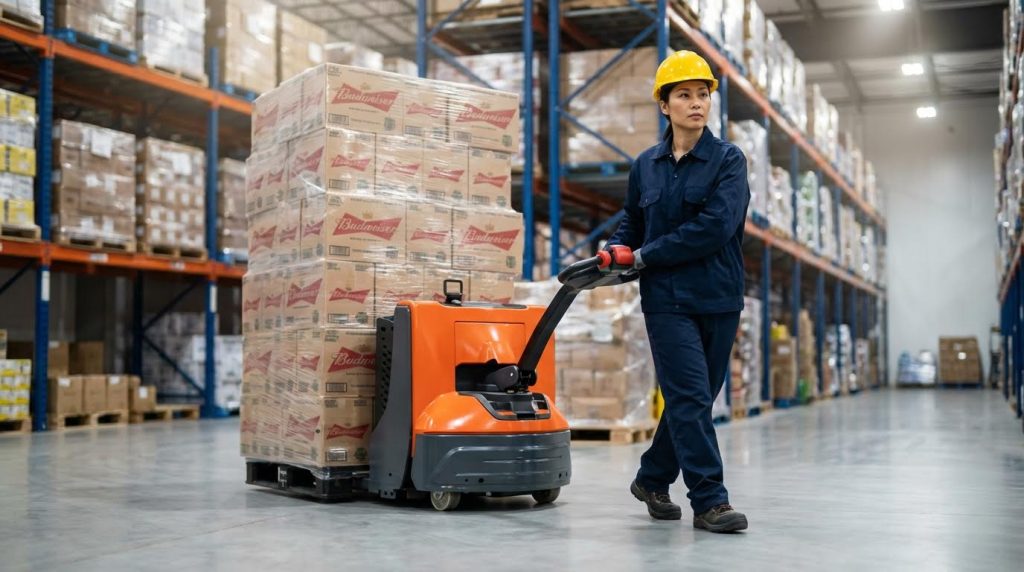
Battery health is the backbone of safe, predictable operation. Poor care shortens runtime, stresses electrical components, and can create fire or acid‑leak hazards.
Whether you use lead‑acid or lithium systems, operators who know how to operate a battery pallet lift must also understand basic charging discipline and inspection points.
| Topic | Lead‑acid Practices | Li‑ion Practices (typical) |
|---|---|---|
| Daily inspection | Check case for damage, swelling, or leakage; confirm terminals are tight; look for corrosion or dust on connectors Battery maintenance practices | Inspect enclosure for mechanical damage or swelling; verify charge indicator and fault lights; check connectors and cables for wear. |
| Cleaning | Clean terminals and connectors regularly to remove dust and corrosion that increase resistance and heat Battery maintenance practices | Wipe connectors and housings; keep BMS ventilation paths clear; avoid aggressive solvents. |
| Charging strategy | Avoid deep discharge; charge fully and limit short “opportunity” charges unless the manufacturer allows them Battery maintenance practices. Charge fully before use and avoid complete discharge Battery care tips | Partial and opportunity charging is usually acceptable; follow BMS and charger guidance. Avoid repeated 0 % discharge to protect cycle life. |
| Storage conditions | Store the truck in a cool, dry place to reduce thermal stress and improve energy efficiency Battery maintenance practices Battery care tips | Same requirement; avoid high‑temperature zones and direct sun, which accelerate capacity fade and BMS derating. |
| End‑of‑life indicators | Frequent undervoltage alarms or noticeable capacity loss indicate the need for replacement Battery maintenance practices | More rapid drop in runtime, BMS warnings, or repeated thermal derating events signal that modules are near end of life. |
- Always disconnect the charger fully and check cables for damage before moving the truck Daily inspection procedures.
- If the charger itself malfunctions, remove it from service and replace it; do not improvise repairs without qualified personnel Charger issue solution.
Electrical fault‑finding and motor issues
Many “dead truck” reports trace back to simple electrical causes.
- No drive / no lift: Power switch off, battery fully discharged, brake not released, or blown fuse; the remedy is to turn on power, recharge, verify travel switch and brake function, or replace the fuse as required Motor failure solutions.
- Intermittent control response: Often linked to loose wiring or failing switches; quarterly checks of connections and switch responsiveness help prevent this Electrical system maintenance.
- Abnormal heating or smell: Stop operation and investigate for overloaded circuits, poor connections, or internal motor faults.
Routine inspection of wiring, forks, wheels, and other parts for damage or excessive wear, plus cleaning after use, supports smooth operation and longer component life Routine inspection checklist.
Modern telematics layers data on top of these basics. Electric pallet jacks with onboard telemetry log usage hours, travel distance, impacts, and charging patterns, allowing maintenance to shift from fixed intervals to condition‑based planning Predictive maintenance using telematics.
- Abnormal discharge curves or repeated high‑temperature events can flag batteries for early replacement before they fail in service.
- Trends in current draw, lift times, or vibration can reveal bearing wear or hydraulic degradation long before operators notice performance loss Final Thoughts On Safe, Efficient Pallet Jack Use
Safe electric pallet jack use rests on three linked pillars: sound equipment, trained operators, and disciplined maintenance. Controls, speed limits, and lift heights exist for clear engineering reasons. They keep the center of gravity inside the stability envelope and preserve traction, braking, and structural strength. When operators respect rated capacity, keep loads low, and drive at walking speeds near people and doors, they turn those design limits into real‑world protection.
Daily inspections close the gap between theory and practice. Quick checks of forks, wheels, hydraulics, and batteries catch defects before they become dropped loads, loss of steering, or electrical faults. Planned mechanical and hydraulic service, plus smart battery care, then extend that safety over the full life of the truck. Telematics can further refine this by turning usage data into targeted maintenance actions.
The best practice for operations and engineering teams is simple. Treat the pallet jack as a system where geometry, load, speed, and maintenance all interact. Standardize checklists and driving rules. Train every operator to follow them, then verify with supervision and data. Used this way, Atomoving pallet jacks stay predictable, productive, and safe shift after shift.
Frequently Asked Questions
How to Operate a Battery Pallet Lift?
To operate a battery pallet lift, ensure the equipment is turned off and disconnected from the power source before starting. Use the control handle to maneuver the pallet lift in pulling mode, as electric pallet jacks are designed to operate this way. For safety, avoid manual pushing unless necessary. Pallet Jack Guide.
- Always check that the battery is adequately charged before operation.
- Use the control panel to adjust speed and direction smoothly.
- Ensure the forks are aligned properly under the pallet before lifting.
Do You Need Certification to Operate an Electric Pallet Jack?
Yes, according to OSHA standard 1910.178, operators must complete proper training and certification to use an electric pallet jack. Certification involves formal instruction, practical training, and a performance evaluation. Online courses are available for completing the formal instruction requirement at your own pace. OSHA Certification Details.