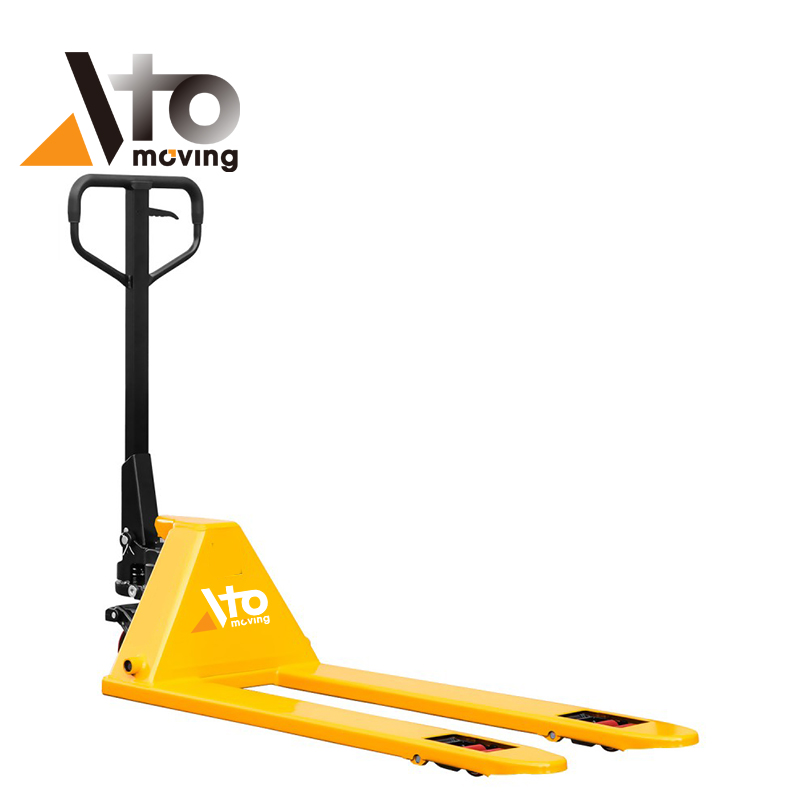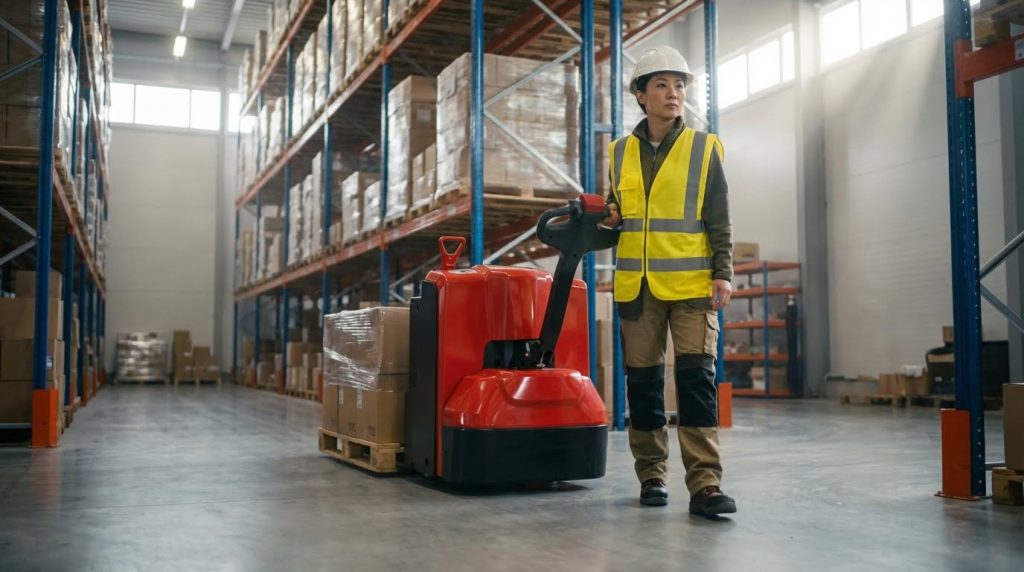
Learning manual pallet jack how to use procedures correctly protects people, product, and equipment. This guide walks you from basic components and safety, through step‑by‑step operation, to hydraulic pallet truck care and troubleshooting. You will see clear checks, movements, and maintenance actions you can apply on any shift. Use it as a practical reference to boost safety, efficiency, and uptime in tight warehouse aisles.
Manual Pallet Jack Basics And Safety Foundations
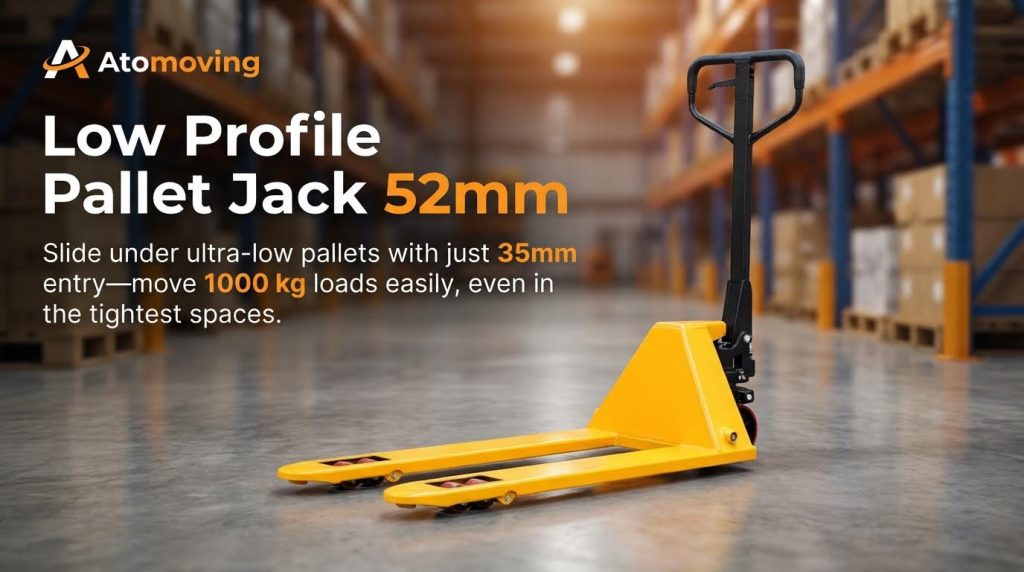
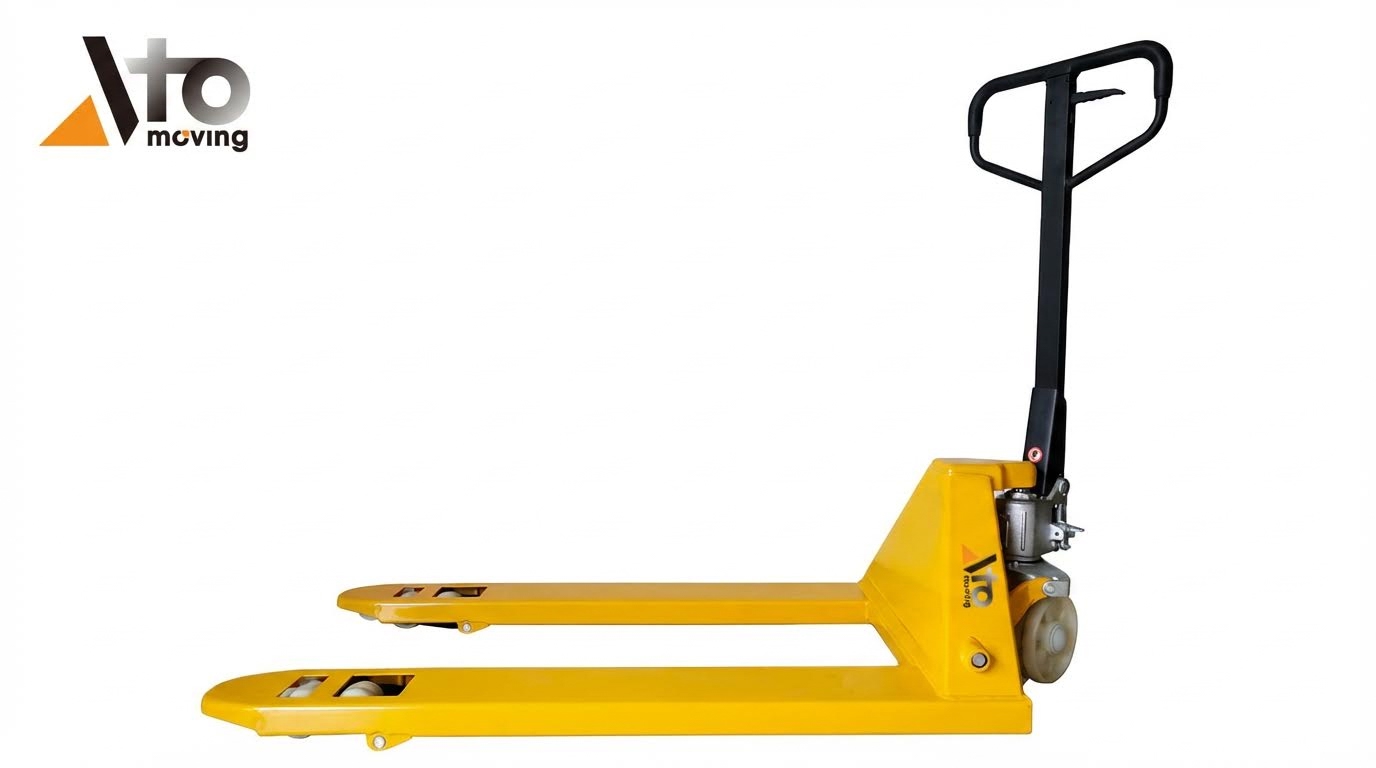
Core components and operating controls
Understanding the main parts and controls is the first step in any manual pallet jack how to use guide. These components work together to lift, move, and precisely position palletized loads with minimal effort.
| Component | Function | Key Safety / Use Notes |
|---|---|---|
| Handle / Tiller | Steers the jack and provides leverage for pumping | Use two hands for control when manoeuvring in tight aisles; keep body outside the arc of the handle to avoid impact |
| Control lever (lift / lower / neutral) | Selects lifting, lowering, or travel (neutral) mode | Lift: lever down; Lower: lever up; Neutral: middle position for travelling and steering Cited Text or Data |
| Hydraulic pump unit | Converts handle strokes into hydraulic pressure to raise forks | Internal check and release valves control oil flow; trapped air or low oil causes slow or failed lifting Cited Text or Data |
| Forks | Slide under pallets and support the load | Lower to about 1 in (≈25 mm) above floor before entry; check for bends, cracks, or distortion before use Cited Text or Data |
| Steer wheels | Carry most of the jack weight and allow turning | Inspect for flat spots, cracks, or embedded debris that can increase push–pull force and reduce stability |
| Load rollers | Small wheels at fork tips that enter the pallet | Enable smooth entry/exit from pallets; damaged rollers can catch and shift the load suddenly |
| Chassis / frame | Connects handle, pump, and forks into one rigid structure | Any cracks, heavy corrosion, or weld damage are grounds to tag out the jack |
How the lift and lower controls work in practice
When the control lever is in the “lift” position, each pump stroke drives a small piston that pressurizes hydraulic oil. The oil flows through a check valve into the lift cylinder, extending it and raising the forks. In the “lower” position, the release valve opens a controlled return path so oil flows back to the reservoir and the forks descend. Neutral closes both paths so the handle can steer without changing fork height.
- Always confirm the forks respond correctly in all three positions (lift, neutral, lower) before handling a load.
- Keep hands on the handle only; never place fingers near pivot points, linkage, or under the forks.
- Train operators to recognise abnormal handle feel (spongy, chattering, or no resistance), which can indicate air in the hydraulic circuit or low oil level.
Rated capacity, stability, and aisle constraints
Safe use starts with respecting the jack’s rated capacity and understanding how geometry affects stability. Overloading or operating in aisles that are too narrow is a common root cause of pallet jack incidents.
| Parameter | What It Means | Practical Guidance |
|---|---|---|
| Rated capacity | Maximum load the jack is designed to carry at the specified load center | Never exceed the marked capacity; if the load weight is unknown, treat it as suspect and verify before moving it |
| Load center | Horizontal distance from fork heel to the load’s center of gravity | Most ratings assume a centered, evenly distributed pallet load; long or top‑heavy loads reduce effective capacity |
| Fork length vs pallet length | Relationship between fork tips and pallet footprint | Forks should extend as close as practical to the far end of the pallet to avoid nose‑down tipping when lifting |
| Stability triangle | Imaginary triangle between the two load rollers and the steer wheel axle | Keep the combined center of gravity inside this triangle by avoiding side pulls, sharp turns, and high forks under load |
| Minimum aisle width | Clear width needed to turn and travel safely with a load | Account for jack length, pallet length, and turning radius; leave extra clearance for pedestrians and obstructions |
For any manual pallet jack how to use procedure, you should match the jack’s capacity and fork length to the typical pallet sizes and load weights in your facility. This reduces the risk of nose‑dive, rear‑tip, or side‑tip events when starting, stopping, or turning.
- Keep forks as low as practical while travelling to lower the center of gravity.
- Avoid sudden starts, stops, and tight turns, especially with tall or stacked loads.
- Never use the jack on steep ramps or dock edges not designed for pallet jack traffic.
Recognising early signs of stability problems
Watch for the load rocking on the pallet, the jack feeling light at the handle, or one fork lifting before the other. These are early indicators of uneven loading or damaged pallets. Stop, lower the load, and re‑position or re‑stack before continuing.
OSHA/ANSI-aligned safety and PPE practices
Regulatory bodies require that only trained and authorised personnel operate pallet jacks, and that they follow basic industrial truck safety practices. A structured manual pallet jack how to use program should align with these expectations and your site’s written procedures.
- Operator qualification
- Refresh training periodically and after any incident or near miss.
- Required PPE
- Safety shoes with toe protection and slip‑resistant soles to protect against rolling loads and wheel contact Cited Text or Data
- High‑visibility vest where vehicle and pedestrian traffic mix.
- Gloves when handling rough pallets or strapping.
- Pre‑use safety checks
- Inspect for visible damage, bent forks, wheel defects, and hydraulic leaks before use. Cited Text or Data
- Confirm lift, neutral, and lower functions operate smoothly without abnormal noise or sticking.
- Safe operating rules
- Do not ride on the pallet jack or on the load. Cited Text or Data
- Keep clear visibility in the direction of travel; if the load blocks your view, pull the jack with the load trailing and use a spotter where required. Cited Text or Data
- Stay out of pinch points between the jack, racks, and fixed objects.
- Load and route control
- Never exceed the rated capacity and avoid unstable, damaged, or poorly wrapped loads.
- Plan routes to avoid steep inclines, dock edges, and congested walkways.
- Parking and securing
- Lower forks fully to the floor and park in a designated area when not in use to prevent trip hazards. Cited Text or Data
- Keep handles turned inwards so they do not protrude into walkways.
Linking facility rules to your training program
Document site‑specific speed limits, no‑go zones, and pedestrian right‑of‑way rules in your manual pallet jack how to use training. Reinforce them with floor markings, signage, and periodic safety walks. This ensures that day‑to‑day operation aligns with OSHA/ANSI expectations and your internal risk assessments.
Step-By-Step Manual Pallet Jack Operation
Pre-use inspection and function checks
Before thinking about manual pallet jack how to use in a busy aisle, you first confirm it is mechanically safe. A fast, repeatable pre-use inspection prevents most incidents and downtime. Focus on visible damage, smooth hydraulic action, and reliable rolling.
- Verify the handle, control lever, and pump linkage move freely and return to neutral without sticking.
- Check forks for bends, cracks, or distortion; reject any jack with obvious structural damage.
- Inspect wheels and rollers for flat spots, broken edges, or embedded debris that could cause sudden stops or tracking issues. Inspect wheels for damage before operation
- Look for oil around the pump, lift cylinder, and fittings that would indicate hydraulic leaks.
- Cycle the jack with no load: set the lever to “lift,” pump several times, confirm the forks rise smoothly, then lower them fully and verify controlled descent. Daily pre-operation inspection is required
- Check the surrounding floor for obstructions, spills, or uneven surfaces where you plan to operate.
Why this inspection sequence matters
The inspection order moves from control to structure to hydraulics, mirroring how loads travel through the jack. A fault in any link can compromise stability under load, so you test each one with no-load strokes before you trust it with product.
Positioning, loading, and fork insertion technique
Correct positioning and loading keep the center of gravity inside the wheelbase and protect the pallet. You align the forks with the pallet openings before you worry about lifting force.
- Approach the pallet straight on, with forks fully lowered to roughly 25–30 mm (about 1 in) above the floor for easy entry. Forks should be lowered close to the ground before use
- Center the forks on the pallet so each fork sits in a matching opening, not against deck boards or stringers.
- Roll forward slowly until the forks are fully inserted, with the fork heels just clear of the opposite side of the pallet. Forks should be fully inserted beneath the pallet
- Confirm the load is stable on the pallet: shrink wrap intact, no cartons overhanging dangerously, and heavy items low and centered.
- Never exceed the jack’s rated capacity; if in doubt, split the load into two moves. Do not exceed rated load capacity
| Step | Operator action | Engineering purpose |
|---|---|---|
| 1. Align | Face pallet straight, forks level and low | Prevents side loading of pallet boards |
| 2. Insert | Roll forward until forks are fully under pallet | Ensures load sits over fork length, not tips |
| 3. Verify load | Check wrap, stacking, and overhang | Keeps combined center of gravity inside footprint |
| 4. Confirm capacity | Compare estimated weight to nameplate rating | Avoids overload of frame and hydraulic circuit |
Lifting, travelling, and visibility management
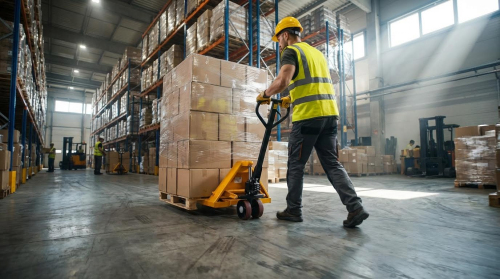
Once the forks are positioned, you convert handle strokes into hydraulic pressure to lift the load. Then you manage travel speed, route, and line of sight to keep forces low and predictable.
- Set the control lever or knob to the “lift” position, then pump the handle until the pallet clears the floor by about 25–75 mm, just enough to roll without dragging. Forks are raised by pumping the handle with the control set to lift
- Return the lever to neutral once the target height is reached to lock the hydraulic circuit for travel.
- Use a controlled pace; avoid sudden starts or stops, which create inertial loads that can shift or topple the stack. Avoid sudden stops or starts to maintain stability
- Where floor conditions and layout allow, walk ahead and pull the jack rather than pushing, keeping the handle to one side of your body to avoid foot strikes. Use both hands to guide the handle while moving
- Plan a route with wide turns and minimal slopes; avoid steep inclines and ramps that can overrun the operator. Operators must ensure clear visibility while driving
- If the load blocks your view, travel in reverse (pulling) so you can see the path, or ask for a spotter in tight areas.
Visibility and line-of-sight tips
Keep the load as low as practical during travel to maintain a clear forward view and reduce tip-over risk. In blind corners or cross-aisles, slow to walking speed, sound any local warning device if fitted, and “slice” the corner wide so the load does not cut across traffic lanes.
Unloading, parking, and securing the jack

Unloading reverses the lifting sequence but still demands control. You lower the hydraulic pressure in a controlled way, then park the jack so it cannot roll or trip pedestrians.
- Position the pallet at the destination so it sits square and fully supported on the floor, rack, or dock surface.
- Set the control lever or knob to “lower” and slowly release pressure until the pallet rests fully on the support. To lower, the control knob is pulled upward to the lowest position
- Once the load is stable on the ground, pull the jack back in a straight line so the forks clear the pallet without catching boards. Slowly lower the forks and then remove them from under the pallet
- Move to the storage location and park the jack with forks fully lowered to the floor to avoid trip hazards and unintended movement. Forks should be lowered and the truck stored in a designated area
- Park clear of doorways, fire equipment, and emergency exits so the jack does not obstruct egress routes.
| Stage | Key action | Risk controlled |
|---|---|---|
| Unloading | Lower pallet fully before withdrawing forks | Prevents pallet drop or sudden shift |
| Fork removal | Withdraw straight, at low speed | Avoids catching deck boards or racking |
| Parking | Forks fully down, handle upright | Reduces trip and roll-away hazards |
| Securing | Store in marked area off main walkways | Keeps traffic lanes and exits clear |
Linking operation steps to long-term reliability
Consistently lowering the forks when parked reduces static load on seals and rods, extending hydraulic life. Smooth travel and controlled stops minimize shock loads into the frame, wheels, and bearings, which in turn cuts maintenance frequency and keeps the jack ready whenever your team needs it.
Hydraulic System Care, Maintenance, And Troubleshooting
Hydraulic circuit operation and common failure modes
The hydraulic circuit in a manual pallet jack converts your handle force into oil pressure that lifts the forks. Understanding this circuit helps you diagnose problems quickly and keep “manual pallet jack how to use” procedures safe and efficient.
| Hydraulic element | Function in the circuit | Typical failure symptom | Probable cause |
|---|---|---|---|
| Pump piston | Pressurizes hydraulic oil when you pump the handle | Slow or no lift under load | Internal wear, scored surfaces, low oil level or trapped air (hydraulic circuit basics) |
| Check valve | Holds pressure in the lift cylinder so forks stay raised | Forks drift down after lifting | Worn valve seat, damaged O-ring, internal bypass (common failure modes) |
| Lift cylinder | Converts oil pressure into vertical fork motion | Uneven or jerky lifting | Air in oil, contaminated or degraded hydraulic fluid |
| Release valve | Opens a controlled path for oil to return to the reservoir | Forks will not lower or drop too fast | Valve stuck closed or open, misadjusted linkage |
| Seals and O-rings | Prevent internal and external oil leakage | Oil on floor, pump body, or rods | Hardened, cut, or worn seals; overpressure damage (leak diagnosis) |
- Oil-related faults: Low level, leaks, or contamination reduce pressure and cause slow lifting or failure to raise a load.
- Air ingress: Air entering through worn seals makes the handle feel spongy and the forks chatter or stop partway up.
- Internal bypass: Worn pistons, valve seats, or O-rings let oil leak internally, so forks sink under load or only lift when empty.
When to suspect hydraulic issues vs. overloading
If the jack lifts empty pallets but not rated loads, assume hydraulic wear or low oil rather than just excessive load. When training operators on manual pallet jack how to use methods, include a quick functional lift test during pre-use checks to catch these faults early.
Bleeding air, checking oil level, and fluid condition
Air in the hydraulic circuit and poor oil condition are the most common and easiest problems to fix. Always work on level ground with the forks lowered and the jack unloaded.
- Bleeding air from the hydraulic pump
- Set the control lever to the lower/release position.
- Pump the handle about 10–20 strokes to purge trapped air from the pump into the reservoir (bleeding procedure).
- Return the lever to the lift position and test-lift a moderate load.
- If lifting improves and the handle feel becomes firm, no further internal work is usually needed.
- If the handle still feels spongy or the forks chatter, check oil level next.
- Checking hydraulic oil level
- Keep forks fully lowered and jack unloaded.
- Wipe dirt away from the reservoir fill plug on the pump body.
- Remove the plug and verify the oil sits roughly 25 mm below the top opening (typical fill height).
- Top up only with compatible hydraulic oil if low, then refit the plug and bleed again.
- Assessing fluid condition
- Clear, light oil: Normal condition.
- Dark oil: Indicates oxidation and aging; schedule drain and refill.
- Milky oil: Shows water contamination; drain, flush, and refill with clean oil (fluid checks are a standard maintenance item).
- Visible particles: Suggest internal wear or dirt ingress; investigate seals and working environment.
Quick decision guide after bleeding and oil check
If the jack still will not lift rated loads after proper bleeding and oil correction, treat it as an internal hydraulic or linkage issue. Remove it from service and escalate to maintenance rather than letting operators keep guessing how a manual pallet jack how to use technique might “work around” the fault.
Linkage, valves, seals, and leak diagnosis
Once air and oil level are correct, focus on the mechanical linkages and sealing surfaces that control the hydraulic valves. Small misalignments here can mimic serious pump failures.
- Handle and linkage checks
- Observe handle travel and automatic return; it should move smoothly without sticking.
- Watch the chain or rod at the pump end while moving the handle through lift, neutral, and lower positions.
- Look for excess slack, bent arms, or misaligned pins that prevent full valve movement (linkage isolation).
- Lubricate pivot points lightly and adjust linkage length per the service manual if valves do not fully open or close.
- Isolating valve and pump faults
- Disconnect the lifting linkage from the pump if possible and operate the valve interface directly.
- If the pump now lifts normally, the fault lies in the handle/linkage.
- If lifting is still weak, suspect internal pump, valve, or seal issues.
- External leak diagnosis
- Clean the pump body, cylinder, and fittings thoroughly.
- Cycle the jack under a moderate load and look for fresh oil paths.
- Common leak points include rod seals, end caps, hose fittings, and around check-valve plugs (seal inspection).
- Internal leak / bypass indicators
- Forks slowly sink while the control lever stays in neutral.
- The jack lifts only when empty or with very light loads.
- No visible external oil, but performance keeps degrading.
- These signs point to worn internal O-rings, valve seats, or cylinder surfaces that require disassembly and part replacement.
Safety note for maintenance personnel
Always lower forks fully, chock wheels if on any slope, and keep hands clear of pinch points when inspecting linkages and seals. Training materials for manual pallet jack how to use should remind operators never to place any body part under raised forks, even during quick leak checks.
Preventive maintenance intervals and replacement criteria
Planned inspections keep the hydraulic system reliable and reduce unplanned downtime. Match your schedule to operating hours and environment, but use the following as a baseline.
| Interval | Key hydraulic-related tasks | What you are looking for |
|---|---|---|
| Daily (pre-use) | – Visual check for oil on floor or around pump – 3–5 test pumps with forks unloaded – Quick lift and lower test with a light pallet (pre-operation inspection) | – New leaks – Spongy handle feel – Jerky or hesitant lifting |
| Weekly | – Lift test with moderate load – Observe for slow sinking in raised position – Listen for grinding or chattering from pump (weekly checks) | – Internal bypass issues – Early seal wear – Abnormal noise indicating contamination or wear |
| Monthly | – Inspect rods for rust streaks or scoring – Check all hydraulic fasteners for tightness – Inspect linkage pivots and lubricate – Verify oil level and sample appearance | – Corrosion that damages seals – Loose fittings that can start leaks – Degraded or contaminated oil |
| Annually or per manufacturer | – Drain and replace hydraulic oil if discoloured or contaminated – Replace worn seals and O-rings as needed – Full functional test at rated capacity | – Restored lifting speed and stability – Reduced risk of sudden hydraulic failure |
- Replacement criteria for the hydraulic system and jack
- Persistent leaks after proper seal and O-ring replacement.
- Heavily scored, pitted, or corroded pump rods or cylinder bores.
- Forks that are bent or cracked, even if hydraulics still work.
- Wheels that wobble or bind after axle and bearing renewal (replacement thresholds).
Linking maintenance to operator training
When you teach manual pallet jack how to use procedures, include simple cues for operators: report any oil on the floor, unusual handle resistance, or forks that will not stay raised. These real-world signals often appear days or weeks before a major hydraulic failure and let maintenance act before a safety incident occurs.
Final Thoughts On Safe, Efficient Pallet Jack Use
Safe manual pallet jack operation depends on three linked areas: sound equipment, trained people, and disciplined routines. Geometry, capacity, and stability rules are not theory; they decide whether the combined center of gravity stays inside the wheelbase or ends up in a tip-over zone. Correct fork positioning, low travel height, and smooth speed changes keep forces predictable and protect pallets, racking, and feet.
The hydraulic system turns handle effort into lifting force. When you keep oil clean, remove air, and fix leaks early, the jack responds the same way every time. That consistency lets operators trust their pre-use checks and focus on route planning and visibility instead of “fighting” the equipment.
OSHA/ANSI-aligned training and PPE close the loop. Clear rules on capacity, no-ride policies, and parking keep people out of crush and trip hazards. The best practice for operations teams is simple: match jack design to your pallets and aisles, enforce a short but strict inspection before each shift, and remove any suspect unit from service immediately. When you pair that discipline with the maintenance steps in this guide, Atomoving pallet jacks will move loads safely, with high uptime and low total cost.
Frequently Asked Questions
How to Operate a Manual Pallet Truck?
To use a manual pallet truck, start by lowering the forks using the control lever. Position the forks under the pallet and ensure they are fully inserted. Lift the pallet by pulling the control lever up. Move the pallet by pushing the handle while keeping the control lever in neutral. Always push rather than pull to reduce strain on your body. Lower the pallet by pulling the control lever up again once you reach the desired location. Herc Rentals Guide.
Do You Need Training to Use a Manual Pallet Truck?
While OSHA does not require certification for manual pallet jack operators, proper training is essential for safe operation. Employees should be trained on how to safely use the equipment to prevent injuries. Never place hands or feet under the pallet jack, never exceed the posted capacity, and always move loads slowly. OSHA Safety FAQs.
What Should You Never Do with a Pallet Jack?
Never place your hands or feet under the pallet jack, as this can lead to serious injuries. Avoid exceeding the posted weight capacity of the pallet jack, which typically ranges from 2,268 to 2,495 kilograms (5,000 to 5,500 pounds). Always move the load slowly and push rather than pull whenever possible to maintain control and safety. Pallet Jack Safety Sheet.