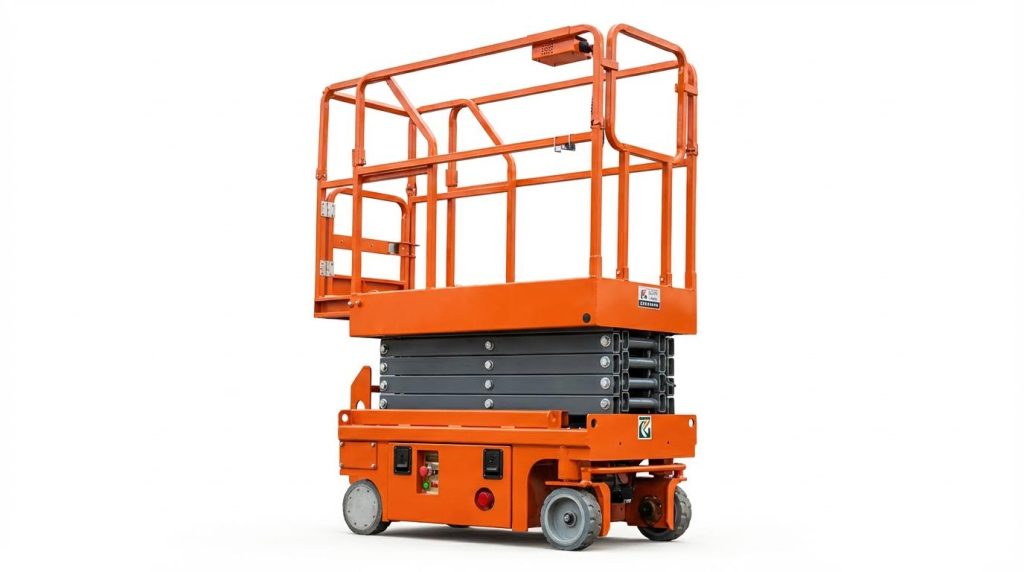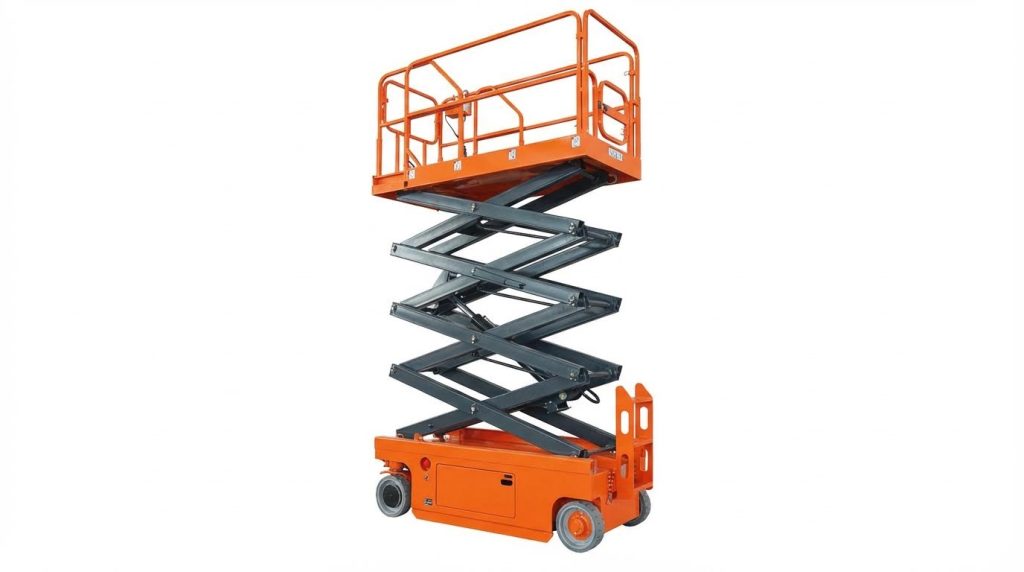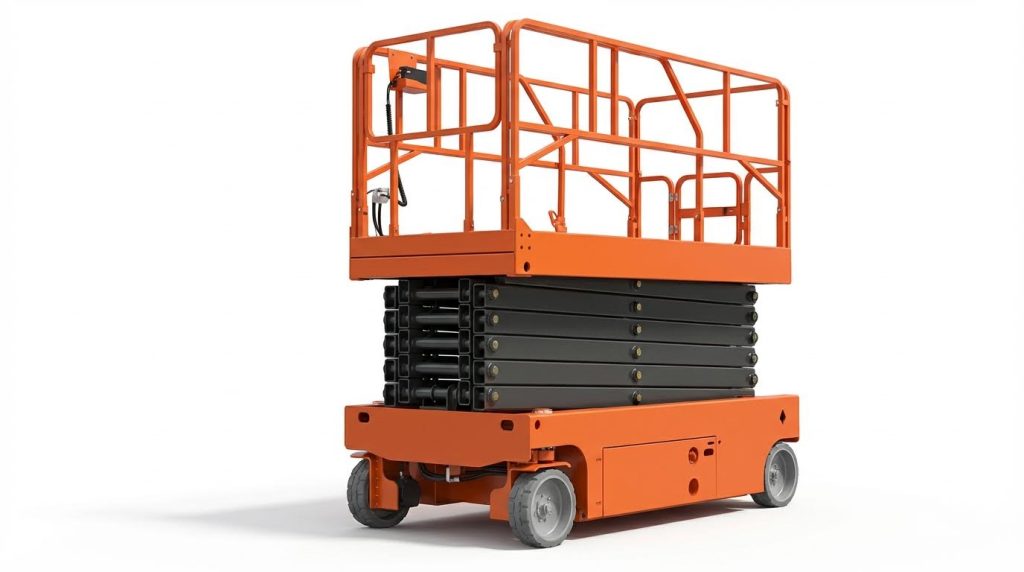
Compact scissor lifts typically cover low to mid working heights in tight indoor spaces, and this guide explains exactly how high they go and where they work best. You will see how platform height, working height, load capacity, and powertrain choices change with size so you can match each height band to real facility tasks. If you are asking how high can a compact scissor platform go, you will also learn when you must step up from compact models to larger machines for safe, efficient coverage of your building envelope.
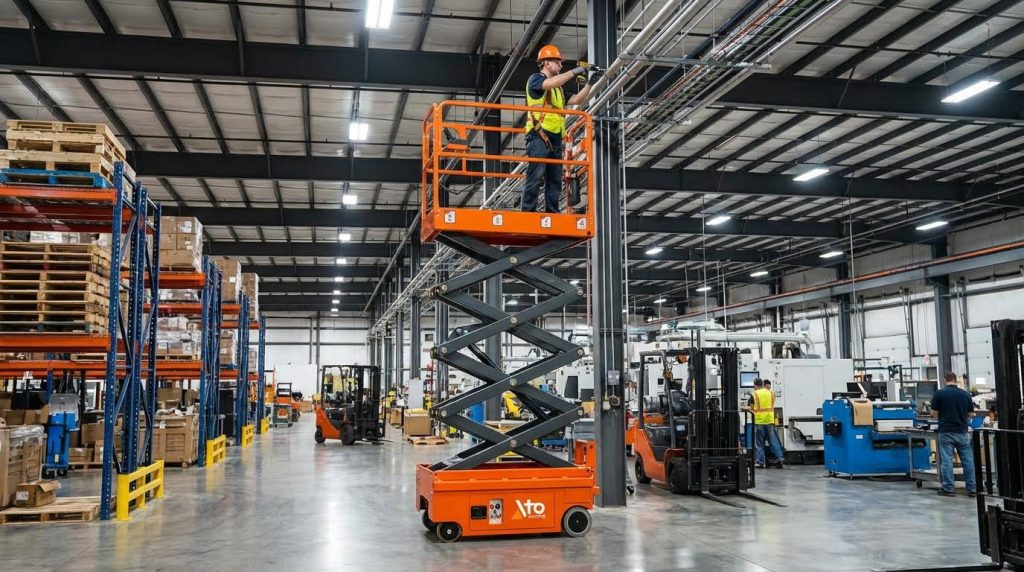
Defining Compact Scissor Lifts And Height Limits
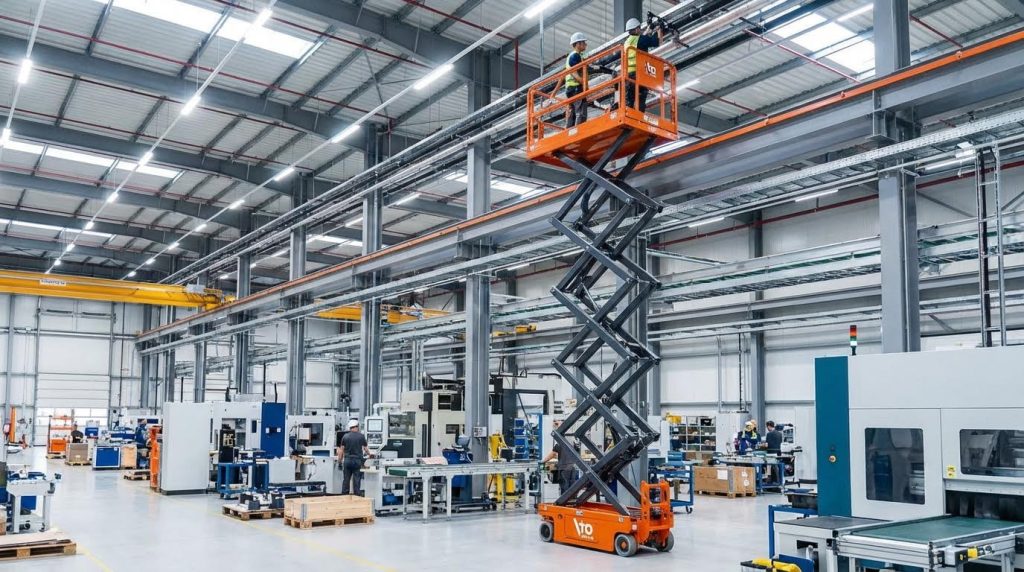
Compact scissor lifts are narrow, lightweight access platforms designed for indoor and tight-space work, with strict rated limits on platform height, working height, load, and stability that you must respect to stay within standards and warranty.
Understanding these limits is the only way to answer “how high can a compact scissor lift go” for your facility, because height, floor capacity, and task type all interact.
Platform height vs. working height
Platform height is the mechanical lift height, while working height adds an operator’s reach and is typically about 2.0 m higher for specification and comparison purposes. Getting this distinction wrong leads to under‑ or over‑specifying machines.
Platform height is the vertical distance from floor to platform deck at full extension, while working height is usually defined as platform height + 2.0 m, assuming an average operator reach. This convention is widely used in access equipment datasheets. One example describes a 5.71 m platform height corresponding to a 7.71 m working height.
- Platform height: Ground to deck at full extension – Defines how high the machine structure actually lifts you.
- Working height: Platform height + ~2.0 m – Represents what a typical person can reach overhead.
- Spec sheets: Often advertise working height – Marketing numbers can look bigger than the actual platform height.
- Risk of confusion: Mixing the two in planning – Can leave technicians 1–2 m short of target fixtures.
How to interpret height in your risk assessment
When you write a method statement, always list both values, for example “platform height 6.0 m, working height 8.0 m,” and verify that all overhead hazards (beams, sprinklers, cables) are checked against working height, not just machine height.
💡 Field Engineer’s Note: When clients ask “how high can a compact scissor lift go,” I insist they confirm the actual platform height against the job, then add a 0.5–1.0 m safety margin instead of working right at the theoretical maximum reach.
Typical compact scissor lift height bands
Compact scissor lifts usually cover low to mid-height indoor work, with typical working heights from about 3–9 m, while full-size units go far higher but require more space, weight capacity, and heavier floors.
Industry data shows compact scissor lifts offering working heights of about 10–30 ft (≈3.0–9.1 m), with narrow platforms 610–910 mm wide and 1.8–3.0 m long, and capacities around 225–450 kg. These compact units are much smaller than full-size models that reach 9–18+ m working height and carry heavier loads.
| Lift type | Typical working height range | Approx. platform height range | Typical capacity | Best for / Operational impact |
|---|---|---|---|---|
| Electric mini / micro compact | Up to ≈6.0 m (≈20 ft) | ≈4.0 m | ≈150–230 kg | Fits through standard doors; ideal for offices, shops, and low-ceiling maintenance. |
| Standard compact scissor lift | ≈3.0–9.1 m (10–30 ft) | ≈1.0–7.0 m | ≈225–450 kg (500–1,000 lbs) | Covers most indoor MRO tasks, lighting, and racking up to ~7 m platform height. |
| Full-size indoor/outdoor scissor | ≈9.0–18.0+ m (30–60+ ft) | ≈7.0–16.0 m | ≈450–1,600+ kg (1,000–3,500+ lbs) | Large construction sites and plants; needs stronger floors and more clearance. |
So, how high can a compact scissor lift go in practical terms? For most self-propelled compact models used indoors, you should plan around a maximum working height of roughly 8–9 m, which corresponds to a platform height near 6–7 m, keeping within typical compact-class envelopes. Smaller electric mini scissor lifts sit at the lower end of this range, up to around 6 m working height.
- Below ≈4 m working height: Micro/mini lifts – Best where floor load limits and doorways are tight.
- ≈4–8 m working height: Core compact band – Covers most indoor maintenance and light installation.
- ≈8–9 m working height: Upper compact limit – Check floor loading and sway, and consider full-size if you need more.
Why not push compact lifts past their rated height?
Height ratings already include stability margins based on center of gravity, chassis width, and wind or indoor disturbance factors. Exceeding the nameplate height or using makeshift steps on the platform undermines those margins and conflicts with standards such as ANSI and EN280.
💡 Field Engineer’s Note: Once your required working height is consistently above about 9 m, I usually recommend stepping up to a heavier, wider machine rather than running a compact unit at its top stop all day; the extra stability and platform area pay off in both safety and productivity.
Key Specifications That Change With Height
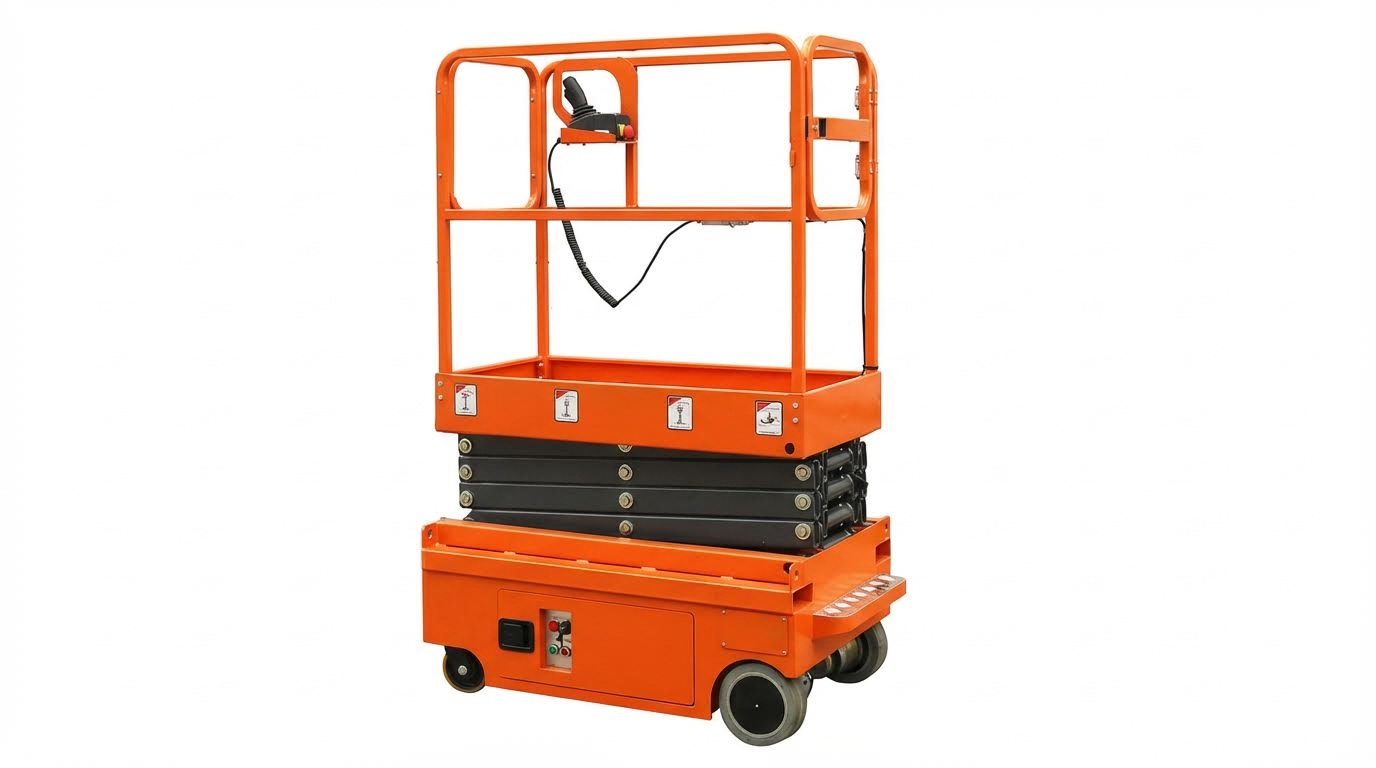
Key specifications that change with height are platform size, person rating, load capacity, stability, floor loading, powertrain, hydraulics, and duty cycle, and they all tighten the practical answer to how high can a compact scissor lift go in your facility.
As platform height increases, the scissor structure, chassis, and power system all scale up. That extra steel and reach improve access but demand stronger floors, more energy, and stricter stability control.
Platform size, extensions, and person rating
Platform size, extensions, and person rating all grow with height, but every extra millimetre of deck and every extra person sharply reduces how forgiving the lift is at maximum reach.
Compact scissor lifts typically use rectangular platforms, often around 1,700 mm × 1,000 mm, with optional slide-out extensions that increase usable floor area. Extensions usually carry a lower rated load than the main deck, so you must treat them as a separate loading zone. Typical platform and extension behavior shows that person rating and extension load are the first things to be de-rated as height increases.
| Lift Type / Height Band | Typical Platform Size | Extension Behavior | Person Rating (typical) | Operational Impact |
|---|---|---|---|---|
| Electric mini / compact (working height ≈ 3–6 m) | ≈ 1,700 mm × 1,000 mm deck example size | Short slide-out; lower load on extension | 1–2 persons | Good for tight indoor work where doorways are ≈ 2.0–2.1 m wide |
| Taller compact slab lift (working height ≈ 6–10 m) | Longer deck; still narrow (≤ 1,000 mm) for aisles | Longer extension; more aggressive de-rating on extension zone | 2 persons typical | Supports two technicians plus tools for ceiling work in 8–10 m bays |
| Full-size indoor/outdoor (working height > 10 m) | Wider, longer deck (often > 2,000 mm long) | Large extension; strict loading rules | 2–3 persons | Suited to big halls or outdoor facades, not narrow-aisle interiors |
- Platform footprint grows with reach: Taller lifts need a longer or wider deck for usable workspace – but this also increases overturning moment at height.
- Extensions trade area for capacity: Sliding out 600–900 mm of deck shifts the load outward – so manufacturers de-rate the allowable kg on the extension.
- Person rating is capacity-driven: The “how many people” number is just capacity divided by assumed person mass – extra tools or materials can consume one “person slot” quickly.
- Guardrails and toe-boards add mass: Taller models use heavier rail systems – this eats into the remaining payload for people and tools.
How person rating links to “how high can a compact scissor lift go”
Even if a compact scissor lift can technically reach 8–10 m working height, you might find the nameplate person rating limited to one person when using the extension. That effectively caps how useful that height is for two-person tasks like duct installation or cable tray work.
💡 Field Engineer’s Note: When you push a compact lift near its maximum platform height, treat the extension like a cantilevered scaffold board. Keep heavy toolboxes and materials inside the main deck zone; use the extension mainly for reach, not for stacking weight at the edge.
Load capacity, stability, and floor loading
Load capacity, stability, and floor loading become tighter constraints as height increases, and in many buildings they limit how high can a compact scissor lift go long before the brochure says it tops out.
Compact scissor lifts commonly support about 225–450 kg (500–1,000 lbs) of payload, while the machine itself may weigh 700–1,800 kg (1,500–4,000 lbs) for compact models and up to 5,500 kg (12,000 lbs) or more for full-size units. These ranges directly influence stability and floor design checks.
| Parameter | Compact Scissor (typical) | Full-Size Scissor (typical) | Operational Impact |
|---|---|---|---|
| Working height range | ≈ 3–9 m (10–30 ft) typical compact range | ≈ 9–18+ m (30–60+ ft) | Defines whether you can stay compact or must move to heavier full-size units |
| Rated load capacity | ≈ 225–450 kg (500–1,000 lbs) | ≈ 450–1,600+ kg (1,000–3,500+ lbs) | More height usually demands higher capacity for façade work, cladding, etc. |
| Machine weight | ≈ 700–1,800 kg (1,500–4,000 lbs) | ≈ 2,300–5,500+ kg (5,000–12,000+ lbs) | Heavier machines may exceed mezzanine or suspended slab design loads |
| Stability features | Wide chassis, sometimes outriggers, indoor-only wind limits | Wider base, heavier chassis, outriggers, outdoor wind ratings | Outdoor work at height often forces move to full-size, even if height is similar |
- Stability is about centre of gravity (CoG): As the platform rises, the combined CoG climbs – making the lift more sensitive to side loads and uneven floors.
- Wind ratings restrict outdoor height: Many compact electric slab lifts are “indoor only” because they are not rated for wind speeds above ≈ 11–12.5 m/s – this caps usable height outside. Typical wind considerations.
- Floor loading is often the hidden bottleneck: A 1,500–3,000 kg compact slab lift can impose very high point loads through small wheels – which may exceed office or mezzanine slab ratings even at modest heights.
- Standards and de-rating rules apply: Using platform extensions or working in higher wind zones often requires de-rating load or height according to standards like ANSI/EN280 and manufacturer instructions – ignoring this undermines safety margins.
How to think about floor loading for compact lifts
Do not just compare machine weight to “kg/m²” of the floor. Wheel contact patches are small, so local stresses can be several times higher than the average. Structural engineers evaluate these as point loads or line loads, especially near slab edges, cable trenches, or hollow-core planks. When you ask how high can a compact scissor lift go, the honest answer may be “only as high as the floor under it allows.”
💡 Field Engineer’s Note: On older mezzanines or tiled office floors, I often specify a lower working height or a smaller compact model than the task theoretically needs. A lighter, shorter lift that does two moves is safer than a tall, heavy unit that cracks tiles or overstresses a beam.
Powertrain, hydraulics, and duty cycle
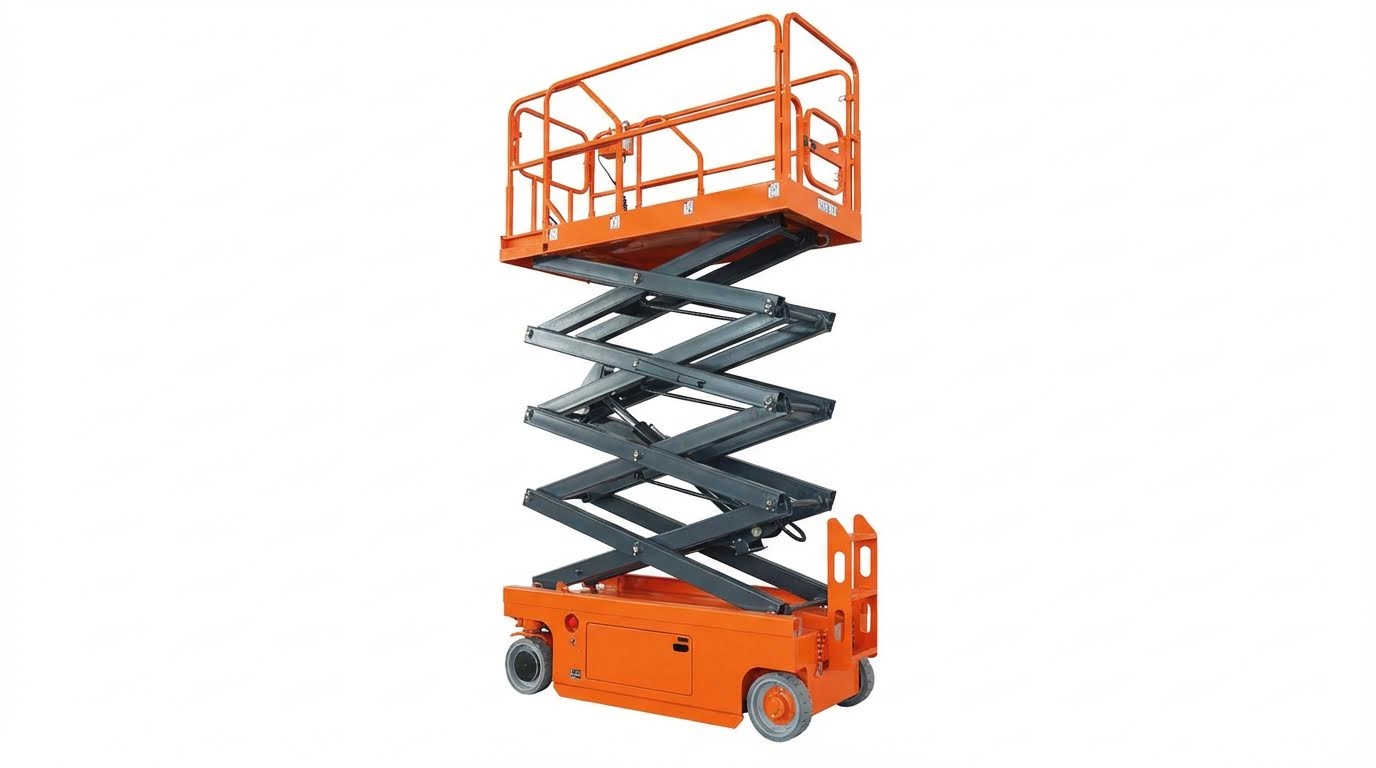
Powertrain, hydraulics, and duty cycle scale hard with height, so the higher you go the more you must budget for battery capacity, pump size, and maintenance to keep the lift productive and safe.
Most compact scissor lifts use electric powertrains with battery packs and hydraulic cylinders to raise the stacked arms. Electric units are popular indoors because they are emission-free and quiet, while larger outdoor models often use diesel engines and higher-capacity hydraulics. Powertrain choices directly influence how many full-height cycles you can run per shift.
| Aspect | Compact Electric Scissor | Larger / Rough-Terrain Scissor | Operational Impact |
|---|---|---|---|
| Power source | Battery-electric, zero local emissions indoor-suitable | Diesel or heavy-duty electric | Electric suits indoor/low-ventilation sites; diesel suits long outdoor shifts |
| Hydraulic system | Smaller cylinders, lower flow, moderate speeds | Larger cylinders, higher flow, higher pump power | Taller lifts need more oil volume and power, raising energy use |
| Duty cycle | Optimised for intermittent indoor tasks | Built for frequent cycling and rough terrain | High-frequency up/down at full height may require larger battery or engine |
| Noise level | Low noise, good for hotels, offices, retail noise benefits | Higher noise, acceptable outdoors | Noise-sensitive facilities often cap you at compact electric heights |
- Higher lifts need more energy per cycle: Raising a platform from 0 to 8–10 m consumes much more hydraulic energy than to 3–4 m – so batteries deplete faster at tall working heights.
- Hydraulic speed vs comfort: Faster lift speeds improve productivity but increase dynamic loads and sway – taller compacts often use conservative speeds to keep motion acceptable at height.
- Cold environments affect oil and batteries: In cold storage or winter conditions, hydraulic oil viscosity increases and batteries lose capacity – this effectively reduces how high and how often a compact scissor lift can operate before recharge.
- Maintenance interval tightens with height and usage: More cycles at higher pressures accelerate wear on hoses, seals, and pumps – so high-duty tall lifts need stricter inspection regimes.
Why duty cycle matters when planning maximum working height
If your job requires going to near-maximum platform height 30–40 times per shift, you cannot just look at the “maximum working height” line. You must confirm that the battery pack, charger availability, and hydraulic cooling capacity can support that many full-stroke cycles without overheating or voltage sag. Otherwise, your real, usable answer to how high can a compact scissor lift go will be “only for the first half of the shift.”
💡 Field Engineer’s Note: For facilities that run two or three shifts, I often specify slightly shorter compact lifts with smaller stroke but faster, more efficient hydraulics. Operators spend less time travelling to maximum height, batteries last longer, and uptime beats the theoretical benefit of an extra metre or two of reach.
Matching Height Ranges To Facility Operations
Compact scissor lift height ranges map directly to ceiling height, aisle width, and task type, so you should size by job and building geometry before asking how high can a compact scissor lift go.
| Working height band | Typical platform height | Typical use case | Best facility fit |
|---|---|---|---|
| Up to ~6 m | ~4 m | Low-level indoor access, light maintenance | Offices, retail, low-bay warehousing |
| ~6–9 m | ~4–7 m | General MRO, lighting, ducting, racking | Standard warehouses, production lines |
| ~9–11.5 m | ~7–9.5 m | High-bay access, inventory, mezzanines | High-bay logistics, 2–3 level mezzanines |
Compact scissor lifts usually offer a working height around 3–9 m (10–30 ft) depending on model, with narrow chassis suited to tight indoor spaces. Typical compact ranges are documented here. If you need more than ~9–10 m working height regularly, you usually move into full-size or rough-terrain units instead of “compact.”
💡 Field Engineer’s Note: Always check your lowest obstructions, not just roof height. In older plants, overhead pipe bridges or cable trays often sit 500–1,000 mm below the truss line and become the real limit for safe working height.
Indoor maintenance, MRO, and light installation
For indoor maintenance and light installation, you typically choose compact scissor lifts in the lower half of the height range to minimize weight and floor loading.
- Ceiling height up to ~4 m: Choose working height 5–6 m – Comfortable reach for lights, signage, and low ducting with margin.
- Ceiling height ~6–8 m: Choose working height 8–9 m – Covers most warehouse and light industrial MRO tasks.
- Ceiling height ~8–10 m: Choose working height 10–11 m – Needed for high-bay lighting, sprinkler heads, and cable tray work.
Compact scissor lifts in this class normally provide working heights of about 3–9 m (10–30 ft) with narrow platforms around 600–900 mm wide and 1.8–3.0 m long, supporting roughly 225–450 kg (500–1,000 lbs). These dimensions and capacities are typical for indoor slab electric units. Electric mini scissor lifts with working heights up to about 6 m (20 ft) and non-marking tyres are often enough for hotels, offices, and retail stores. They are designed specifically for these environments.
- Electric power: Battery units give emission-free operation – Critical where ventilation is limited. Indoor guidance highlights this advantage.
- Low noise: Quiet drives and hydraulics – Reduces disruption in occupied offices, hospitals, and schools. Noise is a key factor in sensitive buildings.
- Compact footprint: Chassis often under 800 mm wide – Allows passing through standard doors and service corridors. Narrow-aisle maneuverability is a core design goal.
How high can a compact scissor lift go for typical indoor MRO?
For indoor maintenance and light installation, most facilities work comfortably with compact scissor lifts offering up to about 9–10 m working height. This covers the majority of 6–8 m clear-height buildings while keeping the machine light and easy to move.
Warehousing, narrow aisles, and inventory access
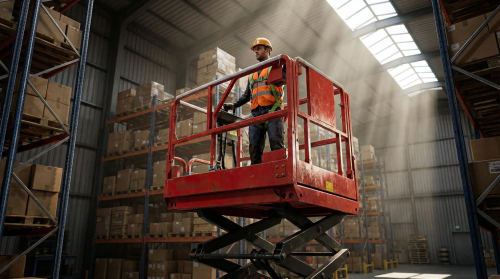
For warehousing and narrow aisles, you size compact scissor lifts by racking height and aisle width, keeping the chassis as narrow as possible while still reaching the top beam.
- Low-bay racking (up to ~5 m top beam): Working height 6–7 m – Stock checks, label changes, and light picking.
- Medium racking (~6–8 m top beam): Working height 8–9 m – General inventory access and maintenance on top levels.
- High-bay or mezzanine (~9–11 m working level): Consider upper-end compact slab lifts or step into larger electric scissor lifts with platform heights up to about 11.9 m, giving higher working heights on smooth floors. Slab electric ranges up to roughly 11.9 m platform height are documented here.
Compact warehouse scissor lifts rely on narrow chassis and non-marking tyres to work between racks and on finished floors. Guidance for indoor use stresses floor protection and stability checks. Working height is usually limited by how much lateral stability you can maintain on a narrow base without outriggers.
| Warehouse scenario | Recommended working height | Chassis/aisle consideration | Operational impact |
|---|---|---|---|
| Retail backroom / light racking | 5–7 m | Very narrow aisles, doors ~0.9 m wide | Use mini electric scissor lifts to reach top shelves without blocking aisles. |
| Standard pallet racking | 7–9 m | Aisles ~2.5–3.0 m | Compact slab lifts share space with semi electric order picker and order pickers. |
| High-bay / mezzanine edges | 9–11 m | Check slab load rating and guardrail heights | May require heavier electric scissor lifts or full-size units. |
How high can a compact scissor lift go in narrow aisles?
In narrow warehouse aisles, compact scissor lifts usually operate in the 6–9 m working-height band to balance reach and stability on a slim chassis. Higher reaches often require wider, heavier machines or different access equipment.
Final Considerations For Specifying Compact Lifts
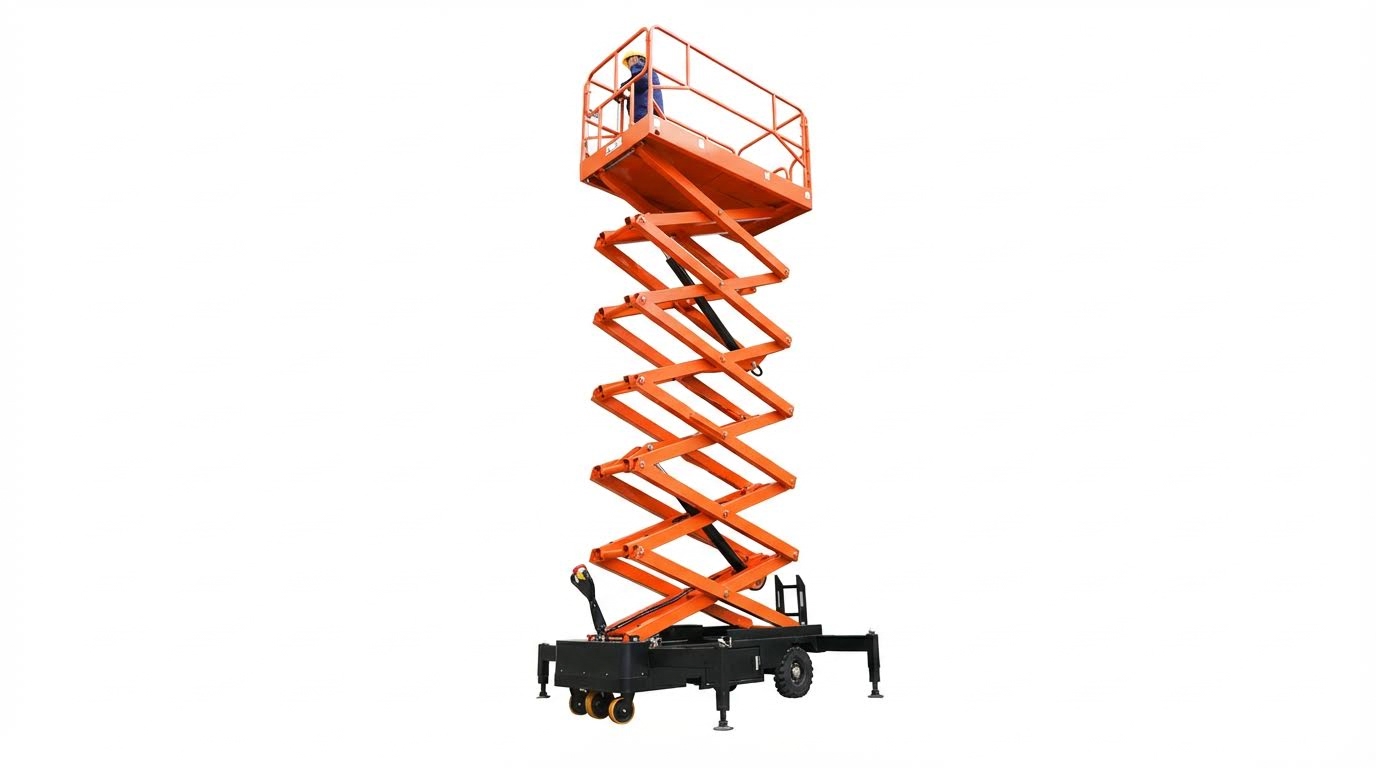
Final specification decisions for compact scissor lifts should balance height, load, floor strength, and duty cycle against real facility constraints, not just catalogue ranges or price. This is where you lock in safe, efficient, and future-proof choices.
- Clarify “how high can a compact scissor lift go” for your site: Most compact units offer about 6–9 m working height (10–30 ft), with full-size models reaching 9–18+ m (30–60+ ft). Prevents overspecifying big machines for low ceilings or underspecifying for tall racking. Working height ranges
- Always separate platform height from working height: Working height is typically platform height + about 2.0 m, reflecting an operator’s reach. Stops you from discovering on day one that the lift stops 500 mm short of the job. Platform vs working height
- Check platform area, extension use, and person rating together: Typical compact decks around 1,700 mm × 1,000 mm with slide-out extensions lose capacity on the extended section and may have a 2–3 person rating limit. Avoids overloading a long tool load-out on a reduced-capacity extension. Deck size and person rating
- Match load capacity to the real job, not just people weight: Compact lifts often support roughly 225–450 kg (500–1,000 lbs), while industrial tables can reach 500–2,000 kg and more. Prevents subtle overloads from tools, materials, and parts bins added later. Industrial lift capacities
- Confirm floor loading with engineering, not guesswork: Compact self-propelled lifts can weigh 1,500–3,000 kg, and larger outdoor units exceed 3,500 kg, concentrating loads into small wheel footprints. Protects warehouse slabs and mezzanines from cracking or punch-through failures. Machine weight and slab checks
- Respect stability, wind ratings, and nameplate limits: Stability depends on centre of gravity, chassis width, and any outriggers, with outdoor-rated models assigned maximum wind speeds around 11–12.5 m/s. Reduces tip-over risk when working near doors, docks, or open bays. Wind and stability limits
- Apply de-rating rules for extensions, wind, and add-ons: Standards and manufacturer instructions require lower capacities when using platform extensions or working in higher wind zones. Stops “paper-compliant” specs from becoming unsafe once jobsite realities change. De‑rating guidance
- Choose electric vs diesel based on environment and duty cycle: Battery-powered compact lifts offer emission-free and low-noise operation for indoor work, while diesel and rough-terrain units suit heavy outdoor tasks with higher capacities up to about 750 kg. Aligns powertrain with ventilation limits, shift length, and terrain. Indoor electric use Powertrain choices
- Consider hydraulic speed and energy efficiency for repetitive tasks: High-capacity or long-stroke models use larger cylinders and higher flow rates, which increase pump power and energy use, but proportional valves and regenerative lowering can recover energy. Improves throughput and reduces electricity or fuel costs on multi-shift sites. Hydraulic efficiency
- Lock in safety features and inspection regimes at the spec stage: Modern lifts provide overload sensing, tilt sensors, emergency stops, and dual controls, but they only work when paired with daily inspections and trained operators. Builds a compliant, low-incident access strategy instead of relying on PPE alone. Inspections and training Integrated safety systems
- Verify compliance with ANSI/EN280 and local regulations: Procurement should confirm that the compact lift meets ANSI, EN280, CE, and any local codes, and that documentation and nameplates are complete. Reduces legal exposure and simplifies audits, especially in multi-site fleets. Standards and compliance
How to quickly shortlist the right compact lift
Use this fast filter before you deep-dive into models:
- Step 1: Confirm maximum required working height in metres, then back-calculate platform height. – Ensures the “how high can a compact scissor lift go” question is answered against your actual task, not brochure maximums.
- Step 2: List worst-case live load in kg (people + tools + materials). – Prevents creeping overload as tasks evolve.
- Step 3: Measure narrowest door, aisle, or turning space in mm. – Eliminates models that cannot physically reach the work area.
- Step 4: Check floor design data or get an engineer to verify point loads. – Protects slabs, mezzanines, and suspended floors.
- Step 5: Choose electric vs diesel based on ventilation, noise limits, and shift pattern. – Aligns with indoor air quality and uptime targets.
💡 Field Engineer’s Note: When you push compact scissor lifts toward the top of their height range, even small add-ons—pipe racks, extra batteries, heavy tooling—can eat into stability and capacity margins. Always re-check nameplate limits and any de-rating notes after you bolt on accessories or change the intended use; the “as-delivered” rating is not always the “as-operated” rating in the field.
Final Considerations For Specifying Compact Lifts
Compact scissor lift safety does not come from height rating alone. It comes from how well you align platform height, working height, load, and powertrain with your building geometry and real tasks. When you size correctly, operators work within stable envelopes instead of at the edge of the chart.
Height bands define what is possible, but floor loading, aisle width, and racking layout decide what is actually safe. As you push higher, centre of gravity rises, wheel loads increase, and person ratings often drop. That is why you must treat extensions, wind limits, and de‑rating rules as design inputs, not fine print.
The best practice is simple. First, fix the true working height and worst-case live load. Second, check access paths and slab capacity. Third, choose electric or diesel based on air quality, duty cycle, and noise. Finally, lock in inspection routines and operator training so built-in safety systems do their job.
Procurement and engineering teams that follow this method usually end up with slightly shorter, lighter compact lifts that still reach every task but run with higher stability and uptime. Atomoving supports this approach by offering compact models tuned to specific height bands, floor conditions, and duty cycles, so you can match each lift to a clear, defensible use case.
Frequently Asked Questions
How high can a compact scissor lift go?
A compact scissor lift typically has a platform height range of 12–20 feet, which translates to a working height range of 18–26 feet. These lifts are designed for tasks that require access to lower heights and are ideal for tight spaces due to their smaller size. For more detailed information, you can refer to this Scissor Lift Height Guide.
What is the tallest scissor lift available?
The tallest scissor lift in the world is the Dingli 3730HRT, which boasts a working height of 37 meters (approximately 121 feet). This model is exceptional and not typical for standard compact scissor lifts. To learn more about this impressive piece of equipment, check out this article on World’s Tallest Scissor Lift.
Are there any safety rules specific to scissor lifts?
Yes, OSHA has specific safety rules for operating scissor lifts. Employees are not allowed to use ladders or guardrails to reach higher positions on the scissor lift, as this can compromise stability. Additionally, leaning over guardrails is prohibited. For comprehensive safety guidelines, visit this resource on OSHA Scissor Lift Safety.