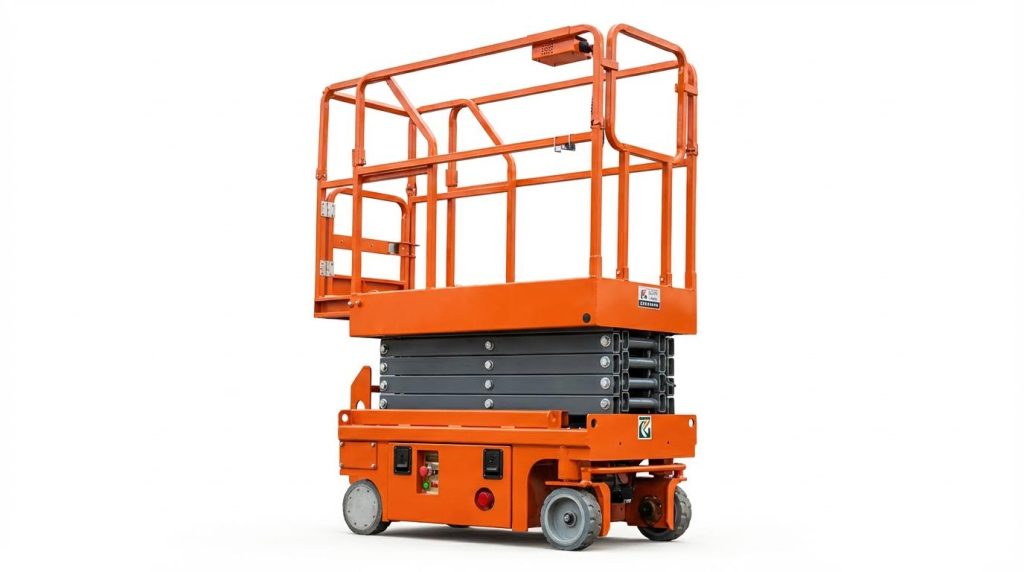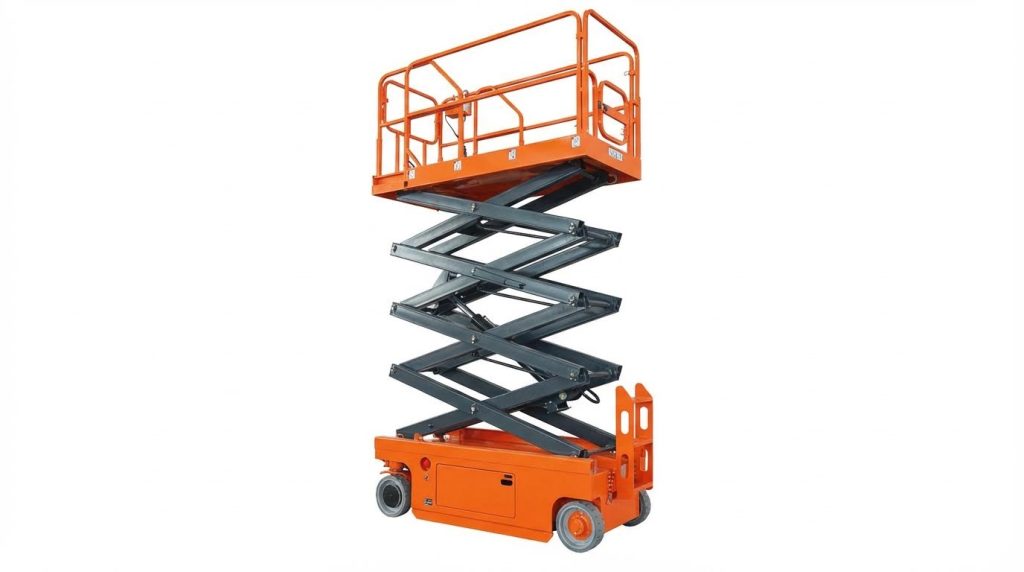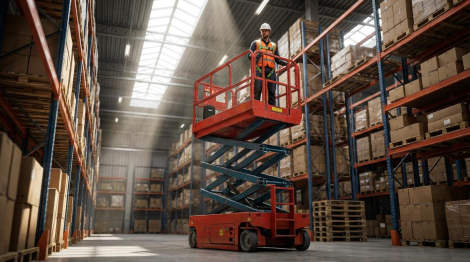
Scissor lift inspection regimes and operator certification cycles formed a critical backbone of industrial safety management. Engineering teams, safety managers, and fleet owners needed clear rules for when to inspect equipment and when to renew operator credentials. This article mapped the regulatory framework, from the Machinery Directive and EN 1570-1 through ANSI/CSA and OSHA-driven annual machine inspections. It then linked engineered inspection lifecycles with regional training validity periods, concluding with practical strategies to align inspections, documentation, and certification expiry for robust compliance.
Regulatory Framework For Scissor Lift Inspections
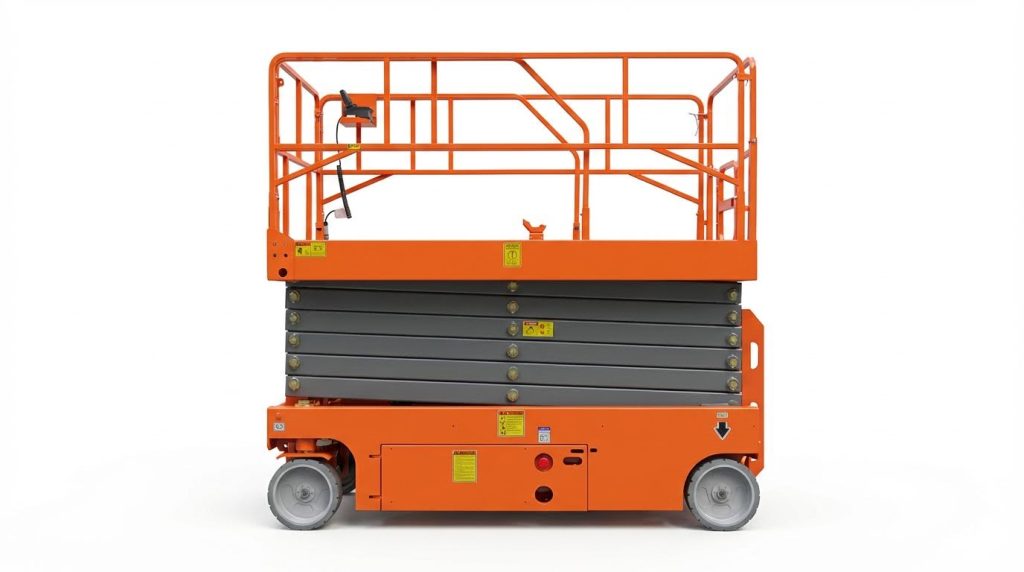
The regulatory framework for scissor lift inspections linked design, manufacture, and operation under harmonized safety rules. Engineers and safety managers had to reconcile machinery directives, product standards, and occupational safety law. A structured interpretation of these layers reduced ambiguity in inspection scope and intervals. The result was a predictable lifecycle for both equipment and operator oversight.
Machinery Directive, EN 1570-1, And EN 60204-1
The EU Machinery Directive defined essential safety requirements and determined when external expert approval or EC type examination was mandatory. Scissor lift tables that lifted people above a 3 m fall height or acted as vehicle platforms could fall under Annex IV, triggering notified body involvement. EN 1570-1 translated these essential requirements into detailed technical provisions for lift tables, including load testing, stability, guarding, and safety devices. EN 60204-1 complemented this by specifying electrical equipment requirements, such as protection against electric shock, wiring practices, and functional safety of control circuits.
Inspection regimes under EN 1570-1 covered visual checks, functional tests, and measurements of all safety-related functions. Designers used preliminary inspections on drawings, circuit diagrams, and manuals to verify that planned configurations met EN 1570-1 before fabrication started. Construction inspections then confirmed that welded structures, geometry, and installed components matched the approved design. Acceptance inspections combined mechanical, practical, and electrical checks, applying EN 60204-1 criteria to verify emergency stops, isolation devices, and protective bonding.
Employer Duties Under Industrial Safety Rules
Industrial safety regulations, such as the German BetrSichV and comparable national rules, placed clear obligations on employers rather than only on manufacturers. Before commissioning a scissor lift table, employers had to perform a documented risk assessment that considered load cases, work positions, environment, and interaction with other machinery. This assessment defined protective measures, inspection frequencies, and any additional safeguards beyond the base standards. Employers also had to ensure that operating instructions, rescue procedures, and emergency contacts were available at the point of use.
Occupational safety law required periodic inspections aligned with both EN 1570-1 and manufacturer instructions, with intervals justified by risk and usage intensity. Employers had to assign only trained and authorized workers to operate lifts and to conduct daily pre-use inspections. Where national rules referenced ANSI/CSA or OSHA-type concepts, annual or pre-defined periodic examinations by competent persons became mandatory. Failure to integrate these duties into internal procedures exposed companies to regulatory penalties and liability after incidents.
Qualified Person And Competency Requirements
Regulations defined a “qualified person” as an individual with appropriate technical education, relevant experience, and familiarity with applicable standards and laws. For scissor lift inspections, this meant proven knowledge of EN 1570-1, EN 60204-1, the Machinery Directive, and national occupational safety rules. Qualified persons had to understand hydraulic, mechanical, and electrical systems sufficiently to recognize degradation, non-conformities, and improper modifications. Their competency also included the ability to interpret load charts, safety circuits, and protective device functions.
Industrial safety rules required that these inspectors remained independent in their judgment, even when employed by the operator or manufacturer. Training records, certificates, and evidence of periodic technical updating supported their status during audits. For annual machine inspections under ANSI/CSA frameworks, qualified mechanics or factory-trained technicians performed structured checks using standardized forms. Regulators expected employers to verify competency rather than rely solely on job titles, especially when outsourcing inspections to service providers.
Documentation, Traceability, And Audit Readiness
Regulatory frameworks treated documentation as integral to safety, not as an administrative afterthought. Each inspection event required a dated, signed record that identified the machine by model, serial number, and location. Forms typically captured inspection scope, findings, pass/fail status, corrective actions, and the inspector’s qualifications. Where standards referenced AMIs or annual inspections, records had to demonstrate that intervals did not exceed the allowed 12–13 months.
Traceability also extended to risk assessments, commissioning reports, and evidence of operator training and certification validity. During authority inspections or post-incident investigations, regulators expected rapid retrieval of these documents to verify compliance. Digital record systems improved audit readiness by linking inspection histories, defect reports, and repair confirmations
Engineering The Inspection Lifecycle Of Lift Tables
Design-Phase And Construction Compliance Reviews
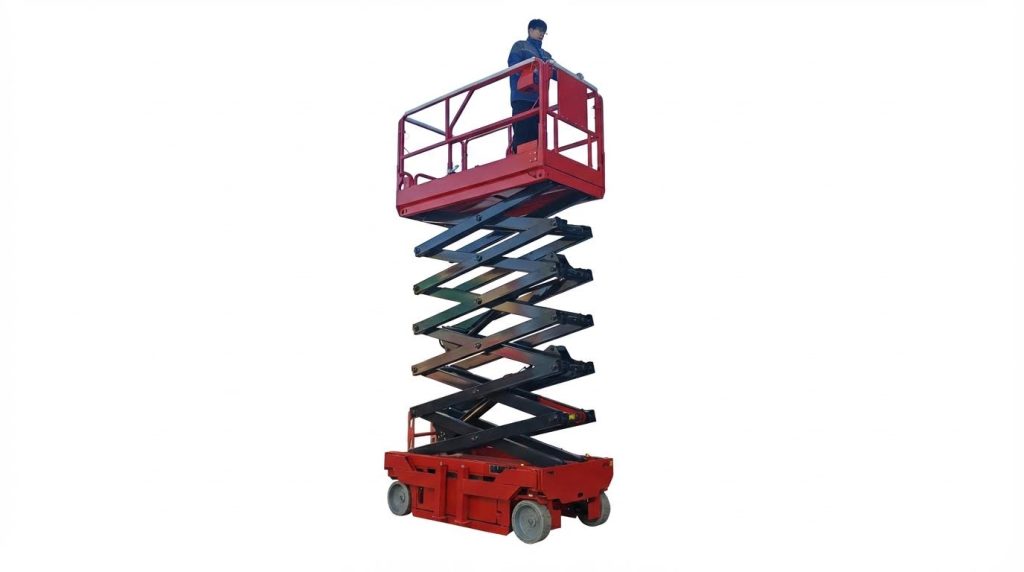
The inspection lifecycle started in the design office. Engineers performed preliminary conformity checks against EN 1570-1 and EN 60204-1 using drawings, hydraulic schematics, and control circuit diagrams. They verified stability, load ratings, safety distances, and guarding concepts before any fabrication. This early review reduced redesigns and helped demonstrate Machinery Directive compliance where applicable. During construction, inspectors compared the fabricated steel structure with the approved drawings and welding specifications. They checked weld sizes, material grades, pin diameters, and mounting interfaces against the technical file. Dimensional checks ensured scissor geometry, stroke, and platform flatness matched design assumptions. These steps built a documented chain of evidence supporting later acceptance and CE conformity assessments.
Acceptance, Final, And Pre-Commissioning Checks
Acceptance inspection occurred when the lift table left manufacturing. It combined visual, functional, and electrical checks as required by EN 1570-1 and EN 60204-1. Visual inspection covered mechanical integrity, guards, labels, safety markings, and correct installation of hoses and cables. Practical testing verified limit switches, safety edges, interlocks, emergency stops, overload protection, and descent control under rated and test loads. Hydraulic systems underwent leak checks and pressure verification. Electrical inspection confirmed correct protection devices, earthing, cable routing, and emergency circuits. When the lift was assembled on the customer site, a final inspection verified correct anchoring, pit interfaces, guarding to adjacent structures, and safe access. Pre-commissioning checks included validation of travel limits, speed, and noise, plus verification that local emergency procedures and signage matched the risk assessment.
Daily, Monthly, And Annual Mechanical Inspections
The in-service phase relied on structured short and long interval inspections. Operators or designated staff carried out daily pre-use checks before energizing the lift. They positioned the table on a level surface, inspected structural members for deformation or cracks, and looked for hydraulic leaks. They verified guardrails, toe boards, and safety decals, and confirmed that control panels, emergency stops, and foot protection devices were intact and responsive. Monthly inspections were more detailed and followed manufacturer instructions. Technicians tested safety edges, interlocks, and emergency lowering systems. They inspected cables, connectors, screws, pins, and limit switches, and checked hydraulic oil levels and hose condition. Annual inspections focused on wear-critical components such as fixed, floating, connecting, and scissor pivot bearings. Inspectors measured play, checked corrosion, and evaluated cylinder mountings and chassis interfaces. Findings fed into maintenance plans and potential component replacement before failure.
AMIs, ANSI/CSA, And OEM-Specific Checklists
Annual Machine Inspections (AMIs) under ANSI/CSA standards formalized the yearly condition assessment. They had to occur at intervals not exceeding 13 months from the previous inspection. Qualified mechanics, familiar with the specific lift model and its manuals, performed these AMIs. Standardized forms captured unit identification, operating hours, and the previous inspection date. Inspectors classified each item as passed, failed, corrected, or not applicable. Coverage typically included eight domains: functions and controls, platform assembly, scissor arms, chassis, power system, hydraulic and electrical systems, manuals and decals, and general safety items. OEM-specific checklists refined these domains with model-level details such as sensor locations, calibration steps, and torque values. Any failed item meant immediate removal from service until repair and reinspection by competent personnel. Properly archived AMI records supported regulatory audits, warranty claims, and lifecycle cost analysis, while also providing data for predictive maintenance and reliability engineering.
Operator Certification Validity And Renewal Cycles
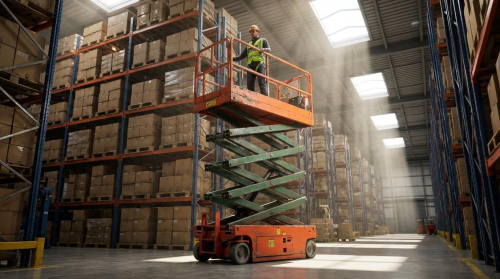
Operator certification validity defined the human-factor boundary condition for safe scissor lift use. Engineering controls and mechanical inspections could only mitigate risk if operators remained competent, current, and documented. This section analyzed how OSHA, CSA, and regional rules interacted with training-provider policies, and how sites could structure evaluations, refresher triggers, and digital tools into a coherent assurance system.
OSHA, CSA, And Regional Training Requirements
OSHA in the United States required employers to ensure scissor lift operators were trained, evaluated, and competent, and to maintain valid certifications. Industry practice aligned with a three-year recertification cycle, with renewal training mandated at least every three years or sooner after incidents, unsafe operation, or equipment changes. In Canada, CSA standards and provincial regulations such as Ontario’s OHSA required adequate training, daily inspections, and documented maintenance, but did not prescribe a universal expiry date for certificates. Regional authorities like Ontario’s Ministry of Labour left certificate validity periods to training providers or internal company policies, while still holding employers legally responsible for competence and safe operation. Across jurisdictions, training typically combined theory and practical evaluation, covering equipment limits, emergency procedures, fall protection, and inspection duties.
Two-Year Vs. Three-Year Certification Practices
Three-year certification cycles reflected OSHA-driven expectations in the United States, where operator cards and records had to support compliance during audits. Training content during three-year renewals usually updated operators on revised standards, manufacturer bulletins, and lessons learned from incidents. In contrast, several Canadian training organizations and rental houses in Ontario adopted a two-year renewal policy, despite no explicit legal requirement. These shorter cycles aimed to counter skill fade and respond to evolving best practices, particularly for aerial work platforms used intermittently. Some providers historically issued “non-expiring” cards, then migrated to time-limited validity as clients demanded clearer due-diligence evidence. From a risk-engineering perspective, the optimal interval depended on task frequency, incident history, and technological change, but organizations still needed a clearly documented policy, whether two, three, or five years.
Site-Specific Evaluations And Refresher Triggers
Site-specific evaluations allowed employers to close the gap between generic certification and local risk conditions. Supervisors or qualified instructors could assess operators on the actual scissor lift models, floor conditions, and work-at-height scenarios present on site. Refresher training and re-evaluation were best triggered not only by calendar expiry, but also by events such as near misses, equipment upgrades, process changes, or extended operator absence. Daily pre-use inspections, mandated under OSHA and provincial rules, functioned as continuous competence checkpoints by forcing operators to apply their training before each shift. Where no formal recertification rule existed, documented on-site evaluations and toolbox talks provided evidence that competence had been maintained, which was critical during regulatory investigations or internal audits.
Integrating Digital Records And Predictive Tools
Digital training and inspection systems turned certification management into a traceable, auditable process. Learning management systems could store operator cards, issue reminders before two- or three-year expiries, and link training records to specific machine IDs. Inspection apps allowed operators to log daily checks, AMIs, and defect reports with timestamps, photos, and electronic signatures, satisfying OSHA, CSA, and machinery safety documentation expectations. Integration with maintenance software enabled predictive triggers, for example flagging operators for refresher briefings after repeated misuse-related faults or control-abuse events. Over time, aggregated data on incident rates, near misses, and inspection failures helped safety engineers adjust renewal intervals and training content, creating a feedback loop between human performance, equipment reliability, and regulatory compliance.
Summary: Aligning Inspections, Training, And Compliance
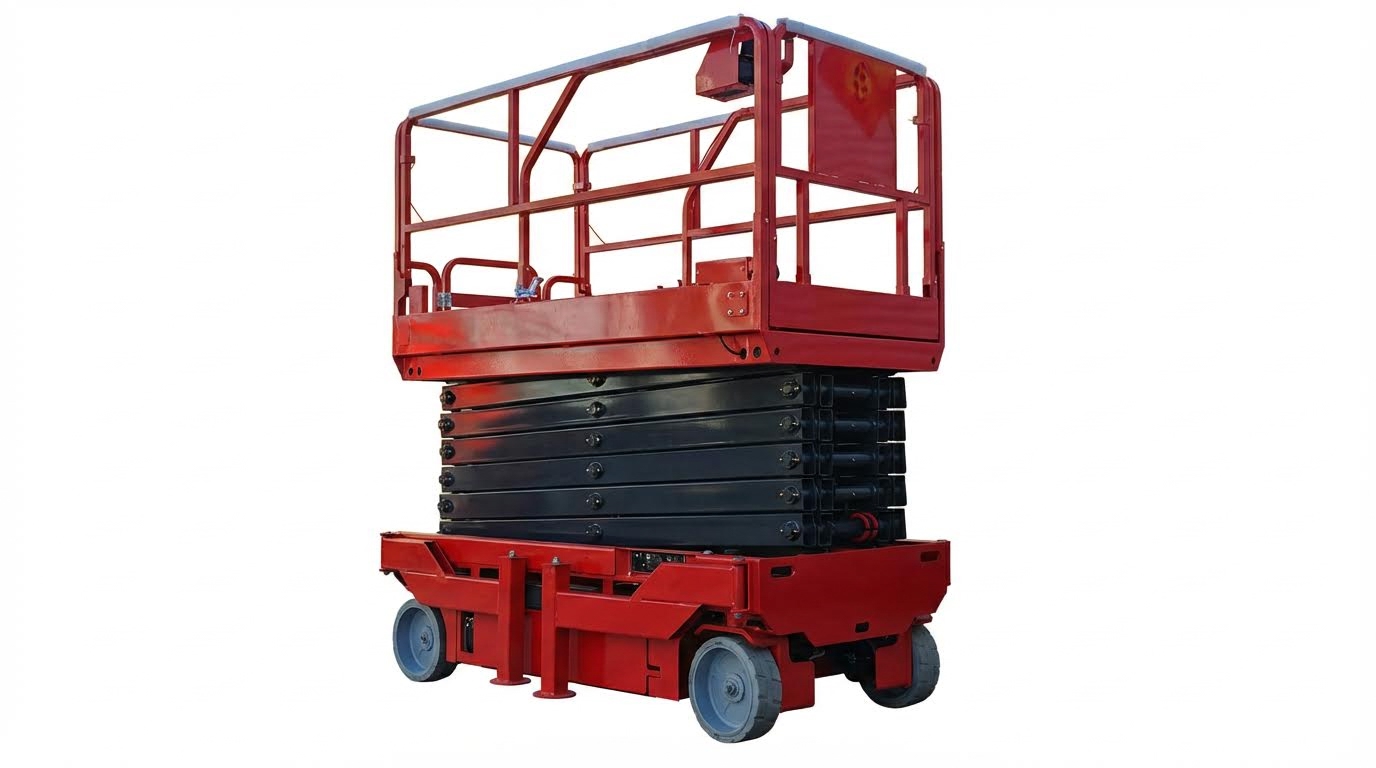
Scissor lift safety depended on a tightly integrated system of technical inspections, operator training, and regulatory compliance. Standards such as EN 1570-1, EN 60204-1, ANSI/CSA AMI requirements, and national occupational safety laws defined minimum inspection content and annual frequencies. Employers had to add risk-based layers on top of these baselines, including daily pre-use checks, monthly function tests, and annual structural reviews. A consistent definition of “qualified person” or “competent mechanic” remained central to the credibility of all inspection and certification activities.
From an engineering perspective, the inspection lifecycle began at design and construction reviews and extended through acceptance, final on-site assembly checks, and periodic in-service inspections. Visual, functional, and electrical tests formed a recurring pattern across daily, monthly, annual, and AMI-level inspections. Defect documentation, immediate removal from service, and verified corrective actions were essential controls that reduced residual risk. Properly structured inspection records supported traceability for audits, incident investigations, warranty claims, and regulatory enforcement.
Operator certification cycles showed regional variation. OSHA-based practice typically used a three-year renewal interval, while certain jurisdictions and training providers worked with two-year or even five-year cycles. Because regulators often did not prescribe explicit expiry dates, the burden fell on employers and training organizations to define renewal policies, trigger refreshers after incidents or equipment changes, and maintain objective competence evaluations. Combining formal certification with site-specific practical assessments improved real-world risk control.
Future practice pointed toward tighter integration of digital inspection tools, centralized training records, and predictive analytics. Time-stamped electronic checklists, automated AMI reminders, and linkage between machine telematics and maintenance planning increased reliability and audit readiness. A balanced strategy aligned legal requirements, consensus standards, and manufacturer instructions with the actual risk profile of each fleet and site. Organizations that treated inspections and certification as an engineered safety system, rather than a paperwork exercise, achieved higher availability, fewer incidents, and more robust compliance over the full life of their scissor lifts and lift tables.