
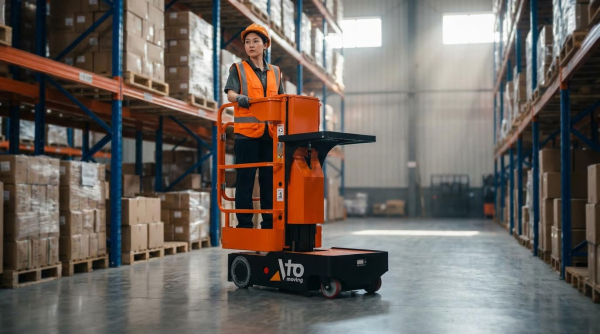
Using a cherry picker machine warehouse side can dramatically improve access to high racking, but it also introduces serious work‑at‑height risks. This guide explains what cherry pickers are, how they fit into warehouse operations, and the safety systems built into modern MEWPs. You will also find a clear overview of regulations, operator training, and daily safe‑use practices, plus practical selection tips for matching equipment to your aisle layout and load profile. The goal is to help you run elevated work that is productive, compliant, and as safe as reasonably practicable.
What Cherry Pickers Are And How They Fit In Warehouses
Defining cherry pickers and MEWP categories
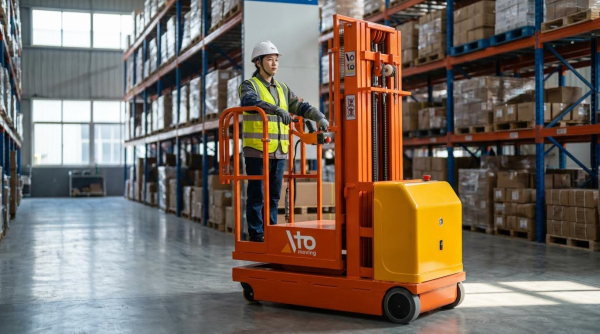
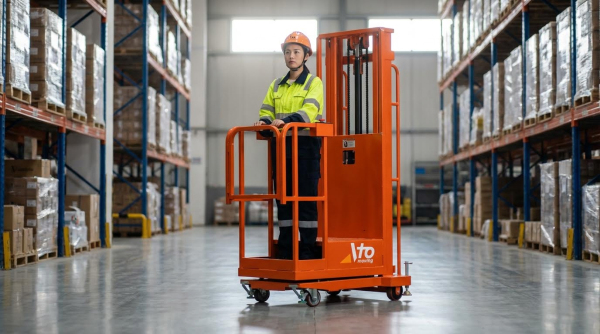
A cherry picker is a type of Mobile Elevating Work Platform (MEWP) designed to lift an operator and tools to work safely at height. In a cherry picker machine warehouse setup, these units typically access racking up to common heights such as 12, 16, or 20 feet, especially in narrow aisles where bulkier equipment struggles to reach. They offer a more stable and productive alternative to ladders or temporary scaffolds for stock picking and maintenance tasks. In MEWP classifications, cherry pickers usually fall under boom-type platforms, with vertical lifts and scissor platform lifts forming other key categories used indoors for similar height access tasks. Warehouse cherry pickers and scissor lifts are widely used to reach high shelving in tight aisles.
How cherry pickers differ from other MEWPs
Compared with scissor lifts, boom-type cherry pickers provide greater outreach to reach over obstacles, not just straight up. Scissor lifts, by contrast, offer larger platforms and straight-vertical lifting, which can be better for bulk picking at a single bay. Vertical mast lifts occupy very small footprints, which suits dense storage layouts but with limited outreach. Understanding these differences helps engineers select the right MEWP type for each warehouse task.
Core components and safety systems
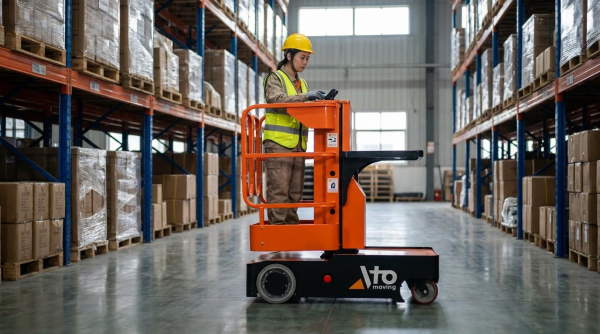
A typical warehouse cherry picker consists of a mobile base, lifting structure (boom or scissor), powered drive system, and an operator platform with guardrails. The platform is engineered to carry both people and materials so multiple items can be picked in one cycle, improving handling efficiency and reducing travel time. Semi electric order picker designs allow safe lifting of workers plus tools and stock, which is critical for order picking and maintenance work. Indoor models often use electric drives with rechargeable batteries to avoid exhaust emissions and may include non‑marking tyres to protect finished warehouse floors. Electric cherry pickers with non‑marking tyres are preferred for clean, indoor warehouse environments.
- Guardrails and toe boards around the platform to prevent falls and dropped objects.
- Clearly marked control panels at basket and base for precise positioning and emergency override.
- Integrated safety devices such as tilt sensors, load‑sensing systems, and emergency lowering functions to protect against overload and instability.
- Stabilizing features (outriggers or automatic levelling on some models) to keep the machine secure on the warehouse floor.
Safety Rules, Regulations, And Operator Training
Global standards and legal obligations
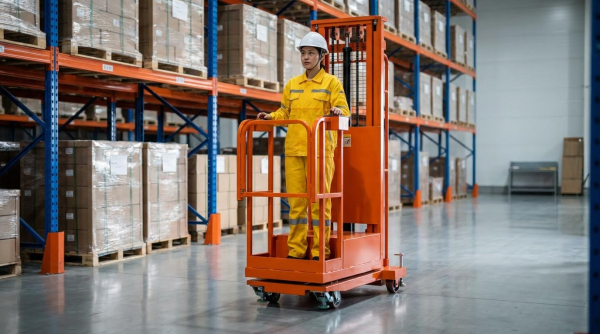
Any cherry picker machine warehouse operation must sit inside a clear legal framework. In many regions, lifting operations with MEWPs must be planned, supervised, and carried out by competent people, with thorough examinations at least every six months when lifting people (LOLER 1998). Work at height laws require employers to plan the task, assess risks, and put measures in place to prevent falls or reduce their consequences (Work at Height Regulations 2005). General safety legislation also obliges employers to protect the health, safety, and welfare of staff, including providing information, supervision, and training for MEWPs (Health and Safety at Work Act 1974). Outside the UK, similar duties apply: for example, CACES certification in France and OSHA‑compliant training in the US both confirm that operators are trained and fit to use aerial platform safely with validity periods typically between 5 and 10 years.
Pre‑use checks and safe operating procedures
Before using a cherry picker machine warehouse teams should complete a documented pre‑use inspection. This includes visual and functional checks for damage, leaks, loose components, and correct operation of all controls, as well as testing safety devices without overriding them according to safe work practice guidance. Ground conditions must be solid and level, avoiding trenches, manholes, or backfill, and using outriggers where fitted to maintain stability as part of pre‑operation checks. Operators must stay within the rated platform load, counting people, tools, and stock, and move the platform smoothly to avoid shocks or instability in line with weight‑limit requirements. The work area should be cordoned as a danger zone to prevent struck‑by or crushed‑by incidents, and the lift must never be left elevated and unattended to control caught‑in hazards.
Fall protection, PPE, and emergency response
Fall protection is critical when using a cherry picker machine warehouse side, even with guardrails. Operators should wear a full‑body harness with a lanyard fixed to the approved anchorage point in the basket or boom to prevent ejection in the event of impact or sudden movement rather than tying off to nearby structures. Additional PPE such as hard hats, safety glasses, and protective footwear is selected based on the warehouse environment and overhead hazards to reduce residual risk. Operators and ground staff must know emergency lowering procedures and how to use ground controls if the main system fails, with clear communication protocols and assembly points agreed in advance as part of emergency preparedness. Regular drills and toolbox talks keep these responses fresh, so that any incident at height is managed quickly and in a controlled way.
Warehouse Applications And Equipment Selection
Typical warehouse tasks and use cases
A cherry picker machine warehouse setup supports most work-at-height tasks above racking and service areas. These machines give safe access to high shelving that can reach around 12–20 ft in many facilities, especially where aisles are too narrow for standard forklifts. They are widely used to reach high shelving in narrow aisles. Typical warehouse applications include:
- Order picking and cycle counting at upper rack levels.
- Installing and maintaining lighting, sprinklers, HVAC and roof sheeting along ceiling lines. Cherry pickers are used for lighting, HVAC ducting and roofing maintenance
- Installing conveyors, cable trays and other mechanical systems suspended from the roof structure. They support installation and renovation work such as mechanical systems and painting
- Painting, signage, and other facility renovation tasks.
Compared with ladders or scaffolds, cherry pickers provide a stable platform and allow tools and materials to travel with the operator, improving productivity and safety. They offer a safer and more efficient alternative to ladders and scaffolding for elevated work
Technical criteria for specifying a cherry picker
When selecting a cherry picker machine warehouse managers should match the platform, drive system, and geometry to the tasks and building constraints. Key criteria include:
| Criterion | What to consider |
|---|---|
| Working height & outreach | Maximum rack height, ceiling services, and any horizontal outreach needed past obstacles. |
| Platform capacity | Combined weight of operator, tools, and stock; higher capacities enable batch picking in one lift. Platforms are designed to carry multiple items per lift to improve efficiency |
| Power source | Electric units with rechargeable batteries are preferred indoors to avoid exhaust emissions and protect air quality. Electric cherry pickers are commonly chosen for indoor environments |
| Tires and floor protection | Non‑marking tires prevent damage and black marks on concrete warehouse floors. Indoor cherry pickers often use non‑marking tires to protect floors |
| Dimensions & turning radius | Machine width vs. aisle width, stowed height vs. doorways, and maneuverability around racking. |
| Duty cycle & utilisation | Battery capacity and charging strategy for multi‑shift operations or high pick density zones. |
Cost and deployment strategy
Where utilisation is low or tasks are seasonal, hiring can reduce lifecycle cost because the business only pays when the equipment is in use and avoids maintenance overhead. Hiring cherry pickers can be more economical than purchasing for some users
Final Thoughts On Safe, Efficient Cherry Picker Use
Cherry pickers can transform warehouse work at height, but only when design, selection, and use follow strict engineering logic. Geometry, load limits, and floor conditions must align. When you match platform height, outreach, and capacity to your racking and loads, you cut overload and tip‑over risk. Built‑in safety systems only work if teams respect them. Tilt sensors, load sensing, and emergency lowering must stay active, tested, and never bypassed. Legal duties then turn this technical envelope into daily practice. Formal training, valid certification, and written procedures make sure operators use the equipment as designed, not as improvised lifting gear. Pre‑use checks, cordoned work zones, and harness use close the gap between theory and real accidents. For operations and engineering teams, the best practice is clear. Start with a risk assessment, choose MEWPs that fit your aisles and tasks, and standardize safe‑use rules across shifts. Pair suitable Atomoving equipment with strong supervision, refresh training, and regular drills. That way, each lift stays inside safe limits, uptime improves, and your warehouse gains the full productivity benefit without trading away safety.
Frequently Asked Questions
What is a cherry picker machine used for in a warehouse?
A cherry picker, also known as an aerial work platform (AWP) or boom lift, is a mechanical device used to provide temporary access for people or equipment to inaccessible areas, usually at height. In warehouses, it is often used for tasks like inventory management, maintenance, and accessing high storage racks. Aerial Work Platform Overview.
What’s the difference between a cherry picker and a forklift?
While both cherry pickers and forklifts are used in warehouses, they serve different purposes. A cherry picker, or boom lift, is primarily used for lifting personnel to reach high places, whereas a forklift is designed for moving and lifting heavy materials. Boom lifts can finish jobs more quickly and are suitable for more complex tasks but are generally more expensive and require more training to operate. Boom Lifts vs Cherry Pickers.
What factors should be considered when choosing a cherry picker for warehouse use?
When selecting a cherry picker for warehouse operations, consider the height and reach required, the weight capacity, ease of maneuverability within the warehouse space, and operator training needs. Additionally, evaluate whether an electric model might be preferable for indoor use to avoid emissions. These factors will ensure the chosen equipment meets the specific needs of your warehouse operations.