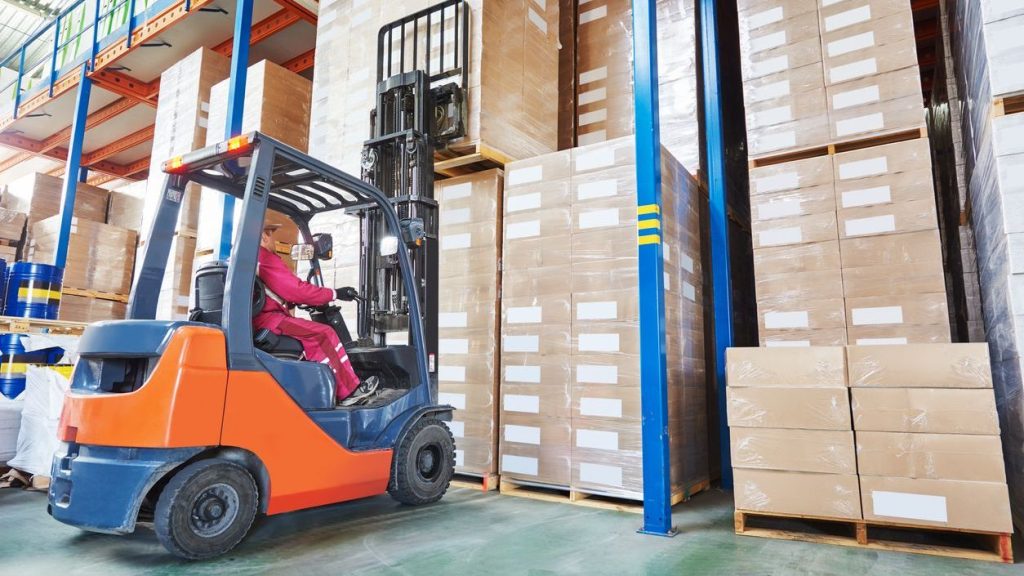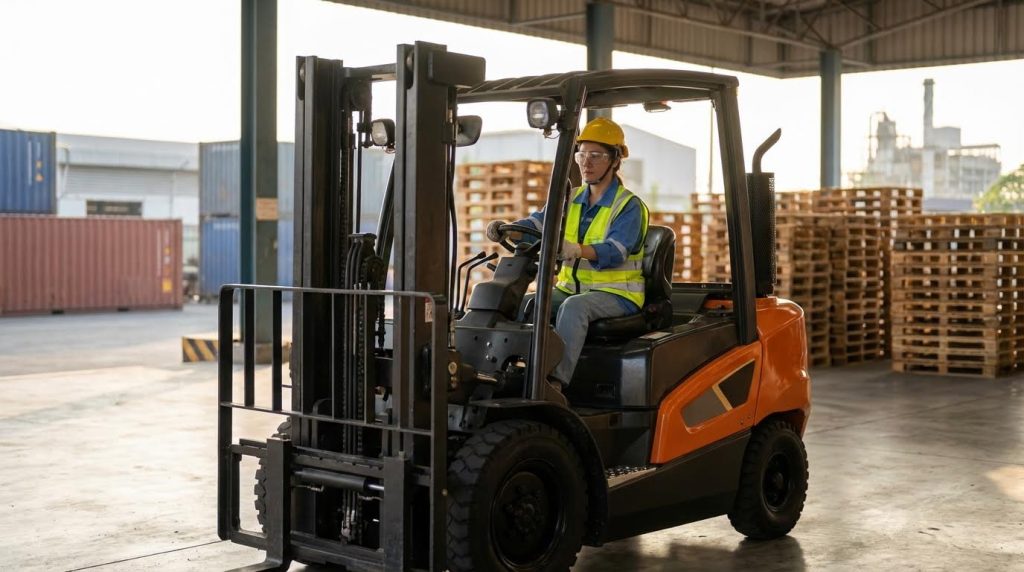
This guide explains what’s the difference between propane-powered forklifts and diesel in real-world operations, not just on paper. You’ll see how fuel type changes power, runtime, emissions, maintenance, and which environments each truck is truly best for. We translate energy density, torque, and duty-cycle data into simple rules you can use to choose the right forklift power source for your loads, shifts, and safety requirements.
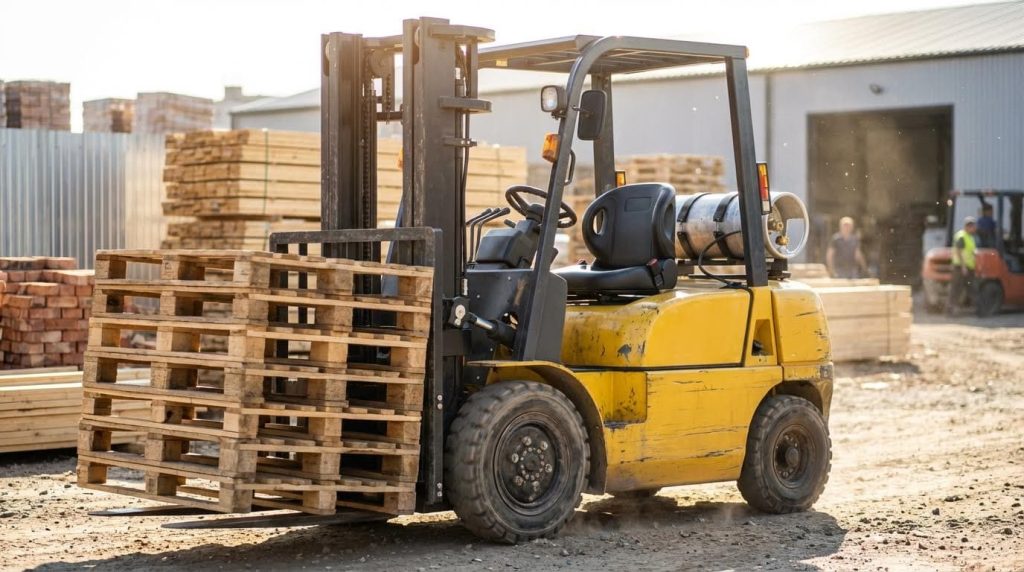
Core Differences Between Diesel And Propane Forklifts
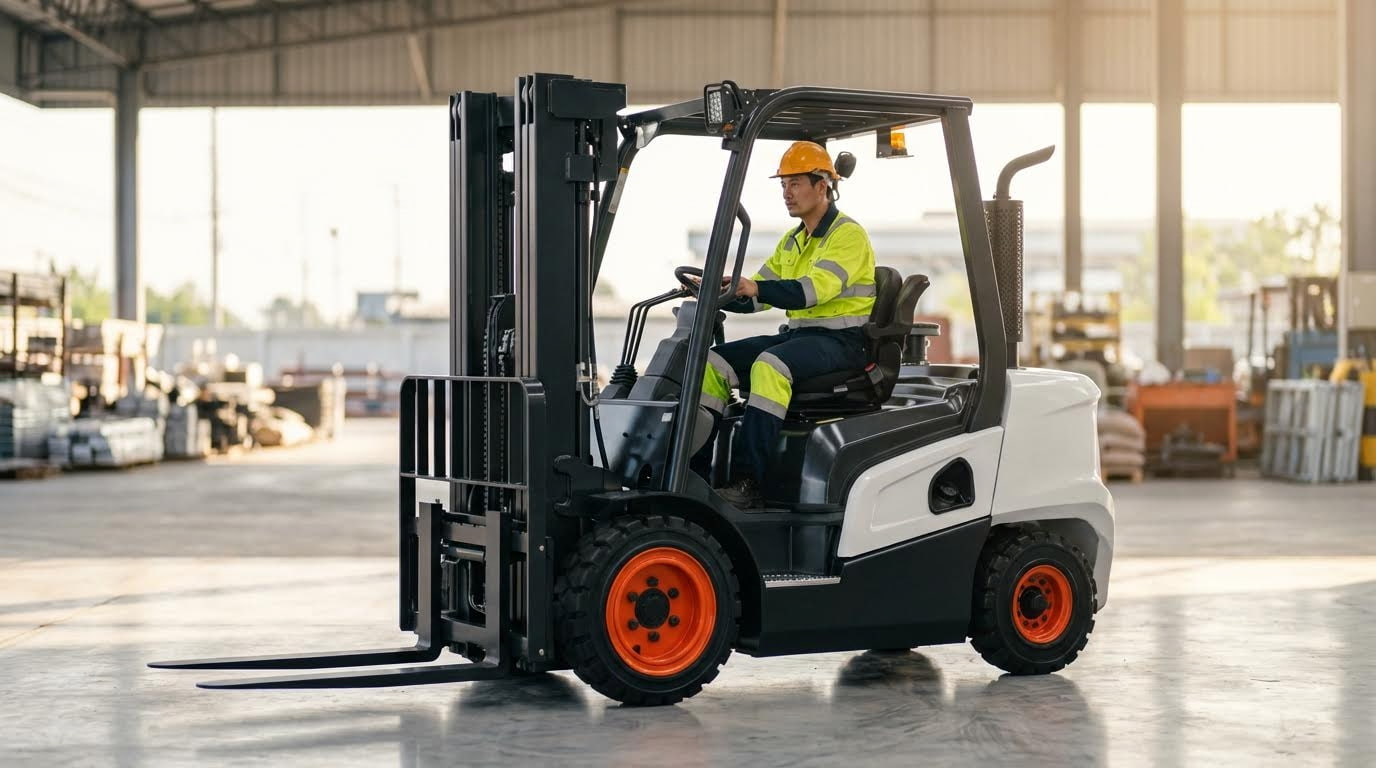
The core difference between diesel and propane forklifts is how their engines deliver torque, runtime, emissions, and refueling logistics, which directly affects where they can safely work and how much each pallet actually costs to move.
If you are asking what s the difference between propane-powered forklifts and diesel in real operations, think in three buckets: engine/torque behavior, fuel energy per liter, and how long you can run between refuels.
| Aspect | Diesel Forklift | Propane (LPG) Forklift | Operational Impact |
|---|---|---|---|
| Typical Use | Heavy-duty, outdoor, high loads, rough yards | Medium-duty, indoor/outdoor with ventilation | Diesel for construction yards; LPG for warehouses and loading docks |
| Torque Feel | Very strong at low rpm, good on ramps | Moderate torque, fine for standard pallets | Diesel suits >3–5 t on slopes; LPG suits 1.5–3 t on flat floors |
| Fuel Energy Density | ≈36 MJ L⁻¹ usable at ~45% efficiency | ≈25 MJ L⁻¹ usable at ~35% efficiency (diesel vs LPG energy) | Diesel carries more kWh per tank, ideal for long multi-shift use |
| Runtime Per Tank | Longer runtime for same tank volume | Shorter runtime; more frequent bottle swaps | Diesel better where refueling breaks are costly |
| Indoor Air Quality | Higher particulates and NOx; limited indoors | Cleaner exhaust, less smoke and soot | LPG preferred where doors stay closed or ventilation is limited |
| Noise | Louder engine, more vibration | Quieter than diesel | LPG improves operator comfort in busy warehouses |
💡 Field Engineer’s Note: When fleets outgrow a single yard and start running forklifts between buildings, diesel’s longer runtime per tank often wins—until complaints about noise and exhaust inside docks push part of the fleet to propane.
Engine, Torque, And Power Characteristics
Diesel engines deliver higher low-end torque and better tractive effort for heavy loads and slopes, while propane engines provide smoother, moderate torque that suits typical warehouse loads and mixed indoor–outdoor work.
- Torque at low speed: Diesel engines generate strong torque at low rpm, making them ideal for loads above several tonnes on ramps and uneven ground – this keeps the truck moving without stalling when you hit a slope with a 3–5 t pallet. (torque on ramps)
- Propane torque band: Propane forklifts offer moderate torque that is sufficient for standard warehouse loads and moderate slopes – good for 1.5–3.0 t pallets on concrete or asphalt with short ramps. (moderate torque)
- Heavy-duty capability: Diesel forklifts are designed for heavy-duty applications, handling loads over 5,000 kg in outdoor environments with uneven terrain – this is why you see diesel units on construction sites and lumber yards, not propane. (heavy-duty use)
- Acceleration and travel speed: Diesel forklifts typically provide faster acceleration and higher top speeds than propane – useful when you shuttle loads over long outdoor runs or across large yards. (performance and power)
- Mixed indoor–outdoor power: Propane forklifts still deliver reliable power for most material handling tasks and can operate both indoors and outdoors where floors are hard and relatively flat – ideal for dock-to-rack operations with frequent door crossings. (indoor/outdoor versatility)
| Power / Torque Aspect | Diesel Forklift | Propane (LPG) Forklift | Best For… |
|---|---|---|---|
| Typical Load Range | >5,000 kg common outdoors | ≈1,500–10,000 kg on good floors (capacity ranges) | Diesel for the heaviest blocks and steel; LPG for palletized goods |
| Terrain | Uneven, gravel, construction sites | Hard, level warehouse and yard surfaces | Diesel for yards; LPG for paved loading areas |
| Ramp / Slope Work | Strong low-speed pull on steep ramps | Acceptable on moderate slopes | Diesel for long external ramps; LPG for short dock ramps |
| Engine Response | High torque but more noise and vibration | Smoother, quieter combustion | LPG where operator comfort and communication matter |
💡 Field Engineer’s Note: If you routinely drag 4–5 t up a 10–12% outdoor ramp, diesel’s extra torque margin is your safety buffer when tires are wet or the load center creeps out beyond 600 mm.
Fuel Energy Density And Runtime Per Tank
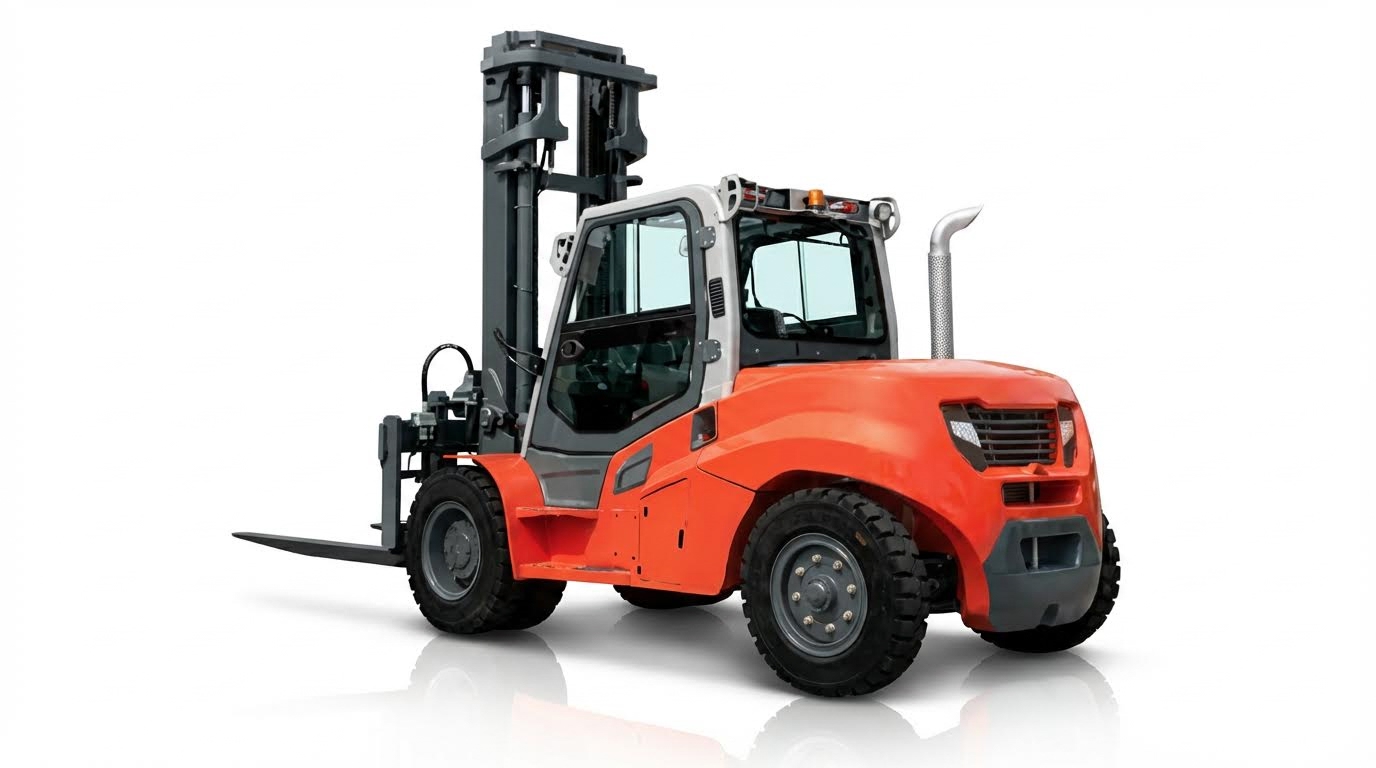
Diesel fuel stores significantly more usable energy per liter than propane, so diesel forklifts usually run longer on a single tank, while propane trades shorter runtime for cleaner exhaust and fast bottle swaps.
- Volumetric energy: Diesel fuel contains about 36 MJ per liter, while LPG contains about 25 MJ per liter. After engine efficiency, diesel delivers roughly 4,455 Wh L⁻¹ versus about 2,430 Wh L⁻¹ for LPG – almost double the usable energy per liter in favor of diesel. (energy density data)
- Tank energy example: A 2.5 t diesel forklift with a 60 L tank carries about 267 kWh of usable energy – equivalent to several tonnes of traction battery mass, explaining why diesel dominates higher capacities. (267 kWh example)
- Runtime per refuel: Because of this higher energy density, diesel forklifts support long, high-intensity duty cycles with minimal refueling breaks – well suited for multi-shift outdoor fleets that cannot stop often. (multi-shift operation)
- Propane runtime and swaps: Propane forklifts run shorter per cylinder but allow very fast bottle swaps, typically in about 2 minutes – ideal where you want consistent power through a shift but can accept quick changeovers. (LPG swap time)
- Fuel cost per kWh: Diesel fuel usually offers lower cost per unit of useful energy than LPG in heavy-duty work – this often makes diesel more economical where trucks run near rated capacity for most of the shift. (fuel efficiency and costs)
- Lifecycle and duty profile: LPG offers cleaner combustion and more stable pricing but usually a higher cost per kWh, while diesel’s higher energy density favors fleets with very intensive utilization – choice should match your average pallets per hour, not just sticker fuel price. (lifecycle cost view)
| Fuel & Runtime Factor | Diesel Forklift | Propane (LPG) Forklift | Operational Impact |
|---|---|---|---|
| Usable Energy per Liter | ≈4,455 Wh L⁻¹ | ≈2,430 Wh L⁻¹ (diesel vs LPG) | Diesel gives longer runtime for same tank volume |
| Typical Refuel Action | Fill fixed tank (≈3 minutes) | Swap cylinder (≈2 minutes) | LPG minimizes downtime between short indoor jobs |
| Best Duty Cycle | High-intensity, near-rated load, multi-shift | Moderate loads, frequent stops, mixed tasks | Match fuel to your average pallets/hour, not peak only |
| Indoor Air and Emissions | Higher particulates and NOx; visible smoke risk | Lower particulates, less visible exhaust | LPG preferred where indoor air quality is monitored |
💡 Field Engineer’s Note: When you calculate runtime, include idle and travel—not just lift time. Diesel’s higher energy density hides a lot of “wasted” idling that would show up immediately on a propane or electric energy-per-pallet report.
Matching Power Source To Applications And Environments
Choosing between diesel and propane forklifts starts with the work, not the fuel sticker: load weight, gradients, hours per shift, and indoor air limits decide which power source is truly fit-for-purpose.
When people ask what s the difference between propane-powered forklifts and diesel in real operations, the answer is that diesel wins on brutal duty and runtime, while propane wins on mixed indoor–outdoor flexibility and cleaner exhaust.
- Diesel forklifts: High torque and long runtime – Best for heavy loads, rough yards, and multi-shift outdoor work.
- Propane forklifts: Moderate torque with cleaner exhaust – Best for warehouses, loading docks, and mixed-use with ventilation.
- Key selection drivers: Load profile, floor condition, slopes, shift pattern, and indoor air rules – These dictate whether diesel’s extra grunt or propane’s cleaner burn is worth more.
💡 Field Engineer’s Note: In fleets over 5 trucks, I often split the power sources: diesel units stay outside on the worst terrain; propane units handle docks and indoor aisles where emissions and noise trigger complaints first.
Load Profiles, Terrain, And Shift Patterns
Diesel forklifts suit high-load, harsh-terrain, long-shift duty cycles, while propane forklifts suit moderate loads on solid floors with frequent stops and mixed indoor–outdoor travel.
- Heavy loads >4–5 t: Diesel delivers higher low-end torque and better traction on ramps and rough ground, making it the preferred option for “near-rated” lifting all day. Source – Suitable for steel, timber, bricks, and container yards.
- Moderate loads 1.5–3 t: Propane comfortably handles standard pallet weights and frequent stopping/starting on level concrete. Source – Ideal for FMCG, 3PL, and manufacturing warehouses.
- High-intensity duty cycles: Diesel’s higher fuel energy density and tank volume support multi-shift operation with minimal refueling downtime. Source – Good for ports and 24/7 yards.
- Stop–start warehouse cycles: Propane forklifts tolerate frequent idling and short travel well and avoid diesel after-treatment issues from light-load running. Source – Reduces soot loading in indoor-style cycles.
- Uneven terrain and gradients: Diesel’s higher torque at low engine speeds and better gradeability make it more capable on ramps and rough yards. Source – Safer on wet, loose, or pothole-ridden surfaces.
- Flat, hard floors: Propane units run smoothly on concrete and asphalt, with enough traction for normal dock slopes and yard approaches. Source – Perfect for paved distribution centers.
- Multi-shift vs single-shift: Diesel minimizes downtime in very long shifts; propane offers quick 2–3 minute cylinder swaps that keep single or double shifts running smoothly. Source – Both beat long electric charge times for round-the-clock fleets.
| Operating Scenario | Better Choice | Reason | Operational Impact |
|---|---|---|---|
| 3–5 t loads on rough gravel yard, 10–12 h per day | Diesel | High torque and high fuel energy density support continuous heavy work | Fewer fuel stops, less risk of stalling on slopes |
| 1.5–2.5 t pallets in warehouse with dock ramps | Propane | Sufficient power and cleaner exhaust for indoor use with doors | Operators can drive from racking to yard without changing trucks |
| Short, intense peaks (container unloading) then idle | Diesel | Handles near-rated loads and long idling without cylinder swaps | Good for ports and railheads with batch arrivals |
| Mixed picking, staging, and truck loading on flat concrete | Propane | Efficient in stop–start duty and simpler refueling logistics | Higher uptime vs electric without exhaust issues of diesel |
How load profile affects fuel choice
If your trucks spend most of the day near rated capacity, diesel’s higher fuel energy per litre and torque margin reduce stress and overheating. If they mostly carry partial loads with many short trips, propane’s cleaner burn and easier indoor compliance usually win.
💡 Field Engineer’s Note: When gradients exceed about 10–12% and surfaces are loose or muddy, I treat propane like an indoor truck: it can cope, but diesel gives you the traction and torque margin that stops “halfway-up-the-ramp” incidents.
Indoor, Outdoor, And Mixed-Use Safety Constraints
Diesel forklifts are generally restricted to outdoor or very well-ventilated areas, while propane forklifts can legally and practically operate in many indoor or mixed-use spaces where exhaust and noise must be controlled.
- Indoor air quality: Diesel produces higher particulate and NOx emissions, which historically limited indoor use, even with after-treatment. Source – Drives the “diesel stays outside” rule in many plants.
- Cleaner propane exhaust: Propane forklifts emit significantly fewer particulates and lower NOx than diesel, with much less visible smoke. Source – Improves indoor air and reduces soot on product and racking.
- Noise exposure: Diesel trucks typically run around 85 dB(A) at the operator’s ear vs about 65 dB(A) for electric; propane usually sits between them. Source – Indoor sites with strict noise rules lean away from diesel.
- Confined spaces and docks: Diesel exhaust accumulation in loading bays and enclosed docks quickly breaches comfort and sometimes regulatory limits. Propane, with lower particulate and cleaner combustion, is more acceptable where roller doors cycle open and closed. Source
- Outdoor harsh environments: Diesel forklifts are effective in harsh outdoor conditions such as construction sites and mines, tolerating wide temperature and humidity ranges. Source – Best where ventilation is unlimited and loads are extreme.
- Mixed-use facilities: Propane forklifts are specifically noted as suitable for mixed indoor and outdoor work where floors are usually hard and level. Source – They can shuttle between racking, docks, and yard staging.
- Fuel storage safety: LPG cylinders require compliant storage cages and separation distances from building openings, while diesel requires fixed refueling points and spill control. Source – Site layout may favor one fuel over the other.
| Environment Type | Diesel Forklift Suitability | Propane Forklift Suitability | Best For… |
|---|---|---|---|
| Fully indoor warehouse with limited ventilation | Poor | Moderate–Good (subject to local air rules) | Propane for pallet handling and dock work without heavy soot |
| Indoor–outdoor cross-dock with large doors | Limited (mainly yard-side) | Good | Propane running from racking to trailers all day |
| Open construction site or mine | Excellent | Fair (if floors are hard and level) | Diesel for bulk materials, long travel, and steep ramps |
| Food and pharma with strict cleanliness | Very limited | Conditional (often still prefer electric) | Propane only where electric cannot meet outdoor demands |
Regulatory and policy considerations
Even if propane emissions are lower than diesel, some facilities ban all internal-combustion forklifts indoors for hygiene or corporate ESG reasons. Always check local occupational safety, fire, and environmental regulations before standardizing on a fuel type.
💡 Field Engineer’s Note: When a customer asks what s the difference between propane-powered forklifts and diesel for a mixed-use site, my rule of thumb is simple: if the truck spends more than half its hours indoors, start with propane (or electric) and justify every diesel unit with a specific outdoor job it alone can do safely.
Final Thoughts On Choosing Between Diesel And Propane
Diesel and propane forklifts solve different engineering problems, so the safest choice starts with duty and environment, not fuel price. Diesel’s higher torque and energy density give it clear advantages on heavy loads, long ramps, and harsh yards. That extra pull and runtime create a safety margin when gradients are steep, surfaces are loose, or loads run close to rated capacity.
Propane trades that brute strength for cleaner exhaust, lower particulates, and better indoor acceptance. It fits stop–start warehouse work, dock ramps, and mixed indoor–outdoor routes where air quality and noise rules are tight. Fast cylinder swaps keep uptime high without diesel-style exhaust build-up in enclosed docks.
In practice, the safest and most cost-effective fleets match power source to use case. Keep diesel outside on rough ground, long shifts, and near-rated loads. Use propane where floors are hard and level, loads are moderate, and operators work around people, product, and racking. Engineering and operations teams should map load ranges, gradients, hours, and indoor exposure, then size a mixed fleet where each truck has a clearly defined role. This structured approach lets you cut fuel cost per pallet, protect air quality, and keep incident risk low across the site with support from Atomoving’s application engineering expertise.
Frequently Asked Questions
What is the difference between propane-powered forklifts and diesel forklifts?
Propane-powered forklifts and diesel forklifts differ primarily in their fuel type, emissions, and typical use cases. Propane forklifts run on liquid petroleum gas (LPG) stored in a tank, while diesel forklifts use diesel fuel from a tank or fuel system.
- Emissions: Propane forklifts produce fewer harmful emissions compared to diesel, making them more suitable for indoor use. Diesel forklifts are better suited for outdoor applications due to higher emissions.
- Performance: Diesel forklifts typically offer more power and torque, making them ideal for heavy-duty tasks and rough terrain. Propane forklifts provide a good balance of power and cleaner operation.
- Cost: Diesel fuel is often less expensive than propane, but diesel engines may require more maintenance over time. Propane engines tend to have simpler maintenance needs.
What are the disadvantages of electric forklifts compared to propane and diesel forklifts?
Electric forklifts have several disadvantages when compared to propane and diesel forklifts. The purchase price is higher when compared with diesel forklifts. Additionally, the cleaning, watering, and charging requirements of the expensive industrial battery are very important and may not be manageable in a multi-shift operation. Electric Forklift Guide.