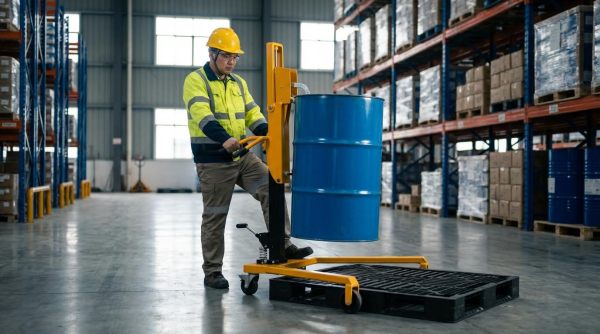
Knowing how to secure drums to pallets means combining the right pallet, drum layout, and restraint system so drums cannot roll, tip, or walk during handling and transport. Poorly secured drums cause leaks, injuries, and rejected loads, especially with hazardous or high-value liquids. This guide explains drum weights and pallet capacity, compares strapping vs stretch-wrap vs blocking, and shows how to design safe drum patterns for forklifts, AGVs, racks, and over-the-road transport. By the end, you will know exactly which securing method to use, where, and why for reliable, standards-aligned drum palletization.
Fundamentals Of Palletizing Steel And Plastic Drums
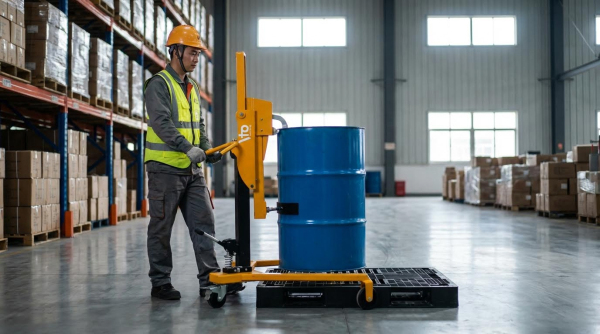
Fundamentals of palletizing drums define the safe weight limits, pallet capacity, and inspection rules that control how to secure drums to pallets without collapse, shifting, or rack failures.
Understanding basic drum weights and pallet ratings is the starting point for any engineered method for how to secure drums to pallets. If you misjudge either, no amount of strapping, stretch-wrap, or blocking will compensate for an overloaded or damaged base. This section explains how to estimate drum load, check pallet capacity, and set practical inspection criteria before you ever touch a strap or roll of film.
Typical drum weights and load calculations
Typical drum weights and load calculations establish the total pallet load and center of gravity so you can choose pallets, racks, and securing methods that keep drums stable under handling and transport forces.
| Item | Typical Value / Range | Used For | Field Impact |
|---|---|---|---|
| Typical filled steel drum weight | ≈ 180–270 kg (400–600 lb) | Estimating pallet load | Four drums can easily exceed 720–1,080 kg; forklifts, racks, and pallets must be rated accordingly. |
| Typical palletized drum set (4 drums) | ≈ 800–1,100 kg including pallet | Unit load design | Determines minimum pallet capacity and rack beam rating for a 2×2 drum pattern. |
| Minimum pallet rating for drum loads | ≥ 725–900 kg (1,600–2,000 lb) | Safe pallet selection | Prevents deck board failure and collapse under static and dynamic handling loads. Source |
| Drum layout on standard pallet | 2 × 2 pattern (four drums) | Center-of-gravity control | Keeps mass centered on pallet for stable forklift travel and racking. Source |
| Dunnage under drum chimes | Plywood or similar sheet | Load distribution | Spreads point loads from drum chimes, reducing risk of deck board cracking and improving friction. Source |
From a physics standpoint, each 200–270 kg drum concentrates weight on a narrow chime ring, creating high local pressure on the pallet deck. That is why even when the overall mass is within rating, weak or cracked deck boards still fail under drum loads.
For planning, always calculate: (number of drums × max filled weight) + pallet mass + any dunnage or blocking. Then compare that to the lowest-rated element in the chain: pallet, forklift capacity at that load center, and rack beam rating.
How to do a quick field load check
Multiply the maximum likely drum weight (for example, 270 kg) by the number of drums (say 4) to get 1,080 kg. Add 25–30 kg for the pallet and dunnage (≈ 1,110 kg). Your pallet, rack position, and handling equipment should all be rated above this figure with a comfortable safety margin.
💡 Field Engineer’s Note: When you change from steel to plastic drums, do not assume the load is “lighter and safer.” The liquid weight is usually the same, but the plastic shell deforms more, which can reduce contact area and increase point loading on marginal pallets.
Pallet strength, design, and inspection criteria
Pallet strength, design, and inspection criteria ensure the wooden or plastic base can carry concentrated drum loads without broken boards, excessive deflection, or instability in racks and during forklift handling.
| Criterion | Practical Guideline | What To Check | Field Impact |
|---|---|---|---|
| Minimum pallet load rating | ≥ 725–900 kg (1,600–2,000 lb) for drum loads | Manufacturer spec or in-house rating | Ensures pallet can safely carry four filled drums plus pallet mass. Source |
| Deck board condition | No broken, cracked, or missing boards | Prevents chime rings from punching through and tipping drums during handling. Source | |
| Fasteners and protrusions | No protruding nails, screws, or sharp edges | Top and bottom surfaces, stringers | Avoids puncturing drums or cutting stretch-wrap and straps used to secure drums to pallets. Source |
| Pallet size and uniformity | Use consistent pallet footprint for a lane or rack | Length, width, and entry orientation | Uniform size improves stack stability and predictable rack support; mixed sizes increase tipping risk. Source |
| Storage clearance | Maintain at least 450 mm (18 in) below sprinklers | Top of drum vs. sprinkler deflectors | Maintains fire protection performance in drum storage areas. Source |
Before deciding how to secure drums to pallets with strapping or stretch film, you must confirm the pallet is structurally sound. A single cracked deck board under a drum chime can turn a stable 1,000 kg unit load into a rolling hazard the moment a forklift hits a floor joint.
- Visual inspection: Walk the pallet, looking for broken boards, crushed blocks, and any sign of rot or moisture damage.
- Touch inspection: Run a gloved hand along edges to detect protruding nails or splinters that could damage drums or securing materials.
- Load path check: Confirm that all drums sit over stringers or blocks, not hanging over unsupported deck boards.
- Compatibility with handling: Ensure the pallet design matches your forklift or manual pallet jack fork spacing and rack beam configuration.
Why pallet stiffness matters for drum loads
Drums behave like rigid cylinders; if the pallet deflects too much in the middle, the outer drums carry more load than the inner ones, or vice versa. This uneven support can cause drums to rock, loosening straps and stretch-wrap during transport and undermining otherwise good securing practices.
💡 Field Engineer’s Note: In real warehouses, most “mystery” drum spills trace back to a bad pallet, not bad strapping. Make it standard work: no pallet, no matter how urgent the shipment, gets used for drums unless it passes a 10–15 second visual and touch inspection.
Strapping, Stretch-Wrap, And Blocking Compared
Strapping, stretch-wrap, and blocking work together to control vertical lift-off and lateral sliding when deciding how to secure drums to pallets, and each method has clear strengths and limits in real-world handling.
💡 Field Engineer’s Note: For drums, think “straps for strength, wrap for containment, blocking for direction.” If you rely on only one method, you usually under‑secure the load in at least one direction.
Vertical and lateral restraint requirements
Vertical and lateral restraint define how well a palletized drum load resists tipping, sliding, and bouncing during forklift handling, truck transport, and emergency maneuvers or impact events.
| Restraint Aspect | Typical Method | Engineering Function | Field Impact |
|---|---|---|---|
| Vertical restraint (drums lifting off pallet) | Plastic/steel strapping over drum tops and around pallet | Applies downward clamping force so drums cannot “hop” on bumps | Reduces risk of drums bouncing off on dock plates, curbs, and rough yards |
| Lateral restraint (sideways sliding/rolling) | Stretch-wrap around drum sides; blocking/dunnage at edges | Provides friction and physical stops against horizontal movement | Prevents side-shift during sharp forklift turns and truck cornering |
| Drum-to-drum coupling | Chime clips, plastic drum connectors, tight wrap | Ties drums into a single “unit load” with shared center of gravity | Makes the stack behave as one block instead of four loose cylinders |
| Drum-to-pallet coupling | Straps routed through/around pallet; blocking against drum chimes | Locks drums to pallet deck to resist shear between deck and drum base | Prevents pallet sliding out from under drums during impacts or braking |
| Toppling resistance (overturning moment) | Low drum pattern, symmetric layout, strapping and wrap | Keeps center of gravity low and centered over pallet footprint | Improves stability on ramps, dock plates, and uneven floors |
| Environmental protection | Stretch-wrap over and around drums | Protects closures and labels from dust, dirt, and moisture | Reduces contamination risk and label loss in storage and transit |
How transport forces translate into drum movement
Truck braking, cornering, and potholes generate horizontal and vertical accelerations. Cylindrical drums have small contact patches and low friction, so they tend to roll or slide unless straps, wrap, and blocking convert those forces into compression within the unit load.
Strapping types, patterns, and drum-chime devices
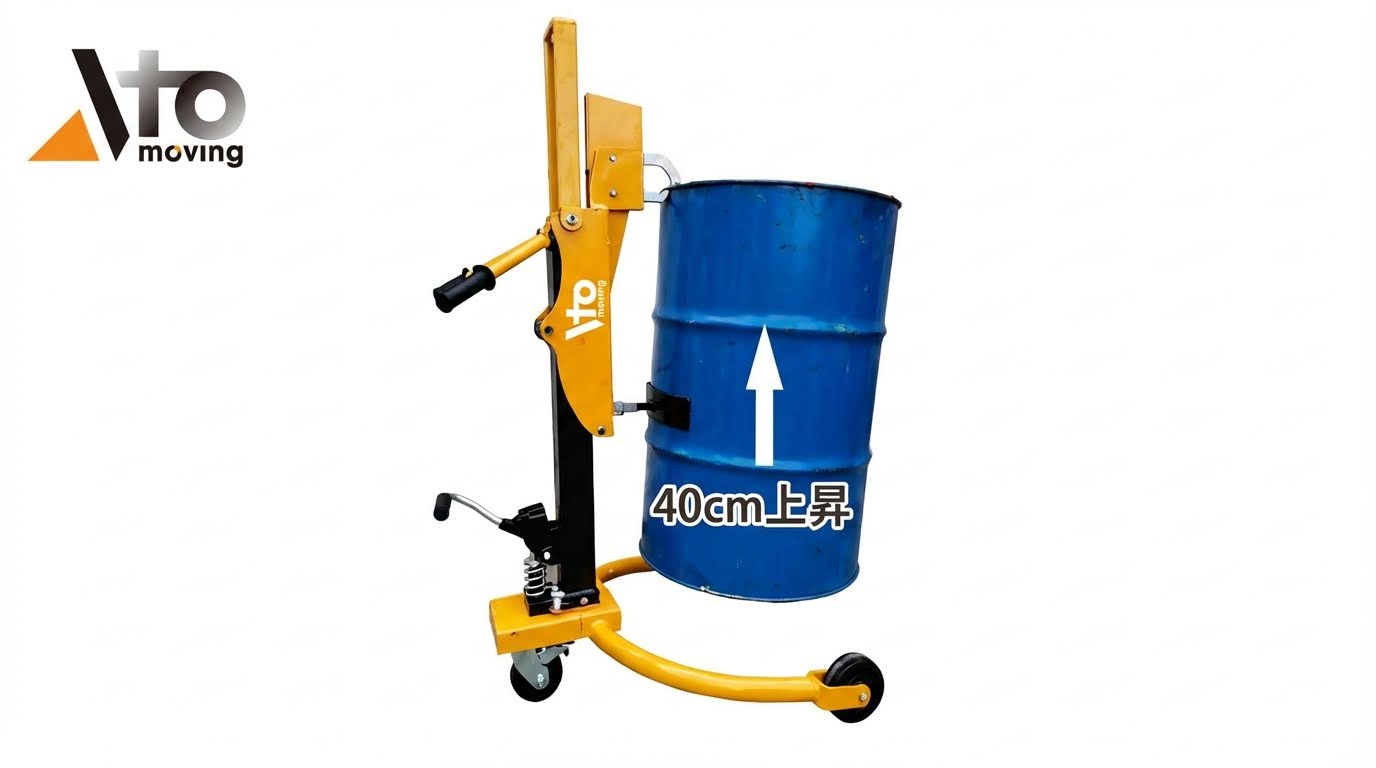
Strapping for drums uses steel or plastic bands in defined patterns, often combined with drum-chime devices, to clamp drums together and to the pallet for high-strength vertical and lateral restraint.
| Strapping Element | Options / Typical Practice | Engineering Function | Field Impact |
|---|---|---|---|
| Strap material | Steel; polyester (PET); polypropylene (PP) | Steel offers highest tensile strength; PET/PP provide elastic recovery and are kinder to drum surfaces | Steel suits very heavy or hazardous loads; PET/PP reduce damage risk to drum chimes and coatings |
| Strap orientation | Two cross straps over drum tops; perimeter straps around drum “waist” and pallet | Top straps provide vertical clamping; perimeter straps prevent outward bulging and rolling | Cross pattern is common for 2×2 drum layouts to tie all four drums and pallet together |
| Number of straps | Traditional: 3–5 straps; with chime devices: often 2 straps | More straps distribute load and add redundancy; chime devices allow fewer straps with better load sharing | Fewer straps reduce labor and material while maintaining stability when devices are correctly rated |
| Chime clips / plastic drum connectors | Plastic tools clipping to drum chimes, linking adjacent drums | Transfer loads through rigid connectors instead of localized strap pressure | Improve stability and reduce strap damage to drum edges, especially on steel drums when certified to load-securing standards |
| Certification standards | DIN EN 12195‑1, ISTA 3E, EUMOS 40509 | Define test methods and performance for load-securing devices | Gives assurance that connectors and patterns withstand realistic transport forces |
| Closure method | Seals, buckles, or friction welding (for plastic) | Maintains strap tension over time and under vibration | Poor closures are a common failure point; regular inspection is critical |
| Reuse and inspection | Plastic chime tools reusable for 1–2 years with inspections | Material fatigue and deformation limit safe lifecycle | Reusing only undamaged devices cuts cost per pallet while maintaining safety when wear checks are documented |
- When to favor steel strapping: Extremely heavy drum loads, export shipments, or hazardous contents where maximum tensile strength and minimal elongation are required.
- When to favor PET/PP strapping: Standard 200–250 L drums on pallets where some elasticity and reduced surface damage are beneficial.
- Role in how to secure drums to pallets: Strapping is usually the “primary lock,” with wrap and blocking acting as secondary stabilizers.
💡 Field Engineer’s Note: Most drum failures I see are under‑tensioned straps or straps bearing on sharp chimes without edge protection. A few seconds spent checking tension and using chime devices prevents hours of spill cleanup.
Legacy vs. modern drum strapping layouts
Legacy layouts often used multiple independent straps directly over drum tops. Modern layouts increasingly use engineered plastic chime connectors that couple drums, allowing two well‑placed straps to outperform older three‑ or four‑strap patterns in standardized tests.
Stretch-wrap containment and hybrid securing methods
Stretch-wrap for drums provides 5‑sided containment and environmental protection, and when combined with strapping and blocking it creates a robust hybrid system for securing drums to pallets.
| Method / Combination | Primary Role | Best Use Case With Drums | Field Impact |
|---|---|---|---|
| Stretch-wrap only | Surface containment and protection | Light to medium-weight plastic drums with low center of gravity, short in-plant moves | Fast and low cost, but limited resistance to severe impacts or long-haul vibration because wrap is not a high-tension clamp |
| Strapping only | High-tension clamping and vertical restraint | Very heavy steel drums, rigid loads, or where wrap is not allowed | Excellent mechanical security but no dust/moisture protection and more risk of point damage |
| Wrap + strapping (hybrid) | Containment plus clamping | Standard 4‑drum pallets for road/sea transport | Wrap stabilizes and protects; straps lock drums to pallet and resist major shocks with good cost-to-safety ratio |
| Wrap + blocking/dunnage | Containment plus directional blocking | Drums in mixed loads where full strapping is impractical | Blocking prevents rolling; wrap keeps drums tight to blocks and adjacent items |
| Wrap + top cover | Environmental and closure protection | Outdoor or dusty storage, sensitive closures and labels | Reduces corrosion and label loss while still allowing visual inspection through film by shielding from dust and moisture |
| Automatic wrapping systems | Consistent film application | High-volume drum lines with repeatable pallet patterns | Improves repeatability and reduces labor compared to manual wrap with typically lower machine cost than strapping systems |
- Containment vs. compression: Stretch-wrap “hugs” the drums and increases friction, while strapping actively compresses the load; drums usually need both for long-distance haulage.
- Product and label protection: Wrap shields closures, labels, and finishes from dust, dirt, and moisture during storage and transit, which is critical for regulatory and hazard labeling.
- Operator safety and ergonomics: Wrap application is generally safer and requires less training than high-tension strapping tools, especially when hand-wrapping because there are no sharp steel edges or high-tension releases.
- Cost and sustainability: Downgauged, recyclable films can lower material use per pallet, while PET/PP straps are also recyclable where programs exist, supporting greener drum-handling operations.
💡 Field Engineer’s Note: In practice, my default for how to secure drums to pallets is: block the bases, wrap to contain, then strap to clamp. If you must remove something under time pressure, remove wrap—not straps or blocking.
Practical hybrid recipe for a 4‑drum pallet
- Lay dunnage: Place a plywood sheet on the pallet to spread drum loads and increase friction.
- Position drums: Set four drums in a tight 2×2 pattern, chimes aligned.
- Apply wrap: Wrap from pallet deck up to at least 2/3 drum height, capturing pallet corners.
- Add chime devices: Clip plastic connectors across adjacent drum chimes.
- Strap the load: Tension two cross straps over drum tops and through/around pallet.
- Inspect: Check strap tension, connector seating, and wrap integrity before release to shipping.
Designing Safe Drum Layouts For Handling And Transport
Designing safe drum layouts means arranging drums, dunnage, and blocking so the center of gravity stays centered, rolling is prevented, and forklifts/AGVs and racks can handle the unit load without incidents.
When you think about how to secure drums to pallets, layout is the “geometry” that either makes your strapping and stretch-wrap succeed or fail. Poor patterns create high centers of gravity, point loading on deck boards, and side-shift when a truck hits a pothole. Good layouts keep drums locked together as one rigid block, compatible with your trucks, AGVs, and pallet racking system.
💡 Field Engineer’s Note: Most drum failures happen at the first hard brake or tight turn, not in static storage. If a layout survives a sharp 90° forklift turn at walking speed, it is usually good enough for road vibrations.
Drum patterns, dunnage, and blocking arrangements
Drum patterns, dunnage, and blocking define how drums sit on the pallet, how loads spread into the deck boards, and how rolling is mechanically prevented before you ever apply straps or film.
For standard 200–220 L steel or plastic drums, the safest default pattern is a tight 2×2 square on a standard pallet, with all drums upright and chimes aligned. This keeps the combined center of gravity near the pallet centerline and shares load into multiple deck boards. Dunnage and blocking then remove any “freedom to roll” and bridge gaps that would otherwise let drums rock or punch through the deck.
| Design Element | Typical Practice | Risk Mitigated | Field Impact |
|---|---|---|---|
| Drum layout pattern | Symmetrical 2×2 on standard pallet | Uneven center of gravity, pallet tipping | Makes the unit load predictable for forklifts and AGVs during turns and braking. |
| Drum orientation | Upright, bungs closed, chimes aligned | Leakage, uneven contact points | Provides flat contact surfaces for dunnage and blocking; improves containment with wrap/straps. |
| Base dunnage | Plywood or sheet under drum chimes | Point loading, rocking on deck gaps | Spreads load across boards and reduces rocking on rough pallets or damaged deck boards. |
| Side blocking | Chocks, wedges, or cleats against drum courses | Rolling off pallet, lateral shift | Provides mechanical stop so drums cannot move even if wrap or straps relax. |
| Top interface | Cap sheet or board on top of drums | Strap damage, localized pressure | Lets you tension straps harder without denting drums; improves stack stability. |
Guidance on drum layout and blocking patterns emphasizes a symmetric 2×2 arrangement on standard pallets, with dunnage such as plywood sheets under drum chimes and chocks or wedges against lower drum courses to prevent rolling, especially for drums stored on their sides. This layout guidance comes from a detailed drum palletization resource.
- 2×2 upright pattern: Use four drums per pallet where possible; avoid “L” shapes or single drums on large pallets unless you add blocking or fillers.
- Full contact between drums: Push drums together so they “lock” each other; gaps allow momentum to build and break straps or film.
- Base sheets or panels: Place a plywood sheet or heavy fiberboard under the drums when pallets have wide deck gaps or visible damage to boards.
- Edge blocking: Nail or screw sacrificial cleats to expendable pallets, or use reusable chocks/wedges to stop rolling toward pallet edges.
- Side-stored drums: If drums are on their sides, always add wedges or chocks at both ends of the lower course to prevent rolling, then strap or wrap over them.
How dunnage changes ground pressure and pallet life
A drum chime concentrates load into a small contact patch. On a rough pallet, this can crush a single deck board. A simple 18–21 mm plywood sheet spreads the same load across multiple boards, lowering local stress, reducing board cracking, and improving long-term pallet life. This is especially important when drums approach the pallet’s rated capacity or when pallets are reused many cycles.
💡 Field Engineer’s Note: If you can rock a drum by hand after layout but before strapping, the forklift will amplify that motion. Add a plywood base or extra blocking until the drums feel like a single solid block.
Forklift, AGV, and rack interface considerations
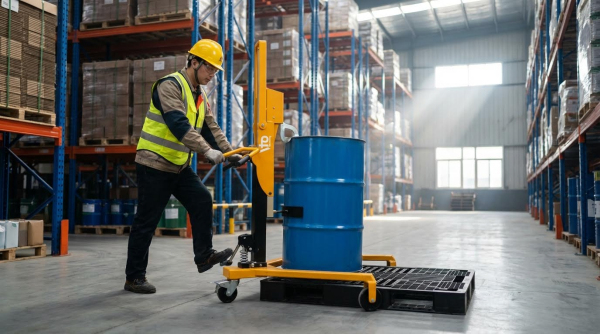
Forklift, AGV, and rack interfaces determine whether a “theoretically stable” drum pallet actually survives real handling, aisle turns, and storage in pallet racking without damage or collapse.
Even a perfectly strapped or wrapped load will fail if the pallet is undersized for the rack, the forks are too short, or AGV forks pick off-center. Interface design focuses on pallet size, fork engagement, travel speed, and rack beam support so that the drum layout you chose remains stable for the entire handling cycle.
| Interface Area | Key Requirement | Failure Mode Prevented | Field Impact |
|---|---|---|---|
| Forklift handling | Load kept low, mast tilted back, no forward tilt | Drums sliding or tipping during travel | Improves stability when turning or braking with 400–600 lb (≈180–270 kg) drums. |
| Fork length & spacing | Forks fully support pallet depth, centered under load | Pallet cracking, nose-diving, or dropping | Prevents deck-board failure and keeps center of gravity between the forks. |
| AGV pick accuracy | Repeatable fork alignment and height | Edge picking, corner overload | Reduces long-term rack and pallet damage from thousands of automatic cycles. |
| Rack beam depth & rating | Beam depth matches pallet stringers; rack rated for combined weight | Pallet sagging, beam punch-through | Maintains drum levelness and prevents slow deformation that loosens straps/wrap. |
| Aisle & turning clearance | Aisles wide enough to turn without scraping drums | Impact damage to drums and securing devices | Protects straps, plastic chime tools, and wrap from being cut or torn. |
Best-practice guidance for forklift handling of palletized drums stresses that operators should keep loads just above floor level, never tilt forward during transport, and ensure aisles have enough clearance to avoid scraping drums or dislodging securing devices. Racks must be rated for the combined pallet and drum weight, with uniform pallet sizes and adequate beam depth to prevent sagging. These points are documented in specialist drum-handling guidance.
- Forklift travel rules: Move with drums just off the floor, mast slightly back, and avoid sudden braking or tight turns with elevated loads.
- Uniform pallet sizes: Standardize pallet footprints feeding your racks so drum pallets sit consistently on beams and AGV forks.
- Rack beam coverage: Ensure at least two stringers or full perimeter support under drum pallets to avoid sagging that can loosen straps or shift drum angles.
- Protect securing devices: Train operators not to push against drums or chime devices with forks, and to avoid “bulldozing” pallets along the floor.
- Inspection loop: Include pallet, rack, and securing-device checks in daily walk-throughs so damaged components are removed before they cause a spill.
AGVs vs. forklifts: what changes in layout?
AGVs repeat the same route and pick positions with high accuracy, which is good for stability but unforgiving of bad layout. If an AGV always picks a drum pallet 30 mm off-center, that offset will be identical every time, increasing long-term rack and pallet stress. For AGV lanes, keep drum patterns perfectly centered on the pallet and use consistent pallet types so the AGV’s programmed fork positions always hit the same structural members.
💡 Field Engineer’s Note: When validating how to secure drums to pallets for a new route, ride with the operator or follow the AGV path once. Any spot where they “nudge” a rack, column, or guardrail is where your layout and securing method will be tested first.
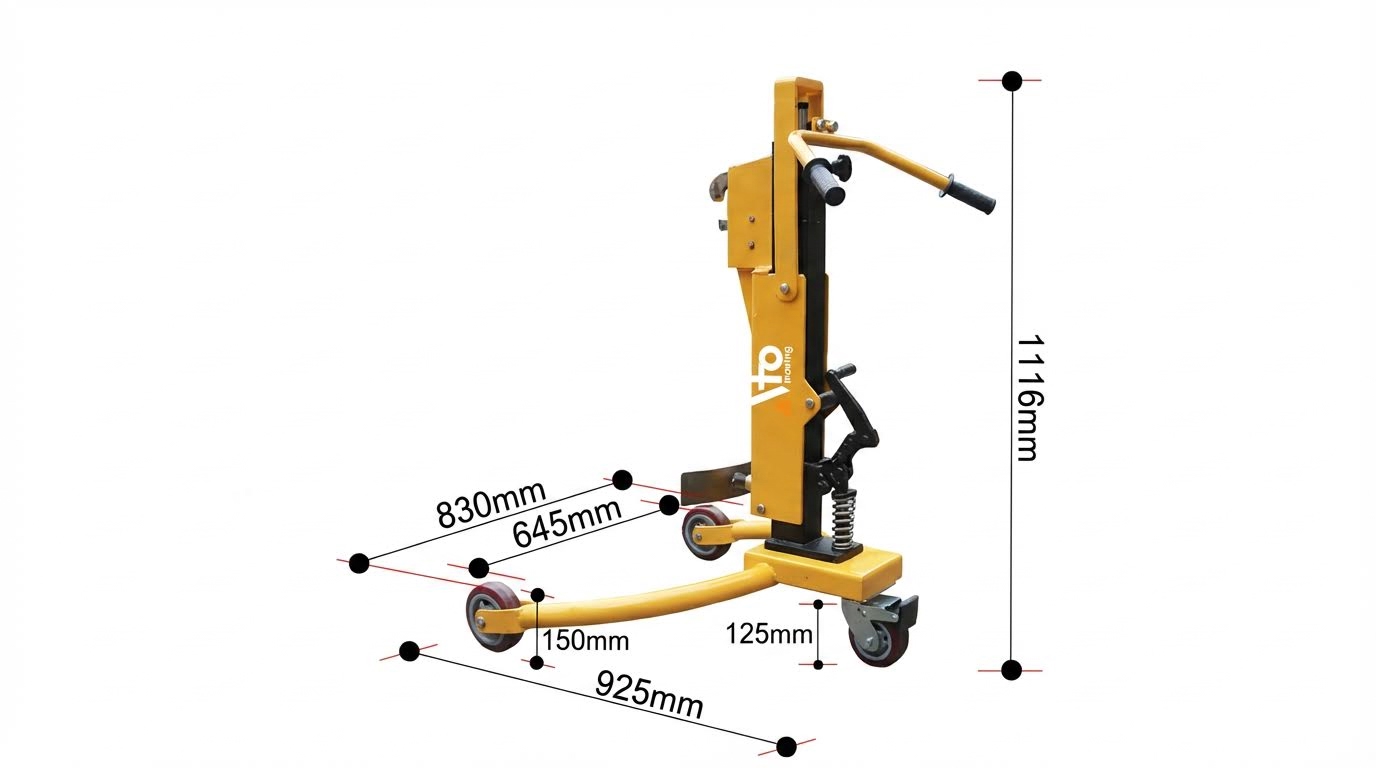
Using a drum cart or manual pallet jack can significantly improve the efficiency of drum handling. Additionally, a hydraulic pallet truck can assist in moving heavier loads safely.

Final Engineering Recommendations For Drum Securing Practices
Safe drum palletization depends on three linked decisions: correct load calculation, sound pallets and layouts, and matched securing methods. When you size pallets and racks from real drum weights and center-of-gravity positions, you remove overload and tipping as root causes. When you inspect pallets, use dunnage, and keep a tight 2×2 drum pattern, you create a rigid base that resists rocking before any strap or film goes on.
Strapping, stretch-wrap, and blocking then act as engineered layers. Straps clamp drums to the pallet and stop vertical lift-off. Wrap couples drum sides, raises friction, and protects closures. Blocking gives hard stops in the directions where impact or braking will hit first. Hybrid systems that combine all three give the best balance of safety, cost, and speed for road and warehouse work.
Operations and engineering teams should lock in standard “recipes” by lane and product: defined drum layouts, pallet specs, dunnage rules, and approved strap/wrap patterns. Train operators to reject bad pallets, keep forklift loads low and tilted back, and protect securing devices. Treat every new route or layout change as an engineering check, not a guess. This approach gives repeatable, Atomoving-level drum safety with fewer spills, injuries, and rejected loads.
Frequently Asked Questions
How to Secure Drums to a Pallet?
Securing drums to a pallet can be done effectively using pallet strapping, also known as pallet banding. This process involves wrapping straps around the pallet and its load to keep everything in place during transport. Pallet Strapping Guide.
- Use plastic or metal straps to secure the drums tightly to the pallet.
- Ensure the straps are evenly tensioned to prevent shifting.
- Consider using additional corner protectors to avoid damage to the drums.
What Are the Best Methods for Securing Items on a Pallet?
Several methods can be used to secure items on a pallet effectively. These include pallet wrapping with plastic stretch film, using pallet strapping for bundling, and employing rubber banding techniques. Pallet Load Tips.
- Pallet wrapping is ideal for lighter loads and provides a protective layer.
- Pallet strapping offers strong support and is suitable for heavier items.
- Rubber banding can provide additional stability and prevent load shifting.