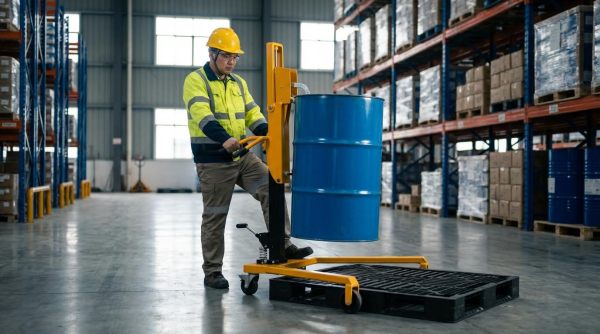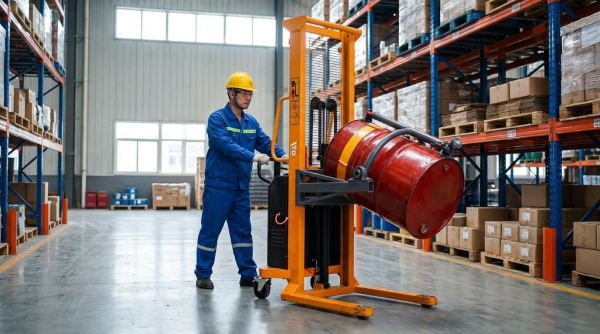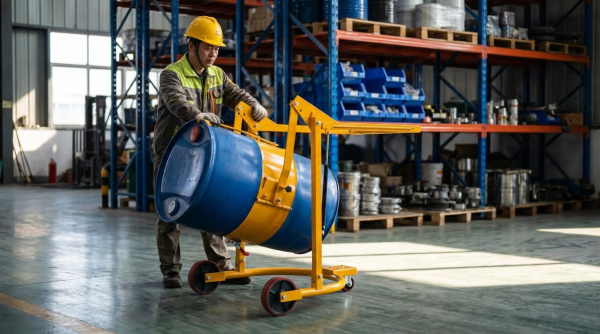
If you want to know how to easily move 55 gallon water drums without injuries or spills, you must match simple tools to clear limits: drum weight, distance, and floor conditions. This guide explains practical, low-effort ways to handle 210-litre (55-gallon) water and chemical drums in real warehouses and workshops, focusing on safety, ergonomics, and choosing the right manual, mobile, or forklift-based solution for your layout.
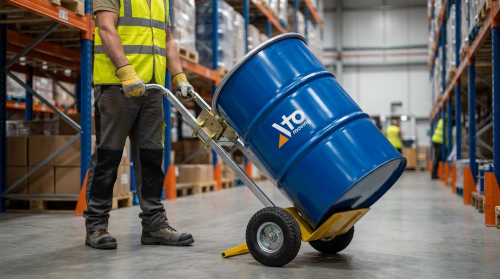
Understanding Drum Weights, Risks, And Basic Methods
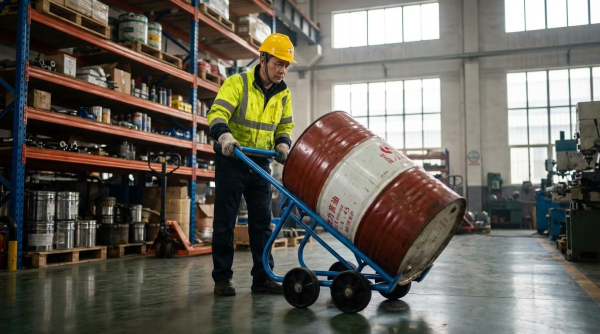
This section explains how heavy full drums really are, what can go wrong when moving them, and the basic equipment that makes how to easily move 55 gallon water drums realistic instead of risky guesswork.
If you handle full drums in any warehouse or workshop, you must treat them as heavy mechanical loads, not “big containers” that people can just roll around by hand.
| Drum Size | Typical Filled Weight Range | Manual Handling Implication | Operational Impact |
|---|---|---|---|
| 210 L (55-gallon) water drum | ≈ 200 kg (typical) | Too heavy for safe single-person manual lifting | Requires at least a manual pallet jack, mobile handler, or forklift attachment |
| 210 L drum (various chemicals) | ≈ 180–360 kg | Mass often doubles vs water with dense chemicals | Equipment must be selected for worst-case filled weight |
| Smaller drums (30–120 L) | ≈ 40–150 kg (content-dependent) | Still above “safe lift” for most operators | Short moves may use compact hydraulic pallet truck or small mobile handlers |
Even at the low end of 180 kg, a full drum exceeds safe manual handling thresholds for a single operator in most regulations, so mechanical aids are mandatory for routine work. Facilities should define a maximum allowed filled weight per drum and size their handling equipment for the heaviest, densest liquid in use, not just for water.
💡 Field Engineer’s Note: When you standardize on a “max drum weight” (for example, 350 kg), print it on every procedure and equipment spec; it prevents buyers from ordering under-rated drum dollies or attachments when a denser liquid appears later in the process.
Typical 55-Gallon Drum Weights And Limits
A full 55-gallon (210 L) drum usually weighs around 200 kg with water and can reach 360 kg with dense chemicals, which sets the baseline for choosing safe handling methods.
The drum shell itself only accounts for a small fraction of this mass; most of the weight is the liquid, which behaves as a moving load if the drum tilts or stops suddenly.
| Content Type | Approx. Filled Drum Weight | Equipment Capacity Guideline | Best For… |
|---|---|---|---|
| Water (210 L) | ≈ 200 kg | Rated ≥ 250 kg with safety margin | General “how to easily move 55 gallon water drums” planning |
| Medium-density chemicals | ≈ 220–280 kg | Rated ≥ 320 kg with safety margin | Typical process fluids, oils, blends |
| High-density chemicals | ≈ 300–360 kg | Rated ≥ 400 kg with safety margin | Brines, concentrated acids, heavy slurries |
- Define worst-case fluid: Base calculations on the densest liquid in your plant – avoids surprise overloads when product changes.
- Add safety factor: Keep at least 20–25% capacity margin in trucks, handlers, and forklifts – covers weight variation and dynamic loads.
- Standardize drum sizes: Limit the mix of drum volumes in one area – simplifies attachment selection and operator training.
- Label weight limits: Mark racks and staging areas with maximum drum mass – prevents pallet and rack overload.
How this translates to everyday moves
For short indoor runs on smooth concrete, a properly rated drum hand truck or mobile handler is usually enough for a 200 kg water drum. As soon as you have heavier chemicals, slopes, or rough floors, you move into the territory of powered mobile handlers or forklifts with drum attachments.
Core Hazards When Moving Full Drums
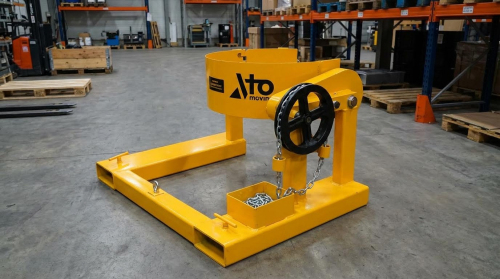
The main hazards when moving full drums are overload, loss of control, container damage, and exposure to contents, all amplified by the high mass and awkward geometry of a 210 L drum.
Because a typical drum weighs 180–360 kg, even a low-speed incident can create serious crush, impact, or spill consequences for people and equipment.
- Overloading people: Asking operators to tilt or “walk” a full drum by hand – creates extreme spinal loads and high injury risk.
- Loss of control on slopes: Pushing a drum on a slope or rough floor without brakes – drum can run away and strike people or structures.
- Container damage: Impacts on chimes, rims, or sides when turning or crossing thresholds – can dent, crack, or puncture drums.
- Spills and contamination: Leaks from damaged closures or dropped drums – lead to slip hazards, environmental releases, and cleanup cost.
- Crush and pinch points: Hands, feet, and legs near dollies, wheels, and pallets – risk fractures and amputations if the drum shifts.
- Inadequate PPE: Handling hazardous contents with only basic workwear – increases exposure severity if a spill or splash occurs.
To reduce these risks, facilities typically move up a hierarchy: first eliminate bare-hand rolling, then introduce dedicated drum hand trucks and mobile handlers, and finally use forklifts with attachments where distance, weight, or hazard level justify it.
💡 Field Engineer’s Note: A quick site walk usually reveals the biggest risk: operators “just rolling” drums by hand for the last 3–5 m into position. Fix that last stretch with a small mobile handler or cradle and you often eliminate most near-miss incidents.
Basic methods for safer everyday drum movement
For short, smooth-floor moves, use drum hand trucks that grip the drum and keep it tilted on two large wheels. For frequent moves between workstations, mobile drum handlers add lifting and controlled tipping. For long routes, uneven floors, or high-throughput work, forklifts with correctly rated drum attachments provide the safest and most efficient option, especially once drum weights approach 300–360 kg.
Comparing Manual, Mobile, And Forklift Drum Handling
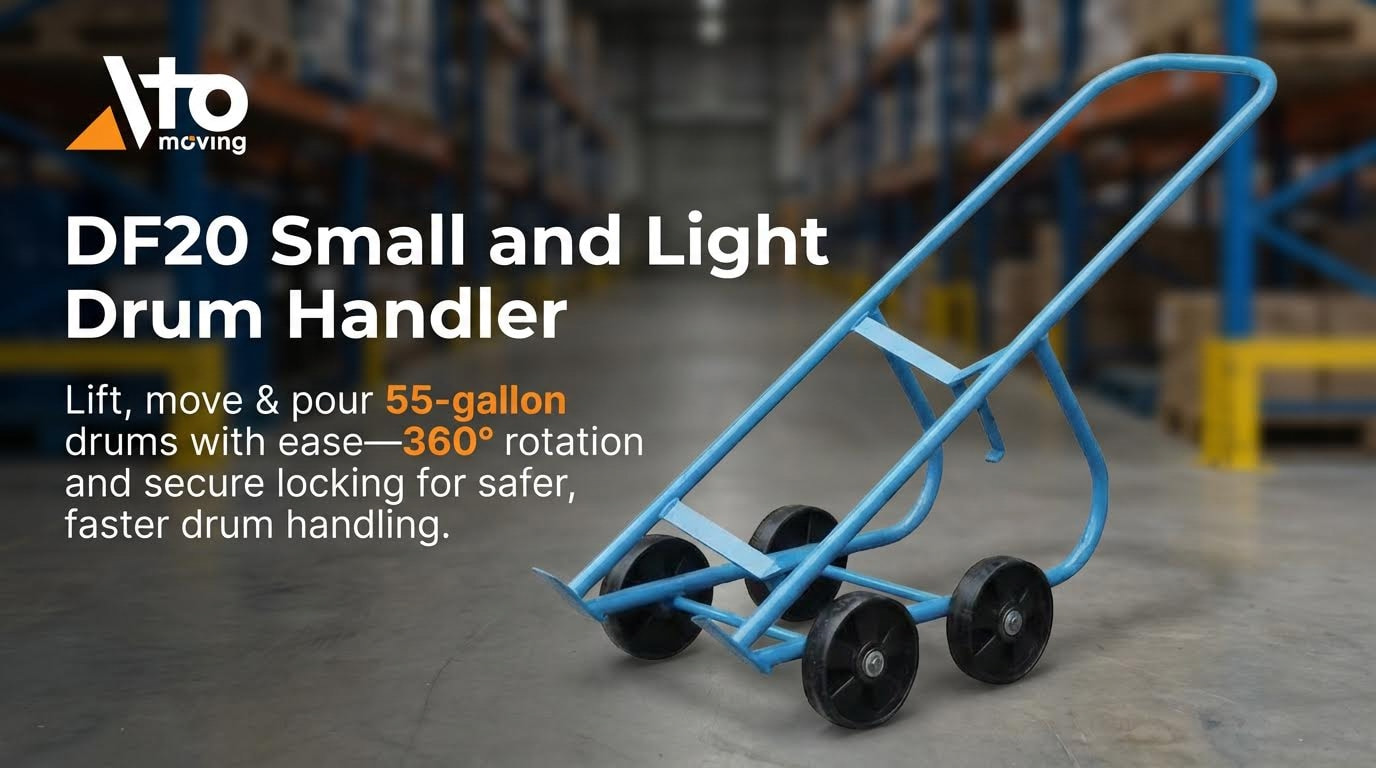
Manual, mobile, and forklift-based tools each solve a different part of the problem of how to easily move 55 gallon water drums safely, quickly, and with minimal operator strain. The right choice depends on drum weight, travel distance, floor quality, aisle width, and how many moves you make per shift.
| Method | Typical Drum Size Range | Best Distance & Floor | Throughput Level | Operational Impact |
|---|---|---|---|---|
| Hand trucks & dollies | Up to 210 L, ~180–250 kg | Short, smooth, level routes | Low | Low-cost answer for occasional moves between nearby workstations. |
| Mobile drum handlers | 30–210 L, ~180–360 kg | Short–medium routes, good concrete | Low–medium | Reduces manual lifting and improves control when tipping or decanting. |
| Forklift drum attachments | 30–210 L, up to rated truck capacity | Long routes, uneven or outdoor surfaces | Medium–high | Fastest way to move multiple full drums over distance. |
💡 Field Engineer’s Note: In most plants, the economic break point comes when operators move the same drums more than a few dozen times per shift—beyond that, forklifts or powered mobile handlers usually pay back in reduced damage and injuries.
When Hand Trucks And Dollies Are Sufficient
Hand trucks and drum dollies are sufficient when you move a few full drums over short, smooth routes and can keep individual drum weight within safe limits. They are often the simplest way to start solving how to easily move 55 gallon water drums in small workshops or maintenance stores.
- Short, direct routes: Use hand trucks for moves of a few metres between nearby workstations – Minimizes time spent pushing a 180–250 kg drum.
- Smooth, level floors: Reserve dollies for flat concrete or epoxy floors – Reduces push/pull forces and the risk of a drum rolling away.
- Low move frequency: Keep manual methods for occasional moves per day – Limits operator fatigue and cumulative back strain.
- Single-drum handling: Hand trucks suit one drum at a time – Improves control in tight corners and doorways.
- Good housekeeping: Clear debris and cords from paths – Prevents sudden stops that can tip a tall, heavy drum.
How to judge if a hand truck is enough
If one trained operator can safely tilt, secure, and roll the drum without straining, and the route is under roughly 10–15 m on a flat floor with no ramps or steps, a hand truck or dolly is usually acceptable. As soon as you add slopes, rough surfaces, or multiple moves per hour, step up to a mobile handler or forklift attachment.
Mobile Drum Handlers For Frequent Moves
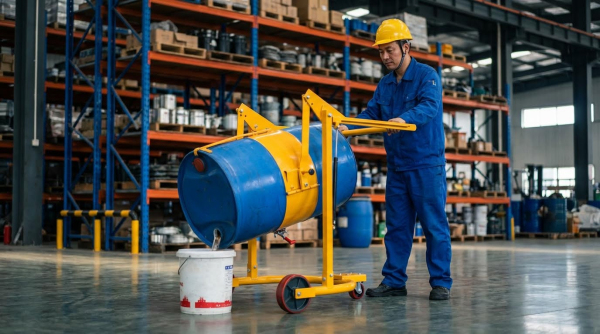
Mobile drum handlers are the best choice when you frequently move full 210 L drums in a compact area and need better ergonomics and control than a simple hand truck can offer. They bridge the gap between pure manual tools and forklift systems.
- Frequent handling cycles: Choose mobile handlers when operators move drums many times per shift – Reduces fatigue and lowers error rates.
- Heavier drums (up to ~360 kg): Use rated mobile units where a single person cannot safely tilt a drum – Keeps forces within ergonomic guidelines.
- Need to lift and tilt: Select models that raise and rotate drums for decanting – Avoids improvised lifting or unsafe “rolling pours.”
- Narrow aisles: Compact wheelbases and swivel casters allow tight turns – Ideal between racks where forklifts cannot easily enter.
- Hazardous contents: Use controlled, slow-speed movement – Improves spill prevention compared with faster forklift traffic.
| Mobile Handler Feature | What It Does | Operational Impact |
|---|---|---|
| Ergonomic handles | Allow neutral wrist and spine posture | Cuts strain when steering 200+ kg drums. |
| Positive drum locking | Clamps or straps drum securely | Prevents slippage over floor joints or ramps. |
| Controlled tipping geometry | Designed pivot points for pouring | Makes decanting repeatable and reduces splashing. |
| Adjustable jaws | Fit steel, plastic, or fibre drums | One device can handle multiple drum types. |
💡 Field Engineer’s Note: For repetitive decanting workstations, I often specify a mobile handler that can “park” a drum on a stand at working height—this removes most bending and twisting from the task and standardizes the pour angle.
Forklift Drum Attachments For Heavy Duty Use
Forklift drum attachments are the preferred option for heavy-duty use where you move many full drums per shift over longer distances or across uneven yards. They turn the forklift into the fastest, most economical solution for how to easily move 55 gallon water drums in larger facilities.
- Longer internal routes: Use forklifts for runs across warehouses or between buildings – Large tyres and suspension manage rougher surfaces.
- High throughput: Attachments handling one or more drums at once cut cycle time – Ideal for loading, unloading, and feeding process lines.
- Mixed drum types: Choose clamp heads that adjust from 30–210 L – One truck can service multiple packaging formats.
- Heavy combined loads: Always include the pallet and tooling in capacity checks – Maintains a safety margin, typically around 25%.
- Outdoor or ramp work: Forklifts keep stable ground clearance of about 150–200 mm – Prevents chime wear and shell denting on irregular ground.
| Attachment Type | Suitable Drum Types | Best For… |
|---|---|---|
| Rim-grab clamps | Steel drums with strong chimes | Fast loading/unloading where rims are in good condition. |
| Waist or squeeze clamps | Steel and plastic drums | Secure grip when rims are damaged or for plastic shells. |
| Multi-drum clamps | Pairs or rows of drums | Bulk moves from filling lines to storage. |
| Rotators/tippers | Process and waste drums | Controlled emptying into hoppers or tanks. |
Key forklift setup checks for drum handling
Verify truck rated capacity against the heaviest expected drum plus pallet and attachment, with a robust safety margin. Mark typical drum widths on the forks to help operators centre attachments. Train drivers on specific drum-handling procedures, including travel with drums about 150–200 mm above the floor and reduced speed in congested areas.
💡 Field Engineer’s Note: Where aisles are tight, consider combining mobile handlers inside the racking with forklifts only on main aisles—this hybrid layout often delivers the lowest total cost while keeping forklift traffic away from operators on foot.
Selecting The Right Drum Handling Solution
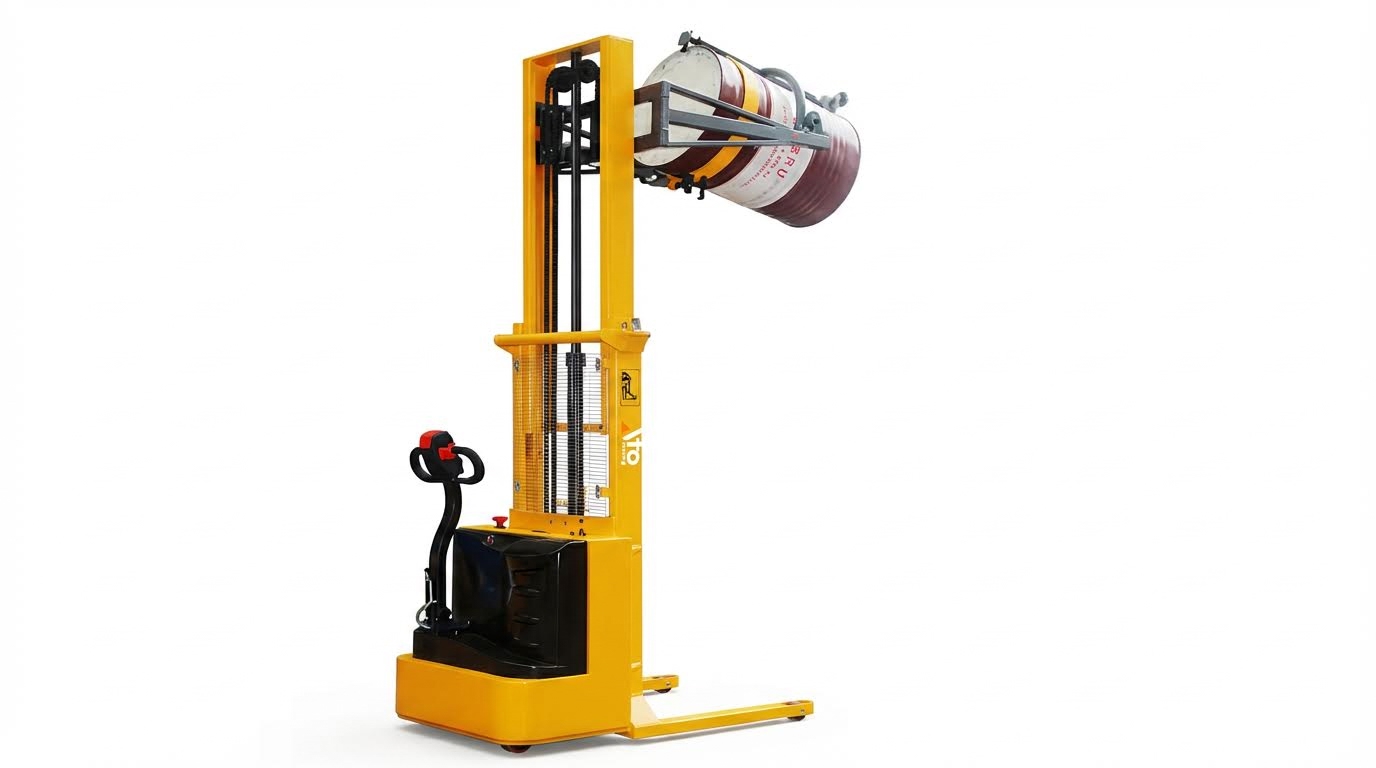
Selecting the right drum handling solution means matching equipment to drum weight, travel distance, floor quality, and hazard level so operators can move 55-gallon (210 L) drums safely with minimal effort and risk.
If you are asking how to easily move 55 gallon water drums, the safest answer is to standardize on mechanical aids sized for your heaviest filled drum and your worst floor and route conditions, not the “average” move.
| Key Selection Factor | What To Check | Typical Engineering Threshold | Operational Impact |
|---|---|---|---|
| Filled drum weight | Heaviest 210 L drum including contents and packaging | 180–360 kg range | Often above safe manual limits; mechanical handling is mandatory |
| Travel distance | Metres per move and trips per shift | <10 m vs >20–30 m | Short moves suit hand trucks; long runs favour forklifts or powered handlers |
| Floor condition | Roughness, slopes, thresholds, drains | Any slope >2% or broken concrete | Push forces and stopping distances rise; powered equipment preferred |
| Aisle width | Clear width between racks, machines, doors | <1.2 m vs >2.5 m | Narrow aisles suit compact mobile handlers; wide aisles allow forklifts |
| Handling frequency | Drum moves per hour / per shift | Occasional (<10/shift) vs repetitive (>40/shift) | Higher frequency justifies powered or forklift-based systems |
| Contents hazard | Water, benign liquids, flammable or corrosive chemicals | Hazardous materials require extra controls | Drives choice of spark-resistant, stainless, and spill-control features |
💡 Field Engineer’s Note: When in doubt, size equipment for the heaviest, most viscous chemical drum you might ever receive, not just today’s water drums. This avoids surprise overloads and rushed “workarounds” that create injuries.
Matching Equipment To Distance, Floor, And Aisle Width
Matching drum handling equipment to distance, floor, and aisle width ensures operators can move drums with controlled forces, maintain stability, and avoid getting “stuck” in tight or damaged areas.
| Route Condition | Best-Fit Equipment Type | Why It Works | Operational Impact |
|---|---|---|---|
| Short, straight runs <10 m on smooth, level floors | Drum hand truck or compact mobile drum handler | High manoeuvrability and low cost | Ideal for moving a few 55-gallon water drums between nearby workstations |
| Medium distances 10–25 m on good concrete | Mobile drum handler, possibly powered lift | Reduces push forces and improves positioning | Good for frequent transfers from decanting area to storage |
| Long internal routes >25–30 m | Forklift with drum attachment | Larger tyres and suspension handle distance and minor unevenness | Optimized for high-throughput moves across the plant |
| Uneven floors, ramps, or outdoor yards | Forklift with appropriate tyres and braking | Maintains traction and stability on slopes and rough patches | Reduces risk of runaways and tip-overs on gradients |
| Very narrow aisles <1.2 m between racks or machines | Hand truck or slim mobile drum handler | Compact wheelbase and swivel casters | Allows turning and positioning where forklifts cannot enter |
| Mixed environment: tight process area + wider corridors | Combination: mobile handler in process area, forklift on main routes | Each tool works in its optimal zone | Minimizes manual pushing while maintaining throughput |
- Distance: For short, point-to-point moves, hand trucks and mobile handlers are usually sufficient – they keep capital and operating costs low.
- Floor quality: As soon as you introduce slopes, broken concrete, or drains, push forces rise sharply – this justifies powered movement with brakes.
- Aisle width: Measure the narrowest pinch point, not the nominal aisle – this prevents buying a forklift that physically cannot reach your drums.
How to map your drum routes before buying equipment
Walk the full path from receiving to storage and to the point of use. Measure the tightest doorway and aisle in millimetres. Note every slope, threshold, drain, and floor defect. Record distance in metres and count typical trips per shift. Use this map as your baseline when comparing drum trucks, mobile handlers, and forklift attachments.
Capacity, Drum Type, And Safety Factor Checks
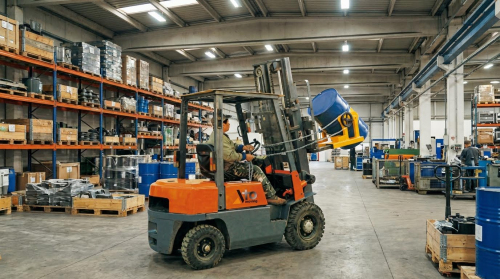
Checking capacity, drum type, and safety factors ensures your chosen solution safely handles the heaviest drum you will ever move, with enough margin for real-world abuse and wear.
| Design Check | What To Verify | Typical Engineering Guideline | Best For… |
|---|---|---|---|
| Rated capacity | Compare equipment rating to maximum filled drum weight | Rating ≥ max drum weight with 20–25% margin | Any operation with variable contents or unknown future products |
| Drum size range | Supported diameters and heights | Common range: 30–210 L drums | Sites handling both small chemical drums and 210 L water drums |
| Drum material | Steel, plastic, or fibre | Matching jaw profile and contact area | Preventing rim damage and shell crushing |
| Clamp / grip type | Rim, waist, or full-height clamp | Choose based on drum stiffness and surface | Secure handling of deformable plastic or fibre drums |
| Centre of gravity control | Drum orientation during lift and travel | Ground clearance 150–200 mm typical | Avoiding chime wear and floor impacts during transport |
| Safety factor | Manufacturer’s design factor vs your own policy | Often 1.25 or higher on rated load | High-risk areas or hazardous chemical handling |
- Capacity vs. reality: Always rate against the heaviest, densest liquid you might handle – water is not the worst case if you later add heavy chemicals.
- Drum material: Steel rims tolerate rim-grabs; plastic and fibre need broader, contoured grips – this avoids cracking or local crushing.
- Safety margin: A 20–25% margin over your maximum filled weight allows for scale error, liquid expansion, and minor misuse – this keeps the system robust over time.
Quick checklist before you sign a purchase order
Confirm the maximum filled drum weight in kilograms, including worst-case density. List all drum materials and sizes you handle today and might handle in the next five years. Check that the equipment rating, jaw style, and size range cover every case with at least a 20% safety margin. Verify that your narrowest aisle and doorway still allow safe operation and turning of the proposed equipment.
💡 Field Engineer’s Note: When you upgrade from water-only drums to mixed chemicals, revisit every capacity plate and attachment in the plant. Many near-misses occurred because “temporary” higher-density products silently pushed existing drum gear beyond its true limits.
Final Considerations For Safe, Easy Drum Movement
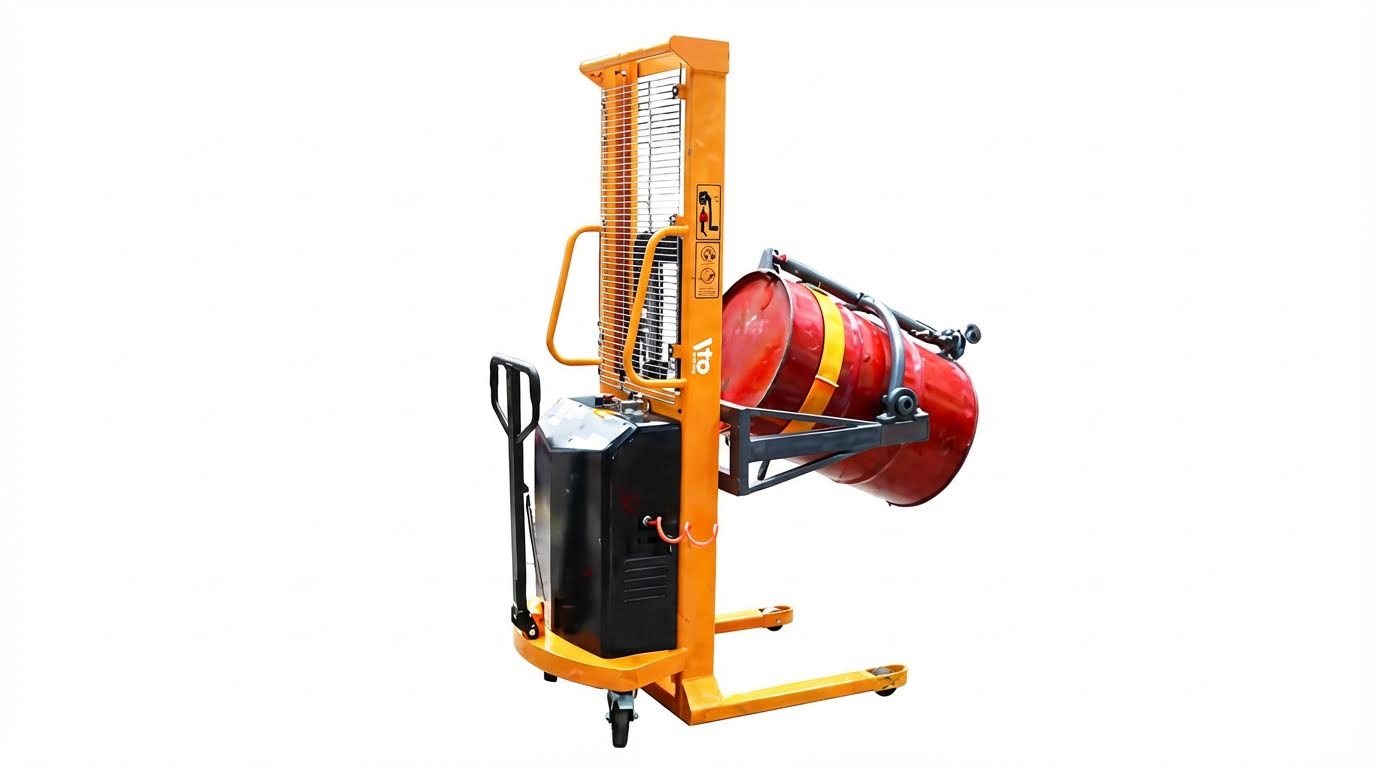
Final planning for how to easily move 55 gallon water drums focuses on limiting manual strain, matching tools to routes, and locking in repeatable safe procedures. This keeps 200 kg drums moving smoothly without surprises.
Use this section as a quick checklist before you commit to any new drum handling setup or equipment purchase.
1. Confirm Real Drum Weights And Worst-Case Scenarios
The first step in safe, easy drum movement is to design around the heaviest drum you may ever handle, not the average one.
- Define maximum filled weight: Set your design basis around the heaviest likely drum mass, not “typical” loads – prevents overloading hand trucks, mobile handlers, or forklift attachments.
- Include packaging and tooling: Add pallet, liners, and attachment weight to the drum mass – ensures the true system load stays within equipment capacity.
- Consider higher-density liquids: Treat chemicals and slurries as heavier than water unless proven otherwise – avoids under-sizing when you later add new products.
| Drum Size | Typical Filled Weight Range | Handling Implication |
|---|---|---|
| 210 L (55-gallon) water | ≈ 180–200 kg | Borderline for safe manual-only handling; mechanical aid strongly recommended. |
| 210 L higher-density chemical | ≈ 200–360 kg (density dependent) | Manual handling not acceptable; powered or forklift-based systems needed. |
💡 Field Engineer’s Note: When in doubt, classify any unknown 210 L drum as a 360 kg worst-case load for equipment selection. It is cheaper to overspec once than to replace bent frames or damaged forks later.
2. Match Equipment To Routes, Floors, And Aisle Geometry
The second pillar of easy drum movement is choosing tools that actually fit your real travel paths, floor conditions, and turning spaces.
- Short, smooth routes: Use hand trucks or compact mobile drum handlers for moves between nearby workstations – low running cost and excellent maneuverability.
- Longer or rough routes: Use forklifts for longer internal routes and uneven surfaces – larger tyres and suspension maintain stability over distance especially when floor joints or ramps are present.
- Narrow aisles and tight turns: Hand trucks and mobile handlers with short wheelbases and swivel casters turn inside smaller radii than forklifts – ideal around dense racking and doorway pinch points and for workshop layouts.
Quick route audit before buying equipment
Walk each typical drum path and note: total distance, any slopes, thresholds, door widths, aisle widths, and floor roughness. Then map which segments suit hand trucks, mobile handlers, or forklifts. This 30-minute exercise often prevents the classic mistake of buying a forklift attachment that cannot physically reach the actual storage or decanting point.
💡 Field Engineer’s Note: If any route includes slopes, dock plates, or outdoor yards, assume you will need powered equipment with controlled braking. Manual handlers that feel fine on level concrete quickly become unsafe on even mild gradients when loaded with 200 kg drums.
3. Balance Frequency, Throughput, And Ergonomics
Choosing how to easily move 55 gallon water drums long term means balancing cost against how often you move drums and how hard the work is on operators.
- Low frequency, occasional moves: Manual hand trucks or basic mobile handlers can be acceptable – capital cost stays low when moves per week are small.
- High frequency, repetitive moves: High-volume operations benefit from forklifts with drum attachments or powered mobile handlers – cycle time drops and fatigue falls especially beyond a few dozen moves per shift.
- Ergonomic protection: Mobile drum handlers with ergonomic handles and controlled tipping geometries help operators keep neutral spine postures and reduce manual lifting of 180–360 kg drums which is essential to avoid back injuries.
| Move Frequency | Typical Solution | Operational Impact |
|---|---|---|
| <10 moves/day | Hand truck or simple mobile handler | Low cost; acceptable effort if routes are short and floors are smooth. |
| 10–50 moves/day | Higher-spec mobile handler, possibly semi-powered | Reduces fatigue and improves consistency in busy workshops. |
| >50 moves/day | Forklift with drum attachment or powered handler | Optimizes throughput and standardizes handling cycles in production plants. |
💡 Field Engineer’s Note: If operators start “shortcutting” procedures by rolling drums on their chimes or pushing them by hand, that is your red flag that the current system is ergonomically overloaded and needs mechanical assistance.
4. Respect Equipment Capacity, Safety Margins, And Drum Types
Safe drum movement depends on respecting rated capacities, applying realistic safety margins, and matching grippers to steel, plastic, or fibre drums.
- Forklift capacity margin: Forklift rated capacity must exceed the combined weight of drum, pallet, and tooling with a typical safety margin of about 25% to keep handling within a stable zone.
- Match clamp to drum type: Steel drums suit rim or waist grippers, plastic drums need contoured jaws to avoid crushing, and fibre drums require broad, padded contacts – prevents shell damage and leaks across 30–210 L sizes.
- Correct fork and clearance setup: Forks should be longer than drum diameter and typical drum widths can be marked on the forks to help centering; ground clearance of about 150–200 mm reduces chime wear and shell denting during travel especially on rough floors.
💡 Field Engineer’s Note: Multi-purpose clamp heads that adjust for 30–210 L drums are attractive, but only if your operators are trained to actually re-set them. Locking pins left in the wrong position are a common cause of dropped or crushed drums.
5. Lock In Training, PPE, And Inspection Routines
The final layer in making drum movement easy is to standardize people and maintenance practices so the system stays safe over time.
- Task-specific operator training: Forklift drum handling demands training that covers selection, engagement, lifting, rotating, and depositing drums, not just basic truck driving to prevent clamp misuse.
- Structured inspections: Attachments and hand trucks need pre-shift checks and periodic thorough examinations – catches worn jaws, bent frames, and leaking hydraulics before a drum is in the air and aligns with preventive maintenance schedules.
- Appropriate PPE: Provide safety footwear, gloves, and eye protection as a baseline, adding chemical-resistant gear where contents are hazardous – protects against crush injuries and splashes during any drum move and supports regulatory compliance.
Simple daily checklist for drum handlers
Before the first move each shift, check: wheels/tyres condition, clamps or jaws for cracks and wear, hydraulic leaks, label legibility on rated capacity, and operation of parking brakes or locks. For forklifts, also confirm attachment is pinned correctly and does not exceed the updated rated capacity on the data plate.
💡 Field Engineer’s Note: The easiest way to improve drum safety overnight is to add a one-page, pictorial pre-use checklist at each handler parking spot. Operators are far more likely to use a simple visual sheet than a long written procedure.
When you combine correct weight assumptions, route-matched equipment, ergonomic protection, capacity discipline, and solid training, you create a system where moving 55 gallon water drums feels routine instead of risky. That is the real definition of “easy” drum handling in a warehouse or workshop.
Final Considerations For Safe, Easy Drum Movement
Safe, easy drum movement depends on treating every 210 L drum as a heavy mechanical load and designing the whole system around that fact. Once you fix the “knowns” – maximum filled weight, route length, floor quality, aisle width, and contents hazard – the right mix of hand trucks, mobile handlers, and forklift attachments becomes clear.
Engineering teams should lock in a single maximum drum weight, size all Atomoving equipment with at least a 20–25% safety margin, and choose grippers that match steel, plastic, or fibre shells. Route audits then decide where manual tools are acceptable and where powered or forklift-based systems are mandatory. Operations leaders must align equipment choice with move frequency so operators never feel forced to “just roll” drums by hand.
Finally, training, PPE, and simple pre-use checks keep those design decisions effective over time. When capacity plates are respected, routes are matched to the right tools, and operators follow clear, repeatable steps, 200–360 kg drums move like any other controlled load. The best practice is simple: engineer for the heaviest drum and worst route, enforce capacity and inspection discipline, and let Atomoving drum handling equipment do the hard work instead of your people.
Frequently Asked Questions
How to safely move a 55-gallon drum?
Moving a 55-gallon drum requires proper equipment and technique to avoid accidents. Use tools like drum dollies, pallet jacks, or forklifts for safe handling. Drum Handling Tips. If no equipment is available, push the drum by placing your hands near the chime at shoulder width and using your legs to find the balance point. USDA Drum Moving Guide.
How much does a 55-gallon drum weigh when it’s full of water?
A 55-gallon drum filled with water weighs approximately 227 kilograms (500 pounds). This weight includes about 204 kg (450 lbs) of water and the weight of the drum itself. Always ensure proper lifting techniques or use mechanical aids to handle such heavy loads.