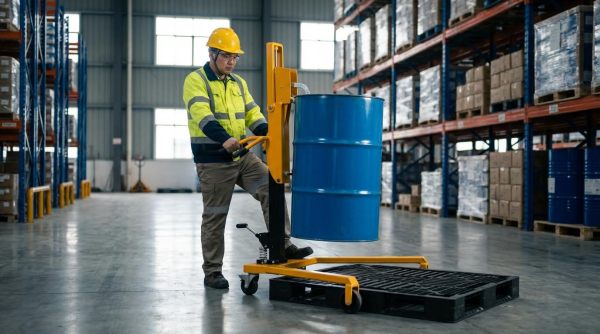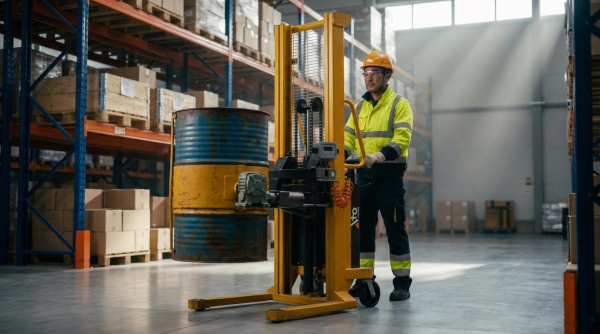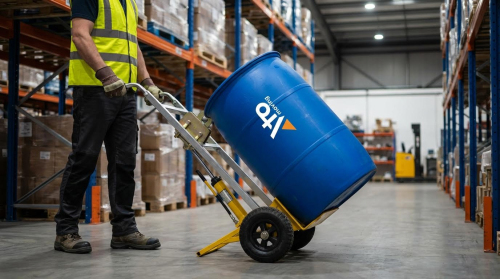
Industrial plants that ask how to move 4 drums at once need solutions that balance speed, safety, and cost. This article compares drum palletizers, forklifts with drum attachments, and drum dollies to show where each method fits best in real operations.
You will see how throughput, labor, and floor space trade-offs drive the choice between manual, semi-automatic, and fully automated systems. The middle sections dive into engineering details for drum palletizers, including load cases, pallet patterns, hydraulics, and controls, then cover forklift drum clamps and train dollies for flexible line-feeding and kitting.
The final part explains how to select safe, efficient drum handling systems that match your existing material flow, regulatory duties, and budget. By the end, engineering, operations, and EHS teams can align on a clear strategy for handling multiple drums per move, with a focus on reliable four-drum handling in busy plants.
Comparing Drum Palletizers, Forklifts, And Dollies
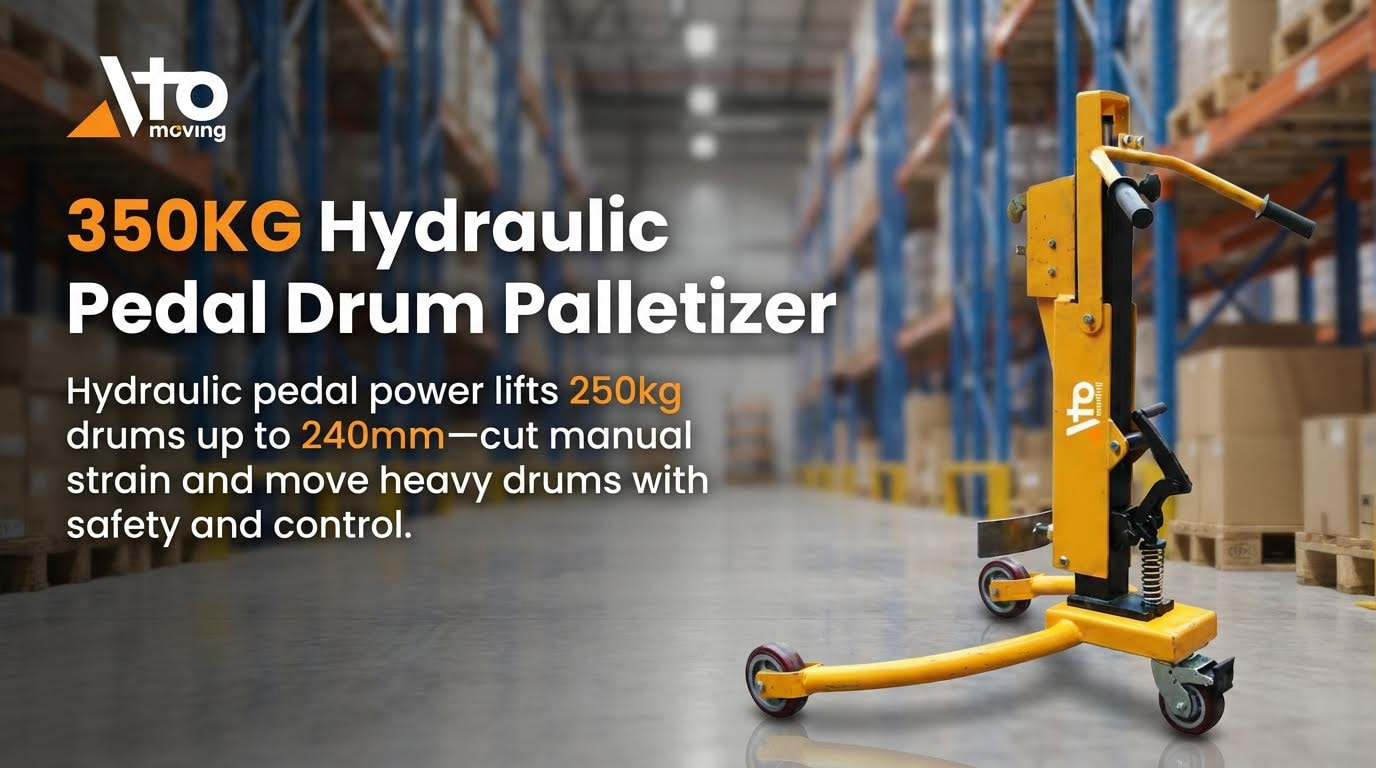
Engineers asking how to move 4 drums at once need clear trade-offs. Drum palletizers, forklifts with drum attachments, and drum dollies each suit different volumes, layouts, and safety targets. This section compares them using throughput, labor, safety, lifecycle cost, and integration factors so plants can select the right mix instead of a single tool.
Throughput, Labor, And Floor Space Trade-Offs
Throughput drives the first decision when you plan how to move 4 drums at once. Automated drum palletizers reach high hourly rates and support continuous lines but need fixed layouts and conveyors. Forklifts with dual-drum or four-drum attachments give flexible routing and good batch capacity but require skilled drivers and clear aisles. Dollies work best for short moves and low volume where capital budgets are tight.
| Method | Typical batch size | Best use case | Floor space impact |
|---|---|---|---|
| Drum palletizer | 4+ drums per cycle on pallets | High-volume palletizing and depalletizing | High, fixed footprint plus conveyors |
| Forklift + attachments | 2–4 drums per trip | Medium to high volume with variable routes | Moderate aisles, shared with other traffic |
| Drum dollies | 1 drum per dolly | Short internal moves and tight spaces | Low, very flexible |
Palletizers reduce direct labor per drum but increase technical support needs. Forklifts balance labor and flexibility and often give the fastest response to schedule changes. Dollies use more manual effort yet fit well where powered vehicles cannot enter.
Safety, Ergonomics, And Regulatory Compliance
Safety rules and ergonomics strongly affect how to move 4 drums at once. Drum palletizers keep operators outside the load zone and reduce manual lifting, which aligns well with occupational safety guidelines. Guarding, interlocks, and emergency stops are essential and must match local machinery safety standards. Forklift drum attachments must grip drums reliably on level and uneven floors to prevent drops and spills.
Dollies and caddies reduce lifting but still rely on human pushing forces. Plants should keep push and pull forces within ergonomic limits and avoid slopes or damaged floors. For hazardous contents, any method must support spill control, stable transport, and clear access routes for emergency response. Written procedures, operator training, and inspection checklists help prove compliance during audits.
Lifecycle Cost And Maintenance Considerations
Lifecycle cost goes beyond the first question of how to move 4 drums at once. Drum palletizers need higher capital cost but offer low cost per drum at high volume. They include drives, hydraulics, and controls that require planned preventive maintenance and spare parts. Forklift solutions spread cost across truck, attachment, fuel or electricity, and tires.
Dollies have low purchase cost and simple maintenance. Typical tasks include wheel inspection, bearing checks, and frame repair. A basic comparison helps during budgeting:
- Palletizers: high capital, medium energy, structured maintenance program.
- Forklifts + attachments: medium capital, higher energy, frequent wear items.
- Dollies: low capital, very low energy, simple upkeep.
Plants should model total cost per moved drum over several years, including downtime risk and safety incidents.
Integration With Existing Material Flow
Integration with present layouts often decides the best way to move 4 drums at once. Drum palletizers fit well at fixed nodes such as filling, curing, or shipping cells. They work best with conveyor-fed pallets and stable drum sizes. Forklifts connect these fixed nodes and bridge gaps between buildings, levels, and docks.
Dollies support last-meter moves where forklifts cannot enter, such as cleanrooms, narrow mezzanines, or maintenance areas. When mapping flows, engineers should document:
- Source and destination points for four-drum moves.
- Available aisle widths and turning radii.
- Shared traffic with people and other vehicles.
Mixed systems are common. A palletizer builds four-drum pallets, forklifts move them between zones, and dollies handle final positioning at workstations. The best configuration keeps high-speed equipment on repeatable paths and uses flexible tools only where needed.
Engineering Drum Palletizer Solutions
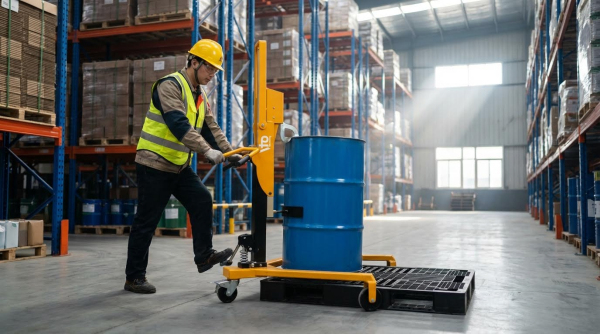
Engineering a drum palletizer starts with a clear target: how to move 4 drums at once with repeatable safety and speed. Plants must match configuration, load rating, and pallet pattern to real drum flows, not catalog data. The right design reduces manual tasks, stabilizes four-drum loads, and fits into existing conveyors and forklift routes. This section explains how engineers specify and integrate palletizers that handle four-drum moves without bottlenecks.
Manual, Semi-Auto, And Automated Configurations
Plants that ask how to move 4 drums at once usually compare manual, semi-auto, and automated palletizers. Manual palletizers rely on operator push or pump power and suit low throughput zones or maintenance areas. They handle four drums but depend on operator skill for alignment and cycle time.
Semi-automatic systems add powered lift, clamping, or pushers while keeping an operator in the loop for positioning and confirmation. These systems fit medium-speed lines where typical palletizers process tens of drums per hour. Fully automated palletizers use conveyors, programmable logic controllers, and automatic gripping to build full four-drum layers with minimal labor.
Selection often follows a simple rule set: manual for low daily drum counts, semi-auto for moderate counts with changing SKUs, and automated for high-volume filling or shipping lines. Engineers also check changeover time, cleaning needs, and shift patterns before fixing the configuration.
Load, Drum Type, And Pallet Pattern Specifications
To move four drums at once safely, engineers first define the maximum load case. A typical 200 litre drum can weigh more than 300 kilograms when full. Four drums can therefore exceed 1,200 kilograms plus pallet mass. The palletizer frame, forks, and gripping points must carry this with a suitable safety factor.
Drum type drives interface design. Steel drums allow rim or chime engagement. Plastic drums often need band or body clamps to avoid deformation. Fiber drums require even lower contact pressure. Engineers also fix pallet patterns early because they control stability and cycle logic.
| Pattern | Use Case | Stability |
|---|---|---|
| 2 × 2 square | Standard 200 litre drums on 1,200 mm pallet | High |
| Staggered 2 + 2 | Mixed drum diameters or label visibility needs | Medium |
| Offset pattern | Space-limited layouts or special pallets | Low to medium |
The 2 × 2 square layout usually gives the best center of gravity and simple programming. Engineers also specify allowable drum diameter ranges and height tolerances so the palletizer can maintain consistent clearances.
Hydraulic, Mechanical, And Control System Design
Hydraulic systems often power the main lift when handling four full drums together. They provide high force in a compact envelope and tolerate frequent duty cycles. Engineers size cylinders and pumps so the system lifts the maximum four-drum load with margin while keeping typical hydraulic efficiency in the 85–90% range.
Mechanical structures carry static and dynamic loads from lifting, acceleration, and braking. Designers check frame deflection, fork bending, and weld fatigue for repeated four-drum cycles. Bearings, rollers, and guide rails must align accurately to avoid side loads on drums and pallets.
Control systems coordinate motion and safety. Simple palletizers may use relay logic. More advanced units use programmable controllers with speed ramps, position control, and interlocks for doors and light curtains. When the goal is to move four drums at once, controls must prevent asymmetric lifting or partial gripping, which can shift the center of gravity suddenly.
Engineers also define emergency stop behavior. The system should stop motion quickly but avoid dropping or jolting the drum group. This often needs controlled hydraulic valve sequencing or motor braking logic.
Automation, Sensors, And Digital Twin Integration
Automated palletizers that move four drums in each cycle depend on robust sensing. Typical sensors detect drum presence, position, pallet location, and clamp status. Photoelectric or laser sensors confirm each drum is in the correct pocket before the pusher or clamp engages. Load cells or pressure switches can verify that the system holds the expected mass.
Vision systems help when drum graphics, labels, or bungs must face a set direction on the pallet. They also support quality checks, such as missing lid detection. Encoders track vertical and horizontal positions so the palletizer repeats four-drum moves with millimetre-level accuracy.
Digital twin models give engineers a way to test how to move 4 drums at once before installing steel. They simulate conveyor speeds, robot or gantry motions, and accumulation logic. Teams can validate cycle time, queue lengths, and collision risks in software. This reduces commissioning time and change orders.
Once the system runs, linking sensor data into the digital twin supports performance tuning. Engineers can compare planned versus actual cycle times, identify micro-stops, and test new pallet patterns virtually. This approach keeps four-drum handling efficient even as products and routes change.
Forklift Drum Attachments And Train Dollies
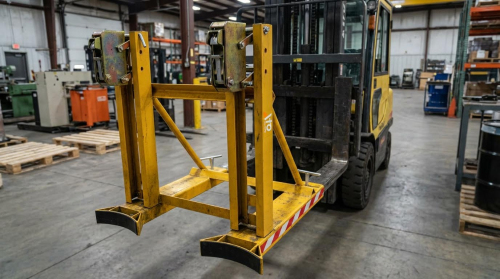
Engineers who study how to move 4 drums at once often compare forklift drum clamps and train dollies. Both tools increase throughput, but they suit different routes, floor conditions, and safety rules. This section explains how to choose and engineer these systems so they stay stable, efficient, and easy to maintain.
Forklift Drum Clamps: Design And Selection
Forklift drum clamps let one truck move two or more drums in a single trip. To move 4 drums at once, planners usually combine a two-drum clamp with palletized drums or use dual-position clamps on higher-capacity trucks. Clamp design must match drum type, wall stiffness, and rolling hoop geometry to avoid slip or crush damage.
Key selection factors include:
- Rated capacity with safety margin for four filled drums
- Grip method, such as beak, hoop, or rim engagement
- Fork pocket size and center spacing versus truck forks
- Need for hydraulic circuits or purely mechanical actuation
Engineers also check visibility, as operators must see clamp tips and drum edges when aligning. Standards such as regional forklift attachment rules guide design factors like factor of safety, locking methods, and proof testing.
Drum Train Dollies For Line-Feeding And Kitting
Drum train dollies work well when routes are fixed and repeatable, such as line-feeding or kitting loops. A tugger or forklift pulls several dollies, each holding one or more drums. With proper coupler geometry, a train can move 4 drums at once or more while keeping turning paths tight.
Designers size frames and wheels for the worst-case drum mass and route length. They also choose wheel types based on floor smoothness and debris risk. In plants with frequent changeovers, modular dollies with removable cradles let teams switch between 200 litre and 55 gallon drums without new hardware.
Train systems reduce forklift traffic near operators because one tug run can replace several single-drum trips. This layout supports lean material flow, with scheduled milk runs that feed work cells at set intervals.
Stability, Ground Conditions, And Route Planning
When planning how to move 4 drums at once, stability comes first. Engineers treat the load as a combined mass and check centre-of-gravity height, axle spacing, and wheel track. They avoid tall stacks on narrow dollies because lateral tipping risk grows quickly with height.
Ground conditions drive many design choices. Smooth sealed floors allow small hard wheels and tighter clearances. Rough or cracked floors need larger wheels, robust bearings, and stronger frames. On slopes, planners limit train length, reduce speed, and specify positive parking brakes.
Route planning should map turning radii, aisle widths, and cross-traffic zones. Useful controls include:
- One-way aisles for tug and drum trains
- Speed limits in high-pedestrian zones
- Marked stopping points at line-side drop areas
These controls lower collision risk and keep dynamic forces within what clamps and dollies can safely handle.
Energy Use, Wear, And Predictive Maintenance
Moving 4 drums at once changes truck energy use and wear patterns. Higher average payloads increase traction demand, brake duty, and steering effort. Electric forklifts see shorter run time per charge if operators carry heavy multi-drum loads on each trip.
Maintenance teams track three main wear points: clamp pivots and pads, dolly wheels and bearings, and coupler joints in trains. Simple steps such as correct tyre pressure, regular lubrication, and pad inspection extend life. Plants that run long shifts often add condition checks to daily pre-use inspections.
P predictive maintenance works well on high-use fleets. Teams log clamp cycle counts, overload alarms, and wheel temperature or vibration trends. They then schedule pad changes, bearing swaps, and bolt torque checks before failures stop production. This approach keeps multi-drum moves reliable and supports stable takt times on filling and packaging lines.
Summary: Selecting Safe, Efficient Drum Handling Systems
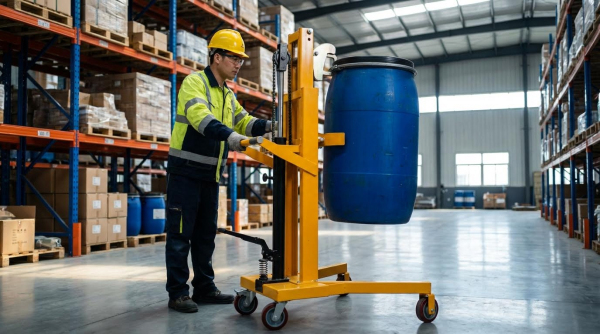
Plants that search for how to move 4 drums at once usually face a mix of safety, throughput, and layout limits. The best solution depends on drum type, route length, floor quality, and interface with filling, storage, and shipping. This article compared drum palletizers, forklifts with drum attachments, and drum dollies to support structured decisions.
From a technical view, drum palletizers offered the highest sustained throughput and the lowest manual effort. They worked well when lines palletized four drums per pallet in repeatable patterns and needed tight control of damage risk. Forklift drum clamps and train dollies allowed flexible routing and fast changeovers, but required strict driver training and route planning to keep four-drum moves stable. Dollies and caddies suited short moves and tight spaces, not long-haul bulk transfers of four full drums.
Future plants will likely combine automated palletizers, smart forklift attachments, and connected sensors. Digital twins and simple telematics will track stack heights, routes, and near-misses. In practice, engineers should start from risk assessment, floor loading checks, and target takt time. Then they can match equipment that moves four drums at once without exceeding ergonomic, structural, or regulatory limits. A balanced roadmap keeps options open for later automation upgrades while locking in safe, repeatable handling today.
Frequently Asked Questions
How can I move 4 drums at once using material handling equipment?
Moving multiple drums safely and efficiently requires the right material handling equipment. A drum handler or drum lifter attached to a forklift is commonly used in warehouses. These attachments are designed to grip and transport up to four drums simultaneously. Ensure that the drums are securely fastened before moving them. Material Handling Equipment Guide.
- Use a forklift with a drum handler attachment.
- Ensure drums are properly secured before transport.
- Follow safety guidelines to prevent accidents.
What safety precautions should be taken when moving drums?
When moving drums, always prioritize safety. Inspect the equipment for damage before use. Ensure the load capacity of the forklift and attachment matches the weight of the drums. Operators should be trained and certified to handle the equipment. Avoid sudden movements and ensure the path is clear of obstacles. OSHA Safety Guidelines.
- Inspect equipment before use.
- Verify load capacity matches drum weight.
- Ensure operators are trained and certified.