Efficient multi-drum handling is the core answer to how to move 4 drums at once without overloading people or equipment. This article examines key design considerations, then compares drum palletizers, robotic palletizing cells, forklift drum attachments, and train dollies for different plant layouts and throughput targets. You will see how safety, ergonomics, lifecycle cost, and uptime influence technology selection across manual, semi-automatic, and fully automated solutions. The final section consolidates these insights into a practical framework for selecting safe, efficient drum handling systems for modern industrial operations.
Key Design Considerations For Multi-Drum Handling
Engineers who plan how to move 4 drums at once must balance load integrity, floor conditions, and operator safety. Design choices for palletizers, forklift attachments, and drum trains affect throughput, ergonomics, and regulatory compliance across the full system lifecycle. Clear specifications for drum geometry, mass, and handling frequency support reliable layouts and predictable uptime. The following considerations help align equipment selection with process, safety, and cost targets in demanding industrial environments.
Drum Types, Sizes, And Load Specifications
The starting point for how to move 4 drums at once is an accurate drum specification. Typical industrial drums range from 200 L to 220 L, with filled masses often between 200 kg and 350 kg per drum. Designs must account for drum material (steel, plastic, fiber), diameter range, and presence of rolling hoops or lipped rims that interface with clamps or beaks. Clamp jaws, beak profiles, and strap systems require sufficient contact area and friction to resist slip during acceleration, deceleration, and minor impacts.
When handling four drums simultaneously, engineers calculate combined mass, center-of-gravity height, and worst-case offset from the handling axis. These values drive forklift capacity derating, palletizer conveyor design, and dolly frame stiffness. Safety factors typically exceed 1.5 on static load and address dynamic effects from uneven floors or abrupt braking. For hazardous contents, designs must also limit impact energies and deformation to avoid breaches, especially during cornering or ramp transitions.
Throughput, Layout, And Workflow Constraints
To move 4 drums at once efficiently, designers align equipment capacity with takt time and plant layout. Required throughput, expressed in drums per hour or pallets per hour, determines whether manual, semi-automatic, or automated systems are viable. High-throughput lines benefit from palletizers or structured drum trains that minimize backtracking and empty travel. Engineers map travel paths, turning radii, and transfer points to avoid congestion between forklifts, pedestrians, and conveyors.
Floor flatness and available aisle width strongly influence whether four-drum attachments or multi-drum dollies operate safely. Narrow aisles may force single-file drum trains with articulated dollies instead of wide, side-by-side configurations. Transfer heights between filling stations, scales, and storage positions must match lift ranges and tilt limits of the chosen equipment. Buffer zones and staging areas near palletizers or docks help decouple variable upstream processes from outbound loading schedules.
Safety, Ergonomic, And Compliance Requirements
Handling four drums at once multiplies potential kinetic energy and risk, so engineered safeguards are essential. Designs should minimize manual lifting and pushing forces, using mechanical or powered devices for all movements of filled 200 L drums. Risk assessments identify crush zones, pinch points, and overturn scenarios around palletizers, forklifts, and drum trains. Guarding, interlocks, and emergency stop devices must follow relevant machinery and workplace safety standards for the region.
Ergonomic criteria limit push–pull forces on drum dollies and carts, especially on inclines or uneven surfaces. Handle heights, control layouts, and visibility envelopes should allow operators to maintain neutral postures and clear sightlines around four-drum loads. For hazardous chemicals or flammables, equipment selection must support spill containment, antistatic or conductive components, and, where required, certified use in explosive atmospheres. Documented training and operating procedures complete the compliance framework.
Lifecycle Cost, Maintenance, And Uptime Targets
Optimizing how to move 4 drums at once requires looking beyond purchase price to lifecycle performance. Multi-drum attachments and palletizers experience concentrated loads, so designers specify robust frames, wear-resistant pivots, and protected hydraulics or sensors. Planned maintenance intervals cover inspection of clamps, straps, rollers, casters, and welds, as well as lubrication and fastener torque checks. High-utilization applications benefit from standardized components and easy access for service to reduce mean time to repair.
Engineers estimate annual operating hours, spare parts consumption, and downtime costs when comparing equipment concepts. Systems with higher initial automation may reduce labor and injury-related costs while improving schedule reliability. However, they demand disciplined preventive maintenance and sometimes specialized technical support. Clear uptime targets, such as 98% availability on a drum palletizing cell, guide decisions on redundancy, condition monitoring, and digital diagnostics strategies across the handling fleet.
Drum Palletizers And Robotic Palletizing Systems
Engineering a system for how to move 4 drums at once with palletizers or robots requires a structured approach. Designers must balance throughput, footprint, and safety while maintaining stable multi-drum unit loads. The following subsections focus on configuration choices, pattern engineering, safeguarding, and reliability tools that directly affect multi-drum handling performance.
Manual, Semi-Automatic, And Fully Automated Options
Manual drum palletizers used fixed chutes, guides, or mechanical lifts that relied heavily on operator positioning. They suited low-throughput lines but limited consistent four-drum handling due to ergonomic and repeatability constraints. Semi-automatic systems combined powered lifts, conveyors, and simple PLC logic, so operators only positioned drums or confirmed cycles. These systems could reliably build patterns of four 200 L drums per layer while reducing strain and misalignment. Fully automated palletizers and robotic cells handled drum infeed, orientation, and placement with minimal human intervention. They excelled when plants required continuous operation, synchronized conveyors, and repeatable “4-at-once” pick or place cycles, often integrated with automatic pallet dispensers and stretch wrappers.
Load Pattern Design And Stability Engineering
Designing how to move 4 drums at once started with the unit-load pattern, not just the gripping device. Engineers evaluated drum diameter, height, fill level, and center of gravity to define safe layer configurations. Typical four-drum patterns used tight square clusters on standard 1,200 mm by 1,000 mm or 1,200 mm by 800 mm pallets, leaving controlled gaps for forks and containment. Stability analysis considered friction between drum and pallet deck, dynamic forces from robot acceleration, and impacts from conveyor transfers. Simulation tools and test stacking verified that multi-layer four-drum patterns resisted tipping during transport, including forklift braking and dock impacts. Where stability margins were low, designers specified anti-slip sheets, pallet collars, or programmed gentler robot motion profiles.
Guarding, Sensors, And Risk Assessment Methods
Multi-drum palletizing cells required rigorous risk assessment before commissioning. Engineers identified hazards such as collisions between a robot arm and personnel, trapping between drums and fixed structures, and gravity-induced drops of four-drum loads. They selected protective measures following standards like ISO 10218 and ISO 12100, matching risk levels to safeguards. Fixed fencing with interlocked access doors defined the primary safety envelope around palletizers and robots. Light curtains, laser scanners, or pressure-sensitive mats monitored approach zones and stopped motion when personnel entered. Additional sensors detected drum presence, correct clamping, and pallet position before executing a four-drum move. Emergency stop devices, redundant control channels, and safe-speed or safe-limited-position functions further reduced residual risk and allowed safe maintenance access.
Predictive Maintenance And Digital Twin Integration
Multi-drum palletizing systems that moved four drums at once imposed cyclic loads on actuators, grippers, and conveyors. Predictive maintenance strategies tracked these duty cycles to prevent unexpected failures. Vibration sensors, motor current monitoring, and cycle counters fed condition data into maintenance software. Algorithms flagged trends such as increasing torque during four-drum lifts, which indicated wear in gripper linkages or misalignment. Digital twins of palletizing cells replicated kinematics, payloads, and control logic in a virtual environment. Engineers used these models to test new four-drum patterns, optimize robot trajectories, and verify safety zones without interrupting production. Over time, feedback from the real system calibrated the twin, improving predictions of component life and enabling planned interventions that preserved uptime and consistent multi-drum handling performance.
Forklift Drum Attachments And Train Dollies
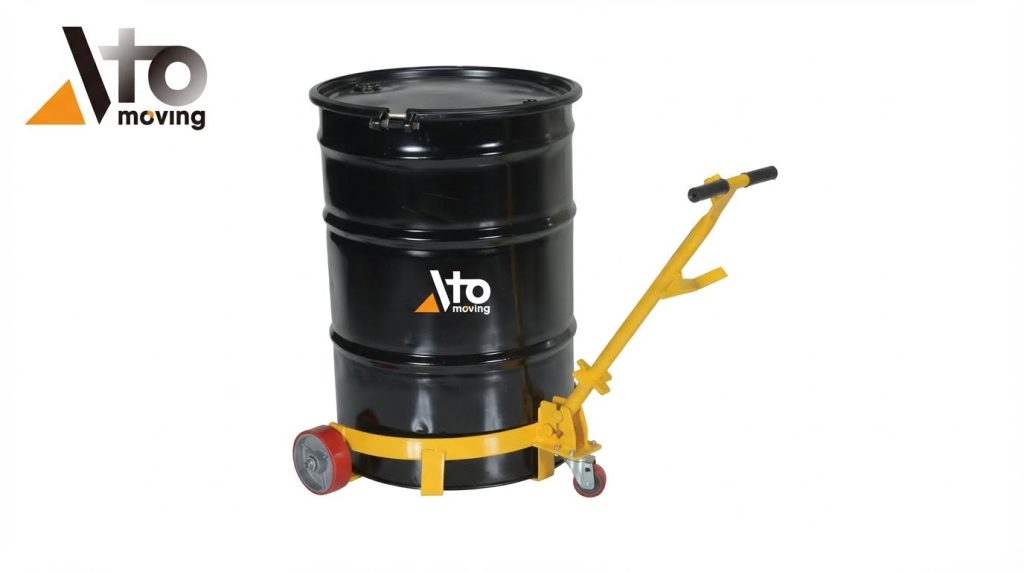
Forklift drum attachments and train dollies provide structured ways to move four drums at once with controlled forces. Engineers match attachment type, drum geometry, and route conditions to avoid slip, impact, and tipping failures. Correct selection improves throughput while maintaining compliant clearances, floor load limits, and operator ergonomics. This section compares attachment mechanisms and train systems so planners can specify safe, repeatable multi-drum moves.
Clamp, Beak, And Strap-Style Forklift Attachments
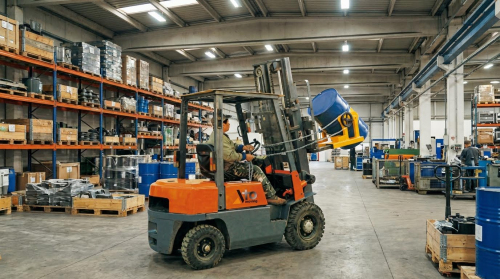
Clamp, beak, and strap-style forklift attachments use different load paths to secure drums during acceleration, braking, and turning. Clamp attachments grip the drum shell with opposing jaws, which suits smooth-sided steel or plastic drums between about 18 and 28 inches in diameter. Designers size jaw pads and rubber linings so local shell stresses stay below drum wall yield, even at full forklift deceleration. Beak attachments engage the drum rim; they require a pronounced rolling hoop at least roughly 600 millimetres above the floor for reliable capture. Strap-style attachments wrap one or two ratchet straps around the drum body, which distributes pressure and accommodates mixed diameters from roughly 350 to 600 millimetres. To move four drums at once, engineers often pair a dual-drum clamp on each side of the mast or use a double-beak attachment rated for two drums combined with palletised pairs. Load charts must confirm the combined drum mass, attachment mass, and load centre remain inside the forklift’s de-rated capacity envelope.
Powered Attachments For Lift, Tilt, And Rotation
Powered drum attachments integrate hydraulic or electro-hydraulic actuators to lift, tilt, and rotate drums under precise control. Typical units handle up to about 900 kilograms per drum, with jaw mechanisms that clamp diameters from 18 to 28 inches and allow 360-degree rotation and tilts up to roughly 120 degrees. When planning how to move four drums at once, powered attachments help maintain plug flow through filling, dumping, or mixing stations because operators can position each drum without manual repositioning. Designers connect these units either to the forklift’s auxiliary hydraulics or to on-board battery packs, which affects hose routing, maintenance intervals, and failure modes. Control valves, flow restrictors, and counterbalance valves limit motion speed so a sudden hydraulic line failure does not cause uncontrolled dumping. For multi-drum handling, engineers evaluate torsional loads on the carriage, visibility around the attachment, and the effect of elevated drum rotation on truck stability, especially on ramps or uneven surfaces.
Drum Carts, Dollies, And Linked “Train” Systems
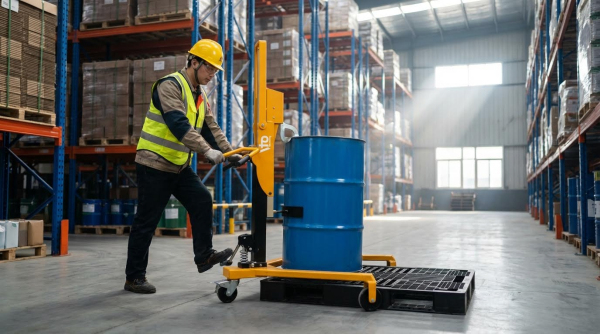
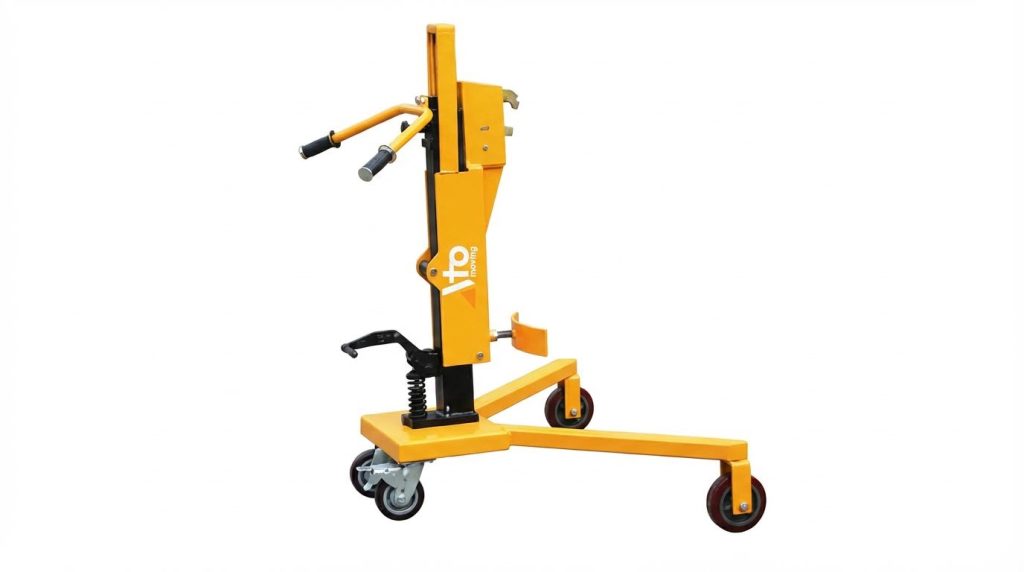
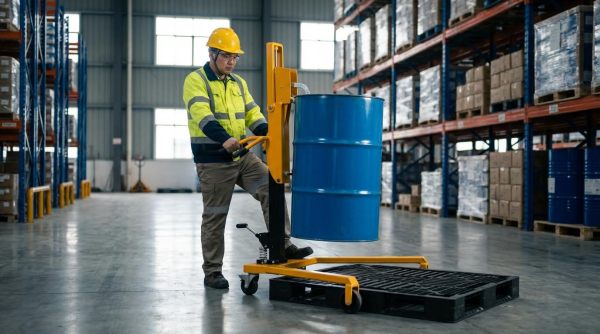
Drum carts and dollies support drums directly on the floor, which reduces lift height and limits potential energy in case of instability. Drum carts usually cradle a single drum with a wheeled frame and leverage, allowing one operator to tip and roll drums weighing up to roughly 250 kilograms. Drum dollies place the drum on a low circular or square platform with swivel castors, optimised for short, level moves between process islands. To move four drums at once without a forklift, facilities often use linked “train” systems: several dollies or low carts coupled with drawbars and towed by a tugger. Engineers specify caster diameter, tread material, and bearing type according to floor roughness, joint gaps, and chemical exposure. Train geometry, including drawbar length and articulation angles, determines turning radius and tracking behaviour through aisles. Stability analyses consider centre-of-gravity height, braking forces from the tugger, and lateral loads in curves so the train can stop without drum tipping or jack-knifing.
Selecting Attachments For Range, Floor, And Space
Attachment selection starts from the handling task definition: drum type, mass, contents, and the requirement to move one, two, or four drums at once. Engineers compare forklift-mounted attachments against carts and train dollies based on travel distance, gradient, and available manoeuvring space at loading and unloading points. Poor floor conditions, such as cracked concrete, steep ramps, or wet surfaces, often favour forklift attachments because they maintain drum elevation and reduce rolling resistance. However, narrow aisles or low door headers can favour low-height dollies or compact carts, especially where drums stay upright and only short transfers occur. Range analysis includes battery or fuel capacity for powered attachments and tuggers, plus cycle time modelling for each move. Safety and compliance reviews check that chosen solutions maintain required aisle widths, emergency egress routes, and guarding around mixing or filling stations. Final selection balances capital cost, required throughput, and acceptable ergonomic loads, with clear operating procedures that define when four-drum moves are allowed and when operators must split loads into smaller groups.
Summary: Selecting Safe, Efficient Drum Handling Systems
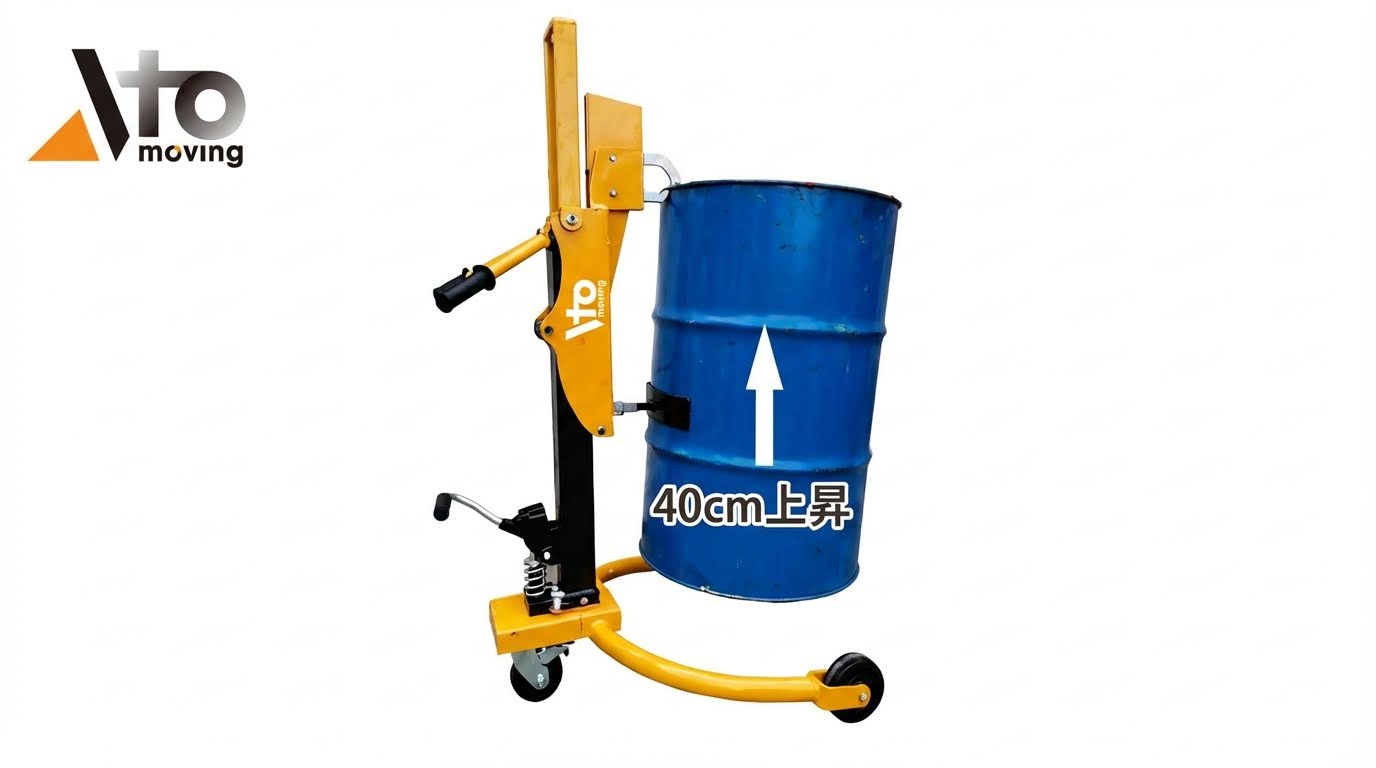
Facilities that need to know how to move 4 drums at once should base decisions on quantified risk, throughput, and lifecycle cost. Multi-drum handling solutions include palletizers, forklift attachments, and drum trains, each with distinct capacity, footprint, and automation profiles. The safest systems eliminated manual lifting of 200–250 kg drums and used mechanical or hydraulic gripping with positive retention, compliant guarding, and documented operator training. Plants that standardized on integrated drum handling systems reported lower musculoskeletal injuries, fewer dropped-drum incidents, and more predictable cycle times.
From an industry perspective, the trend shifted toward automated or semi-automated semi electric order picker and powered forklift attachments, especially where 55-gallon drums carried hazardous or high-value product. High-infeed palletizers and robotic cells combined load-pattern optimization with light curtains, safety fencing, and controlled-access doors to manage collision and entrapment risks. Forklift-mounted clamps and beak or strap attachments enabled simultaneous transport of two drums, while linked dollies or “trains” allowed operators to move four or more drums per trip over short, flat routes. Predictive maintenance, sensor calibration, and digital-twin-style monitoring improved uptime and reduced unplanned stops.
For practical implementation, engineers should map routes, floor conditions, and turning radii before choosing between palletizers, forklift attachments, and drum trains. They should verify drum diameter ranges, rated capacities in kilograms, and compatibility with existing forklifts or tuggers, then confirm compliance with relevant safety standards and internal process safety rules. A balanced strategy often combined automated palletizing at fixed load/unload points with forklift drum grabber or drum dolly for internal transfer, rather than relying on a single technology. This hybrid approach supported current productivity targets while keeping options open for future automation upgrades and layout changes.