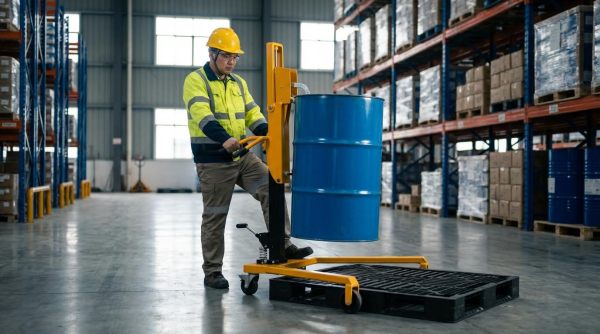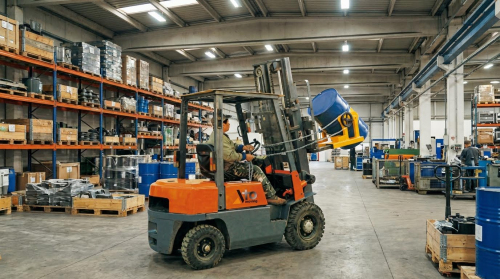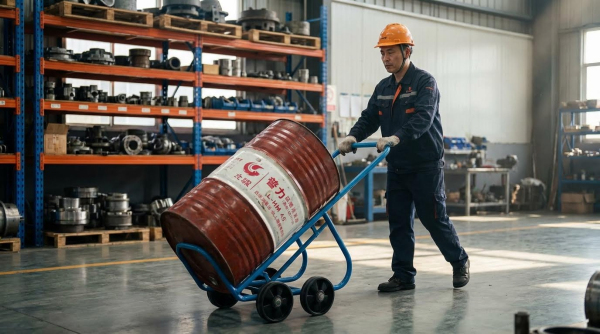
Mechanical devices for lifting and handling industrial drums are engineered tools that safely raise, move, tilt, and pour heavy drums with minimal manual effort and reduced injury risk. In practical terms, when someone asks “what device did the engineers use to lift the drums,” the answer is usually a drum truck, stacker, trolley, or vertical drum lifter designed for the specific drum size and weight. This article explains the main types of drum lifting equipment, how their mechanisms work, and the key design and safety factors that matter on a real warehouse floor. You will also see how to specify the right solution for your facility, balancing performance, ergonomics, and long‑term operating cost.
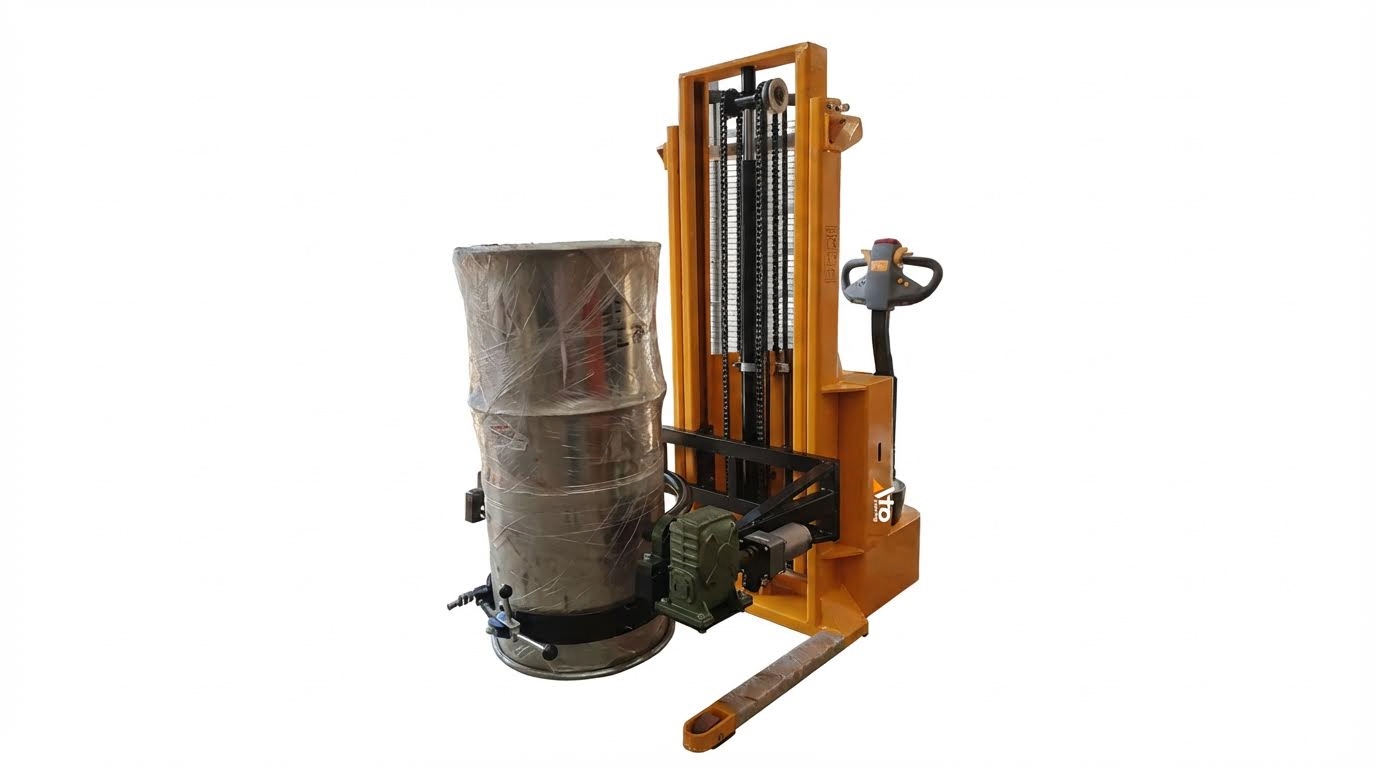
Key Drum Lifting Devices And How They Work
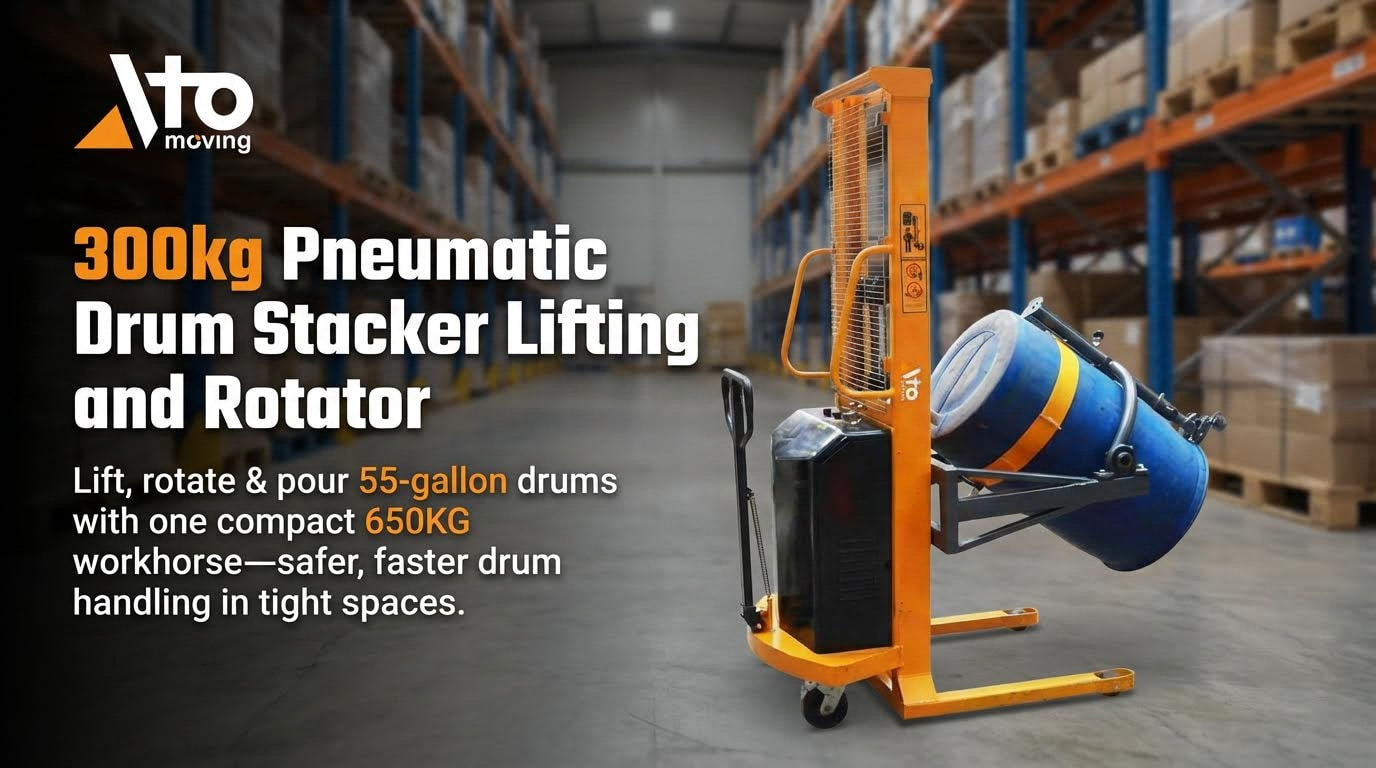
Key drum lifting devices are engineered tools that grip, lift, move, and rotate drums so operators avoid manual handling, reduce injury risk, and keep workflows compliant with OSHA/ISO material-handling expectations.
This section explains what device the engineers use to lift the drums in typical plants—covering manual drum trucks and trolleys for ground-level moves, and drum stackers, dumpers, and rotators for lifting, pouring, and stacking operations.
💡 Field Engineer’s Note: In real warehouses, you rarely use just one drum device; you pair low-lift trolleys for floor moves with stackers or rotators for vertical lifting and controlled pouring into process vessels.
Manual drum trucks and trolleys
Manual drum trucks and trolleys are wheeled frames that let one operator tilt, lift slightly, and roll heavy drums safely instead of dragging or rolling them on the floor by hand.
A basic drum trolley is a rigid frame with 2–4 wheels and a cradle that hugs the drum, allowing you to tip it back and roll it with reduced push/pull force. More advanced hydraulic drum trucks add a small hydraulic pump so you can raise the drum off the floor or clear pallet boards with minimal effort, which is crucial when operators handle 200–300 kg drums repeatedly per shift.
| Device Type | Typical Capacity / Drum Size | Key Features | Typical Use Case | Field Impact |
|---|---|---|---|---|
| Basic drum trolley | Up to ~250–300 kg (30–55 gal, Ø≈572–600 mm) | Wheeled frame, cradle, ergonomic handles, sometimes adjustable for different diameters (drum trolley description) | Short-distance moves on flat floors between storage and workstations | Reduces manual lifting and back strain; keeps drums more stable than rolling them on the rim. |
| Hydraulic drum truck | ≈250 kg, Ø≈572 mm drums (specs) | Hydraulic pump, spring‑loaded steel jaws on drum lip, straddle legs, larger rollers (features) | Picking drums from Euro pallets, raising them ≈345 mm to clear boards or move on uneven floors | Hydraulics cut required lifting force; jaws lock on the rim to prevent drop incidents and meet safety expectations. |
| Raptor‑type load/unloader | ≈450 kg, Ø≈572 mm drums, lift height ≈500 mm (specs) | Drum claw grab, glides over pallets, manual push with hydraulic lift (description) | Quick loading/unloading of 30/55‑gal drums from standard pallets | Allows one operator to reach into pallet middle safely, improving pick rate and reducing crush hazards. |
In answer to “what device did the engineers use to lift the drums” at floor level, engineers typically specify hydraulic drum trucks or Raptor‑style pallet unloaders when drums must be lifted a few hundred millimetres and extracted from pallets without a forklift.
Why manual drum trucks matter for safety and compliance
Manual trucks and trolleys directly address OSHA and ISO expectations around avoiding manual lifting of heavy loads by shifting the effort from the operator’s spine to wheels and hydraulics. Features like spring‑loaded jaws on the drum lip and straddle legs around pallets improve stability, helping you control error rates (dropped drums, leaks) and keep incident reports low.
💡 Field Engineer’s Note: On old asphalt or cracked concrete, choose drum trucks with larger‑diameter rollers; small casters dig into defects, spike push force, and tempt operators to drag drums, which defeats the safety benefit.
Drum stackers, dumpers, and rotators
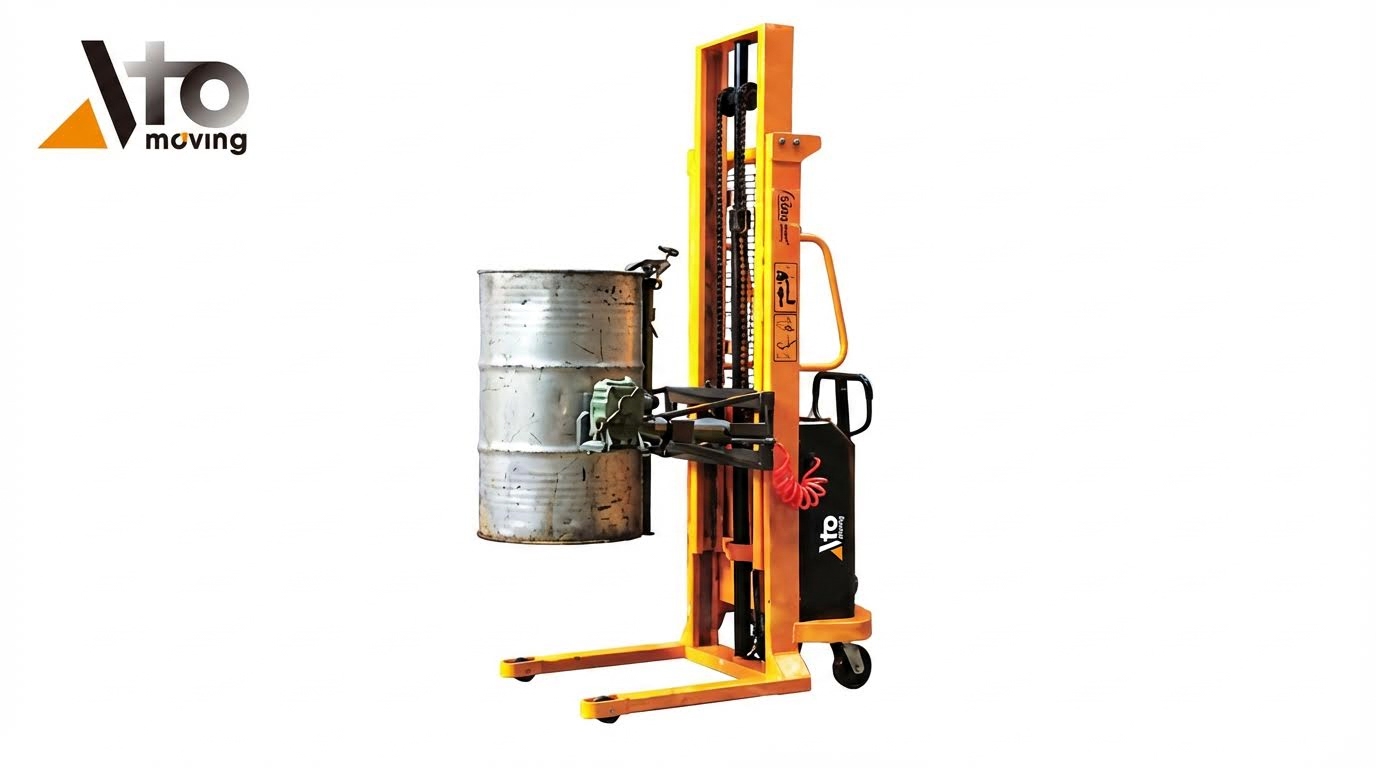
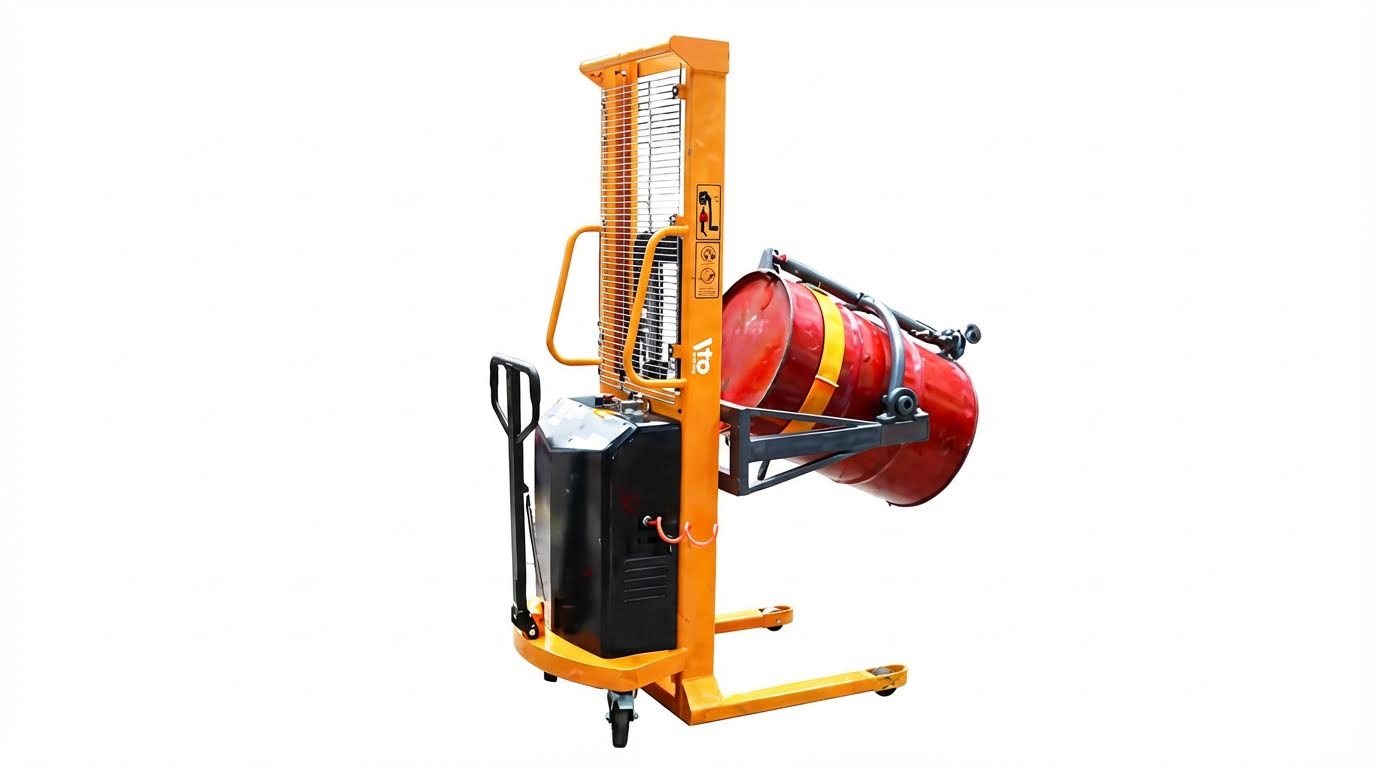
Drum stackers, dumpers, and rotators are vertical‑lift devices that not only raise drums up to 1,000–2,880 mm but also tilt or rotate them for controlled dumping into hoppers, reactors, or mixing tanks.
Where manual trolleys stay close to floor level, drum stackers and rotators give you vertical reach and rotation control. A manual or semi‑electric drum stacker may lift 250–300 kg drums to 1,000–1,600 mm for stacking or feeding a process, while higher‑reach stackers can elevate a 55‑gallon drum to about 2,880 mm and tilt it up to 120° for emptying contents (drum stacker data).
| Device Type | Capacity / Lift Height | Motion & Control | Typical Application | Field Impact |
|---|---|---|---|---|
| Manual drum stacker / dumper | ≈250 kg, lift ≈1,000 mm (specs) | Manual push, manual pump lift, tilt for dumping | Occasional drum dumping into low hoppers or mixers | Low cost, suitable for low‑volume lines; turning radius ≈1,300 mm affects aisle design. |
| Semi‑electric drum stacker | ≈300 kg, lift ≈1.6 m (specs) | Manual travel, electric lift/lower, drum forks or cradle | Frequent lifting of drums to mezzanines, scales, or process infeed | Electric lift reduces operator fatigue and improves cycle time, supporting higher pick rates. |
| High‑lift drum stacker / rotator | 55‑gal drum to ≈2,880 mm, tilt up to 120° (capabilities) | Vertical lift plus controlled tilt for emptying | Charging tall reactors, silos, or multi‑level process equipment | Replaces overhead cranes for many tasks, improving positioning precision and reducing spillage. |
| Vertical drum lifter / rotator (for crane/hoist) | Up to ≈360 kg, 30/55‑gal drums (capacity) | Overhead lift, 360° rotation, locking at any angle, sometimes remote‑controlled tipping (features) | Using existing cranes/hoists to lift and pour drums at height | Maximizes existing overhead equipment, reduces need for platforms and manual handling at height. |
In many process plants, when managers ask “what device did the engineers use to lift the drums to the top of that vessel,” the answer is usually a semi‑electric drum stacker for floor‑based lifting, or a vertical drum lifter attached to an overhead crane for high‑level pouring.
Rotation control and spillage risk
Modern drum rotators lock drums vertically, horizontally, or at intermediate angles during tipping (rotation and locking). This matters in chemical and food applications where even minor splashes can trigger clean‑down, contamination risk, or environmental events. Remote‑controlled tipping lets the operator stand clear of splash zones and eliminates the need to climb stairs or platforms during pouring, which aligns with OSHA expectations for fall protection and safe access.
💡 Field Engineer’s Note: When specifying drum stackers, always check drum diameter (e.g., 572–600 mm) against cradle or fork design; a 10–15 mm mismatch can cause “wiggle” that feels small in spec sheets but translates to scary sway at 2.5–3.0 m height on the shop floor.
Technical Design, Performance, And Safety Factors
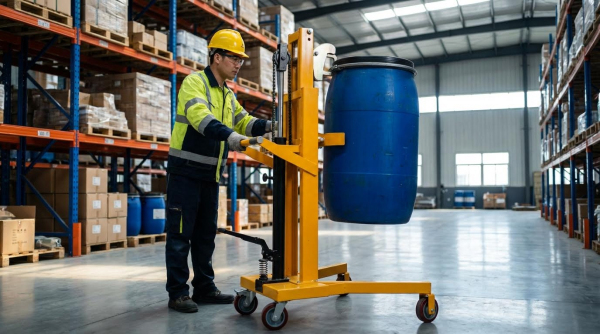
Technical design, performance, and safety factors determine which drum lifter is truly safe and efficient in your plant, not just what device did the engineers use to lift the drums in a brochure or case study.
💡 Field Engineer’s Note: In real warehouses, most “mystery” questions about what device did the engineers use to lift the drums are answered by three things: how the drum is gripped, how it is powered, and how stable it is on imperfect floors.
Gripping mechanisms and drum compatibility
Gripping mechanisms and drum compatibility describe how the device physically holds the drum and which drum sizes and materials it can handle without slipping, deforming, or dropping under load.
| Gripping Mechanism Type | Typical Drum Types & Sizes | Key Design Features | Operational Performance | Field Impact |
|---|---|---|---|---|
| Top rim jaws / claw grab | 30–55 gallon, Ø ~572–600 mm steel drums (example spec) | Spring‑loaded steel jaws lock under top lip | Fast engage/release; reliable vertical lifting when drum rim is in good condition | Ideal for pallet picking and short moves; damaged rims or plastic drums reduce safety margin. |
| Side clamp / cradle | Steel or plastic drums, typically 200–300 L, Ø up to ~600 mm (example) | Curved arms or cradle support drum circumference | Distributes load, reduces point stresses; suitable for rotation and dumping | Better for mixed drum conditions and frequent tipping; slightly slower to position but more forgiving. |
| Vertical drum lifter hooks | 30/55‑gallon closed‑head steel and fiber drums (example) | Hook set engages under rim via overhead hoist or crane | 360° rotation with locking at set angles; single‑operator control | Excellent for high-level pouring and vertical storage; requires overhead lifting infrastructure. |
| Fork‑style forks/cradles on stackers | Standard 200 L (55‑gallon) drums, sometimes 30‑gallon | Fixed or adjustable forks cradle drum base or body | Stable lifting to 1,000–2,880 mm heights (example) | Good for racking and stacking; needs correct fork spacing to prevent drum slip or denting. |
| Drum trolley frames | Various drum diameters with adjustable frames (example) | Wheeled frame with adjustable clamps, straps, or saddles | Optimized for rolling and tilting rather than pure vertical lift | Best for short horizontal moves and controlled tilting; not a substitute for high-lift stackers. |
When you ask what device did the engineers use to lift the drums in a given process, the real answer is usually: “the one whose gripping geometry matches the drum rim, diameter, and material.” Steel closed‑head drums tolerate rim grabs; fiber or thin‑wall plastic drums need cradles or side clamps to avoid crushing.
How to check drum compatibility before purchase
Measure drum outside diameter in mm, confirm rim profile (rolled steel lip vs plain edge), check if heads are open or closed, and verify that the grip’s rated diameter and style match your most fragile drum type.
💡 Field Engineer’s Note: Most drum drops I’ve investigated came from worn or bent rims that no longer let jaws fully seat—build a rule that damaged rims are “no‑lift” until the drum is overpacked or transferred safely.
Hydraulic, semi-electric, and electric drives
Hydraulic, semi-electric, and electric drives define how lifting force is generated and directly affect operator effort, cycle time, and how many drums per hour you can move safely.
| Drive Type | Typical Example Specs | Key Design Elements | Performance Characteristics | Field Impact |
|---|---|---|---|---|
| Manual hydraulic (foot/hand pump) | Hydraulic drum truck: 250 kg capacity, 345 mm lift, 22 mm per stroke (example) | Manual pump pressurizes hydraulic cylinder; return via valve | Low cost, simple, but operator provides all energy | Good for low-frequency tasks; operator fatigue limits daily throughput. |
| Manual hydraulic with higher lift | Manual drum handling unit: 250 kg, 1,000 mm lift, turning radius 1,300 mm (example) | Longer stroke cylinder, 4‑wheel chassis for stability | Enables drum dumping and elevated placement | Suited for occasional dumping; repeated high lifts can strain operators over a shift. |
| Semi‑electric (electric lift, manual travel) | Semi‑electric order picker: 300 kg capacity, 1.6 m lift (example) | Electric motor drives hydraulic pump; push/pull is manual | Fast, low‑effort lifting; travel still depends on operator strength | Excellent compromise where aisles are short but lift heights and volumes are high. |
| Overhead vertical drum lifter (powered hoist) | Up to 360 kg capacity; device weight ~20 kg (example) | Drum lifter is passive; hoist or crane provides power | High reach, precise placement, remote tipping options | Ideal when overhead cranes already exist; minimizes floor congestion. |
| Manual pallet‑style drum loader/unloader | Raptor‑type unit: 450 kg capacity, 500 mm lift, 11.6 mm per stroke (example) | Hydraulic pump with claw grab; glides over pallets | Optimized for pallet-to-floor transfers | Perfect when the main need is getting drums off pallets without forklifts. |
From an engineering standpoint, what device did the engineers use to lift the drums in a high‑volume filling line is almost always semi‑electric or fully powered, because it keeps lift time and operator heart rate low while keeping pick rates high.
Choosing between manual, semi-electric, and overhead solutions
Estimate drums per shift, average lift height, and push distances in meters. Above roughly a few dozen high lifts per shift or above 1.5 m, semi‑electric or overhead drum lifters generally give better ROI through reduced fatigue and fewer strain injuries.
💡 Field Engineer’s Note: Watch the “hidden” performance metric—number of pump strokes per lift. A spec like 11.6 mm per stroke vs 22 mm per stroke can double the time and effort for the same lift height.
Stability, ergonomics, and safety compliance
Stability, ergonomics, and safety compliance determine whether a drum lifter stays upright, protects the operator’s body, and meets OSHA/ISO lifting equipment expectations over years of use.
- Static and dynamic stability: Wide leg widths (e.g., 670 mm internal on hydraulic trucks example) and low centers of gravity reduce tip‑over risk during travel and rotation.
- Turning radius and maneuverability: A turning radius around 1,300 mm (example) must be checked against aisle widths to avoid unsafe “wheel lifting” in tight corners.
- Ergonomic controls: Foot pedals, ergonomic handles, and smooth‑acting valves reduce peak push/pull forces and awkward postures, which directly lowers musculoskeletal injury risk.
- Secure locking and anti‑slip features: Drum locking during tilt, anti‑drop provisions, and anti‑slip surfaces are essential when rotating drums up to 120° for emptying (example).
- Inspection and maintenance regime: Daily checks of hooks, jaws, and hydraulics, plus scheduled inspections, lubrication, and replacement of worn parts, are core to safe operation (reference).
- Operator training and procedures: Formal training, adherence to operating manuals, and clear communication protocols between operators and signalers are required to meet typical OSHA/ISO expectations (example).
- Regulatory alignment: While specific codes vary by region, drum lifters are generally expected to follow lifting equipment safety principles similar to OSHA and ISO‑based standards for inspections, load testing, and record keeping (reference).
If you are reverse‑engineering what device did the engineers use to lift the drums in a safe installation, you’ll always find three things: a wide and stable base, documented inspection schedules, and trained operators following written procedures.
Inspection and documentation essentials
Implement daily pre‑use visual checks, periodic detailed inspections by qualified staff, and maintain records of all maintenance, incidents, and load tests in line with your local adaptation of OSHA/ISO lifting equipment rules.
💡 Field Engineer’s Note: I treat any drum lifter with missing inspection records as “failed” until proven otherwise—paperwork is often the only evidence that the steel, hydraulics, and hooks are still within safe limits.
Specifying Drum Handling Equipment For Your Facility
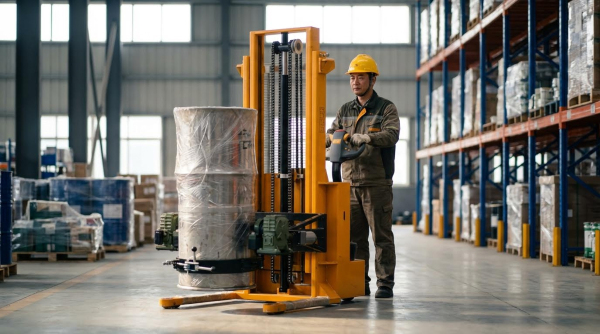
Specifying drum handling equipment means matching devices to drum size, mass, and workflow so operators lift safely, maintain throughput, and stay compliant with OSHA/ISO lifting standards over the full equipment life cycle.
💡 Field Engineer’s Note: In real warehouses, the wrong drum lifter usually fails not on capacity, but on simple things like pallet type, door height, or turning radius at the end of an aisle.
Matching equipment to drum size, weight, and workflow
Matching drum equipment to size, weight, and workflow means selecting trucks, stackers, or vertical lifters whose capacity, lift height, and footprint align with your drums, pallets, and process steps end‑to‑end.
| Selection Factor | Typical Options / Data from Sources | How It Guides Equipment Choice | Field Impact |
|---|---|---|---|
| Drum size & type | Commonly 30–55 gallon drums; examples include Ø572–600 mm drums for trucks and stackers (Ø572 mm hydraulic truck) (Ø600 mm dumper). | Confirms jaw/cradle geometry and clamp style will grip your specific drum (steel, plastic, fiber; open or closed head). | Prevents dropped drums and mis-grips that slow operators or cause spills. |
| Drum weight (kg) | Examples: 250 kg hydraulic drum truck (250 kg truck), 300 kg semi-electric stacker (300 kg stacker), 360 kg vertical lifter (360 kg lifter). | Choose rated capacity ≥110–125% of maximum drum mass including contents to maintain safety margin and reduce wear. | Reduces overload risk and keeps hydraulic and structural components within safe stress limits. |
| Required lift height | Examples: 345 mm on hydraulic truck for pallet pick-up (345 mm), 500 mm load/unloader (500 mm), 1,000–1,600 mm for dumpers/stackers (1,000–1,600 mm). | Map lift height to your highest pour point, rack beam, or mixer inlet, then select equipment that exceeds that by a small margin. | Ensures drums clear pallet lips, bund walls, and vessel rims without unsafe tilting or manual “helping.” |
| Handling pattern / workflow | Examples: pallet-to-floor transfer using hydraulic truck or load/unloader that straddles Euro pallets (straddle leg design); overhead transfer and tipping with vertical drum lifter (overhead use). | Define each move: from where, to where, at what height, and through which constraints (doors, ramps, ATEX zones) before choosing devices. | Eliminates “dead spots” where drums cannot pass, which often show up at door thresholds or between machines. |
| Throughput & pick rate | Manual trucks/trolleys suit low daily drum counts; semi-electric stackers and vertical lifters suit higher, repetitive handling with rotation/tipping. | Estimate drums/hour and number of operators, then match drive type (manual vs powered) to ergonomic limits and target cycle time. | Balances operator fatigue with productivity; avoids bottlenecks at decanting or loading stations. |
| Floor space & turning radius | Example: drum handling equipment with 1,300 mm turning radius and 4-wheel design (1,300 mm radius). | Compare equipment overall length/width and turning radius against aisle width and obstructions (columns, scales, drains). | Confirms whether the device can rotate a loaded drum safely inside real aisles, not just on drawings. |
| Process operations (tilting, dumping, stacking) | Drum dumpers with 1,000 mm lift for tipping (1,000 mm dumper); vertical lifters with 360° rotation and locking at any angle (360° rotation). | Choose between pure transport devices and those that also pour, rotate, or stack based on your process steps. | Reduces extra transfers between devices, which add handling time and spill risk. |
From an engineering standpoint, when someone asks “what device did the engineers use to lift the drums,” the correct answer depends on these factors: a low-level pallet transfer might use a manual pallet jack, while high-level pouring into a reactor might use a electric drum stacker or semi-electric drum stacker.
How to document your drum handling workflow before buying
Sketch each drum’s journey from goods-in to waste or finished product: include every pallet, rack, door, bund, and machine. Note heights, clearances, and floor gradients. This simple map prevents expensive mis-specification.
- Manual drum trucks/trolleys: Best for short moves on flat floors with limited height requirements and low daily drum counts.
- Hydraulic drum trucks and load/unloaders: Add lift assist and pallet access for 200–450 kg drums, improving ergonomics for moderate throughput.
- Semi-electric drum stackers: Ideal where drums must be raised to 1,600 mm for stacking or decanting with reduced operator effort.
- Vertical drum lifters: Used with cranes/hoists where overhead space exists and precise tipping or high-level pouring is required.
- Dedicated drum dumpers: Suited to repetitive dumping at fixed stations, such as mixers or hoppers, at about 1,000 mm height.
💡 Field Engineer’s Note: Always test-fit the device on your tightest pallet configuration. Many “universal” drum clamps cannot reach the middle drum on a 3-drum pallet stack without re-palletizing.
Evaluating TCO, maintenance, and emerging technologies
Evaluating TCO, maintenance, and technology for drum lifters means comparing not just purchase price, but service effort, safety compliance, and digital monitoring options over the full 8–10 year equipment life.
- Define life-cycle horizon: Decide a realistic service life (often 8–10 years for mechanical lifters) and estimate annual drum moves to spread capital cost over real usage.
- Assess maintenance requirements: Use manufacturer guidelines and generic lifting-equipment best practices for inspections, lubrication, and parts replacement to estimate yearly maintenance cost and downtime (inspection and preventive maintenance).
- Check inspection and safety obligations: Align with OSHA/ISO-style requirements for daily checks, periodic thorough examinations, and record keeping for lifting equipment to avoid fines and unplanned outages (safety and regulatory standards).
- Compare manual vs powered operating costs: For semi-electric stackers and vertical lifters, include battery charging, potential replacement, and any electrical maintenance in your TCO model versus lower-maintenance manual units.
- Evaluate reliability-critical components: Identify hydraulic pumps, chains, gears, clamps, and bearings that will wear; use supplier data and generic guidance to budget for replacements and periodic overhauls (maintenance guidelines).
- Implement a preventive maintenance schedule: Plan daily operator checks, weekly cleaning and lubrication, and scheduled inspections by qualified technicians, following best-practice intervals for lifting equipment (preventive maintenance program).
- Quantify safety and incident costs: Include potential costs of spills, injuries, and downtime if equipment fails; prioritize devices with secure locking, controlled tipping, and good ergonomics to minimize these risks (safety features).
- Review operator training needs: Factor in training time and certification requirements for complex or powered systems, using structured programs for safe operation and basic maintenance (operator training).
- Consider digital and IoT enhancements: For higher-value systems, assess sensor-based monitoring, load indication, and CMMS integration to predict failures and schedule maintenance efficiently (technological advancements).
- Standardize and document: Choose a small family of drum lifters where possible, then standardize SOPs, inspection checklists, and spare parts to reduce complexity and inventory.
- Routine inspection discipline: Daily visual checks for wear, deformation, leaks, and abnormal sounds on hooks, jaws, chains, and hydraulics significantly extend service life and maintain safe operation (routine inspection schedule).
- Cleaning and lubrication: Regular removal of dirt and application of correct lubricants on moving parts reduces friction and corrosion, especially on equipment used in chemical or outdoor environments (cleaning and lubrication).
- Corrosion protection: Using anti-rust coatings and proper storage for seldom-used drum lifters avoids hidden degradation that might only appear under load (anti-corrosion practices).
- Record keeping and audits: Maintaining inspection and maintenance records supports compliance with OSHA/ISO-style lifting-equipment requirements and helps identify recurring failure modes (record keeping).
- Emergency procedures: Clear rules for stopping operations and isolating equipment during faults reduce the impact of mechanical failures and protect personnel (safe operating procedures).
💡 Field Engineer’s Note:</b “”
Final Thoughts On Selecting Drum Lifting Solutions
Effective drum handling starts with geometry, not marketing claims. You must match gripping mechanism, drum diameter, and rim profile so the drum cannot slip, crush, or deform under load. Then you size capacity and lift height with a clear safety margin, based on real drum weights and the highest pour or storage point in your process.
Drive choice decides how long operators can work safely. Manual hydraulics suit low drum counts and short lifts. Semi-electric or powered systems fit higher volumes and taller vessels because they cut effort and keep cycle times stable. Stability, turning radius, and floor quality then decide if that device stays upright in your tightest aisle and worst floor patch.
Safe plants treat drum lifters as critical lifting equipment. They run structured inspections, keep records, and train operators to treat damaged rims, leaks, or odd noises as stop signals. When you combine correct geometry, adequate power, stable chassis design, and disciplined maintenance, drum handling becomes predictable, clean, and compliant.
The best practice is clear: map your workflows in detail, select a small, standardized family of devices, and partner with a supplier like Atomoving that understands both the engineering and day-to-day use on the warehouse floor.
Frequently Asked Questions
What device did the engineers use to lift the drums?
Engineers typically use a hoist drum or a barrel lifter to lift drums. A hoist drum is part of crane equipment that winds steel wire ropes, converting rotary motion into linear motion Hoist Drums Guide. Alternatively, a barrel lifter with extended long reach allows operators to lift drums in and out of storage cabinets and process machinery Barrel Lifter Information.
What is a hoist drum?
A hoist drum is a crucial component in crane equipment. It functions by winding steel wire ropes of the hoisting mechanism, converting the rotary motion of the driving unit into linear motion of the rope Hoist Drums Guide.
What is a barrel lifter?
A barrel lifter is a device designed to lift drums, especially useful for placing them in and out of storage or machinery. This tool often features an extended long reach to make the operation easier and more efficient Barrel Lifter Information.