Understanding how many 55 gallon drums fit on a pallet starts with standard drum geometries, pallet footprints, and regulatory limits. This article outlines typical drum sizes from 20 litres to 64 gallons, common pallet standards, and the compliance framework that governed safe storage and transport. It then walks through practical pallet layouts by drum size, compares spill containment pallets and bunded systems, and highlights design checks such as forklift drum grabber access and drainage. The final section provides a concise design guide that ties capacity planning, safety, and regulatory requirements into a single engineering perspective for warehouse, transport, and chemical facility layouts.
Key Standards For Drums, Pallets, And Regulations
Engineers who ask how many 55 gallon drums fit on a pallet must first align drum geometry, pallet standards, and regulatory limits. Capacity is not only a footprint problem; it also depends on allowable mass, stability, and spill containment rules under EPA, OSHA, and SPCC frameworks. This section defines common drum sizes, standard pallet footprints, and structural load categories that control safe layouts from 20 L packs to 64 gallon drums. These fundamentals support later sections where specific pallet layouts and density plans are calculated.
Common Drum Sizes From 20L To 64 Gallons
Industrial drum systems historically used a relatively narrow range of nominal sizes between 20 L and 64 gallons. Typical small containers in this band included 20 L, 25 L, and 30 L packs, usually in tight-head plastic or steel pails with diameters between 250 mm and 320 mm. Medium drums such as 16 gallon, 20 gallon, and 30 gallon units had larger diameters and heights, which reduced pallet count compared with 20 L packs. Standard 55 gallon or 205 L drums generally used an outside diameter near 572 mm and a height around 880 mm, which allowed four drums per layer on a 1219 mm by 1016 mm pallet when configured in a square pattern. Higher capacity 64 gallon drums followed similar diameters with increased height, so they rarely exceeded four drums per pallet footprint without compromising stability or regulatory spill thresholds.
Standard Pallet Footprints (US, EU, AU, Custom)
Pallet footprint standards historically determined how many 55 gallon drums fit on a pallet far more than drum dimensions did. In North America, the 48 inch by 40 inch pallet, equivalent to 1219 mm by 1016 mm, dominated chemical and lubricant distribution and routinely carried four 55 gallon drums per layer or eight drums per skid in two layers. European operations commonly used the 1200 mm by 800 mm EUR pallet and the 1200 mm by 1000 mm industrial pallet; the former suited smaller containers and the latter handled up to four 205 L drums with tight clearances. Australian warehouses typically used 1165 mm by 1165 mm pallets, which supported four 205 L drums in a square layout with improved edge clearance compared with a 1200 mm by 1200 mm pallet weighing scales of similar function. Custom pallets and spill decks, such as 1300 mm by 1300 mm or 1200 mm by 1200 mm containment pallets, also carried four 55 gallon drums, but designers adjusted sump volume and wall height to meet regional containment rules.
Regulatory Drivers: EPA, OSHA, SPCC Basics
Regulations historically constrained drum-per-pallet layouts beyond pure geometry. In the United States, EPA and SPCC rules required secondary containment volume at least equal to the largest single container or a defined percentage of the total stored volume, whichever was greater. For four 55 gallon drums on a pallet, engineers sized sumps to capture at least 208.2 L, and many commercial spill pallets offered containment capacities between roughly 165 L and 488 L to exceed that baseline. OSHA requirements emphasized safe access, handling, and stacking, which limited vertical drum stacking on pallets even when static capacity allowed higher loads. Designers also considered local fire codes and hazardous chemical classifications, which affected maximum drum counts per storage zone and influenced whether layouts used one, two, four, six, or ten drum spill pallets in a given area.
Static, Dynamic, And Racking Load Considerations
Answering how many 55 gallon drums fit on a pallet safely required checking static, dynamic, and racking loads. Static load capacity described how much total mass a pallet or spill deck could support when stationary; for example, heavy-duty containment pallets historically carried four 55 gallon drums with total loads above 1500 kg. Dynamic load capacity applied when a walkie pallet truck transported a loaded pallet, so designers often derated the allowable drum count or prohibited moving fully loaded spill pallets to prevent structural failure or sloshing-related instability. Racking load capacity concerned pallets stored on beam racks, where point loads at stringers or runners controlled allowable mass and sometimes limited layouts to two drums instead of four. Mechanical engineers therefore combined drum weight, pallet ratings, and safety factors to confirm that a four-drum layout on a 48 inch by 40 inch pallet remained acceptable only when the pallet, grating, and support frame met or exceeded the applied loads in all handling conditions.
How Many Drums Fit On A Pallet By Size
Drum count per pallet depended on drum diameter, pallet footprint, and loading pattern. Engineers typically balanced pallet utilization, stability, and regulatory limits for mass and containment. For logistics planning, the key question was not only how many drums fit on a pallet, but also how the layout affected trailer cube, handling, and spill-control strategy. The following subsections broke this down by container size class, including the frequently searched case of how many 55 gallon drums fit on a pallet.
Layouts For Small Containers (20L–30L Drums)
Small drums from 20 litres to 30 litres usually had diameters between 280 millimetres and 320 millimetres. A common approach used standard pallets such as 1200 millimetres by 1000 millimetres or 1200 millimetres by 800 millimetres in Europe, and 1219 millimetres by 1016 millimetres (48 inches by 40 inches) in North America. For these containers, operators often used tight grid layouts with drums in direct contact, or with minimal gaps for label visibility and strap clearance. For example, a 1200 millimetres by 1000 millimetres pallet could typically carry 16 x 20 litre drums in a four-by-four layout, as reflected in bund deck examples that accepted 16 x 20 litre packs around four 205 litre drums.
Density calculations started from drum footprint area versus pallet area. Engineers also checked the combined filled mass against pallet dynamic rating and handling equipment limits. For chemical and hazardous goods, bunded pallets or external sumps needed sufficient capacity, usually at least 110% of the largest single container or 25% of total volume, whichever was greater, depending on jurisdiction. This requirement often capped the practical small-drum count below the purely geometric maximum. Where facilities used plastic spill pallets, grating modules defined fixed positions, which simplified standardized layouts and repeatable load securing.
Layouts For Medium Drums (16–30 Gallons)
Medium drums in the 16 gallon to 30 gallon range bridged the gap between small packs and full 55 gallon drums. Industry data indicated that a typical 16 gallon drum layout allowed 27 drums per skid and 702 drums per trailer under optimized patterns. For 20 gallon drums, 20 drums per skid and 520 per trailer were typical, while 30 gallon drums usually loaded as 15 per skid and 390 per trailer. These figures assumed standard freight pallets and full-height stacking in enclosed trailers.
On a 48 inches by 40 inches pallet, these medium drums usually arranged in three-by-three or three-by-four grids, sometimes with staggered rows to improve stability. The limiting factor was drum diameter; as capacity increased, diameter grew and reduced the feasible column count. Engineers also considered center-of-gravity height, especially when double-stacking pallets in racking or trailers. For hazardous liquids, many operators placed these drums on low-profile pallet jacks that met EPA and SPCC rules, accepting a slightly lower drum count to maintain sump volume and safe access for handling equipment. This trade-off between maximum drum count and containment capacity was central in layout decisions.
Layouts For 55–64 Gallon Drums On 48×40 And 1200×1200
The question how many 55 gallon drums fit on a pallet had a well-established industry answer. On a standard 48 inches by 40 inches pallet, the typical layout used four 55 gallon drums per layer, in a two-by-two pattern. With two layers stacked, this produced eight drums per skid, a figure that matched published freight data showing eight 55 gallon drums per skid and 208 per standard trailer. This configuration balanced pallet coverage, stability, and load ratings for common wooden or plastic pallets.
On a square 1200 millimetres by 1200 millimetres pallet, engineers could also place four 205 litre or 55 gallon drums in a similar two-by-two pattern. Commercial spill pallets with footprints near 1300 millimetres by 1300 millimetres or 1330 millimetres by 1330 millimetres routinely supported four drums with adequate sump capacity, confirming the geometric feasibility. For 64 gallon drums, which had slightly larger diameters, four per pallet still remained realistic on 1200 millimetres by 1200 millimetres platforms, but clearances tightened and sometimes required chamfered or recessed deck edges. In all cases, load planners checked pallet static and dynamic load ratings, which for heavy-duty spill pallets could reach 4000 kilograms or more, ensuring that four filled drums remained within safe limits.
Where operators needed more drums per footprint, they used dedicated six-drum or ten-drum spill pallets with extended lengths, for example 2200 millimetres by 1300 millimetres for six drums or 3400 millimetres by 1600 millimetres for ten drums. These were not standard freight pallets but purpose-designed platforms for high-density drum storage with integral sumps. They demonstrated that the four-drum limit on a 48 inches by 40 inches pallet was not geometric alone, but a compromise with handling standards and regulatory compliance.
Trailer, Container, And Warehouse Density Planning
Once engineers fixed how many drums fit on a pallet, they scaled the calculation to trailers, containers, and warehouse bays. Reference data showed that a standard trailer could carry about 208 x 55 gallon drums when loaded as eight drums per skid, with 26 skids per trailer. Similar tables listed 390 x 30 gallon drums or 520 x 20 gallon drums per trailer, which helped planners compare product formats in terms of logistics efficiency. These figures assumed full-height stacking and optimized pallet patterns within the trailer or container footprint.
In warehouses, density planning combined pallet positions, racking heights, and aisle widths. High-density drum storage often used dedicated steel pallets, post pallets, or drum racks that stacked up to five units high, provided load ratings and floor capacity allowed. For hazardous liquids, designers also integrated spill pallets or steel sumps under drum racks to capture leaks, following EPA, OSHA, and SPCC guidance. This sometimes reduced vertical stacking options but improved safety and compliance. Engineers evaluated trade-offs between drum size, pallet count, and containment volume, ensuring that layout decisions remained aligned with process throughput, manual handling limits, and emergency response planning.
Spill Containment Pallets And Bunded Layouts
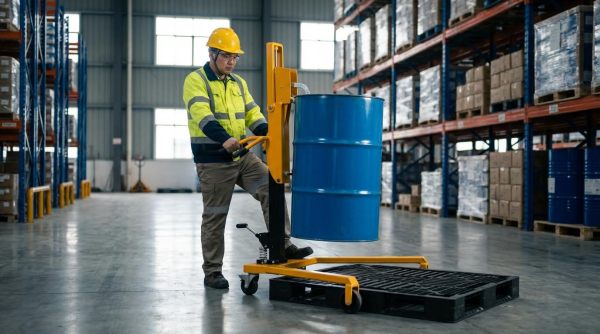
Spill containment pallets controlled leakage from 55 gallon drums and smaller containers. Engineers sized these pallets to provide compliant sump volume while preserving pallet density. Layout choices affected how many 55 gallon drums fit on a pallet, forklift handling, and warehouse cube utilization. The following sections compared 1–10 drum layouts, bunded systems for 205 L drums and IBCs, and key design checks.
1–4 Drum Containment Pallets: Footprints And Sumps
Single to four-drum spill pallets formed the basic building blocks for compliant storage. A typical 1-drum unit for a 55 gallon drum used a footprint near 0.67 m by 0.67 m with a sump of about 40–70 L. Two-drum models used footprints around 1.32–1.33 m by 0.66 m and delivered sump capacities between 80 L and 260 L depending on profile height. Four-drum spill pallets, which directly answered how many 55 gallon drums fit on a pallet in standard layouts, typically used a square footprint near 1.30–1.33 m by 1.30–1.33 m and carried 55 gallon drums in a 2×2 pattern. Their sumps ranged from roughly 165 L for low-profile designs to almost 500 L for tall containment pallets, which exceeded 110% of a single drum and often 25–30% of the aggregate stored volume. Engineers selected between low and high profile based on loading method, spill risk, and regulatory margin.
6–10 Drum Spill Pallets And Multi-Unit Layouts
Six and ten-drum spill pallets targeted higher density while retaining integrated containment. A six-drum layout usually arranged 55 gallon drums in a 3×2 grid on a platform about 2.20 m long by 1.30 m wide with sump volume near 1,100 L. Ten-drum systems extended this concept to a 5×2 layout on footprints around 3.40 m by 1.60 m and sump capacity close to 1,600 L. These large units answered how many 55 gallon drums fit on a pallet-scale module when users wanted to minimize the number of containment units per bay. In practice, facilities often combined multiple 4-drum pallets or paired a 6-drum pallet with smaller units to match racking spans, aisle widths, or segregated chemical classes. Engineers checked that total stored volume, not just drum count, remained within sump capacity and regulatory thresholds.
Bunds For 205L Drums, IBCs, And Mixed 20L Packs
Bunded pallets for 205 L drums and IBCs used similar principles but with larger footprints and deeper sumps. A typical 4-drum bund carried four 205 L drums on a square deck near 1.23–1.25 m by 1.23–1.25 m with a sump about 250 L, adequate for 110% of one drum or at least 25% of the aggregate volume in several jurisdictions. Larger bunds for single or twin IBCs used footprints around 1.90–2.76 m by 1.50 m and sump capacities from roughly 1,150 L to 1,470 L. Flat deck bunds often allowed mixed storage, for example four 205 L drums or up to sixteen 20 L packs, which changed how many 55 gallon drums fit on a pallet-equivalent area versus small-pack layouts. Designers evaluated chemical compatibility, splash containment, and decanting practice when mixing 20 L packs with drums or IBCs on the same bunded platform.
Design Checks: Forklift Access, Grating, And Drainage
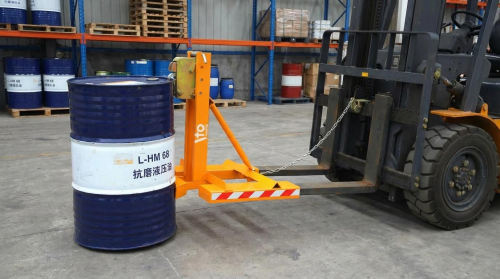
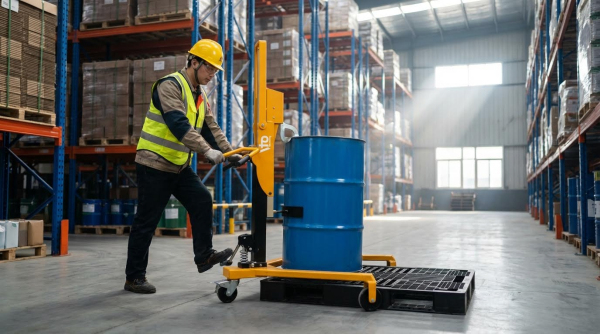
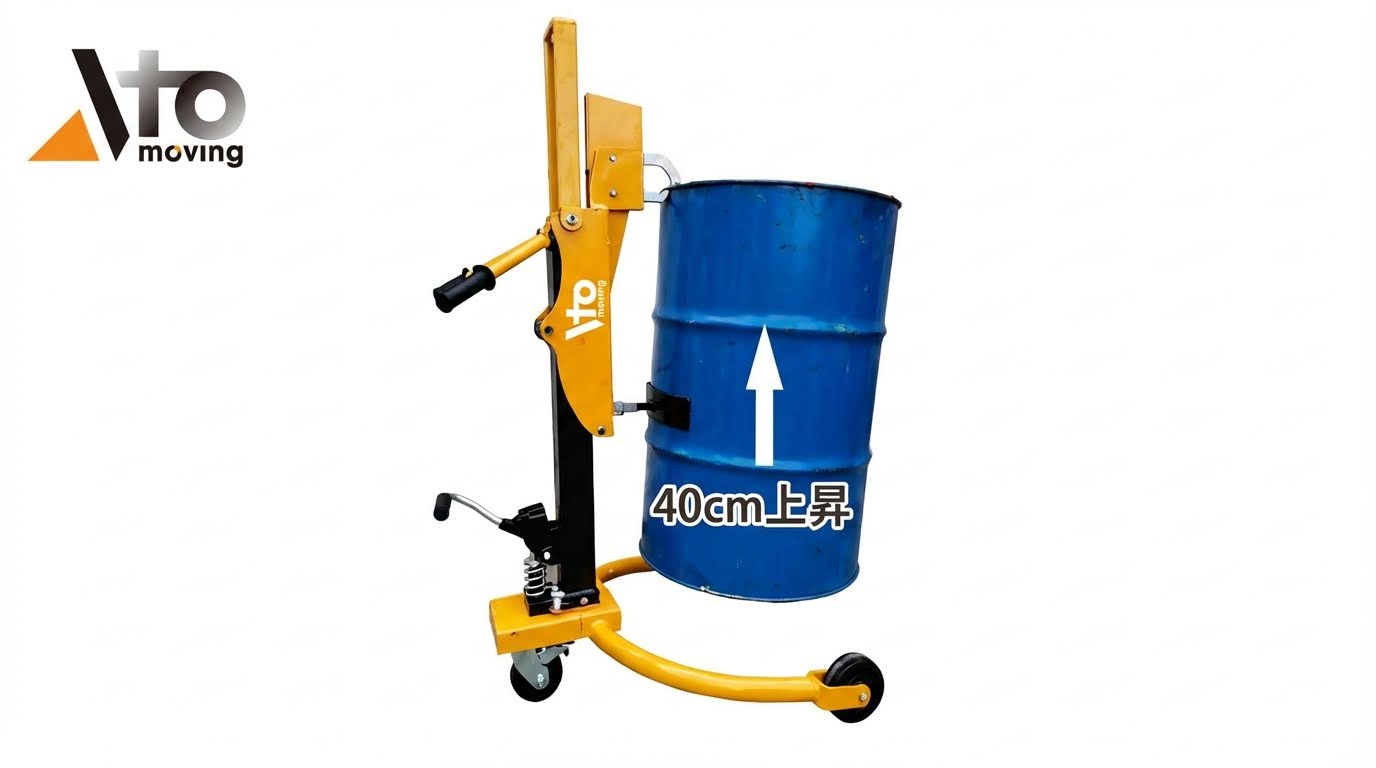
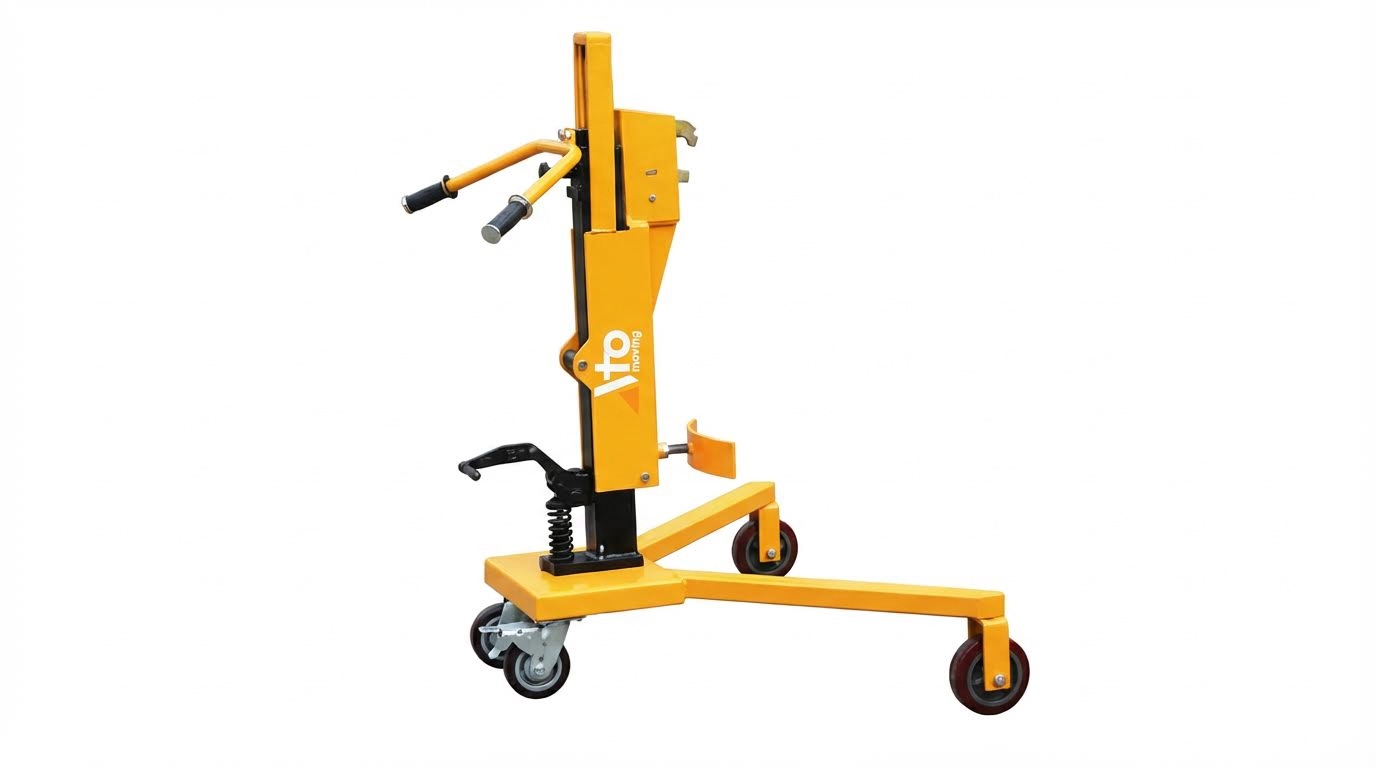
Containment pallet design had to balance structural performance, access, and liquid management. Forklift pockets or recesses needed sufficient clearance and section depth to carry the full rated load of 55 gallon drums, and guidance discouraged traveling with fully loaded spill pallets to limit dynamic spill risk. Removable gratings spread drum loads across the deck, protected the sump, and provided slip-resistant walking surfaces; engineers verified deflection limits under static and impact loading. Drain plugs, often 19 mm nominal with threaded polyethylene fittings, enabled controlled emptying of captured liquids into waste systems. When selecting how many 55 gallon drums fit on a manual pallet jack-scale containment unit, users confirmed that sump volume met or exceeded EPA, OSHA, and SPCC requirements and that pallet geometry allowed safe drum handling with trolleys, lift stacker, or forklift barrel grabber in the intended warehouse layout.
Practical Design Guide, Summary, And Conclusions
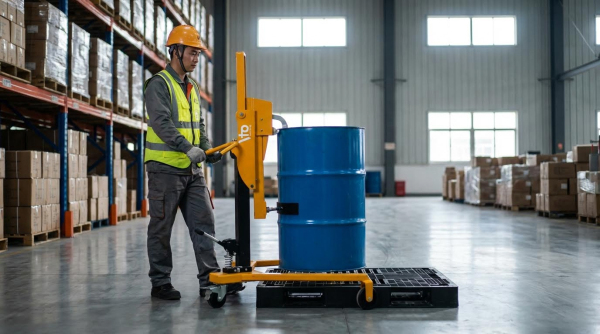
Designers who needed to answer how many 55 gallon drums fit on a pallet always balanced footprint, load rating, and regulations. A typical 48×40 inch pallet or 1200×1200 millimetre deck effectively carried four 55 gallon (≈205 litre) drums per layer in a 2×2 pattern. Where height limits, stability, or SPCC secondary containment rules applied, users often limited stacks to one or two layers, or switched to dedicated spill pallets with integrated sumps.
Spill containment pallets historically followed this geometry. Single-drum units matched one 55 gallon drum, while two-drum and four-drum units matched 2×1 and 2×2 layouts. Larger containment platforms handled six or ten drums in 3×2 or 5×2 arrays, but required careful checks of static and dynamic load, forklift pocket position, and sump volume. Designers verified that sump capacity met or exceeded 110% of the largest drum or 25% of the total volume, in line with typical EPA and SPCC guidance.
Future layouts increasingly integrated warehouse density modelling, trailer cube utilisation, and ergonomic access. Engineers treated “how many 55 gallon drums fit on a pallet” as a system question, not only a geometry problem. They evaluated drum outer diameter, overhang allowances, racking beam spacing, and seismic or impact loads. In practice, four 55 gallon drums per pallet remained the reference configuration, but projects frequently derated this for spill control, segregation of incompatibles, and safer handling.
For new designs, practitioners should start from the four-drum baseline on standard pallets, then adjust for containment pallet footprints, grating clear spans, and forklift barrel dumper entry. They should confirm that pallet and grating capacities exceed worst-case weight, including liquid plus pallet mass, with a safety factor aligned to local codes. A balanced approach considered regulatory compliance, operational efficiency, and risk reduction, recognising that marginally lower drum counts per pallet often delivered better lifecycle safety and throughput.