Industrial facilities relied on stacked drums and barrels to store liquids, chemicals, and bulk materials in a compact footprint. Poor stacking practices created instability, hid leaks, and increased the risk of structural overloads and worker injury. This article outlined engineering fundamentals of stable drum stacks, compliant stacking patterns and layouts, and the selection of handling equipment, containment systems, and high‑density storage solutions. It concluded with a compliance-focused summary that tied OSHA requirements to practical, field-tested best practices for safe drum and barrel storage.
Engineering Basics Of Stable Drum Stacks
Engineering stable drum stacks required a clear understanding of how loads transferred through curved shells, pallets, and floors. Facilities that treated drum stacks as engineered structures reduced collapse risk, improved inspection access, and supported regulatory compliance. The following fundamentals linked drum geometry, material variability, and floor performance to OSHA-compliant stacking practices.
Load Paths, Contact Stresses, And Drum Geometry
Drum stacks carried load through discrete contact zones, not uniform surfaces. For steel 55-gallon drums, the primary load paths ran through the top chime, side shell, and bottom chime into pallets or dunnage. Point or line contact between drum chimes created high local contact stresses, which increased denting and buckling risk if tiers exceeded two drums in height. Using pallets, planks, or sheets of plywood between tiers spread loads over larger areas and converted line contact into quasi-planar contact, lowering local stress. Symmetrical stacking patterns, with drum centers aligned and rows balanced, kept the resultant load within the footprint and minimized overturning moments.
Variability In Drum Strength, Condition, And Dimensions
Real facilities did not receive identical drums; wall thickness, corrosion, prior damage, and dimensional tolerances all varied. A corroded or dented drum under compression behaved as a weaker column, concentrating load on adjacent drums and increasing the probability of progressive stack instability. Dimensional variation in diameter and height produced uneven contact, so upper tiers could rock on lower drums, especially when more than two tiers high. Because actual container strength and condition were uncertain, engineering practice limited stacks of 55-gallon drums to two tiers high and two drums wide to maintain a conservative safety margin. Regular inspections for rust, leaks, bulging, and impact damage formed part of the engineering control strategy, ensuring that degraded containers did not occupy critical load-bearing positions.
Floor Capacity, Levelness, And Base Preparation
Stable drum stacks depended as much on the supporting floor as on the drums themselves. A full 55-gallon drum weighed roughly 180–360 kg, so a small array of drums could impose several kilonewtons over a limited floor area. Engineers verified that slabs, mezzanines, and rack decks stayed within rated load limits and accounted for dynamic effects from forklift operations. Levelness and flatness controlled how loads distributed; uneven floors caused rocking, differential settlement, and shifting, especially for drums stored on their sides. Best practice placed stacks on solid, level bases using pallets, skids, or plywood sheets to create a uniform bearing surface and prevent rolling. Outdoor storage required pallets or racks that kept drums above standing water and maintained base integrity under freeze–thaw and weathering.
OSHA Storage Rules Relevant To Drum Stacking
OSHA standards framed the minimum legal requirements for drum stacking stability. Under 29 CFR 1910.176(b) and 1926.250(a)(1), materials stored in tiers had to be stacked, blocked, interlocked, and height-limited to prevent sliding, falling, or collapse. For drums, this translated into chocking or blocking bottom tiers when stored horizontally, using dunnage or pallets between vertical tiers, and avoiding stack heights that required ladders for routine inspection. Facilities limited drum stacks to configurations that allowed clear visual access to every container, aligning with guidance that discouraged more than two drums high or two drums wide. OSHA rules on clear aisles, unobstructed exits, and protection of sprinkler clearances also influenced layout, ensuring that engineered drum stacks integrated safely into the broader warehouse environment.
Safe Stacking Configurations And Layouts
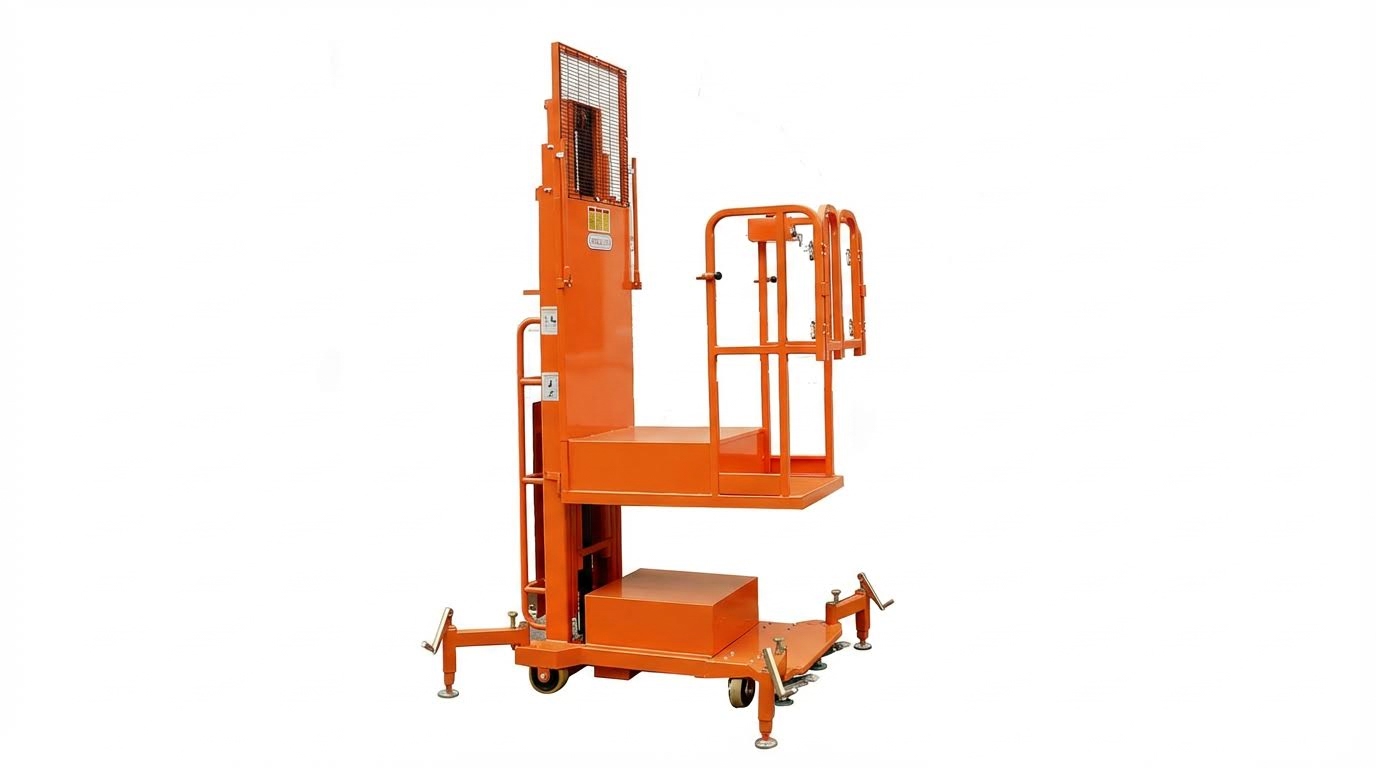
Safe stacking configurations depended on predictable load paths, controlled contact stresses, and repeatable handling methods. Facilities reduced incidents when they standardized drum orientation, tier limits, and inspection access. OSHA material storage rules required stacks to be blocked, interlocked, and height-limited to prevent sliding or collapse. Engineering-based layouts also considered aisle width, exits, overhead services, and emergency access as integral design constraints.
End-Up Stacking: Pallets, Dunnage, And Tier Limits
End-up stacking placed drums vertically with the chime bearing on pallets or dunnage. Engineers specified solid, level bases and pallets rated for the full stack mass, including dynamic forklift loads. Guidance limited rows to a maximum of two drums high and two drums wide for 55-gallon drums to maintain stability and inspection access. Facilities used planks, plywood sheets, or pallets between tiers to distribute contact stresses and create a flat bearing surface.
Variability in drum wall thickness, denting, and bung reinforcement made higher stacks unreliable. Stacking more than two tiers imposed significant compressive and local bending loads on lower drums, which could deform or leak. OSHA 1910.176(b) required stored containers to be stacked, blocked, interlocked, and height-limited, which aligned with conservative tier limits. Engineers also verified floor load ratings so the combined mass of up to four 400–800 lb drums per stack did not exceed slab capacity.
Horizontal Stacking: Chocking, Blocking, And Symmetry
Horizontal stacking oriented drums on their sides, which introduced rolling instability and required positive restraint. Facilities blocked or chocked the bottom tier on both sides to prevent drums from rolling out from under upper tiers. When stacking two or more tiers, they used timber chocks, steel angle stops, or rack uprights to contain lateral movement. A symmetrical pattern in both longitudinal and transverse directions reduced eccentric loading and torsional effects on the stack.
Engineers avoided more than two horizontal tiers because contact lines between curved shells created small, high-stress zones. Any dent or ovality increased the chance of point contact and local shell buckling. Interposed cribbing or shaped saddles helped spread loads and protect coatings, especially for chemical drums. For outdoor storage, pallets or cribbing kept horizontal drums above standing water, while chocks maintained alignment despite freeze–thaw cycles and settlement.
Stack Height, Width, And Inspection Accessibility
Stack geometry had to satisfy both structural stability and operational inspection requirements. For 55-gallon drums, best practice limited stacks to two tiers vertically and two drums wide so operators could visually inspect every container face. Wider rows hid interior drums, forcing extra handling and lifting to access suspected leaks or corrosion. Taller stacks required ladders or platforms, which increased fall risk and complicated routine inspections.
Engineers defined maximum stack heights using both drum ratings and floor load limits, then checked against clearance to sprinklers, lighting, and ductwork. Facilities posted painted stripes or signs on walls or uprights indicating maximum allowed stacking heights. This visual control supported OSHA requirements that stacked materials remain stable and not endanger employees. Regular inspection intervals focused on corrosion, bulging, and seepage at seams and bungs, with access routes designed into the layout from the outset.
Aisle Clearances, Exits, And Overhead Obstruction Limits
Safe layouts preserved clear aisles sized for both personnel and material handling equipment. Designers aligned drum rows perpendicular or parallel to travel paths so forklifts could center loads near the mast and avoid sharp turning near stacks. They maintained unobstructed access to emergency exits, fire extinguishers, alarms, and spill kits, in line with OSHA aisle and egress requirements. Clearances also allowed responders to deploy containment and firefighting equipment without moving stacks under emergency conditions.
Vertical clearance around stacks accounted for sprinkler deflector distances, lighting, pipes, and electrical conduits. Engineers ensured drums did not intrude into required sprinkler discharge zones or shield combustible areas from spray patterns. Overhead signs or floor markings indicated no-stack zones beneath low services and around electrical panels. Housekeeping standards required removal of trash and spilled product from aisles so operators could maneuver drum trucks or forklifts
Equipment, Containment, And Automation Options
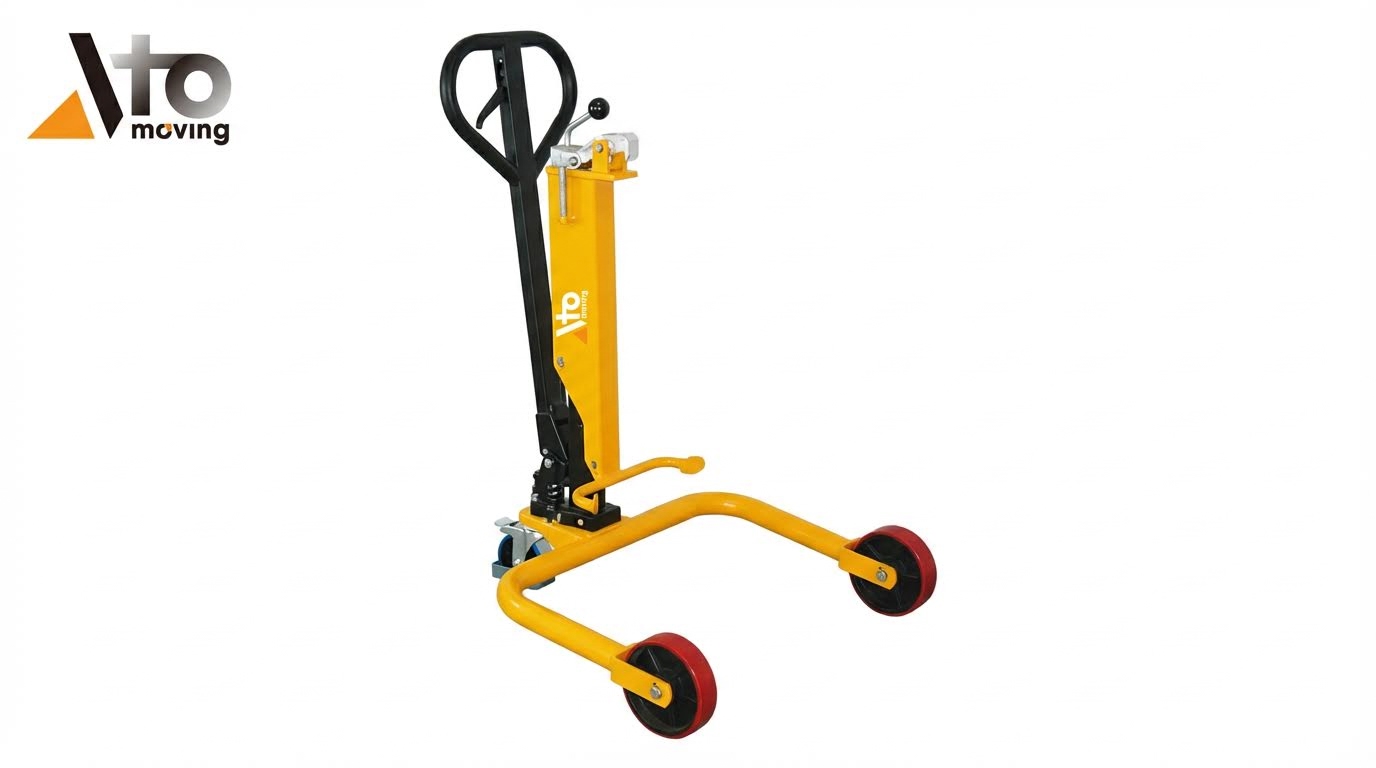
Drum storage safety depended strongly on the chosen handling and racking equipment. Engineers evaluated not only static capacity but also dynamic loads during placement, retrieval, and impact events. Properly designed containment systems limited the consequences of leaks, while automation and monitoring tools improved inspection quality and regulatory compliance. This section compared equipment classes and outlined selection criteria for industrial facilities handling heavy or hazardous drum inventories.
Forklifts, Drum Trucks, Cradles, And Rated Racks
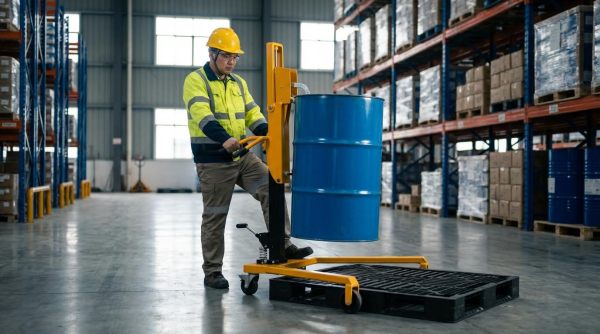
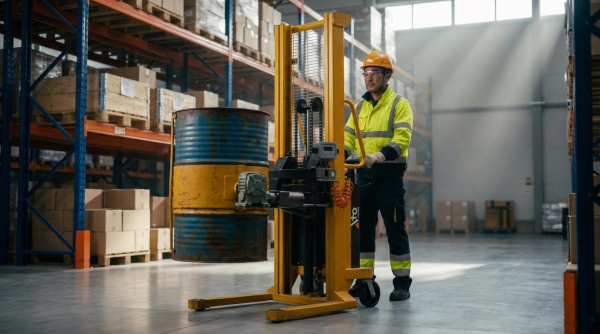
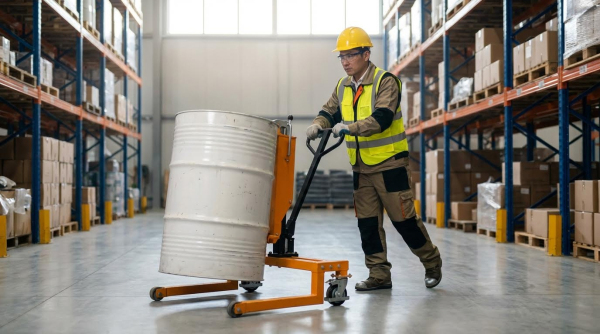
Forklifts handled the majority of palletized drum movements and required strict load management. Operators centered loads on the forks, kept drums as close to the mast as possible, and traveled with the forks in the lowest safe position to maintain stability. They avoided exceeding the truck’s rated capacity, accounting for drum weight, pallet weight, and any attachments. For single-drum moves or tight spaces, facilities used drum trucks, carts, and cradle devices designed specifically for 200 L (55-gallon) drums.
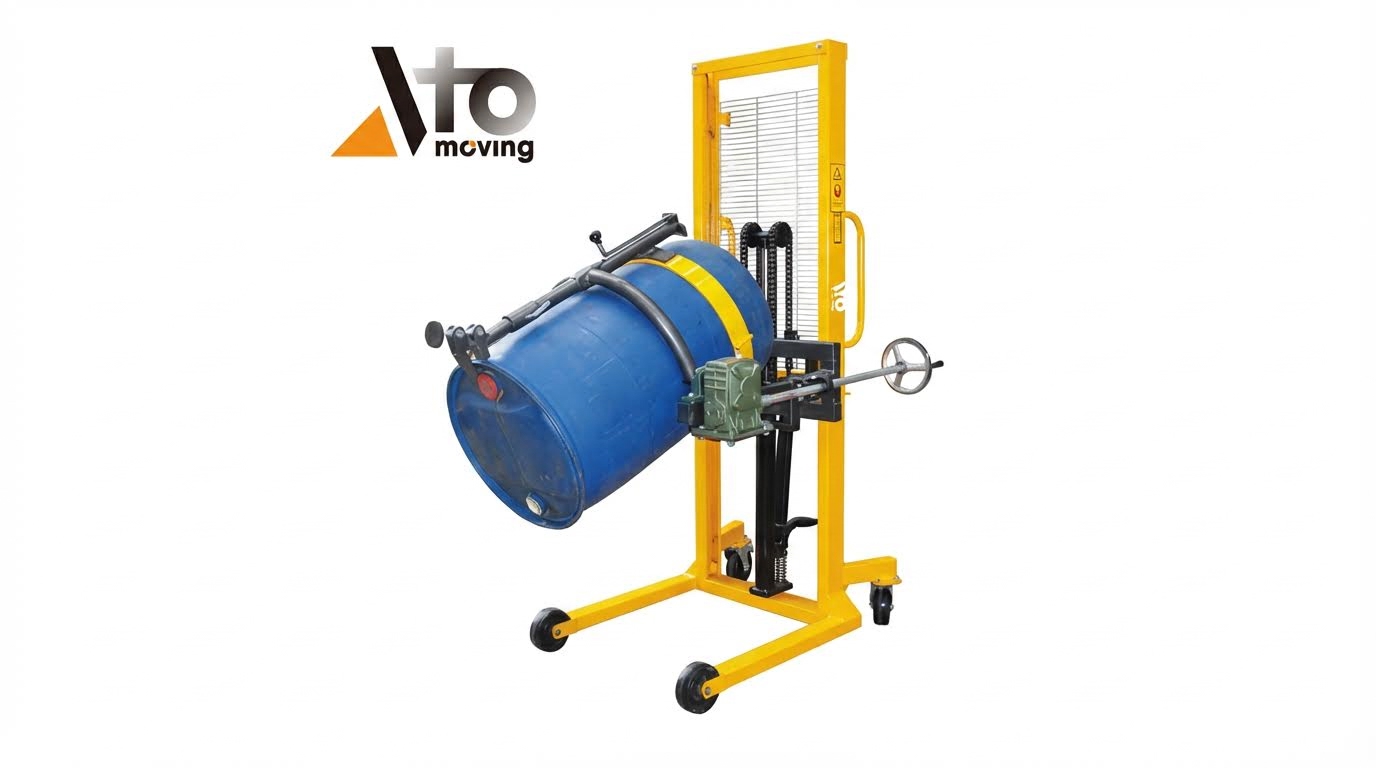
Drum cradles and tilters provided controlled rotation for decanting, often with built-in slopes around 5° to assist drainage while keeping the drum stable. Rated drum racks and modular rack systems stored drums vertically or horizontally with defined load capacities per level and per bay. Typical steel drum racks provided capacities from roughly 1 600 kg to above 3 000 kg per level, depending on configuration, with fork pockets or clear fork access for safe loading. Engineers verified that rack uprights prevented rolling, that beams provided full drum support, and that rack anchorage met local seismic and impact requirements.
Horizontal drum racks with four-way forklift access allowed drums to be stored on their sides for dispensing while maintaining positive containment beneath. Facilities checked that roller or cradle elements supported the full drum circumference to limit local contact stresses on the shell. All racks carrying chemical drums required compatibility between coating materials and stored products to prevent corrosion. Periodic inspection programs looked for bent beams, cracked welds, corrosion, and loose anchors, and removed damaged racks from service until repaired or replaced.
Bunded Storage, Secondary Containment, And Covers
Bunded storage systems created a secondary containment volume capable of capturing leaks or full drum failures. Engineers sized bunds to satisfy applicable regulations, typically using a design basis such as the greater of 110% of the largest single container or a defined percentage of the total stored volume. Bunded drum stores often combined steel or polymer sumps with grated working platforms that supported pallets while allowing leaked liquids to drain below the walking surface. Only trained personnel moved drums within these areas to minimize impact and puncture risks.
Secondary containment pallets and drum storage platforms integrated fork pockets to permit safe relocation while maintaining containment capacity. For indoor use, designers considered chemical compatibility, fire resistance, and load ratings that exceeded the combined mass of full drums. Outdoor drum storage incorporated weather protection such as drum covers and canopies, which reduced rainwater ingress into bunds and limited corrosion of steel drums. Operators stored drums on pallets or raised platforms outdoors to avoid standing water contact, which accelerated base corrosion and compromised stability.
Facilities segregated incompatible chemicals into separate bunded zones to prevent dangerous reactions if simultaneous leaks occurred. Clear labeling and color coding supported this segregation and helped operators select the correct storage bay. Regular inspections checked for accumulated liquids in bunds, corrosion on grating and walls, and damage to polymer liners or coatings. Maintenance teams removed collected liquids according to waste regulations, ensuring that bund freeboard remained available for future leak events.
Flow Racks, Push-Back Systems, And High-Density Storage
High-density drum storage systems, such as roller flow racks and push-back racks, increased cube utilization while preserving safe handling. In tested configurations, full roller push-back racks stored 200 L drums with diameters around 0.6 m and heights near 0.9 m, each weighing approximately 200 kg. The rails often used rollers with diameters near 230 mm, spaced about 50 mm apart, and pitched roughly 12 mm per 300 mm of run to control flow speed. Rated capacities ranged from about 400 N to 1
Summary And Compliance-Focused Best Practices
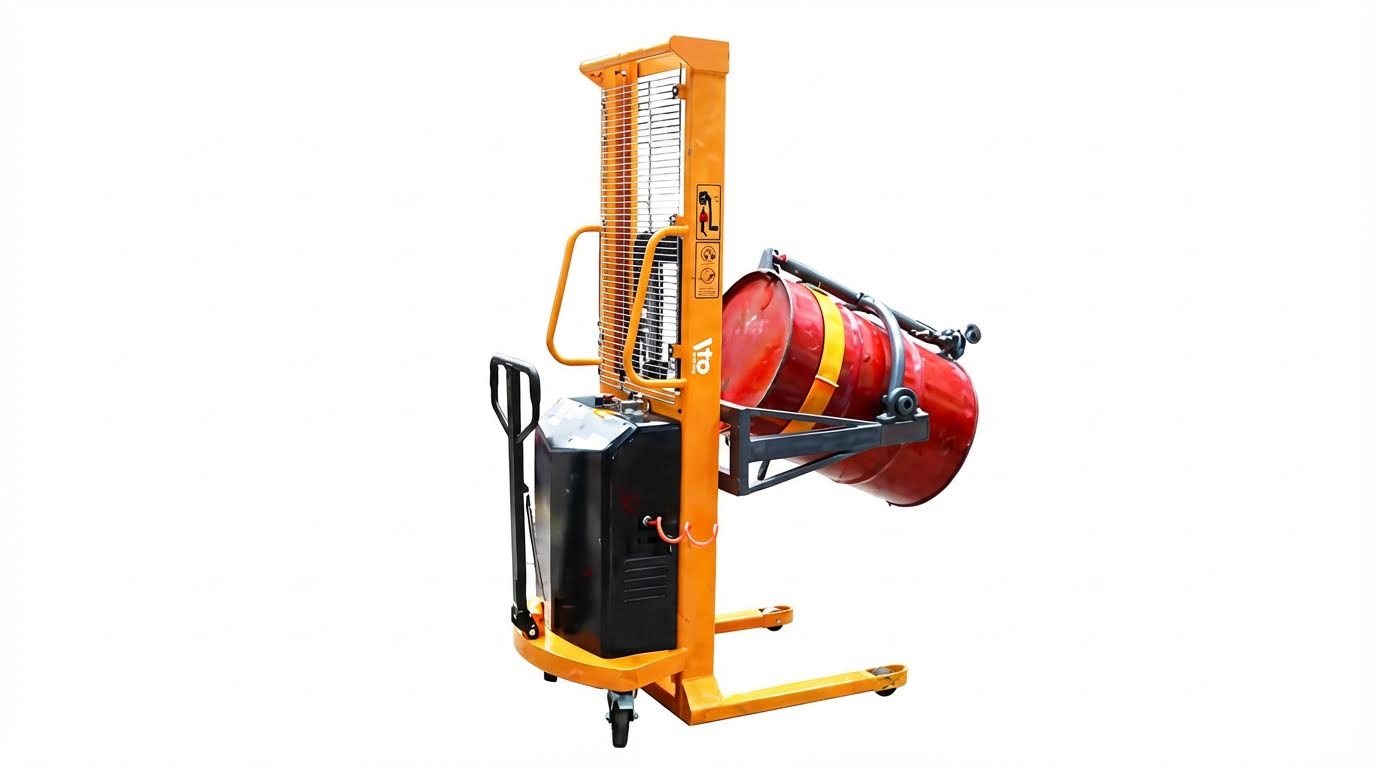
Safe drum and barrel stacking in industrial facilities relied on conservative geometry, controlled load paths, and strict tier limits. Facilities typically limited 200 L (55 gallon) drums to two tiers high and two drums wide, whether on pallets or in rows, to manage variability in shell strength, corrosion, and dimensional tolerances. OSHA General Industry 1910.176(b) and Construction 1926.250(a)(1) required all tiered materials to be stacked, blocked, interlocked, and height-limited to prevent sliding, falling, or collapse. Engineering checks of floor load capacity, rack ratings, and contact stresses at chimes and pallet interfaces remained essential before increasing density.
Industry practice favored end-up stacking on solid, level bases, with planks, plywood, or pallets between tiers to create flat bearing surfaces. When drums were stored horizontally, operators chocked or blocked the bottom tier on both sides and used symmetrical patterns to avoid torsional instability. High-density solutions such as rated drum stackers and push-back flow racks increased cube utilization but required verified capacities per drum, per level, and per roller, along with controlled forklift procedures. Bunded storage, sumps, and covers formed the backbone of spill containment strategies, especially for hazardous chemicals.
Implementation hinged on clear procedures, training, and inspection. Facilities read labels and Safety Data Sheets before handling, segregated incompatible materials, and maintained unobstructed aisles, exits, fire equipment, and overhead clearances. They posted maximum stacking heights, floor and rack load limits, and inspection access requirements. A balanced approach combined conservative manual stacking rules with engineered systems, digital monitoring, and predictive maintenance for racks and containment. This allowed sites to increase storage efficiency while maintaining regulatory compliance and reducing the risk of collapse, leaks, or difficult-to-access stacks.