
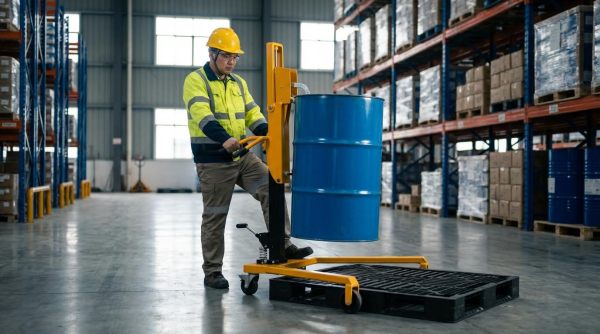
Safe drum transport required different engineering approaches for industrial chemical drums and musical drum sets. Industrial drums involved heavy hazardous loads, strict regulations, and specialized handling systems such as forklifts, drum grabs, and tilters. Musical drum sets demanded space-efficient packing, protection of delicate components, and ergonomic loading into trucks, vans, or cars. This article examined load physics, equipment selection, regulatory drivers, and practical loading patterns to build integrated, low-risk transport practices for both industrial and performance environments.
Engineering Basics Of Drum Loads And Risks
Engineering analysis of drum transport loads required understanding weight ranges, geometry, and how drums interacted with handling equipment and vehicles. Steel drums typically weighed 180–270 kg when filled, which drove equipment capacity selection and pallet design. Risk profiles differed for industrial chemical drums versus musical drum cases, but the underlying mechanics of stability, restraint, and impact resistance followed similar principles. This section outlined the fundamental load characteristics, failure mechanisms, and regulatory context that framed safe drum transport system design.
Typical Drum Weights, Centers Of Gravity, And Stability
Standard 200 L steel drums usually weighed 400–600 lb when filled, depending on product density. The center of gravity (CG) sat near the drum’s central axis, but its height varied with fill level and internal baffles. Partially filled drums exhibited sloshing, which dynamically shifted the effective CG and reduced stability during acceleration, braking, and cornering. Engineers evaluated tip-over risk by comparing the lateral acceleration of the vehicle to the restoring moment from the drum footprint and restraint system. Palletized drums improved stability by enlarging the effective base and enabling mechanical handling with forklifts and drum grabs. However, stacked drums increased the combined CG height, which required tighter blocking, bracing, and lower stacking heights to maintain safety margins.
Failure Modes: Leaks, Deformation, And Puncture Damage
Industrial drums failed through several predictable modes: leakage at closures, plastic or elastic deformation of the shell, and localized puncture damage. Improper forklift handling, such as tine contact with the drum body, created high local stresses and caused punctures or deep dents that compromised coatings and corrosion resistance. Dropping drums or allowing them to roll into obstacles introduced impact loads that exceeded the elastic limit of the steel, leading to buckling, chime deformation, or out-of-round conditions. Horizontal storage after filling increased the risk of hoop deformation and gasket distortion, which promoted leaks at bungs or lids. Elevated product temperatures softened polymer gaskets and created internal pressure or vacuum effects during cooling, which either stressed seams or drew moisture into the drum. Over-compressed covers during stacking also crushed gaskets, reducing sealing performance and increasing the probability of slow seepage during transport.
Regulatory Context For Chemical Drum Transport
Chemical drum transport operated within a defined regulatory framework that governed packaging performance, closure, labeling, and spill containment. In the United States, the Department of Transportation (DOT) referenced UN performance-oriented packaging tests for steel drums and required that closures followed manufacturer-specific instructions to maintain certification. Hazard communication rules mandated legible labels indicating contents and hazard classes; unlabeled or illegible drums were treated as non-movable until identified. Storage and handling facilities for chemical drums followed Environmental Protection Agency (EPA) spill containment criteria, which specified minimum sump capacities of 10% of total stored volume or the largest container, whichever was greater. Factory Mutual (FM) standards often required more conservative containment, such as 25% of total volume. Employers also had to comply with occupational safety regulations on personal protective equipment, training, and emergency response planning, ensuring that procedures for drum inspection, movement, and spill response were documented, drilled, and periodically reviewed.
Industrial Drum Handling Systems And Safety
Forklifts, Dollies, Hoists, And Drum Grabs: Selection
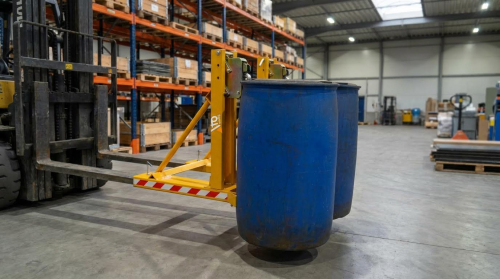
Engineers selected drum handling equipment based on drum mass, geometry, and process flow. Filled steel drums typically weighed 180–270 kg, so designers matched this to device capacity with at least a 25% safety margin. Fork-mounted drum grabs such as Gator Grip fork mounts offered 725 kg capacity and suited high-throughput pallet movements. Triple Truck base units with 340 kg capacity supported lighter, more mobile handling in confined areas.
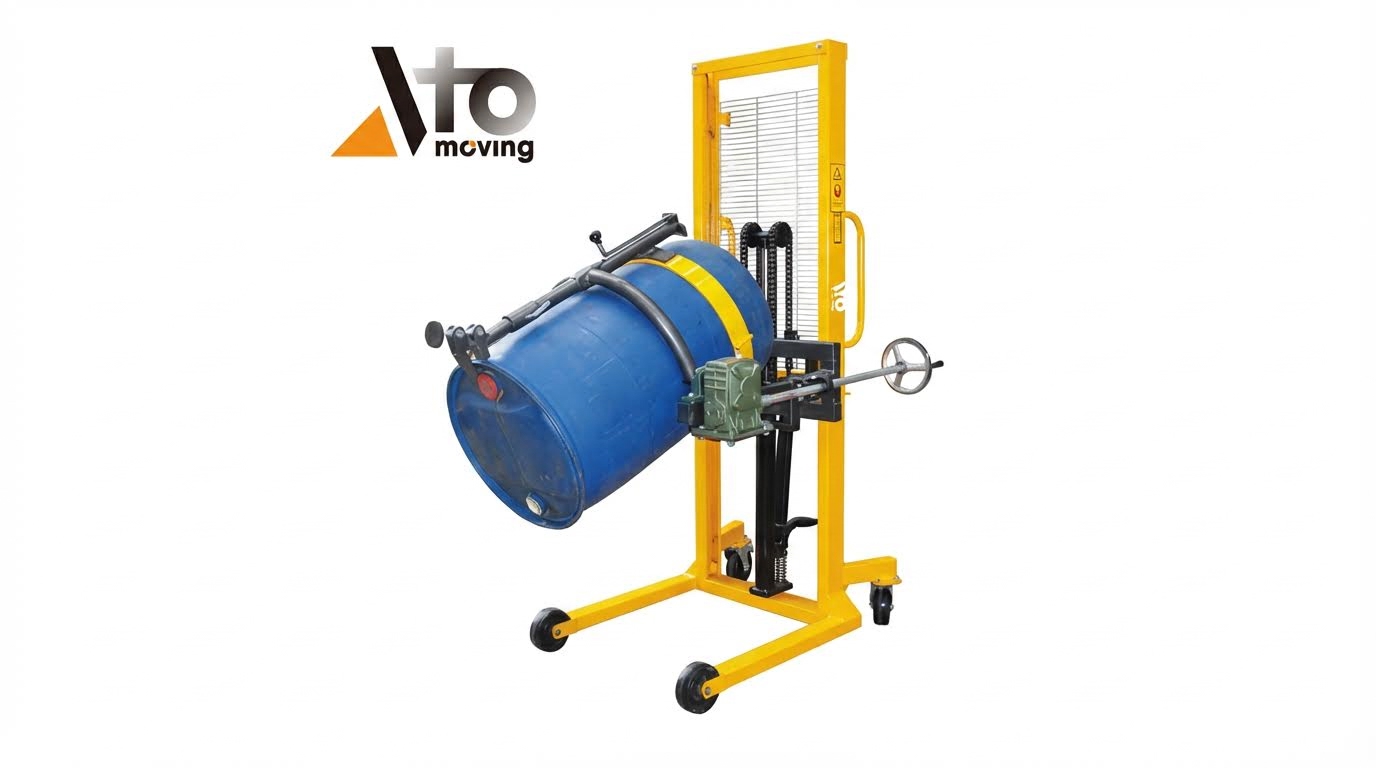
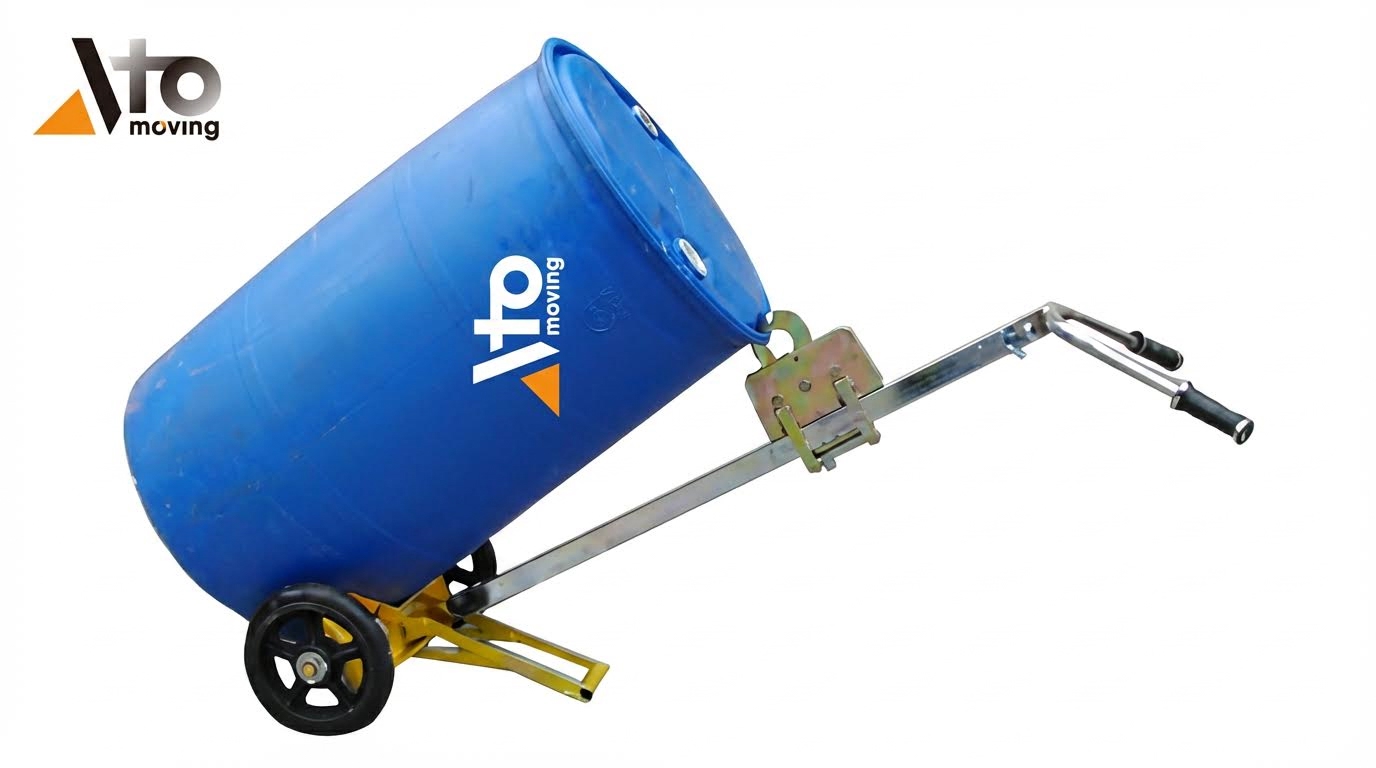
Manual drum tilters like the DM-800-MDT family allowed controlled rotation between vertical and horizontal positions for dispensing. Stainless steel drum trucks (DBT-SS series) used 304 stainless steel for corrosion resistance in chemical or washdown environments. Automatic grip adjustment on DBT-SS-DLX reduced required input force by about 50%, improving ergonomics and reducing musculoskeletal risk. Engineers chose hoists or cranes with suspended drum grabs where vertical lifts over obstacles or into containment were required.
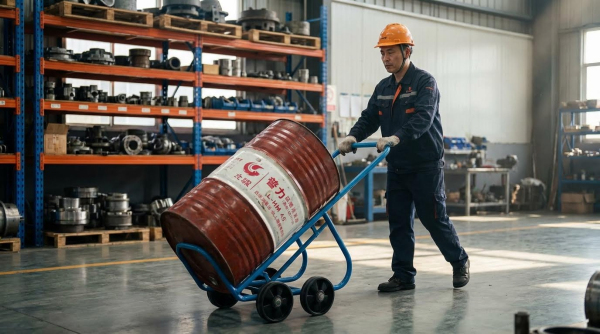
Selection criteria included drum type (tight head, open head, plastic, fiber), rim geometry, and floor conditions. Devices with adjustable chime hooks and adapters handled 30–85 gallon drums and rimmed plastic or fiber drums. Four-wheel trucks with low ground clearance improved stability and reduced tipping risk on uneven floors. Designers also evaluated turning radius, wheel material, and braking features to limit impact loads that could deform drums or compromise closures.
Pallet Design, Blocking, Bracing, And Load Securing
Pallets carried concentrated line loads from drum chimes, so engineers specified sound deck boards and stringers without protruding nails. Damaged or low-quality pallets increased puncture risk and allowed drum tilt or rocking during handling. Typical configurations placed four 200 L drums on a pallet with drum centers aligned to maximize stability. Forklifts engaged pallets rather than rolling drums by hand to avoid injury and shell damage.
Inside trailers or containers, blocking and bracing eliminated relative motion between drums and vehicle structure. Timber blocks, load bars, and friction mats prevented sliding and racking under braking or cornering. Drumclips provided an engineered load-securing solution that linked drums to pallets and reduced reliance on additional pallets or complex bracing. Two Drumclips per pallet on opposite sides created symmetric restraint and distributed strap forces.
Drumclips had been tested against standards such as DIN EN 12642 Annex B, ISTA 3E, and EUMOS 40509, providing quantifiable performance for dynamic transport loads. Their use reduced operator time for securing by up to 80–90%, which lowered labor cost and turnaround time. Engineers specified inspection intervals because textile-based devices degraded with wear, UV exposure, and chemical contact. They also integrated pallet and bracing design with spill containment planning, ensuring that drum layouts matched sump capacities and emergency access routes.
Drum Closure Integrity, Temperature, And Seal Management
Closure integrity governed leak risk more than shell strength in many incidents. Operators followed manufacturer and Department of Transportation closure instructions, including torque values for bungs and bolt rings. Lever lock rings that loosened during storage were replaced with bolt-fastened hoops and re-torqued to restore sealing performance. Engineers documented closure procedures in work instructions and audit checklists.
Temperature effects strongly influenced gasket behavior and internal pressure. High-temperature contents were cooled to ambient before filling to prevent vacuum deformation and water ingress during cool-down. Polyethylene gaskets softened at elevated temperature, which reduced compression and allowed micro-leaks under vibration. Installing covers and hoops only after contents reached near room temperature improved long-term seal reliability.
Drums were stored and transported upright; horizontal storage after filling increased deformation and leak probability at chimes and seams. Outdoor storage required rain and sun protection to limit thermal cycling and coating degradation. Heating drums to remove residues risked damaging internal coatings or phosphate films and contaminating subsequent batches. Routine inspections checked for bulging lids, corrosion, or damaged bungs, which could indicate internal reactions or compromised seals before movement.
Operator Training, PPE, And Emergency Response Planning
Safe drum handling depended on trained personnel using appropriate tools instead of manual rolling or pushing. Training covered equipment operation, capacity limits, and correct attachment of drum grabs,
Transporting Musical Drum Sets In Fleet Vehicles
Transporting musical drum sets in fleet vehicles required the same disciplined approach as industrial drum logistics, but with greater sensitivity to impact, vibration, and cosmetic damage. Touring operations had to treat each drum, stand, and accessory as a discrete load with its own fragility and center of gravity. Effective methods combined correct disassembly, protective packaging, and vehicle-specific loading patterns. Well-planned workflows reduced crew fatigue, minimized setup time at venues, and cut the risk of in-transit failures.
Breaking Down, Packing, And Protecting Drum Components
Efficient drum transport started with complete disassembly of the kit into stable, packable units. Operators removed snares, toms, and cymbals from stands and combined loose items such as mallets, sticks, tambourines, triangles, and small cymbals into a dedicated drum set box. This box ideally had reinforced corners and internal dividers to prevent component-to-component impact. Crews used dedicated cases or padded bags for shells and cymbals, or applied blankets and towels when cases were unavailable, ensuring no metal hardware contacted lacquered or wrapped finishes.
Heavier composite units, such as a loaded drum set box, required clear handling plans and crew assignments. Typical practice used at least four people to lift and position the box and two people to roll it, reducing peak manual forces and limiting drop risk. Sensitive surfaces, including drum heads and cymbal edges, were protected from point loads by orienting them vertically in cases or by inserting soft separators. Labels on cases indicating weight, contents, and orientation simplified stacking decisions and reduced accidental overloading of lighter or fragile items.
Truck, Van, And Car Loading Patterns And Constraints
Vehicle geometry strongly influenced drum loading strategies. Large trucks with automatic lifts often provided surplus volume, which shifted the focus from capacity to stability and access sequencing. In these vehicles, operators loaded the heaviest, least fragile units first, such as the drum set box placed horizontally against the front bulkhead, followed by tympani, chimes, and mallet instruments positioned directly against the walls. In contrast, smaller rental trucks with ramps and limited floor area required tight packing and deliberate nesting of stands, racks, and chair stacks to maximize usable space.
Passenger vehicles such as hatchbacks and sport utility vehicles demanded careful dimensional planning. Crews measured trunk and rear-seat spaces and verified that the bass drum, floor tom, and hardware cases could pass through door apertures. They loaded the largest shells first, then filled voids with snare, tom, and cymbal cases to create interlocking patterns that resisted movement. For sedans with constrained trunk openings, operators often folded rear seats and used through-loading, accepting reduced crew seating in exchange for safer drum positioning.
Securing Percussion Loads To Prevent Shift And Damage
Load securement for drum sets aimed to eliminate both gross sliding and local rubbing damage during transit. In trucks, crews positioned large rolling instruments such as tympani, chimes, and bass drums directly against structural walls, then engaged wheel locks on at least one wheel per unit. They added bungee cords or straps between frames and wall anchor points to prevent oscillation on rough roads. Chair stacks and stand racks acted as structural fillers when placed against walls and oriented consistently, with stand racks facing the same direction to create a flat, braceable surface.
Within smaller vehicles, operators used seat belts, cargo tie-downs, and adjustable straps to immobilize cases. They avoided stacking chairs or cases to unstable heights that could topple and impact drum shells. Fragile items, including bells and their stands, rode flat on the floor to minimize tipping risk. Crews checked that no sharp hardware edges or stand feet contacted drum coverings, and they used soft spacers where contact was unavoidable. Before departure, a short controlled braking test at low speed verified that the load remained stationary under expected deceleration levels.
Labor, Ergonomics, And Scheduling For Touring Crews
Touring crews optimized labor assignments to balance speed, safety, and fatigue across repeated load-in and load-out cycles. Heavier or awkward items such as drum set boxes, large tympani, and chimes had defined minimum crew numbers: typically four people for the drum set box, two to three for tympani
Summary: Integrated Practices For Drum Transport
Safe, efficient drum transport required an integrated approach that linked engineering, equipment, procedures, and human factors. Industrial steel and chemical drums typically weighed 180–270 kg when filled, so planners needed accurate mass data, center-of-gravity estimates, and container compatibility checks before loading. For hazardous contents, operators followed DOT closure instructions, UN performance standards, and spill-containment rules such as EPA and FM sump-capacity criteria. Musical drum sets imposed lower static loads but high sensitivity to impact, vibration, and moisture, so packing and support conditions dominated the design of transport procedures.
Across industrial drums, the highest incident rates traced to handling errors, inadequate blocking and bracing, and poor pallet or forklift practices. Best practice therefore combined quality pallets, verified drum closures, controlled temperatures during and after filling, and strict prohibitions on bumping, rolling, or heating drums. Dedicated devices such as drum tilters, stainless drum trucks, and fork-mounted drum grabs increased control and reduced manual-force requirements, provided operators respected rated capacities between 450–725 kg. For chemical drums, mandatory PPE, label verification, pre-move inspection for bulging or damage, and pre-approved emergency plans formed a baseline safety envelope.
Musical percussion transport focused on space optimization and damage prevention rather than regulatory containment. Crews broke down kits into protected cases, loaded the largest items first, and used truck walls and racks as structural references to prevent shifting. They treated tympani, chimes, and mallet instruments as fragile wheeled loads, controlling wheel locks and tie-down points. In smaller vehicles, drivers measured interior dimensions, selected hatchbacks or vans where possible, and used straps and padding to maintain both load stability and safe vehicle handling.
Future practice in both industrial and musical applications will likely increase use of engineered securing devices such as certified Drumclips and purpose-built drum grabs, combined with data-driven training and standardized loading patterns. Facilities that integrated engineering calculations, proper equipment selection, disciplined procedures, and routine inspections achieved lower incident rates, reduced ergonomic stress, and longer asset life. The most robust systems treated industrial drums and drum sets within a single framework: know the load, control the interfaces, secure against motion, and plan for failure with clear emergency response capability.