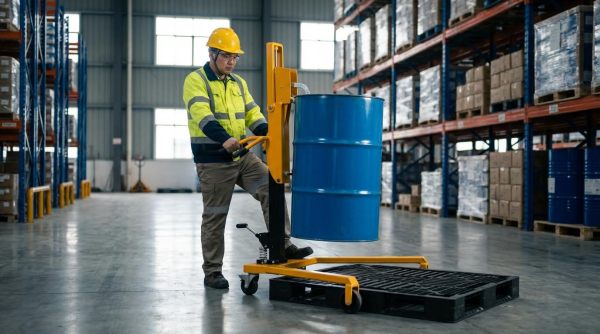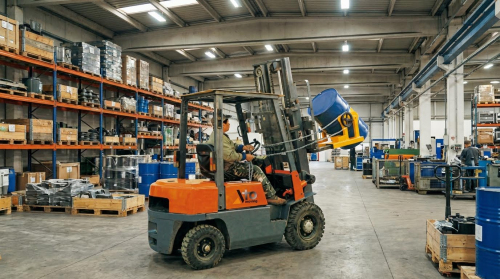
Handling 55-gallon drums required strict control of weight, stability, and hazardous contents. This article examined key hazards, regulatory requirements, and safe manual techniques before any movement. It then compared mobile drum lifters, palletizers, overhead grabs, and custom powered systems using real industrial specifications. Finally, it defined engineering selection criteria and summarized best-practice drum handling system design for safe, efficient material flow.
Key Hazards And Safety Standards For Drum Handling
Typical Drum Weights, Contents, And Failure Modes
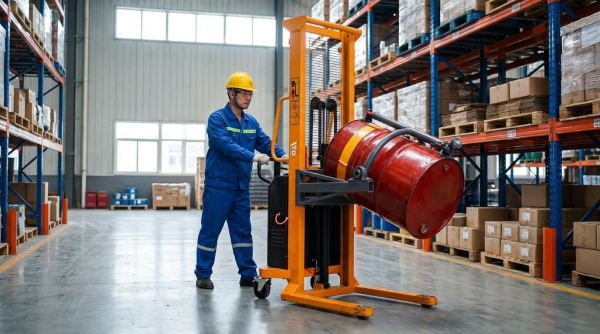
Typical 55-gallon drums weighed between 400 kg and 800 kg depending on contents. High-density liquids such as oils or concentrated chemicals pushed weights toward the upper range. This mass generated significant kinetic energy during tipping, dropping, or uncontrolled rolling. Contents often included corrosive, flammable, toxic, or reactive chemicals, so loss of containment created dual risks: impact injuries and exposure. Common failure modes included deformed chimes, corroded seams, damaged bungs, and weakened sidewalls from previous impacts. Stacked or palletized drums introduced additional hazards from shifting loads and uneven pallet support. Engineers needed to consider both static and dynamic loading, especially during lifting, tilting, and transport.
OSHA, ANSI, And Chemical Handling Requirements
OSHA regulations in the United States governed material handling, hazardous materials, and powered industrial trucks. Relevant sections included 29 CFR 1910 Subparts H (Hazardous Materials), N (Materials Handling and Storage), and O (Machinery and Machine Guarding). ANSI standards complemented OSHA by defining design and performance criteria for below-the-hook devices, slings, and drum handling attachments. Grade 80 chain assemblies, for example, met specific ANSI and OSHA requirements for overhead lifting. Drum lifters and grabs used with cranes or forklifts had to comply with these design factors and safety factors of load rating. Chemical handling requirements also referenced Hazard Communication rules, mandating Safety Data Sheets, labeling, and training. Facilities handling flammable or corrosive contents needed compatible equipment materials and sometimes spark-resistant options.
PPE, Labeling, And SDS Review Before Movement
Operators needed to verify drum labels before any movement. If labels were missing or illegible, best practice treated the drum as hazardous until identification. Reviewing the Safety Data Sheet clarified physical hazards, incompatibilities, and required personal protective equipment. Typical PPE included safety shoes with toe protection, chemical-resistant gloves, eye protection, and sometimes face shields or aprons. For corrosive or toxic contents, respiratory protection and splash suits could be necessary. Procedures required inspection for leaks, missing bungs, and compromised closures before lifting. Missing closures had to be replaced or secured to avoid spills during tilting or transport. Clear labeling also supported emergency response planning and segregation of incompatible materials in storage areas.
Safe Manual Techniques And When To Prohibit Them
Manual handling of full 55-gallon drums posed high musculoskeletal and crush injury risks. Where mechanical aids existed, procedures prioritized drum trucks, palletizers, or powered handlers over manual methods. If personnel needed to roll or upend a drum, they used specific body mechanics: straight back, bent knees, and leg-driven lifting. Recommended techniques kept hands on the chime, away from pinch points, and avoided twisting the torso. Two-person lifts were reserved for lighter or partially filled drums and still required coordinated movement. Facilities typically prohibited manual lifting of stacked drums and mandated cranes or lift trucks for vertical stacking or de-stacking. Policies also restricted pushing drums with feet or grabbing ends, as these actions destabilized the drum and increased injury risk. Formal training in manual and mechanical methods remained a prerequisite before anyone handled drums in production or warehouse areas.
Comparing Drum Lifting And Moving Equipment Types
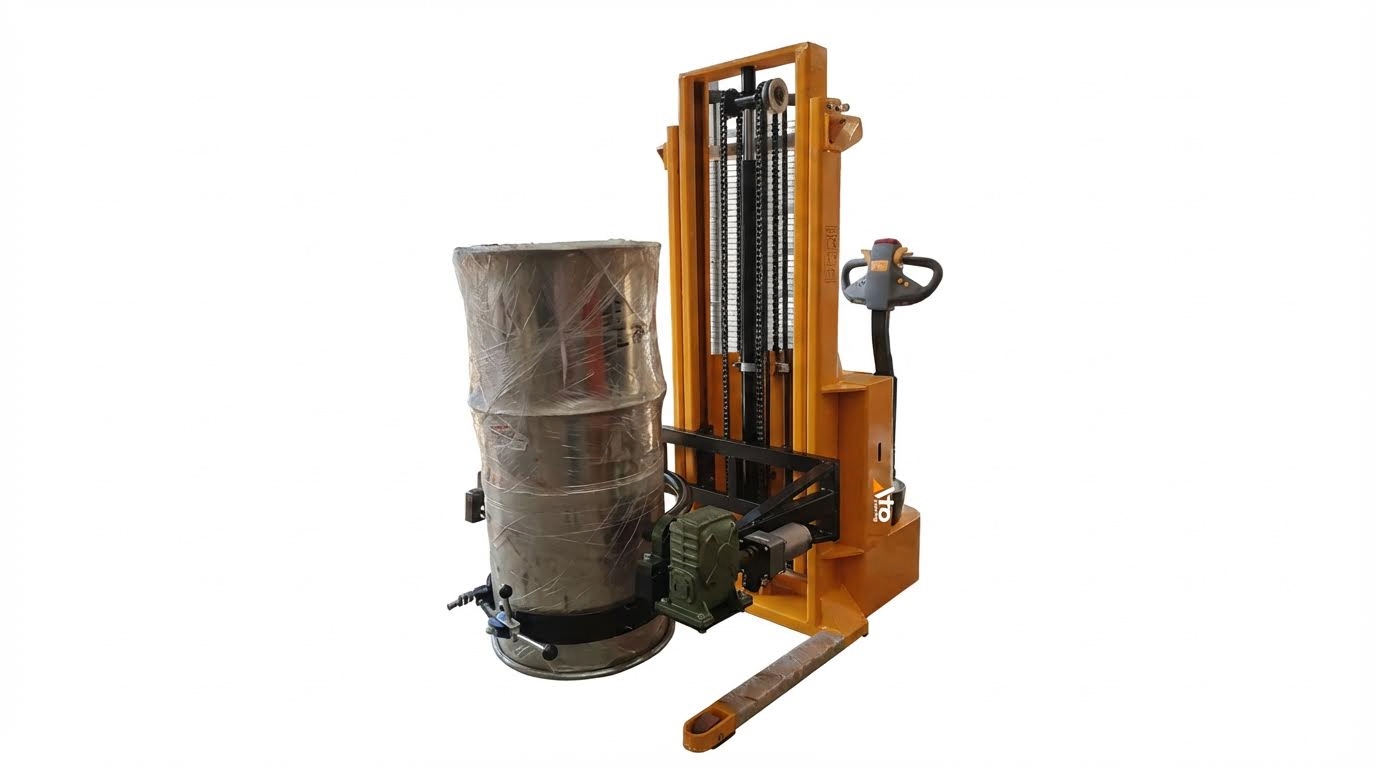
Industrial facilities used multiple drum handling technologies to manage 55-gallon drums safely and efficiently. Each equipment family addressed specific motion patterns such as vertical lifting, horizontal racking, or controlled pouring. Selecting the correct type reduced ergonomic risk, limited spill potential, and improved throughput in filling, storage, and dispensing operations.
Mobile Drum Lifters, Trucks, And Palletizers
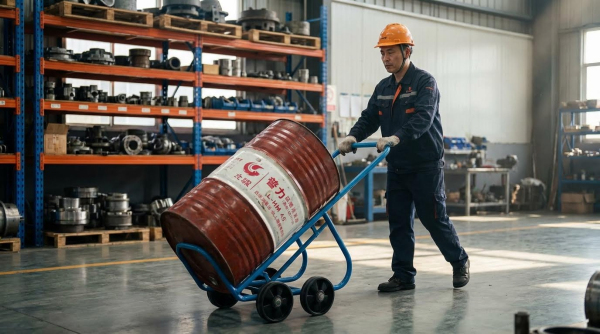
Mobile drum lifters and transporters supported ground-level pickup, short-distance travel, and precise placement on pallets or spill decks. Units such as hydraulic hand-pump drum transporters used rigid front wheels and swivel rear wheels to balance tracking stability with steering maneuverability. Attachment options included beak clamps for intact drum rims, ratchet-strap cradles for damaged or plastic drums, and cylinder cradles for tall narrow vessels. Typical capacities reached 360 kg to 450 kg, matching the upper range of filled 55-gallon drums and providing a defined safety margin. Drum trucks and dollies focused on tilting and rolling rather than full vertical lifting, so they suited short moves on good floors with lower lift heights. Drum palletizers combined lift, clamp, and reach functions to place drums onto or off pallets without manual tilting, which reduced back loading and toe-crush risk.
Overhead And Forklift Drum Lifters And Grabs
Overhead drum lifters connected to cranes or hoists and handled drums via top lips, chimes, or three-arm grabs. These devices enabled vertical lifting into overpacks, containment basins, or tall process vessels where floor-based lifters could not reach. Rated capacities typically ranged from 450 kg to 900 kg, with heavy-duty horizontal lifters reaching about 900 kg to 900+ kg using alloy chain assemblies. Forklift drum grabs and carriage-mounted clamps allowed operators to pick drums from the floor, pallets, or rows without leaving the cab. These attachments required verification of truck capacity at the given load center and height to maintain compliance with OSHA and ANSI stability limits. Overhead and forklift solutions worked best in fixed handling lanes or high-bay storage where overhead clearance and traffic control were engineered into the layout.
Drum Rackers, Pourers, And Below-Hook Karriers
Drum rackers were specialized machines that lifted a vertical drum, rotated it to horizontal, and placed it onto rack beams or stands. They increased storage density by using horizontal racks while avoiding manual upending or high stacking, which safety guidance discouraged. Pourers and karriers added rotational control around the drum’s axis to support dosing, decanting, or batch charging. Manual gearboxes, hand wheels, or powered tilt drives allowed controlled pouring of heavy drums without sudden tipping or splash. Below-hook drum karriers suspended from hoists combined lift and controlled rotation, enabling operators to elevate a drum, move it horizontally, then tilt to pour into mixers, kettles, or IBCs. These units required positive locking mechanisms and rated tilt controls to prevent unintended rotation, especially with viscous or sloshing contents.
When To Use Custom Or Powered Drum Handlers
Custom or powered drum handlers became appropriate when standard catalog units could not meet geometry, throughput, or hazard constraints. Examples included handling non-standard drum diameters, tall gas cylinders, or mixed container families where quick-change attachments reduced changeover times. Power-propelled walk-behind handlers with electric lift and tilt reduced push forces and eliminated manual pumping, which benefited high-frequency operations or long travel paths. In classified or corrosive environments, custom designs incorporated non-sparking materials, stainless structures, or specialized coatings to meet safety and corrosion-resistance requirements. Facilities also adopted powered or custom units when risk assessments identified unacceptable ergonomic loads, frequent near-misses, or the need to integrate with automated lines, sensors, or access-control systems.
Engineering Criteria For Selecting Drum Handling Gear
Capacity, Drum Geometry, And Attachment Selection
Engineers first matched drum handler capacity to the heaviest credible drum weight, including contents and residues. A typical 55-gallon drum weighed 180–360 kg, so designers often specified at least 450 kg capacity with a safety margin. Industrial and Deluxe drum lifts from Valley Craft rated 360 kg capacity and handled 30- and 55-gallon drums, aligning with this range. Overhead lifters from Beacon and others handled up to 900 kg or 900–2,000 lbs, covering dense products and horizontal lifting.
Drum geometry strongly influenced attachment choice. Beak-style heads engaged the top rim and worked well with intact steel, plastic, and fiber drums with a defined chime. Strap-style attachments with dual ratchets accommodated damaged rims or irregular drums and covered 14–24 inch (≈356–610 mm) diameters. Cylinder attachments with cradles and straps handled tall, narrow containers between 9–18 inches (≈229–457 mm) diameter, such as gas cylinders or specialty vessels.
Selection also depended on drum orientation and handling task. Below-hook horizontal lifters accepted 30- and 55-gallon drums for tipping and pouring, often up to 900 kg. Vertical grabs with three-arm centering rings suited overhead placement into overpacks or salvage drums. Engineers documented compatible drum types—closed head versus open head, presence of top lip or chime—to avoid misapplication that could shear rims or drop loads.
Compatibility with hazardous contents required conservative assumptions. When labels were missing, users treated drums as hazardous and selected attachments that minimized manual contact and provided positive mechanical engagement. Grade 80 chain assemblies with spring-loaded latches offered OSHA- and ANSI-compliant gripping for closed-head drums with a top lip. This reduced the risk of accidental release during lifting or rotation.
Stability, Maneuverability, And Floor Conditions
Stability analysis considered wheelbase, center of gravity, and attachment height. Industrial drum transporters used fixed geometry frames around 1.27 m long and 0.89 m wide, with low-mounted drums to keep the combined center of gravity inside the wheel footprint. Deluxe units used telescoping legs, extending from roughly 0.64–0.81 m width, allowing narrow-aisle access or widened stance for higher stability when lifting. Engineers evaluated tipping risk during acceleration, deceleration, and turning with a full drum.
Wheel configuration strongly affected maneuverability. Industrial models used two 150 mm front rigid wheels and a single 200 mm rear swivel wheel, enabling tight pivoting in congested areas but requiring trained operators to control tracking. Deluxe models used two rigid front and two swivel rear wheels, improving directional stability during longer pushes and reducing steering effort. For power-propelled units, designers also considered drive wheel traction and turning radius near racks and containment berms.
Floor conditions constrained wheel and caster selection. Hard steel or polyurethane wheels rolled efficiently on smooth concrete but transmitted higher point loads and vibration on rough surfaces. Where floors included expansion joints, drains, or minor spalling, larger-diameter wheels reduced hang-up risk. In wet or chemically aggressive areas, corrosion-resistant wheel materials and sealed bearings extended service life and preserved smooth rolling.
Surface slope and local obstructions influenced safe operating envelopes. Engineers typically limited manual drum handling on ramps and prohibited pulling heavy drums across thresholds without mechanical aids. For spill containment platforms and gratings, they verified wheel spacing and load distribution to avoid punching through or overstressing deck panels. Where static discharge posed an ignition risk, they considered conductive wheels and bonding provisions.
Integration With Pallets, Racks, And Spill Containment
Drum handling equipment had to interface cleanly with pallets and storage hardware. Mobile drum lifts with compact frames reached over standard pallets to place or retrieve 30- and 55-gallon drums without dragging them across deck boards. Telescoping-leg designs retracted for narrow pallet openings and extended for stable lifting off pallets or spill decks. Engineers checked minimum fork or leg clearance and turning space between pallet rows.
For racking and stacking, barrel rackers and powered drum handlers raised drums to upper rack levels while maintaining controlled tilt. Designers evaluated vertical lift height, mast deflection,
Summary And Best Practices For Drum Handling Systems
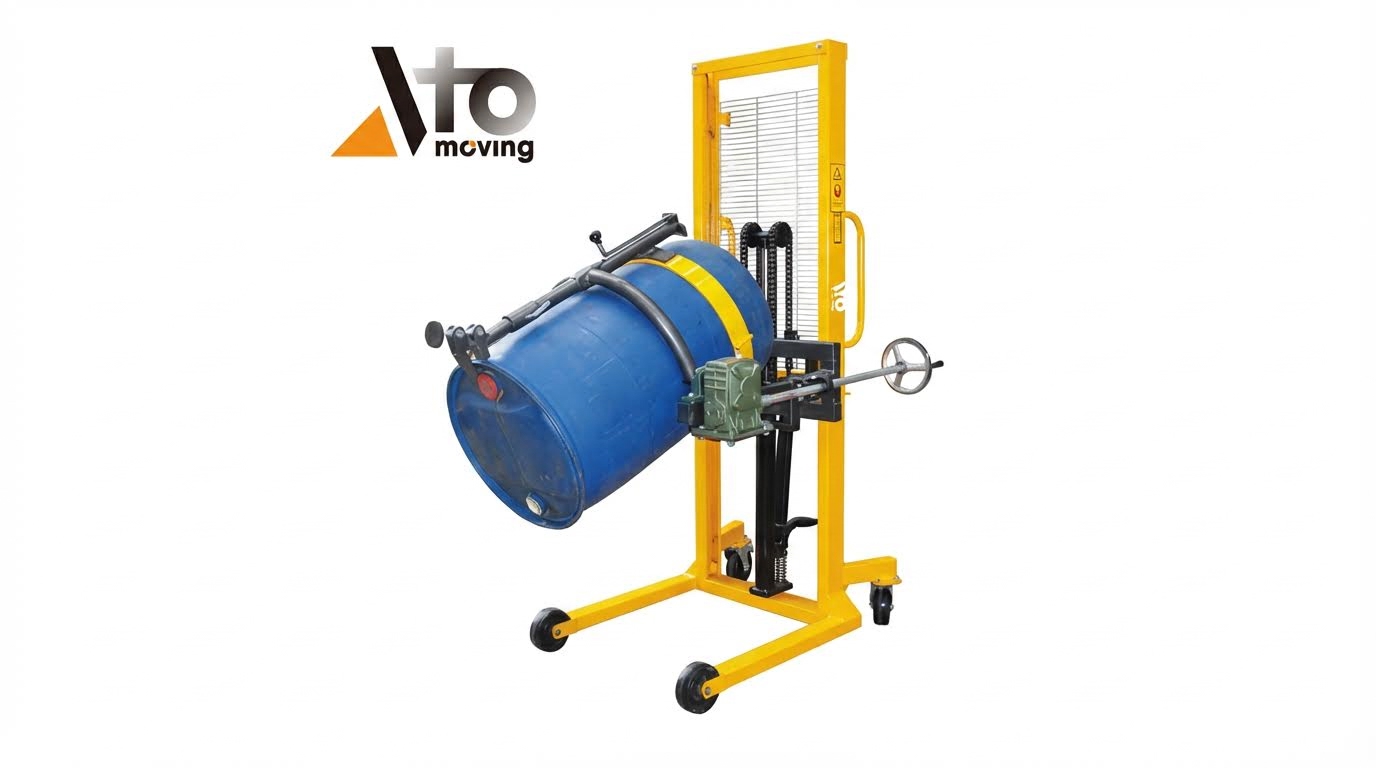
Effective drum handling relied on matching equipment capability with drum mass, geometry, and process flow. Typical 55-gallon drums weighed 180–360 kg, so engineered aids such as mobile lifters, palletizers, and below-hook grabs significantly reduced ergonomic and chemical exposure risks. OSHA and ANSI requirements drove the use of positive-locking attachments, rated lifting components, and written procedures aligned with SDS information and hazard communication rules. Modern systems also incorporated quick-release backplates and interchangeable attachments to handle steel, plastic, and fiber drums with damaged rims or non-standard diameters.
Across industry, the key trend moved from manual rolling and tipping toward mobile and powered handlers with controlled lift and pour. Compact hydraulic drum transporters, pallet-jack-style units with telescoping legs, and overhead grabs with 1,000–2,000 lb ratings supported tighter layouts and higher storage densities. Integration with spill pallets, secondary containment, and racking shaped attachment choice, especially where horizontal storage, racking, or overpack placement was required. Future systems increasingly combined power drive, powered lift, and electronic interlocks or sensors to reduce human error and support higher throughput.
When implementing or upgrading drum handling, facilities should start with a formal hazard and task analysis. Map drum paths from receiving to disposal, identify manual handling points, and substitute mechanical aids wherever full drums are lifted, stacked, or poured. Verify that capacity ratings exceed worst-case filled weight with an appropriate safety margin, that attachments positively capture the drum lip or body, and that wheel types match floor conditions and slopes. Balance initial purchase cost against injury reduction, spill avoidance, and productivity gains over the equipment life, and plan inspections and maintenance for hydraulic systems, chains, and grab mechanisms.
A robust drum handling strategy combined engineering controls, operator training, and disciplined storage practices. Limiting stack heights, enforcing PPE and labeling rules, and prohibiting manual lifting of full drums aligned with both safety guidance and practical experience. As equipment options evolved, the most resilient operations remained those that periodically re-evaluated their drum mix, chemical hazards, and layout, then adjusted attachments and powered solutions accordingly.