
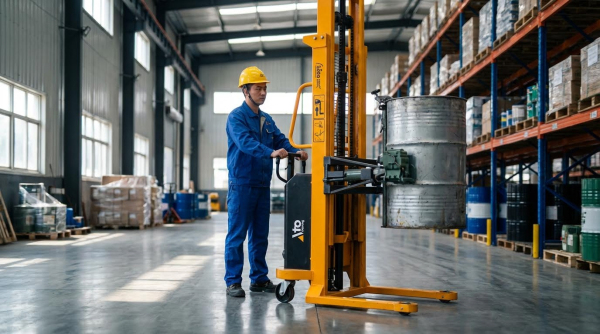
This guide explains how to use a drum lifter safely and efficiently in real-world operations. You will learn the main drum lifter types, how they lift, tilt, rotate, and transport drums, and how to match equipment specs to your drum sizes and weights. We also cover step‑by‑step operating procedures, safety practices, and maintenance strategies to extend service life and reduce downtime. Use this as a practical reference when selecting, operating, and maintaining drum handler in your facility.
Understanding Drum Lifters And Core Functions
Key drum lifter types and configurations
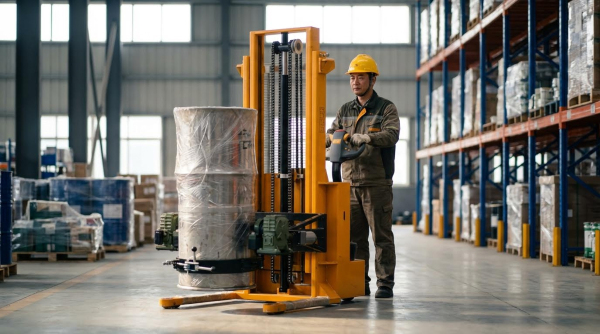
When you plan how to use a drum stacker in your facility, it helps to understand the main equipment families and how they grip and support the drum. Common types include mobile drum stackers/handlers, forklift attachments, below‑hook drum lifters, and dedicated drum rotators. Each configuration is optimized for specific drum sizes, floor layouts, and handling tasks such as stacking, decanting, or long‑distance transport.
- Mobile drum handlers and stackers
These floor‑running units lift, move, and often tilt drums made of steel, plastic, or fiber weighing around 350–400 kg, reducing manual strain in warehouses, factories, and chemical storage areas drum handling equipment overview. Typical lifting capacities range from 50 kg to 450 kg with lift heights from about 250 mm up to 1400 mm depending on model design drum lifter functionality. They usually clamp the drum at the rim or body using mechanical jaws or belts, allowing a single operator to move full 200‑liter drums safely single operator usage. - Forklift‑mounted drum lifters
Forklift attachments convert existing trucks into drum handlers for high‑throughput loading and unloading. Typical capacities span roughly 300 kg up to several thousand kilograms, with fork sizes around 640–950 mm to suit different drum diameters load capacity and fork size. These attachments can safely handle common 45‑gallon (210 L) steel drums with high mass‑to‑volume ratios during truck loading or container stuffing forklift attachments. - Below‑hook drum lifters
Below‑hook devices suspend from an overhead hoist or crane to lift, tilt, and pour drums in process areas or docks. Stainless‑steel units with hydraulic power and chain pullers can lift drums up to about 454 kg and handle steel, plastic, or fiber drums in corrosive or marine environments below-hook drum handlers. This configuration is useful where floor space is limited or where vertical lifting over equipment is required. - Dedicated drum rotators
Drum rotators specialize in controlled rotation for mixing or decanting. Some electric models lift up to about 600 kg to heights around 2400 mm and rotate drums through 360° using electromagnetic brakes for smooth operation, which is common in chemical applications drum rotators. When you define how to use a electric drum stacker for frequent pouring or dosing, these units reduce spill risk and operator effort compared with improvised methods.
Typical drum size and footprint ranges
Many drum lifters are designed around standard 200‑liter drums. Common compatible drum envelopes range from about 572×917 mm for smaller units up to roughly 890×2020 mm for larger frames, so matching lifter geometry to drum size is critical to avoid instability or clamp slippage drum size compatibility. Typical overall equipment widths sit around 19–21 inches, with leg lengths of about 32–39 inches and heights on some models reaching 85 inches, which influences aisle planning and racking clearances equipment dimensions.
Core functions: lift, tilt, rotate, transport
All drum lifters are built around four core functions: lifting, tilting, rotating, and transporting drums safely. Understanding these motions is central to learning how to use a barrel lifter without overstressing the equipment or the drum. Each function has specific limits on load, angle, and speed that you must respect to control spill risk and structural loads.
- Lifting
The primary job is to raise drums from floor level to a target height such as a pallet, rack beam, or hopper edge. Many models handle between 50 kg and 450 kg and lift to about 250–1400 mm, depending on design and power source drum lifter functionality. Electric and semi‑electric units use motors (for example, around 2.2 kW) to achieve repeatable lifting speeds in the order of 80–145 mm/s, while manual models depend on operator effort via pumps or winches lifting speed. - Tilting and rotating
Tilting and rotation control how product leaves the drum. Manual drum stackers typically tilt up to about 180° for controlled emptying, while electric drum lifters and rotators can offer full 360° rotation for complete discharge or mixing tilting capability. Electric drum rotators often use electromagnetic brakes to manage inertia and stop the drum at precise angles, which is important for viscous or hazardous contents drum rotators. - Transport and maneuvering
Transport covers horizontal movement from storage to process or shipping areas. Many mobile drum handlers are designed for a single operator and include casters or drive wheels to move drums in confined aisles or on docks applications across industries. Typical turning radii around 1350–1650 mm allow them to work in tight spaces, but operators must keep loads low to the ground and avoid sharp turns to maintain stability turning radius. - Secure gripping and release
Although sometimes overlooked, gripping and release are critical to every motion. Stainless‑steel jaws or adjustable clamps engage the drum rim or body and must hold the drum without wobble during lifting and travel mobile drum handlers. Correct clamp adjustment and verification before lift are essential steps in any standard operating procedure for how to use a drum lifter safely.
How these functions work together in real operations
In a typical workflow, an operator approaches a standing drum, secures it with jaws or belts, then lifts it just clear of the floor before transporting it along a cleared route work area clearance and securing the drum. At the destination, the operator repositions the drum, tilts or rotates to the required angle for decanting, and then returns it to a stable upright or horizontal storage position. Understanding these combined motions helps engineers select lifters with the right lift height, rotation capability, and turning radius for their layout and drum mix.
Technical Use, Safety, And Maintenance In Practice
Matching lifter specs to drum size and weight
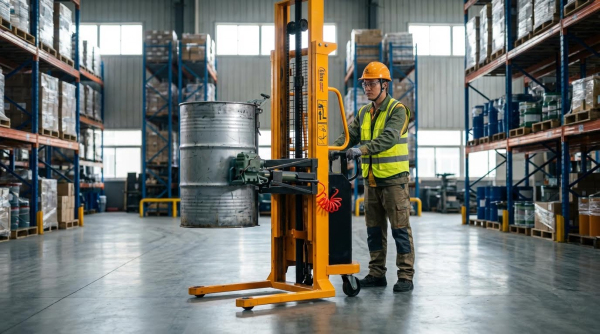
To decide how to use a drum lifter safely, start by matching the lifter’s rated capacity to your heaviest full drum, including contents. Many drum lifters are built to handle typical industrial drums in the 350–400 kg range, so you must confirm the nameplate capacity and never exceed it. Some below‑hook drum handlers can lift up to 454 kg (1000 lb) plastic, steel, or fiber drums safely for factory and dock applications. Where multiple drum sizes are in use, choose lifters with adjustable or “universal” gripping heads that can adapt to different diameters and heights to reduce changeover and wear.
Geometric compatibility is as important as weight. Typical drum lifters cover drums from roughly 200 L steel barrels to larger containers, with equipment widths often around 19–21 in and leg lengths 32–39 in to straddle pallets or drums safely while maintaining stability. You should verify that the drum diameter fits within the clamp or jaw range and that drum height is compatible with the lifter’s minimum and maximum lift stroke. Where tilt or pouring is required, confirm whether the lifter provides 180° tilt or full 360° rotation, as some drum rotators can raise loads up to 600 kg to about 2400 mm and rotate fully for discharge in chemical applications.
Finally, match the lifter design to your layout and duty cycle. Typical turning radii of 1350–1650 mm allow maneuvering in narrow aisles, but you still need enough clearance for safe steering and drum swing during rotation in tight warehouse spaces. Manual lifters suit low‑throughput or occasional handling, while hydraulic or electric lifters reduce operator effort for frequent moves or higher lifting heights. In all cases, the chosen lifter must match the drum material (steel, plastic, or fiber) and rim profile so the gripping system can lock securely without crushing or slipping.
Step‑by‑step safe operating procedure
If you want to know how to use a barrel lifter in a repeatable, safe way, standardize a simple operating sequence. Before each use, carry out a visual inspection of key components such as clamps, jaws, chains, hydraulic cylinders, wheels, and safety latches, and remove any damaged unit from service until repaired to prevent failure under load. Only trained operators should use the lifter, and they must wear suitable PPE, including safety boots, gloves, and high‑visibility clothing, plus eye and head protection where splashes or impact are possible in drum filling or decanting areas.
Next, prepare the route and drum. Clear the travel path of debris, spills, and tight obstacles that could destabilize the load, and confirm floor capacity where heavy drums will pass to avoid tipping or structural damage. Approach the drum squarely with the lifter, center the mast or gripping head on the drum’s vertical axis, and adjust leg position so the load sits within the wheelbase. Engage the clamp or jaws around the drum’s rim or body, then test‑lift a few centimeters to confirm that the drum is secure and not leaning or slipping before raising to transport height.
During travel, keep the drum as low as practical, usually just clear of the floor, to minimize overturning moments and improve stability especially with full or high‑center‑of‑gravity drums. Move at walking speed, avoid sudden braking or sharp turns, and maintain clear sightlines. For tilting or pouring, position the lifter on level ground, set any wheel brakes, and rotate the drum slowly, using mechanical or powered controls to avoid shock loads on the clamp. After placement or emptying, return the drum to vertical, lower it fully until it bears on a firm surface, release the clamp, and then back the lifter away before turning. For powered units, ensure emergency stops and controls are within easy reach of the operator’s normal position in line with hoist and drum‑handling safety rules.
Maintenance, lifespan, and predictive monitoring
Knowing how to use a drum dolly efficiently also means maintaining it to preserve capacity and safety margins. Routine maintenance tasks include checking battery water levels, inspecting tire and wheel condition, and lubricating steering joints and pivot points at defined intervals to minimize wear and steering effort. Hydraulic systems typically need servicing after about 600 operating hours, which often includes fluid checks, hose inspection, and seal replacement to prevent leaks and loss of lifting force under repeated load cycles. With such periodic maintenance, many drum lifters can deliver around 20,000 operating hours, while neglected units may see service life cut roughly in half due to accelerated component fatigue.
Storage and inspection practices also affect long‑term reliability. When equipment will stand idle, clean off dirt and residues, lubricate moving parts, protect gripping arms, and remove batteries for periodic recharging, then store the lifter in a dry, frost‑free area to limit corrosion and seal damage especially on structural welds and hydraulic fittings. Even in storage, schedule regular inspections to identify rust, loose fasteners, damaged wheels, or degraded hoses early, correcting defects before the next production run to avoid in‑service failures.
For larger fleets or high‑utilization operations, predictive maintenance adds another layer of control. By logging operating hours, repairs, and component replacements, you can calculate metrics like Mean Time Between Failures and Mean Time To Repair and use them to optimize maintenance intervals and spare‑parts stock levels for drum handling equipment. Statistical or machine‑learning tools can then flag lifters that are trending toward failure, allowing you to schedule repairs during planned downtime rather than reacting to breakdowns on the shop floor and supporting safer, more predictable drum handling.
Selecting The Right Drum Lifter For Your Facility
Comparing manual, hydraulic, and electric options
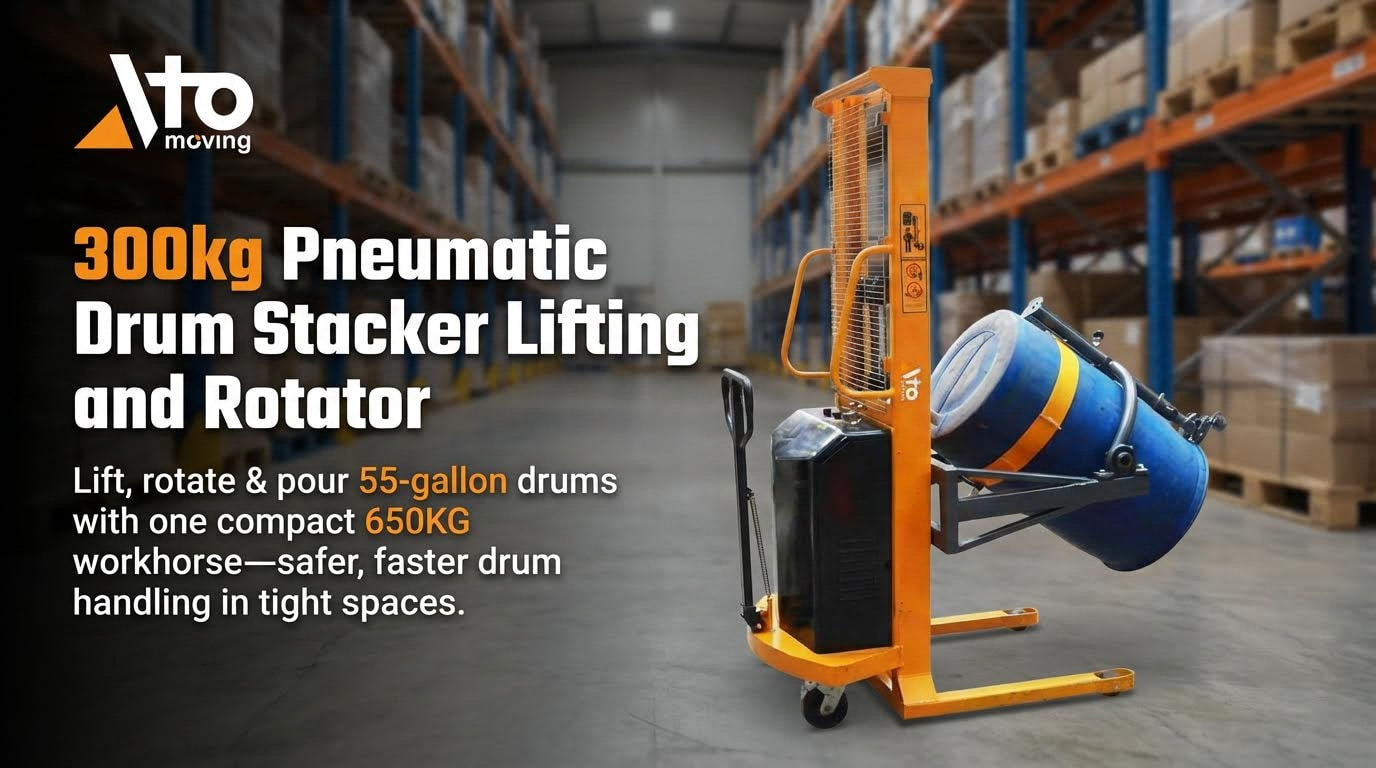
When planning how to use a drum stacker efficiently, start by matching the power type to your load profile, shift pattern, and operator capability. Manual lifters rely on physical effort, so they suit low-throughput areas, lighter drums, and short travel distances. Hydraulic units reduce effort through a pump system and are a good middle ground for small to medium operations, but still require some manual input for pumping or positioning. Electric models use a battery‑powered motor to lift and travel, which minimizes strain and supports higher cycle rates and heavier drums, with typical lifting capacities from about 50 kg up to 450 kg for many drum stackers depending on the model.
- Manual lifters: Lowest purchase cost and simplest maintenance. Best for occasional handling of standard 200‑liter drums where operators can safely provide the required force.
- Hydraulic lifters: Offer higher capacities and better control, and some versions can tilt drums up to 180° for decanting in manual drum stackers. They suit mixed tasks like loading pallets, lining up drums in racking, or feeding process vessels.
- Electric lifters: Ideal where you move drums continuously or over longer distances, and where you need frequent lifting to higher levels. Electric units can rotate drums up to 360° for complete emptying and typically use traction batteries such as 12/80×2 V/Ah packs to power the motor in modern drum stackers.
To choose between them, consider total cost over the life of the equipment, not just the purchase price. Electric units cost more upfront but can cut labor and improve ergonomics when a single operator must handle many drums per shift because one person can operate manual, semi‑electric, or fully electric drum stackers. Manual or basic hydraulic designs remain cost‑effective where volumes are low and travel paths are short. In all cases, verify that the chosen lifter is compatible with your drum materials (steel, plastic, or fiber) and dimensions, since typical handled drums range from about 200‑liter barrels up to larger formats in steel or plastic HDPE.
Layout, turning radius, and aisle optimization
Facility layout strongly influences how to use a drum lifter safely and which design will work in your aisles. Drum stackers and mobile handlers usually have an overall width around 19–21 inches and leg lengths of about 32–39 inches depending on the model, so they can navigate narrower spaces than many pallet trucks, but they still need room to turn with a loaded drum. Typical turning radius values fall in the 1350–1650 mm range for common drum stackers, which you must compare with your aisle width, column spacing, and door openings.
| Layout factor | What to check | Impact on lifter choice |
|---|---|---|
| Aisle width | Clear width minus racking, pipes, or guards | Must exceed equipment width plus turning radius allowance |
| Turning points | Junctions, doorways, and corners | May require compact chassis or shorter leg length |
| Lift height | Required stacking or discharge height | Drives selection of mast height and model type |
Walk the actual travel route from drum storage to filling, processing, or loading points and remove obstructions before deciding on equipment. Clean, unobstructed pathways reduce the risk of tipping or impact, especially when moving full drums because debris and tight corners can destabilize the load. In very tight layouts, consider solutions such as below‑hook drum handlers or compact mobile drum handlers that can lift standard 55‑gallon drums and operate in confined areas like docks and marine environments using secure rim‑grip jaws. Aligning lifter dimensions, turning radius, and travel paths at the design stage leads to smoother traffic flow and safer day‑to‑day operation.
“”
Final Thoughts On Effective Drum Lifter Use
Effective drum handling depends on how well you match equipment capability to real process demands. Geometry, load rating, and layout are not abstract design data. They decide whether a full drum stays stable during lift, rotation, and travel. When engineers size lifters correctly and check clamp fit, they keep the drum’s center of gravity inside a safe base and prevent side loads that crack welds or topple frames.
Safe operation then protects that design margin. Standardized checks, slow controlled motions, and low travel height keep dynamic forces within the limits the lifter was built for. In parallel, structured maintenance and predictive monitoring keep hydraulic and structural performance close to “as‑new,” so rated capacity remains valid over the full service life.
The practical best practice is clear. Start with a layout and drum survey, select lifters that fit your heaviest drum, tightest aisle, and highest discharge point, and then lock in training and inspection routines. Treat every change in product, drum type, or route as an engineering review point. With this discipline, tools such as Atomoving drum lifters can move heavy, hazardous, or high‑value liquids with high uptime, low injury risk, and predictable handling quality shift after shift.
Frequently Asked Questions
How Does a Drum Lifter Work?
A drum lifter is a specialized piece of material handling equipment designed to lift and move heavy drums safely. It typically uses a clamping mechanism to grip the drum securely. The operator positions the lifter around the drum, engages the clamp, and then uses a hydraulic or mechanical system to lift it. Always ensure the drum is balanced before moving. For more details on safe operation, check out this Drum Lifter Safety Guide.
What Safety Precautions Should Be Followed When Using a Drum Lifter?
When using a drum lifter, safety is critical. First, inspect the equipment for any visible damage or wear. Ensure the clamping mechanism is functioning properly. Never exceed the drum lifter’s weight capacity, which is usually marked on the equipment. Always wear appropriate PPE (personal protective equipment) like gloves and safety shoes. Lastly, move the drum slowly and avoid sudden movements to maintain balance. Refer to Material Handling Safety Tips for additional guidance.
What Are the Common Types of Drum Lifters?
There are several types of drum lifters used in warehouses and industrial settings. The most common include manual drum lifters, hydraulic drum lifters, and pneumatic drum lifters. Manual lifters rely on physical effort, while hydraulic and pneumatic models use fluid or air pressure for lifting. Each type has its own advantages depending on the application. For an overview of different models, see this Types of Drum Lifters Guide.