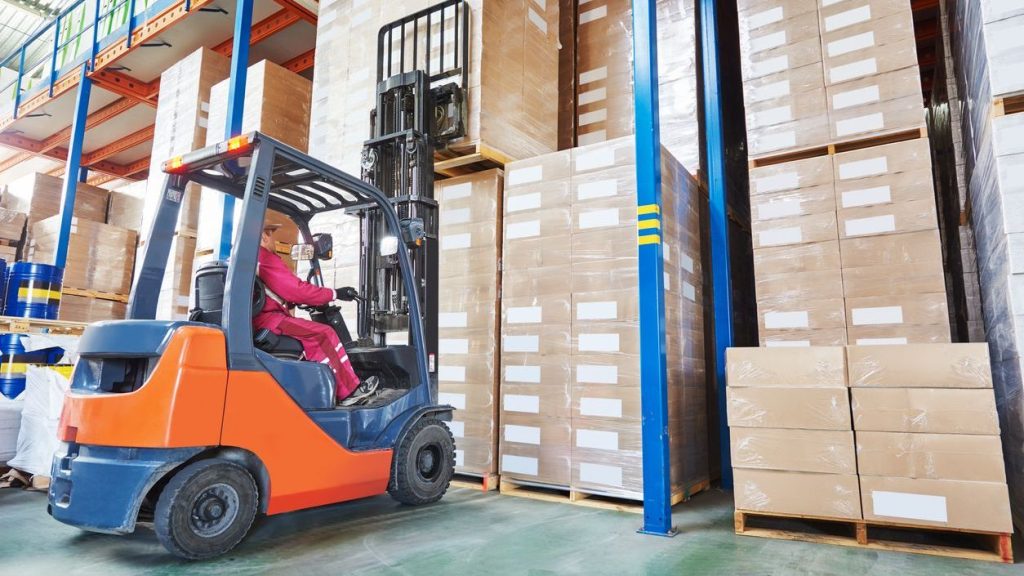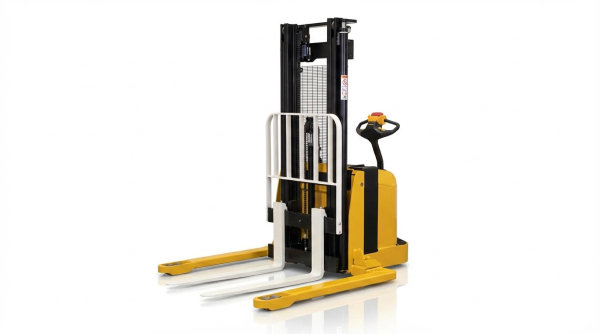
Electric stackers transformed indoor material handling by combining powered lifting, stacking, and short-distance transport in one compact unit. Modern designs balanced high-torque electric drive systems, ergonomic controls, and advanced safety features to operate efficiently in narrow aisles and dense storage layouts.
This article examined their core functions and design, safe operating practices, and compliance requirements in regulated warehouse environments. It then explored maintenance structures, reliability drivers, and emerging technologies such as regenerative energy recovery and digital monitoring. Finally, it provided a practical framework for selecting and managing lift stacker that align with throughput, safety, and lifecycle cost targets in contemporary warehouse operations.
Core Functions And Design Of Electric Stackers
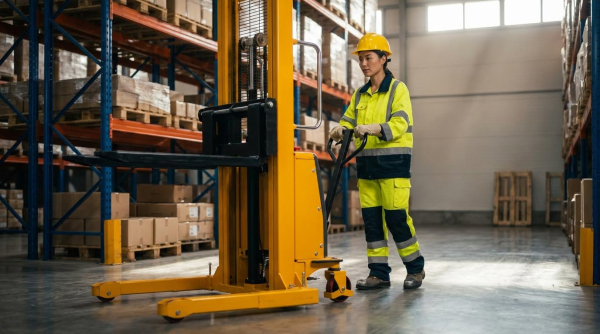
Electric stackers served as compact, powered material handling units that lifted, stacked, and transported palletized loads in confined warehouse spaces. Their design combined vertical lifting capability with short-distance horizontal travel, which reduced manual handling and improved throughput in storage and order-picking operations.
Definition And Role In Material Handling
An electric stacker was a battery-powered industrial truck designed to lift and stack loads on racking or staging areas. It bridged the gap between manual pallet trucks and full-size forklifts, especially in narrow aisles and light-to-medium duty applications. Warehouses, cold stores, and manufacturing plants used stackers for pallet put-away, retrieval, and line feeding where turning space and floor loading limits constrained forklift use. By mechanizing vertical handling, electric stackers reduced operator strain and supported higher storage densities with controlled lift heights.
Key Components And Drive Systems
Typical electric stackers integrated a chassis with drive unit, mast assembly, fork carriage, hydraulic system, and battery-electric control system. High-torque 24 V DC traction and lift motors provided propulsion and lifting force, governed by electronic controllers that enabled stepless speed regulation and precise positioning. Hydraulic power units converted electrical energy into oil pressure for smooth mast extension, fork lifting, and controlled lowering. Ergonomic tiller or multifunction handles housed throttle, lift/lower, horn, and emergency reverse controls, while electromagnetic brakes and emergency power disconnects ensured fail-safe stopping and parking. Compact layouts, low ground clearances, and high-visibility masts supported maneuvering in tight aisles without sacrificing operator sightlines.
Typical Capacities, Lift Heights, And Dimensions
Electric stackers typically handled rated capacities from about 450 kg to 1 800 kg, aligned with common palletized load ranges. Lift heights varied widely by mast design, from roughly 2 500 mm for low-level applications up to about 4 800 mm or more for higher racking, with hydraulic oil volumes scaled to mast stroke. Travel speeds under rated load generally fell between 5 and 6 km/h, suitable for pedestrian-controlled operation in busy warehouse aisles. Overall widths around 800–1 000 mm and optimized turning radii near 1 400–2 000 mm allowed operation in aisles narrower than those required for sit-down forklifts. Fork lengths near 1 150 mm and adjustable fork spreads accommodated standardized pallets while maintaining adequate residual capacity at maximum lift.
Comparison With Forklifts And Manual Stackers
Compared with ride-on forklifts, electric stackers offered smaller footprints, lower purchase costs, and reduced aisle width requirements, but carried lower capacities and shorter duty cycles. Their counterbalanced or straddle configurations enabled work in tight storage zones where conventional forklifts could not turn without wider aisles. Relative to manual stackers and pallet jacks, electric units reduced operator effort, supported higher lift heights, and maintained more consistent performance over shifts, particularly with heavy or repetitive lifting tasks. However, they required structured battery maintenance, electrical diagnostics, and compliance with powered industrial truck regulations. In practice, facilities often combined forklifts for long-haul and yard work with electric stackers for in-aisle stacking and point-of-use material delivery.
Safe Operation And Regulatory Compliance
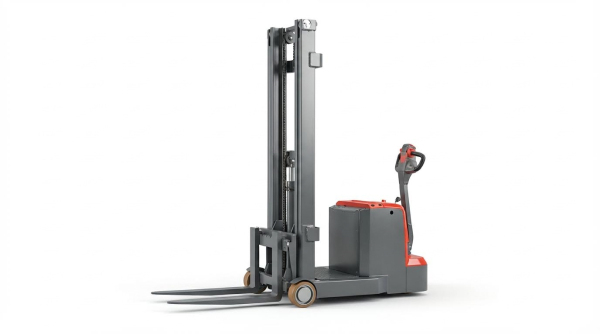
Safe operation of electric stackers relied on disciplined procedures, trained operators, and strict adherence to regulations. Warehouses that enforced structured rules reduced incidents, extended equipment life, and improved throughput. Safety practices covered people, machines, and the work environment as an integrated system.
Operator Training, PPE, And Access Control
Only trained and authorized personnel were allowed to operate lift stackers. Formal training covered driving, load handling, hazard recognition, and emergency response, aligned with local occupational safety regulations. Operators wore protective footwear with reinforced toes, high-visibility clothing, and other PPE defined by site risk assessments. Facilities implemented access control so untrained workers could not start or move stackers, often using keys, badges, or PIN-based systems. Policies strictly prohibited operation under the influence of alcohol, drugs, or fatigue-inducing medication.
Pre-Operation Checks And Driving Best Practices
Operators performed a walk-around inspection before each shift. They checked visible structural damage, mast condition, forks, wheels, hydraulic hoses, and guards. They verified control functions, horn, brakes, safety interlocks, and emergency stop, and ensured the battery charge was adequate for the planned shift. During driving, operators kept forks or load low, typically 100–200 mm above the floor when traveling unloaded. They avoided high speeds, sharp turns, and sudden braking, especially with elevated loads or in congested areas. Safe distances to pedestrians and other vehicles were maintained, and speeds were reduced in narrow aisles, intersections, and blind spots.
Load Handling, Stability, And Slope Operation Rules
Safe load handling started with respecting the rated capacity at the specified load center. Operators centered pallets on both forks, avoided single-fork lifting, and ensured loads were stable, wrapped, or contained. Small items were placed in containers to prevent falling, and large loads that blocked visibility required a guide person. During transport, the mast tilted slightly back and the load height typically stayed around 300–400 mm to keep the combined center of gravity inside the stability triangle. On slopes steeper than approximately 7°, operators traveled uphill with the load facing uphill and reversed downhill, without turning or braking sharply on the incline. No person was allowed within roughly 1 m of the forks during lifting or lowering to avoid crush and impact hazards.
Parking, Charging, And Lockout Procedures
Safe parking required lowering forks fully to the floor, placing the controls in neutral, and cutting power. On slopes above about 5°, operators did not park unless they blocked wheels, applied the parking brake, and isolated the electrical circuit. Charging procedures followed battery manufacturer instructions and site electrical safety rules. Operators used compatible chargers, avoided deep discharge, and turned off charging power before disconnecting plugs. During maintenance or when a fault occurred, technicians applied lockout procedures by disconnecting the main power supply and securing it against reconnection. They reported abnormal noises, vibrations, or performance changes immediately so maintenance could correct issues before they caused accidents or major failures.
Maintenance, Reliability, And Technology Trends
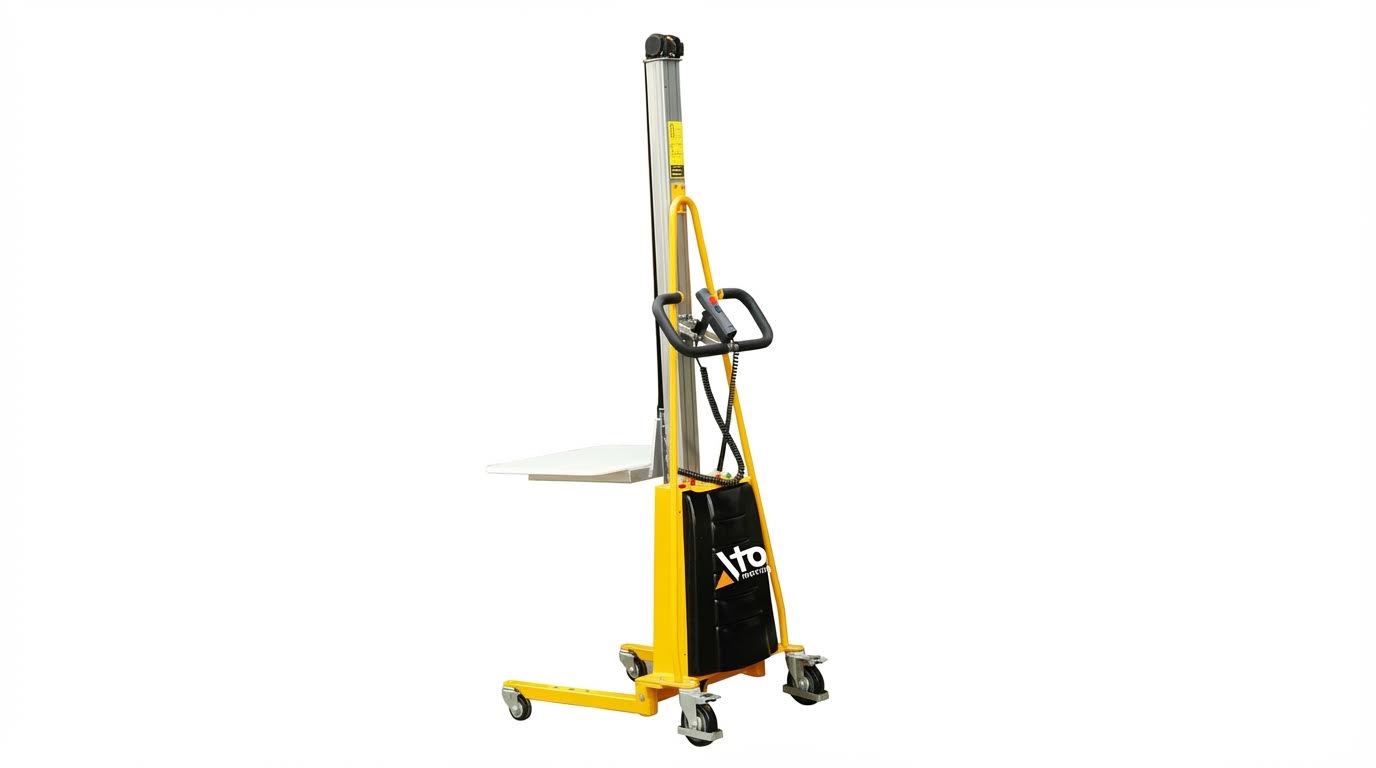
Electric stackers relied on structured maintenance to deliver predictable performance, low lifecycle cost, and regulatory compliance. Maintenance practices covered routine inspections, scheduled component service, and condition-based interventions driven by data from electronic controllers. Reliability engineering focused on brake systems, hydraulic integrity, traction components, and battery health, because these subsystems dominated downtime statistics. Recent technology trends integrated energy-efficient drives, regenerative braking, and digital monitoring to extend service intervals and stabilize operating costs.
Structured Daily To Quarterly Maintenance Tasks
Daily tasks targeted safety-critical checks and fast-wearing elements. Technicians verified hydraulic oil levels with forks fully lowered and confirmed that visible hoses, mast chains, and forks showed no cracks or deformation. They inspected wheels and tires for cuts or flat spots, confirmed horn and emergency stop function, and checked battery state of charge before shift start. Weekly work typically included brake function tests, tiller response checks, and verification of brake clearance in the specified 0.2–0.8 mm range.
Monthly maintenance expanded the scope to structural and fastening integrity. Personnel inspected chassis welds, mast connections, and fasteners for looseness or fatigue indicators and retorqued as required. They reviewed the full steering system, verified parking brake holding capability on defined test slopes, and confirmed the accuracy of any load indication or safety interlock devices. Quarterly tasks repeated monthly checks but added deeper inspection of contactors, carbon brushes, and commutators, often including light resurfacing of pitted contacts.
Quarterly intervals also suited systematic lubrication and alignment activities. Technicians lubricated mast rollers, pivot points, and chain runs using manufacturer-approved greases to minimize friction and wear. They inspected alignment of forks and mast rails, since misalignment increased chain loads and could accelerate seal damage in the lift cylinder. Maintenance plans often used checklists tied to operating hours instead of calendar time, improving alignment between service frequency and actual utilization. Documented records from these cycles supported warranty claims and internal safety audits.
Hydraulic, Electrical, And Battery Care Essentials
Hydraulic care focused on fluid level, cleanliness, and leak prevention. Technicians checked oil levels with the mast fully lowered and used the specified volume for the installed lift height, typically in the 5–6 L range for 2.5–3.5 m masts. They inspected cylinders, fittings, and hoses for sweating, drips, or abrasion and replaced damaged hoses immediately to prevent burst failures. Filter elements and breather caps required periodic cleaning or replacement to limit particulate ingress and cavitation risk.
Electrical systems required systematic inspection because controller or wiring faults could immobilize the stacker. Maintenance personnel checked the main disconnect, key switch, fuses, and contactors for secure connections, discoloration, or pitting. They verified that micro switches on tillers and safety reversers actuated consistently and that wiring harnesses showed no crushed insulation or exposed conductors. Functional tests validated that all alarms, lights, and electromagnetic brakes operated correctly before returning the unit to service.
Battery care strongly influenced runtime and asset life. Electric stackers typically used 12–24 V lead-acid traction batteries with capacities up to roughly 210 Ah, which required adherence to charge regimes. Operators avoided deep discharge and initiated charging before voltage dropped below recommended thresholds to prevent sulfation. Maintenance staff checked electrolyte levels, cleaned terminals, and removed corrosion, ensuring tight, oxidation-free connectors. Storage in cool, dry areas and full charge before extended idle periods helped preserve capacity and reduce replacement frequency.
Troubleshooting Common Faults And Failures
Structured troubleshooting began with basic power and interlock checks. When a stacker would not start, technicians verified main disconnect position, fuse continuity, and key switch operation before suspecting controller failure. Low or unstable lift performance often indicated low battery voltage, insufficient hydraulic oil, or internal leakage in the lift valve or cylinder seals. Uneven or jerky mast motion pointed toward air in the hydraulic circuit or contaminated fluid.
Drive anomalies required careful observation of symptoms. Loss of traction or intermittent movement often traced to worn contactors, damaged throttle potentiometers, or loose motor connections. Overheating of the drive motor or controller suggested excessive load, dragging brakes, or blocked ventilation paths. Brake performance issues, such as extended stopping distance, could result from incorrect brake clearance, worn friction surfaces, or failed electromagnetic brake coils.
Technicians prioritized safety when investigating faults. Before working on electrical or hydraulic subsystems, they isolated the stacker by switching off the main power and removing the key. In the event of suspected controller malfunction, they disconnected the main battery leads to prevent unintended movement. Diagnostic procedures combined visual inspection, multimeter tests, and, where available, error codes from the controller display. Documenting root causes and corrective actions helped refine preventive maintenance schedules and reduce repeat failures.
Energy Efficiency, Regeneration, And Digital Upgrades
Energy efficiency in electric stackers depended on motor technology, drive algorithms, and operator behavior. High-torque DC or AC traction motors paired with electronic controllers allowed stepless speed regulation, which reduced unnecessary acceleration and braking. Regenerative braking captured kinetic energy during deceleration or downhill travel and returned it to the battery, lowering net energy consumption and reducing mechanical brake wear. Correctly configured regeneration also improved control on slopes by providing predictable deceleration without overheating friction components.
Digital upgrades increasingly supported maintenance and fleet optimization. Modern controllers stored operating hours, error histories, and event logs that maintenance teams used to identify emerging problems before failure. Some systems allowed parameter adjustments, such as acceleration ramps and maximum speed limits, to align performance with site safety policies. Connectivity features enabled remote diagnostics, firmware updates, and integration into warehouse management or fleet management platforms.
These technologies influenced reliability and lifecycle planning. Data from energy usage and alarm histories supported right-sizing of battery capacity and charger infrastructure. Predictive maintenance models, based on motor current, temperature, and duty cycles, allowed planners to schedule component replacements before unplanned downtime. As digitalization progressed, electric stackers became not only lifting devices but also data sources that informed broader warehouse optimization and energy management strategies.
Summary: Selecting And Managing Electric Stackers
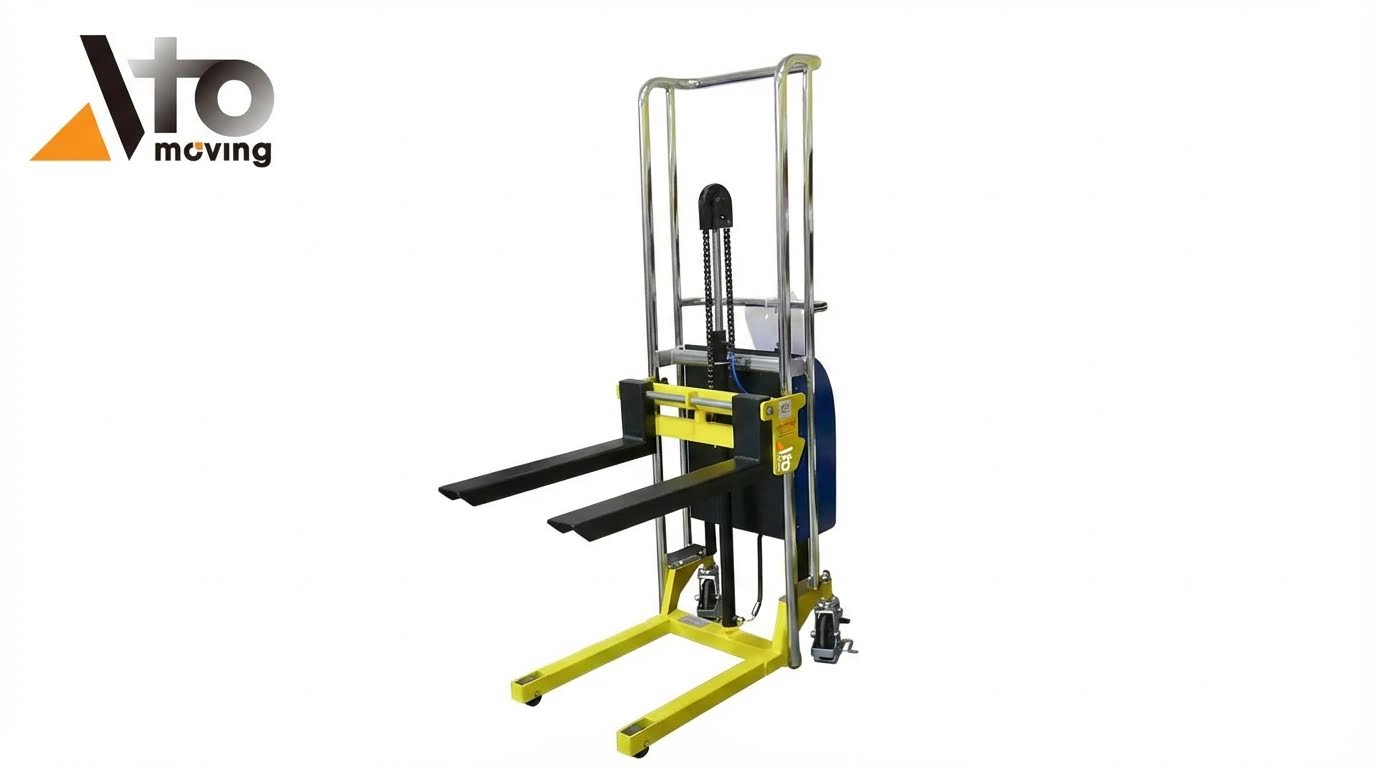
Electric stackers played a central role in modern warehouse and distribution operations by combining lifting, stacking, and short-distance transport in one compact platform. Their typical capacities, lift heights, and narrow-aisle geometries allowed operators to replace or supplement forklifts in indoor applications, especially where space, emissions, or noise constraints existed. Compared with manual stackers, electric units reduced operator fatigue and increased cycle throughput, but required disciplined training, structured maintenance, and robust safety management to deliver their full value.
From a selection perspective, decision makers needed to match rated capacity, maximum lift height, aisle width, and battery system to the specific storage layout, pallet format, and duty cycle. Compliance with operator training requirements, PPE use, and access control policies remained mandatory to keep incident rates low. Operational rules on fork height, speed limits, slope behavior, and exclusion zones around the forks minimized tip‑over and crushing risks, while clear procedures for parking, charging, and lockout preserved equipment integrity and battery life.
Reliability depended on layered maintenance plans that covered daily visual checks, scheduled hydraulic and electrical inspections, and periodic overhauls of brakes, drive components, and batteries. Technology trends such as regenerative braking, higher‑efficiency motors, and more capable electronic controllers improved energy efficiency and reduced wear, while digital diagnostics and maintenance planning tools supported condition‑based servicing. Looking ahead, integration with warehouse management and telematics systems enabled tighter fleet optimization, but also required clear data governance and cybersecurity practices. A balanced strategy combined careful initial selection, rigorous safety culture, and proactive maintenance to keep electric stackers productive, compliant, and cost‑effective over their service life.