Manual empty pallet stacking height decisions must balance OSHA’s no-hazard requirement with fire-code, insurance, and ergonomic limits. This article explains how high empty pallets can be stacked manually without violating OSHA 1910.176(b), NFPA idle-pallet rules, and typical insurer restrictions. It also covers practical safe heights for manual handling, good layout and inspection practices, and how engineered solutions like racks and frames reduce risk. Use these sections as a design and operations guide for setting site-specific stack height limits and procedures.
Regulatory Limits For Empty Pallet Stack Height
Regulations answered the question “how high can empty pallets be stacked manually” in an indirect way. OSHA focused on preventing hazards rather than prescribing a single maximum height. Fire codes and insurance rules introduced specific numeric limits for idle pallet stacks and separation distances. Engineers needed to integrate all three: OSHA, NFPA, and insurer requirements, plus site sprinkler and egress constraints.
OSHA: No Fixed Height, But No-Hazard Requirement
OSHA did not publish a numeric maximum height for manually stacked empty pallets. Under 29 CFR 1910.176(b), employers had to stack materials so they did not slide, collapse, or create struck-by hazards. For manual stacking, this pushed practical limits toward worker shoulder height or lower, typically around 1.2–1.5 m, depending on pallet weight and worker stature. OSHA guidance also expected stable stacking patterns, blocked or interlocked tiers, and height limits consistent with pallet base dimensions and traffic patterns. Inspectors often referenced the stability rule of thumb that free-standing stacks should not exceed roughly three to four times the narrow base dimension, adjusted downward where manual handling or high traffic increased risk.
NFPA And Insurance: 6 Ft, 15 Ft, And Fire Load Limits
NFPA standards treated idle wood pallets as a high fire load because they ignited quickly and produced intense heat. NFPA guidance limited idle pallet stacks to about 4.6 m in height and 37 m² per pile footprint, unless specifically engineered fire protection existed. Insurance carriers typically imposed stricter rules for floor-stacked idle pallets: a maximum height of about 1.8 m for wood pallets, grouped in fours with at least 2.4 m between groups. Above 1.8 m, insurers often required automatic sprinklers designed for the pallet commodity class and sometimes prohibited large accumulations of idle pallets indoors. For manual stacking, these fire-driven limits usually controlled before any structural or ergonomic limit became critical.
Sprinkler Clearances And Egress Requirements
Sprinkler system rules strongly influenced how high empty pallets could be stacked manually inside buildings. Codes and OSHA guidance required at least 450 mm of vertical clearance between the top of stored materials and sprinkler deflectors, and facility-specific design documents sometimes required more. Designers had to check that manual pallet stacks stayed below the hydraulically calculated storage height for the installed sprinkler density and response type. Stacks also could not project into exit routes or reduce egress width below code-minimum clearances, typically 810–910 mm for industrial aisles, or obstruct access to fire extinguishers and electrical panels. As a result, the allowable manual stack height often depended on ceiling height, sprinkler layout, and aisle design, not just pallet stability.
When To Consult Fire Marshals And Insurers
Facilities needed to consult local fire marshals and insurers whenever they changed pallet quantities, storage locations, or stack heights. This was critical if idle pallet stacks approached or exceeded 1.8 m indoors, or if engineers planned to store pallets under mezzanines, near high-rack storage, or in unsprinklered areas. Fire authorities verified compliance with adopted NFPA codes, local amendments, and any special occupancy conditions such as high-piled combustible storage classifications. Insurers evaluated overall fire load, business interruption exposure, and may required engineered solutions like dedicated pallet yards, barriers, or upgraded sprinklers. For engineers answering “how high can empty pallets be stacked manually,” formal consultation ensured that site-specific fire protection and underwriting criteria aligned with OSHA’s no-hazard requirement and prevented costly retrofits or citations.
Safe Manual Stacking Heights And Ergonomics
Manual stacking of empty pallets must respect both regulatory constraints and human lifting limits. The key question “how high can empty pallets be stacked manually” depends on ergonomics, stack stability, and fire protection rules. Engineers should define conservative working heights, then validate them against OSHA’s no-hazard requirement and local fire codes. The following subsections focus on practical manual limits, team handling, and stability ratios that control tipping risk.
Practical Manual Limits: 4–6 Ft For Empty Pallets
For manual handling, most facilities treated 4–6 feet as the safe working band for empty pallet stacks. This range kept the top pallet at or below typical shoulder to eye height for an average worker, which reduced awkward overhead reaches. Insurance and fire guidance often limited floor-stacked idle wood pallets to 1.8 meters, with additional sprinkler protection required above that level. Within 4–6 feet, workers could usually place and remove pallets without stepping onto stacks or using unstable makeshift platforms. Engineers should set site-specific limits using worker anthropometrics, pallet mass, and task frequency, then document them in written procedures and training.
Team Lifting, OSHA Guidelines, And PPE Use
OSHA did not publish a fixed weight limit per person but required employers to control manual handling hazards. Many ergonomics programs treated 23 kilograms as a typical upper guideline for individual lifts under ideal conditions, then reduced that value for twisting, reaching, or high-frequency tasks. Empty wood pallets often weighed 15–25 kilograms, so team lifting became important when workers stacked above waist height or handled heavier specialty pallets. Facilities that asked “how high can empty pallets be stacked manually” usually paired height limits with rules that any stacking above chest height required two-person handling. Workers wore gloves with good grip, safety shoes or boots, and avoided climbing on stacks, which significantly reduced crush and pinch injuries.
Stability Ratios, Base Width, And Tipping Risk
Stack height also had to satisfy basic stability criteria, independent of worker capability. A common engineering rule limited free-standing stacks to roughly three to four times their smallest base dimension, assuming level floors and uniform pallets. For a 1 200 millimeter by 1 000 millimeter pallet, this implied a maximum theoretical stack height of about 3.0–4.0 meters, but manual-handling programs usually chose much lower limits to maintain a margin against impact and misalignment. Empty pallets interlocked reasonably well, yet gaps, broken deck boards, or mixed sizes increased the risk of lean and sudden collapse. To keep manually handled stacks stable, engineers specified flat floors, uniform pallet sizes per stack, visual height markers, and periodic inspections, then aligned those controls with OSHA’s requirement that stored material not create sliding or collapse hazards.
Best Practices For Stacking, Layout, And Inspection
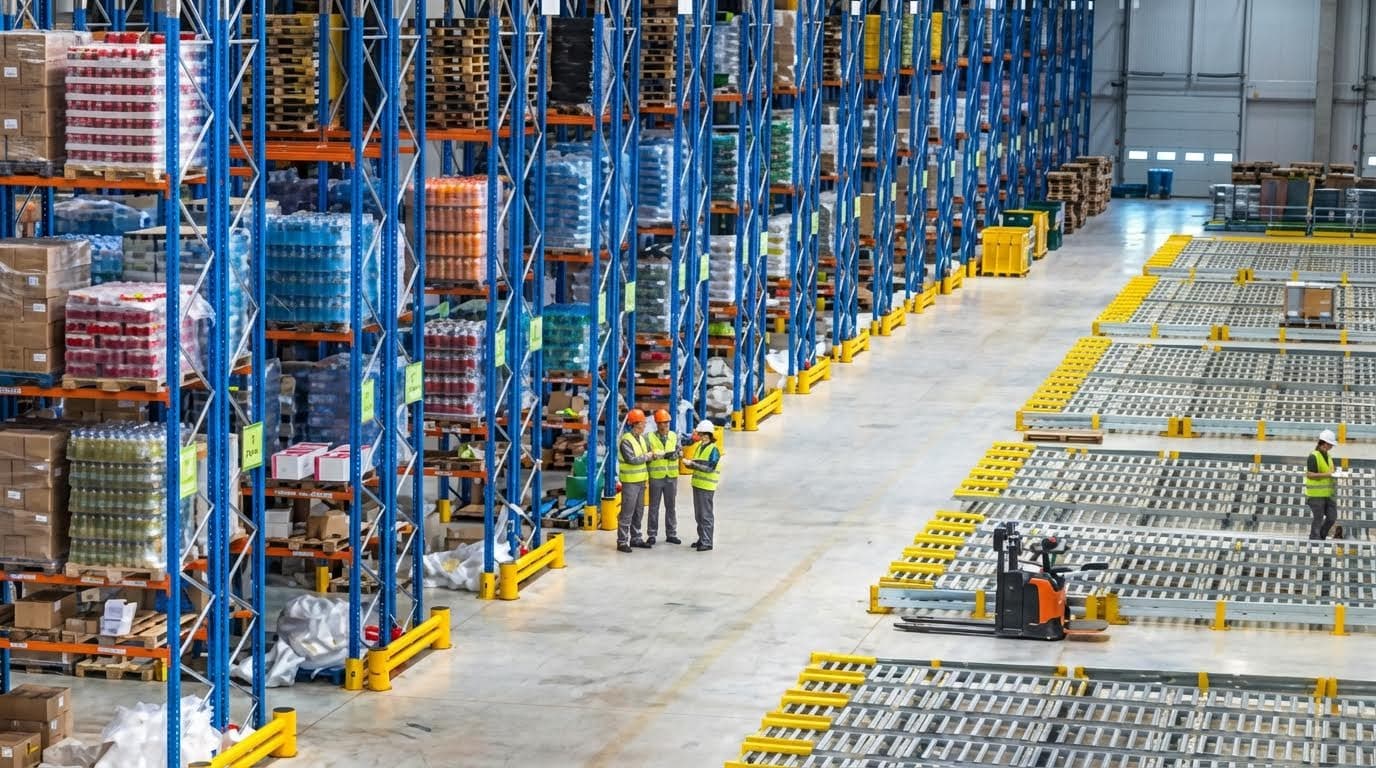
Engineering best practices for empty pallet storage focus on stability, fire safety, and manual handling limits. Facilities must answer a core question: how high can empty pallets be stacked manually while staying within OSHA’s no-hazard rule and fire-code constraints. The following subsections outline floor conditions, stack layout, inspection routines, and engineered solutions that keep manual pallet stacking both compliant and efficient.
Flat Surfaces, Like-Sized Pallets, And Even Stacks
Empty pallets should sit on flat, rigid floors with no rocking or localized subsidence. Irregular floors amplify tipping risk as stack height increases, especially above 1.5–1.8 m. Use only like-sized pallets in each stack so edge bearing and contact areas align consistently. Mismatched footprints introduce point loading and lean, which reduces the safe manual stacking height.
Stacks must remain plumb in both directions, with stringers and deckboards aligned vertically. Workers should correct any visible lean immediately instead of adding more pallets on top. For manual stacking, supervisors should define a conservative limit, often 1.2–1.8 m for floor stacks, based on pallet mass, base footprint, and traffic conditions. Visual height markers on columns or walls help operators judge when a stack has reached the approved limit.
Grouping Stacks, Aisle Clearances, And Traffic Zones
Facilities that store idle pallets on the floor should group stacks in controlled blocks rather than scattering them. A common risk-based practice keeps individual stacks within 4–6 ft when handled manually, then spaces groups of up to four stacks at least 2.4 m apart to reduce fire spread and allow equipment access. Aisles must remain wide enough for pedestrians and material handling equipment without brushing stacks; many warehouses target at least 2.4–3.0 m main aisles.
Locate pallet stacks outside high-traffic corners, blind intersections, and dock approaches where impact probability is higher. Mark pallet storage zones with floor paint or embedded striping and keep them clear of exit routes and fire equipment. Maintain the 450 mm minimum vertical clearance to sprinklers and additional clearance around electrical panels and emergency equipment per applicable codes. Where traffic density is high, consider lower manual stack heights to maintain a larger stability margin.
Damage Inspection, Purging, And Stack Segregation
Before stacking, workers should inspect pallets for broken deckboards, split stringers, missing blocks, exposed nails, or contamination. Damaged units reduce stack stiffness and can fail suddenly under the cumulative weight of a tall pile. Establish a purge criterion, for example rejecting pallets with cracked main stringers, more than one broken top deckboard, or severe warp. Remove these from circulation and send them to repair or scrap streams.
Segregate pallet stacks by size, material, and condition class. Keep repaired or downgraded pallets separate from higher grade units used in automated systems. Segregation simplifies visual checks and reduces the chance of a weak pallet being buried deep inside a tall stack. Implement a periodic inspection schedule, such as weekly walk-throughs, to verify stack plumb, height limits, and absence of damaged pallets in active stacks. Document findings and corrective actions to support OSHA’s General Duty Clause expectations.
Using Racks, Frames, And Atomoving Solutions
Engineered supports such as pallet racks and stacking frames can raise safe storage heights beyond what is acceptable for free-standing manual stacks. Racks with rated beam capacities and adequate anchorage reduce tipping risk and allow tighter footprint usage. Facilities must still maintain sprinkler clearances and comply with relevant rack design standards. For manual handling, lower beam levels should carry the majority of hand-stacked pallets, with higher levels served by mechanical equipment.
Dedicated pallet stacking frames act as vertical guides and limit lean as workers build stacks by hand. These frames can cap maximum stack height physically, which helps enforce rules on how high empty pallets can be stacked manually. Solutions from Atomoving can integrate frames, floor markings, and handling aids into a coordinated layout. Engineers should evaluate load paths, floor capacity, and fire protection when selecting between floor stacks, frames, and racking, then write site-specific procedures that define safe manual stack heights and inspection routines.
Summary And Practical Engineering Takeaways
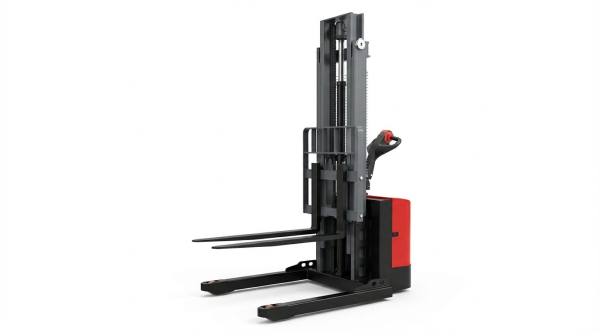
Manual pallet stacker empty pallet stacking height limits depended on a mix of OSHA, NFPA, insurance, and site-specific rules. For the core question “how high can empty pallets be stacked manually,” practical engineering practice converged near 1.2–1.8 meters for hand-stacked floor piles, even when theoretical stability or fire codes allowed more. OSHA 1910.176(b) required that stacks not create a hazard, while NFPA and insurers capped idle pallet stacks at 1.8 meters on floors and 4.6 meters overall, with spacing and sprinkler clearances respected.
From an engineering standpoint, safe manual limits resulted from three constraints: human capability, stack stability, and fire performance. Ergonomic guidance favored keeping frequent hand lifts below shoulder height, which naturally limited empty pallet stacks to roughly 4–6 feet for most workers, often lower for shorter operators. Stability criteria, such as keeping stack height below roughly three to four times the base width and maintaining flat, like-sized, undamaged pallets, set an upper bound even when workers could physically lift higher. Fire engineering then tightened limits further through requirements for 18-inch sprinkler clearance, maximum idle pallet stack areas, and separation between stack groups.
In practice, facilities that wanted to exceed about 1.5 meters manual stack height needed engineered controls: defined layouts, clear aisles, documented procedures, and often a transition to mechanical handling or racking. Future trends pointed toward more quantified approaches: digital height monitoring, standardized pallet condition inspection, and closer integration of insurance and fire-code modeling into warehouse design. Engineers should treat “how high can empty pallets be stacked manually” as a site-specific design variable, not a single number, and document their chosen limits with calculations, risk assessments, and signposted rules. This balanced approach aligned operational efficiency, regulatory compliance, and worker safety. Additionally, integrating tools like a walkie pallet truck or a lift stacker could enhance safety and efficiency in pallet management.