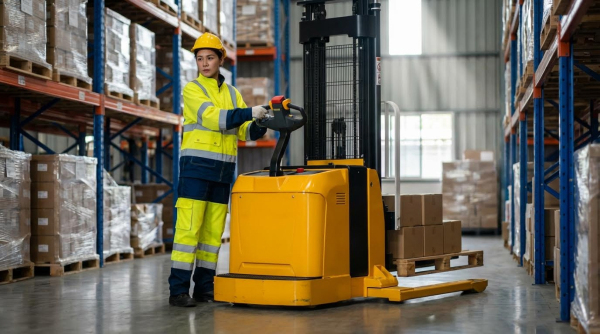
Knowing exactly how to operate a straddle stacker starts long before you touch the controls. Safe work depends on disciplined pre‑operational checks, correct use of the control handle, and strict load‑handling procedures. This guide walks through daily inspections, stability principles, and step‑by‑step operating methods to cut the risk of tip‑overs, collisions, and equipment damage. Use it as a practical framework to build site‑specific checklists, training, and compliance documents for your warehouse or facility.
Understanding Straddle Stackers And Safety Basics

What Makes A Straddle Stacker Unique
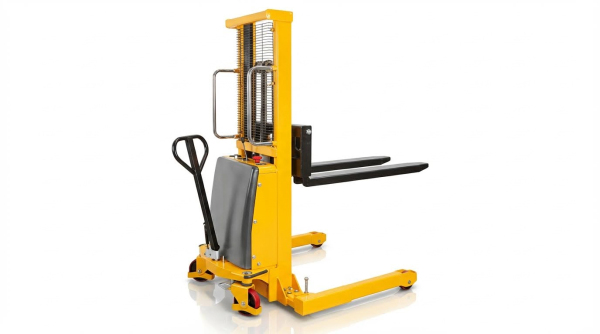
To understand how to operate a straddle stacker safely, you first need to know what makes it different from a manual pallet jack or counterbalance truck. A straddle stacker uses outriggers (straddle legs) that pass around the sides of the pallet instead of under it, and a compact mast for lifting to rack height. This geometry changes how the machine carries weight, turns in aisles, and stays stable under load.
- Straddle legs around the load – Outriggers run on each side of the pallet, improving lateral stability but requiring clear space beside the load.
- Walk‑behind or ride‑on control – Most units use a tiller handle with integrated travel, lift, and lower controls, so the operator walks just ahead or beside the truck.
- Narrow‑aisle capability – The compact chassis and tight turning radius make it suitable for dense warehouse layouts where larger trucks cannot operate.
- Electric drive and lift – Electric traction and hydraulics reduce emissions and noise, but introduce battery, charging, and electrical safety considerations.
Why this matters for safety
The straddle legs can strike pallets, racking, or feet if clearances are misjudged. The walk‑behind position also means the operator is exposed to crush and pinch points at the drive end if safe distances and correct body position are not maintained.
Because of these design features, learning how to operate a straddle stacker focuses heavily on body position, visibility, and understanding how the machine will react as loads are raised, lowered, and turned in tight spaces.
Key Accident Types And Risk Factors
Most serious incidents with straddle stackers fall into a few predictable patterns. Knowing these patterns is the foundation for any safe system when teaching how to operate a straddle stacker.
| Major accident type | Typical causes and risk factors | Key prevention controls |
|---|---|---|
| Tip‑over | Overloading, high or off‑center loads, turning with mast raised, uneven or sloped floors, striking obstacles. Many cases relate to poor understanding of the stability triangle and load moment. Four major accident areas include tip‑over | Respect capacity plate, keep loads low while traveling, avoid sudden turns, maintain good floor conditions, and train operators in stability triangle and load moment principles. Load placement and stability triangle guidance |
| Loss of steering or control | Mechanical defects, poor maintenance, damaged wheels, slippery floors, or operating too fast for conditions. Loss of steering control cited as a main accident area | Daily pre‑use checks on wheels, handle, brakes, and controls; adherence to speed limits; immediate removal from service if steering or braking issues are found. Pre‑operational inspection requirement |
| Falling loads | Poor pallet condition, incorrect fork spacing, forks not fully inserted, unbalanced or loosely stacked goods, sudden braking or turning. Falling loads identified as a primary accident area | Inspect pallets and loads; fully insert forks and spread them as wide as possible; keep the load low and slightly tilted back; lift and drive smoothly. Load handling protocol for forks and lift height |
| Collisions with pedestrians or products | Poor visibility around racking, mixed traffic zones, lack of marked walkways, inattention, or inadequate communication. Collisions listed among four major accident areas | Segregated pedestrian routes, clear signage, good lighting, horn use at intersections, eye contact with pedestrians, and site‑specific traffic rules. Pedestrian awareness and traffic segregation |
| Pinch / crush injuries | Hands, feet, or legs placed near straddle legs, mast, or steering head; standing in the “pinch zone” between the truck and fixed objects. | Clear no‑go zones around the drive end and straddle legs, correct walking position, and training on body placement during travel and stacking. |
These patterns show that accidents rarely come from a single mistake. They usually combine poor pre‑use checks, weak traffic control, and gaps in operator training on stability, load moment, and safe body position. A structured Safe Operating Procedure and formal training program are therefore essential to reduce tip‑overs, falls, and collisions when planning how to operate a straddle stacker in any warehouse. Purpose of SOP and safety controls
Pre‑Operational Checks And Control Familiarization

Pre‑operational checks are the first step in learning how to operate a counterbalanced stacker safely and efficiently. A structured, repeatable inspection reduces failures, prevents accidents, and keeps the machine within its design limits. Use the following checklists before every shift, and always remove the truck from service if you find a critical defect.
Daily Mechanical And Structural Inspection
Carry out this inspection with the power off, key removed, and the forks lowered. Walk around the entire battery-powered stacker and follow a consistent pattern so no item is missed.
| Component / Area | What To Check | Typical Defects To Watch For |
|---|---|---|
| Wheels / Tires | Condition and security | Cuts, flat spots, chunking, excessive wear, loose or missing fasteners Inspection Visual Checkpoints |
| Forks | Integrity and alignment | Cracks, bends, worn heels, damaged tips Inspection Visual Checkpoints |
| Mast & Chains | Structure and guides | Cracks, twists, loose fasteners, damaged or dry chains, missing guards Inspection Visual Checkpoints |
| Lift Cylinder & Hydraulics | Leaks and damage | Oil on cylinder rods, hose abrasion, loose fittings, puddles under truck Hydraulic System Check |
| Handle / Tiller Arm | Physical condition | Cracks, loose hardware, damaged grips, bent arm Pre-Operational Inspection Components |
| Guards & Carriage | Presence and security | Missing bolts, bent guards, cracked welds, misaligned backrest Pre-Operational Inspection Components |
| Warning Labels & Capacity Plate | Legibility | Illegible, painted over, missing, or incorrect plates and decals |
| General Structure | Frame and welds | Cracks, corrosion, bent sections, non‑approved modifications |
- Do not operate the stacker if you find structural cracks, severe hydraulic leaks, or missing safety guards.
- Tag the unit out of service and report defects according to your site procedure.
- Record the inspection on a checklist; documented pre‑use checks are a core part of any safe system of work. Pre-Operational Inspection
How this inspection supports learning how to operate a straddle stacker
Daily mechanical and structural checks teach new operators to “read” the machine. They see how forks, mast, and hydraulics interact, which helps them understand load paths and stability once they start driving and lifting. This is a practical foundation for anyone learning how to operate a electric platform stacker safely.
Verifying Brakes, Hydraulics, And Safety Systems
Once the visual inspection is complete, power up the stacker in a clear area and test all functional safety systems. Perform these checks with no load on the forks.
| System | Test Method | Pass / Fail Criteria |
|---|---|---|
| Service Brake | Travel slowly forward, then apply the brake or neutral/plugging control | Truck stops smoothly in a straight line, no pulling or delay Safety System Verification |
| Parking Brake (if fitted) | Apply brake; attempt to move truck on level floor | Truck remains stationary, control handle feels secure Safety System Verification |
| Hydraulic Lift | Raise and lower forks through full stroke without a load | Movement is smooth, no jerks, no abnormal noises or leaks Hydraulic System Check |
| Tilt / Reach / Side‑shift (if equipped) | Cycle each function both directions | Controls respond correctly, no drift when controls are neutral |
| Horn | Press horn button with power on | Sound is loud and clear, suitable for a noisy warehouse Safety System Verification |
| Warning Lights / Reverse Alarm | Select travel direction; observe lights and listen for alarm | All lights operate; reverse alarm sounds whenever truck backs up Safety System Verification |
| Emergency Stop / Belly Button Switch | Test in a controlled, low‑speed situation | Truck stops immediately or reverses away, according to design |
| Hydraulic Oil Level | Check reservoir sight glass or dipstick with forks lowered | Level within marked range, no milky oil or contamination Hydraulic System Check |
- If any brake, horn, light, or emergency stop fails, do not use the stacker. Remove it from service immediately.
- Never “work around” a failed safety device; this is a major root cause of tip‑overs, collisions, and loss‑of‑control incidents. Four Major Accident Areas
Control familiarization tips for new operators
When learning how to operate a lift stacker, spend extra time with the controls in a no‑load, low‑speed area. Practice: selecting forward and reverse, feathering the travel speed, inching the truck into position, and making small lift and lower corrections. This builds muscle memory before you combine travel and lifting with a real load.
Battery, Charging, And Energy System Checks
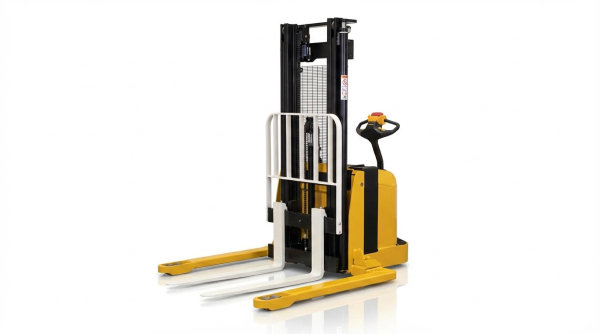
Energy system checks protect both the equipment and the operator. They also prevent mid‑shift failures that can leave a loaded stacker stranded in an aisle.
| Item | Pre‑Use Check | Why It Matters |
|---|---|---|
| Battery Charge / Fuel Level | Verify charge state or fuel gauge before starting work | Reduces risk of stalling with a raised load; part of standard pre‑use inspections Battery and Fuel Inspection |
| Battery Cables & Connectors | Inspect for tightness, corrosion, damaged insulation | Loose or damaged cables can overheat and fail under load Battery and Fuel Inspection |
| Battery Restraints | Confirm hold‑downs and covers are secure | Prevents battery movement, which can damage cables or leak electrolyte |
| Charging Area | Check that charging is done only in the designated zone | Area must be ventilated, clear of ignition sources, and managed by trained staff Charging Procedures |
| Leaks & Spills | Look for acid stains, wet patches, or fuel smells | Indicates battery or fuel system damage that must be fixed before use Inspection Visual Checkpoints |
- Only trained personnel should connect or disconnect batteries and perform charging operations. Charging Procedures
- Do not smoke or create sparks near charging batteries; hydrogen gas can accumulate and ignite.
- Wear appropriate PPE (eye and hand protection) when handling batteries or cleaning up electrolyte.
Link between energy checks and safe operation
Understanding the limits of the battery and recognizing warning signs of low charge are part of knowing how to operate a manual platform stacker responsibly. Low voltage affects lift speed, braking response, and travel performance, all of which influence stability and stopping distances in tight warehouse aisles.
Safe Operating Procedures And Load Handling
Stability Triangle, Load Moment, And Capacity Plate
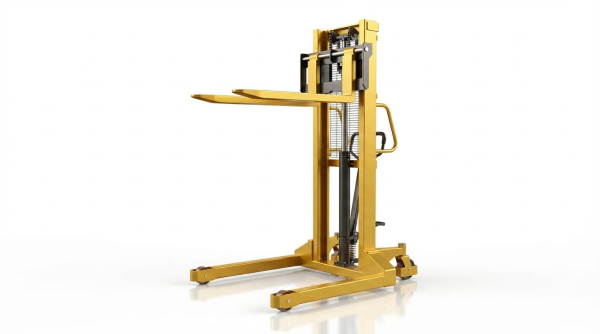
Understanding stability is the foundation of how to operate a straddle stacker safely. The goal is to keep the combined center of gravity of the truck and load inside the stability triangle at all times to prevent tip-over or falling loads. Improper load placement significantly increases tip-over risk. Use the capacity plate as your non‑negotiable limit for weight and load center.
| Concept | What It Means | Operator Action |
|---|---|---|
| Stability triangle | Imaginary triangle between the support points of the stacker | Keep load low, centered, and within the wheelbase |
| Combined center of gravity | Resulting balance point of truck + load | Avoid sudden turns, slopes, or off‑center loads |
| Load moment | Load weight × horizontal distance from mast | Heavier or further‑out loads increase tip risk and reduce stability |
| Capacity plate | Rated capacity at specified load center and lift height | Never exceed listed weight or load center; derate for attachments |
| Load placement | Position of the pallet on the forks and between straddle legs | Place load hard against the backrest, centered between the legs |
- Always read the capacity plate before handling unfamiliar loads.
- Reduce speed and keep loads lower as weight or lift height increases.
- Avoid side‑shifting or sharp steering with the load raised.
- Refuse any load that is unstable, poorly wrapped, or exceeds rated capacity.
Why load moment matters in day‑to‑day work
Load moment grows every time the center of gravity moves away from the mast. Long pallets, overhanging loads, or picking up from only one fork extension all push the center of gravity outward. This can push the combined center of gravity outside the stability triangle even if the weight is below the capacity plate value. Understanding this principle is central to safe, repeatable control when learning how to operate a straddle stacker.
Step‑By‑Step Lifting, Transporting, And Stacking
This section turns theory into a practical routine for how to operate a straddle stacker in daily warehouse work. Follow these steps in order every time you lift, move, and stack a pallet. They assume all pre‑operational checks are complete and the area is clear of hazards.
- Approach and align
- Travel with forks lowered and within the straddle legs’ footprint.
- Stop square to the pallet; center the mast with the pallet opening.
- Ensure the pallet fits between the straddle legs without contact.
- Fork and leg positioning
- Level the forks before entry.
- Adjust fork spread to the widest setting that still fits the pallet openings for maximum stability. Forks should be fully inserted and spread as wide as possible.
- Confirm straddle legs are clear of obstructions and not contacting racking or pallets.
- Inserting the forks
- Move forward slowly until the forks are fully under the pallet deck boards.
- Visually confirm the pallet is seated against the fork heels/backrest.
- Do not lift if forks are only partially inserted or skewed.
- Lifting the load
- Lift the pallet only to the minimum height needed for floor or obstacle clearance, typically a few inches. Raising higher than necessary increases instability.
- If tilt is available, apply a slight backward tilt to stabilize the load.
- Re‑check for loose or damaged pallet boards before moving.
- Transporting the load
- Travel at walking speed or slower, especially with elevated loads.
- Keep the load within the stacker’s footprint and as low as practical.
- Avoid sudden braking, sharp steering inputs, and tight turns.
- Do not travel with the load raised to stacking height.
- Positioning for stacking
- Stop square to the racking or stack; keep the mast centered on the target position.
- Check overhead clearances and height limits in the racking area. Clear height markings help avoid impacts.
- Ensure ground/floor is level and free of debris before lifting to height.
- Raising to stack height
- Raise the load smoothly to just above the target beam or stack level.
- Move forward slowly until the pallet is fully supported on the racking or stack.
- Avoid side‑loading racks or pushing existing loads out of place.
- Depositing the load
- Lower the pallet until its full weight rests on the support surface.
- Ensure the pallet is stable and not overhanging dangerously.
- Back the stacker away slowly until forks are completely clear.
- Lowering and parking
- After unloading, lower forks fully to travel height before moving off.
- When finished, park in a designated area with forks fully lowered, controls off, and parking brake applied.
Common load‑handling errors to avoid
- Lifting with only one fork fully engaged.
- Carrying damaged or visibly unstable pallets.
- Dragging pallets along the floor instead of lifting cleanly.
- Using the stacker to push or pull stuck loads or racking.
Pedestrian Safety, Aisle Layout, And Traffic Rules

Even perfect machine control is not enough if people and traffic are unmanaged. Knowing how to operate a straddle stacker safely includes strict discipline around pedestrians, aisle design, and site rules. Many serious incidents involved collisions with pedestrians, product, or structures. Collisions are one of the four major accident areas for straddle stackers.
- Pedestrian awareness
- Maintain constant eye contact with pedestrians before moving near them.
- Stop if a pedestrian enters your travel path or blind spot.
- Use horn and warning devices at aisle ends, doorways, and intersections. Audible signals are a critical safety system.
- Never assume pedestrians have seen or heard you.
- Aisle and work area layout
- Use clearly marked pedestrian walkways, separated from equipment lanes where possible. Segregated walkways significantly reduce collision risk.
- Maintain clean, obstacle‑free aisles with adequate passage width and lighting. Good floor conditions and organization are key to safe movement.
- Mark turning zones, crossing points, and height limits clearly.
- Traffic rules for stacker operation
- Drive at or below posted speed limits; slow down further in congested areas. Speed control is a core safety measure.
- Give pedestrians absolute right of way.
- Stop and sound the horn at blind corners; proceed only when the path is clear.
- Never overtake another truck in narrow aisles.
- Communication and signage
- Follow all posted signs for load limits, route restrictions, and emergency procedures. Clear signage on load weights and handling instructions improves safety.
- Use agreed hand signals or radios when working with spotters.
- Report damaged signs, floor markings, or mirrors immediately.
Practical behavioral rules for mixed traffic areas
In mixed pedestrian and vehicle areas, operate as if every blind spot is occupied. Reduce speed before every intersection, never cut corners, and avoid reversing long distances. If your view is blocked by the load, use a spotter or reposition the load rather than “driving blind.” These behaviors, combined with good layout and signage, are central to real‑world safe practice when deciding how to operate a straddle stacker in busy warehouses.
Final Safety Considerations And Compliance
Safe straddle stacker operation depends on more than good driving skill. It requires a full system that links equipment condition, operator behavior, and site design. Daily mechanical checks, brake and hydraulic tests, and battery inspections keep the truck within its design limits. These steps cut the risk of sudden failures that can turn a simple maneuver into a major incident.
Stability rules, like the stability triangle and load moment, turn the capacity plate into a hard boundary, not a guideline. When operators keep loads low, centered, and within rated limits, the truck stays predictable, even in tight aisles. Clear traffic rules, marked walkways, and strict pedestrian priority then control the human side of risk.
Operations and engineering teams should lock these principles into written Safe Operating Procedures, checklists, and training plans. Treat pre‑use inspections as mandatory. Audit traffic layouts and update them when storage patterns change. Use Atomoving stackers within their rated envelope and never bypass safety devices.
When you combine sound engineering limits, disciplined checks, and controlled traffic, straddle stackers become reliable, low‑risk tools in dense warehouses. Ignore any one of those pillars, and tip‑overs, collisions, and falling loads become likely, not rare.
Frequently Asked Questions
How to Operate a Straddle Stacker?
A straddle stacker is designed to maneuver pallets in tight spaces within warehouses. To operate one, ensure you understand its controls and follow safety protocols like the “Halo Rule,” which requires maintaining a three-foot distance from the equipment when in use. Warehouse Solutions.
- Inspect the straddle stacker before use, checking for any visible damage or malfunctions.
- Ensure the load capacity aligns with the weight of the pallets being moved.
- Use the lift controls to raise and lower forks as needed, ensuring stability during operation.
What Should You Do Before Using a Straddle Stacker?
Before operating a straddle stacker, perform a preventive maintenance check to ensure the equipment is in safe working condition. This includes inspecting tires, hydraulic systems, and controls. A well-maintained checklist supports operational efficiency and compliance. Preventive Maintenance Guide.
- Verify that all safety features are functional.
- Check battery levels or fuel if applicable.
- Clear the operating area of obstacles to prevent accidents.