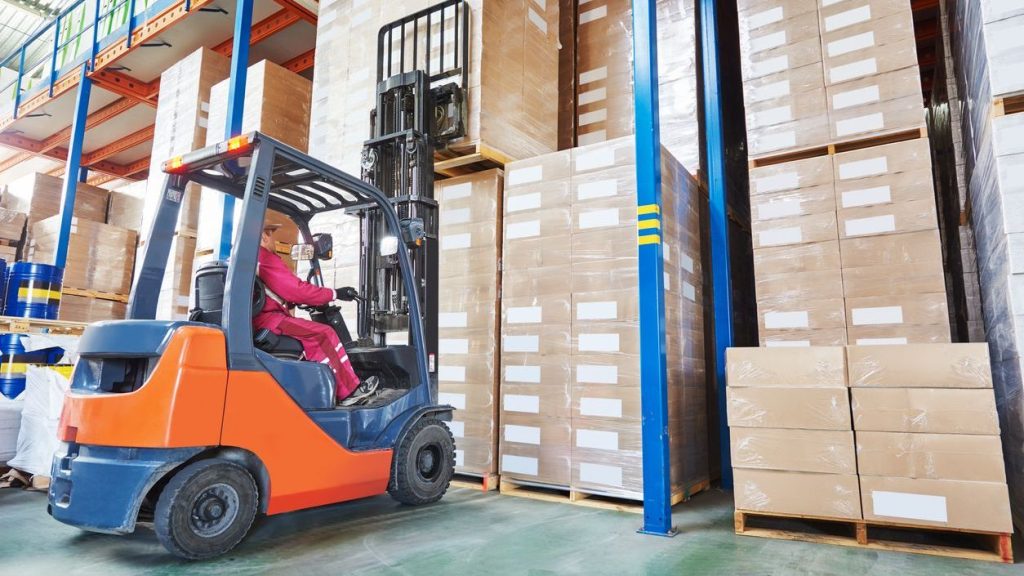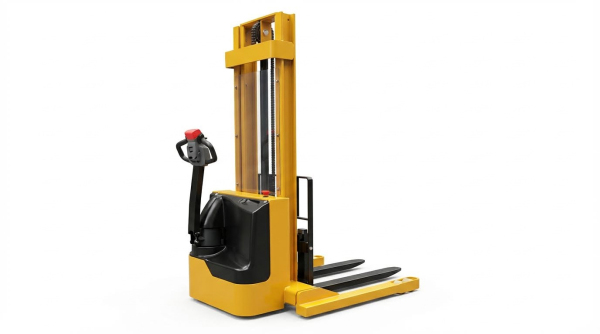
Safe, efficient operation of high-lift walkie stackers starts with how you travel, not just how you lift. This guide explains stability, mast height, visibility, speed control, and real-world warehouse practices so you can reduce tipovers, collisions, and damage when traveling with a counterbalanced stacker.
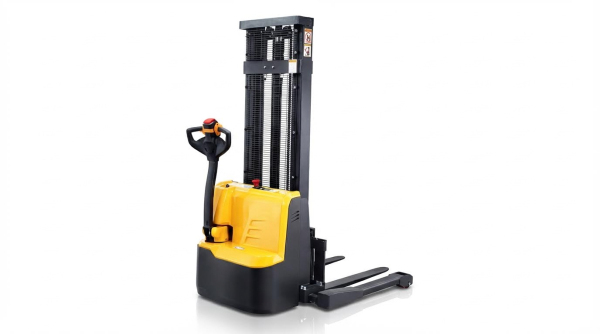
Fundamentals Of Safe High-Lift Walkie Travel

Fundamental safe-travel rules for high-lift walkies focus on keeping the center of gravity inside the stability triangle and the mast/load as low as practical. When traveling with a manual pallet jack, these basics prevent tipovers, lost loads, and collisions.
Stability triangle and load center basics
The stability triangle and load center define how far you can safely lift and move a load before the truck becomes unstable. When traveling with a high lift walkie, understanding this geometry is what keeps the truck and load upright.
| Concept | Typical Value / Description | Operational Impact When Traveling With A High Lift Walkie |
|---|---|---|
| Stability triangle | Three-point base formed by the drive axle and load wheels | Combined center of gravity must stay inside this triangle to avoid tipover during turns, braking, or on ramps. |
| Rated load center | Commonly 500 mm from the fork face for standard pallets | Capacity on the data plate assumes this load center; longer loads or forward tilt effectively reduce safe capacity. |
| Load height and distribution | Uniform, wrapped, and secured load on the pallet | Top-heavy or uneven loads raise the combined center of gravity and increase side-tip risk in turns. |
| Fork engagement | Forks fully under the pallet, spaced to support outer stringers | Partial engagement or narrow fork spread shifts the load center and can bend forks or drop the load. |
| Dynamic forces | Forces from acceleration, braking, and turning | Sudden steering or braking can push the center of gravity outside the triangle, even if the static load is “within capacity.” |
High-lift walkies operate within a three-point stability triangle where the combined center of gravity of truck and load must remain inside the triangle in both static and dynamic conditions. A rated capacity assumes a specific load center, typically 500 mm, with a uniformly distributed, properly secured load. If the actual load center increases due to long pallets, uneven stacking, or forward tilt, the effective capacity decreases and tipover risk rises. Off-center or top-heavy loads greatly increase the chance of side tipover during turns or over uneven surfaces. Operators must keep loads centered on the forks, fully engaged, and as low as possible, and slow before turning to limit lateral forces.
- Center the load: Keep the pallet fully on both forks – prevents side shift of the center of gravity in turns.
- Respect the data plate: Never exceed rated capacity at the specified load center – avoids hidden overloads on the mast and drive unit.
- Flatten unstable stacks: Restack top-heavy or leaning loads – reduces sway and the chance of a pallet collapse while moving.
- Slow before turning: Reduce speed before you steer – limits lateral acceleration that can push the center of gravity outside the triangle.
- Avoid sudden stops: Brake progressively – prevents the load from shifting forward and overloading the front wheels.
💡 Field Engineer’s Note: In practice, most near-tip events I investigated came from “light but long” loads. Operators saw a low weight number and ignored the increased load center. Any time a pallet or crate extends more than 1,000 mm past the fork tips, assume your effective capacity is significantly lower and drive as if you are at the limit.
How to estimate load center in the field
Measure from the fork face (vertical part of the carriage) to the load’s center of mass. For a uniform pallet, this is roughly half the pallet length. For irregular or offset loads, visually judge where most of the mass sits and measure to that point. If that distance is greater than the truck’s rated load center on the data plate, treat the rated capacity as reduced and lower your travel speed.
Mast height, tilt angle, and travel clearance
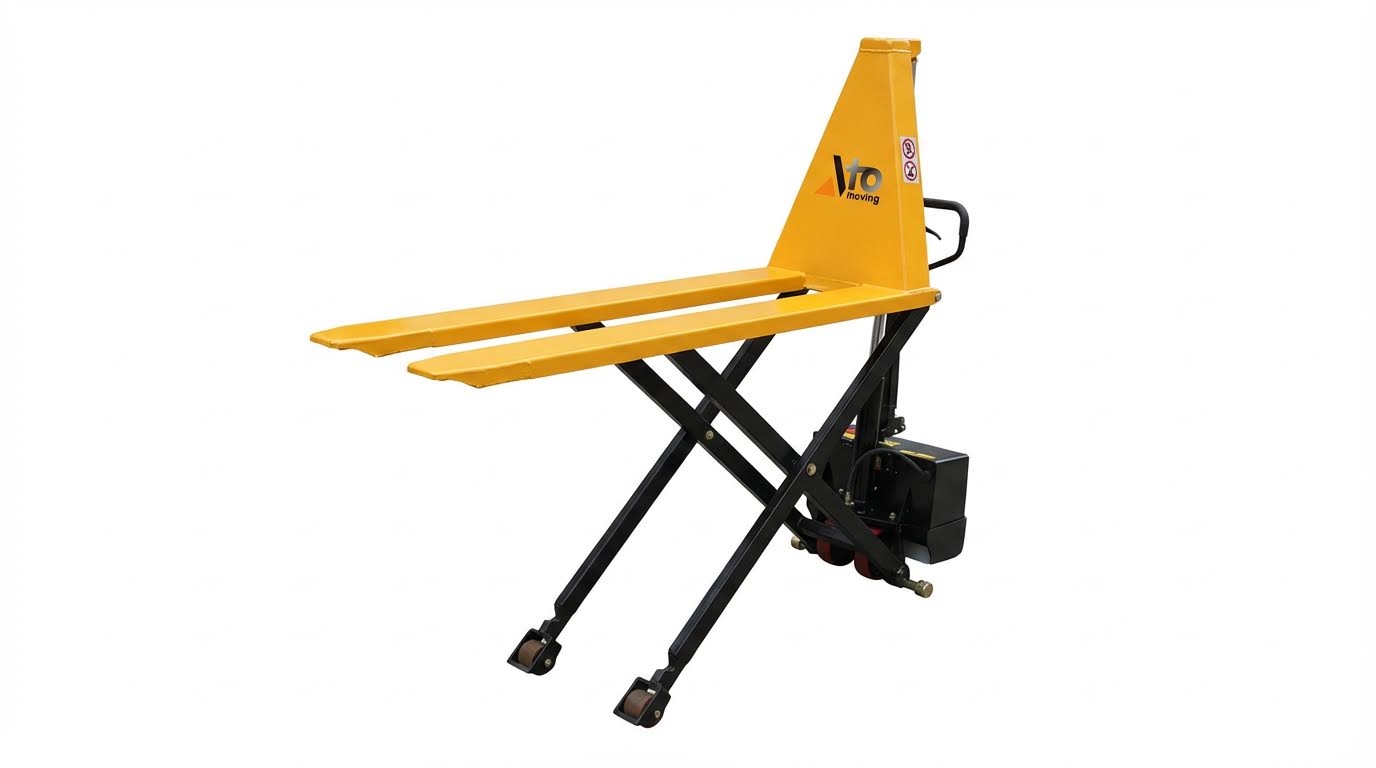
Mast height, tilt, and clearance rules all aim to keep the load low, slightly back, and clear of obstacles. When traveling with a high lift walkie, you lift only enough for ground clearance and never travel with the mast raised unnecessarily.
| Parameter | Recommended Range / Practice | Operational Impact When Traveling With A High Lift Walkie |
|---|---|---|
| Fork ground clearance in travel | Approx. 50–100 mm above floor | Clears minor floor defects while keeping the center of gravity low and improving stability. |
| Mast height in travel | Lowest practical stage; do not travel with mast extended | Reduces risk of overhead strikes and mast oscillation, especially on uneven floors. |
| Tilt angle during travel | Slight back tilt only; no forward tilt | Keeps the load against the backrest and the center of gravity toward the truck body. |
| Forward tilt in motion | Prohibited except at very low creep speed for placement | Forward tilt moves the center of gravity outward and can cause forward tip or lost load. |
| Overhead clearance | Verify clear path below door tracks, sprinklers, and mezzanines | Prevents mast or load striking overhead structures when entering aisles or crossings. |
When traveling with a high-lift walkie, the mast and load must remain in the lowest practical position to maintain stability. Operators should lift the load only enough to provide about 50–100 mm of ground clearance. The mast should be slightly tilted back so the load stays against the backrest, reducing the risk of tipover or lost-load incidents. Forward tilt during travel is unsafe because it shifts the center of gravity outward. Before moving, operators must verify overhead clearance and lower the mast to a safe travel height before entering aisles, crossings, or ramps.
- Set travel height before you move: Raise to 50–100 mm, apply slight back tilt, then start driving – avoids adjusting height while rolling, which can unsettle the load.
- Use backrest contact: Bring the load firmly against the load backrest – limits pallet slide and keeps the center of gravity close to the mast.
- Scan overhead transitions: Check dock doors, tunnel entries, and mezzanines – prevents mast or load impact with low structures.
- Stop before high lift: Come to a full stop before lifting above about 300–400 mm – avoids combining mast sway with travel movement.
- Lower before travel: After picking from racking, lower to travel height before exiting the bay – reduces tip and collision risk while turning out of the rack.
💡 Field Engineer’s Note: In cold stores and on rough concrete, I often saw mast “whip” when operators traveled with the mast partially raised. Small floor dips amplified into big oscillations at the fork tips. Keeping the mast fully nested during travel almost eliminated these events and the associated lost-load incidents.
Checking real-world floor and clearance conditions
Walk your route periodically and note expansion joints, dock plates, and ramps where a 50 mm clearance might be marginal. In those zones, slow to a crawl and, if needed, briefly increase clearance while stopped, then lower again after passing the obstacle. For overhead clearance, measure the lowest point of doors, conveyors, and pipework and compare it to the maximum fork height you actually use in travel, not just the truck’s full lift height.
Technical Controls For Mast Height, Visibility, And Speed
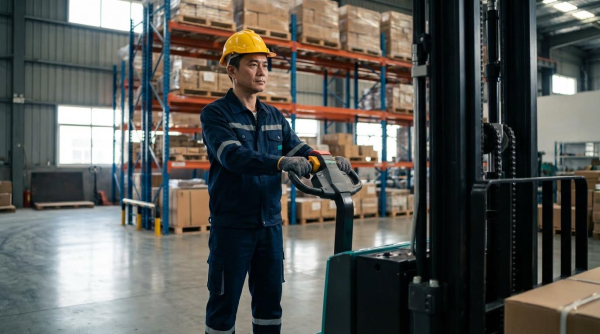
Technical controls set hard limits on mast height, visibility, and speed so that when traveling with a walkie pallet truck, the truck stays within its stability envelope in real warehouses, not just on paper.
This section translates safety theory into concrete mast positions, visibility rules, and speed controls you can apply on ramps, in wet aisles, and at busy intersections.
Setting safe mast height and fork clearance
Safe mast height and fork clearance mean keeping the load as low as practical, with slight back tilt and just enough ground clearance to avoid floor contact during travel.
When traveling with a walkie pallet truck, the mast and load must stay in the lowest practical position, with forks typically 50–100 mm above the floor to clear joints or uneven spots while keeping the center of gravity low. The mast should be slightly tilted back so the load rests firmly against the backrest, which reduces the chance of tipover or the load sliding off. Forward tilt during travel is prohibited because it shifts the combined center of gravity outward and toward the fork tips, cutting effective capacity and increasing the risk of longitudinal tipover. Before moving, operators must check overhead clearance and lower the mast to a safe travel height before entering aisles, crossings, or ramps.
- Fork clearance: 50–100 mm lift – Clears bumps without raising the center of gravity too high.
- Mast tilt: Slight back tilt only – Keeps the load tight to the backrest for stability.
- Travel height: Lowest practical mast stage – Maximizes stability under braking and turning.
- No forward tilt in motion: Zero or back tilt only – Prevents the center of gravity moving outside the stability triangle.
- Overhead clearance check: Before ramps and aisles – Prevents mast or load strikes on doors, sprinklers, or beams.
How to choose travel height in mixed-clearance areas
Set a standard “travel height” for your site based on the lowest doorway, mezzanine, or sprinkler line along normal routes. Train operators to lower to that height before moving and to stop and re-check any time they leave marked routes.
💡 Field Engineer’s Note: In older warehouses with patched floors, I specify the lower end of the 50–100 mm fork clearance range. Higher fork heights make walkies more sensitive to sudden braking; the extra lever arm at the fork tips can start to unload the steer wheels, especially with long pallets.
Managing visibility, lighting, and warning devices
Managing visibility, lighting, and warning devices ensures the operator can always see a clear path of travel and pedestrians can detect the truck before it reaches conflict points.
Visibility management is critical when traveling with a walkie pallet truck because elevated loads, tight aisles, and racking can hide pedestrians and obstacles. Operators must maintain an unobstructed view in the direction of travel at all times; if the load blocks forward vision, they must travel in reverse while still keeping the load upgrade on ramps as required. Employers should provide adequate general lighting and add truck-mounted lights where ambient light is low, plus visibility aids such as convex mirrors at intersections and warning beacons or reversing alarms to alert pedestrians in blind spots. Windows, light lenses, and reflective markings must stay clean and undamaged so these systems actually work.
- Direction of travel vs visibility: Travel where you can see – If the load blocks forward view, travel in reverse on level ground.
- Lighting levels: Adequate overhead lighting – Prevents “black holes” at rack ends and dock doors.
- Truck-mounted lights: Headlights and work lights – Extend visible stopping distance in low-light areas.
- Warning devices: Horn, beacons, and alarms – Alert pedestrians at blind corners and crossings.
- Clean optics: Windows and lenses kept clear – Maintains full effectiveness of visibility aids.
Typical visibility controls in busy aisles
Common controls include convex mirrors at 90° rack intersections, painted stop lines before cross-aisles, mandatory horn use at all blind corners, and flashing beacons on units working in mixed pedestrian zones.
💡 Field Engineer’s Note: In practice, I treat visibility failures as engineering defects, not operator mistakes. If your operators constantly “creep” past a blind corner to see, you need a mirror, better lighting, or a physical barrier, not another toolbox talk.
Speed control on ramps, wet floors, and tight aisles
Speed control on ramps, wet floors, and tight aisles means limiting travel speed so the truck can stop within the visible clear distance and keep the center of gravity inside the stability triangle under dynamic loads.
When traveling with a walkie pallet truck on ramps or grades, loaded units must move with the load upgrade: drive forward up the ramp with the load uphill and reverse down with the load still uphill. This orientation keeps the center of gravity toward the truck body and reduces the risk of the unit or load rolling away. Unloaded units should travel with the forks downgrade to maintain steering and braking control. Turning on grades is prohibited because the lateral component of gravity combines with turning forces and can push the center of gravity outside the stability triangle. Operators must stop on level ground before changing direction or turning and avoid sudden acceleration or braking on slopes to prevent loss of traction or jackknifing at the steer wheels.
Speed control is equally critical in tight aisles and on wet or contaminated floors. The truck must operate at a speed that allows a complete stop within the visible, clear travel path, taking into account stopping distance, floor friction, and load mass. In narrow aisles, operators should select the lowest travel-speed setting, start turns early, and keep the load low to limit rear-end swing and avoid striking racking or pedestrians emerging from cross-aisles. On wet or slippery floors, reduced friction increases stopping distance and decreases lateral stability, so operators must further reduce speed and avoid sharp steering inputs. Guidance also requires speed reduction at intersections and on slippery surfaces, with operators sounding the horn at blind corners or doorways.
- Ramps with load: Load always upgrade – Forward uphill, reverse downhill with the load uphill.
- Ramps unloaded: Forks downgrade – Maintains better steering and braking control.
- No turning on grades: Straight-line travel only – Prevents side tipover from combined lateral forces.
- Wet floors: Lowest speed, smooth inputs – Compensates for longer stopping distances and low friction.
- Tight aisles: Slow speed, early turns – Controls rear-end swing and protects racking and pedestrians.
- Intersections: Slow and sound horn – Buys reaction time in shared-traffic areas.
Practical speed-setting policy
Many sites define three speed zones: “walking speed only” in mixed pedestrian aisles, “reduced speed” near docks and intersections, and “standard speed” in clear, designated truck-only lanes. Controls on the truck should match these policies so operators cannot override them easily.
💡 Field Engineer’s Note: On polished or painted concrete, I assume braking friction can drop by 30–40% when wet. That is enough to double stopping distance with a heavy pallet. I set conservative speed limits in these zones and verify them during commissioning with instrumented stop tests, not guesses.
Applying Best Practices In Real Warehouse Conditions
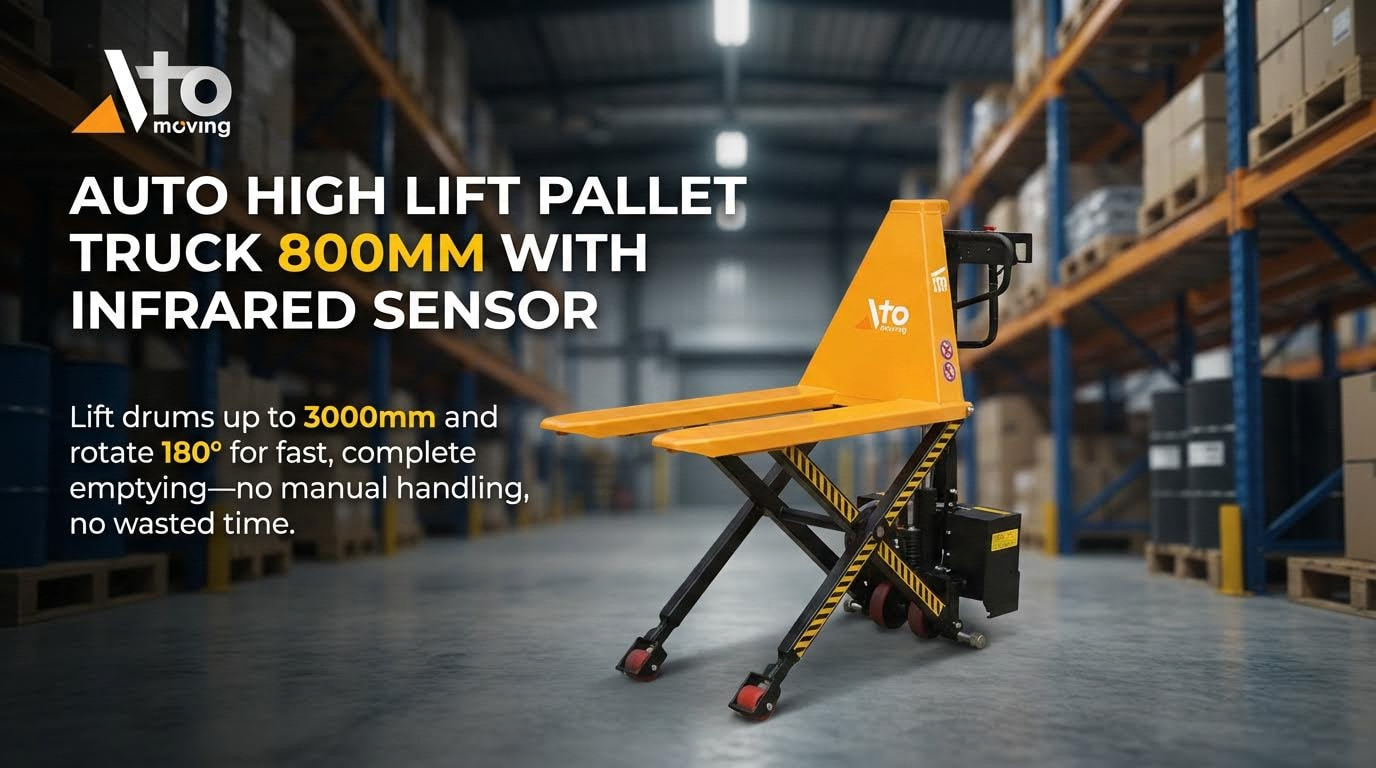
Applying best practices when traveling with a high lift walkie means combining correct load handling, safe routing, pedestrian control, and disciplined inspections and training into one consistent daily routine.
Load handling, routing, and pedestrian separation
Safe load handling and routing when traveling with a high lift walkie start with low, stable loads, controlled speed, and clearly separated paths for people and trucks.
- Keep load low and stable: Travel with forks only 50–100 mm above the floor and mast slightly tilted back – This keeps the combined center of gravity inside the stability triangle and reduces tipover risk when turning or braking.
- Respect rated capacity: Never exceed the truck’s data-plate capacity at the specified load center (often 500 mm) – Prevents overload that can push the center of gravity outside the stability triangle during travel or lifting.
- Center and secure the load: Place pallets fully on the forks, against the backrest, with no overhang where possible – Reduces off-center loading that can trigger side tipovers in turns or on uneven floors.
- Choose direction of travel for visibility: If the load blocks your forward view, travel in reverse while keeping the load upgrade on ramps – Maintains both sightlines and longitudinal stability.
- Fix travel routes: Use mapped, marked routes for high-lift walkies separate from primary pedestrian walkways – Reduces random crossing points and surprise encounters at aisle ends.
- Control speed by environment: In tight aisles or congested zones, limit speed to a fast walking pace or lower – Ensures you can stop within the clear, visible distance ahead on smooth or wet floors.
- Use one-way systems where possible: Make aisles one-way for powered trucks – Prevents head‑on conflicts and reduces steering corrections in narrow racking lanes.
- Guard high‑risk edges: Use guardrails, wheel stops, or painted “warning tracks” near docks, pits, and mezzanine edges – Provides a physical and visual barrier against roll‑off incidents.
- Define crossing rules: Mark pedestrian crossings with floor paint and signs, and require trucks to stop or creep through – Makes interaction predictable and enforceable.
- Yield to pedestrians: Always give pedestrians right-of-way and maintain at least three truck lengths spacing from vehicles ahead – Preserves braking distance and avoids pressure to make unsafe maneuvers.
| Practice | Key Parameter / Rule | Operational Impact |
|---|---|---|
| Fork height during travel | 50–100 mm clearance above floor | Clears minor floor defects while keeping center of gravity low for stability. |
| Typical load center rating | 500 mm from fork heel (common spec) | Long loads beyond 500 mm reduce effective capacity and require extra caution. |
| Travel speed in shared areas | At or below fast walking pace (~1.2–1.5 m/s) | Allows controlled stopping within visible distance and improves reaction time. |
| Pedestrian buffer distance | ≈ 3 truck lengths | Maintains safe stopping distance and visibility in case of sudden stops. |
When traveling with a high lift walkie through mixed-traffic areas, combine these load rules with strict route discipline and pedestrian separation to keep the center of gravity controlled and the travel path predictable.
How to choose safe routes for high-lift walkies
Plan routes that avoid steep grades, sharp turns near doors, and blind corners where racks or walls block sightlines. Favor wide, straight aisles and clearly marked intersections with mirrors and warning signs.
💡 Field Engineer’s Note: In real warehouses, most pallet strikes and near-tipovers with high-lift walkies happened at cross-aisles where pedestrians appeared from behind racking. Marking 1–1.5 m “no‑storage” setbacks at intersections greatly improved sightlines and cut those incidents.
Pre-use checks, training, and incident prevention
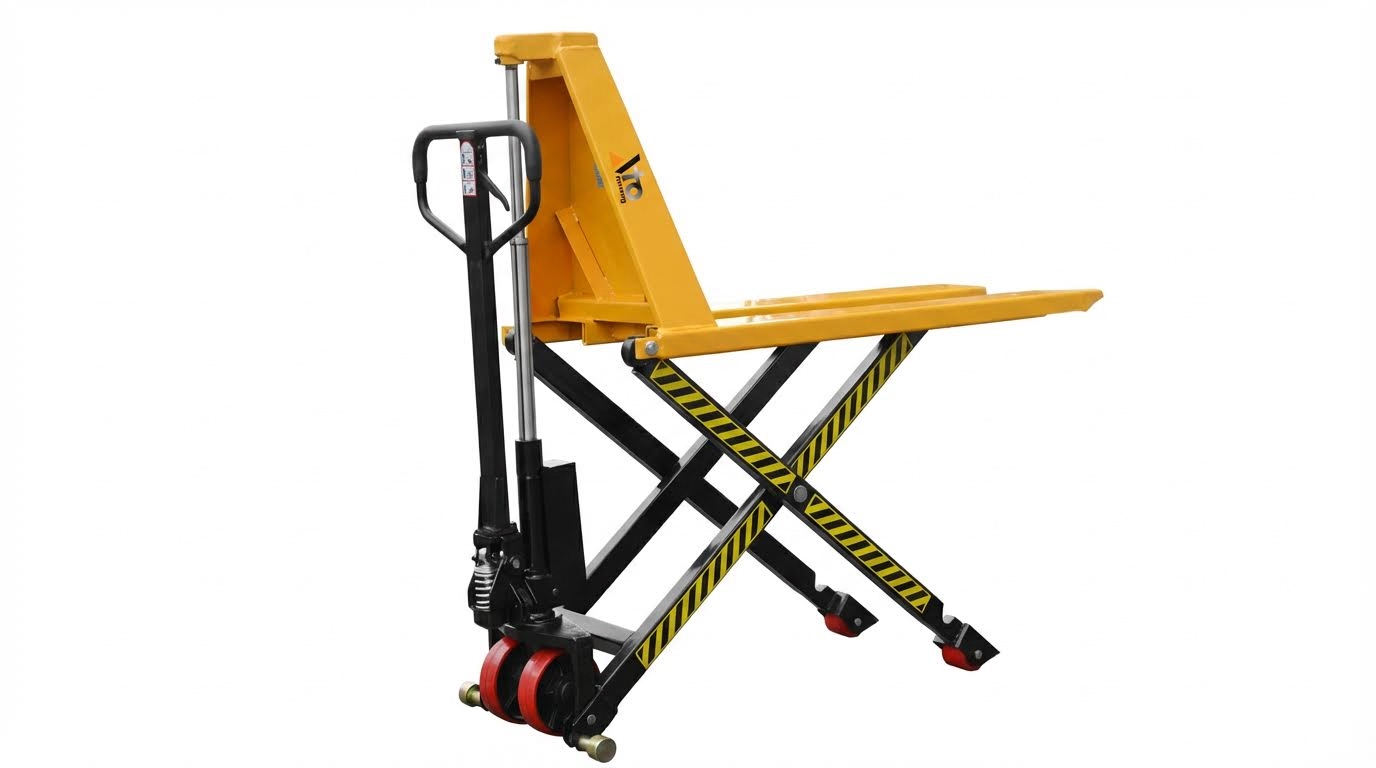
Consistent pre-use checks and structured training are the backbone of incident prevention when traveling with a high lift walkie in busy warehouse operations.
- Do a 360° visual inspection: Walk around the truck before use to check for leaks, damaged forks, worn tires, and mast chain issues – Catches mechanical failures that could cause loss of control under load.
- Check safety and warning devices: Verify horn, lights, beacons, and alarms work before entering traffic areas – Ensures others can see and hear you at intersections and doorways.
- Test functional controls: With power on, test lift, lower, and tilt, plus service and parking brakes and steering – Confirms the truck responds predictably before you add load mass.
- Tag out unsafe equipment: Remove defective units from service and report them – Prevents operators from “making do” with unsafe trucks during busy shifts.
- Reinforce correct ramp technique: Train that loaded trucks go with the load upgrade and unloaded with forks downgrade – Maintains longitudinal stability and steering control on slopes.
- Emphasize low travel height: Make it a rule that, when traveling with a high lift walkie, loads stay at the lowest safe height, not at lift height – Minimizes both tipover energy and damage if a pallet fails.
- Scenario-based training: Include drills for wet floors, tight aisles, and blind intersections – Builds muscle memory for speed reduction, horn use, and route choice under stress.
- Pedestrian awareness training: Train both operators and walkers on eye contact, hand signals, and staying out of truck blind spots – Creates shared habits instead of relying only on painted lines.
- Document near-misses: Log and review near-misses, not just accidents – Lets you adjust routes, signage, or rules before a serious incident occurs.
- Refresher intervals: Provide refresher training after incidents, equipment changes, or observed unsafe behavior – Keeps skills aligned with current layouts and risk patterns.
| Check / Control | What to Verify | Best For… |
|---|---|---|
| Daily visual inspection | Leaks, tire damage, fork cracks, mast chain condition | Preventing sudden failures during lifting or braking. |
| Operational check | Brakes, steering, lift/lower/tilt, horn, lights | Ensuring predictable handling in tight aisles and ramps. |
| Training content | Load limits, low‑height travel, ramp rules, pedestrian right‑of‑way | Aligning operator behavior with engineering stability limits. |
| Incident review | Near-misses at intersections, doors, docks | Optimizing routes, mirrors, and markings to remove repeat hazards. |
Simple pre-use checklist to post at charging stations
1) Walk-around: leaks, damage, forks, mast, wheels. 2) Controls: lift, lower, tilt, brakes, steering. 3) Safety: horn, lights, beacon, alarms. 4) Data plate: capacity readable. 5) Report and tag out if any item fails.
When traveling with a high lift walkie in real warehouse conditions, disciplined inspections and targeted operator training turn the theoretical stability rules into everyday habits that prevent collisions, tipovers, and lost-time injuries.
💡 Field Engineer’s Note: Many sites invested in new warning lights and beacons but still had incidents because operators skipped basic brake and steering checks. A 60–90 second pre-use routine, enforced by supervisors, consistently delivered the biggest safety improvement per euro spent.
Final Thoughts On High-Lift Walkie Travel Safety
Safe high-lift walkie travel depends on one core idea: keep the combined center of gravity controlled and predictable. Geometry, mast position, visibility, and speed all work toward this goal. When operators hold loads low, centered, and against the backrest, the truck stays inside its stability triangle even when floors are uneven or aisles are tight. Correct mast height and tilt then limit mast whip and overhead strikes.
Visibility and speed rules convert theory into real protection. Clear sightlines, good lighting, and effective warning devices give operators and pedestrians time to react. Speed limits that reflect grades, wet floors, and aisle width keep dynamic forces within what the truck and floor can safely handle. Route planning and pedestrian separation turn chaotic traffic into managed flow.
Pre-use checks and focused training close the loop. They align daily behavior with the engineering limits built into Atomoving equipment and similar units. Operations and engineering teams should treat low travel height, defined routes, conservative speed zoning, and enforced inspections as non‑negotiable standards. When these controls act together, high-lift walkies move pallets efficiently while keeping tipovers, collisions, and near-misses rare exceptions instead of routine risks.
Frequently Asked Questions
How high can a high lift walkie stacker lift?
A high lift walkie stacker can typically lift loads to heights of up to 6100 mm, making it ideal for storing items at elevated levels. Some models, like the T-Series walkie reach stacker, can handle stacking and loading of pallets up to 5.5 meters high with a lift capacity of 1500 kg. Crown Walkie Stackers.
Do you have to be certified to use a high lift walkie stacker?
Yes, operators should be properly trained and certified to use a high lift walkie stacker to ensure safety and compliance with OSHA standards. Proper training helps prevent accidents and ensures efficient operation. United Equipment Training.