Straddle stacker lifts answered the question “what is a straddle stacker lift” in practical warehouse terms: a compact, walk-behind lift truck that straddles the load for stability and versatility. This article explains their core design and operating principles, from straddle geometry and load moment to manual and electric variants, and contrasts them with pallet jacks and counterbalance trucks. It then examines advantages in modern warehouse operations, including space optimization in narrow aisles, handling of closed pallets and skids, ergonomics, and lifecycle energy costs. The final sections address limitations, safety risks, selection criteria, and conclude with guidance on matching straddle stackers to the right industrial applications.
Core Design And Operating Principles
Engineers who ask “what is a straddle stacker lift” usually want to understand its geometry, stability, and power options before specifying equipment. This section explains how straddle legs support closed pallets, how manual and electric drives differ, and how stability concepts such as the stability triangle and load moment govern safe use. It also compares straddle stackers to pallet jacks and counterbalanced stacker for warehouse and industrial layouts.
Straddle Geometry And Load Support
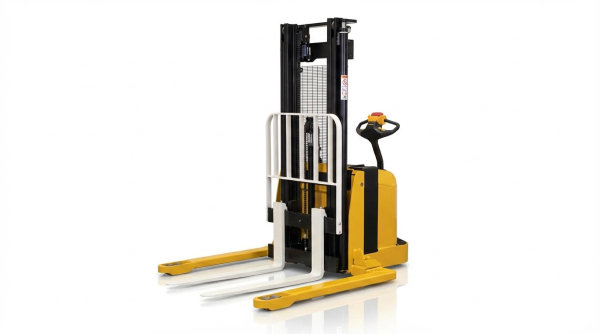
A straddle stacker lift uses two outriggers, or straddle legs, that run on the floor and flank the load. The forks sit between these legs, so the legs carry part of the load reaction directly into the floor rather than through a long counterweight. This geometry lets the truck handle closed-bottom pallets, skids, and loads placed directly on the floor because the legs pass around, not under, the load carrier. Adjustable leg spacing and fork width allow engineers to match the truck to pallet dimensions, racking clearances, and typical load overhang. The compact wheelbase and low-profile legs improve maneuverability in narrow aisles while maintaining a wide support polygon under the mast.
Manual, Semi-Electric, And Electric Variants
When defining what is a straddle stacker lift for a given site, power configuration is a primary decision. Manual stackers typically use a hydraulic pump actuated by a foot pedal or tiller stroke, with push or pull travel provided by the operator. Semi-electric designs usually combine electric lift with manual travel, reducing ergonomic strain during vertical handling while keeping capital cost low. Full electric straddle stackers use traction motors and powered steering functions, which support higher duty cycles, longer travel distances, and more consistent lift speeds. Selection depends on daily lift cycles, average load mass, travel distance, and acceptable operator effort under health and safety policies.
Stability Triangle, Load Moment, And Center Of Gravity
Straddle stacker stability follows the same fundamental physics as other industrial trucks but with a different support polygon. The stability triangle, or in this case a polygon defined by drive wheel and caster positions, represents the footprint within which the combined center of gravity of truck and load must remain. Load moment equals load mass multiplied by the horizontal distance from the mast or load axle reference line, and it increases rapidly with longer load lengths or mast tilt. As lift height increases, the combined center of gravity rises and can shift toward the polygon edge during braking, cornering, or mast tilt. Operators must therefore respect the data plate, which specifies rated capacity at defined load centers and lift heights, and position loads fully against the backrest to minimize moment.
Comparison To Pallet Jacks And Counterbalance Trucks
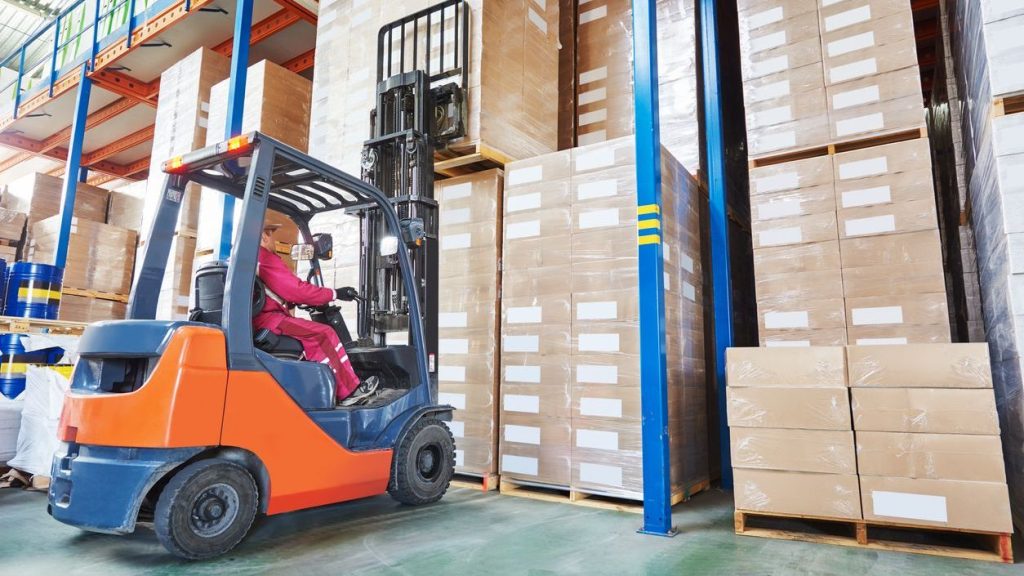
Understanding what is a straddle stacker lift also involves comparing it with adjacent equipment classes. Compared to pallet jacks, straddle stackers add a vertical mast, allowing stacking into racking and double or triple pallet stacking on the floor. The straddle legs give better lateral stability than fork-over pallet jacks when handling tall or top-heavy loads, especially at heights above 2 m. Against counterbalance trucks, straddle stackers remove the heavy rear counterweight and instead use the outriggers to react load forces, which shortens the overall length and improves performance in narrow aisles. However, counterbalance trucks still handle heavier loads, larger load centers, and rougher floors, so engineers typically reserve straddle stackers for smooth indoor floors, moderate capacities, and high-density storage applications.
Advantages In Modern Warehouse Operations
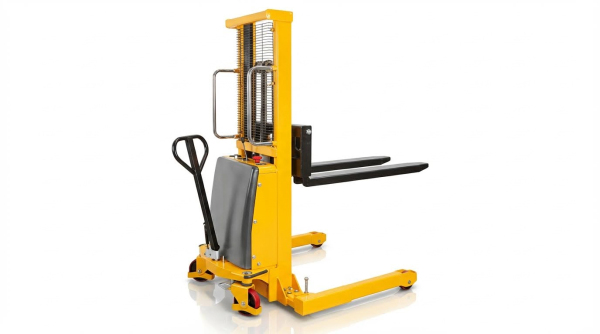
Understanding what is a straddle stacker lift helps engineers and warehouse planners quantify its operational advantages. These walk-behind trucks used straddle legs to support the load, which changed how facilities optimized space, ergonomics, and energy use. In modern warehouses, straddle stackers bridged the gap between pallet jacks and counterbalance forklifts, especially in narrow aisle storage and medium lift heights.
Space Optimization In Narrow Aisles And Racking
Straddle stacker lifts improved space utilization because they did not require a large counterweight behind the mast. The load sat between the straddle legs, so the truck length stayed compact and the turning radius remained small. This geometry allowed operation in aisles often narrower than those needed for counterbalance forklifts, while still stacking loads two to four levels high in racking. Engineers could reduce aisle width, lower building footprint, or increase pallet positions within the same shell. High-mast variants, including duplex and triplex designs, enabled full use of vertical cube up to about 4–7 m, depending on model and capacity. When planning rack layouts, designers typically balanced residual capacity at height, minimum clearances, and required right-angle stacking aisle to exploit the straddle stacker’s compact chassis.
Load Flexibility: Closed Pallets, Skids, And Attachments
Straddle stacker lifts handled closed-bottom pallets and skids effectively because their support legs bypassed the pallet perimeter. The forks operated between the legs rather than under them, so the truck could lift loads directly from the floor or from closed-deck pallets that blocked fork-over designs. Adjustable straddle widths and fork spreads allowed one truck to service different pallet standards and mixed load dimensions. With suitable attachments, such as clamps, poles, or rotators, straddle stackers also moved rolls, bales, or bins in light manufacturing and distribution. This load flexibility made them a practical answer when users asked what is a straddle stacker lift good for beyond standard pallet handling. Engineers still needed to check attachment derating on the data plate, because added mass and shifted centers of gravity reduced rated capacity at height.
Ergonomics, Visibility, And Control Precision
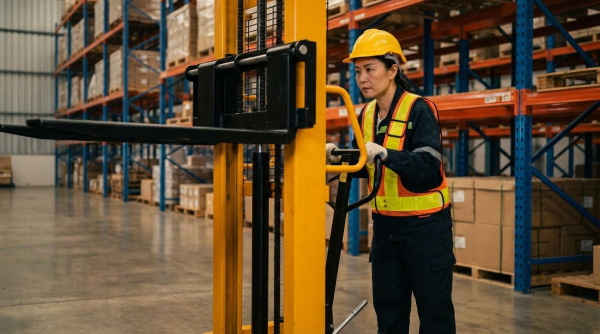
Modern straddle stacker lifts incorporated ergonomic tiller heads and proportional hydraulic controls to reduce operator fatigue. Walk-behind operation kept the operator outside the chassis, which improved all-round visibility, especially of fork tips at ground level and at initial lift stages. Clear-view mast designs and low-profile power units further reduced blind spots around the load. Precision lift and lower valves allowed fine positioning when placing pallets into tight rack openings, which reduced rack damage and product impacts. Because operators walked beside or slightly ahead of the truck, they could monitor pedestrians and obstacles more easily than on some ride-on equipment. However, training remained essential to avoid foot and leg injuries, especially in confined areas and during reverse steering around racking ends.
Energy Efficiency And Lifecycle Cost Considerations
Straddle stacker lifts typically used smaller traction and lift motors than ride-on counterbalance trucks, which reduced peak power demand and overall energy consumption. Electric variants with 24 V battery systems supported multi-shift operations when paired with proper charging strategies and battery maintenance routines. Lower truck mass and reduced travel speeds also decreased tire wear and mechanical stress on drive components. From a lifecycle cost perspective, acquisition costs often sat between pallet jacks and sit-down forklifts, while maintenance costs stayed moderate due to simpler drivetrains and accessible components. When engineers evaluated what is a straddle stacker lift in total cost terms, they considered not only purchase price but also throughput, energy per pallet moved, and required maintenance intervals. In many medium-duty warehouse applications, these factors produced a favorable cost-per-pallet-handled compared with larger trucks, provided that capacity and duty cycle limits were respected.
Limitations, Risks, And Selection Criteria
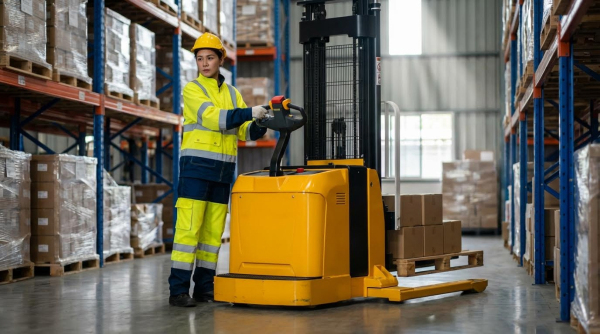
Understanding what is a straddle stacker lift also requires recognizing its constraints and risk profile. This section explains where straddle stackers reach their limits and how engineers and warehouse planners should select and operate them safely. It focuses on capacity and duty cycle, interaction with floor and aisle geometry, key accident modes, and how maintenance and digital monitoring shape long-term reliability.
Capacity, Lift Height, And Duty Cycle Constraints
Straddle stacker lifts use a compact chassis and outrigger legs, so rated capacity decreases as lift height increases. Engineers must read the data plate and capacity chart, which specify maximum load at given load centers and mast heights. Overloading or using an incorrect load center increases load moment and pushes the combined center of gravity toward the edge of the stability triangle. This raises the probability of mast deflection, loss of steering control, or tip-over, especially at high lift elevations. Duty cycle also limits application; continuous multi-shift operation with frequent high lifts accelerates wear on hydraulic components, traction systems, and batteries. For intensive cycles, planners should check manufacturer duty ratings, recommended rest periods, and thermal limits of drive and lift motors. When defining “what is a straddle stacker lift” for a project specification, capacity, lift height, and duty cycle must align with the heaviest realistic load, peak throughput, and racking profile, not just average conditions.
Floor Conditions, Aisle Width, And Turning Radius
Straddle stacker lifts rely on small-diameter load wheels and casters, which are sensitive to floor quality. Uneven slabs, spalled joints, ramps, and debris increase rolling resistance and dynamic shocks into the mast and chassis. Poor floors also reduce tracking accuracy and can cause the outriggers to lose uniform contact, degrading stability. Engineers should verify minimum floor flatness and levelness and avoid steep gradients in stacking areas. Aisle width and turning radius constrain maneuverability because the outriggers extend beyond the load envelope. Planners must consider the required right-angle stack aisle, including clearance for operator position and steering swing. In very narrow aisles, the outer leg may approach racking uprights, increasing collision risk. When evaluating what is a straddle stacker lift suitable for a site, layout studies should model turning paths, cross-aisle transitions, and transfer zones at dock or production interfaces.
Safety Risks: Tip-Overs, Falling Loads, Collisions
Typical accident modes for straddle stacker lifts include tip-overs, falling loads, and collisions with pedestrians or infrastructure. Tip-overs usually result from exceeding capacity, high load centers, off-center loads, or traveling with elevated forks, which shift the center of gravity outside the stability triangle. Falling loads often trace back to damaged pallets, incorrect fork spacing, insufficient fork insertion, or sudden braking or turning. Collisions occur when operators have restricted visibility, rush in congested aisles, or fail to sound warnings at intersections. Safety engineering should therefore focus on operator training, strict adherence to data plate limits, and correct load positioning. Facilities should define walking and driving lanes, install guardrails at high-risk zones, and enforce low travel speeds with elevated loads. Answering “what is a straddle stacker lift” from a safety standpoint means treating it as powered industrial truck equipment subject to formal training, supervision, and periodic competency refreshers.
Maintenance, Inspection, And Digital Monitoring Trends
Straddle stacker lifts require structured maintenance to sustain safe performance and predictable availability. Daily pre-shift inspections should cover wheels, outriggers, forks, mast, chains, hydraulic cylinders, brakes, steering, horn, lights, and emergency stop. Operators should check hydraulic oil levels, battery charge, visible leaks, and any abnormal noises or vibration. Weekly and monthly maintenance typically adds brake clearance checks, battery electrolyte inspection, lubrication, and fastener torque verification. For electric units, periodic examination of contactors, wiring, and motor condition reduces unplanned downtime. Lockout-tagout procedures must apply whenever defects affect safe operation. Digital monitoring has increasingly supported these routines; telematics systems can log operating hours, lift counts, impact events, and battery health. These data streams enable condition-based maintenance and better matching of “what is a battery-powered stacker” capability to actual site usage. A maintained stacker with documented inspections, fault tracking, and timely repairs delivers longer component life, lower lifecycle costs, and a reduced incident rate compared with units run to failure.
Summary: Matching Straddle Stackers To Applications
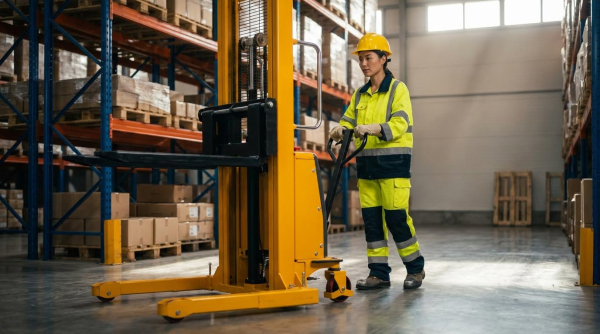
Understanding what is a straddle stacker lift helps engineers and warehouse planners align equipment with real operating conditions. A straddle stacker lift used the outrigger legs to straddle the load, support the mast, and carry weight into the stability triangle. This geometry allowed safe handling of closed pallets and skids in narrow aisles, but imposed clear limits on capacity, lift height, and floor requirements. Matching these benefits and constraints to specific use cases determined whether a straddle design outperformed pallet jacks or counterbalance trucks.
From a technical standpoint, the stability triangle, load moment, and center of gravity relationships defined the safe operating envelope. Engineers needed to compare rated capacity at given load centers with actual pallet dimensions, attachment offsets, and racking heights. In high-density storage, straddle stackers provided excellent cube utilization and precise placement, provided aisle width, turning radius, and floor flatness met the specification. Where floors were uneven, gradients significant, or travel distances long, counterbalance trucks or reach trucks often offered better performance and safety margins.
In practice, the best application fits included dock support, end-of-aisle staging, light to medium stacking up to moderate heights, and handling of mixed pallet types, including closed-bottom pallets. Facilities with predictable duty cycles and controlled environments could exploit the energy efficiency and lower lifecycle cost of manual, semi-electric, or compact electric straddle stackers. However, planners needed to factor in training, pre-shift inspections, and digital maintenance logging to manage risks such as tip-overs, falling loads, and collisions.
Looking ahead, integration of digital monitoring, smarter chargers, and sensor-based stability aids will likely expand the safe operating window for straddle stacker lifts. Despite advances, the core engineering trade-offs will remain: outrigger geometry versus maneuvering space, capacity versus lift height, and efficiency versus flexibility. Selecting the right straddle stacker configuration will continue to depend on a rigorous comparison of load spectrum, layout, and duty cycle against the fundamental design limits of the equipment.