Trailer loading with walkie stackers required a careful balance of capability, stability, and procedural control. This article examined when trailer loading was technically feasible, which dock and trailer conditions supported safe use, and how walkie stackers compared with rider trucks and pallet jacks.
It then explored safety engineering for trailer operations, including trailer securing, dock levellers, ramps, load stability, travel practices, and operator training. Further sections addressed equipment selection, maintenance, and emerging technologies such as telematics and digital twins, before closing with practical recommendations for plant engineers and operations managers.
When It Is Feasible To Load Trailers With A Walkie Stacker
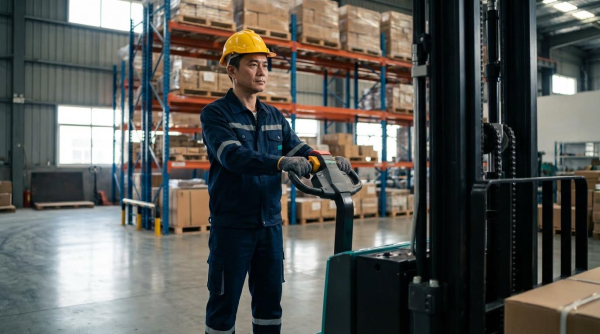
Walkie stackers could load and unload trailers effectively when the dock environment matched their design limits. Plants evaluated trailer geometry, dock height, and approach space before approving this use case. Engineers also considered load characteristics, stacking height, and traffic density. A structured feasibility assessment helped avoid instability, damage, and throughput bottlenecks.
Typical Trailer And Dock Conditions For Safe Use
Safe trailer loading with a walkie stacker required a stable, well-controlled dock interface. The trailer had to be secured with parking brake engaged, wheels chocked, stabilisers deployed, and the engine off before equipment entered. Operators visually inspected the trailer floor for broken boards, pallet fragments, and liquid spills, especially oil, to prevent wheel slip and floor failure. Dock levellers or dock plates needed correct capacity ratings for the combined mass of truck and load, and had to lock positively to the trailer to prevent relative movement. Straight, level approaches with adequate width allowed the walkie stacker to align squarely with the trailer and pallets, which reduced side loading of forks and mast. Curtain-side and unsupported semi-trailers introduced additional tipping and edge-fall risks, so facilities often restricted walkie stacker use there or imposed extra controls.
Load Capacity, Mast Height, And Stability Limits
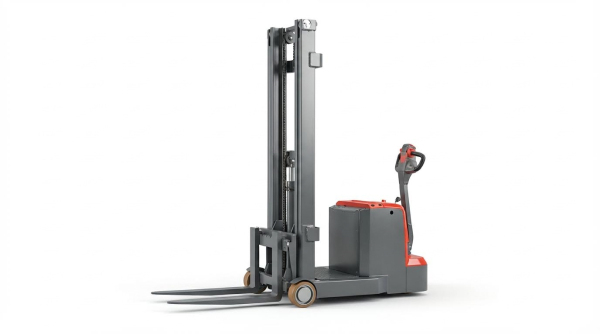
Feasible trailer loading depended strongly on rated capacity and stability limits of the walkie stacker. Electric walkie stackers historically handled up to about 5 000 kg, but the usable capacity at height decreased due to load centre effects. Engineers verified that the mass of the pallet plus packaging stayed below the capacity curve at the intended lift height, not just the nominal rating at low lift. Typical maximum lift heights for walkie stackers reached roughly 4.5–4.8 m, which was sufficient for most trailer pallet positions but required careful mast control near the roof. During travel inside trailers, best practice kept fork height around 0.3–0.4 m with the mast slightly tilted back to maximise longitudinal stability. Facilities prohibited overloading, partial loading of forks, and loosely stacked or unsecured goods, because these conditions significantly increased the risk of tipping or load shedding during braking or on irregular floors.
Comparing Walkie Stackers, Rider Trucks, And Pallet Jacks
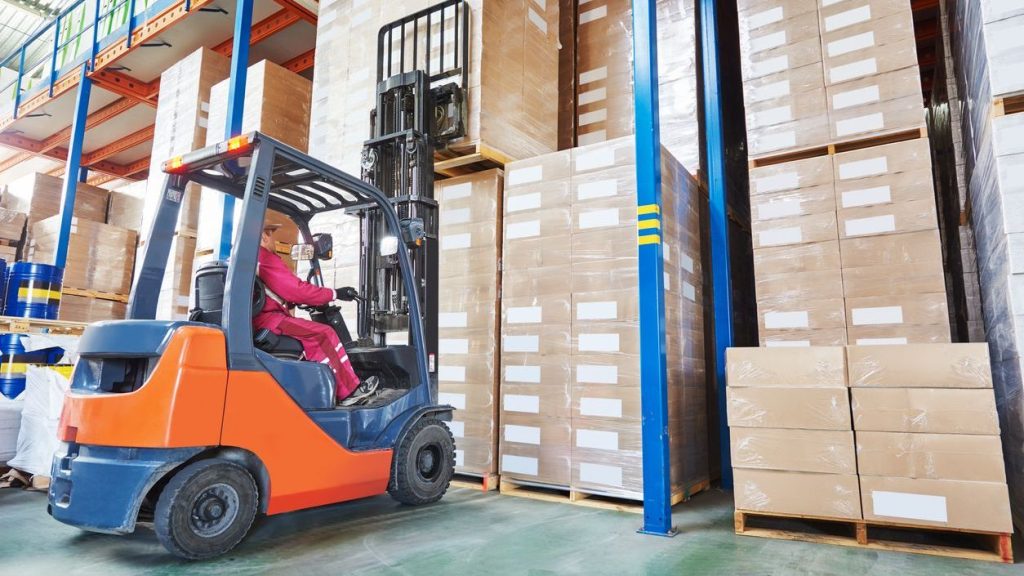
Walkie stackers sat between rider forklifts and pallet jacks in capability and risk profile for trailer loading. Compared with manual or basic electric pallet jacks, walkie stackers offered powered lift, higher stacking heights, and better vertical storage utilisation, which enabled loading deeper tiers and removing pallets from trailer sides or ends. Their tight turning radius and pedestrian operation made them suitable for congested docks, but the operator remained exposed and walked near the load, which raised different safety considerations than seated rider trucks. Rider counterbalance or reach trucks provided higher capacities and better performance on uneven floors, yet they required more headroom, more turning space, and higher capital cost. Plants often chose walkie stackers for light-to-medium loads, short dock approaches, and cost-sensitive operations, while reserving rider trucks for heavier freight, long shuttles, and rougher yard interfaces. Manual pallet jacks remained appropriate for short, level moves where no vertical stacking inside the trailer was required.
Safety Engineering For Trailer Loading Operations
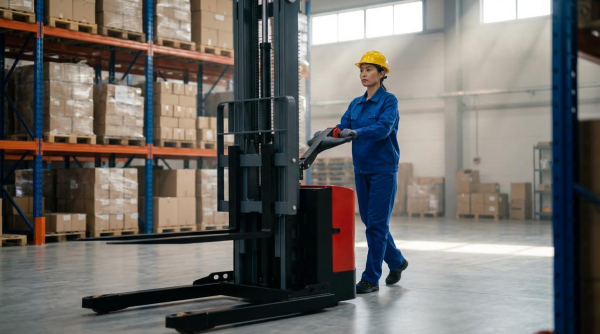
Safety engineering for trailer loading with walkie stackers focused on controlling predictable mechanical and human failure modes. Engineers treated the trailer, dock interface, and stacker as one coupled system that required coordinated safeguards. Robust procedures, suitable hardware, and trained operators reduced incidents such as trailer upending, falls from height, and load loss. This section outlined the engineered controls that supported safe, repeatable loading cycles.
Securing The Trailer, Dock Levellers, And Ramps
Securing the trailer before loading was a primary control measure. Operators or dock staff engaged the truck parking brake, selected neutral, shut down the engine, removed the key, and applied wheel chocks. Facilities often used vehicle restraint systems, such as mechanical or hydraulic dock locks, to prevent trailer creep or premature departure. Engineers also specified stabilisers or support stands for unsupported semi-trailers to reduce the risk of tipping at the kingpin or collapsing landing gear. Dock levellers and ramps required clear rated capacities that exceeded the combined mass of lift stacker and load, with secure lip engagement on the trailer bed.
Before use, operators visually inspected dock levellers, bridging plates, and ramps for deformation, cracked welds, loose anchors, or hydraulic leaks. They confirmed that dock levellers sat level, that mechanical interlocks engaged, and that any traffic light or interlock system indicated a safe status. Ramps and plates had to sit flush with both surfaces to avoid step changes that could destabilise the stacker or damage load wheels. Where tail lifts were used, operators approached with the load leading, turned 90 degrees, then parked clear of edges before raising or lowering. Consistent signalling and communication with the driver prevented movement while personnel or equipment occupied the dock interface.
Load Stability, Fork Positioning, And Travel Practices
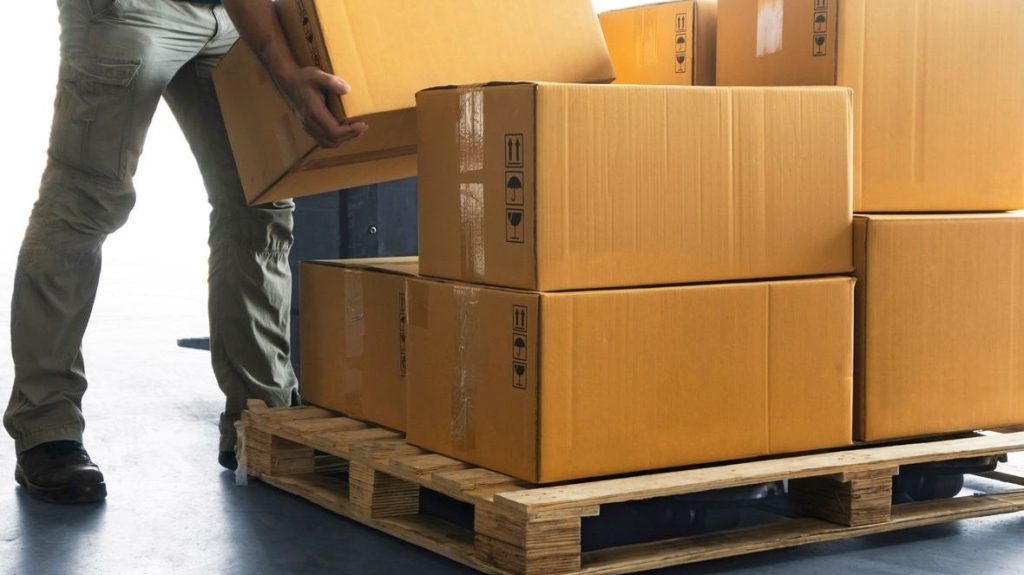
Engineers defined load stability criteria that limited height, mass distribution, and packaging quality. Operators verified pallet integrity, checked for broken boards, and rejected unstable or loosely stacked loads. When picking up pallets, they inserted forks fully beneath the load, centred the pallet, and ensured even weight distribution on both forks. During travel, they kept the load low, typically 300–400 millimetres above the floor, with the mast tilted back within design limits to increase stability. They avoided travelling long distances with loads higher than approximately 500 millimetres, which raised the centre of gravity and reduced margin against tipping.
Safe travel practices reduced dynamic instabilities. Operators usually travelled with forks trailing, except when positioning into or withdrawing from pallets. They accelerated, braked, and turned gradually to limit inertial forces on the stacked goods. Speed limits reflected aisle width, congestion, and floor conditions, with lower limits near dock edges or blind intersections. Horn use at crossings and doorways warned pedestrians and other vehicles. Engineers also specified no-transport rules for dangerous goods or unsecured items that could shift or fall during manoeuvres. Parking procedures required lowering forks fully, placing the control handle in neutral, and cutting drive power before leaving the warehouse order picker unattended.
Managing Slopes, Floor Conditions, And Edge Risks
Slopes and uneven floors significantly affected walkie stacker stability, especially during trailer access. Engineering controls limited operation on gradients, often to less than about 7 degrees, and defined mandatory travel directions on slopes. With a load, operators drove with forks uphill and typically in reverse to maintain control and visibility. Without a load, they travelled downhill in reverse, keeping the drive wheel leading for better traction and braking. Turning or braking sharply on slopes was prohibited because it could induce lateral instability and cause tip-over or load shift.
Floor condition management reduced loss-of-control events. Operators inspected trailer decks and dock areas for debris, broken pallet fragments, and liquid spills before loading. Oil or water required immediate cleanup or, at minimum, coverage with absorbent material to restore traction. Edges presented fall hazards on open docks and curtain-side trailers without edge protection. Facilities mitigated this through physical barriers, painted edge markings, and procedural exclusion zones. Engineering assessments considered trailer suspension movement, which could create gaps or height changes at the dock leveller. Operators remained alert to these changes and avoided overhanging loads that could snag curtains or fall from unprotected sides.
Operator Training, Procedures, And Compliance
Safety engineering relied on operators who understood both equipment limits and site-specific risks. Training programmes followed a structured model: basic theory and practical skills, job-specific application on the actual dock layout, and supervised familiarisation. Content covered rated capacities, combined weight calculations for trucks and loads, and correct use of ramps, dock levellers, and vehicle restraints. Operators learned to recognise high-risk situations, such as unsupported semi-trailers, curtain-side trailers without edge protection, and trailers on non-level ground. They also studied incident case histories to understand consequences of incorrect loading practices.
Written procedures standardised safe behaviour and supported regulatory compliance. These documents defined pre-use inspections, trailer securing steps, communication protocols with drivers, and load sequencing rules for multi-drop deliveries. Supervisors monitored adherence through observations, checklists, and periodic refresher training. Facilities used incident data, near-miss reports, and performance indicators like damage rates and loading times to refine procedures. Compliance with national regulations on lift-truck operation, workplace transport, and load securing underpinned the whole system. Documented training records, maintenance logs, and risk assessments demonstrated due diligence and supported continuous improvement of trailer loading safety with walkie stackers.
Equipment Selection, Maintenance, And Emerging Tech
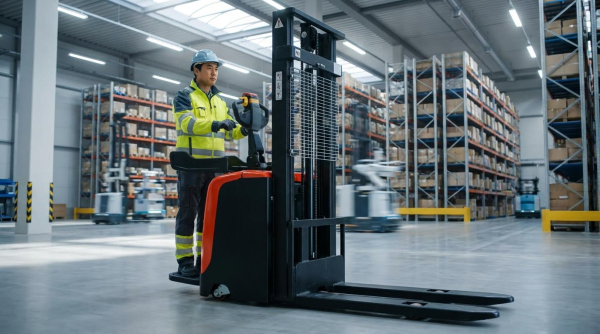
Trailer loading with walkie stackers required tight alignment between equipment capability, dock geometry, and safety systems. Engineers evaluated capacity, mast height, and turning space against trailer types, floor conditions, and ramp arrangements. They then supported this with structured maintenance and diagnostics to keep braking, hydraulics, and controls within specification. Emerging digital tools further enhanced visibility, control, and energy performance across dock operations.
Choosing The Right Walkie Stacker For Dock Work
Walkie stacker selection for trailer loading started with rated capacity and mast height. Electric units in this class typically handled up to about 5 000 kg and reached elevations near 4.8 m, which covered most dock and trailer stacking tasks. Engineers checked that the residual capacity at the required lift height exceeded the heaviest pallet plus attachment mass. They also verified that fork length matched pallet depth and allowed full insertion without striking trailer bulkheads. Tight turning radius and compact chassis geometry remained essential when working inside 2.4–2.6 m wide trailers or congested docks. Specifiers additionally considered floor loading, ensuring axle and wheel loads remained within dock plate and trailer deck ratings.
Preventive Maintenance And On-Board Diagnostics
Reliable trailer loading depended on systematic preventive maintenance of the walkie stacker fleet. Maintenance plans covered daily checks of brakes, steering, horn, hydraulic leaks, forks, and tires, plus scheduled inspections of chains, mast rollers, and electrical systems. Operators performed pre‑use visual and functional checks, while technicians executed periodic measurements such as fork wear, chain elongation, and battery health. Modern walkie stackers integrated on‑board diagnostics that logged fault codes, hours, and event histories. These systems simplified troubleshooting of traction, lift, or control issues and supported condition‑based maintenance. Plants that linked diagnostic data to a maintenance management system reduced unplanned downtime and improved compliance with safety inspection requirements.
AI, Telematics, And Digital Twins In Dock Operations
Telematics on walkie stackers captured utilization, travel paths, impacts, and overload events around docks and trailers. Engineers used this data to optimize dock layouts, set speed limits in high‑risk zones, and adjust training for repeated incident patterns. AI algorithms processed historical loading data to predict peak dock demand and recommend fleet size or charging windows. Some facilities developed digital twins of dock areas, combining trailer flow, equipment telemetry, and incident records. These models allowed simulation of new ramp configurations, vehicle restraint strategies, or traffic rules before physical changes. Over time, integrated AI and telematics improved safety performance, asset productivity, and adherence to load limits.
Lifecycle Cost, Energy Use, And Sustainable Handling
Equipment decisions for trailer loading increasingly considered total lifecycle cost rather than purchase price alone. Engineers evaluated acquisition, energy, maintenance, downtime, and end‑of‑life costs over a 7–10 year horizon. Electric walkie stackers offered lower local emissions and reduced energy cost per tonne‑kilometre compared with internal combustion alternatives. Energy efficiency depended on correct charger sizing, opportunity‑charging strategies, and matching battery technology to duty cycle. Facilities tracked key indicators such as kWh per pallet handled, brake and tire replacement rates, and failure‑related delays. By combining efficient walkie stackers with well‑maintained dock plates, restraints, and ramps, plants reduced environmental impact while maintaining safe trailer loading performance.
Summary And Practical Recommendations For Plants
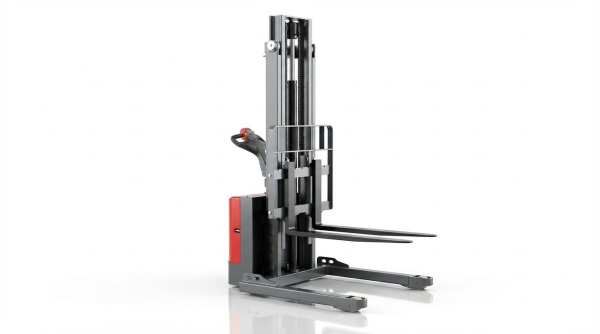
Trailer loading with walkie stackers offered plants a flexible alternative to full-size lift trucks, but only within defined limits. Typical electric walkie stackers handled loads up to about 5 000 kg and reached mast heights near 4.8 m, which suited dock work and moderate stacking. Their compact chassis and tight turning radius improved maneuverability inside trailers and congested staging areas. However, stability margins reduced on uneven floors, slopes, or when operators raised loads higher than necessary during travel.
Safe trailer loading required a systems approach that combined equipment capability, engineered dock infrastructure, and disciplined procedures. Plants needed to secure trailers with chocks and restraints, verify landing gear integrity, and confirm dock leveller or ramp capacity for the combined mass of truck and load. Operators had to insert forks fully under pallets, keep the load low during travel, avoid sharp steering inputs, and follow strict rules on slopes and unsupported semi‑trailers. Structured training, including task‑specific and familiarisation modules, supported compliance with occupational safety regulations and reduced incidents such as trailer upending or edge falls.
Going forward, plants could enhance performance by standardising trailer loading methods, selecting walkie stackers explicitly rated for dock work, and embedding preventive maintenance with on‑board diagnostics. Emerging tools such as telematics, AI‑assisted monitoring, and digital twins allowed sites to analyse utilisation, near‑miss patterns, and energy use across docks. This data supported better equipment sizing, floor layout refinement, and targeted operator coaching. A balanced strategy treated walkie stackers as one element in a broader material handling architecture, integrating them with rider trucks, conveyors, and storage systems to match each task’s risk level and throughput demand.