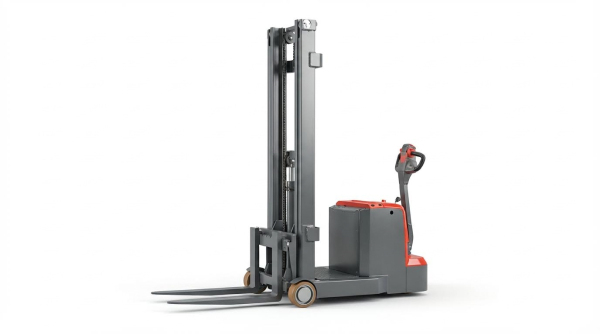
Walkie stacker weight and capacity directly affect safety, floor loading, and equipment selection in warehouse design. This article explains typical truck masses, rated load capacities, and how battery weight changes total system weight. It then links these parameters to engineering issues such as slab design, mezzanines, ramps, and stability under real operating conditions. Finally, it outlines how to specify and manage lift stackers so facilities maintain safe loads, regulatory compliance, and long-term operational reliability.
Typical Walkie Stacker Weights And Capacities
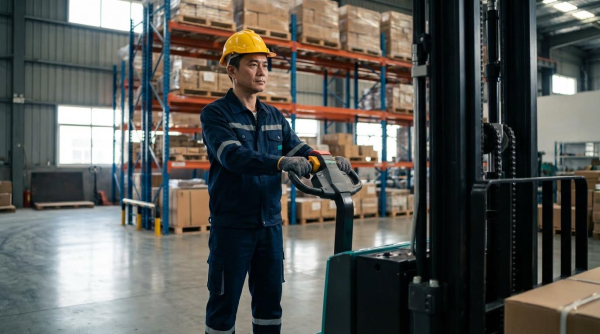
Walkie stacker weight and capacity defined equipment selection, floor design, and safety procedures. Engineers distinguished between a truck’s own mass and its rated load capacity to prevent structural overloads and tip events. Typical values varied by configuration, from light-duty manual units to electric high lift pallet truck and reach designs. Understanding these ranges allowed planners to align material flow, racking, and building infrastructure with realistic operating envelopes.
Net Truck Weight Vs. Rated Load Capacity
Net truck weight described the mass of the stacker itself, either with or without the battery. Rated load capacity defined the maximum permissible payload the manufacturer specified under standard operating conditions. Electric walkie stackers in light-duty classes typically weighed 450 kg to 560 kg without the battery and 500 kg to 610 kg including the battery. In contrast, their rated capacities often ranged from about 910 kg up to 2,000 kg, depending on design. Engineers therefore treated truck weight and capacity as separate design inputs for floor loading, racking interfaces, and transport calculations.
Common Weight Ranges: Manual Vs. Electric
Manual walkie stackers lacked traction motors and traction batteries, so they generally weighed less than electric units. While exact masses varied by manufacturer, manual pallet stacker usually supported light to medium-duty capacities around 1,000 kg to 1,500 kg. Electric pedestrian high-lift and counterbalanced walkie stackers covered similar or higher capacity bands but with greater truck weight. Typical electric models supported 1,000 kg to 2,000 kg, with walkie reach units around 910 kg to 1,360 kg and counterbalanced or high-lift versions between roughly 1,130 kg and 1,820 kg. This meant electric stackers imposed higher static and dynamic floor loads but delivered improved ergonomics and throughput.
Battery Mass And Its Impact On Total Weight
Battery mass significantly increased total truck weight and influenced stability, floor loading, and compatibility with elevators or mezzanines. For light-duty electric walkie stackers, the battery typically added about 50 kg to 70 kg, raising total weight from roughly 450 kg–560 kg net to 500 kg–610 kg in service. Higher-capacity trucks used larger batteries, which increased both operating time and axle loads. Engineers accounted for worst-case conditions, including maximum battery weight and rated load, when checking slab design and dock equipment limits. Battery selection also affected center-of-gravity location, so changing battery type or size required verification against the manufacturer’s data and stability calculations.
Engineering Implications Of Stacker Weight
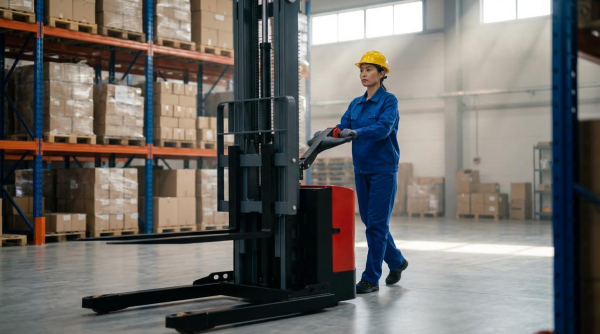
Walkie stacker weight directly affected structural design, traffic planning, and safety engineering in warehouses. Engineers evaluated both net truck mass and maximum loaded mass when checking floors, racking, and access structures. For typical electric walkie stackers, total weight with battery ranged roughly from 500 kg to 610 kg before adding payload. With rated capacities up to about 2,000 kg, the worst-case combined mass often exceeded 2,000 kg and required explicit verification.
Floor Loading, Slab Design, And Racking Interfaces
Stacker weight influenced floor loading through both point loads at wheels and distributed loads along travel paths. Engineers converted total truck plus load mass into wheel reactions using axle spacing and wheelbase geometry. They then compared these reactions to slab-on-grade design criteria, including allowable contact pressures and punching shear around wheels. High-capacity walkie stackers approaching 2,000 kg rated load required slabs with adequate thickness, reinforcement, and subgrade support to avoid cracking or settlement. At racking interfaces, designers checked that concentrated wheel loads near upright bases did not exceed local bearing limits or cause anchor pull-out.
Floor flatness and levelness also interacted with stacker weight. Heavier trucks amplified the effect of small slab irregularities on dynamic loading and mast sway. Facilities with tall racking often specified tighter floor tolerances in main travel aisles to control vibration and maintain safe clearances. Where existing slabs had unknown capacity, engineers used core testing or ground-penetrating radar to assess reinforcement before introducing heavier electric stackers.
Ramps, Mezzanines, And Elevator Compatibility
On ramps and mezzanines, total stacker weight affected both structural design and operational limits. Engineers combined dead weight of the stacker, battery, and maximum rated load to determine worst-case reactions on stringers, beams, and columns. They checked bending, shear, and deflection under uphill and downhill travel, considering dynamic factors for acceleration and braking. Ramp gradients typically stayed below 10% for loaded pedestrian-operated stackers to maintain traction and braking control.
For mezzanines, the heavier mass of electric walkie stackers often exceeded design assumptions originally made for manual pallet trucks. This required verification of deck capacity, joist spacing, and connection details, especially near openings and landings. Elevator compatibility checks included car rated capacity, floor plate strength, and door thresholds. Engineers ensured that maximum combined mass of stacker and load remained below elevator rating with a safety margin, and that wheel loads did not damage car flooring or sills.
Stability, Center Of Gravity, And Tip-Over Risk
Stacker weight distribution, not just total mass, governed stability and tip-over behavior. Designers evaluated the combined center of gravity (CoG) of truck, battery, and load relative to the support polygon formed by the wheels or outriggers. As mast height increased, the elevated load shifted the CoG upward and forward, reducing stability margin, especially for counterbalanced and reach-type walkie stackers. Rated capacities between roughly 910 kg and 2,000 kg assumed correct load positioning and level floors.
Heavier batteries often improved longitudinal stability by acting as a low-mounted counterweight. However, they also increased lateral forces during turning, which could raise tip risk on uneven or sloped surfaces. Training programs emphasized slow cornering, avoiding side travel on ramps, and keeping loads as low as practical during travel. Engineers also considered stability when specifying attachments, since longer or offset forks shifted the CoG and could reduce the allowable load below the nameplate rating.
Transport, Dock Levelers, And Trailer Floor Limits
During external transport, stacker weight affected truck selection, tie-down design, and route planning. Logistics teams calculated gross transport mass by adding stacker weight, battery, and any residual attachments or tooling. They verified that vehicle axle loads complied with road regulations and that loading ramps or liftgates could support concentrated wheel loads. For frequent relocations, lighter manual or lower-capacity electric models reduced transport complexity but also limited on-site performance.
At loading docks, engineers checked that dock levelers, bridge plates, and trailer floors could handle the fully loaded stacker. Manufacturer data for dock equipment specified allowable dynamic loads and single-axle ratings, which had to exceed the worst-case wheel loads of a 500–610 kg truck carrying up to about 2,000 kg. Trailer floor capacity, especially in older wooden-deck trailers, could control maximum allowable stacker and load combination. Clear procedures instructed operators to center travel paths, avoid sudden stops on dock plates, and respect any posted capacity limits to prevent structural damage or collapse.
Selecting The Right Stacker For Your Facility
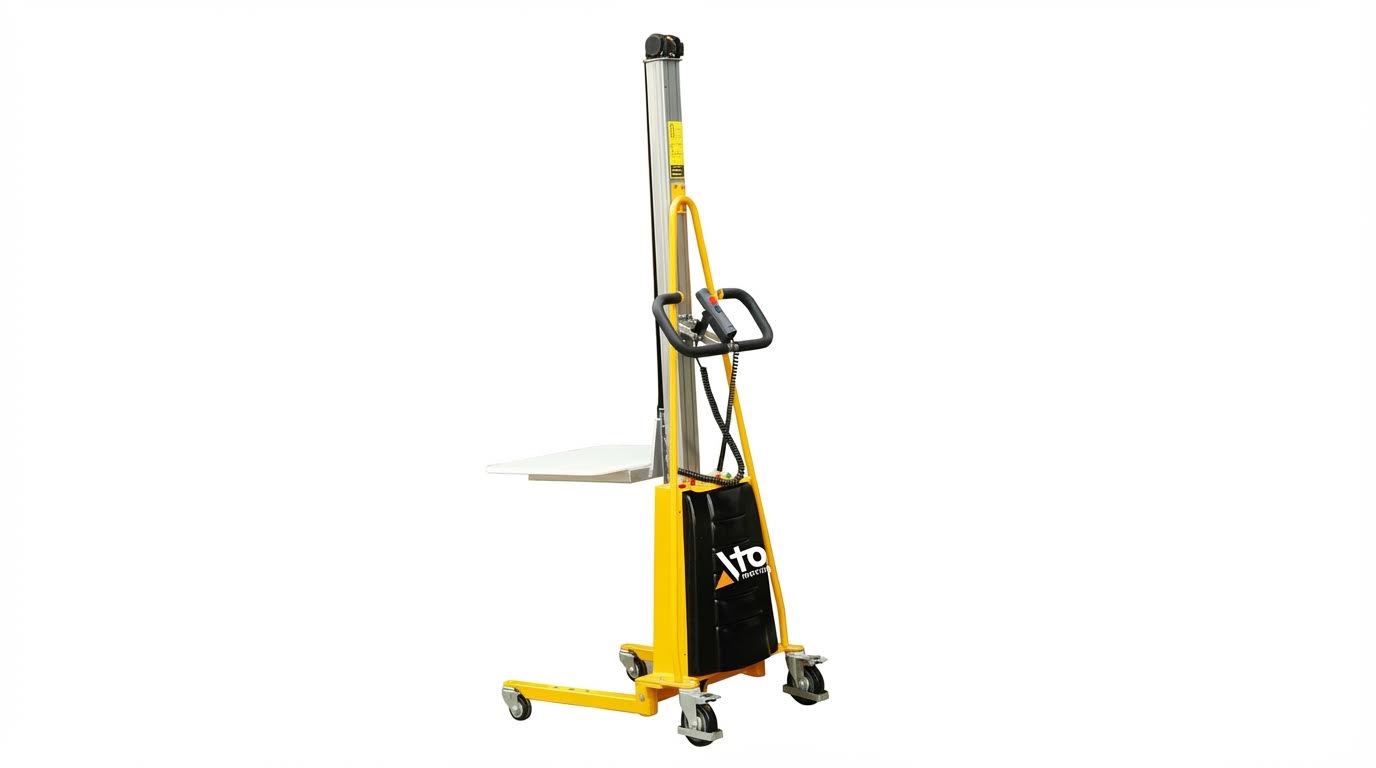
Engineers had to balance capacity, maneuverability, and infrastructure limits when selecting walkie stackers. Truck weight, battery mass, and rated capacity directly affected floor loading, ramps, and elevator compatibility. Safety, training, and lifecycle cost planning determined whether a stacker remained productive or created downtime. A structured selection process reduced risk and aligned equipment capability with operational and regulatory requirements.
Matching Capacity, Mast Height, And Truck Weight
Capacity selection started with the heaviest unit load, including pallet, packaging, and any attachments. Typical walkie stacker capacities ranged from about 900 kg to 2,000 kg, with higher-capacity units carrying greater net truck weight. Engineers also considered mast height, because rated capacity usually decreased at maximum lift and with extended load centers. Taller masts and reach or counterbalanced designs increased truck mass, which raised floor loading and required verification against slab design and mezzanine ratings. Battery size and chemistry influenced total mass as well, so engineers reviewed specification sheets that listed net weight, battery weight, and rated load together.
Safety Margins, Training, And Operating Protocols
Designers always applied safety margins above the maximum expected working load, typically 10–25% depending on corporate standards. They never allowed operators to treat this margin as extra usable capacity; the truck’s nameplate rating remained the hard limit. Safe use depended on operator training that covered load distribution, pallet condition, and the difference between net truck weight and rated capacity. Training programs also addressed pre-use inspections, communication methods, and route planning to avoid uneven floors, tight blind corners, and congestion. Facilities formalized operating protocols for speed limits, pedestrian right-of-way, and emergency procedures to comply with local occupational safety regulations.
Maintenance, Lifecycle Costs, And Digital Monitoring
Stacker weight and duty cycle strongly influenced maintenance intervals, especially for wheels, brakes, and hydraulic components. Heavier electric units with capacities around 1,500 kg or more required disciplined battery maintenance and charging practices to avoid premature failure. Engineers evaluated lifecycle cost by combining purchase price, energy consumption, battery replacement, and planned maintenance over five to ten years. Digital monitoring systems, where available, recorded usage hours, overload events, and fault codes, which supported condition-based maintenance. Maintenance logs and telematics data helped detect recurring issues, validate that operators respected rated capacity, and schedule repairs before failures disrupted production.
Summary: Key Takeaways On Walkie Stacker Weight
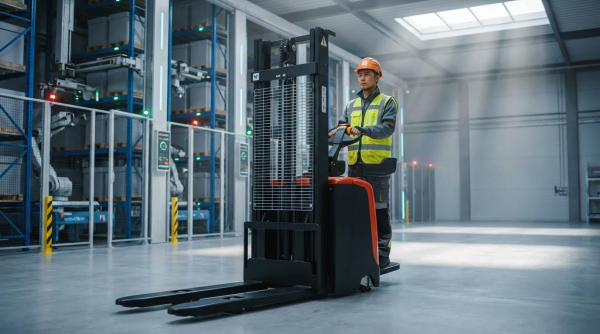
Walkie stacker engineering required a clear distinction between truck mass and rated load capacity. Typical electric walkie stackers weighed approximately 500 kg to 610 kg including the battery, while their rated capacities ranged from about 900 kg to 2,000 kg depending on configuration. Manual and lighter-duty pedestrian stackers weighed less due to the absence of drive motors and traction batteries but still required the same rigor in capacity assessment and labeling. Engineers and facility planners treated catalogue capacities strictly as load ratings, not as indicators of truck self‑weight.
Stacker mass directly influenced floor loading, slab design, and the selection of mezzanines, ramps, and elevators. Heavier, high‑capacity units demanded verification of point loads at rack interfaces and dock levelers, and checks against trailer floor limits. Battery weight significantly affected the overall center of gravity, stability margins, and tip‑over risk, particularly at maximum lift height or on gradients. Correct matching of stacker type, capacity band, and mast height to the building’s structural and geometric constraints remained a core engineering task.
Safe and efficient operation depended on conservative safety margins, operator training, and disciplined adherence to rated capacities. Overloading or using stackers beyond their intended design envelope compromised structural integrity and increased accident probability. Regular inspections, maintenance logs, and where available, digital monitoring supported lifecycle cost control and reliability. Looking ahead, higher‑energy‑density batteries, embedded telematics, and better stability analytics were expected to improve performance while tightening the link between real‑time load data and safety interlocks, but they would not replace the need for sound engineering judgment and regulatory compliance.