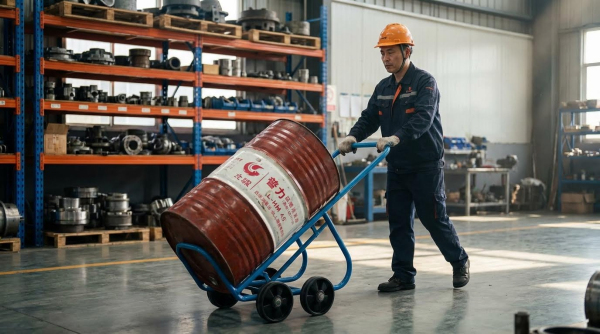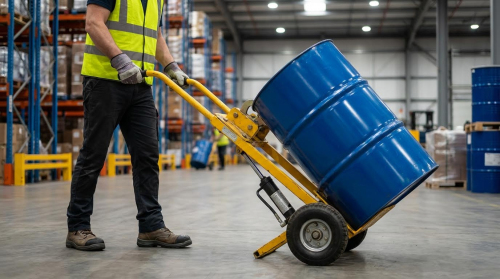
Understanding diesel forklift fuel consumption per hour is essential for controlling operating costs and planning fleet capacity. This guide explains how much diesel does a forklift use per hour across different capacity ranges, and how real-world factors like duty cycle, terrain, and maintenance change those baseline figures. You will also see how engineering choices, operator behaviour, and telematics data can reduce litres burned per hour and cost per tonne moved. Use these insights to specify the right truck, benchmark your site, and lower total cost of ownership over the life of your diesel fleet.
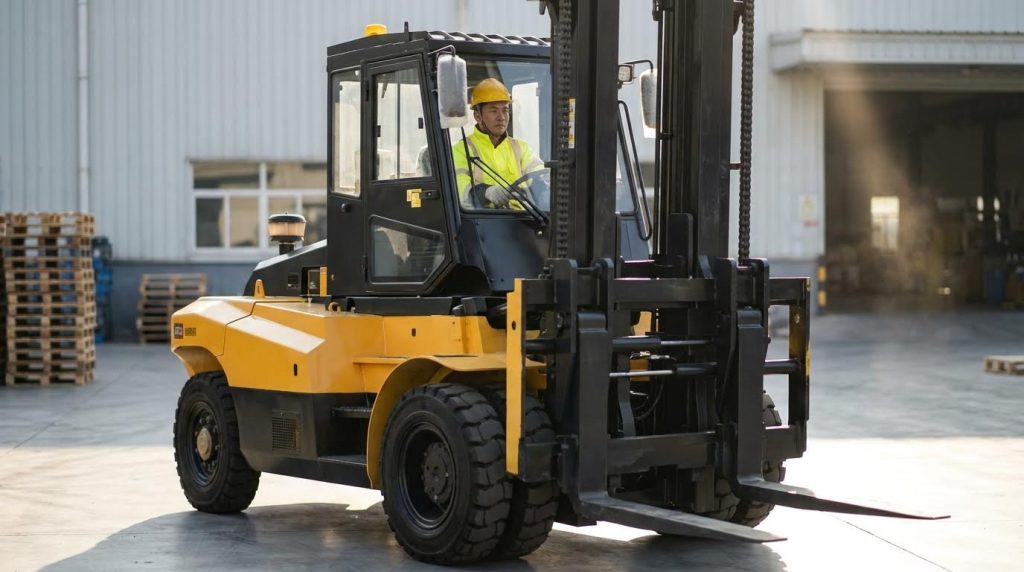
Typical Diesel Use Per Hour By Forklift Size
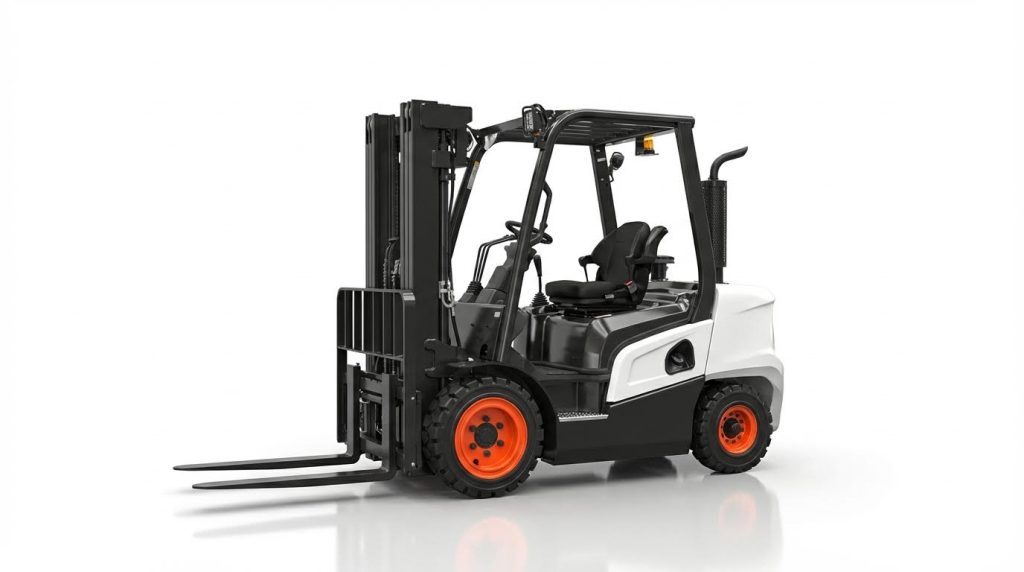
Average litres per hour by capacity band
If you are asking how much diesel does a forklift use per hour, the starting point is its capacity band and the way it is worked. Across most applications, diesel forklifts typically burn about 2–5 litres of fuel per operating hour, from light warehouse units to heavy yard trucks. Typical diesel forklift fuel consumption is quoted in the 2–5 L/h range. Actual burn depends on load, travel distance, lift height, and idle time.
| Capacity band (tonnes) | Typical diesel use (L/h) | Usage notes |
|---|---|---|
| 1.5–2.0 t | ≈ 2.0–2.5 L/h | Light warehouse and loading dock work, moderate lift heights |
| 2.5–3.0 t | ≈ 2.5–3.5 L/h | Most common size; mixed pallet handling and loading |
| 3.0–3.5 t | ≈ 2.5–3.5 L/h | General-purpose outdoor and yard applications |
| 5.0 t | ≈ 4.5–6.0 L/h | Heavier loads, often outdoors or in production plants |
| 7.0 t | ≈ 6.5–8.0 L/h | Steel, timber, and other heavy industries |
| 10.0+ t | ≈ 10.0+ L/h | Very heavy, long-load or port-type duties |
Under standard conditions, a 3‑ton diesel forklift often uses about 2.5–3.5 L/h, a 5‑ton unit about 4.5–6.0 L/h, and a 7‑ton truck about 6.5–8.0 L/h. Published fuel consumption bands by tonnage show this same scaling trend. These ranges give a realistic planning basis when you estimate fleet fuel budgets or compare options.
How to use these bands in budgeting
Multiply the mid-point of the L/h band by expected operating hours per shift, then by shifts per month. Combine this with your local diesel price to estimate monthly fuel cost per truck. This simple approach lets you compare scenarios without complex modelling.
Real-world examples and duty cycle impact
Duty cycle is the main reason two identical trucks can show very different answers to how much diesel does a forklift use per hour. Under light, intermittent use with partial loads and short travel distances, consumption will sit near the bottom of each band. Under continuous heavy lifting, long travel, or poor ground conditions, it will move to the top of the band or higher.
- Constant heavy lifting and long shifts push fuel use well above “catalogue” figures. Continuous full-load work and minimal breaks significantly increase diesel burn.
- Uneven ground, ramps, gravel yards, or mud all demand more engine torque, further raising hourly litres. Inclines and soft or slippery surfaces are known drivers of higher fuel consumption.
- Idle time is a hidden load on your fuel bill; many fleets see 30–40% of engine hours at idle, which still burns roughly 0.5–1.0 L/h without moving any product. Idle-time studies on forklifts report this 30–40% pattern.
As a worked example, a 3‑ton truck in a light warehouse role, with good floors and moderate loads, might average around 3.0 L/h across a shift. The same model in a yard doing near-capacity lifts on rough ground, with long travel and high idle time, can realistically move toward 4.0 L/h or more. Real-world examples show that load, surface, and operator behaviour all shift actual litres per hour away from the nominal figures. Understanding your own duty cycle is therefore essential before you benchmark or try to reduce diesel usage.
Engineering Factors That Drive Fuel Consumption
Engine technology, emissions tier, and hydraulics
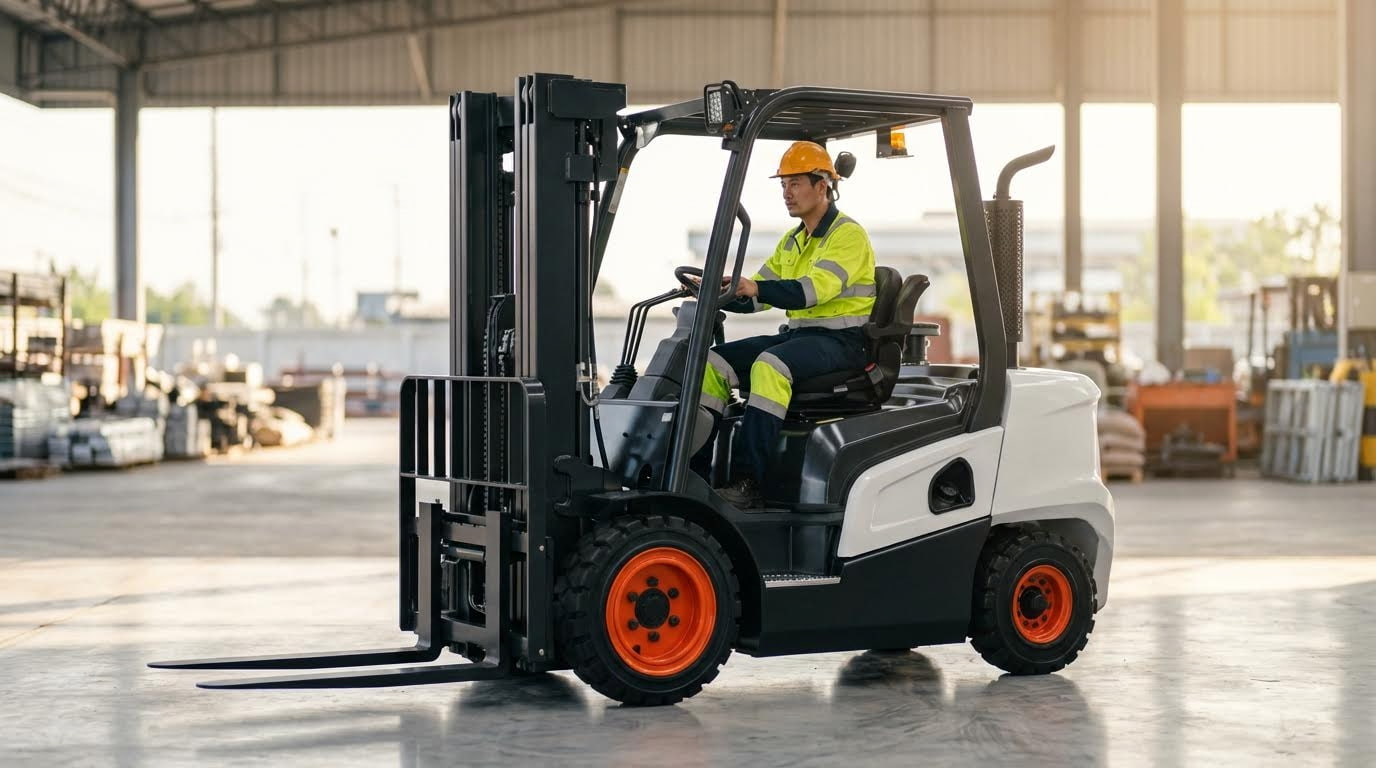
Engine design and hydraulic layout are core drivers of how much diesel does a forklift use per hour. Modern high‑pressure common‑rail systems inject fuel at over 2,000 bar, creating very fine atomisation and more complete combustion, which improves power density and reduces fuel burn for the same work done. High‑pressure common‑rail fuel injection also allows precise electronic control of timing and quantity, so the engine can stay closer to its best specific fuel consumption point across different loads. Emissions tier matters as well: Stage V / Tier 4 Final engines use DPF and SCR; active DPF regeneration consumes some extra fuel, while SCR lets the base engine be tuned leaner, typically improving fuel economy by around 5–15% compared with older designs. Stage V / Tier 4 Final systems therefore tend to reduce litres per hour in real‑world use, especially on high‑hour trucks.
The hydraulic system is the other big consumer after the driveline. Load‑sensing hydraulics vary pump output to match demand, so they only move the oil needed for a given lift or tilt function, avoiding waste heat generation and cutting fuel use compared with older fixed‑displacement pumps that circulate oil constantly. Load‑sensing hydraulic systems therefore have a direct impact on how much diesel does a forklift use per hour in lift‑intensive applications such as high‑bay warehousing. Matching engine torque characteristics, hydraulic pump size, and typical load heights is essential so the engine can stay in an efficient RPM band instead of revving high to maintain hydraulic speed.
Transmission type, tires, and surface conditions
The driveline and the rolling interface with the ground strongly affect fuel consumption. Hydrodynamic (torque‑converter) transmissions are efficient for longer travel distances and steady speeds, while hydrostatic drives with a hydraulic pump and motor can be more efficient in shuttle work because they offer regenerative braking and remove mechanical clutch losses. Comparisons of hydrodynamic and hydrostatic drives show that choosing the wrong transmission for the duty cycle can add noticeable litres per hour. Tire type and condition also change rolling resistance: under‑inflated pneumatics or worn solids increase drag, forcing the engine to work harder for the same travel distance.
Ground and surface conditions are a major external factor in how much diesel does a forklift use per hour. On smooth indoor concrete, rolling resistance is low, so a typical diesel truck may stay near the lower end of the 2–5 L/h range for mid‑capacity machines. On uneven gravel, steep ramps, or muddy yards, the engine must provide more torque to overcome grade and wheel slip, which pushes fuel consumption up. Tests and field data show that uneven or inclined surfaces, plus wheel spin in slippery or muddy areas, noticeably increase fuel burn compared with flat, dry concrete surfaces. Analysis of surface condition impacts confirms that outdoor rough‑terrain applications sit toward the upper end of published litres‑per‑hour ranges.
Operator behaviour, idle time, and maintenance state
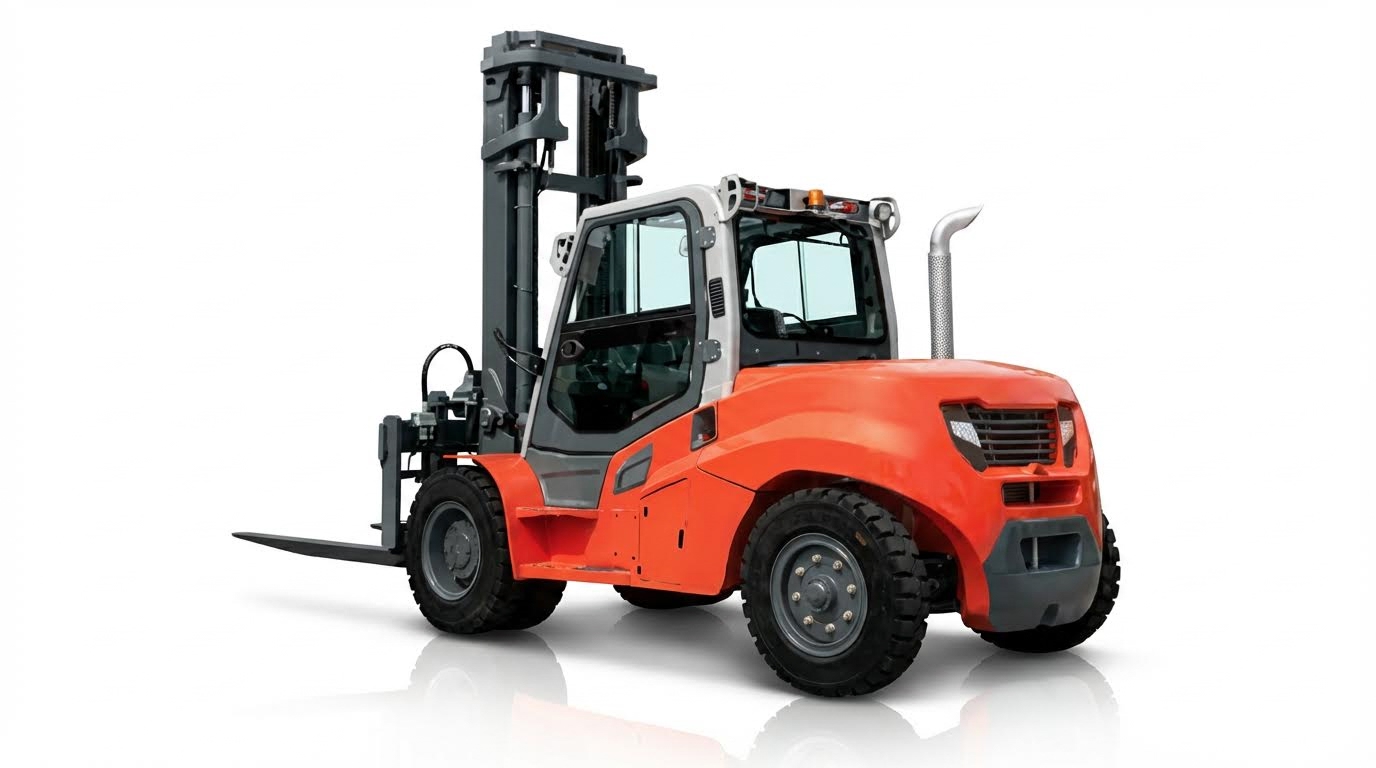
Even with the same truck and site, operator behaviour can change how much diesel does a forklift use per hour by a large margin. Studies of industrial fleets show many forklifts spend 30–40% of logged key‑on time idling, consuming 0.5–1.0 L/h while doing no useful work. Idle‑time analyses highlight that teaching operators to shut down during longer waits, or using auto‑idle / auto‑stop, can significantly cut fleet fuel bills. Hard acceleration, riding the inching pedal, and abrupt braking also waste energy as heat in the transmission and brakes instead of moving manual pallet jack.
Maintenance condition sets the baseline efficiency of the engine and hydraulics. A poorly tuned engine, dirty air filters, low‑quality or old oil, and worn components all mean more fuel is burned to produce the same shaft power. Field experience and guidance show that neglected filters and skipped services increase fuel consumption and breakdown risk. Maintenance recommendations emphasise regular servicing, filter changes, and system inspections to keep trucks operating near their designed fuel‑efficiency levels. When combined with telematics that track idle time and harsh driving, these measures give managers clear levers to reduce litres per hour without sacrificing throughput. Additionally, equipment like the drum dolly or electric drum stacker can improve operational efficiency.
How To Specify, Monitor, And Reduce Diesel Usage
Sizing the forklift to load, height, and duty cycle
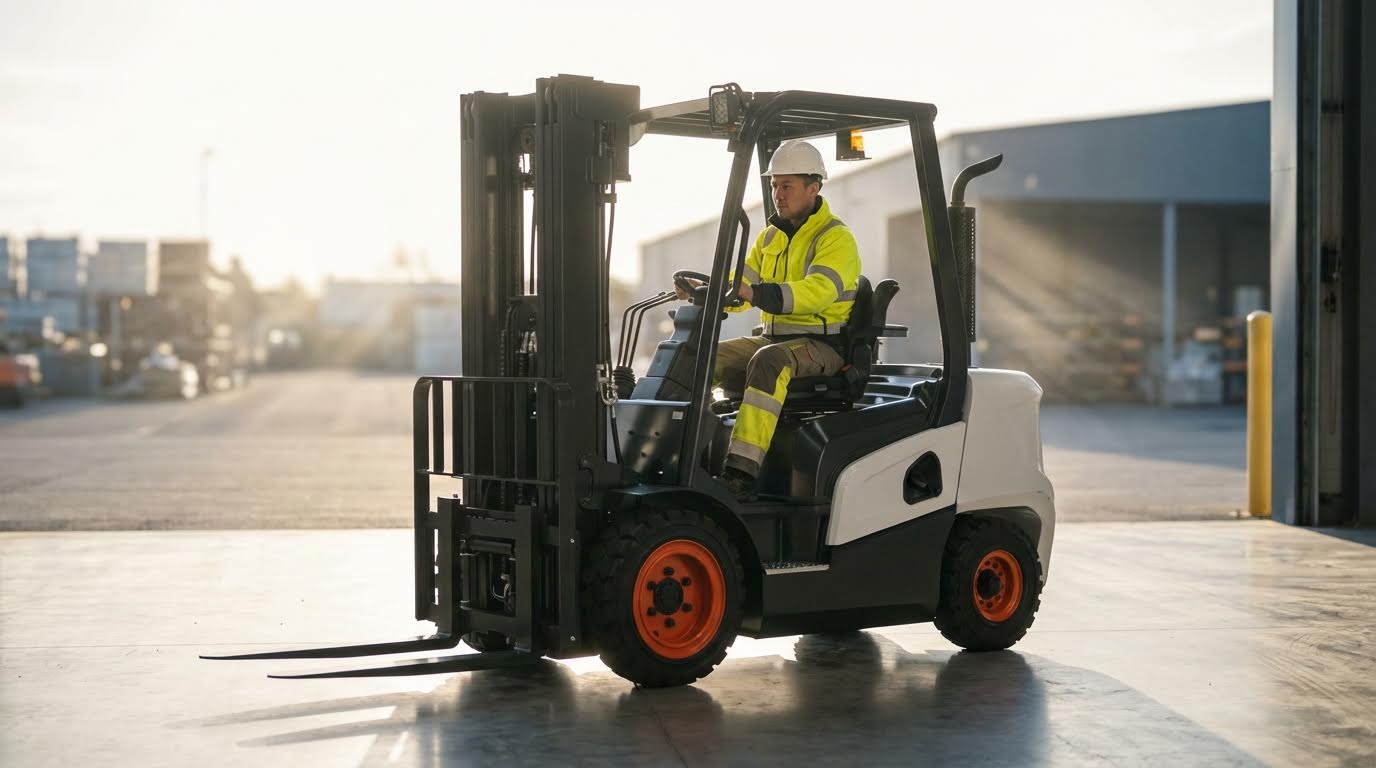
Start with the real work you need to do, not the truck that happens to be available. Define typical and peak pallet weights, lift heights, and the number of movements per shift. Oversizing wastes capital and can increase idle and travel time, while undersizing forces the engine and hydraulics to run near maximum output, raising diesel burn and wear. Right‑sizing is central when you ask how much diesel does a forklift use per hour, because capacity, mast height, and duty cycle all change the answer.
- Match capacity to the heaviest realistic load, then add a sensible safety margin (typically 10–15%), not a full size class.
- Consider lift height: higher masts need more hydraulic energy per cycle, increasing litres per hour.
- Classify duty cycle (light, medium, heavy). Heavy, continuous lifting with few breaks will push fuel use toward the top of the typical 2–5 L/h range. Typical diesel consumption is about 2–5 litres per hour depending on size and usage.
- Check that attachments (clamps, sideshifts, fork positioners) and their hydraulic demands are included in the sizing and fuel expectations.
Under‑capacity trucks running at or near their limit for most of the shift will show higher litres per tonne moved and more heat in the hydraulics. A correctly sized machine, working in its efficient band, will usually complete the same work with fewer lift cycles, lower engine speed, and lower diesel use per hour and per tonne.
Calculating fuel cost and work done per litre
To control fuel, you need numbers, not guesses. First, answer how much diesel does a forklift use per hour on your site by measuring actual fill volumes and hours. Then convert that into hourly cost and productivity per litre.
Step‑by‑step fuel and cost calculation
- Over a period (for example, one week), record total diesel purchased for a truck or fleet (litres).
- Read the hour meters at the start and end of the period to get operating hours.
- Use: Fuel use per hour = Total fuel (L) ÷ Operating hours.
- Use: Fuel cost per hour = Fuel use per hour × Diesel price per litre. A similar method using total fuel spend and operating hours is recommended in industry practice. Logging hour meters and fuel cost is a proven way to get hourly fuel cost.
Next, calculate work done per litre so you can compare trucks and shifts on equal terms. Use: Work efficiency = Total weight moved (tonnes) ÷ Total fuel consumed (litres). A modern, well‑maintained 3‑tonne diesel forklift often moves about 0.9–1.2 tonnes per litre under typical conditions. This tonnage‑per‑litre metric is widely used to benchmark diesel forklift efficiency.
| Metric | Formula | What it tells you |
|---|---|---|
| Fuel use per hour | L ÷ operating hours | Site‑specific answer to how much diesel does a forklift use per hour |
| Fuel cost per hour | L/h × price per litre | Direct operating cost of diesel per truck‑hour |
| Work per litre | Tonnes moved ÷ litres | Productivity of fuel, used to compare trucks and shifts |
Once you have these metrics, you can rank trucks, shifts, and operators, then target the worst performers with maintenance, training, or layout changes.
Using telematics, layouts, and training to cut burn
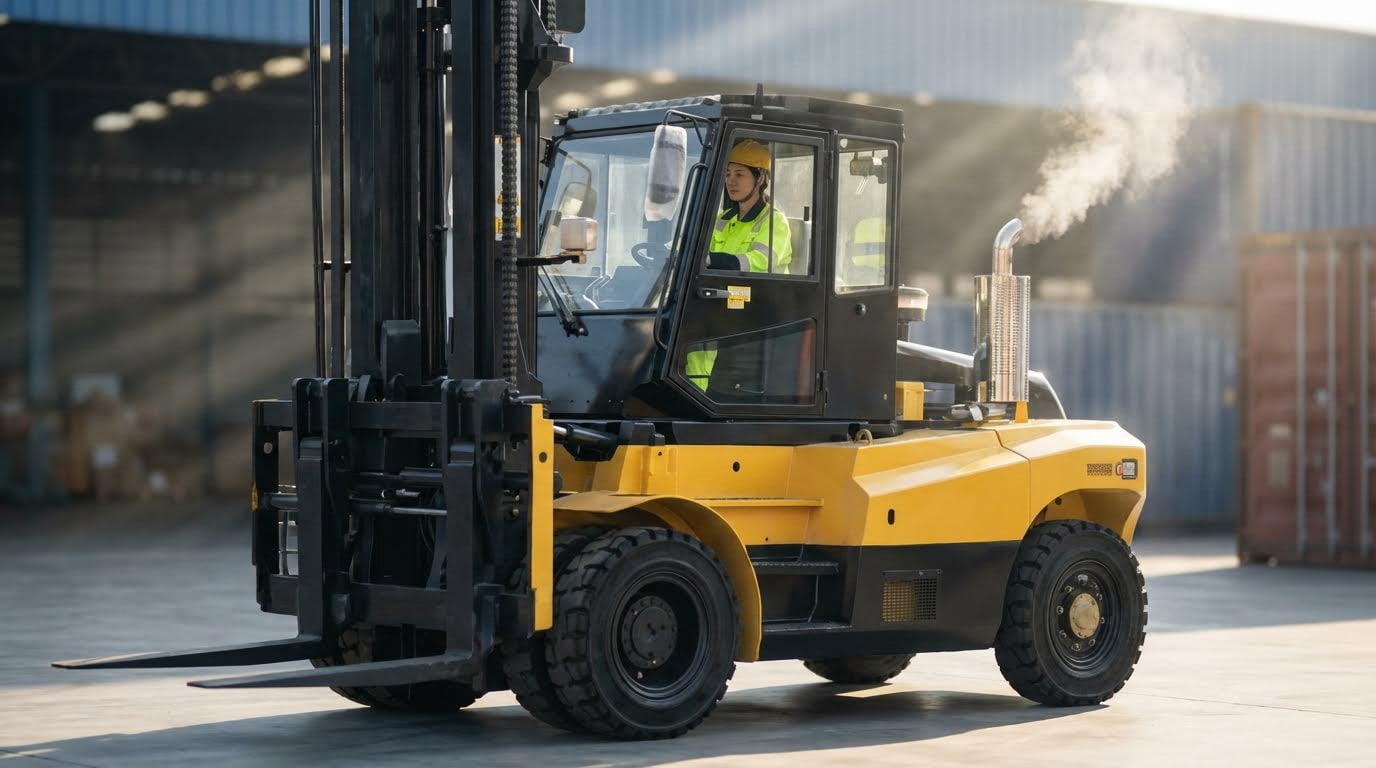
Telematics turns raw operation into data you can act on. Modern systems log engine hours, travel vs lift time, idle time, harsh acceleration, and fuel use. Many fleets show 30–40% of engine time at idle, burning fuel without moving any product. Idle time of 30–40% and 0.5–1.0 L/h fuel use at idle are commonly reported.
- Use telematics dashboards to flag trucks with high idle ratios, frequent harsh braking, or spikes in fuel rate. Telematics is widely used to track idle time and operator behaviour.
- Enable features such as auto idle‑down or automatic engine shut‑off after a set period of inactivity to cut wasted litres. Automatic shutdown after a few minutes of inactivity is a proven fuel‑saving strategy.
- Review site layout: long travel distances, congestion at docks, and very high racking all add to fuel use. Poor facility layout and high racks have been shown to increase fuel consumption.
- Run short, focused operator training on smooth driving, route planning, and shutting off during longer pauses. Gradual acceleration, avoiding sudden braking, and switching off during idle are recommended techniques.
These measures directly reduce the real‑world answer to how much diesel does a forklift use per hour on your site, often without changing the trucks themselves. Combined with regular maintenance, correct tire pressures, and clean filters, they can deliver double‑digit percentage reductions in litres per hour and fuel cost per tonne moved. Industry guidance highlights right‑sizing, maintenance, tire care, and driver behaviour as key levers for lower fuel burn.
Summary: Turning Fuel Data Into Lower TCO
Diesel forklift fuel consumption per hour is not a fixed catalogue number. It is the result of capacity choice, duty cycle, engine and hydraulic design, driveline layout, ground conditions, and how people actually drive and maintain the trucks. Treating 2–5 L/h bands as planning guides, then measuring your own litres per hour and tonnes per litre, turns fuel from a vague expense into a controllable KPI.
Engineering decisions set the efficiency ceiling. Modern engines, load‑sensing hydraulics, matched transmissions, and suitable tires all cut waste energy. Right‑sizing trucks to real loads and lift heights keeps engines in their efficient band instead of at the limit. Good floors and compact, well‑planned routes further reduce drag and travel time.
Operations then decide how close you get to that ceiling. Telematics, clear metrics, and simple operator training can trim idle time, harsh driving, and unnecessary trips. Regular servicing and clean filters protect both fuel burn and uptime. The most effective sites treat fuel as a performance metric, not just a cost. They specify correctly, monitor honestly, and act on the data. Follow the same approach and your diesel fleet can deliver lower litres per hour, lower cost per tonne, and a lower total cost of ownership with Atomoving equipment and handling aids.
Frequently Asked Questions
How much diesel does a forklift use per hour?
The diesel consumption of a forklift depends on factors like engine size, load weight, and operating conditions. On average, most diesel forklifts consume about 4 to 8 liters of fuel per hour under moderate use. Heavy-duty models or continuous operation may increase this range.
- Fuel efficiency improves with proper maintenance and operator training.
- Lighter loads and slower speeds reduce fuel consumption significantly.
What is the difference between a pump truck and a pallet jack?
A pump truck and a pallet jack are often used interchangeably, but there can be subtle differences. A pump truck typically refers to a hydraulic hand-operated device designed for lifting heavier loads compared to standard pallet jacks. Both tools are used in warehouses to move palletized goods efficiently.