Forklift pallet capacity and stacking safety depended on precise matching of equipment ratings, pallet design, and load characteristics. Engineers and safety managers needed to understand rated capacity, load centers, and derating to avoid tip-overs and structural failures. At the same time, facilities relied on clear stacking rules, OSHA-compliant layouts, and verified pallet quality to maintain stable, high-density storage. This article examined capacity fundamentals, engineering-based stacking criteria, and maintenance and monitoring technologies that supported reliable, compliant forklift and pallet operations.
Fundamentals Of Forklift And Pallet Capacity
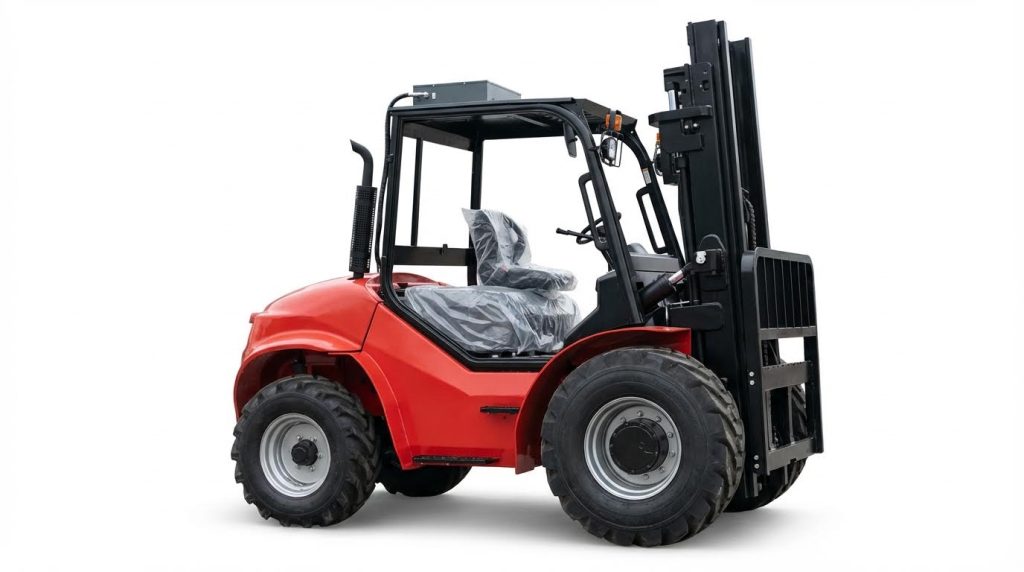
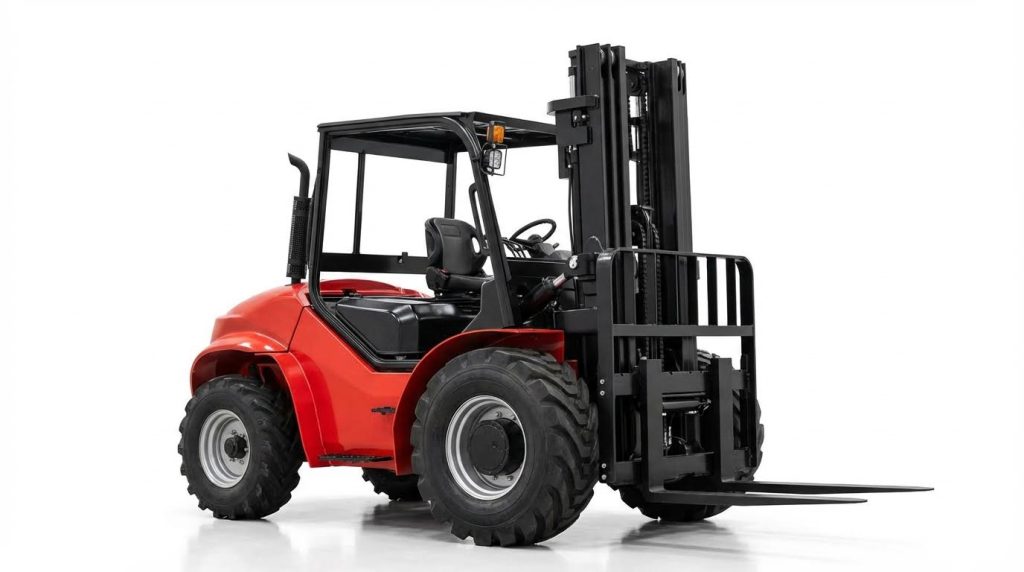
Fundamentals of forklift and pallet capacity defined how engineers sized equipment and set safe working envelopes. Capacity ratings, load centers, and derating rules determined what a truck could lift at a given height and reach. Pallet, attachment, and fork geometry then constrained how that capacity translated to real loads. Understanding these interactions allowed facilities to select appropriate trucks and pallet lifters, and to avoid overload conditions during stacking.
Rated Capacity, Load Center, And Derating
The rated capacity of a forklift or pallet lifter described the maximum load it could handle at a specified load center and lift height. Standards such as ISO and OSHA required that nameplates stated this capacity together with the reference load center, typically 500 mm for standard pallets. When the actual load center increased due to long pallets, overhanging product, or attachments, the effective capacity decreased, a process known as derating. Engineers calculated derating using the truck’s stability triangle and moment balance, comparing the overturning moment from the load with the restoring moment from the truck’s counterweight and wheelbase. Any change that moved the center of gravity forward, higher, or off-center reduced the safe capacity and required updated capacity charts or revised nameplates.
Matching Forklift, Pallet, And Attachment Loads
Safe operation required that the forklift’s derated capacity exceeded the combined mass of pallet, load, and any attachment. The forklift’s data plate capacity had to be adjusted for added attachment weight and shifted load center, for example when using clamps, rotators, or extended forks. Engineers treated the pallet as part of the load, accounting for its self-weight and allowable pallet rating to avoid crushing or structural failure. Operators then ensured that the actual product loading respected both the pallet’s design load and the forklift’s reduced capacity at the working lift height and mast tilt. This matching process minimized tipping risk and prevented damage to pallets, racking, and attachments during stacking and retrieval cycles.
Typical Capacities For Pallet Lifters And Trucks
Pallet lifters and pallet trucks covered a wide capacity spectrum to support different industrial applications. Overhead pallet lifters operated in ranges from 1 tonne to 20 tonnes, with lighter models such as Model 90 and 91 covering 1 tonne to 5 tonnes and heavy-duty versions like Model 95 and 96 covering 7.5 tonnes to 20 tonnes. Fork lengths for these lifters typically ranged from 36 inches to 72 inches, with unit self-weights escalating from roughly 245 pounds for light 1 tonne units to about 4850 pounds for 20 tonne heavy-duty units. Hydraulic hand pallet trucks such as CBY-AC series supported 2000 kilograms to 5000 kilograms, with fixed fork lengths around 1150 millimetres to 1220 millimetres and lift heights of about 110 millimetres. These catalog values gave engineers a baseline for selecting equipment, but final capacity decisions still depended on load geometry and stacking height requirements.
Effects Of Fork Length, Width, And Clearance
Fork geometry strongly influenced both capacity utilization and load stability. Longer forks increased the effective load center when loads extended near the fork tips, which reduced the usable capacity due to higher overturning moments. Adjustable fork width allowed better alignment with pallet stringers, improving load distribution and reducing point loads on deck boards, but wider spacing could also shift the resultant load center outward if product overhung. Typical adjustable ranges, such as 16 inches to 38 inches on Model 91 and 20 inches to 48 inches on Model 96, enabled matching to different pallet designs while maintaining stability. Recommended additional vertical clearance of 75 millimetres to 100 millimetres (about 3 inches to 4 inches) above the load simplified fork entry and exit, reducing incidental contact that might disturb stacked loads. Correct selection of fork length, width, and working clearance therefore supported both rated capacity use and safe stacking in constrained aisles.
Engineering Guidelines For Safe Pallet Stacking
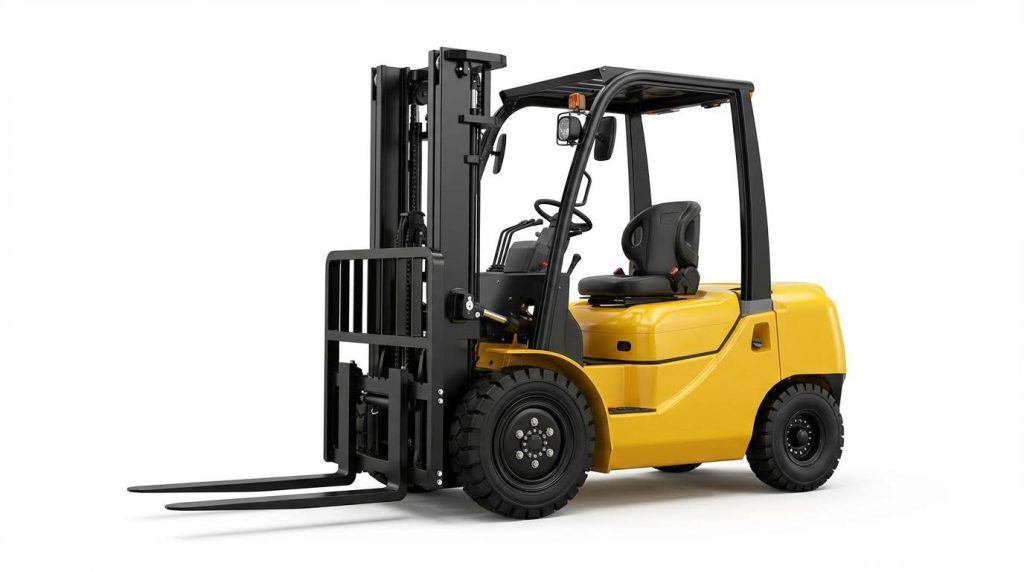
Engineering guidelines for pallet stacking translated safety regulations into concrete design and operating rules. Practitioners evaluated load geometry, pallet condition, aisle layout, and forklift capability as a coupled system. This section focused on quantifiable criteria for stability, OSHA compliance, and warehouse layout that reduced tip-over and collapse risks.
Load Stability, Center Of Gravity, And Stack Height
Engineers treated the pallet stack as a composite column with a moving center of gravity (COG). Placing the heaviest items at the bottom lowered the COG and increased the restoring moment against tipping. Operators stacked loads vertically with no overhang and avoided side stacking, which created eccentric loading and lateral instability. Taller stacks raised the COG and reduced the safety margin against overturning, so facilities limited height based on pallet strength, floor flatness, and forklift mast capacity.
Uniform layer patterns and even weight distribution across the pallet deck improved contact area and reduced point loading. Shrink wrap or banding confined the load, increased friction between units, and prevented shifting during acceleration, braking, or mast tilting. When lifting, operators kept the load as low as practicable and tilted it slightly back, which shifted the combined COG toward the truck and away from the forward tipping line. Spotting guides or visual markers supported accurate placement at higher levels, where small misalignments had larger destabilizing effects.
Double Stacking Criteria And OSHA Requirements
Double stacking required both pallets and product to remain within the forklift’s rated capacity at the relevant load center. Engineers allowed double stacking only for lightweight, uniform loads on structurally sound pallets with no visible damage or warping. Overloading pallets or the truck reduced safety factors and increased the probability of structural collapse or tip-over. Safety equipment such as stabilizer bars, backrests, and, where appropriate, rack beams provided additional restraint against sliding or overturning.
OSHA standards required stored materials to be secured against sliding, collapsing, or tipping. Facilities maintained at least 457 mm (18 in) of clearance between the top of pallet stacks and ceiling sprinklers to preserve fire protection performance. Operators wrapped or banded double-stacked loads so upper and lower pallets behaved as one unit under dynamic forces. They approached stacking locations slowly and in a straight line, especially in narrow aisles, to avoid lateral impact loads that could destabilize tall stacks.
Pallet Quality, Uniformity, And Racking Practices
Pallet structural integrity was a primary design variable in stacking safety. Cracked deck boards, broken stringers, or irregular geometry introduced uneven support and stress concentrations, which could trigger progressive collapse under stacked loads. Engineers specified uniform pallet dimensions and consistent designs for racking systems to avoid overhang that shifted load reactions outside rack beams. Using mixed pallet types in the same rack bay increased the risk of misalignment and localized failure.
Racking practices required even weight distribution across beams and adherence to rack manufacturer capacity ratings. Operators positioned forks level and fully under the pallet before lifting to prevent prying forces on deck boards. Before lowering into racks, they confirmed the load cleared beams and uprights to avoid impact damage. Uniform pallets also simplified automated or semi-automated storage systems, where predictable geometry and stiffness were critical for reliable positioning and safe high-bay stacking.
Traffic Layout, Aisle Design, And Stack Positioning
Warehouse layout strongly influenced stacking stability and incident rates. Engineers designed aisle widths to accommodate the largest forklift type, turning radius, and load dimensions with defined clearance margins. Straight, well-marked travel paths reduced sharp turns and sudden maneuvers that could induce lateral forces on stacked loads. Facilities avoided stacking pallets near exits, emergency equipment, sprinklers, or high-traffic walkways to minimize obstruction and impact risk.
Stacking locations used flat, structurally adequate floors with controlled surface defects to prevent rocking or differential settlement of stacks. Operators positioned the forklift as close as possible to the stack, aligned square to the load, and approached at low speed. Visual markers, floor lines, and designated buffer zones around stacks improved placement accuracy and reduced incidental contact by passing trucks. These layout and positioning controls complemented equipment capacity rules, creating a system-level approach to safe pallet stacking.
Maintenance, Monitoring, And Emerging Technologies
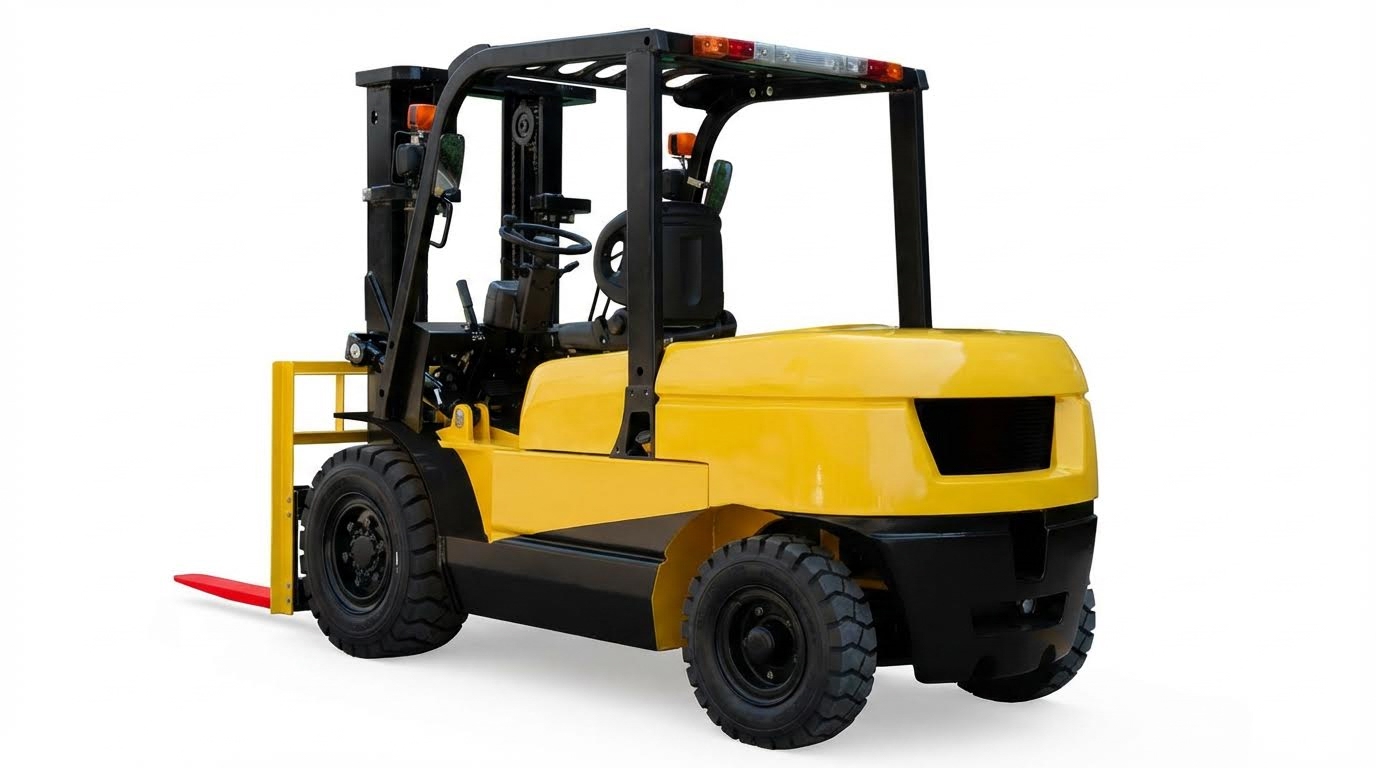
Maintenance, monitoring, and emerging technologies directly affected forklift pallet capacity and stacking safety. Robust inspection practices preserved rated capacity and reduced derating caused by hidden defects. At the same time, telematics, AI analytics, and digital twins enabled data‑driven decisions on loading limits, utilization, and risk. This section linked classical mechanical checks with modern monitoring tools to keep lifting and stacking operations within safe engineering margins.
Structural And Hydraulic Checks For Lift Integrity
Structural and hydraulic inspections ensured the forklift could safely deliver its nameplate capacity at the specified load center. Technicians examined forks for straightness, cracks, corrosion, and dents, since section loss or bending reduced moment capacity and increased fracture risk under rated load. They checked mast rails, carriage welds, and overhead guard for fissures or deformation that indicated prior overloads or impacts. Hydraulic systems required verification of fluid level, hose condition, seals, and cylinders to prevent pressure loss, jerky motion, or asymmetric lifting.
Inspectors typically performed a light test lift to confirm smooth, uniform mast travel and stable load holding without drift. Any leakage at fittings or cylinder rods indicated a reduction in effective lifting force and potential contamination of friction surfaces. Structural weaknesses in the frame or mast changed stiffness and could shift the combined center of gravity under load, reducing the true tipping threshold relative to the rated chart. Systematic structural and hydraulic checks therefore acted as a prerequisite before operating near maximum pallet weights or stacking at higher tiers.
Tires, Power Systems, And Control System Health
Tire condition strongly influenced forklift stability and effective capacity during pallet handling. Uneven wear, low pressure, or damaged solid tires altered contact patch geometry and raised the risk of lateral instability when traveling with elevated loads. Proper inflation or correct press‑on band sizing maintained the designed static and dynamic stability triangle. Good tire health also improved traction, reducing skidding on surfaces contaminated by grease or hydraulic leaks.
Power systems, whether internal combustion or electric, needed adequate output to sustain rated lift speeds and maintain hydraulic pressure under load. Weak batteries, corroded terminals, or poor charging practices caused voltage sag, slower mast response, and unexpected downtime in stacking cycles. Engine‑driven units required correct fluid levels, filter condition, and cooling performance to avoid power loss during continuous lifting. Control systems, including steering, brakes, and operator interfaces, had to function smoothly to place forks accurately, maintain low travel height, and execute controlled tilting.
Faulty controls increased the probability of abrupt motions that destabilized stacked pallets or exceeded racking tolerances. Regular verification of lights, alarms, and parking brakes supported safe operation in congested warehouse traffic. When combined, healthy tires, reliable power supply, and precise controls preserved the forklift’s designed handling envelope, allowing operators to respect capacity charts and stacking guidelines with confidence.
AI Predictive Maintenance And Telematics Tools
AI‑driven predictive maintenance and telematics transformed how fleets monitored lifting and stacking performance. Sensors on hydraulic circuits, mast stages, and drive systems streamed data on pressures, temperatures, lift cycles, and shock events. Machine‑learning models analyzed these signals to forecast component wear, such as chain elongation, seal degradation, or bearing fatigue, before they produced noticeable capacity loss. This approach moved maintenance from reactive repairs to scheduled interventions aligned with actual duty profiles.
Telematics platforms also tracked load weights, lift heights, travel speeds, and operator behaviors. Fleet managers used this information to identify frequent overloads, harsh braking, or repeated impacts with racking that could compromise structural integrity. Location and utilization data helped optimize truck assignment, ensuring high‑capacity units handled heavier pallet lifters and double‑stacking tasks. Integration with safety systems enabled automatic alerts when operators attempted lifts beyond configured thresholds or violated speed limits in high‑stack aisles.
By correlating usage patterns with failure histories, AI tools refined maintenance intervals for forks, hydraulics, and tires, preserving effective capacity over the forklift’s life. Data from telematics also supported compliance documentation, demonstrating adherence to OSHA‑aligned inspection routines and safe stacking practices. As algorithms improved, fleets achieved higher uptime while reducing the probability of capacity‑related incidents.
Digital Twins And Data-Driven Fleet Optimization
Digital twins of forklifts and warehouse environments provided a virtual testbed for capacity and stacking strategies. Engineers created physics‑based models of mast kinematics, frame stiffness, and tire behavior, then calibrated them with
Summary Of Best Practices For Capacity And Stacking

Safe forklift pallet handling depended on correctly matching equipment capacity, pallet rating, and load mass. Operators had to respect the rated capacity at the specified load center and account for derating due to attachments, long loads, or elevated lifting. Typical pallet lifters covered 1–20 T, while common hand pallet trucks handled 2–5 t with fork heights between roughly 75 mm and 195 mm, so engineering calculations needed to reference the actual data plate and manufacturer specifications. Additional fork clearance of about 75–100 mm above the load improved engagement without creating excessive lift height or instability.
Stacking practices focused on stability, controlled center of gravity, and regulatory compliance. Heavier items belonged at the bottom of the stack, with loads wrapped or banded and kept within pallet and rack dimensions to avoid overhang. Double stacking was appropriate only for uniform, relatively light loads on structurally sound pallets and could never exceed the truck’s rated capacity. OSHA rules required stacks secured against sliding, collapsing, or tipping and maintained at least 450 mm clearance to ceiling sprinklers, while aisles, exits, and walkways had to remain unobstructed.
Ongoing maintenance and monitoring preserved lifting capability and reduced accident risk. Regular inspections of forks, chains, mast, hydraulics, and frame integrity helped prevent hidden capacity loss and structural failure. Tire condition, power system health, braking, and control responsiveness directly influenced handling precision during stacking. By 2026, AI-driven telematics, predictive maintenance, and digital twins supported data-based decisions on loading patterns, routing, and fleet utilization, but did not replace OSHA-compliant training and daily checks. A balanced approach combined strict adherence to rated capacities, engineered stacking layouts, and systematic maintenance to achieve high throughput without compromising safety.