Safe, efficient forklift travel with full pallet loads depends on physics, equipment limits, and disciplined operating habits. This guide explains how should a lift operator travel with a full pallet, from understanding the stability triangle and load center to setting fork height, mast tilt, and speed while moving. You will also see how pallet design, racking systems, surface conditions, and maintenance routines affect risk. Use these best practices to reduce tipovers, product damage, and downtime while keeping operators and pedestrians safe.
Fundamentals Of Traveling With A Full Pallet
Stability triangle and load center basics
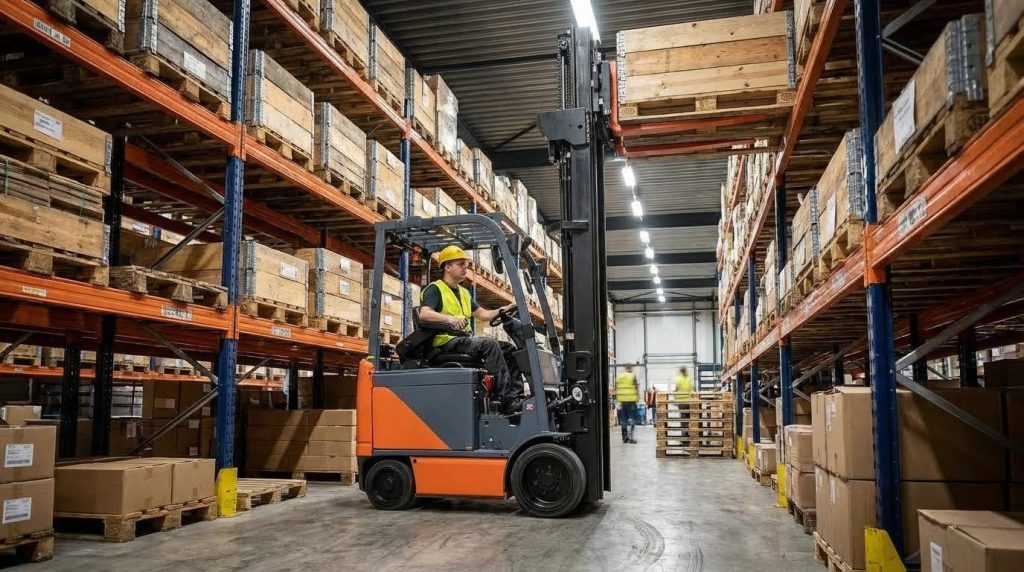
When asking how should a lift operator travel with a full pallet, the starting point is the truck’s stability triangle and the load center. The forklift’s stability triangle is formed between the two front drive wheels and the pivot point of the steer axle; keeping the combined center of gravity of truck plus load inside this triangle prevents tipover. The load center is the horizontal distance from the fork face to the load’s center of gravity, and most counterbalance trucks are rated at a 24 in (600 mm) load center. If a pallet is long, unevenly stacked, or off-center, the true load center moves forward, effectively reducing the truck’s safe lifting capacity and increasing the risk of forward tip or lost load. Operators must never exceed the rated capacity at the specified load center and should treat any increase in load height or reach as a further reduction of effective capacity. Traveling with a full pallet safely means keeping the load as low as practicable, the mast slightly tilted back, and the combined center of gravity well within the stability triangle at all times.
Centering, securing, and sizing the pallet load
Correct centering and securing of the pallet load are critical before the truck ever moves. The forks should be spread and adjusted so the weight is centered between the blades, then driven fully under the pallet at least two‑thirds of the load length to support the center of gravity. The load should be arranged so the heaviest items are closest to the carriage/front wheels, with no loose, leaning, or overhanging items; if product is damaged or unstable, it must be wrapped, banded, or otherwise secured before travel. When placing pallets into storage systems such as flow or drive‑in rack, the pallet must be centered in the lane and kept square to the rails while it is raised 3–4 in above the rails and then lowered carefully in place for pallet flow systems and similarly 3–4 in above the rail level in drive‑in lanes. Drive‑in rack guidance also requires using only sound, undamaged pallets of consistent size and staying within the lane’s rated capacity, because a failed pallet can lead to a dropped load or structural damage. In practical terms, how should a lift operator travel with a full pallet? Only after confirming the pallet size matches the system design, the load is centered and secure, and the forks fully support the pallet, should the operator lower the load to a safe travel height, slightly tilt the mast back, and move off at low speed while avoiding sudden steering, braking, or mast movements.
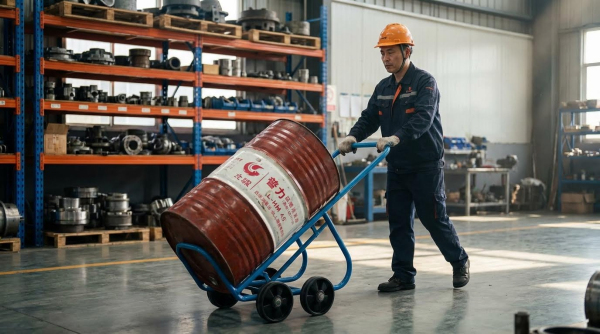
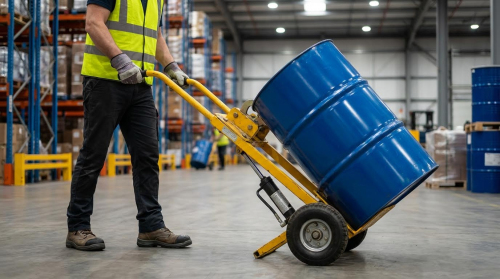
For handling pallets efficiently, equipment like the manual pallet jack or a hydraulic pallet truck can be used. Additionally, for drum handling, tools such as the drum dolly or forklift drum grabber double grips ensure safety and precision.
Technical Operating Practices While In Motion
Fork height, mast tilt, and travel speed
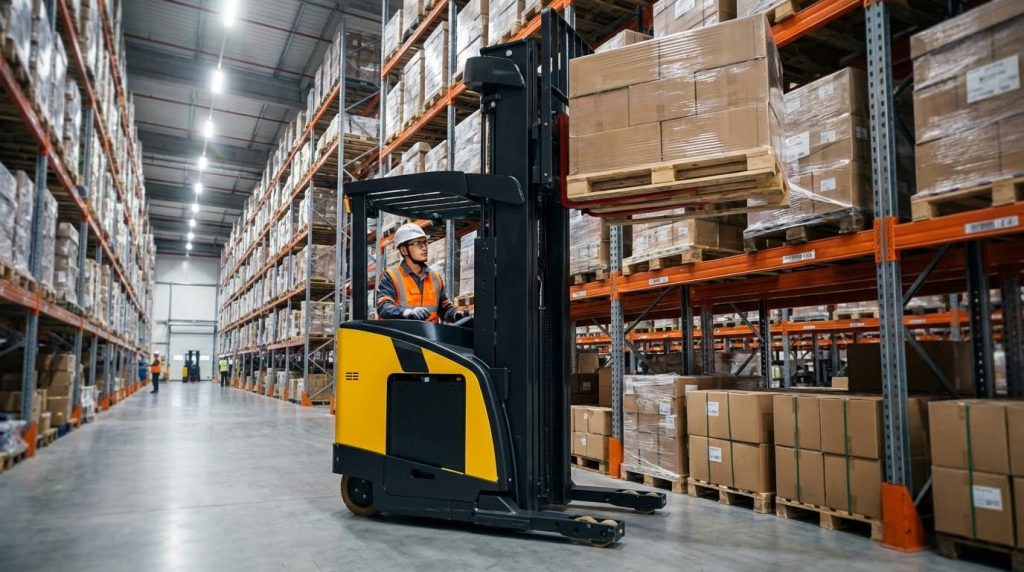
When people ask how should a lift operator travel with a full pallet, fork height and mast tilt are the first controls to get right. After lifting and clearing the stack, the load should be lowered again so the pallet is typically only several inches above the floor, not carried high in the air, to keep the center of gravity low and reduce tipover risk. Operators should travel with the mast slightly tilted back so the load rests against the load backrest, while avoiding any forward tilt when the forks are elevated, because forward tilt increases the load distance and makes the truck less stable and more prone to tip or drop the pallet. Travel speed must always match conditions: slow in congested areas, on rough floors, near pedestrians, and when turning, because lateral forces rise sharply with speed. A stable full pallet at low speed can become unstable at high speed, especially if the operator brakes or turns suddenly.
- Do not raise or lower the forks while the truck is moving; stop, set the brake, then adjust height.
- Use only enough rear tilt to stabilize the load; excessive tilt can shift marginally stable pallets.
- Drive more slowly when carrying near the truck’s rated capacity, as stopping distances increase.
Direction of travel, visibility, and aisle constraints
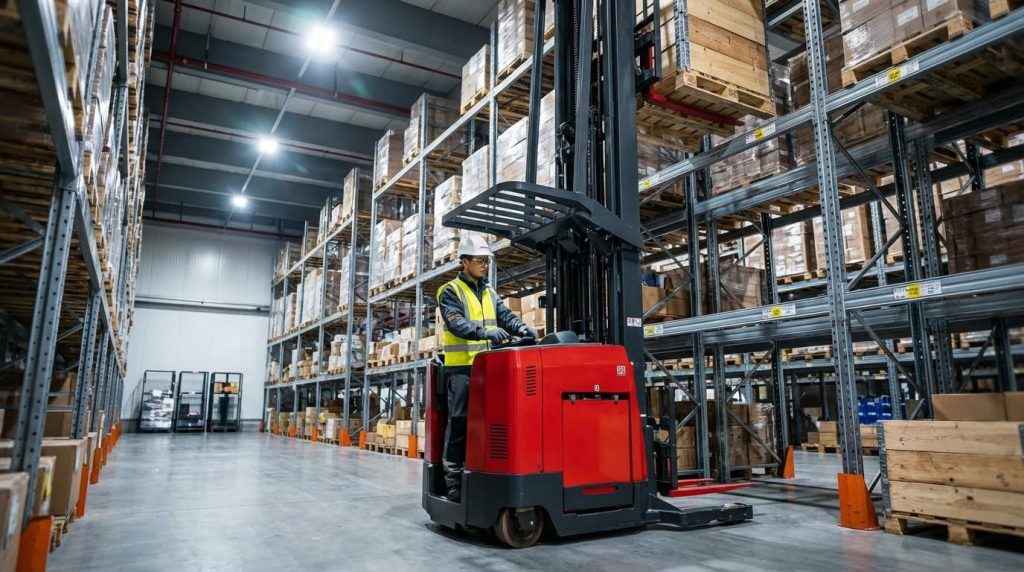
With a full pallet that blocks the forward view, the safest answer to how should a lift operator travel with a full pallet is: travel in reverse when visibility ahead is restricted. Operators should always maintain a clear line of sight in the direction of travel and use headlights and warning signals where lighting is poor or intersections are blind. In tight aisles, the truck should be aligned square to the travel path before moving, and turns should be wide and slow to prevent the load or truck from striking racking or columns. When approaching or leaving stacks or racking, operators must stop 20–30 cm (8–12 inches) from the load, keep the truck square, and avoid steering while the mast is raised, to prevent side loading of the mast and loss of stability during load handling in confined spaces. Sounding the horn at aisle ends, doorways, and trailer entries further reduces collision risk.
- Travel forks-first only when you have adequate forward visibility; otherwise travel in reverse.
- Keep within marked aisle widths and clearance envelopes; never “squeeze” past obstructions with an elevated load.
- Stop before adjusting fork height in aisles to avoid hitting beams, sprinklers, or lighting.
Racking systems, gradients, and surface conditions
How should a lift operator travel with a full pallet near racking, on slopes, or over uneven floors? Around pallet flow and drive-in systems, the truck must be squared to the lane before moving in, and the pallet should be carried only a few inches above the rails to maintain control. For pallet flow lanes, operators position the pallet centered over the lane, then slowly lower and tilt it down onto the rails while keeping it square, before backing out slowly as the pallet advances on its own according to established best-practice procedures. In drive-in racking, pallets are typically lifted about 3–4 inches above the rails, placed in the furthest position first, then the truck is backed out slowly, with the mast lowered before turning in the aisle to avoid striking the rack structure as part of safe loading and unloading steps. On gradients, operators should travel with the load upgrade (facing uphill) and avoid turning or side-travel on slopes, because gravity shifts the combined center of gravity toward the downhill side. Wet, oily, or damaged floors require reduced speed, greater stopping distance, and smoother control inputs to prevent skids and tipovers.
- Never push or drag a misaligned pallet along rack rails; re-lift, re-center, and reset the pallet instead to avoid stressing the rack and dropping the load.
- Reduce speed before entering or exiting trailers and use dock plates straight-on, not at an angle, to maintain stability over gaps and level changes when crossing bridge plates and trailer thresholds.
- Inspect travel paths for potholes, loose debris, and floor damage before moving full pallets through high-density storage areas.
Equipment, Maintenance, And Technology Considerations
Forklift type, capacity plate, and pallet design
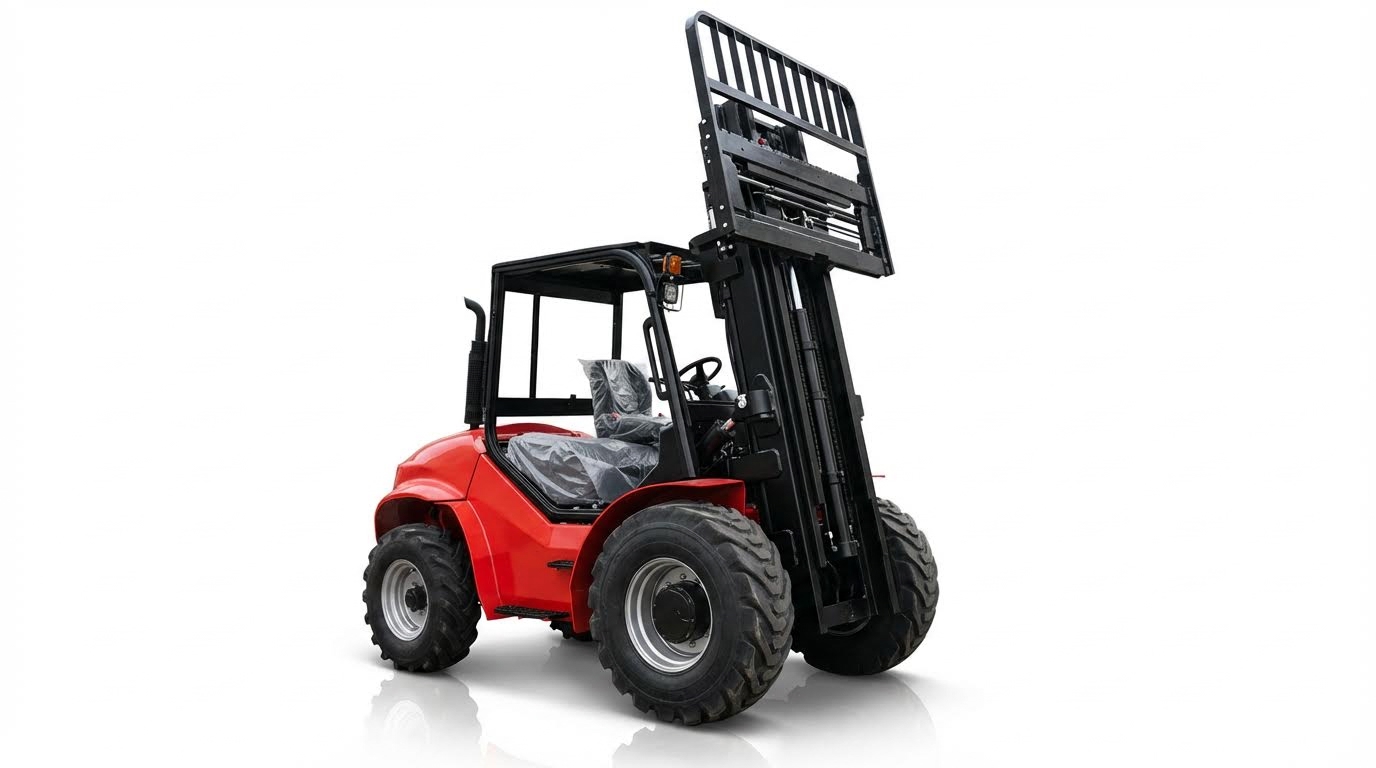
For safe, efficient full-pallet travel, the forklift type, its capacity plate, and the pallet design must work as a system. The capacity plate defines the rated load and load center; operators must never exceed this rating, especially with tall or overhanging loads that shift the center of gravity forward. Understanding how should a lift operator travel with a full pallet starts with matching the truck’s rated capacity to the actual pallet weight and load center to avoid tipovers and falling loads. Operators should keep the heaviest part of the load as close as possible to the carriage and front wheels to maintain stability. The load center is typically defined from the fork face to the load’s center of gravity, and many trucks are rated at a 24-inch load center. Pallet design also matters: all pallets in drive-in or flow systems must be consistent in size and strong enough for the rated system capacity, and damaged or weak pallets should be removed from service to prevent collapse or rail punch-through. Using only same-size, undamaged pallets keeps the load stable in drive-in lanes and prevents overstressing the racking. In pallet flow systems, pallets must sit square and centered on the rails so they advance correctly and do not hang up or shift. When these three elements—truck, rating, and pallet—are aligned, operators can travel with full pallets at low fork height, mast slightly back, and within rated capacity with a robust safety margin.
Inspection routines and condition monitoring
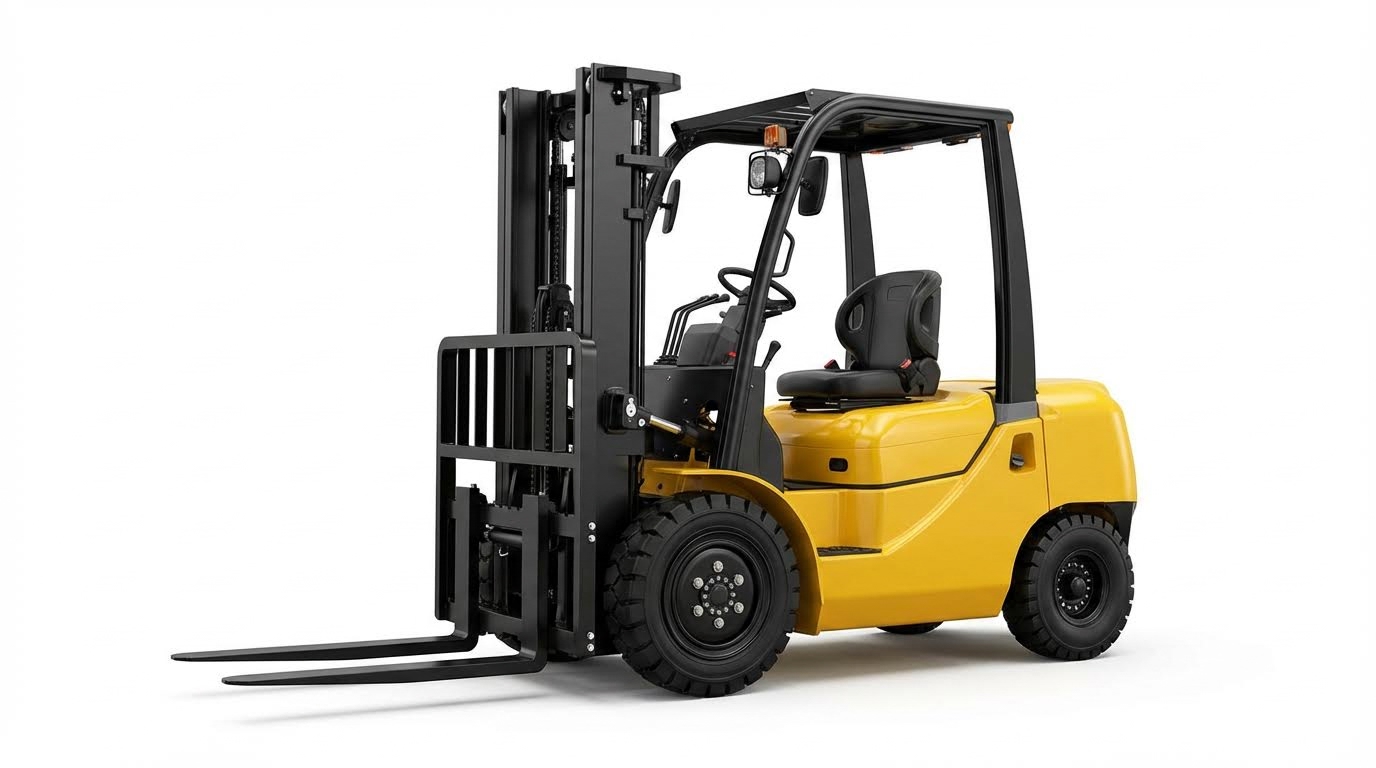
Consistent inspections are critical for safe full-pallet travel because they ensure the truck can control, steer, and stop a fully loaded pallet under real operating conditions. A structured inspection regime should include daily walk-around checks, weekly and monthly system checks, and an annual professional evaluation. Daily inspections should cover visible damage, fluid levels, brakes, steering, lights, horn, forks, and attachments, as well as tire condition and mast alignment. These checks verify that the truck can safely lift, tilt back, and transport a full pallet without unexpected mechanical failure. Weekly and monthly inspections should focus more deeply on hydraulic hoses, mast operation, and exhaust or power systems, looking for leaks, unusual noises, or corrosion. An annual inspection by a qualified technician, including a certified load test, confirms that the truck still meets its rated lifting capacity under controlled conditions. Safe practice requires that power be off and keys removed during maintenance, with appropriate PPE and restricted access so no one accidentally activates the truck. Keeping detailed inspection and maintenance records helps detect trends such as recurring hydraulic leaks or brake wear before they cause incidents. When operators know a truck is well maintained, they can focus on how should a lift operator travel with a full pallet—low, slow, and stable—rather than compensating for mechanical issues.
Emerging tech: Li-ion, telematics, and safety systems
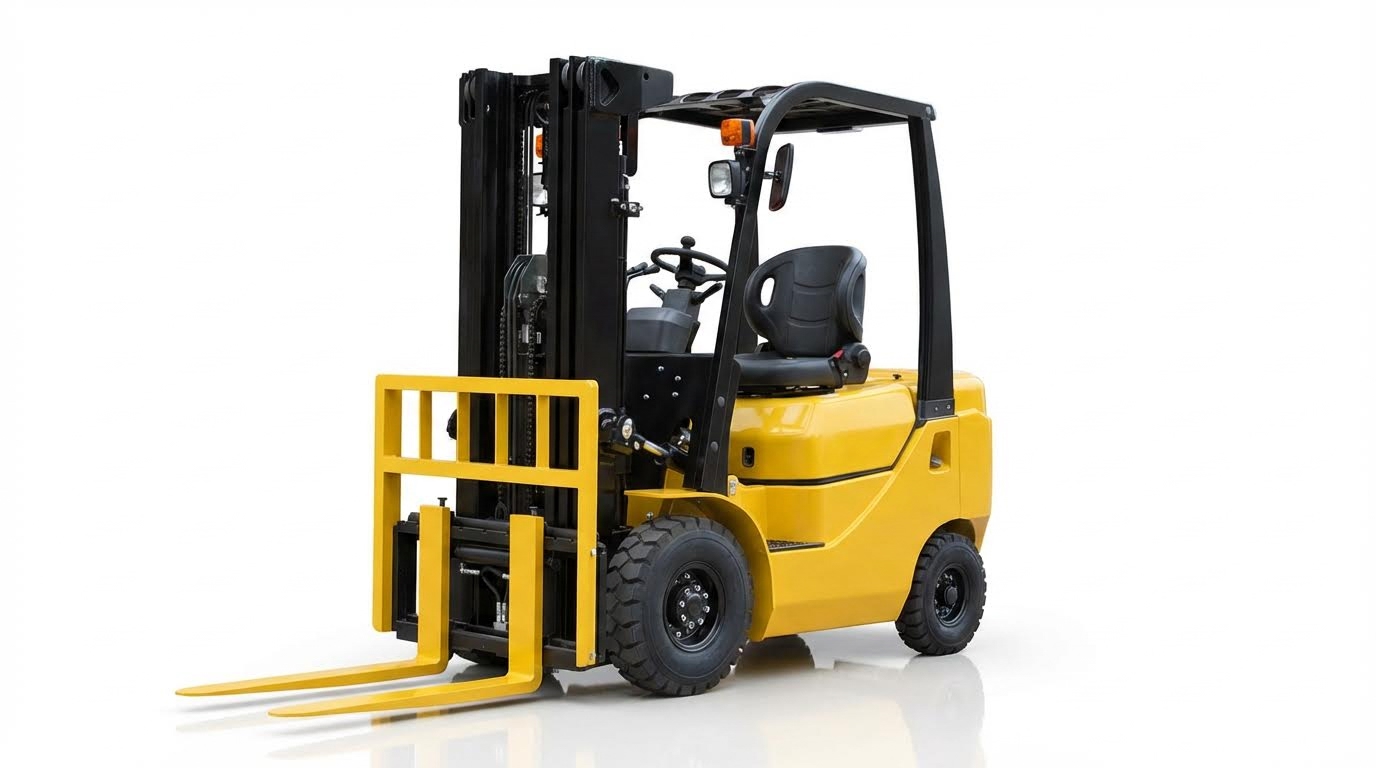
Modern technologies such as Li-ion power, telematics, and advanced safety systems significantly improve control and visibility when traveling with full pallet loads. Li-ion batteries provide consistent voltage and power throughout the discharge cycle, so lift speed, tilt response, and travel speed remain predictable even near the end of a shift. This consistency helps operators maintain stable, repeatable behavior when carrying full pallets at low fork height with the mast slightly back. Telematics systems capture data on travel speed, impacts, overload attempts, and pre-shift checklist completion, which allows supervisors to identify unsafe behaviors and refine training around how should a lift operator travel with a full pallet. Impact and overload sensors can automatically log events and, in some setups, restrict truck performance after a severe incident until it is inspected. Vision aids such as cameras, proximity sensors, and warning lights improve visibility around the truck, especially in tight aisles or near racking, reducing the risk of contacting structures while carrying a full pallet. Over time, combining these technologies with disciplined maintenance and correct capacity-plate use creates a closed-loop safety system: equipment stays within its limits, operators receive feedback on their driving patterns, and management can adjust rules and traffic layouts based on real data.
“”
Summary Of Key Practices For Full-Pallet Travel
Safe travel with a full pallet is never about one rule. It comes from combining physics, equipment limits, and repeatable habits. The stability triangle and load center define how close you are to a tipover. Low fork height, slight back tilt, and centered, well-secured loads keep the combined center of gravity inside that safe zone. When operators respect the capacity plate and pallet design, the truck, pallet, and racking act as one stable system instead of three weak links.
In motion, the priorities are clear sight, controlled speed, and smooth inputs. Reverse travel when the load blocks the view, stop before raising or lowering, and slow down near racking, slopes, and poor floors. These choices turn tight aisles, gradients, and dock edges from high-risk zones into routine work.
Maintenance and technology then lock in those gains. Structured inspections, accurate records, and modern tools such as telematics and vision aids give early warning before a defect or bad habit becomes an accident. The best practice for any site is simple: set clear rules based on stability and capacity, train operators to run low, slow, and square, maintain trucks and pallets to standard, and use Atomoving equipment and technology to monitor and enforce those standards every shift.
Frequently Asked Questions
How should a lift operator travel with a full pallet on the forks?
To travel safely with a full pallet, approach the load squarely and insert the forks fully under the pallet. Lift the load slightly and tilt the forks back to stabilize it. Keep the heavier side of unbalanced loads closer to the carriage. Before moving, ensure the load is secure and tilted slightly backward. Always maintain a safe speed and watch for obstacles or pedestrians. Forklift Safety Guide.
What safety precautions should operators follow when moving a loaded pallet?
Operators should separate forklift traffic from pedestrians whenever possible and always yield the right of way to people on foot. Stop immediately if someone crosses your path. Ensure the load is stable and secure before traveling. Maintain a safe speed and stay alert for any hazards in the area. OSHA Pedestrian Safety.