
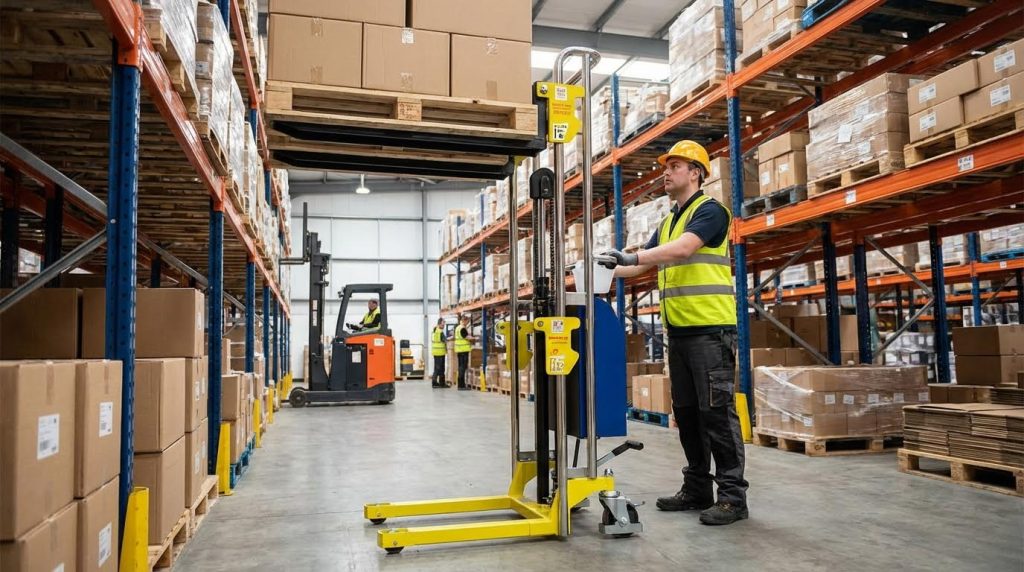
Manual pallet stacking is the point where physics, fire codes, and human limits collide, so “how high to manually stack pallets” must be engineered, not guessed. This guide explains safe stack heights, stability ratios, and ergonomic controls so you can set clear, defensible warehouse rules. You will see how regulatory limits, 4:1 stability criteria, and sprinkler clearance interact with real-world pallet weights and floor conditions. Use it as a blueprint to write or tighten your manual pallet stacker policy without sacrificing throughput or worker safety.
Defining Safe Manual Pallet Stack Heights
Safe manual pallet stack heights balance three things: ergonomics, stability, and fire protection. In most facilities, this means keeping manually built stacks around 1.5–1.8 m unless a formal engineering and fire review allows more.
If your safety team is asking how high to manually stack pallets, you should set a default rule, then tighten or relax it based on pallet type, load type, and sprinkler design. The subsections below translate typical limits and regulatory constraints into simple, enforceable numbers.
Typical height limits for manual pallet stacking
For everyday operations, most facilities cap how high to manually stack pallets at roughly shoulder height for loaded pallets and up to about 1.8 m for empty pallets. This keeps both strain injuries and collapse events rare.
- Loaded pallets (cartons, product): 1.2–1.5 m typical manual limit – Keeps work near elbow/shoulder height and within easy reach.
- Empty wood pallets: 1.2–1.8 m common practice – Controls tipping risk while staying within ergonomic reach for most workers.
- Ergonomic ceiling: Top of stack at or below shoulder height (≈1.2–1.5 m for many workers) – Reduces back and shoulder strain from high lifts.
- Fire-safety ceiling for idle pallets: About 1.8 m per many NFPA/insurance programs – Limits fire load and improves sprinkler effectiveness.
- Theoretical stability ceiling: Up to 3–4 times pallet base dimension on perfect floors – Used only as an engineering check, not a manual work target.
| Use Case | Typical Manual Stack Height | Key Driver | Operational Impact |
|---|---|---|---|
| Loaded pallets built by hand | 1.2–1.5 m | Ergonomics and reach limits | Most workers can build without overhead lifting or step-stools. |
| Empty wood pallet storage (manual stacking) | 1.2–1.8 m | Fire load and collapse control | Usually 6–8 pallets high, still reachable for manual handling. Source |
| Idle pallet fire-code maximum (engineered) | Up to ≈4.6 m | NFPA high fire load limits | Only acceptable with engineered fire protection and spacing. Source |
| Theoretical stability limit (4:1 ratio) | ≈3.0–4.0 m for 1,000–1,200 mm base | Geometry and tipping risk | Engineering check only; manual programs usually set lower limits. Source |
Ergonomic guidance usually keeps individual lifts around 23 kg under ideal conditions, with lower limits when twisting or reaching is involved. Empty wood pallets often weigh 15–25 kg, so stacking them above waist height is already borderline for a single person and often triggers a team-lift rule. manual pallet jack
💡 Field Engineer’s Note: When I set site rules for how high to manually stack pallets, I start with 1.5 m as a hard default and only move higher if I see flat floors, light pallets, and a proven ergonomic program. Anything above chest height with 20+ kg pallets quickly turns into a strain and drop hazard.
How to convert these numbers to your pallet size
For a standard 1,200 mm × 1,000 mm pallet, a 1.5 m manual limit equals roughly one full product pallet plus one or two extra carton layers. For smaller pallets, keep the same 1.2–1.5 m height cap, not “X pallets high,” because stability and ergonomics depend on absolute height, not just count.
Regulatory and insurance constraints on stack height
Regulatory and insurance rules answer how high to manually stack pallets by capping fire load, requiring stability, and protecting sprinkler performance. These rules often force lower limits than pure engineering or ergonomics would suggest.
- OSHA-style requirement: Stacks must be stable and secure against sliding or collapse – Any leaning or overhanging stack can be a violation.
- NFPA idle pallet limits: About 4.6 m maximum height and 37 m² pile area for wood pallets – Recognizes pallets as a severe fire load. drum dolly
- Group spacing: Idle pallet stacks grouped in fours with at least 2.4 m between groups – Slows fire spread and allows access. hydraulic pallet truck
- Sprinkler clearance: Minimum 450 mm below sprinkler deflectors – Prevents stored goods from blocking water spray. battery-powered stacker
- Insurer rules: Often stricter than NFPA, especially for wood pallets in high-hazard commodities – May cap heights at 1.8–2.0 m for manual stacks. Source
| Constraint Type | Key Limit or Requirement | What It Means for Manual Stack Height | Operational Impact |
|---|---|---|---|
| Sprinkler clearance | ≥450 mm gap below sprinkler deflectors | Max stack height = sprinkler height – 450 mm (or more, per design) | In a 6.0 m building with sprinklers at 5.5 m, storage must stay ≤5.05 m. Source |
| NFPA idle pallet guidance | ≈4.6 m max height, 37 m² per pile | Sets an absolute structural/fire ceiling, not a manual handling target | Manual programs usually stay far below this, especially near exits and walkways. Source |
| Insurance requirements | Lower height caps and 2.4 m spacing between groups | May limit stacks of idle pallets to 1.8–2.0 m | Reduces fire load density and improves access for firefighting. Source |
| General safety regulations | Stacks must be stable, no risk of sliding or collapse | No fixed height number, but any leaning or damaged stack is non-compliant | Forces you to remove broken pallets and rework unstable stacks immediately. Source |
Fire codes treat idle wood pallets as a high fire load because they ignite quickly and burn intensely. That is why NFPA and insurers push for modest heights, small pile footprints, and clear separation distances between pallet groups, even if your floors and pallets could structurally support taller stacks. Source
💡 Field Engineer’s Note: When you write a site rule on how high to manually stack pallets, start with three filters: (1) sprinkler clearance minus at least 450–600 mm, (2) insurer/Fire Marshal caps on idle pallets, and (3) your ergonomic limit around 1.5 m. The lowest of those three becomes your true maximum.
Aligning internal SOPs with external rules
To avoid conflicts, document your internal manual stack limit (for example, 1.5 m for loaded pallets, 1.8 m for empty pallets) and show how it sits below NFPA/insurer and sprinkler limits. Train supervisors to stop any stack that approaches sprinkler heads, blocks egress routes, or leans beyond visual plumb.
Engineering Stability: Ratios, Loads, And Floor Conditions
This section explains how to decide how high to manually stack pallets by linking the 4:1 stability ratio, load prep, and floor/sprinkler limits into one practical rule set.
When supervisors ask how high to manually stack pallets, the engineering answer is: only as high as your stability ratio, load quality, floor, and fire protection safely allow, which is usually far below the theoretical maximum.
| Design Factor | Typical Safe Range / Rule | Operational Impact |
|---|---|---|
| Manual pallet stack height (general) | 1.5–1.8 m for manual stacking programs | Aligns with shoulder height; reduces strain and collapse risk. Guides how high to manually stack pallets in most warehouses. |
| Empty pallet manual stacks | 1.2–1.8 m high, often ≤ 8 pallets | Controls fire load and tipping for idle pallets on floor. |
| 4:1 height‑to‑base ratio | Max height ≈ 4 × narrowest base dimension | Sets absolute tipping limit on flat floors with good loads. |
| Sprinkler vertical clearance | ≥ 450 mm below deflectors | Caps stack height regardless of stability or ergonomics. |
| Idle pallet fire limits | ≈ 4.6 m and 37 m² per pile (engineered systems) | Defines upper fire‑protection envelope; insurers often require less. |
💡 Field Engineer’s Note: In real facilities, I rarely approve manual stacks above 1.8 m even when math says 3–4 m is possible. Impacts from manual pallet jack and uneven floors eat your safety margin fast.
Applying the 4:1 height‑to‑base stability ratio
The 4:1 height‑to‑base ratio is the core engineering tool to keep free‑standing pallet stacks from tipping, but you must derate it for real‑world floors, traffic, and load quality.
- Basic rule: Maximum stack height ≈ 4 × the narrowest base dimension – This keeps the center of gravity inside the footprint under moderate side loads.
- Example, standard pallet: A 1,200 mm × 1,000 mm pallet has a 1,000 mm narrow side – Theoretical limit ≈ 4,000 mm stack height if the load is uniform and flush. Reference
- Practical manual limit: Most manual programs cap stacks at 1.5–1.8 m – This preserves a large safety margin versus the 4:1 tipping line. Reference
- Good floors assumed: The 4:1 rule assumes a flat, level, strong floor – Any slope or cracking increases tipping risk at a given height.
- Uniform pallets assumed: The rule also assumes consistent pallet size and condition – Broken or mixed pallets reduce usable height even if the math “works.”
| Pallet Base Size (mm) | Narrowest Dimension (mm) | 4:1 Theoretical Max Height (m) | Typical Manual Program Limit (m) | Operational Impact |
|---|---|---|---|---|
| 1,200 × 1,000 | 1,000 | ≈ 4.0 | 1.5–1.8 | Most common; manual limit is less than 50% of theoretical. |
| 1,200 × 800 | 800 | ≈ 3.2 | 1.4–1.6 | Narrower base; height must drop to maintain stability. |
| 1,000 × 1,000 | 1,000 | ≈ 4.0 | 1.5–1.8 | Square footprint; similar engineering envelope to 1,200 × 1,000. |
- Impact of overhang: If cartons overhang the pallet edge, treat the overhang side as the base – This effectively narrows the stable footprint and lowers safe height.
- Traffic exposure: Near walkways, doors, or busy forklift lanes, many sites cut the ratio to 3:1 or less – This compensates for bumps and side impacts.
- Uneven or soft floors: On asphalt, dock plates, or worn concrete, reduce permitted height further – Deflection under load tilts the stack and shifts the center of gravity.
How to quickly check your 4:1 limit on site
Measure the narrowest pallet side in mm. Multiply by 4 to get the absolute theoretical height limit in mm. Compare this to your current stack height and then apply reductions for: poor floors, mixed pallets, irregular loads, and nearby pedestrian traffic. Most supervisors then set a manual cap 30–50% below the theoretical value.
Load preparation, patterns, and weight distribution
Load quality decides whether you can safely approach your calculated height; poor patterns or weight distribution will fail long before the 4:1 ratio says they should.
- Heaviest at the bottom: Place the densest cartons in the first layers – This keeps the center of gravity low and reduces sway. Reference
- Even footprint loading: Spread weight across the full deck, not just the center – Prevents the pallet from rocking when moved or when stacked.
- Avoid point loading: Don’t stack narrow crates or drums in a single column – They create a tall, slender tower with a very small base.
| Stacking Pattern | Stability Characteristics | Recommended Use | Operational Impact |
|---|---|---|---|
| Block stacking | Layers interlock like bricks | Most manual case picking and mixed SKU loads | High lateral stability; supports higher stacks within ergonomic limits. Reference |
| Column stacking | Cases aligned vertically | Very rigid cartons, light loads | Good vertical strength but poor side resistance; needs wrap or strapping. |
| Pinwheel / rotated | Alternating carton orientation | Airflow or special stability needs | Improves stability but is slower to build; useful for tall but light stacks. |
- Flush with pallet edges: Keep cartons inside the pallet footprint – Overhang reduces effective base width and invites edge damage.
- Use anti‑slip sheets: Add friction between layers – Allows a slightly higher safe stack at the same 4:1 ratio because layers are less likely to slide. Reference
- Secure with stretch wrap: Wrap from pallet deck upward – Mechanically ties load to pallet and each layer to the next, improving resistance to bumps. Reference
- Straps and bands: Use with corner boards on tall stacks – Adds tensile restraint, especially for column‑stacked cartons.
- Carton rigidity: Tall, soft cartons crush at much lower heights – This can cause a progressive lean even if the 4:1 ratio is respected.
💡 Field Engineer’s Note: When I audit sites asking how high to manually stack pallets, the limiting factor is usually carton crush and layer slip, not the pallet itself. If you see “banana” layers or bulging sides, your current height is already too high.
Quick checklist before stacking above 1.5 m
Confirm pallets are undamaged and uniform. Verify cartons are rigid and not already deformed. Use block or pinwheel patterns, not loose column stacks. Add anti‑slip sheets every 3–4 layers for smooth packaging. Apply stretch wrap tied into the pallet deck. If any of these are missing, cap the stack at or below 1.5 m.
Fire load, sprinkler clearance, and separation distances
Fire protection rules and sprinkler clearances often decide the real ceiling on how high to manually stack pallets, especially for idle wood pallets with high fire load.
- High fire load of pallets: Idle wood pallets ignite quickly and burn intensely – NFPA treats them as a special high‑hazard commodity. Reference
- NFPA idle pallet envelope: Guidance allows ≈ 4.6 m stack height and ≈ 37 m² pile footprint with appropriate protection – But this is an engineered maximum, not a manual handling target.
- Insurance carrier rules: Insurers often cap idle pallet stacks at 1.8 m and require 2.4 m between groups of up to four – This sharply reduces fire spread and collapse exposure. Reference
| Fire / Sprinkler Constraint | Typical Value | Effect on Stack Height | Best For… |
|---|---|---|---|
| Sprinkler vertical clearance | ≥ 450 mm below deflector | Subtract from roof height to get max storage height | Any floor‑stacked storage under sprinklers. Reference |
| Idle pallet stack height (engineered) | Up to ≈ 4.6 m | Requires suitable sprinkler design and controls | Mechanically handled pallet storage, not manual stacking. |
| Idle pallet manual program | 1.8–2.0 m typical | Balances fire load, ergonomics, and stability | Everyday warehouse pallet stacks built by hand. Reference |
| Separation between pallet groups | ≥ 2.4 m | Acts as fire break and access lane | Large floor areas with multiple pallet piles. |
- Hydraulic design limit: Sprinkler systems are designed for a maximum storage height – Your manual stack must sit below that hydraulic design point plus clearance.
- Ceiling height is not the limit: You cannot stack “up to the roof” – You must leave at least 450 mm, and often 600 mm, clear to the sprinkler deflectors. Reference
- Group size control: Limiting each pallet pile footprint to ≈ 37 m² reduces total fire load – This prevents one large fire from overwhelming sprinklers.
- Empty vs loaded pallets: Loaded pallets may have different fire characteristics – Always match stack height to the more restrictive of product or pallet fire rules.
💡 Field Engineer’s Note: When we calculate how high to manually stack pallets in a new warehouse, we start with sprinkler drawings, not just pallet dimensions. If your stacks creep into the sprinkler “spray zone,” you’ve already failed compliance.
Putting it all together: a simple rule for supervisors
For typical 1,200 mm × 1,000 mm pallets on a good concrete floor under standard sprinklers, a conservative manual rule is: keep mixed‑product stacks at or below 1.5–1.8 m; keep idle pallet stacks at or below 1.8–2.0 m; maintain at least 2.4 m separation between pallet groups; and always verify at least 450–600 mm vertical clearance to sprinklers. Only consider higher stacks with engineered analysis and mechanical handling equipment.
Ergonomic And Safety Practices For Manual Stacking
Ergonomic and safety practices for manual stacking define how high to manually stack pallets without overloading workers or creating unstable, hazardous stacks. This section links height limits to human capability, PPE, and housekeeping controls.
Manual handling limits, team lifts, and task design
Manual handling limits, team lifts, and task design set the human boundary for how high to manually stack pallets while protecting backs, shoulders, and hands.
| Control Aspect | Typical Guideline / Range | Operational Impact |
|---|---|---|
| Single‑person lift weight | Up to about 23 kg under ideal conditions (ergonomic guideline) | Set pallet and case weights so one person can lift repeatedly without fatigue. |
| Typical empty pallet weight | About 15–25 kg for wood pallets (common range) | Often near the upper safe limit for frequent solo lifting, especially at or above waist height. |
| Ergonomic lift zone | Between mid‑thigh and shoulder height, roughly 700–1,500 mm for most adults | Design stacking so most lifts stay in this “power zone” to reduce back strain. |
| Manual stack height for good ergonomics | Top of stack at or below shoulder height, about 1.2–1.5 m for most workers (shoulder‑height guidance) | Defines a practical answer to how high to manually stack pallets without overreaching. |
| Empty pallet stack height (manual) | About 1.5–1.8 m recommended for manual stacking (manual stacking limits) | Keeps top pallet near chest/shoulder level and maintains stability. |
| Team lift trigger | Heavier than about 20–23 kg, or any lift above waist–chest height with awkward grip (ergonomic guideline) | Use two‑person lifts for heavy pallets or high placements to cut injury risk. |
- Set lift weight limits: Cap routine single‑person lifts around 10–20 kg – builds a buffer below the 23 kg “ideal” upper guideline for real‑world twisting, reaching, and repetition.
- Define when to team lift: Require two people for heavy pallets, damaged pallets, or stacking above chest height – shares the load and reduces sudden back overloads.
- Keep the work in the power zone: Design tasks so hands stay roughly 700–1,500 mm from the floor – minimizes deep bending and overhead reaching.
- Use lift tables or self‑levelers: Raise or lower the pallet as layers are added or removed – keeps the top layer in a comfortable band and speeds work.
- Plan pallet flow: Position “build” and “take‑away” points close together – cuts walking distance with loads and reduces fatigue.
- Limit manual stack height: For full product pallets, set internal rules so manual stacking stops at shoulder height and higher tiers use equipment – aligns ergonomic limits with stability rules on how high to manually stack pallets.
- Step 1: Measure worker shoulder height for your crew – sets a realistic maximum manual stack height by body size, not just theory.
- Step 2: Compare pallet weight and size to lift limits – identifies which SKUs require team lifts or mechanical aids.
- Step 3: Map high‑frequency tasks (per hour) – high‑repetition lifts need lower weight limits to prevent cumulative strain.
- Step 4: Redesign tasks with aids and team lifts – moves the highest‑risk lifts off single workers.
- Step 5: Train and enforce – clear rules stop workers from “hero lifting” pallets beyond safe limits.
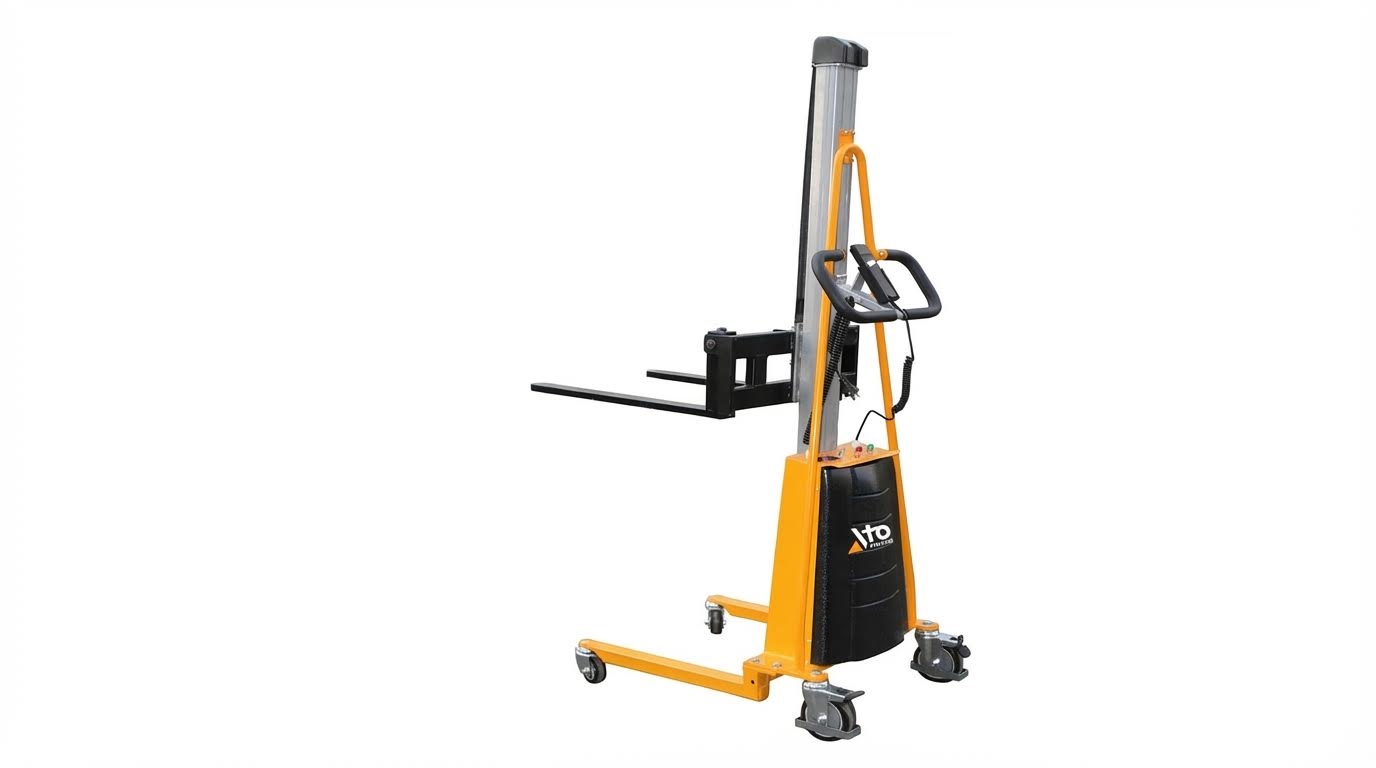
💡 Field Engineer’s Note: In busy docks, I treat any manual stacking above about 1.5 m as “equipment‑only” unless a lift table or battery-powered stacker is in place. Once workers start pushing pallets overhead, they instinctively lean and twist, and that is where shoulder and lumbar injuries appear within weeks, not years.
How manual limits tie back to stack height rules
Even if stability calculations allow 3.0–4.0 m stacks, manual handling programs usually cap hand‑stacked heights nearer 1.5–1.8 m. Above that, use pallet jacks, stackers, or forklifts to build higher tiers while workers stay in ergonomic zones.
PPE, housekeeping, and pallet inspection controls
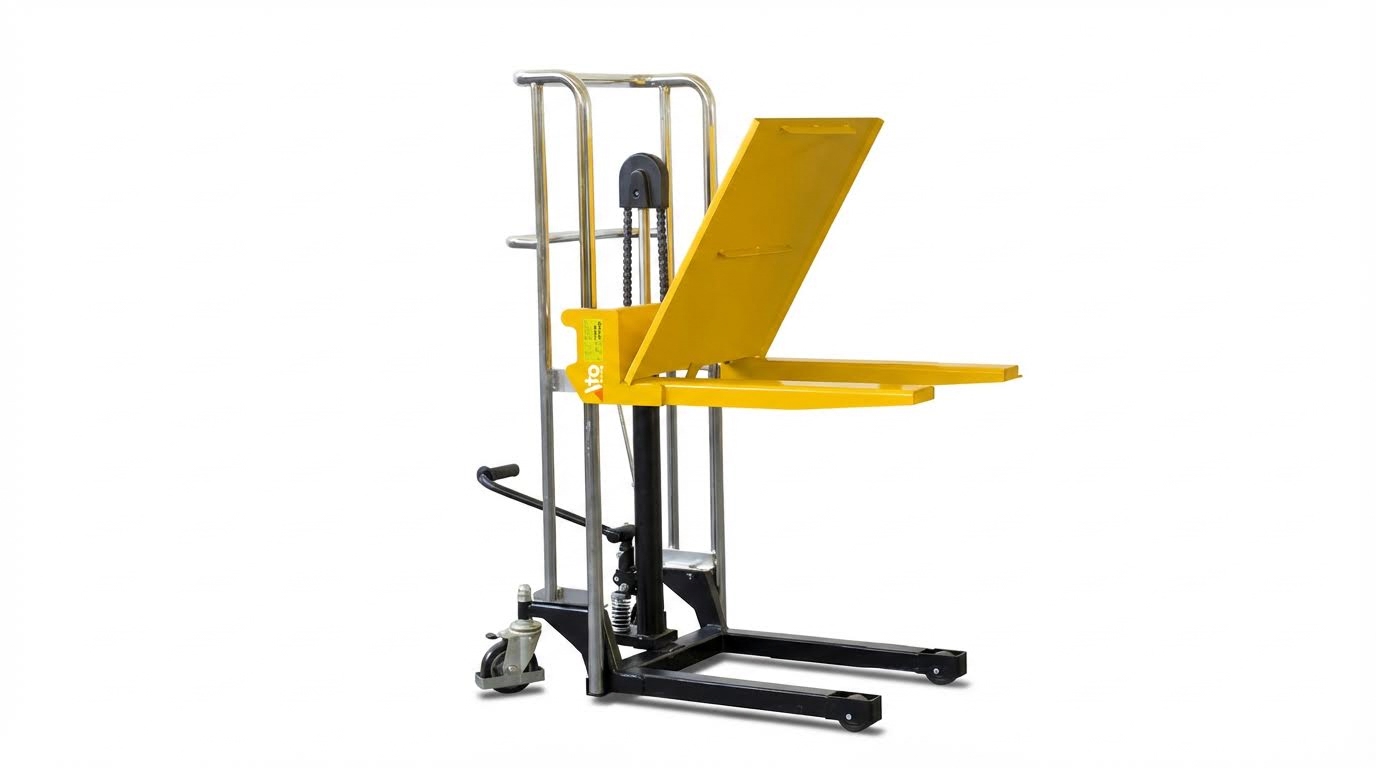
PPE, housekeeping, and pallet inspection controls reduce the day‑to‑day risks of cuts, trips, and collapses when deciding how high to manually stack pallets on the floor.
| Control Type | Key Requirement | Operational Impact |
|---|---|---|
| Hand protection | Cut‑resistant gloves to guard against splinters and nails (PPE guidance) | Improves grip on rough wood and reduces hand injuries during high‑frequency stacking. |
| Foot protection | Safety shoes/boots rated for impact and puncture from dropped pallets or nails (PPE guidance) | Protects toes and soles when maneuvering stacks in tight aisles. |
| Additional PPE | Eye, hearing, and high‑visibility protection as environment requires (PPE guidance) | Makes pedestrians visible and shields from flying debris in mixed traffic areas. |
| Pallet inspection | Remove broken pallets (cracked boards, missing bottom boards, protruding nails) from circulation (inspection guidance) | Prevents stack lean or sudden collapse under load. |
| Segregation of small pallets | Stack smaller pallets separately or on top, not at the base (stability guidance) | Maintains a consistent footprint so higher stacks stay stable. |
| Housekeeping | Regularly remove pallet debris, broken deckboards, and nails from walkways (housekeeping guidance) | Reduces trips, slips, and puncture injuries near stacked pallets. |
| Stack inspection | Check for leaning, shifting, or loose items and rework immediately (stability checks) | Prevents partial collapses as height increases. |
- Inspect every pallet: Reject pallets with broken boards, cracks, or protruding nails – weak pallets are the first failure point in tall manual stacks.
- Standardize pallet materials: Avoid mixing small with full‑size pallets in the same stack – keeps the base footprint uniform and predictable.
- Clear the floor: Sweep chips and nails before building stacks – gives a flat, high‑friction base to support higher stable piles.
- Set clear stack markers: Paint or tape maximum stack height lines on walls or posts – gives workers a visual cue for how high to manually stack pallets in each zone.
- Use containment for marginal loads: Apply stretch wrap or banding to stacks that include smaller or slightly damaged pallets – adds redundancy if an inner pallet shifts.
- Train on “no‑climb” rules: Ban climbing on pallet stacks – prevents falls and sudden toppling when workers use stacks as ladders.
Why inspection matters more as height increases
As stack height approaches 1.5–1.8 m for manual operations, small defects in pallets or floor flatness amplify into visible lean. Systematic inspection and debris removal are what let you safely use the full ergonomic stack height instead of stopping early because stacks look unsafe.
💡 Field Engineer’s Note: When I see splinters and broken deckboards on the floor, I assume stack heights are already too aggressive or pallets are not being culled. Before raising any limit on how high to manually stack pallets, I insist on a housekeeping and pallet‑inspection audit; otherwise, extra height just multiplies existing defects into accidents.
Final Considerations For Manual Pallet Stacking Policies
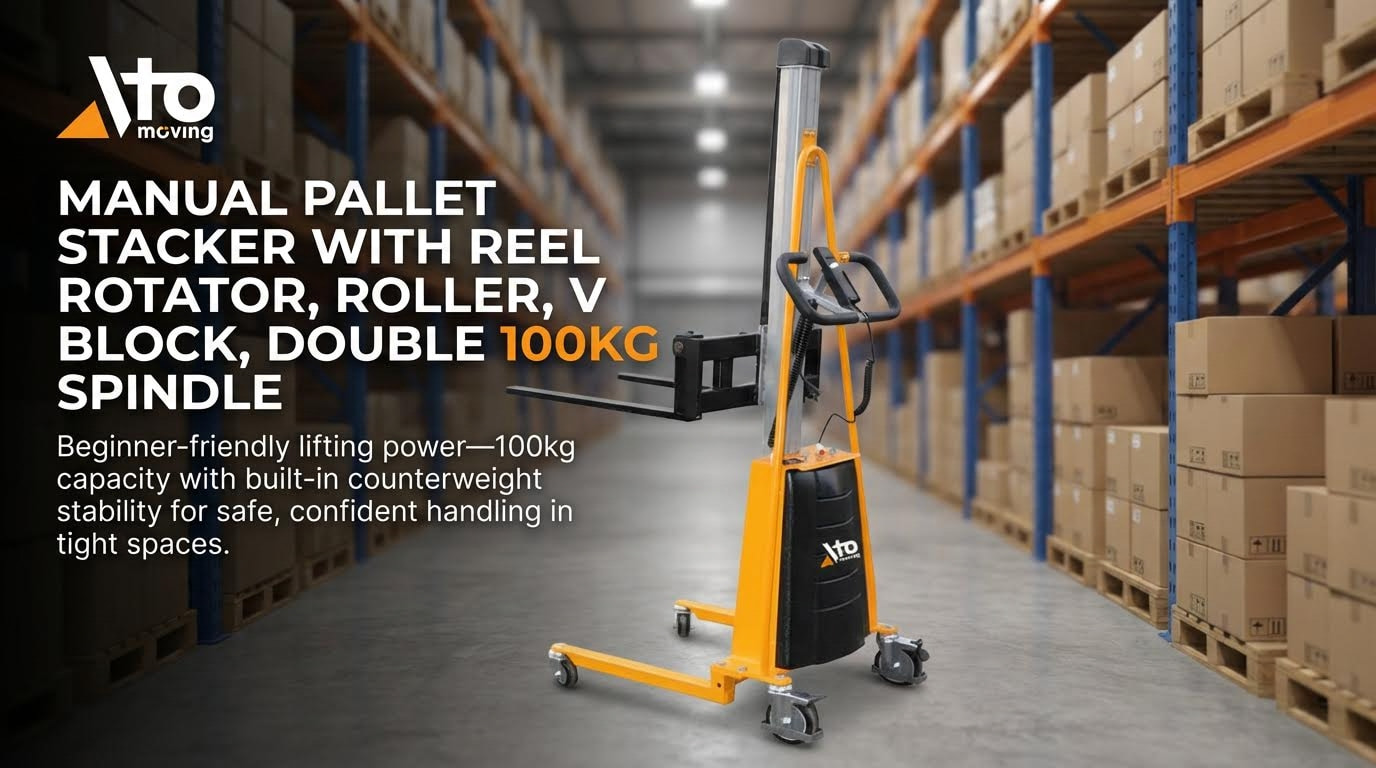
Final manual pallet stacking policies should convert technical limits into simple, enforceable rules that answer how high to manually stack pallets for your specific building, workforce, and insurance constraints.
At policy level, you are locking in three things: maximum heights, where certain stacks are allowed, and how people actually handle pallets day to day. The goal is consistent decisions across shifts, not case‑by‑case judgment calls.
- Set a default manual stack height limit: Cap mixed palletized product and empty pallet stacks at about 1.5–1.8 m for manual work – keeps tops near shoulder height and within common ergonomic and stability guidance. Typical 1.5–1.8 m manual limits align with programs that keep the working zone between waist and shoulder.
- Differentiate by use case: Write separate limits for loaded pallets, empty pallets, and idle pallet storage – fire load and collapse risk are very different for each. Idle wood pallets carry high fire load and often face stricter height and grouping rules than product stacks. NFPA and insurers typically cap idle pallet groups at 1.8 m in manual programs with 2.4 m separation between groups of up to four stacks.
- Embed the 4:1 stability rule as a check: Require supervisors to verify that planned stack height does not exceed roughly four times the narrowest base dimension on level floors – prevents slender, easy‑to‑tip columns. For a 1,000 mm narrow side pallet, that means 4,000 mm is the absolute engineering ceiling, but manual policies should sit far lower to allow for misalignment and impacts. 4:1 ratio guidance is best treated as a hard stop, not a target.
- Respect sprinkler and ceiling clearances: Mandate a minimum 450–600 mm vertical gap from the top of any stack to sprinkler deflectors or the roof deck – protects sprinkler performance and avoids over‑storage. Many facilities adopt a simple rule: “If you can’t see at least half a meter of air gap, the stack is too high.” Sprinkler design normally requires at least 450 mm clear.
- Tie height limits to manual handling rules: Connect “how high to manually stack pallets” to weight per lift, team‑lift thresholds, and use of mechanical aids – this keeps spine loads within ergonomic limits. Many programs set 10–20 kg as a typical per‑lift range and require two‑person handling or equipment once stacking above chest height or when empty pallets weigh 15–25 kg. Ergonomic guidance and manual stacking controls both support this approach.
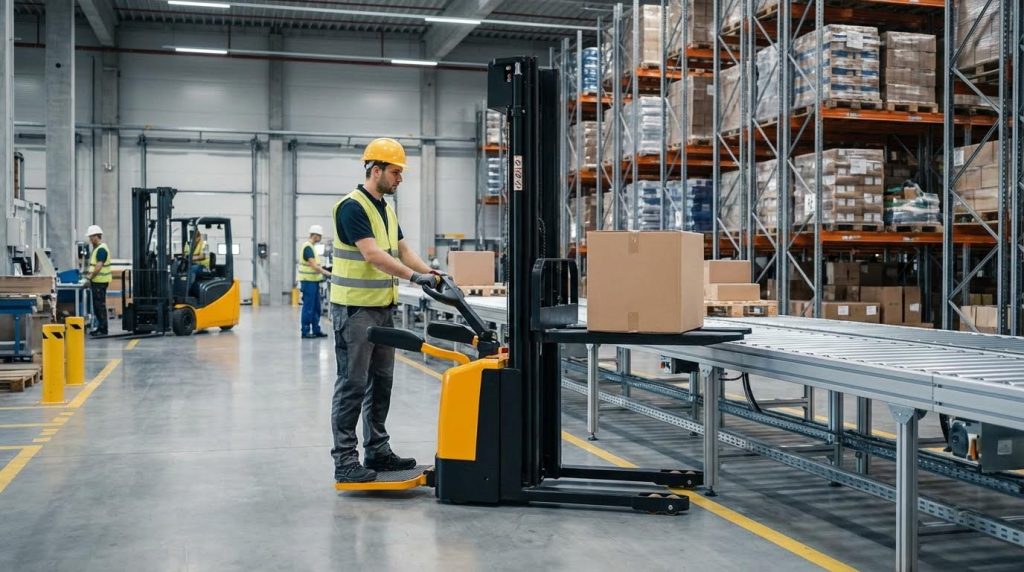
- Define when to switch from manual to mechanical: Create a simple trigger, such as “above 1.8 m or above shoulder height, use a manual pallet stacker or forklift” – prevents risky overhead lifts and unstable hand‑built towers. This also clarifies that very tall stacks (3.0–4.0 m) belong only to mechanically built, engineered storage, not to manual handling zones.
- Align with fire and insurance requirements: Integrate NFPA, OSHA, and insurer rules into written procedures rather than relying on memory – keeps stacks legal and insurable. For idle wood pallets, that means respecting approximate 4.6 m maximum engineering caps and 37 m² pile footprints only where specifically engineered fire protection exists, while everyday manual policies stay well below those limits. NFPA‑style limits and regulatory constraints should appear explicitly in your SOPs.
- Standardize stacking patterns and pallet quality checks: Require block or interlocking patterns for manual stacks and formal inspection of pallets before stacking – reduces leaning stacks and sudden collapses. Policies should ban broken pallets from stack bases, segregate smaller pallets, and specify that overhang is not allowed because it compromises the 4:1 stability envelope. Pallet inspection and segregation of broken pallets should be written into daily routines.
- Lock in PPE and housekeeping as non‑negotiables: Make gloves, safety footwear, and clear aisles mandatory conditions for stacking – prevents many crush, puncture, and trip injuries before they start. Policies should state that stacking stops if debris, loose deckboards, or nail remnants are present until the area is cleaned. PPE and housekeeping expectations need the same weight as height limits.
- Specify roles, training, and enforcement: Assign who sets limits, who trains, and who can authorize exceptions – this keeps “how high to manually stack pallets” from becoming a negotiation on the shop floor. Training should cover safe lifting techniques, recognizing unstable stacks, and when to call for mechanical help, with periodic audits to verify that written rules match actual practice.
Translating engineering limits into a simple local rule
A practical way to embed all this is to convert the engineering and regulatory detail into one or two plain‑language shop‑floor rules, for example: “With manual handling, do not stack any pallets or palletized product higher than 1.6 m or your shoulder height (whichever is lower). Above this, use a battery-powered stacker or forklift and maintain at least 500 mm below the sprinklers.” This kind of rule answers the everyday question of how high to manually stack pallets while still respecting 4:1 stability, ergonomic limits, and fire protection constraints in the background.
Final Considerations For Manual Pallet Stacking Policies
Manual pallet stacking policies work when they turn engineering, fire protection, and ergonomics into clear limits on the floor. Height is only “safe” when stack geometry, pallet quality, worker capability, and sprinkler clearance all agree. If any of these is weak, you must lower the limit or switch to equipment.
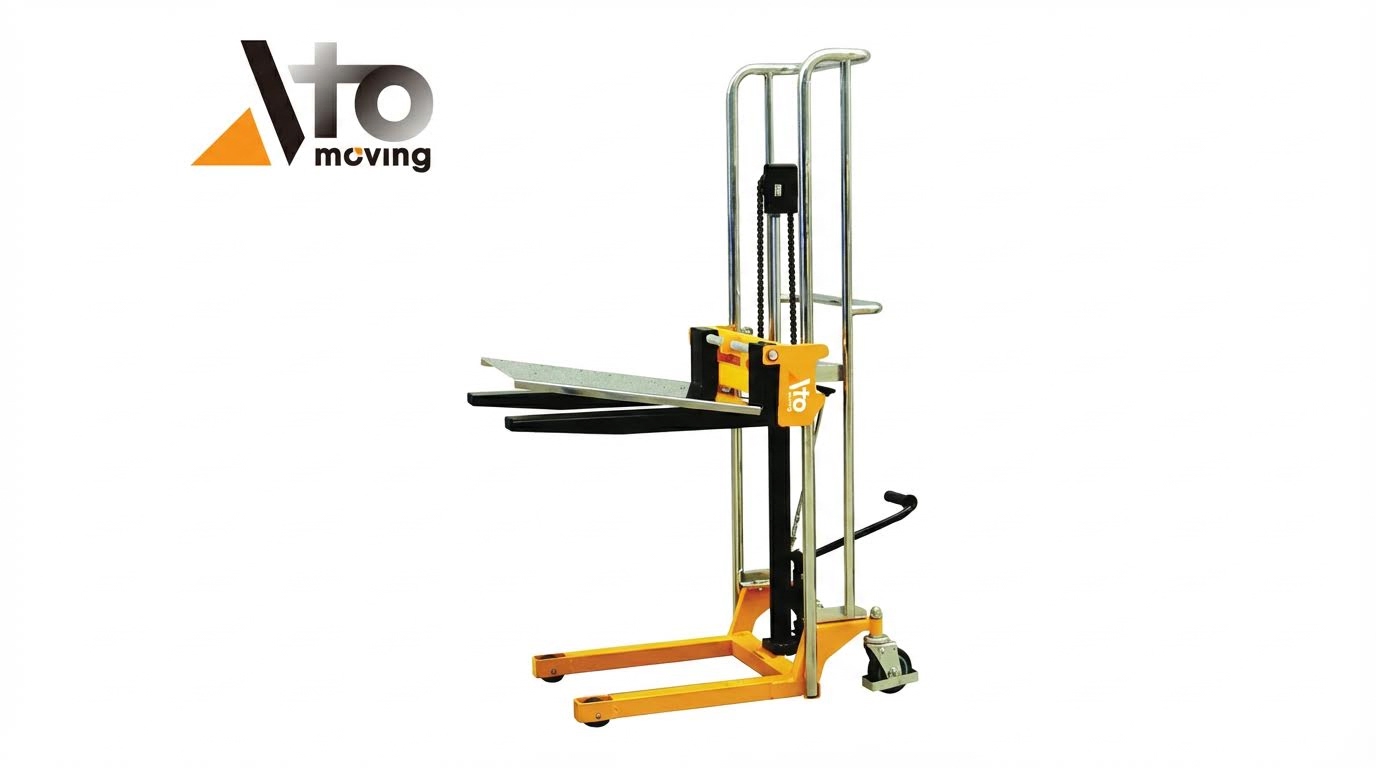
The practical envelope for hand-built stacks usually sits around 1.5–1.8 m. This range keeps work in the power zone, stays well inside the 4:1 stability ratio, and respects typical insurer caps for idle pallets. Above that, you should treat stacking as a mechanical task and use tools such as an Atomoving manual pallet stacker or other powered aids.
Operations and safety teams should lock in one rule set per use case: loaded pallets, empty pallets, and engineered high storage. Each rule must reference a checked 4:1 ratio, verified sprinkler clearance, and written ergonomic limits on lift weight and height. Supervisors then enforce pallet inspection, PPE, and housekeeping as non‑negotiable.
The best programs answer “how high to manually stack pallets” with a simple, local rule, but they build that rule on solid engineering. That approach protects workers, satisfies fire and insurance demands, and still keeps throughput high.
Frequently Asked Questions
What is the ideal pallet stacking height?
While there is no fixed national standard for pallet stack height, OSHA requires that storage must not create hazards. A common guideline is to keep stacks below 15 feet (4.5 meters) to ensure safety and stability. Safe Pallet Stacking Tips.
- Ensure at least 18 inches of clearance between the top of the load and ceiling sprinklers.
- Avoid stacking higher than 15 feet to maintain stability and ease of movement.
How high should you load a pallet?
The standard packing height for a pallet is 48 inches (1.2 meters). This height allows for efficient double-stacking on trucks without exceeding weight or height limits. Pallet Shipping Standards.
- Double-stacked pallets should each be 48 inches high or lower.
- Higher loads may require single stacking to avoid damage or instability.