
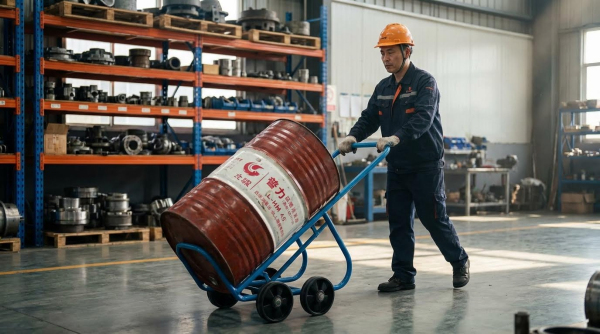
Material handling equipment that is used to move heavy drums or barrels protects workers from high‑risk manual lifting while keeping product flow steady. This guide explains how different drum movers work, what they safely handle in kg and mm, and how to pick the right solution for your plant layout and throughput targets.
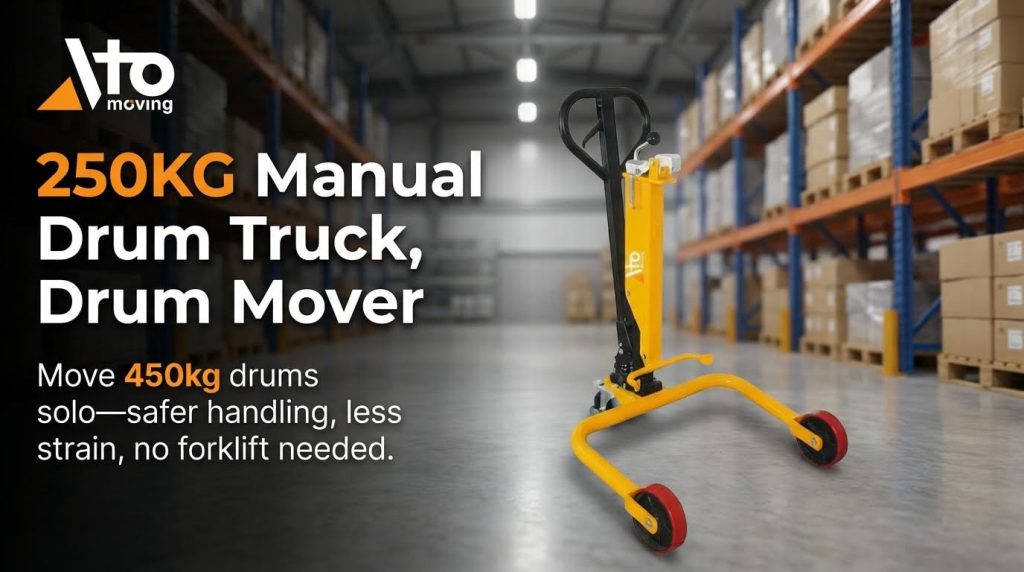
Key Types Of Drum And Barrel Moving Equipment
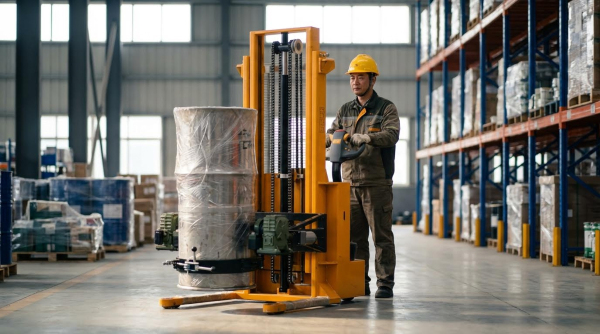
Two main categories of material handling equipment are used when a is used to move heavy drums or barrels: manual devices for short, light-duty moves and hydraulic or powered units for higher weights, lift heights, and throughput. Choosing correctly cuts injury risk and spill incidents while matching your plant’s floor conditions and traffic patterns.
| Equipment Type | Typical Capacity | Main Use Case | Operational Impact |
|---|---|---|---|
| Manual drum trucks / trolleys | Up to about 300–350 kg (drum mass only) | Short moves, occasional handling, good floors | Low cost, high ergonomics improvement versus freehand rolling |
| Drum cradles / tilters | 180–360 kg (205–210 L drums) | Tilting drums from vertical to horizontal and controlled pouring | Lets one operator decant safely without lifting the full weight |
| Drum dollies | Up to about 500 kg per drum Reference | Rolling upright drums over smooth floors | Reduces push forces and crushed-foot risk compared with dragging |
| Hydraulic drum lifters / stackers | 250–500 kg per drum Reference | Lifting, stacking, and transferring drums between pallets, racks, and process points | Enables vertical storage and spill-free transfer with one operator |
| Forklifts with drum attachments | 400–1,000 kg (with suitable attachment WLL) Reference | High-throughput, long-distance drum movements | Best for bulk transfer, loading bays, and uneven floors |
💡 Field Engineer’s Note: In most plants, manual trucks and dollies handle short, predictable moves, while hydraulic lifters or forklifts carry drums across long routes or onto mezzanines where slopes and thresholds quickly overwhelm manual equipment.
Manual drum trucks, cradles, and dollies
Manual drum trucks, cradles, and dollies are lever-based devices that let one or two operators control 180–360 kg drums without freehand lifting, making them the first level of engineered control for safe drum moves.
- Manual drum trucks / barrel drum trucks: Vertical trolleys that clamp or hook the drum and let you tilt it back onto wheels – they convert a standing drum into a wheeled load supported near its centre of mass.
- Drum cradles and tilters: Frames with curved backs and rotation shafts – they support the drum while you tip from vertical to horizontal or rotate for pouring.
- Drum dollies: Low platforms with castors that carry an upright drum – they remove the need to “walk” drums on the chime and cut push forces.
Typical drum weights and why manual aids are essential
Standard 205–210 L and 55-gallon drums often weigh 180–360 kg when filled, which far exceeds safe one-person lift limits. Facilities therefore use hand trucks and carts so operators roll, tilt, and support drums while applying low, controlled forces instead of dead-lifting. Safety programs also prohibit freehand rolling because it historically produced many crushed hands and feet. More detail on ergonomics and risk
| Manual Device | Key Design Features | Typical Capacity / Range | Best For… |
|---|---|---|---|
| Barrel drum truck | Two wheels, long handle, clamp or chain grip | Approx. 360–680 kg (800–1,500 lbs) depending on model Reference | Moving single drums between nearby stations on flat floors |
| Drum cradle / tilter | Curved backrest, chime hooks, rotation shaft | 180–360 kg filled drum range | Decanting from 205 L drums into smaller containers with control |
| Drum dolly | Low circular or square frame with 3–4 castors | Up to about 500 kg per drum Reference | Repositioning upright drums in storage bays and mixing rooms |
- Securing the drum: Operators open the clamp or chain fully, position around the drum, then tighten gradually and test by rocking – this checks the drum and truck move as one unit. Procedure details
- Moving the drum: The handle tilts toward the operator while legs, not back, generate the lift – this keeps the weight over the wheels and reduces spinal loading.
- Turning and stopping: Wide, slow arcs minimise side loading on the wheels and frame – this cuts tip-over risk when the centre of gravity is high.
- Personal protective equipment (PPE): Steel-toe boots and gloves remain mandatory – this protects against foot crush and pinch points around the chime and clamps.
Inspection and basic maintenance for manual drum movers
Before use, operators check wheels for damage or debris and confirm smooth rotation. They inspect gripping mechanisms for alignment and free movement, and scan the frame and welds for cracks. Routine lubrication of wheels, axles, and pivot points reduces friction and wear, while clean, dry storage prevents corrosion and flat-spotting of wheels. Inspection guidance Lubrication guidance
Hydraulic drum lifters and mobile drum stackers
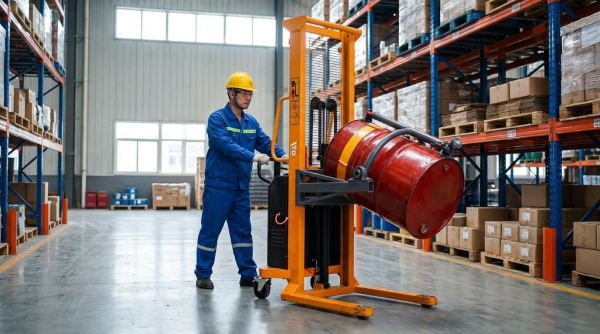
Hydraulic drum lifters and mobile drum stackers are wheeled frames with hydraulic pumps and gripping arms that raise 200 L drums to working or stacking height, providing the safest option when a is used to move heavy drums or barrels frequently or over vertical levels.
| Hydraulic Drum Device | Typical Capacity | Lifting / Rotation Capability | Operational Impact |
|---|---|---|---|
| Hydraulic drum lifter | 250–500 kg per drum Reference | Vertical lift via manual or electric pump | Transfers drums between floor, pallets, and low platforms without manual lifting |
| Hydraulic drum stacker | Similar 250–500 kg per drum range | Higher lift heights for stacking 1–2 levels high | Enables vertical storage, freeing floor space |
| Hydraulic drum rotator / tilter | Up to about 1,000 kg WLL for some attachments Reference | Controlled rotation through 180–360° | Safe decanting of liquids and powders at height or into reactors |
These units typically use spring-loaded metal arms that close around the drum body or rim, accommodating steel, plastic, and fibre drums in the 55-gallon (about 200 L) class. Frames are often fabricated from galvanized or stainless steel for corrosion resistance in chemical and food plants. Design reference
- Lifting system: A manual hydraulic pump raises the drum; a hand lever or pedal controls lowering – this gives fine control when positioning near spill-sensitive areas.
- Mobility: Polyurethane or elastic rubber wheels, often 125–150 mm diameter with double ball bearings and dust covers, reduce rolling resistance and wear – this keeps push forces low even with 300+ kg loads. Wheel details
- Control options: Some models add electric lift and tilt – this suits repetitive, high-throughput tasks where manual pumping would fatigue operators.
Safe operating practices for hydraulic drum lifters
Operators ensure the drum surface is clean and dry and avoid lubricants that could reduce grip. They position the lifter squarely before engaging the arms, then test the grip with a small lift. Shock loading is avoided once the drum is raised, and unbalanced loads are treated cautiously because they can shift the centre of gravity outside the wheelbase. These practices align with general OSHA principles for powered industrial trucks and drum handling attachments, even when the unit itself is pedestrian-operated. Safety guidance
- Industry usage: Chemical, petroleum, food, and oil & gas plants use hydraulic lifters to prevent spillage and contamination – the drum stays clamped and supported from storage to process point. Application examples
- Customization: Manufacturers vary load capacity and lift height to match specific logistics paths – this ensures the unit clears your highest pallet stack or reactor inlet without over-specifying.
- Maintenance: Periodic operation, cylinder oiling, and hydraulic system cleaning, plus dry indoor storage, prevent rust and seal damage – this preserves lifting performance and avoids sudden failures under load.
💡 Field Engineer’s Note: When specifying hydraulic drum lifters, always walk the exact route: check door heights, ramp gradients, and floor joints. A 2–3% slope or a 20 mm floor lip that seems minor on foot can become a real stability problem once you push a 350 kg drum raised 500–800 mm above the floor.
“”
Selecting The Right Drum Handling Solution For Your Facility
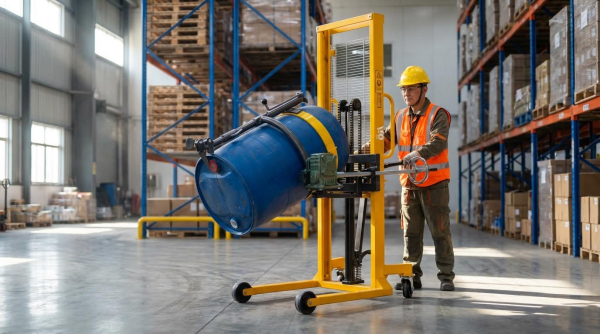
Selecting the right device that is used to move heavy drums or barrels starts with drum mass, route length, floor quality, and throughput, then layers in safety, ergonomics, and how well the equipment fits your plant logistics.
- Start with risk: Identify where a drum could fall, leak, or injure – this filters out under‑spec or manual-only options.
- Quantify the work: Count drums per shift, average travel distance, and lift heights – this points you to manual, hydraulic, or forklift-based gear.
- Match to drum type: Steel, plastic L‑ring, Mauser, or fibre – this ensures the gripping system is compatible and stable.
- Check the floor and gradients: Ramps, joints, and slopes – these often force the move from hand trucks to powered or forklift solutions.
- Fit into traffic patterns: Aisle width, crossings, and pedestrians – this drives decisions on truck size, turning radius, and staging zones.
💡 Field Engineer’s Note: When you are unsure between manual and powered equipment, time a real drum move over the actual route with a hand truck. If the operator is near their limit or you see unstable tilting at corners, you already have your answer: go to hydraulic or forklift-based handling before the first incident.
Matching drum weight, throughput, and travel distance
Matching drum weight, throughput, and travel distance defines whether a simple hand truck is used to move heavy drums or barrels, or whether you need hydraulic lifters or forklifts with drum attachments.
| Typical Scenario | Drum Mass / Contents | Throughput & Travel | Recommended Equipment | Operational Impact |
|---|---|---|---|---|
| Occasional moves in one room | 180–360 kg, 205–210 L drums (typical range) | Few drums/shift, <10 m per move, good floor | Drum trucks, cradles, dollies | Low cost, higher operator effort, best for small workshops |
| Regular transfers between workstations | Up to 250–500 kg per drum (hydraulic lifter capacity) | 10–50 drums/shift, 10–30 m per move | Hydraulic drum lifters / mobile drum stackers | Reduces strain, allows vertical lifting and controlled lowering |
| Warehouse or tank farm distribution | Dense liquids, drums approaching or exceeding 400 kg (with liquids) | High throughput, >30 m travel, uneven floors | Forklifts with drum grabs/rotators, palletiser stackers | High productivity, better stability over distance and ramps |
| Frequent decanting / pouring | 200 L drums, various viscosities | Many tilt/decant operations per shift | Hydraulic lifters with tilt, rotating cradles | Controlled pouring, reduced spillage and ergonomic stress |
- Manual drum trucks and cradles: Suited where operators only need to roll, tilt, and support drums, not lift them high. Ideal when routes are short and predictable. Manual drum equipment reference
- Hydraulic drum lifters: Use a manual hydraulic pump to lift drums up to about 250–500 kg, with lever-controlled lowering. Best where vertical stacking or pallet transfer is routine. Hydraulic lifter operation
- Forklifts with drum attachments: Handle masses around and above 400 kg and even 1,000 kg WLL rotators, provided truck capacity at >1 m load centre is adequate. Best for long travel, outdoor yards, and high stacks. Forklift capacity and stability
How to choose between manual, hydraulic, and forklift drum handling
Step 1: List maximum drum mass and worst-case contents – this sets your minimum capacity.
Step 2: Count drums per hour and typical route length – this shows when walking with a hand truck becomes inefficient.
Step 3: Walk the route and note slopes, thresholds, and tight turns – these may force powered or forklift solutions.
Step 4: Check required lift heights (pallet to rack, mixer inlets, etc.) – this determines if you need stackers or tilt/rotation.
Step 5: Compare two or three equipment options against these constraints – pick the one that meets capacity with the lowest ergonomic and spill risk.
Integrating drum moves with plant layout and automation
Integrating drum moves with plant layout and automation means you design lanes, staging zones, and controls so that whatever is used to move heavy drums or barrels fits safely into traffic, storage, and decanting workflows.
Facilities that move drums efficiently standardise lanes, pallet positions, and staging zones around real truck dimensions and turning radii. Drum pallet loaders and palletiser stackers then bridge between floor storage and pallets to remove intermediate manual steps. Plant logistics integration
| Layout / System Element | Design Focus | Relevant Drum Equipment | Operational Impact |
|---|---|---|---|
| Drum lanes and aisles | Width to suit turning radius and load width | Hydraulic drum lifters with 180° turning, dollies on castors Turning radius reference | Prevents three‑point turns, reduces collision risk with racks and pedestrians |
| Reception and dispatch zones | Dedicated areas for loading/unloading drums | Forklifts with drum grabs, palletiser stackers | Shorter loading cycles, clear separation from pedestrian walkways |
| Decanting / mixing stations | Stable platforms and defined approach paths | Hydraulic lifters with tilt, rotating cradles | Safer pouring, less spillage and operator strain |
| Storage blocks and pallets | Fixed pallet positions and stack heights | Mobile drum stackers, drum dollies | Repeatable moves, simpler stock counts and inspections |
| Automation and monitoring | Sensors, interlocks, and telematics | Forklifts with instrumented drum rotators and IoT monitoring | Flags overloads, harsh driving, and impact events before accidents |
- Define drum-only routes: Keep drum traffic on fixed lanes that avoid tight pedestrian zones. This reduces random crossings and near misses.
- Use compatible wheel and floor systems: Polyurethane or elastic rubber wheels with ball bearings roll more easily and resist wear on smooth concrete. They cut push forces and vibration. Wheel design details
- Centralise hazardous drum handling: Put flammable or toxic drum decanting in a single, controlled area with proper containment. This simplifies PPE rules and emergency response. Industry applications
- Leverage automation and telematics: Use sensors to monitor drum loads, mast tilt, and travel speed, and to log impact events. This supports behavioural coaching and predictive maintenance. Automation and monitoring
Practical layout checklist before buying drum equipment
Step 1: Draw current drum routes on a simple plan – highlight crossings with people and other trucks.
Step 2: Measure aisle widths, door openings, and ramp gradients – compare with turning radius and wheel design of candidate equipment.
Step 3: Mark fixed positions for pallets, racks, and decanting points – ensure your chosen stacker or forklift can reach and rotate safely.
Step 4: Decide where inspection and maintenance will occur – you need dry, clean space for daily checks and periodic servicing. Inspection and maintenance guidance
Step 5: Validate the layout with a trial move using existing equipment – then scale up with the new, purpose-designed drum handling solution.
💡 Field Engineer’s Note: When you introduce new drum lifters or forklift attachments, walk the first week’s shifts with operators. You will often spot small layout tweaks—moving a pallet line by 300 mm or changing a turn angle—that remove chronic “near miss” moments and unlock most of the safety and efficiency gains you paid for.
Final Thoughts On Safe, Efficient Drum And Barrel Handling
Safe drum handling depends on matching equipment geometry, capacity, and stability to real plant conditions, not ideal ones. Manual trucks, cradles, and dollies work well when routes are short, floors are smooth, and drums stay near ground level. Once drum mass, lift height, or travel distance increase, hydraulic lifters, stackers, or forklifts must take over to keep push forces, tip risk, and spill risk within safe limits.
Hydraulic frames, secure gripping arms, and suitable wheel materials keep the drum’s centre of gravity inside a stable wheelbase. This is what turns OSHA-style rules into real protection on the shop floor. Good layout and traffic design then complete the system by giving each drum move a clear, repeatable path.
The best practice is simple. Quantify drum weights, routes, and lift heights. Walk the paths. Then select the lowest-level device that can handle the worst case with a safety margin. Standardise equipment, inspection, and training with a partner like Atomoving, and you turn drum handling from a chronic risk into a controlled, predictable process that supports throughput rather than threatening it.
Frequently Asked Questions
What is a drum used for in material handling?
A drum, also known as a barrel, is a cylindrical container commonly used for transporting and storing bulk cargo such as liquids, powders, or heavy materials. In material handling, drums are often moved using specialized equipment like drum handlers or forklift attachments to ensure safety and efficiency.
- Drums can be made of steel, plastic, or dense paperboard (fiber drum).
- They are ideal for handling hazardous or heavy materials in industrial settings.
What is the difference between a drum and a barrel in material handling?
In modern material handling, the terms “drum” and “barrel” are often used interchangeably. However, traditionally, a drum referred to a 55 US gallon container, while a barrel denoted a 42 US gallon container, typically used for oil. Both are cylindrical containers used for storage and transport of goods.
This distinction has become less relevant as their applications have broadened over time. For more details, you can refer to this Plastic Barrels Guide.