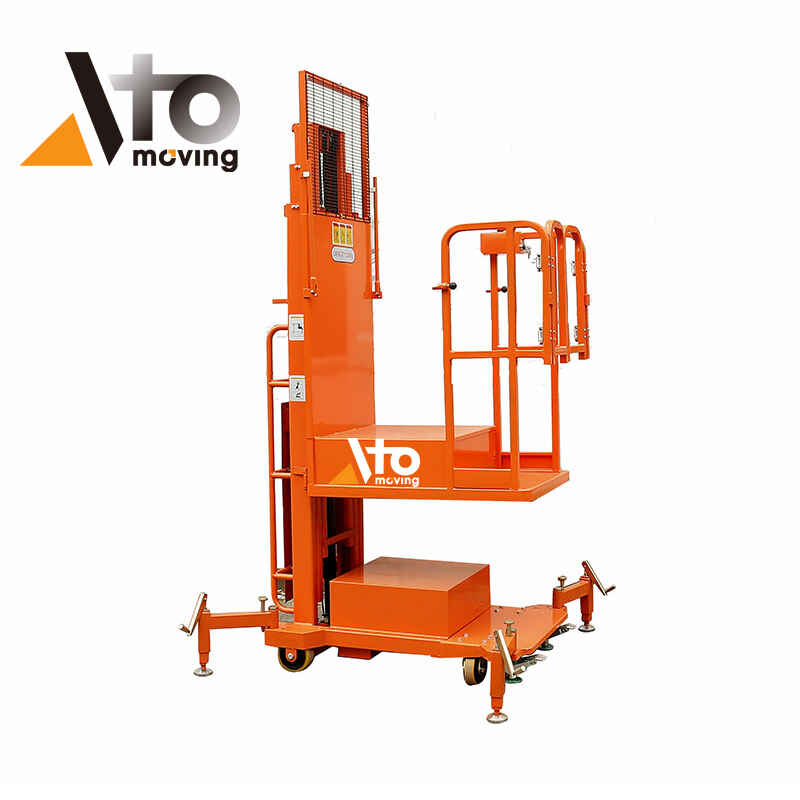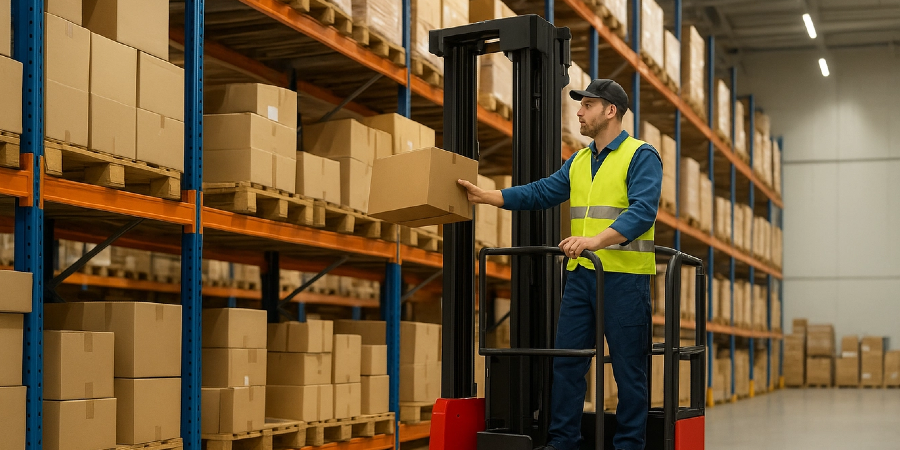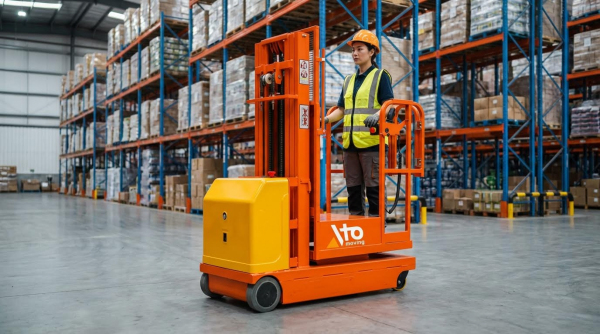
Cherry picker order selectors bridge the gap between traditional forklifts and manual picking, allowing operators to travel with the load and pick directly from high-bay racking. They improve safety, productivity, and space utilization by replacing ladders and low-level equipment with engineered, height-capable machines that work in narrow aisles and dense storage. This article explains what these machines are, how they are designed, and how to match them to real warehouse layouts so you can confidently answer questions like “is there a cherry picker order selector that fits my operation?” It also covers key safety systems, maintenance practices, and selection criteria to maximize uptime and order picking machines efficiency.
Defining Cherry Picker Order Selectors
What a cherry picker order selector is
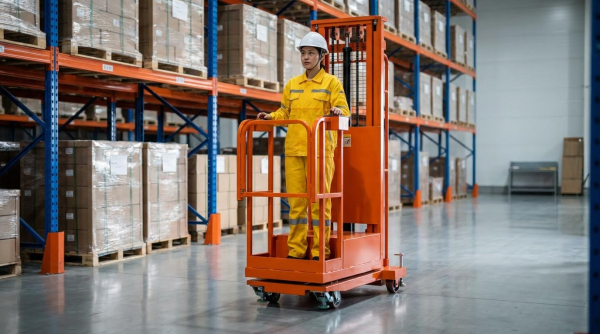
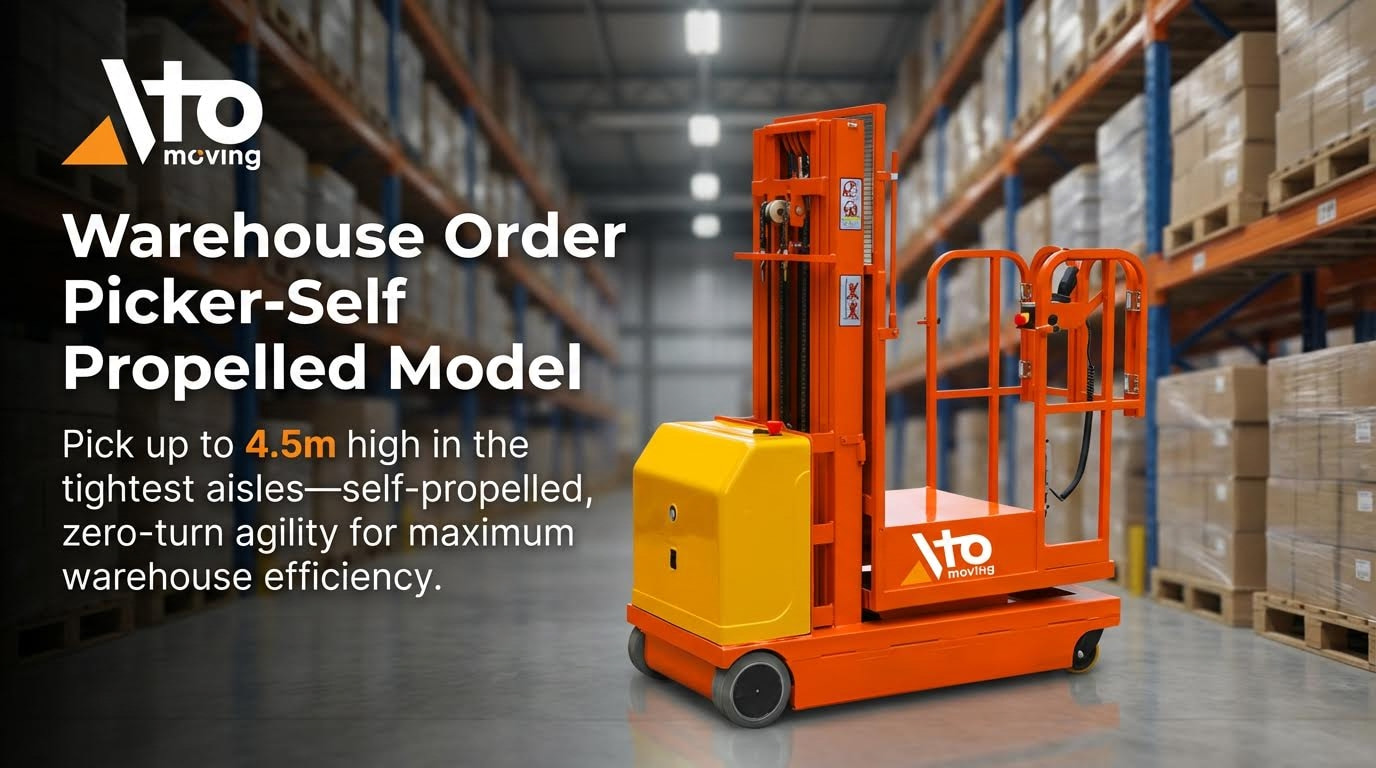
A cherry picker order selector is a type of powered industrial truck that lifts both the operator and a small load platform so they can pick individual items directly from racking at height. It belongs to the family of electric narrow‑aisle trucks designed for manual piece picking rather than moving full pallets. In practical terms, it replaces ladders and rolling stairs by providing a guarded platform that can reach upper rack levels while the truck drives and steers from the operator compartment. When people ask “is there a warehouse order picker for my warehouse?”, they are usually looking for this combination of vertical lift, narrow‑aisle maneuverability, and person‑up picking capability. Typical order picking machines can reach working heights around 4.5 m, allowing operators to retrieve items from higher shelves while staying within a protected platform and reducing fall risk compared with ladders and replacing traditional ladder-based picking methods. These machines are widely used in distribution centers and e‑commerce facilities where operators must manually place or retrieve cartons and pieces from high racking rather than move full pallets and are classified as electric motor narrow aisle trucks.
Key components and working principles
A cherry picker order selector combines a vertical lifting system, a compact chassis, and an operator platform into a single integrated machine. Key components typically include:
- Mast and lift system: A rigid mast with chains or hydraulic cylinders raises the operator platform and load. High‑stability mast designs are critical to keep deflection and sway low at elevation, especially when working around 5–5.5 m platform heights with extended mast heights above 4.7 m.
- Operator and load platform: The guarded platform carries the operator plus cartons or small loads. Typical platform footprints are compact, for example around 600 × 640 mm, to work in narrow aisles while still giving enough space to handle cartons and scan labels with turning radii around 1600 mm.
- Drive and steering system: Electric drive motors power the traction wheels, often with zero‑turn or very tight turning geometry so the truck can maneuver in narrow aisles and staging areas and navigate tight warehouse layouts.
- Power supply: Most units use 24 V or 36 V battery systems sized to the duty cycle. Example configurations include 24 V / 360 Ah industrial batteries or 2 × 12 V / 150 Ah packs for lighter models, matched to lifting motors in the ~1.6 kW range and smaller drive motors for travel with 24V/360Ah options and 24V/150Ah systems on compact units.
- Controls and ergonomics: Fingertip or multi‑function controls manage drive, lift, and lower functions, allowing the operator to fine‑tune speed and position while elevated. Variable controls, wide pick windows, and clear‑view masts help maintain visibility and reduce strain during repetitive picking by providing intuitive, ergonomic handling.
In operation, the working principle is straightforward: the operator drives to the pick location at ground level, raises the platform to the rack beam level, stabilizes the truck, and then manually picks items from the shelf onto the platform. The machine’s rated capacity, often in the 200–700 kg range depending on model, must cover the combined weight of the operator, picked load, and any tools or equipment with compact units around 200–300 kg and higher-capacity units around 700 kg. Modern electronic systems add diagnostics and performance tuning, which help maintenance teams reduce downtime and allow supervisors to match truck acceleration and lift speed to operator skill levels for safer, more efficient picking using built-in self-checking and adjustable performance features.
Engineering Design, Safety, and Performance
Mast design, stability, and height classes
When operations ask “is there a cherry picker order selector that can safely reach my top beam?”, mast design is the first constraint. Modern units use high-stability telescopic masts with rigid sections and tight clearances to control deflection at height. For example, a typical order picker can reach working heights of 5–5.5 m with a lowered mast around 2345 mm and extended mast heights up to about 5145 mm, in a chassis roughly 2725 × 800 mm. High-stability mast designs with these dimensions help maintain control at elevation.
Stability comes from a low center of gravity, wide enough chassis, and conservative speed and acceleration limits as the platform rises. Load rating and height class always go together: some machines carry 200–300 kg to about 4.5 m platform height, while others handle up to 700 kg around 5–5.5 m working height. Typical platforms are about 600 × 640 mm with maximum platform heights near 4500 mm and machine heights up to 6100 mm. This combination of mast stiffness, chassis footprint, and electronic stability limits allows safe operation in narrow aisles while still reaching upper rack levels that used to require ladders.
Typical mast and stability parameters engineers review
- Maximum platform height vs. racking top beam
- Rated capacity at full elevation
- Chassis width vs. aisle width
- Allowable mast deflection at height
- Speed derating curves as elevation increases
Powertrain, batteries, and duty-cycle sizing
For anyone wondering “is there a warehouse order picker that can run all shift in my aisle profile?”, the answer depends on powertrain and battery sizing. These trucks use electric drive and lift systems, typically with separate motors sized for slow, controlled travel and precise vertical movement. As an example, one compact order picker uses a 24 V lifting motor rated at 1.6 kW and dual 24 V drive motors at 0.4 kW each. This configuration supports 200–300 kg lift capacity with a tight 1600 mm turning radius.
Battery systems are usually 24 V or 36 V, with capacity chosen to match the daily duty cycle. One design uses a 24 V / 360 Ah pack, while another uses 2 × 12 V / 150 Ah with a 24 V / 15 A charger for overnight or opportunity charging. A 24 V / 360 Ah battery supports intensive warehouse use with maintenance-free, fast-charging options. Newer machines increasingly adopt lithium-ion packs to extend runtime and reduce maintenance. Lithium-ion batteries provide longer autonomy and lower maintenance than traditional lead–acid units.
| Parameter | Typical Range | Design Impact |
|---|---|---|
| System voltage | 24–36 V | Determines motor selection and cable sizing |
| Battery capacity | 150–360 Ah | Defines runtime and charging strategy |
| Lift motor power | ≈1.6 kW at 24 V | Controls lift speed and responsiveness |
| Drive motor power | 2 × 0.4 kW at 24 V | Affects acceleration and gradeability |
Duty-cycle considerations for engineering teams
- Number of picks per hour and average lift height
- Travel distance per shift
- Percentage of time lifting vs. traveling vs. idling
- Charging windows (breaks, shift changes, overnight)
- Future growth in throughput demand
Standards, ergonomics, and safety systems
From a safety and ergonomics view, “is there a order picking machines suitable for my operators?” comes down to how well the machine aligns with standards and human factors. Order pickers belong to the electric narrow-aisle truck class and are built so operators can manually pick from high racking while staying inside a guarded platform. They are designed specifically for manual stock retrieval in warehouses and distribution centers. Modern designs include wide pick windows, clear-view masts, and fingertip or variable controls to reduce strain and improve precision at height. Ergonomic variable controls and wide pick windows improve comfort and accuracy.
Safety systems cover both active and passive measures. Typical features include deadman (presence-sensing) controls that stop motion if the operator releases the pedal or handle, overload protection based on rated capacity, and speed reduction at height. Guidance from elevated work platform practice also applies: operators should wear a harness with lanyard, never override safety devices, and respect combined load limits of person, tools, and product. Safe work practices include using body harnesses, keeping within load limits, and maintaining clearance from overhead hazards.
Typical safety and ergonomics features on cherry picker order selectors
- Guarded operator platform with rails and entry gate
- Deadman switch and emergency stop controls
- Speed and lift derating at higher elevations
- Clear-view mast sections and good lighting
- Self-diagnostics and warning indicators to catch faults early
Matching Cherry Pickers to Warehouse Applications
Comparing cherry pickers to other picking methods
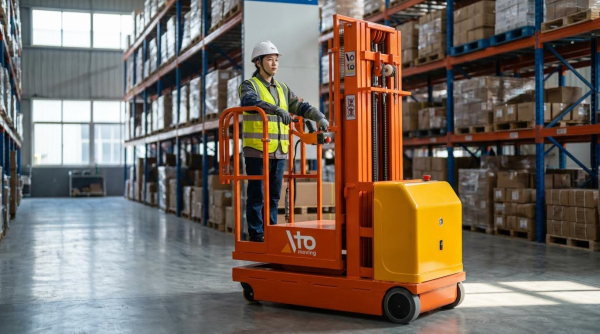
When operations ask “is there a cherry picker order selector that really improves picking speed,” the answer depends on how it compares to other methods in your building. Cherry picker order selectors sit between basic tools like ladders and pallet jacks and more capital‑intensive systems such as VNA trucks or automation. They allow the operator to travel with the load and pick directly from multiple rack levels in a single pass, replacing rolling ladders and manual handling in many applications. In typical warehouses, they work where pallet trucks, ladders, and other piece‑picking methods were traditionally used, but at much greater vertical reach and productivity. Order pickers can reach heights up to 456 inches, so they cover most high‑bay racking without the complexity of full automation.
- Versus ladders and carts: Cherry picker order selectors remove repeated climbing and descending, cutting non‑value‑added time and fall risk. They are designed specifically to retrieve items at height and replace ladders in many facilities. Dedicated order pickers safely retrieve items up to about 4.5 m, which is far beyond comfortable ladder work.
- Versus low‑level pallet trucks: Low‑level methods are efficient for floor and first‑level picks, but they cannot reach higher beams without extra equipment. Cherry picker order selectors combine horizontal travel with vertical access in one machine, reducing touches and changeovers.
- Versus VNA turret or reach trucks: Those trucks shine in full‑pallet handling. For case or each‑picking, cherry picker order selectors are usually more ergonomic, with wide pick windows and clear‑view masts that support fast manual picking. Ergonomic fingertip controls and wide pick windows help operators maintain speed and accuracy at height.
- Versus automated systems: Automation can beat manual picking at very high volumes and stable SKU profiles, but it needs major investment and rigid processes. Cherry picker order selectors are more flexible and can adapt quickly to SKU, order profile, or layout changes without re‑engineering.
When cherry pickers are not the best choice
They are less suitable where all demand is on floor level, where aisles are extremely narrow and already optimized for other truck types, or where very high throughput justifies full automation. In those cases, a mixed fleet or different technology may perform better.
Selection criteria for layouts and SKU profiles
To decide if there is a cherry picker order selector that fits your warehouse, match machine capability to your layout and SKU behavior. Start with vertical and horizontal geometry: required pick height, aisle width, and turning clearances. Many order pickers are designed for narrow aisles and tight spaces, with some models featuring zero‑turn or very small turning radii for high maneuverability. Examples include platforms around 600×640 mm with turning radii near 1600 mm, which work well in dense storage.
Next, align load capacity and working height with your SKU mix. For light case or each‑picking, compact machines with lift capacities in the 200–300 kg range are often enough. Typical platforms can lift 200–300 kg to heights around 4.5 m, with overall machine heights up to about 6.1 m. For heavier cases or palletized picks, you may need higher‑capacity units; some order selector designs handle loads around 700 kg with working heights in the 5–5.5 m range. One example lists 700 kg capacity with a 5–5.5 m working height.
| Selection Factor | Why it Matters | Typical Engineering Considerations |
|---|---|---|
| Working height | Ensures safe access to highest pick level | Match maximum platform or fork height to top beam, plus safety clearance |
| Load capacity | Supports combined weight of operator, load, and tools | Use worst‑case pick weight and apply safety factors from internal standards |
| Aisle width & turning radius | Determines if the truck can work in existing aisles | Compare machine turning radius to clear aisle minus rack and safety offsets |
| Order profile | Aligns equipment to lines per order and pick density | High lines/order and many levels favor man‑up order selectors |
| Duty cycle & energy | Ensures battery and motors handle shift length | Choose between 24 V and 36 V systems and appropriate Ah rating for your hours |
Energy and duty‑cycle sizing are also critical. For single‑shift, moderate‑intensity work, smaller battery systems are often sufficient. Some compact order pickers use 2×12 V/150 Ah batteries with a 24 V/15 A charger, which supports typical warehouse tasks. Higher‑throughput operations may require larger capacities, such as 24 V/360 Ah batteries, to maintain productivity over long shifts. A 24 V/360 Ah configuration is one documented example for more intensive use.
How SKU profiles influence configuration
Fast‑moving SKUs concentrated at lower levels may favor a mix of low‑level equipment with a few cherry picker order selectors for exceptions. If high‑demand items are distributed across many levels, a larger fleet of order selectors with ergonomic controls and wide pick windows will usually give better overall productivity. Modern designs use intuitive variable and fingertip controls to reduce strain and increase pick speed, which is especially valuable in high‑line environments.
“”
Final Thoughts on Optimizing Order Selection with Cherry Pickers
Cherry picker order selectors work best when engineering and operations teams treat them as part of the storage system, not just as trucks. Mast stiffness, platform geometry, and chassis footprint must match rack heights, aisle widths, and turning clearances. When you size these correctly, operators reach every target location without unsafe stretching or tight maneuvers.
Battery and motor selection must follow the real duty cycle, not brochure values. Teams should map picks per hour, lift heights, and travel distance, then choose voltage and amp‑hour capacity that carry a full shift with planned charging windows. Right‑sized powertrains keep lift speed and travel performance consistent, which protects throughput.
Safety and ergonomics complete the picture. Guarded platforms, speed derating at height, and presence‑sensing controls reduce fall and tip risk, while wide pick windows and simple controls cut fatigue. When you align these design elements with your SKU profile and layout, cherry picker order selectors can safely replace ladders and mixed tools, raise storage density, and improve pick rate.
The practical recommendation is clear: define heights, loads, aisles, and duty cycle first, then select a cherry picker configuration—such as Atomoving’s solutions—that fits those limits with margin for growth.
Frequently Asked Questions
What is the difference between a cherry picker and an order picker in a warehouse?
A cherry picker, also known as a boom lift or aerial work platform, is primarily used to elevate workers to access high areas for tasks like maintenance or stock retrieval. An order picker, on the other hand, is a type of forklift designed specifically for picking items from warehouse shelves. Warehouse Equipment Guide.
Do you need special training to operate a cherry picker in a warehouse?
Yes, operating a cherry picker requires proper training and certification. Training typically covers safe operation, pre-shift inspections, and load handling. A common certification required is the IPAF license. IPAF Training Info.
What are the safety rules when using a cherry picker in a warehouse?
- Ensure personal fall protective equipment is worn.
- Adhere to weight limits specified by the manufacturer.
- Maintain controlled speed while operating.
- Stay aware of your surroundings at all times.
- Never leave the machine unattended while in operation.
Cherry Picker Safety Checklist.
What types of cherry pickers are commonly used in warehouses?
Common types include electric order pickers for indoor use and narrow aisle cherry pickers designed for tight spaces. Each type has specific applications based on warehouse layout and operational needs. Order Picker Types.