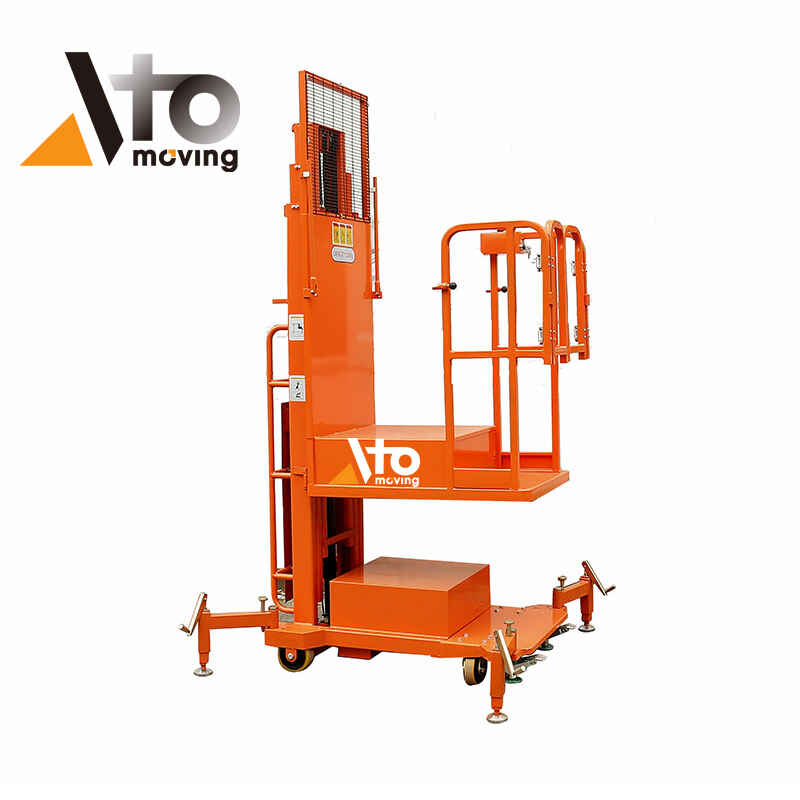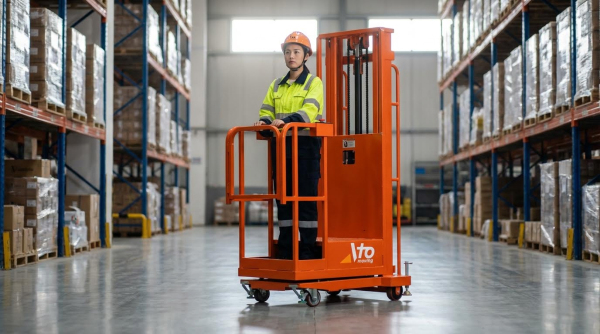
Low-level order pickers sit at the intersection of truck design, warehouse layout, and human performance. This guide explains how a low level picker works best in real-world operations, how to match it to your warehouse order picker strategy, and how engineering choices affect safety, fatigue, and throughput. You will see where these trucks excel, where they do not, and which specs matter most when you size and select equipment for your facility.
What Low-Level Order Pickers Are And How They Work
Defining Low-Level Versus Other Order Pickers
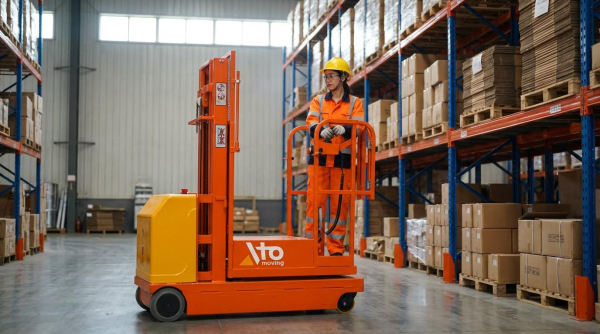
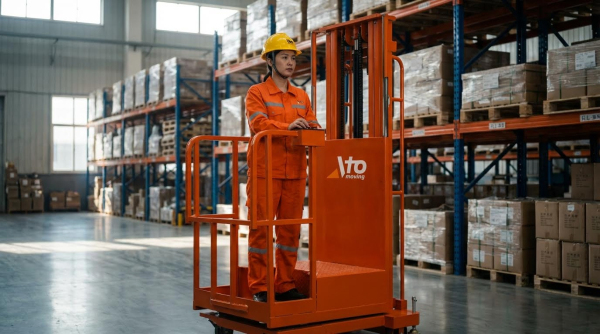
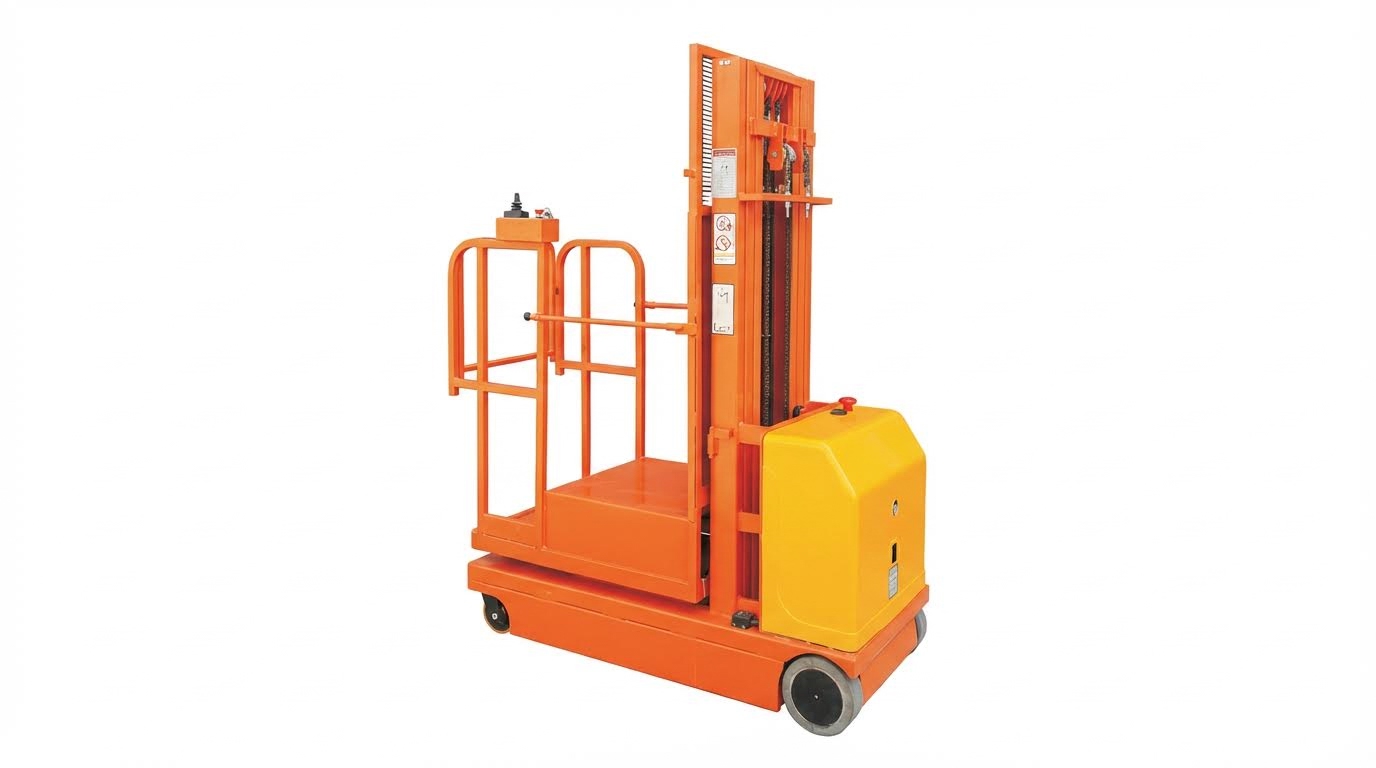
A low level picker is a powered industrial truck that lets the operator ride on a platform close to the floor while picking cases or items directly from the first and second rack levels. The forks carry one or more pallets or load carriers, and the operator walks or rides alongside the load as they move along the aisle. The platform or forks usually lift only enough to reach lower rack levels, not high-bay storage.
Compared with other order picking trucks:
- Versus pallet jacks: Low-level order pickers add an operator platform and limited elevation for faster, more ergonomic case picking than simple floor-level pallet jacks.
- Versus medium/high-level order pickers: Low-level units keep the operator near the floor, accessing up to roughly the second rack level instead of lifting the operator several meters into the rack.
- Versus reach or counterbalance trucks: Low-level machines are optimized for horizontal travel and frequent on/off cycles, not deep stacking or high lifting.
- Typical use: High-throughput case picking for e‑commerce, retail replenishment, and fast-moving SKUs in narrow to standard aisles.
Modern low-level order pickers focus on three engineering priorities: minimize walking distance, reduce bending and reaching, and maintain safe, stable travel with heavy pallet loads. Many designs allow operators to pick up to the second shelf level at about 4.6 m maximum picking height using extended masts or auxiliary platforms while still being classified as low-level equipment.
How low-level pickers improve productivity
Horizontal order pickers supported high picking performance and reduced operator strain by combining ride-on travel, short lift heights, and optimized operator compartments. They increased effective pick-face by up to about 80% compared with floor-only picking, because operators could access more SKUs within the same bay length without climbing or using separate ladders or platforms. Source data and additional specs.
Core Specs: Capacity, Lift Height, And Dimensions
Engineering teams usually start with hard numbers when selecting a low level picker: load capacity, lift height, platform height, and overall dimensions. The ranges below summarize typical values from several current models.
| Specification | Typical Range / Example | Engineering Impact |
|---|---|---|
| Rated load capacity | 5,500–8,000 lb (≈2.5–3.6 t) capacity range and 6,000–8,000 lb examples | Defines pallet count, SKU density per trip, and racking design loads. |
| Fork length | Up to about 2.4 m, handling as many as three pallets and 2.5 t total load for multi-pallet runs | Longer forks increase throughput but require wider aisles and careful turning-radius checks. |
| Maximum lift height (forks/platform) | ≈4.7 ft (≈1.4 m) for low-level platforms second-level access; up to ≈47 in for some fork lift heights floor + first level | Determines which rack levels are reachable without separate equipment. |
| Operator platform height | ≈38.6 in working height for some models ergonomic platform | Key ergonomic variable; it sets typical hand height during picking and affects bending/overreach. |
| Overall length | ≈111–207 in depending on fork length and configuration length range | Drives minimum aisle length for turns and cross-aisle maneuvers. |
| Overall width | ≈33 in truck width narrow chassis | Important for clearances between rack uprights, conveyors, and dock edges. |
| Power system voltage | 24 V as a baseline, with some 34 V options and 425–750 Ah capacities battery voltage and capacity 24 V example | Impacts acceleration, duty cycle, and compatibility with existing chargers. |
| Battery chemistry | Lead–acid and lithium-ion options, with Li-ion offering up to ≈20% lower energy use and zero maintenance plus fast charging | Determines charging strategy, shift coverage, and life-cycle cost. |
| Maximum travel speed (loaded) | Up to about 9 mph with full load high-speed horizontal travel | Affects cycle time between pick zones; must be matched with braking and stability systems. |
These specs define the operating envelope of each low level picker. Capacity and fork length drive how many pallets or roll cages you can move per trip, while lift and platform heights govern which rack levels are in ergonomic reach. Overall dimensions and speed determine whether the truck fits your aisle layout and throughput targets.
- For dense, narrow-aisle case picking: Prioritize compact overall width, shorter fork options, and strong acceleration over maximum capacity.
- For long travel distances between zones: Higher travel speed and energy-efficient batteries reduce non-value-added time.
- For heavy multi-pallet runs: Select the upper end of the 5,500–8,000 lb range and verify floor loading and rack impact protection.
When you combine these hard numbers with your SKU profile and picking strategy, you can size the low level picker correctly and avoid under-specifying capacity or over-specifying length and lift height that you will never use.
Engineering Design, Powertrain, And Ergonomics
Electric Drive, 24–34V Systems, And Battery Choices
Modern low level picker trucks use compact electric drive systems designed for short, high-frequency travel cycles. The engineering focus is high torque at low speed, tight packaging around the drive axle, and energy efficiency over long shifts.
| Design Aspect | Typical Options / Data | Engineering Impact |
|---|---|---|
| System voltage | 24V standard, 34V available on some models battery capacities of 24V and 34V | Higher voltage reduces current for the same power, lowering cable and contactor heating. |
| Battery capacity range | Approx. 240–360 Ah for lithium-ion 240 Ah or 360 Ah lithium-ion options; ~425–750 Ah for lead-acid 425–750 Ah range | Defines runtime and opportunity-charging strategy for multi-shift operations. |
| Drive motor | AC traction motor, matched to 5,500–8,000 lb load range 5,500–8,000 lb capacities | AC motors give high starting torque, good speed control, and regenerative braking capability. |
| Energy consumption | Up to 20% less with lithium-ion versus lead-acid up to 20% less energy consumption | Smaller battery for same runtime or longer runtime in same battery envelope. |
| Charging approach | Lead-acid: full-cycle with equalization; Li-ion: fast intermediate charging quick intermediate charging, zero maintenance | Determines charger sizing, grid load, and battery-change infrastructure. |
For a low level picker, the 24–34V range is a compromise between safety, cable size, and controller cost. Higher-voltage systems draw less current for the same power, which reduces resistive losses and allows slimmer harnesses, but they require more series cells and higher-voltage-rated components.
Lead-acid vs lithium-ion in low level pickers
Lead-acid batteries offer lower upfront cost and are familiar in most warehouses, but they need watering, equalization charges, and dedicated battery-change areas. Lithium-ion options deliver zero maintenance, very short charging times, and better partial-charge tolerance, which suits multi-shift or high-throughput picking where trucks rarely sit idle. Li-ion advantages
- Select 24V systems for light-to-medium duty, single-shift operations.
- Consider 34V and high-Ah packs where long travel distances and heavy loads dominate duty cycles.
- Use lithium-ion when opportunity charging between waves is possible and uptime is critical.
Travel Performance, Braking, And Stability Control
Travel dynamics on a low level picker directly affect throughput and incident risk. Engineers balance maximum speed, acceleration, braking distance, and stability to keep operators productive but controlled in congested aisles.
| Parameter | Typical Values / Features | Design Purpose |
|---|---|---|
| Max travel speed (loaded) | Up to 9.0 mph with full load 9.0 mph under load 9.0 mph full load | Reduces non-productive travel time between pick zones. |
| Load capacity | Approx. 5,500–8,000 lb range 5,500–8,000 lb | Defines braking torque and frame stiffness requirements. |
| Stability features | Speed reduction with forks lowered fork height travel interlock; cold-store protection down to -20°C cold storage conditioning | Maintains traction and predictable handling in varying floor and temperature conditions. |
| Steering system | Electric power steering with up to ~90% effort reduction reduced steering effort | Improves maneuverability and reduces upper-body fatigue. |
| Structural safety | Thick steel frames and raised front apron 8 mm steel frames and raised apron | Protects operator legs and critical components during impacts. |
- Use programmable controllers to limit speed in congested zones or during training.
- Specify interlocks that cut speed when forks are outside the design height window to reduce tip and impact risk.
- Include cold-store packages where ambient temperatures fall below freezing to preserve hydraulic and electrical reliability. cold storage down to -20°C
Braking and control strategy in a low level picker
Most trucks combine regenerative braking through the AC traction motor with mechanical friction brakes for emergency stops. The control system ramps deceleration to keep the load stable while recovering energy into the battery. Travel-speed interlocks tied to fork height and operator-presence sensors further reduce the chance of sudden, unstable maneuvers. fork height travel interlock and sensing
Operator Compartment, Controls, And Fatigue Reduction
Ergonomics is where a low level picker can deliver the biggest productivity gains. The operator platform, control layout, and assistance systems all target fewer steps, less bending, and lower cumulative strain over a shift.
| Ergonomic Feature | Typical Data / Function | Benefit |
|---|---|---|
| Compartment size | Approx. 21 in wide operator compartment 21-inch operating compartment spacious compartment | Allows easy step-on/step-off and side-facing stance for rapid picking. |
| Platform height | Platform around 38.6 in for some models 38.6 inches | Reduces vertical reach to second-level pick faces and lowers back bending. |
| Pick-face gain | Up to 80% more pick-face versus floor-only picking 80% increase in pick-face | Higher density of accessible SKUs per aisle reduces walking distances. |
| Hands-free lowering | Foot-operated platform or fork lowering pedal foot-operated controls | Operator keeps both hands on product or controls, improving cycle time and safety. |
| Remote movement | Optional remote drive lets the truck creep forward without the operator riding remote drive functionality | Reduces step-on/step-off frequency and leg fatigue. |
| Compartment sensing | Sensors detect obstructions and slow the truck, with audible/visual alerts compartment sensing system | Prevents operators from riding in unsafe positions or with blocked exits. |
- Use side-entry, low step heights, and non-slip surfaces to cut mounting effort per pick.
- Specify electric power steering to minimize shoulder and wrist strain during tight maneuvers. electric power steering
- Add audible “platform down” tones so operators always know when the platform is fully lowered before travel. audible lowering tone
From an engineering standpoint, the goal is to align the low level picker geometry with human reach envelopes and typical carton weights. Good design keeps most picks between mid-thigh and shoulder height, minimizes trunk flexion, and limits the number of steps per line item.
How ergonomic design translates into productivity
Field data showed that when operations switched from assisted picking to solo pickers, productivity increased by about 44% because helpers’ idle time disappeared and walking distances dropped. 44% productivity gain A well-designed low level picker supports similar gains by cutting non-value-added walking, bending, and climbing, while keeping the operator in a safe, controlled stance for most of the shift.
When specifying a low level picker, treat the operator compartment and controls as core performance components, not accessories. The right combination of platform height, control placement, and assistance features often yields more throughput than simply increasing travel speed or motor power.
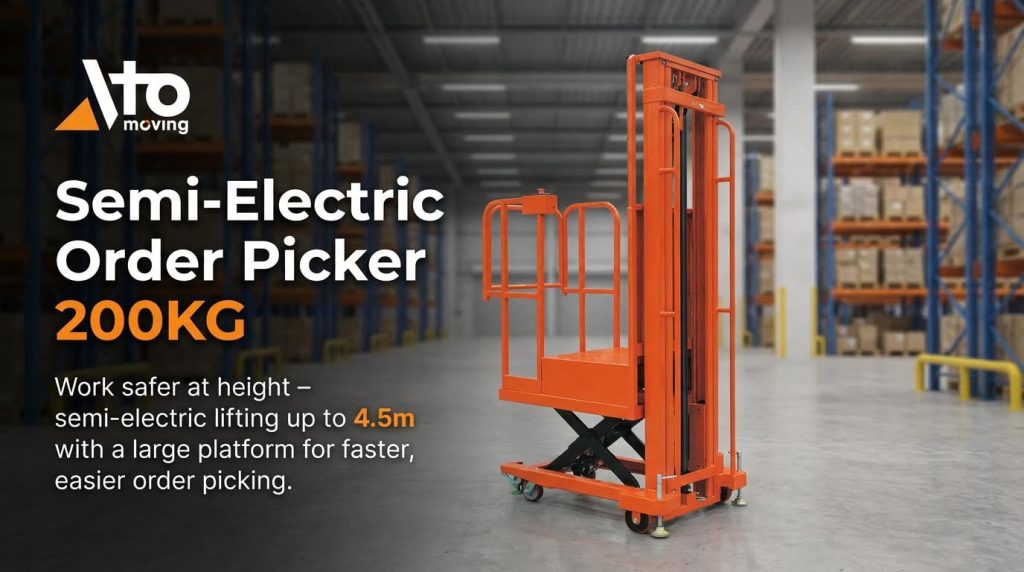
For example, using a manual pallet jack or a drum dolly can significantly improve material handling efficiency. Additionally, integrating semi electric order picker solutions can enhance productivity in warehouse environments.
Ideal Applications, Picking Methods, And Truck Selection
Matching Picking Strategies To Low-Level Pickers
A low level picker is most efficient when the picking method matches its strengths: short travel cycles, fast acceleration, and ergonomic access to the first and second beam levels. Use the truck differently for single, batch, cluster, zone, and wave strategies to avoid bottlenecks and under‑utilized capacity.
Quick guideline: when to use low-level pickers
Use low-level order pickers where: SKUs are fast-moving, pick faces are on the first 2 levels, and the travel distance per line is high. Avoid them where: picks are mostly from high-bay locations, cube is very dense but velocity is low, or aisles are too narrow for horizontal pallet handling.
The table below links common warehouse picking strategies with how a low-level order picker should be applied.
| Picking strategy | How it works | Fit with low-level pickers | Best-practice setup |
|---|---|---|---|
| Single order picking | One operator completes one order at a time. Simple and low error risk | Good for full-pallet or case picks with long travel; truck speed up to 9 mph reduces non‑productive walking. Typical max travel 9 mph under load | Use long forks to carry 2–3 pallets where possible. Reserve for bulky, heavy orders and low order counts per shift. |
| Batch picking | Operator picks multiple orders with overlapping SKUs in one tour. Reduces travel per order | Excellent fit; long forks and high pallet capacity (≈5,500–8,000 lb) let one low level picker consolidate many orders per run. Typical capacity 5,500–8,000 lb | Use pallet or cage positions as “order slots”. Tie routing to WMS batch logic so the truck follows the shortest path. |
| Cluster picking | Operator picks several small orders at once and sorts to totes or containers. Lower travel than single-order | Very strong fit for e‑commerce and piece picking along low‑level shelving, especially with load trays and second‑level access up to ~4.6 m. Picking up to second level (~4.6 m) | Mount carton flow or tote racks on forks. Use color-coded totes and simple paper or RF guidance; advanced WMS not mandatory. |
| Zone picking | Warehouse divided into zones; each picker works only their zone. Reduces congestion in busy areas | Good fit in high‑volume, wide‑aisle zones with many low‑level picks. Low level pickers shuttle pallets or carts through the zone. | Define “low‑level fast‑mover zones” served only by low-level trucks. Use hand-off points or conveyors between zones. |
| Wave picking | Orders released in scheduled waves, often grouped by carrier or cut‑off time. Often combined with batch or zone | Low level pickers support wave-based operations by clearing high‑volume SKUs quickly during each wave. | Align number of trucks and operators per wave with expected cube per hour. Use the highest‑capacity models in peak waves. |
In many operations, moving from an assisted-picker model (driver plus helper) to a solo low-level picker model can increase productivity significantly. One study reported a 44% productivity gain when shifting to a solo-picker model that removed helper idle time and improved labor utilization. Measured productivity improvement of 44% This matches the design intent of a low level picker, where one operator controls both travel and picking from an ergonomic platform.
- Use solo-picking with low-level trucks wherever order profiles allow one person to complete the whole cycle.
- Reserve helpers for exception handling (rework, quality checks, labeling), not for routine ride-along picking.
- Measure lines per hour before and after introducing low-level pickers to verify the productivity gain.
When a low-level picker is the wrong tool
A low level picker is a poor fit where most SKUs are at high levels, where orders are single-piece and very light with short reach distances, or where aisles are too narrow for pallet-length forks. In those cases, other equipment types or manual carts can outperform low-level trucks on cost and maneuverability.
Layout, Aisle Design, And Environmental Constraints
Warehouse layout has to match the geometry and performance envelope of the low level picker: overall length, turning radius, fork length, and maximum picking height. Poorly designed aisles or rack heights will force excessive steering corrections, walking, or bending, which cancels out the truck’s speed and ergonomic benefits.
Key dimensional and environmental factors for low-level order pickers are summarized below.
| Design factor | Typical range / capability | Impact on layout and use |
|---|---|---|
| Load capacity | ≈5,500–8,000 lb. Common low-level range | Design pallet positions and batch sizes so the truck rarely runs at full capacity; leave margin for uneven loading. |
| Lift / picking height | Platform or forks typically lift to ≈4.7 ft, with some models enabling picking up to ~4.6 m second level. Low-level lift Second-level reach | Concentrate A and B movers on floor and second level to maximize use of the low level picker and minimize vertical travel. |
| Overall length | Approx. 111–207 in depending on fork length. Typical length range | Set clear aisle widths and end-of-aisle turning pockets to allow smooth U-turns without multi‑point maneuvers. |
| Travel speed | Up to about 9 mph under full load. Loaded travel speed | Requires longer sight lines, traffic rules, and speed‑limited zones near docks and cross aisles. |
| Electrical / battery system | 24–34 V systems with capacities roughly 240–750 Ah; options for lead‑acid and lithium‑ion. Battery range Li-ion and energy use | Plan charging areas, ventilation, and battery-change routes so trucks do not cross main picking aisles unnecessarily. |
| Cold storage capability | Optional packages protect systems down to about −20 °C. Cold store options | Allows use in freezers; ensure floor flatness and anti‑slip measures because braking distances increase on cold, smooth floors. |
Aisle width is one of the most critical layout decisions for a low level picker. The truck’s overall length (often over 9 ft with standard forks) means it needs generous working aisle widths to turn with loaded pallets without repeated shunting. At the same time, aisles that are too wide increase walking and travel distance between pick faces.
- Base minimum aisle width on the truck’s right‑angle stacking dimension plus a safety margin for pedestrians and rack deflection.
- Provide enlarged “pocket” areas at aisle ends so a fully loaded low level picker can turn 180° in a single sweep.
- Use one‑way traffic in narrow aisles to reduce meeting conflicts and steering corrections.
Environmental and ergonomic constraints also influence how a low level picker should be deployed. Cold storage, high humidity, or rough floors affect traction, braking performance, and component life; dedicated conditioning packages and more frequent inspections are often justified. From an ergonomics standpoint, studies that compared picking from full pallets on the floor, half‑pallets on the floor, and half‑pallets on upper shelves showed clear differences in metabolic cost and posture quality, with more elevated pick faces reducing bending and awkward postures. Ergonomic analysis of pallet rack layouts A low level picker supports this by lifting the operator or pallet so that most picks occur between roughly knee and shoulder height.
- Assign fast-moving SKUs to positions reachable from the low level picker platform without deep bending or overhead reaching.
- Use storage assignment heuristics that balance travel distance with ergonomic quality of the pick face. Heuristic balancing cost and ergonomics
- Exploit the truck’s ability to increase available pick-face by up to about 80% versus floor-only picking by adding second-level faces accessible from the platform. Pick-face increase data
Practical checklist before specifying low-level pickers
- Confirm that at least 60–70% of picks are at low or second level, within the height reach of a low level picker.
- Measure current lines per hour and travel distance per line to quantify the benefit of 9 mph travel and batch/cluster strategies.
- Verify aisle widths, turning pockets, and dock access against the truck’s length and turning radius.
- Check floor flatness and condition, especially in freezers or older buildings.
- Plan battery type (lead‑acid vs lithium‑ion) and charging concept around shift patterns and available power.
Final Considerations For Specifying Low-Level Order Pickers
Engineering, layout, and ergonomics must work together when you specify low-level order pickers. Capacity, fork length, and lift height set the safe load envelope and which rack levels you can reach without extra equipment. Travel speed, braking strategy, and stability controls then keep those loads stable while trucks move quickly through real aisles, not test tracks.
Operator platform geometry and control layout have equal weight. If you ignore reach distances, step height, and steering effort, you will trade lower capital cost for higher fatigue, injury risk, and lower lines per hour. Battery choice and voltage level also shape uptime and infrastructure, so match them to shift length, charging windows, and energy prices.
The best practice is simple. Start with your SKU velocity profile and pick methods, then design rack heights, aisle widths, and traffic rules around the actual truck dimensions and speeds. Only then lock in truck specs and options. Use low-level pickers where at least two rack levels carry fast movers and where batch or cluster picking can exploit multi-pallet capacity. When that alignment is in place, an Atomoving low-level order picker becomes a stable, ergonomic, and highly productive core of your warehouse fleet.
Frequently Asked Questions
What is the lowest position in a warehouse?
The lowest position in a warehouse is often referred to as a “warehouse associate.” This role is entry-level and involves basic warehouse operations such as organizing stock, moving products, and supporting higher-level staff. Warehouse Jobs Guide.
Is being a picker a good entry-level job?
Yes, being a picker is an excellent entry-level job, especially if you’re starting in logistics or supply chain management. Many companies offer on-the-job training, making it accessible for those new to the workforce. It provides valuable experience and can lead to career advancement opportunities. Order Picker Spotlight.