A semi electric order picker bridges the gap between purely manual picking and fully electric machines, combining powered lift with manual travel. This article explains how these units work, how they differ from manual and full-electric systems, and where they fit best in real warehouse operations. You will see how they impact safety, throughput, ergonomics, and lifetime cost so you can match the right technology to your aisles, volumes, and growth plans.
What Semi-Electric Order Pickers Are And How They Work
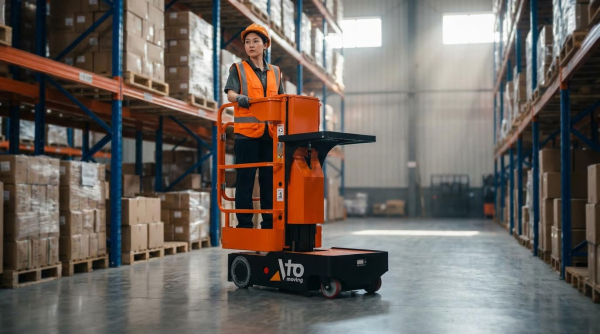
Core design and operating principles
A semi electric order picker combines an electric lift system with manual travel. The operator walks the unit into position, then uses powered controls to raise and lower the platform. This hybrid design sits between manual ladders or carts and fully electric order picker trucks, giving more reach and speed without the cost and complexity of full drive systems. It suits sites that need better productivity than pure manual picking but do not justify a fully electric fleet. Semi-electric order pickers combine powered lifting with manual movement.
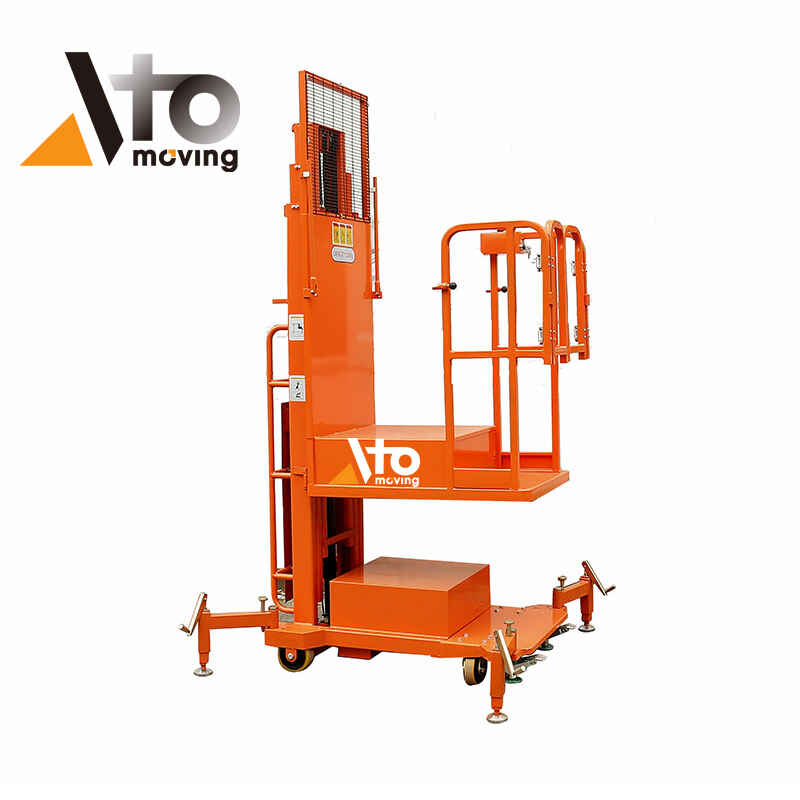
- Structure: Base chassis with steerable wheels, vertical mast, operator platform or small pallet deck, and guardrails.
- Lift system: Electric motor driving a hydraulic pump or chain system to raise the platform.
- Control layout: Simple up/down buttons or tiller-mounted controls plus an emergency stop.
- Power source: Typically a small lead-acid or lithium battery sized only for lifting, not traction.
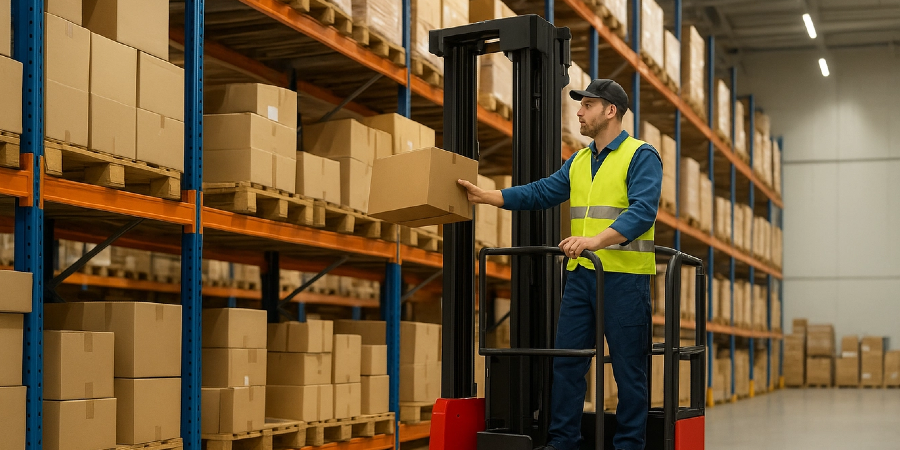
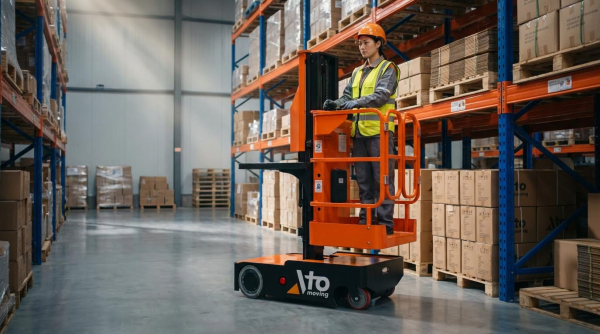
In operation, the picker pushes or pulls the unit along the aisle, positions it at the pick face, then uses the powered lift to reach the correct shelf level. Compared with manual pickers, the powered elevation cuts time and physical strain when accessing higher levels. Powered order picker lifts raise and lower platforms quickly to reach higher shelving levels. Safety features usually include interlocked gates or guardrails, emergency lowering, and non-slip platforms, reducing the risks associated with ladders and step-stools. Stable powered platforms reduce slips, falls, and manual lifting injuries.
How semi-electric differs from manual and fully electric picking
Manual pickers rely on human effort for both movement and vertical access, using carts and ladders. They are cheap and flexible but slower and more physically demanding. Manual pickers are more affordable and maneuverable but less productive than electric order pickers. Fully electric order pickers power both travel and lift, maximizing throughput and minimizing operator effort, but they cost more and require more maintenance. Electric order picker lifts significantly increase picking speed and efficiency. The semi electric order picker splits the difference: manual travel at walking pace, powered vertical movement, and moderate purchase cost.
Typical specs: capacity, lift height, and duty cycles
Warehouse order picker specifications sit between manual platforms and full electric trucks. Most units are sized for light to medium loads on the platform, rather than full pallet handling. Typical design targets are enough capacity for cartons, totes, or partial pallet layers, with safe, stable reach into low and mid-level racking. Semi-electric lifting systems on related warehouse stackers commonly support around 1–1.5 t to moderate heights in low-throughput areas, which frames the upper bound of what small electric lift systems can handle efficiently. Semi-electric units are typically designed for 1–1.5 t loads at walking-speed operation.
| Parameter | Semi-electric order picker (typical range) | Context vs other equipment |
|---|---|---|
| Rated platform load | Commonly a few hundred kilograms (cartons, totes, partial pallets) | Below full electric stackers that often handle 1–2.5 t loads |
| Lift height | Suited to low–mid rack levels (e.g., first 2–3 beam levels) | Full electric masts on stackers can reach up to about 6 m with telescopic designs Full-electric stackers commonly reach 6 m |
| Travel mode | Manual push/pull at walking pace | Full electric units add powered drive up to around 5 km/h in similar classes Electric stackers reach walking-to-jogging speeds |
| Energy use | Low, as power is only used for lifting | Semi-electric lifting systems on stackers consume about 0.3 kWh per 100 lift cycles, versus 0.9 kWh for full-electric lift-and-drive cycles Semi-electric units use roughly one-third of the energy per 100 cycles |
Duty cycles for a order picking machines are usually light to moderate. The small lift motor and battery are optimized for intermittent use rather than continuous, multi-shift operation. That makes them well suited to operations that need powered elevation for a few hours per day or for specific zones, but not full-time high-speed picking. In similar semi-electric stacker applications, daily cycles below about 50 have been recommended as a good fit for this technology, while higher-frequency, multi-shift work tends to justify full-electric solutions. Decision criteria for semi-electric vs full-electric stackers include daily cycle counts and throughput requirements.
Battery and maintenance expectations
Because only the lift is powered, battery packs are smaller and cheaper than on fully electric order pickers. Experience from semi-electric stackers indicates that lead-acid batteries typically last around 750 cycles, with higher-cost lithium options extending life and reducing charge times. Lead-acid batteries last about 750 cycles, lithium-ion around 2,500 cycles. Maintenance focuses on the hydraulic system, lift motor, and safety components, and is generally simpler than on full-electric trucks that also require drive gearbox and traction system servicing. Semi-electric units typically have lower preventive maintenance requirements than full-electric units.
Engineering Comparison: Manual, Semi-Electric, And Full Electric
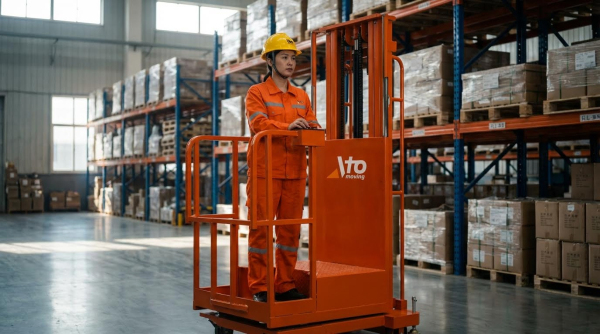
Mechanical and electrical design differences
Manual order picking relies on purely mechanical devices such as platform trolleys or ladders, with the operator providing all lifting and travel force. This keeps the design simple and low cost, but limits safe working height and payload because every kilogram must be moved by human muscle. A semi electric order picker typically uses an electric power pack for vertical lift while keeping horizontal travel manual, in the same way semi-electric stackers use an electric motor for lifting with push–pull movement handled by the operator. Semi-electric pallet stackers use electric lift with manual travel. Fully electric order pickers integrate traction and lift motors, electronic controllers, and often regenerative braking, similar to full-electric stackers that power both vertical and horizontal movements for high efficiency. Full-electric pallet stackers drive and lift electrically. In engineering terms this adds weight, complexity, and higher initial cost, but supports higher duty cycles and automation-ready features such as integrated weighing or scanning.
- Manual: mechanical linkages, hydraulic jacks, no battery or wiring.
- Semi-electric: DC power pack for mast lift, small battery, simple control pendant or tiller.
- Full electric: drive motor, lift motor, motor controller, larger battery, safety interlocks, and often CAN-bus electronics.
This architecture progression from manual to semi-electric to full-electric is the same pattern seen in stackers, where fully electric units are designed for heavy-duty, high-frequency use. Full-electric stackers are intended for heavy-duty applications.
Throughput, ergonomics, and operator fatigue
Manual picking systems are constrained by walking speed, ladder climbing, and manual lifting, so throughput is limited and strongly tied to operator fitness. Manual pickers are attractive on cost and maneuverability, especially in tight or irregular aisles, but they demand more physical effort over a shift. Manual pickers are cheaper and flexible but physically demanding. A semi electric order picker removes most of the strain from vertical lifting, so operators no longer climb ladders or dead-lift cartons to higher levels, but they still walk and push the machine between locations. This makes them well suited to medium-throughput zones where vertical travel is frequent but travel distances are moderate.
Fully electric order pickers deliver the highest throughput because both travel and lift are powered and platform height adjustments are fast. In analogous pallet-handling tasks, semi-electric stackers typically handle around 25 pallets per hour, while full-electric units reach about 40 pallets per hour, cutting labour cost per pallet from roughly US$2.40 to US$1.50. Semi-electric vs full-electric pallet handling productivity. The same relationship appears in order picking: powered order pickers significantly increase the speed of picking and transport versus manual methods. Electric order pickers deliver higher productivity than manual pickers. From an ergonomics standpoint, full-electric machines minimize push–pull forces and repetitive bending, which reduces musculoskeletal risk and fatigue, while semi-electric solutions sit in the middle ground: far better than manual, but still dependent on human propulsion.
Quick comparison: throughput & ergonomics
| Type | Relative throughput | Ergonomic load | Typical use |
|---|---|---|---|
| Manual | Low | High (walk, lift, climb) | Small, low-volume zones |
| Semi-electric | Medium | Medium (push, powered lift) | Medium-volume, mixed-height picking |
| Full electric | High | Low (powered drive & lift) | High-throughput, longer travel |
Energy use, batteries, and maintenance demands
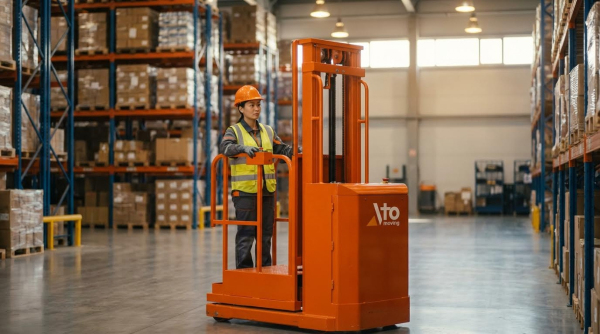
Manual picking equipment consumes no electrical energy, so there are no batteries, chargers, or related maintenance tasks. This is attractive in power-restricted zones or very small operations but shifts all “energy” demand to human labour. A semi electric order picker uses a relatively small battery pack because only lifting is powered; energy consumption is similar in pattern to semi-electric stackers, which use roughly one-third of the energy per cycle of full-electric units for equivalent lifting work. Semi-electric stackers consume about 0.3 kWh per 100 lift cycles vs 0.9 kWh for full-electric. Fully electric order pickers draw more energy because they power both traction and lift, but the absolute electricity cost remains low relative to labour, and some models recover energy via regenerative braking, similar to advanced electric pallet trucks that recapture around 15% of energy. Electric pallet trucks use regenerative braking to recover energy.
Battery life and replacement costs depend on chemistry: lead–acid options have shorter cycle life but lower price, while lithium-ion packs last several times longer and charge faster at a higher upfront cost. Lead-acid batteries last about 750 cycles vs 2,500 cycles for lithium-ion, at higher purchase cost. Maintenance demands rise as systems move from manual to semi-electric to full-electric. Semi-electric units need hydraulic oil, seals, and pump or motor checks, while fully electric machines add drive gearbox, contactors, and more complex diagnostics, mirroring the higher annual service cost seen on full-electric stackers compared with semi-electric ones. Full-electric stackers carry higher preventive maintenance costs than semi-electric units. For engineering teams, the choice is a trade-off: zero-energy but labour-intensive manual systems, modest-energy and modest-maintenance semi-electric designs, or higher-energy, higher-complexity full-electric equipment that delivers the greatest productivity per operator.
When Semi-Electric Order Pickers Make Sense
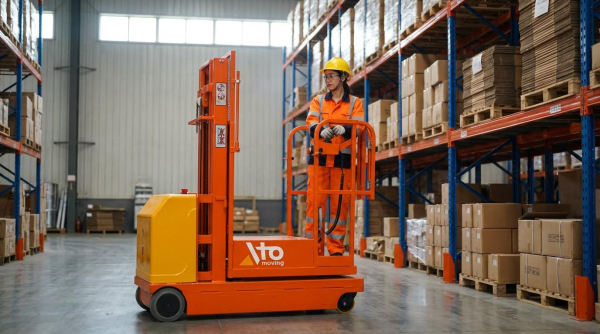
Matching equipment to throughput and aisle layout
A semi electric order picker fits best where you need faster picking than purely manual methods but cannot justify a fully electric fleet. These machines combine powered lifting with manual travel, so they work well in low‑ to medium‑throughput zones where operators move at walking speed but still need vertical access to multiple rack levels. They are particularly attractive in operations that have outgrown ladders and carts yet do not require the speed and complexity of full-electric systems. Semi-electric designs mirror semi-electric stackers, which used an electric motor for lifting while keeping horizontal movement manual, making them more efficient than manual units for medium to heavy loads while still relying on human push/pull effort for travel. Semi-electric pallet stackers combined manual and electric systems with powered lift and manual horizontal movement Semi-electric order pickers are well suited to:
- Zones with moderate order lines per hour, where manual picking is becoming a bottleneck but full-electric speed is not yet essential. Electric order pickers significantly increased picking speed over manual methods
- Aisles that are relatively short or segmented, where frequent direction changes reduce the benefit of powered drive.
- Mixed-storage areas where operators must frequently raise and lower to different shelf levels but travel distances between picks are modest.
As a rule of thumb, if your daily cycles per machine stay relatively low and your aisles are not so long that walking time dominates, a warehouse order picker offers a balanced compromise between capital cost, ergonomics, and productivity. For very narrow aisles and high-frequency pallet moves, studies of stackers showed that higher-speed full-electric travel made more sense, especially where aisles narrower than 2.5 m and high pallet volumes justified powered drive. A decision matrix for pallet stackers favoured full-electric units in narrow aisles and high-cycle applications
TCO, ROI, and upgrade paths for growing operations
From a total cost of ownership (TCO) standpoint, semi electric order pickers follow the same economic pattern as semi-electric stackers. Semi-electric pallet stackers cost roughly 35–60% less at purchase than comparable full-electric units, with entry-level semi-electric machines starting around US$850 versus about US$4,500 for a mainstream full-electric model. Semi-electric pallet stackers were reported at 35–60% lower purchase price than full-electric models, with example prices of US$850 vs. US$4,500 Energy use and maintenance costs also stayed lower for semi-electric stackers, with simpler components and smaller batteries to service. Semi-electric units used less energy per cycle and required fewer maintenance items than full-electric units
However, labour efficiency increasingly favoured full-electric machines as throughput rose. For stackers, semi-electric units averaged about 25 pallets per hour, while full-electric units reached around 40 pallets per hour, cutting labour cost per pallet from roughly US$2.40 to US$1.50 at a US$20 hourly wage. Labour cost per pallet dropped from US$2.40 with semi-electric to US$1.50 with full-electric stackers at 25 vs. 40 pallets per hour The same pattern applies to order picking: at low to moderate volumes, the lower capital and simpler maintenance of a semi electric order picker dominate, but at high order lines per hour the extra speed and reduced walking of full-electric systems usually pay back quickly.
In a low-volume warehouse case for stackers, operating 2 hours per day and moving 50 pallets, the 3‑year total cost was about US$2,415 for a semi-electric unit compared with US$6,412 for a full-electric unit. A low-volume scenario showed 3‑year costs of US$2,415 for semi-electric vs. US$6,412 for full-electric pallet stackers In contrast, very high-throughput operations moving about 3,000 pallets per week recovered the higher purchase price of full-electric units in just a few operating days through labour savings. High-throughput operations recouped the extra cost of full-electric stackers within days due to large annual labour savings
For order picking, this suggests a practical upgrade path:
- Start with order picking machines in young or budget-constrained facilities where order volumes are still growing and staff usage per truck is limited.
- Monitor picks per hour and walking distances; once labour per order line becomes a major cost driver, plan to introduce full-electric order pickers in the busiest zones.
- Retain semi-electric units as backup or for secondary, low-throughput areas where their lower TCO continues to make sense.
This staged approach allows operations to match equipment capability and cost to actual demand, while keeping options open to scale into fully electric systems as volumes, shift patterns, and aisle configurations evolve.
Summary: Choosing The Right Order Picking Technology
Manual, semi-electric, and full-electric order pickers each solve a different engineering and operational problem. Manual systems keep hardware simple and cheap but limit safe height, payload, and shift length because the operator supplies all energy. Semi-electric order pickers use powered lift with manual travel, so they remove ladder work and heavy vertical lifting while keeping batteries, controls, and maintenance straightforward. Full-electric units add powered drive and higher-spec electronics to maximize throughput and reduce fatigue but at higher capital and service cost.
The right choice depends on duty cycle, aisle length, and target productivity. Engineering teams should size platform load and lift height to real SKU profiles, then check daily lift cycles and walking distances. If operators lift often but do not travel far, a semi-electric order picker from Atomoving usually gives the best balance of safety, ergonomics, and TCO. If order lines per hour and travel distances are high, fully electric systems typically recover their higher price through labour savings.
In practice, the strongest strategy is tiered: use manual tools only in very light zones, deploy semi-electric machines as the core fleet in medium-throughput areas, and reserve full-electric order pickers for the heaviest, fastest-moving aisles.
Please provide the `{reference}` data so I can parse, filter, and generate the FAQ section based on the search intent for “semi electric order picker.” The `{reference}` should include an array of objects containing the `output` field with JSON strings to extract relevant information. Once provided, I will proceed with the task.