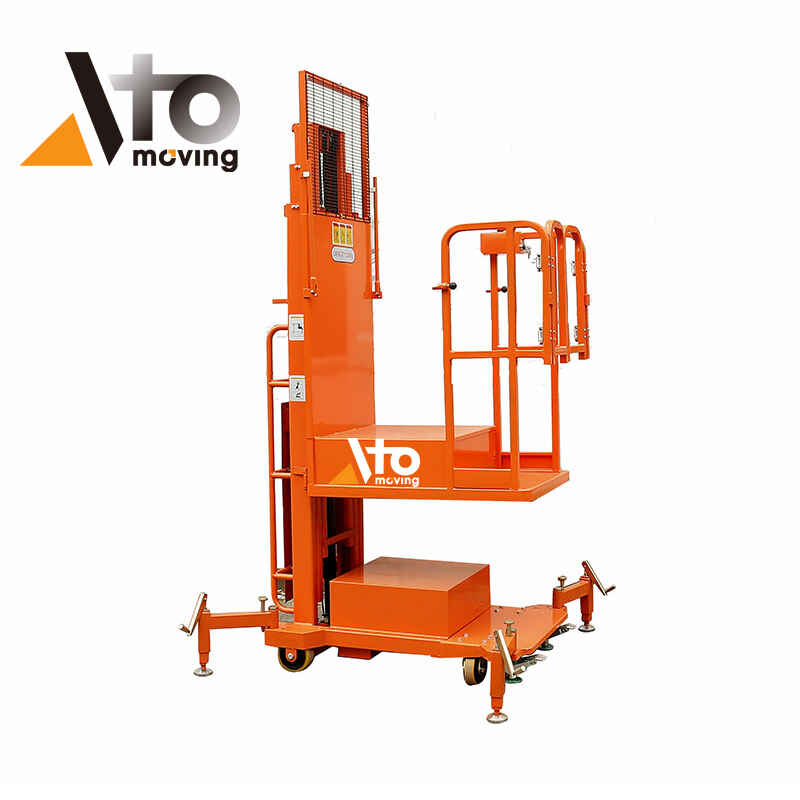
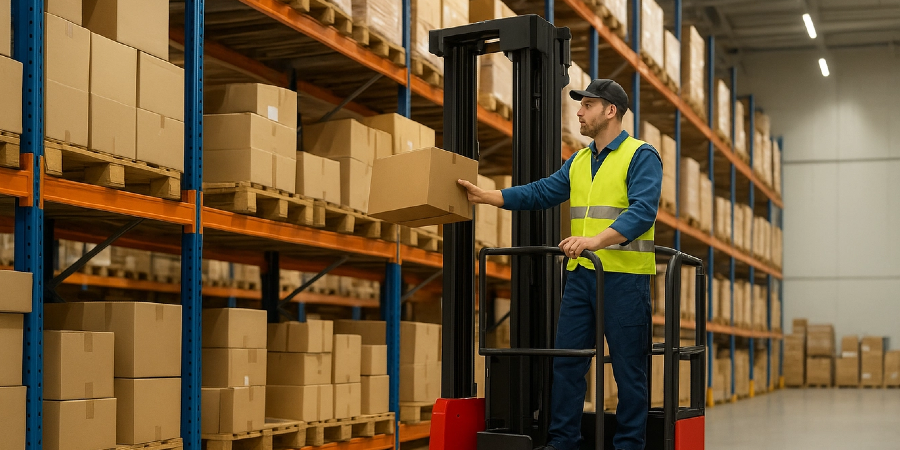
Semi electric order picker technology sits between simple manual equipment and high-output fully electric machines. This guide breaks down how they work, where they fit, and how they compare on safety, throughput, and cost of ownership. You will see clear differences in lifting performance, aisle compatibility, energy use, and maintenance demands. Use these data points to match the right warehouse order picker type to your shift patterns, storage density, and budget.
What Semi-Electric Order Pickers Are And How They Work
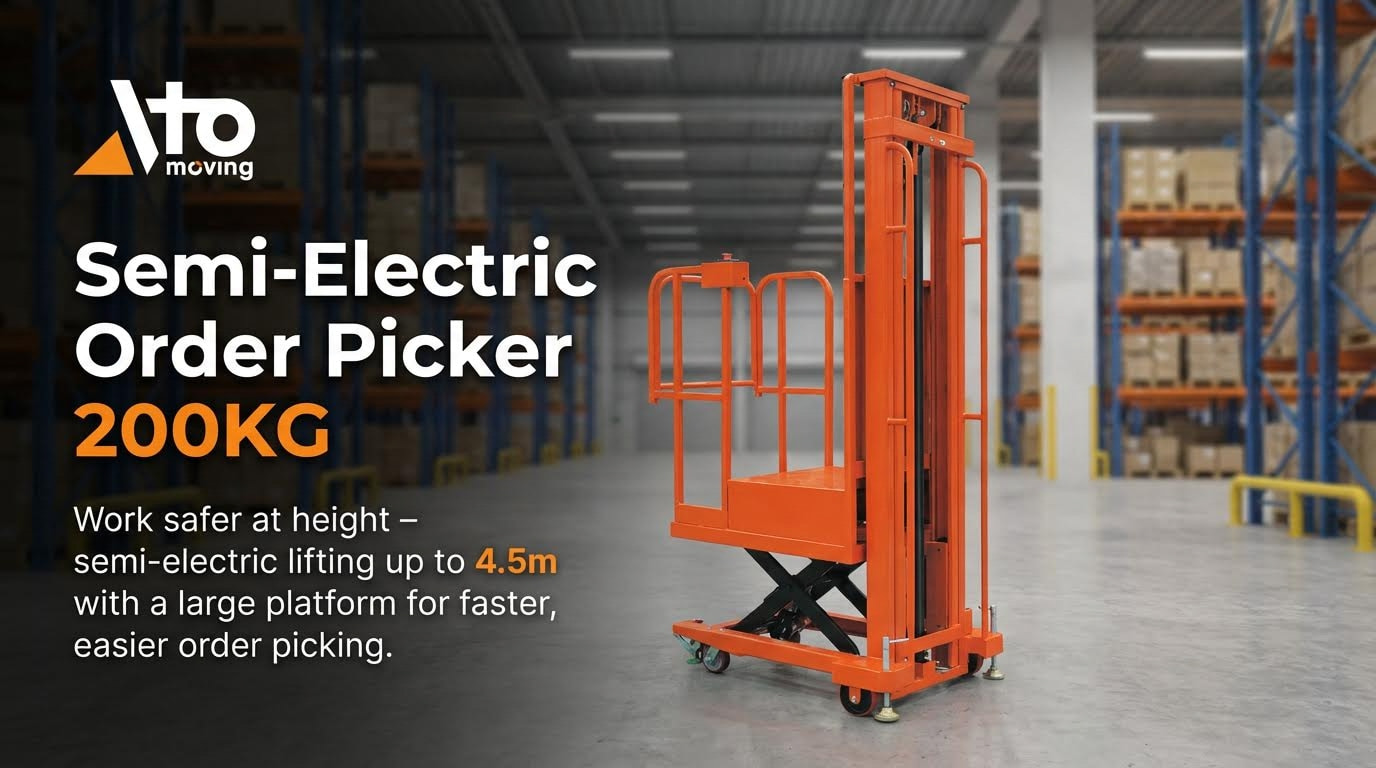
Key Components And Powertrain Layout
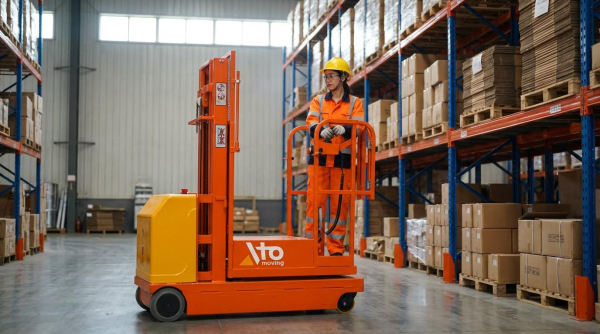
A semi electric order picker combines an electric lifting system with manual or walk-behind travel. The electric portion handles vertical movement, while the operator still walks, steers, and positions the unit by hand. This hybrid layout cuts operator strain compared with purely manual units but avoids the cost and complexity of full-drive systems.
Typical key components on a warehouse order picker include:
- Chassis and mast: Narrow-aisle frame with a vertical mast and guide rails sized for tight warehouse spaces, often 5–7 ft aisle widths. These dimensions allow storage density gains of 30–40% versus forklift layouts.
- Operator platform and guardrails: Standing platform with toe-boards, rails, and gates to support the operator plus picked items while elevated.
- Electric lift motor and hydraulic pump: Compact DC motor driving a hydraulic pump that raises the mast or scissor mechanism. Many semi-electric lifting systems run on 24 V batteries and can lift continuously for several hours under typical duty. Similar semi-electric lifting systems on stackers operate 4–6 hours per charge.
- Battery pack and charger: Lead‑acid or lithium‑ion battery supplying the lift circuit. Energy use for a semi electric order picker typically falls in the 8–12 kWh range per eight‑hour shift. This translates to about $1–$3 per day in electricity at common tariffs.
- Manual travel system: Steer tiller, load wheels, and castors designed for push/pull operation. Travel speed stays close to walking pace, around 4–6 mph, to prioritise control and safety. Semi-electric units use electric lift only; horizontal movement is manual.
- Control interface: Lift/lower buttons or joystick on the platform or tiller, emergency stop, and key or PIN access to prevent unauthorised use.
- Safety and fall-protection points: Anchor points for harness lanyards, interlocked platform gates, and sensors that limit travel at height to reduce tip‑over risk. Modern machines restrict horizontal movement at maximum elevation.
The powertrain layout on a semi electric order picker is simpler than on a fully electric truck. Only the lifting motion is powered; there is no traction motor, gearbox, or drive axle to maintain. This reduces upfront cost and service complexity but means the operator still supplies the tractive effort to move and steer the machine.
How the hybrid powertrain affects operation
The hybrid layout of a semi electric order picker changes how work is shared between the machine and the operator. The electric motor handles the most ergonomically demanding task: repeated vertical lifting of the operator and load. The operator still walks with the unit, controlling direction and speed by pushing or pulling. This keeps travel speed moderate and improves picking accuracy in dense storage. It also means that travel-intensive applications may favour fully electric units, while short-shuttle or high-accuracy picking can work very efficiently with semi-electric equipment.
Lifting Performance, Capacity, And Working Heights
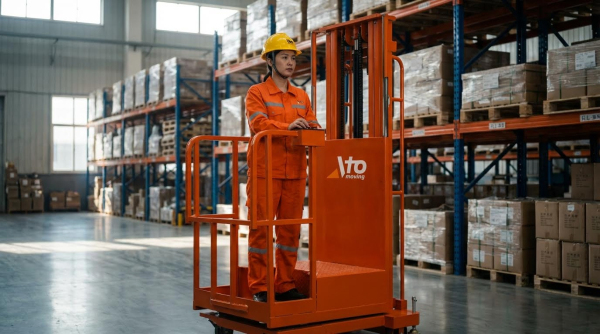
Lifting performance is a core selection factor for any order picking machines. Capacity must cover the combined weight of the operator, platform, tools, and picked items with a safety margin. Typical models sit between manual and fully electric machines in both capacity and height capability.
The table below compares representative lifting and working ranges for manual, semi-electric, and fully electric vertical handling equipment. This helps put the semi electric order picker in context when you size your fleet.
| Equipment type | Typical rated capacity | Typical working / lift height | Lift speed (approximate) | Notes |
|---|---|---|---|---|
| Manual stacker / manual order handling | 1,000–2,000 kg for pallet loads on typical manual stackers | Up to about 1.6 m lift height for pallets in manual stacker applications | 50–80 mm per pump stroke, 15–20 strokes to full height with 1,000 kg load on manual hydraulic systems | Operator supplies all lifting energy through the pump handle. |
| Semi electric stacker (reference for lift system) | 1,000–1,600 kg pallet loads on semi-electric stackers | Up to about 3.3 m lift height for semi-electric lifting masts | Roughly 80–100 mm/s with full load, reaching 3 m in 30–35 s on semi-electric systems | Electric motor powers lift only; travel remains manual. |
| Semi electric order picker | Typically 500–2,500 lb including operator, platform, and picked load for semi-electric picking platforms | Working heights usually in the low- to mid-rack zone; vertical clearance of 3–5 ft above max lift is required for safe operation on semi-electric order picking units | Comparable to semi-electric stackers for the same mast class; typically under a minute from ground to full working height | Capacity rating must include operator, tools, and all accumulated picks. |
| Fully electric stacker / high-reach equipment | 1,000–2,500 kg for pallet loads on fully electric stackers | Up to about 5.5 m on specialised high‑reach masts for fully electric stackers | High lift speeds with simultaneous lift and travel, saving 15–20 s per cycle through dual-motor systems | Best suited to high-bay, high-throughput operations. |
In practical terms, a semi electric order picker offers enough capacity for typical case and piece picking while keeping the machine compact and light. The capacity band of roughly 500–2,500 lb covers most single-operator tasks in retail back rooms, e‑commerce zones, and light manufacturing stores. This rating always includes the operator, platform, and all picked items.
From an engineering and safety standpoint, you should consider these points when matching a semi electric order picker to your application:
- Capacity at height: The rated capacity often reduces at maximum lift due to stability limits. Always check the load chart and keep heaviest picks at lower levels.
- Centre of gravity: Tall, heavy items increase overturning moment. Keep loads within the platform footprint and as low as possible on the deck.
- Required overhead clearance: Semi electric order pickers generally need 3–5 ft of free space above the highest working height for safe manoeuvring and to avoid overhead strikes. This clearance is critical in low-ceiling mezzanines.
- Duty cycle and heat: Frequent full-height lifts increase motor and battery temperature. In warm warehouses, high ambient temperatures can shorten battery life and reduce available runtime compared with cooler environments. Lead-acid systems in hot climates have shown 15–20% capacity loss and shorter life, which is relevant when sizing batteries for semi-electric lifting systems.
- Throughput expectations: Because travel remains manual, semi electric order pickers usually target modest picking rates. Reference figures for semi-electric units indicate about 100–150 picks per hour depending on layout and order profile. This suits low- to medium-throughput zones.
Why semi electric lift performance often beats manual units in real use
Manual lifting systems depend entirely on operator effort and technique. As the shift progresses, pump strokes get slower, operators avoid full-height lifts, and productivity drops. The electric lift on a semi electric order picker keeps lift speed consistent throughout the battery’s state of charge window, so the last hour of the shift looks much like the first. In addition, operators no longer waste time and energy on 15–20 pump strokes per lift cycle, as is typical on manual hydraulic equipment with 1,000 kg loads. That energy instead goes into accurate picking and safe manoeuvring, which is why semi-electric units often deliver a better balance of ergonomics, safety, and throughput than purely manual solutions in the same footprint.
Technical Comparison: Manual Vs Semi-Electric Vs Fully Electric
This section compares manual, semi-electric, and fully electric warehouse order picker equipment on three hard metrics: throughput, energy use, and maintenance cost. Use it to decide when a semi electric order picker is the sweet spot versus a basic manual unit or a high-capacity fully electric machine.
Throughput, Travel Speed, And Picking Productivity
Throughput is a function of lift speed, travel speed, and how much human effort each cycle needs. The table below gives realistic ranges based on typical stacker and order picker performance data. Values are indicative, not model-specific.
| Parameter | Manual Equipment | Semi Electric Order Picker / Stacker | Fully Electric Equipment |
|---|---|---|---|
| Typical travel speed (loaded) | 2–3 km/h walking push speed for manual stackers | Walking pace, usually around 4–6 km/h with powered lift only | 4–6 km/h loaded, 6–8 km/h empty for fully electric stackers |
| Lift mechanism | Manual pump, 15–20 strokes to full height at ~1.6 m with 50–80 mm per stroke | Electric lift, manual push/pull travel using 24 V motor | Electric lift and electric drive with dual motors allowing simultaneous functions |
| Typical lift speed (full load) | Highly operator-dependent; slower at higher loads | ~80–100 mm/s, ~30–35 s to 3 m for semi-electric stackers | Similar or faster than semi-electric; often combined with travel to save 15–20 s per cycle through dual motors |
| Typical picks per hour (order picking use) | Low, often <60 picks/h in multi-level racking | ~100–150 picks/h depending on layout and order mix for semi-electric units | Highest; can exceed semi-electric throughput, especially over long travel distances |
| Operator effort per cycle | High: manual pumping and pushing every move | Medium: powered lifting but manual travel; effort rises with load and distance on smooth floors | Low: powered lift and drive; operator mainly steers and controls speed |
In short travel, high-lift, low-distance applications, a semi electric order picker closes much of the productivity gap to fully electric units because lift time dominates the cycle. Over long aisle runs, the higher travel speed and simultaneous lift-and-drive of fully electric machines pull ahead.
- Use manual units where picks are infrequent and travel distances are short.
- Use semi-electric where you need powered lift and moderate productivity without the cost of full drive.
- Use fully electric where travel distance and pick volume per shift are high.
Energy Use, Batteries, And Heat-Derated Runtime
Energy and battery behavior differ sharply between manual, semi-electric, and fully electric equipment. Manual units have no traction or lift battery. Semi-electric and fully electric machines trade higher throughput for higher energy draw.
| Parameter | Manual Equipment | Semi Electric Order Picker / Stacker | Fully Electric Equipment |
|---|---|---|---|
| Energy consumption per 8 h shift | None (human power only) | ~8–12 kWh per shift for typical semi-electric units | Higher than semi-electric due to powered travel; actual value depends on duty cycle |
| Battery system (common) | Not applicable | 24 V lead-acid, 4–6 h continuous lift operation before recharge in semi-electric stackers | Higher-capacity lead-acid or lithium packs sized for drive and lift together |
| Battery runtime impact of heat (example: hot-climate warehouses) | Not applicable | Capacity loss of about 15–20% and life reduction from 1,200–1,500 to 900–1,100 cycles when exposed to 28–32°C environments for 24 V lead-acid systems | Subject to similar heat derating for lead-acid; lithium-ion variants are more temperature-tolerant but cost more |
| Regenerative braking | Not available | Rare on basic semi-electric designs | Common; can extend runtime by ~8–12% via energy recovery in fully electric stackers |
| Typical battery replacement cost | None | ~US$2,500–6,000 per pack, replacement every 5–7 years in normal use; lithium-ion up to ~2,500 cycles at ~US$1,000–1,500 for semi-electric order pickers | Similar or higher absolute cost due to larger capacity packs and higher duty cycles |
For a semi electric order picker, energy cost per shift is low compared with labor, but battery sizing and heat management are critical. In hot warehouses, plan for shorter runtime and earlier battery replacement, and consider ventilation or opportunity charging to stabilize battery temperature.
Practical battery planning tips
- Size chargers so a full recharge fits into your longest planned off-shift window.
- Keep lead-acid batteries between 20–80% state of charge to extend life where possible.
- In hot regions, avoid parking machines in unventilated loading docks or near doors with direct sun.
- Track battery failures and runtime to adjust maintenance intervals before unplanned downtime hits.
Maintenance Intervals, Service Tasks, And TCO
Maintenance drives long-term total cost of ownership (TCO). Manual units have low parts counts and simple hydraulics. Semi-electric and fully electric machines add batteries, motors, and controls, which increase both the number of tasks and the skill level required.
| Aspect | Manual Equipment | Semi Electric Order Picker / Stacker | Fully Electric Equipment |
|---|---|---|---|
| Routine inspection frequency | Monthly visual and lubrication checks for pump, forks, wheels | Weekly visual and functional checks; monthly lubrication and safety checks including battery terminals and lift chains | Weekly visual and control checks; monthly motor, brake, and hydraulic inspections plus battery connections |
| Typical maintenance interval (operating hours) | Low utilization: service largely calendar-based | Service every ~200–250 operating hours for semi-electric order pickers | Similar or slightly shorter intervals due to higher duty and more components |
| Key recurring tasks | Hydraulic fluid checks, wheel lubrication, fork inspection, seal replacement every few years for manual stackers | Battery water and terminals, drive wheel and brake checks, lift chain lubrication and replacement if elongation >2%, electrical connection tightening plus hydraulic service | Electrical diagnostics, motor bearings, hydraulic filter replacement, brake components, control system calibration, chain inspection and adjustment for fully electric units |
| Annual maintenance cost (rule-of-thumb) | Low; dominated by occasional wheels, seals, and fluid changes | Roughly 10–15% of equipment value per year, with 5–10% extra versus basic forklifts due to the elevating mechanism for semi-electric order pickers | Highest absolute spend; more complex electronics and motors, but cost per pick can be low at high throughput |
| Typical major component costs | Push wheels every 18–24 months, hydraulic seals every 3–4 years for manual stackers | Battery pack every 5–7 years plus periodic lift chain replacement for semi-electric order pickers | Battery pack, drive and lift motors, control boards, and brake components over life |
- Manual units minimize maintenance cost but cap productivity and increase operator fatigue.
- A When Semi-Electric Order Pickers Make Sense
A semi electric order picker sits between manual and fully electric units in cost, speed, and complexity. The sweet spot is operations that need higher storage density and safer elevated picking, but do not justify full-aisle travel speeds or multiple high-intensity shifts. Use the criteria below to decide where semi-electric equipment is the right engineering and financial fit.
Matching Equipment To Aisle Widths And Storage Density
Semi-electric order pickers are designed for tight storage layouts where a standard forklift cannot work efficiently. They trade horizontal speed for the ability to operate safely in very narrow aisles while lifting an operator and load together.
Parameter Semi-Electric Order Picker Typical Manual Equipment Typical Full-Electric Order Picker Minimum workable aisle width ≈ 5–7 ft aisles supports narrow-aisle layouts Often needs ≥ 8–10 ft to turn and pump under load Commonly designed for ≥ 8–12 ft guided aisles Storage density gain vs forklift layout ≈ 30–40% higher rack density by narrowing aisles due to 5–7 ft aisles Limited density gain; aisles stay relatively wide High density possible with rail or wire guidance but at higher system cost Required vertical clearance above top rack ≈ 3–5 ft above max lift for safe operator headroom to avoid overhead strikes Lower, because operator usually stays on floor Similar or higher; mast and guard structures need extra clearance Typical load capacity (incl. operator + picks) ≈ 500–2,500 lb combined platform + operator + load Similar or lower, but without elevated operator platform Often equal or higher; optimized for pallet loads Choose a warehouse order picker when the main design driver is cubic utilization, not travel speed. They are especially effective in:
- Retail back rooms where you want to push racks closer together without installing rail-guided systems.
- Mezzanine levels where floor loading is limited and small chassis machines are safer.
- Slow- to medium-velocity SKU zones that still need safe man-up picking.
Quick engineering checks before committing to narrow aisles
Before redesigning aisles around a order picking machines, verify:
- Turning radius at full mast height, including clearance for guardrails and column bases.
- Obstruction envelope for sprinklers, lighting, and HVAC ducting above the top rack.
- Emergency egress paths so an operator can lower and exit quickly if a truck fails in the aisle.
Duty Cycle, Shift Patterns, And Operator Fatigue
Because drive is manual and lift is powered, semi-electric units fit medium-duty applications where operators walk a lot but do not need forklift-level travel speeds. The balance between manual push effort, lift motor runtime, and battery capacity defines where they make sense.
Factor Semi-Electric Order Picker Manual Solution Fully Electric Order Picker Typical horizontal speed Walking pace, often around 4–6 mph manual push / pull Similar or slower when loaded due to higher push force ≈ 4–6 km/h loaded and 6–8 km/h empty with powered travel Typical picks per hour ≈ 100–150 picks/h depending on layout and order mix medium throughput Lower; more time lost to pumping and climbing Higher; often chosen when high-velocity zones exceed this range Recommended daily duty cycle Best under ≈ 1 full shift of continuous use or < 50 full-height cycles per day for moderate workloads Best for light, intermittent use and short lifts Suited to multi-shift, high-cycle environments Battery / energy profile Consumes ≈ 8–12 kWh per 8-hour shift low running cost No traction battery; operator provides energy Higher kWh per shift but higher throughput Operator fatigue drivers Reduced fatigue from powered lifting; residual fatigue from pushing, especially with heavier loads or ramps. High fatigue from both pumping and pushing, particularly at higher lift heights. Lowest physical strain; main fatigue is from standing and steering. A semi electric order picker generally makes sense when your operation looks like this:
- One-shift or light two-shift operation, with ample breaks for battery cool-down and charging.
- Daily cycles under roughly 50 full-height lifts and moderate horizontal travel per picker.
- Order profiles that need man-up access but not full-aisle, high-speed travel between zones.
Red flags that you should move to fully electric
Consider a fully electric unit instead of a semi electric order picker if:
- Operators regularly complain about push effort or show early signs of strain-related injuries.
- Travel distances per pick are long (for example, end-to-end runs in a 100 m+ aisle).
- You plan to run two or more heavy shifts per day or exceed 150–200 picks per hour per truck.
From a mechanical engineering standpoint, semi-electric designs are most efficient when vertical work dominates and horizontal work stays modest. That is where the powered mast does the hard lifting, the operator’s walking pace is acceptable, and you avoid the capital and maintenance overhead of fully electric travel drives while still upgrading from purely manual equipment.
“”
Final Thoughts On Selecting Semi-Electric Order Pickers
Semi-electric order pickers sit in a clear engineering niche. They use powered lift to remove the hardest ergonomic task while keeping travel manual, which holds down cost, weight, and complexity. Narrow chassis and 5–7 ft aisle capability let you raise storage density by up to 30–40% without moving to high-cost guided systems.
The same design choices set the safety envelope. Capacity ratings include the operator and every picked case, and real limits fall as height increases. Stability depends on keeping the centre of gravity low and inside the platform footprint, plus maintaining 3–5 ft of overhead clearance. Battery sizing, heat management, and 200–250 hour service intervals then protect lift performance and reduce unplanned stops.
In practice, semi-electric units work best in one-shift, medium-throughput zones with moderate travel and frequent elevation. Use manual gear for light, occasional work, and move to fully electric when travel distances, picks per hour, or shift count push operator effort too high. For most back-of-store, e‑commerce, and mezzanine applications, a well-specified semi electric order picker from Atomoving gives a strong balance of safety, density, and lifetime cost.
Please provide the `{reference}` data so I can parse, filter, and generate the FAQ section for the semi-electric order picker query. The reference should include an array of objects with `output` fields containing JSON strings as described in the instructions.