In warehouse operations, the question “what is a cherry picker in a warehouse” usually refers to an order picking machines-style aerial work platform that lifts an operator to racking height for direct item retrieval. This article explains how these warehouse cherry pickers compare to other lift types, how their core components and lift mechanisms work, and where they fit across different industries and duty cycles.
It then examines key engineering and selection parameters such as load capacity, lift height, aisle width, energy options, and lifecycle cost. Finally, it outlines the safety standards, training requirements, inspection routines, and digital tools that enable safe, efficient use of semi electric order picker in modern logistics environments.
What A Warehouse Cherry Picker Really Is
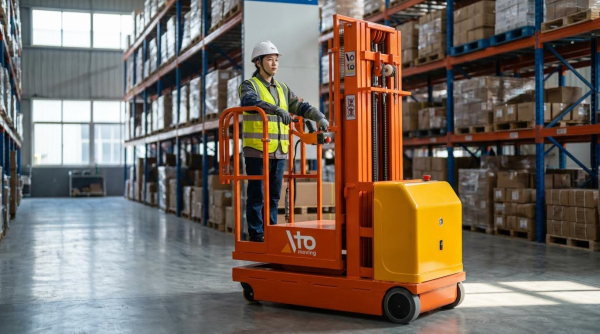
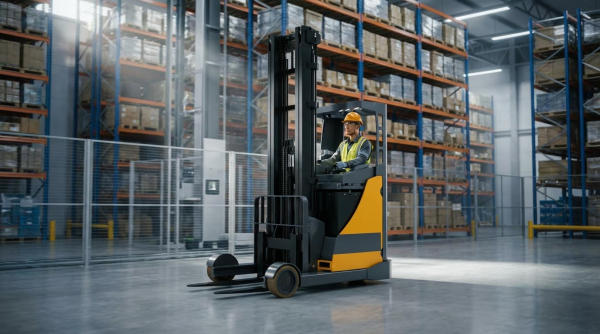
In a warehouse context, the question “what is a cherry picker in a warehouse” usually referred to a specialized warehouse order picker forklift that lifted an operator to rack level to pick individual items. The machine functioned as a narrow-aisle, high-reach platform that combined vertical lifting with precise horizontal positioning in front of pallet locations. Understanding how this equipment differed from other forklifts, how its components worked, and where it fit best in warehouse operations helped engineers and managers specify the right machine and design safe, efficient systems.
Cherry picker vs. order picker forklift
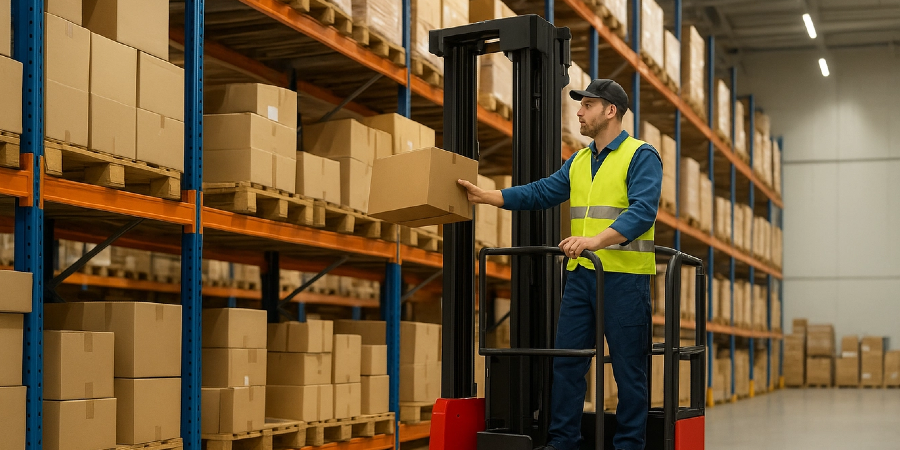
Historically, “cherry picker” in a warehouse described an semi electric order picker forklift designed for man-up picking, not bulk pallet handling. The operator stood on an integrated platform that rose with the forks, enabling direct access to cartons or eaches stored on pallet racking. Conventional counterbalance or reach forklifts typically stayed at floor level and moved fully loaded pallets instead of individual items. By contrast, a warehouse cherry picker prioritized vertical access, operator ergonomics, and precise positioning in narrow aisles. This distinction mattered for layout design, pick-face configuration, and safety training, because the primary lifted load was a person plus limited picked product rather than a full pallet.
Core components and lift mechanisms
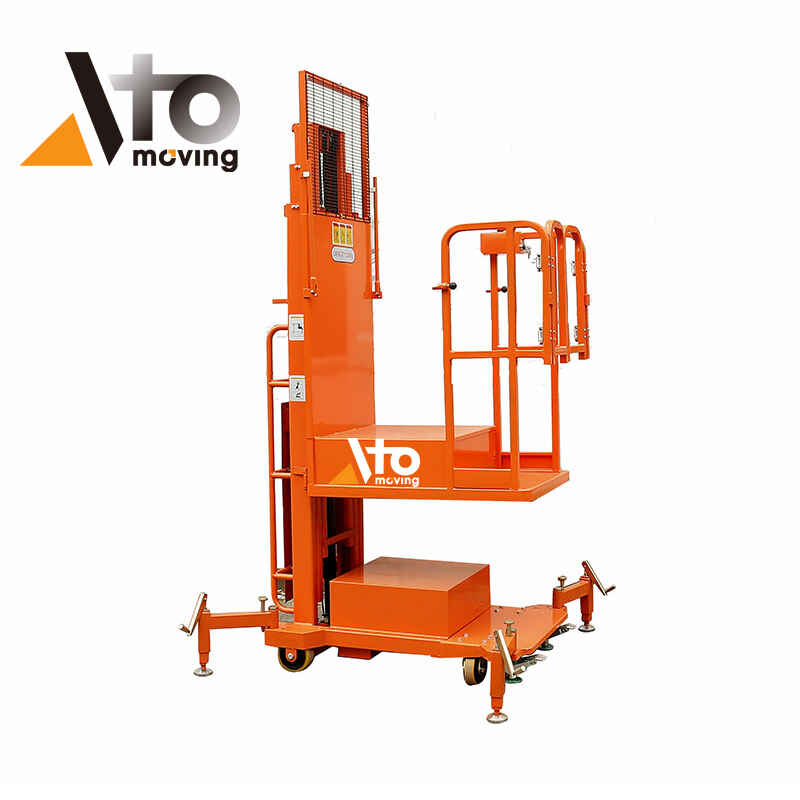
A warehouse cherry picker incorporated a chassis with drive unit, a vertical mast or scissor platform-type structure, an operator platform with guardrails, and fork or load tray assemblies. Electric drive motors powered traction and steering, while a hydraulic or electro-hydraulic system actuated mast sections and platform lift. Control consoles on the platform provided proportional joysticks or fingertip controls for lift, lower, travel, and steering, often with integrated speed and height limiters. Modern designs used AC traction motors, sealed controllers, and regenerative braking to reduce energy consumption and maintenance. Safety-critical components included interlocks on gates, emergency-stop switches, tilt or height sensors, and overload detection that prevented operation beyond rated limits.
Typical warehouse applications and industries
In warehouse operations, cherry pickers supported case and piece picking at medium to high levels, typically from the second racking level upward. E-commerce fulfillment centers used them for slow- to medium-moving stock stored in high bay racking where full automation was not justified. Third-party logistics providers deployed them flexibly across changing customer inventories, especially for bulky or irregular items that did not suit conveyor or shuttle systems. Wholesale distribution, home improvement centers, and spare-parts warehouses used cherry pickers for both order fulfillment and in-rack maintenance tasks such as labeling, light installation, or rack inspections. Their ability to operate in relatively narrow aisles while lifting an operator directly to the pick face made them a bridge between traditional forklifts and fixed automation.
Key performance specs and duty cycles
Key specifications for a warehouse cherry picker included rated capacity, maximum platform height, travel speed, and duty cycle classification. Typical capacities ranged from about 1 360 kg for medium-level units down to lower values when the platform reached maximum height, reflecting derating for stability. Lift heights often spanned from 4 m to above 10 m, enabling access to multiple racking levels in high-bay facilities. Engineers evaluated duty cycles by combining lift frequency, average vertical travel, and driving distance per shift, then matching those profiles to battery technology and motor sizing. For example, high-throughput “man-up” picking in multi-shift operations favored energy-dense lithium-ion batteries and robust cooling for power electronics. Specifying the correct class also required considering aisle width, floor flatness, and expected utilization hours to ensure that performance, thermal limits, and structural fatigue life aligned with the warehouse’s operational profile.
Engineering And Selection Considerations
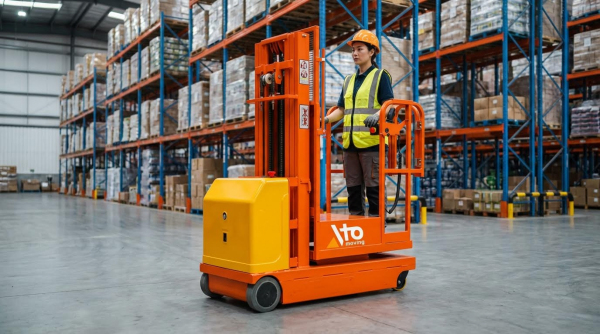
Engineering choices for a warehouse cherry picker determine safety, throughput, and long-term cost. When asking what is a cherry picker in a warehouse, engineers must translate that definition into quantifiable parameters such as capacity, lift height, aisle width, and energy profile. Proper selection aligns the machine with racking geometry, SKU profile, and operating patterns over an entire lifecycle.
Load capacity, lift height, and stability limits
Warehouse cherry pickers, often called order picker forklifts, typically handle rated loads from 1 350 kg to about 3 600 kg. Engineers should size capacity based on the heaviest pallet or carton cluster plus operator, tools, and attachments, with at least 10–20% engineering margin. Required lift height must match the top beam level plus clearance for pallet overhang and safe working posture. Stability depends on the center of gravity envelope, mast deflection, and dynamic effects during acceleration or braking at height. Specification sheets define rated capacity at a given load center; exceeding this or adding cantilevered loads reduces the stability factor and increases tip-over risk.
Aisle width, racking interface, and layout impacts
In a warehouse, what is a cherry picker in a warehouse functionally becomes a man-up truck that dictates minimum aisle width. Engineers should compare equipment turning radius, platform overhang, and required clearance to rack face when defining very narrow aisle, narrow aisle, or standard aisle layouts. The interface with racking includes pallet type, beam spacing, and required reach to individual pick faces at multiple levels. Poorly matched equipment and layout increase travel distance, cause frequent multi-point turns, and raise collision risk with uprights. Early coordination between storage system designers and equipment engineers enables higher storage density while maintaining acceptable travel speeds and visibility envelopes.
Power options and energy efficiency trade-offs
Warehouse cherry pickers typically use electric power, with lead-acid, thin plate pure lead, or lithium-ion batteries. Lead-acid packs involve lower upfront cost but require watering, equalization charging, and battery swaps on high-shift operations. Lithium-ion systems offer higher round-trip efficiency, faster opportunity charging, and more stable voltage under high lift cycles, which benefits performance at upper rack levels. Engineers should model daily amp-hour demand from lift profiles, travel distances, and duty cycles to size battery capacity and charger infrastructure. Energy efficiency also depends on regenerative lowering, traction motor technology, and drive control strategies that limit peak current while maintaining acceptable acceleration.
Lifecycle cost, maintenance, and uptime metrics
Selection must consider total cost over 8–10 years, not only purchase price. Key lifecycle elements include scheduled maintenance intervals, cost of wear parts, and expected battery replacement frequency. For high-intensity picking, uptime targets often exceed 95%, which requires robust preventive maintenance plans and rapid access to spares. Engineers should review mean time between failures data, diagnostic capabilities, and compatibility with telematics for monitoring hours, fault codes, and shock events. A structured cost model should combine capital expenditure, energy consumption per operating hour, maintenance labor, parts, and downtime cost per hour of lost picking capacity. This approach links engineering decisions directly to warehouse service levels and order fulfillment reliability.
Safety Standards, Training, And Best Practices
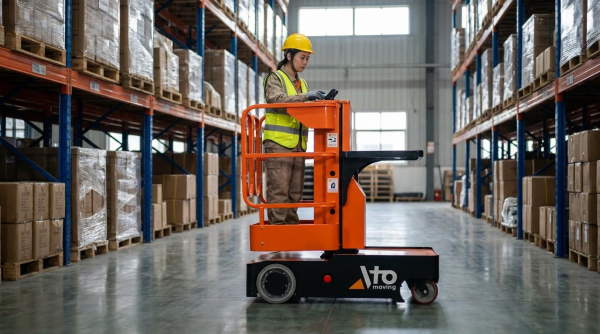
Safety standards for warehouse cherry pickers defined what a cherry picker is in a warehouse from a regulatory perspective. These standards linked equipment design, operator behavior, and maintenance into one control system. Engineering teams used them to set specifications, while HSE teams used them to control daily risk. Robust training, inspection, and digital monitoring kept elevated work predictable, even in high-throughput environments.
Regulatory frameworks and operator training
Regulatory frameworks for warehouse order picker treated them as mobile elevating work platforms used for lifting people. In regions such as the EU and UK, work-at-height regulations required employers to plan tasks, assess risks, and use competent operators. Standards equivalent to EN 280 or ANSI A92 defined design, stability, load rating, and control system requirements. Operators learned what a cherry picker is in a warehouse not just functionally, but as a controlled risk source that must follow these rules.
Formal operator training covered equipment classification, stability envelopes, safe working load (SWL), and control logic. Courses included theory, hands-on driving, elevation maneuvers, and emergency descent practice. Trainees learned to maintain minimum clearances from overhead services and to respect interlocks and limit switches. Refresher training and documented competence assessments supported compliance and reduced incident rates in dense racking systems.
Pre-use inspection and functional test checks
Daily pre-use checks verified that a scissor platform lift remained within its design assumptions before lifting a person. Operators conducted a walk-around inspection to identify leaks, damaged guardrails, loose fasteners, and tire or wheel defects. They checked hydraulic hoses, mast or boom structures, platform gates, and anchor points for the fall-arrest lanyard. Clear labeling of SWL, lift height, and control symbols helped maintain safe use under time pressure.
After the visual inspection, operators performed functional tests on ground and platform controls. They verified steering, service brakes, emergency stop, horn, tilt alarms, and descent alarms. Lift and lower functions had to operate smoothly, without abnormal noise or jerky motion. Any fault found during inspection or tests required immediate lockout and notification to maintenance, rather than improvised fixes by operators.
Fall protection, ground stability, and tip-over risks
Fall protection was central to defining what a cherry picker is in a warehouse: a people-lifting machine that assumes correct use of harness systems. Operators wore a full-body harness with an energy-absorbing lanyard attached to an approved anchor point on the platform. They stood on the platform floor and avoided climbing rails or using boxes to gain extra reach. This controlled ejection risk during sudden stops, impacts, or platform movement.
Ground stability governed tip-over behavior, especially at full lift height with dynamic loads. Before operation, operators confirmed that the floor or slab had adequate bearing capacity and was free from voids, ramps, or unprotected edges. If the design included outriggers, they deployed and leveled them fully before elevation. Adhering to the rated load, including operator, tools, and picked items, kept the center of gravity inside the stability polygon and reduced overturn potential.
Digital tools, telematics, and predictive maintenance
Digital tools and telematics transformed how facilities managed what a cherry picker is in a warehouse from a safety and uptime viewpoint. Fleet telematics recorded operating hours, lift cycles, impact events, and fault codes. Engineers used these data to schedule maintenance based on actual duty cycles rather than fixed calendar intervals. This approach reduced unplanned downtime and ensured that critical safety devices received timely inspection.
Connected systems also controlled access and behavior. Keyless start with operator logins restricted use to trained personnel and linked incidents to specific users. Telematics dashboards highlighted repeated overload attempts, harsh driving, or frequent tilt alarms, prompting targeted retraining. Predictive analytics on vibration, hydraulic pressure trends, or battery performance enabled early intervention before a failure occurred at height, improving both safety margins and lifecycle cost control.
Summary: Safe, Efficient Use Of Warehouse Cherry Pickers
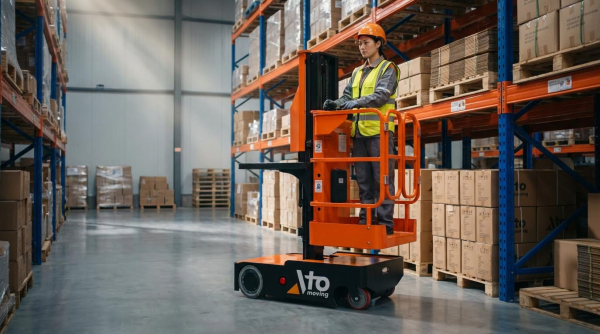
Warehouse teams that ask “what is a cherry picker in a warehouse” need a clear, practical definition and a safety-focused mindset. A warehouse cherry picker, or order picker forklift, elevated an operator to racking levels so they could pick items directly from storage locations. Correct specification, consistent training, and disciplined inspections turned this vertical access tool into a high-productivity, low-incident asset.
From a technical standpoint, safe and efficient use depended on matching load capacity and lift height to the heaviest SKU and highest pick face while staying within the rated stability envelope. Operators had to respect the stated safe working load, including the combined mass of person, tools, and picked items, and keep the platform within designed duty cycles to avoid overheating drive or hydraulic systems. Daily pre-use checks of hydraulics, braking, steering, and emergency controls, combined with scheduled maintenance and lockout/tagout procedures, reduced failures and unplanned downtime.
Industry trends moved toward higher-density racking, narrower aisles, and higher pick levels, which increased reliance on warehouse cherry pickers and highlighted the importance of fall protection, ground stability assessment, and clear danger zones around operating equipment. Digital tools such as telematics, access control, and predictive maintenance algorithms helped monitor impacts, utilization, and fault codes, supporting data-driven fleet decisions and improving uptime. Future designs were expected to integrate more energy-efficient powertrains, advanced sensors, and semi-automated positioning to lower incident rates while boosting pick accuracy.
For engineers and operations leaders, the balanced approach combined rigorous compliance with work-at-height regulations, robust operator training, and careful layout design with continuous monitoring of lifecycle cost and uptime metrics. When organizations understood exactly what a cherry picker in a warehouse was, controlled where and how it operated, and invested in inspection discipline, they achieved both safer workplaces and faster, more accurate order fulfillment using order picking machines.