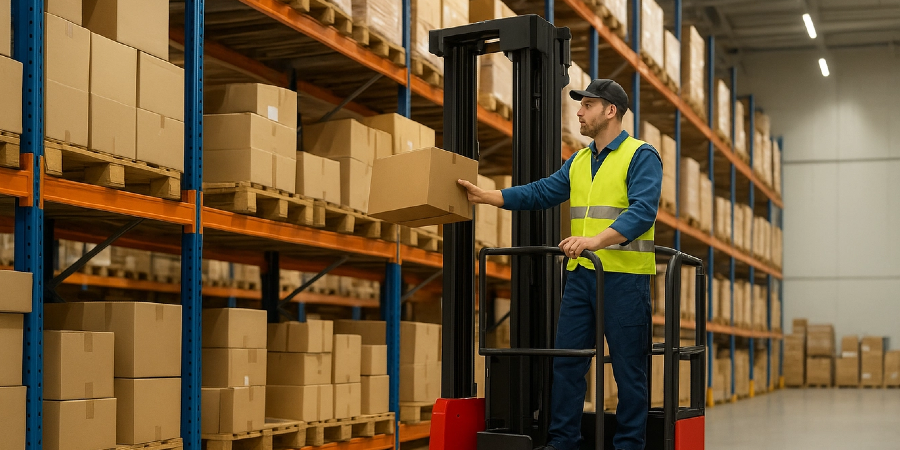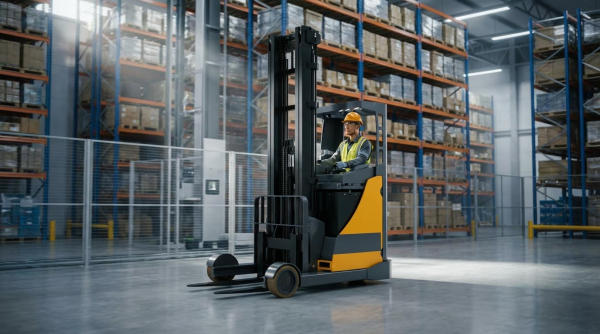
Warehouse order pickers are engineered lifting trucks that raise the operator to rack level so they can manually select individual items, rather than moving full pallets. Understanding what a warehouse order picker is involves examining truck classes, lift heights, capacities, and powertrains, along with how these machines integrate into modern storage systems and automated material flows. This article outlines core order picking machines types and design parameters, engineering applications and system integration, and the safety, compliance, and maintenance practices that govern their use. It concludes with best-practice selection guidelines so engineers, operations managers, and safety professionals can specify order pickers that match layout, throughput, and regulatory requirements.
Core Order Picker Types And Design Parameters
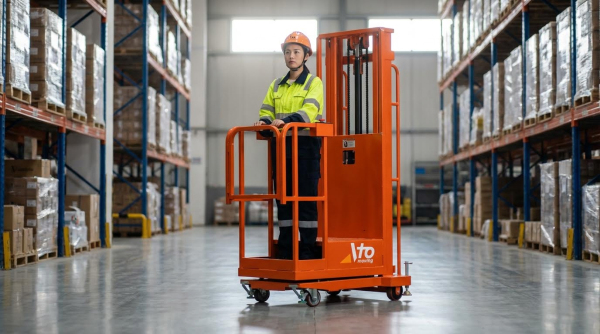
Engineers asking what is a warehouse order picker should first understand how design classes, aisle constraints, and powertrains shape performance. Core parameters such as lift height, rated capacity, and duty cycle determine where each machine fits within a storage system. This section explains the main picker classes, VNA and work-assist concepts, critical specifications, and battery technologies that drive productivity and lifecycle cost.
Low-, Medium-, And High-Level Picker Classes
Low-level order pickers operate mainly at floor level and the first beam level. Typical fork lift heights remain below 0.96 m, with platform elevation often limited to step-on access. Rated capacities usually range between 1,200 kg and 2,700 kg for pallet transport and case picking. Engineers specify these trucks for fast-moving SKUs, short travel distances, and high-throughput ground-level picking.
Medium-level order pickers bridge the gap between low and high-level systems. They commonly reach up to about 4.3 m with rated capacities around 1,000 kg to 1,200 kg. Operators ride up with the platform and manually pick cartons from racking. Facilities use them for mixed-case distribution where vertical storage density matters but full high-bay infrastructure is not justified.
High-level order pickers target tall racking in high-bay warehouses. Typical platform lift heights extend to roughly 10 m, with capacities up to about 1,250 kg. These machines allow single-piece or carton picking across multiple levels without bringing down full pallets. Engineers apply them in automated or semi electric order picker systems where cube utilization and pick-face accessibility dominate the design brief.
VNA And Work-Assist Order Picker Designs
Very narrow aisle (VNA) order pickers operate in aisles often between 1.6 m and 2.0 m wide. Designers configure them with guidance systems, such as wire or rail guidance, to minimize clearance and protect racking. VNA pickers may feature fixed forks or auxiliary lifts, with lift heights up to roughly 2.44 m for some compact designs. These trucks support high-density storage while preserving selectivity at the case or unit level.
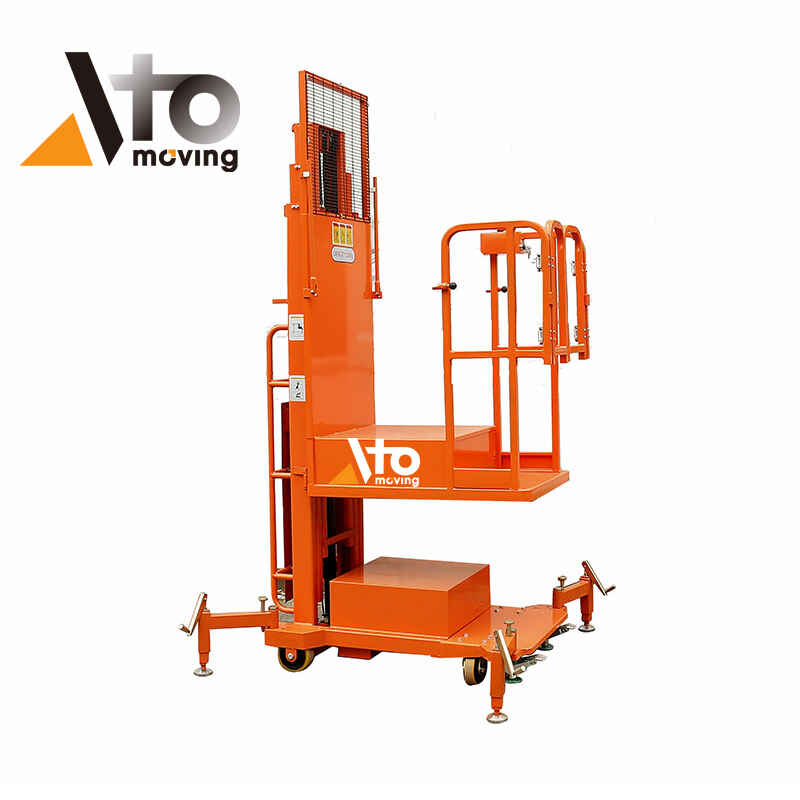
Work-assist order picker vehicles occupy a lighter-duty segment. They typically handle loads below 100 kg on trays or small decks and reach heights up to about 4.07 m. Engineers specify them for light maintenance, inventory checks, and small-item picking where a full-size order picker or scissor platform lift would be excessive. Their compact chassis and low mass reduce floor loading and improve maneuverability in congested areas.
In layout planning, VNA designs integrate with rack-supported structures and often require flatter floors and tighter tolerances. Work-assist units, by contrast, fit easily into mixed-traffic environments with pedestrians and other lift trucks. Understanding these design intents helps engineers select equipment that aligns with aisle width, SKU size, and required pick frequency.
Key Performance Specs: Height, Capacity, Duty Cycle
Lift height is the primary determinant of racking strategy and building clear height utilization. For low-level equipment, sub-1 m fork lift or operator elevation suits floor picking and first beam access. Medium-level machines around 4 m to 5 m enable three to four beam levels, while high-level units near 10 m support deep high-bay concepts. Engineers must match maximum lift height to rack top beam plus safety clearance and local regulations.
Rated capacity defines the safe working envelope for pallets, operators, and tools. Typical order picker capacities span 90 kg on light work-assist trays up to roughly 2,700 kg on heavy low-level transport units. Designers must consider combined mass of the load, platform, attachments, and operator when checking capacity plates. Derating at higher lift heights and with attachments is critical for stability and compliance.
Duty cycle describes how intensively the truck operates over a shift. High-throughput e-commerce facilities often run multi-shift operations with short pick cycles and frequent lift-lower events. Engineers quantify this as operating hours per day, lift cycles per hour, and travel distance per shift. These metrics drive powertrain sizing, battery selection, and thermal management requirements.
Additional performance indicators include travel speed, lift speed, and acceleration. Higher speeds improve productivity but increase energy consumption and risk exposure. Control systems therefore balance ramp rates, regenerative braking, and speed limits by height to maintain safety while preserving pick rates. Clear definition of performance targets during design or selection avoids overspecification and unnecessary capital cost.
Powertrains: Lead-Acid Vs. Lithium-Ion Systems
Warehouse order pickers almost always use electric powertrains to meet indoor emission and noise requirements. Traditional flooded or sealed lead-acid batteries have offered robust performance at relatively low initial cost. However, they require battery changes or long charge windows, plus scheduled watering and ventilation during charging. Voltage sag under high current draw can reduce lift performance late in the shift.
Lithium-ion systems changed the powertrain landscape for high-duty applications. They support opportunity charging during breaks, which suits multi-shift order picking. Charge times are shorter, and usable depth of discharge is higher compared with lead-acid. This reduces the need for spare batteries and battery rooms, freeing floor space for storage or value-adding processes.
Thermal behavior also differs between chemistries. Lithium-ion packs with integrated battery management systems maintain performance in a broader temperature range, including cold storage. Some designs incorporate heaters to sustain capacity in sub-zero environments. In contrast, lead-acid batteries experience pronounced capacity loss at low temperatures and often require derating or dedicated cold-room strategies.
Lifecycle cost analysis must consider energy efficiency, maintenance, replacement intervals, and infrastructure. Lithium-ion typically offers higher round-trip efficiency and lower maintenance, but higher upfront investment. Engineers evaluate total cost of ownership over a 5–10 year horizon, incorporating duty cycle, electricity tariffs, and labor costs for battery handling. Selecting the correct powertrain ensures that the chosen warehouse order picker type meets throughput targets with predictable operating costs.
Engineering Applications And System Integration
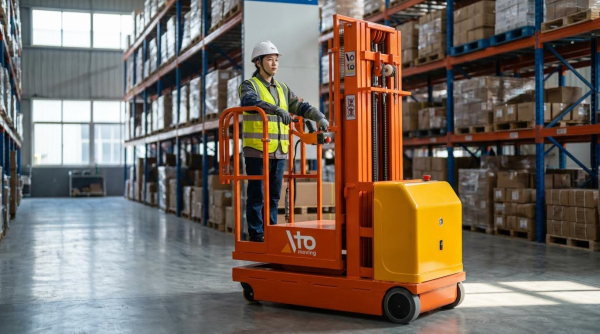
Engineering teams that ask “what is a warehouse order picker” usually care about how it fits into real layouts, digital systems, and long-term operating costs. This section explains how different picker classes map to storage patterns, how industries like e-commerce and pharma deploy them, how they integrate with software and automation, and how powertrain choices affect energy and lifecycle economics.
Matching Picker Types To Storage And Aisle Layout
Warehouse order pickers are mobile lifting platforms that raise the operator to rack level for unit picking. Engineers select picker classes primarily from storage height, aisle width, and required throughput. Low-level pickers suit floor-level or first-level rack picking in wide aisles where lift height stays below roughly 1 m. Medium- and high-level pickers fit multi-level racking with pick heights up to roughly 4–10 m, where vertical travel dominates cycle time.
Very narrow aisle layouts, typically 1.6–2.0 m wide, favor VNA order pickers or work-assist vehicles with compact chassis and mast designs. These trucks minimize turning radius and maximize storage density but require precise guidance and strict traffic control. Wide-aisle facilities with mixed traffic often use low-level pickers or reach trucks, balancing maneuverability with coexistence alongside forklifts and pedestrian flows.
Designers also match platform size and rated capacity to carton size, order profile, and ergonomics. High SKU counts with small items benefit from larger platforms and integrated shelving to reduce bending and walking. Heavy case picking near capacity limits requires short load centers and conservative rack clearances to maintain stability at height. The result is a picker configuration that aligns with the physical cube, aisle geometry, and human factors of the operation.
Use Cases: E-Commerce, Pharma, Cold Storage
In e-commerce fulfillment, order pickers support high SKU variety, small order lines, and short delivery promises. Engineers favor medium- and high-level pickers that reach multiple rack levels in a single aisle pass, reducing travel distance. Remote drive or semi-automated travel can raise pick rates by reducing mounting and dismounting cycles. Layouts often combine low-level pickers in fast-moving zones with higher-level units in reserve or slow-mover areas.
Pharmaceutical warehouses impose stricter regulatory and quality constraints. Order pickers there operate in controlled environments with validated storage conditions and tight inventory traceability. Designs prioritize precise stopping positions, stable platforms, and good visibility to avoid product damage and cross-contamination. Integration with validated warehouse management systems supports lot, batch, and expiry tracking while the picker acts as a mobile execution node.
Cold storage applications add thermal and condensation challenges. Low temperatures reduce battery performance and increase operator fatigue, so engineers often specify heated lithium-ion packs and enclosed or partially enclosed operator compartments. Components must tolerate ice, moisture, and corrosion. Traction, braking, and sensor performance must remain reliable on potentially slippery floors. Picker duty cycles in cold rooms typically shorten, so designers may use more units with shorter shifts and high-speed opportunity charging in ambient zones.
Integrating Pickers With WMS, AGVs, And Cobots
Modern answers to “what is a semi electric order picker” increasingly include its role as a connected mechatronic node. Integration with a warehouse management system (WMS) starts with digital task assignment, where the WMS sequences picks and sends them to vehicle-mounted terminals or handhelds. The picker becomes the physical executor of WMS-directed work, following optimized routes and scanning barcodes or RFID to confirm each pick. This closed loop improves accuracy and real-time inventory visibility.
Order pickers also share space and tasks with automated guided vehicles and autonomous mobile robots. Engineers define interaction rules, such as dedicated lanes, speed limits, and right-of-way logic, to avoid conflicts. AGVs may handle pallet movements between zones, while human-operated pickers focus on piece picking at height. Handover points between AGVs and pickers require clear markings and robust scanning or sensor logic to prevent blocking and collisions.
Cobots can assist on or near the picker platform. For example, a cobot arm on a work-assist vehicle can handle repetitive lifting of small cases while the operator handles exceptions and navigation. Such systems need rigid mounting, collision detection, and safe speed limits to comply with collaborative safety standards. Data integration across WMS, vehicle controllers, and cobot controllers enables coordinated motion, dynamic task allocation, and performance analytics.
Energy Efficiency And Lifecycle Cost Tradeoffs
Energy strategy is central when evaluating what a warehouse order picker contributes to long-term cost. Lead-acid batteries historically dominated due to low upfront cost and mature support infrastructure. However, they required battery change rooms, ventilation, and scheduled equalization charges. Depth-of-discharge limits and long charge times constrained multi-shift operations. Engineers had to factor in additional trucks or spare batteries to maintain uptime.
Lithium-ion systems shifted this tradeoff by offering higher round-trip efficiency, faster charging, and better performance at partial state of charge. In multi-shift or high-throughput facilities, opportunity charging during breaks reduced or eliminated battery swaps. This improved space utilization because separate battery rooms and handling equipment became unnecessary. In cold storage, lithium-ion packs with integrated heating maintained usable capacity and reduced performance degradation.
Total cost of ownership comparisons must include purchase price, charger infrastructure, labor for battery handling, downtime, and energy cost per kilowatt-hour delivered to the drive motors. Maintenance patterns differ as well. Lead-acid batteries need watering and periodic equalization, while lithium-ion packs rely on battery management systems and condition monitoring. Engineers also consider residual value and recycling pathways, ensuring compliance with local environmental regulations. The optimal choice depends on duty cycle intensity, shift structure, ambient conditions, and corporate sustainability targets.
Safety, Compliance, And Maintenance Practices
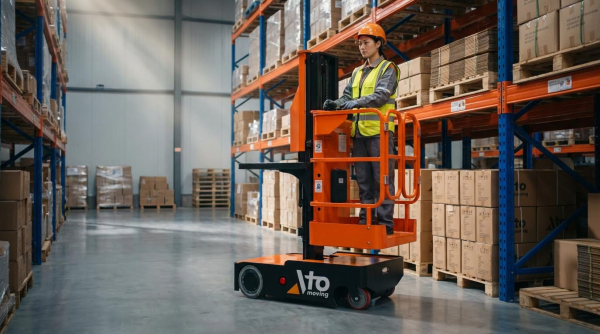
Understanding what is a warehouse order picker also requires understanding its regulatory and maintenance framework. Safety, compliance, and preventive care directly affect uptime, residual value, and incident rates. This section explains how standards, inspections, and modern sensing technologies keep order pickers reliable and safe in high-density storage environments.
OSHA Classification, Training, And Certification
OSHA classified warehouse order picker as Class II electric motor narrow aisle lift trucks. This classification tied them to specific operator training, evaluation, and documentation rules. Employers had to ensure operators understood what is a warehouse order picker in functional terms: an elevating platform that lifted both operator and load into the racking envelope. Training programs covered general powered industrial truck safety, site-specific hazards, and model-specific controls.
Curricula addressed stability triangles, rated capacity, and how lift height changed residual capacity. Instructors demonstrated correct use of travel, lift, and emergency controls, and highlighted risks such as off-center loads and overhead obstructions. OSHA required a formal evaluation of each operator’s performance in the actual workplace. Employers retained training and evaluation records for at least three years and recertified drivers after incidents, near misses, or observed unsafe operation.
Certification processes varied by jurisdiction, but responsibility remained with the employer. Facilities often used a blended model: third-party classroom modules plus in-house practical evaluations. For mixed fleets, training differentiated between order pickers, reach trucks, and pallet trucks to avoid control confusion. Programs also emphasized personal protective equipment such as high-visibility clothing, safety footwear, and where applicable, fall-arrest harnesses for elevated work.
Pre-Shift Inspections And Maintenance Intervals
Pre-shift inspections ensured that a warehouse order picker operated within design limits before entering traffic aisles. Operators followed a structured checklist, starting with a walk-around visual inspection. They checked forks or platforms for cracks, mast rails and chains for damage, hydraulic hoses and cylinders for leaks, and tires and load wheels for flat spots or excessive wear. They confirmed that guardrails, gates, and capacity plates were intact and legible.
Key-on checks verified that safety-critical functions worked correctly. Operators tested the horn, backup alarm, lights, deadman or presence-sensing pedal, service brake, and parking brake. They raised and lowered the mast to confirm smooth motion without abnormal noise or jerking. Battery indicators, hour meters, and warning lamps had to display correctly. If any defect affected safe operation, the unit was tagged out until a qualified technician repaired it.
Planned maintenance intervals depended on duty cycle and environment, but many facilities scheduled professional inspections at least every six months. Technicians measured chain elongation, checked mast roller clearances, and tested hydraulic pressure. They inspected electrical contactors, controllers, and wiring for overheating or insulation damage. Battery maintenance included cleaning terminals, checking electrolyte levels for flooded lead-acid systems, and verifying charger settings. Adhering to these intervals reduced unplanned downtime and extended component life.
Load Stability, Fall Protection, And Traffic Control
Load stability was central to safe order picking because the operator platform moved with the mast. Operators had to understand the rated capacity at the specified load center and never exceed it. They positioned loads fully within the platform or fork envelope, avoided cantilevering cartons beyond guardrails, and stacked items so heavier units sat at the bottom. Irregular or tall loads required additional restraint such as straps or shrink wrap to prevent shifting during travel or elevation.
Fall protection strategies combined engineered features and procedural controls. Platforms used full-height guardrails, mid-rails, and toe boards, plus self-closing gates or interlocks that prevented travel when open. At higher elevation ranges, facilities often required full-body harnesses connected to approved anchor points on the platform. Operators kept both feet on the floor, avoided climbing on guardrails, and never used pallets or boxes as makeshift steps to gain extra reach.
Traffic control policies reduced collision risk in mixed-vehicle aisles. Warehouses defined one-way travel paths, speed limits, and dedicated pedestrian walkways with high-contrast floor markings. Mirrors at blind intersections and stop lines at cross-aisles improved visibility. Operators sounded the horn before entering intersections, doorways, or rack tunnels. Supervisors conducted periodic job hazard analyses, identifying congestion points, poor lighting, and slippery surfaces, then adjusted layouts or rules to mitigate those risks.
Sensors, Remote Drive, And Predictive Maintenance
Modern answers to the question “what is a warehouse order picker” included its role as a sensor-rich mobile platform. Proximity sensors and obstacle detection systems monitored the path ahead, slowing or stopping the truck when objects entered defined zones. Height sensors and limit switches prevented mast over-travel into sprinklers or roof structures. Some units used floor-level scanners to detect pedestrians or pallet overhangs that could interfere with chassis clearance.
Remote drive and remote creep functions allowed operators to reposition the truck without repeatedly mounting and dismounting. Handheld or wearable controls moved the truck short distances along the aisle while the operator walked beside the load face. This reduced fatigue and cycle time, but required strict safety logic. Systems enforced low-speed limits, line-of-sight operation, and automatic stop if the operator left the detection zone. Facilities updated training and traffic rules to incorporate these new operating modes.
Predictive maintenance relied on telemetry from controllers, battery management systems, and usage logs. Sensors tracked motor currents, hydraulic pressures, lift cycles, and impact events. Cloud or on-premise analytics identified patterns that indicated emerging issues such as bearing wear, chain stretch, or underperforming batteries. Maintenance planners then scheduled targeted interventions during low-demand windows. This approach increased availability, reduced catastrophic failures, and supported data-driven replacement decisions for high-wear components.
Summary Of Best Practices And Selection Guidelines
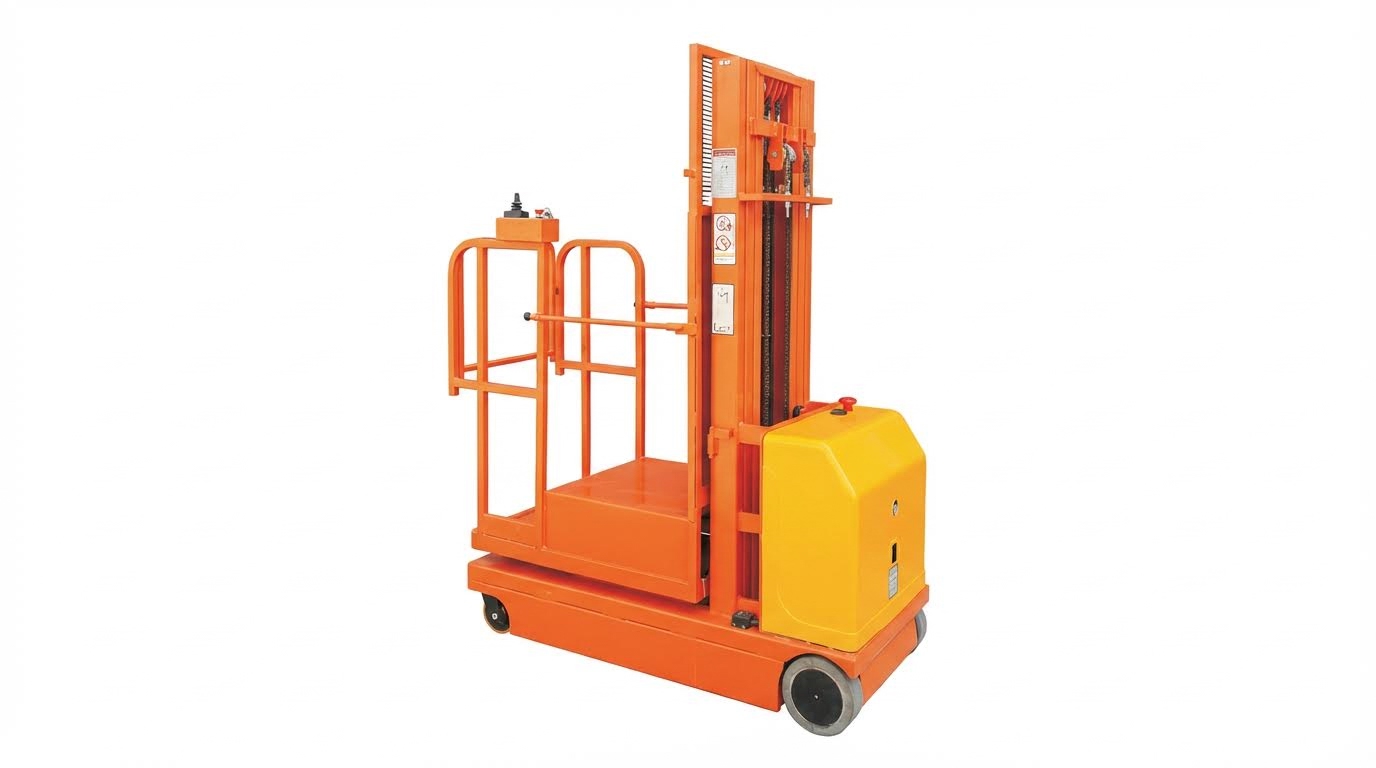
Engineers asking what is a warehouse order picker should align selection with storage height, aisle width, and throughput targets. Order pickers elevated operators to rack level and differed from pallet-moving forklifts, so stability, visibility, and ergonomics dominated design choices. Low-, medium-, and high-level classes covered ground to roughly 10 m, with capacities typically between 90 kg on work-assist trays and 2700 kg on heavy low-level units. Narrow-aisle and work-assist variants optimized cube utilization where floor space cost remained high.
Best practice started with a structured requirements matrix. Specify maximum pick height, minimum aisle width, pallet type, and peak lines-per-hour first. Then match these to equipment classes: low-level units for fast-moving ground slots, medium-level for mixed case picking up to about 4.3 m, and high-level or VNA machines for dense high-bay storage near 10 m. Verify rated capacity at maximum lift height, including operator, load, and tools, and keep at least a 10–15% safety margin below the nameplate rating.
Powertrain choice followed duty cycle. Single-shift or intermittent operations could still use lead–acid batteries with scheduled charging and watering. Multi-shift or cold-store facilities benefited from lithium-ion packs, which supported fast opportunity charging, higher round-trip efficiency, and better low-temperature performance. Engineers should compare total cost of ownership over at least five years, including energy, battery replacement, and downtime, not only acquisition price.
Safety and compliance remained non-negotiable. In the United States, order pickers fell under OSHA Class II electric motor narrow aisle trucks, so operators required formal training, evaluation, and documented certification. Facilities should mandate pre-shift inspections covering structure, hydraulics, brakes, steering, controls, and fall protection, and remove defective trucks from service until qualified technicians repaired them. Guardrails, gates, and harness anchor points must support fall-arrest systems at all elevated picking heights.
Modern sensor packages, remote drive, and telematics supported both safety and productivity. Obstacle detection, speed limiting, and automatic braking reduced collision risk in mixed traffic with pedestrians and other trucks. Remote creep or “tethered” travel modes cut mounting cycles and operator fatigue, increasing pick rates by up to roughly 25% in suitable workflows. Predictive maintenance, driven by hour-meter data, fault codes, and vibration or current signatures, allowed planned interventions and minimized unplanned downtime.
Looking ahead, tighter aisle designs, higher rack systems, and labor constraints would push further automation and human–robot collaboration. Engineers should specify order pickers that integrated cleanly with warehouse management systems, AGVs, and collaborative robots through standardized interfaces and data protocols. A balanced selection approach considered not only current SKUs and layout but also future growth, regulatory changes, and energy-transition goals. This lifecycle view ensured that order picking machines remained safe, efficient, and economically viable throughout their service life.