Wave picking warehouse strategy structured order releases into engineered “waves” that aligned picking, packing, and shipping to real operational constraints. This article examined how to define waves and batching rules, compare wave picking with batch, zone, and cluster methods, and decide when waves fit a given operation profile. It then explored how to engineer wave parameters around dock capacity, pack-station throughput, storage modes, and mixed flows including manual handling, conveyors, ASRS, and warehouse order picker systems. Finally, it detailed the technology stack, KPI framework, and continuous-improvement practices required, and concluded with a practical implementation roadmap for transitioning from ad-hoc picking to robust, wave-based fulfillment.
Core Principles Of Wave Picking Design

Wave picking design established a structured, time-phased way to release work into a warehouse. It grouped orders into executable units that respected real constraints such as labor, equipment, and carrier cutoffs. A robust design linked upstream order profiles with downstream packing and shipping capacities. Engineers treated waves as controllable flow units rather than ad hoc picking lists.
Defining Waves, Batches, And Order Grouping Rules
A wave was a scheduled release of a set of orders into the picking system. Within a wave, batches grouped order lines so pickers collected items for multiple orders in one tour. Grouping rules used criteria such as SKU affinity, shared storage zones, delivery deadlines, and temperature or hazard classes. Engineers configured warehouse management system rules so orders with incompatible packaging or compliance requirements never entered the same batch. Effective designs also limited batch size by pack-station capacity and sorter throughput to prevent downstream congestion. This created a predictable relationship between released work, picker travel, and consolidation effort.
Wave Picking Vs. Batch, Zone, And Cluster Methods
Wave picking differed from pure batch picking because it added a time dimension and explicit cutoffs. Batch picking alone grouped orders but did not coordinate with carrier schedules or dock capacity. Zone picking assigned workers to fixed areas, which engineers often combined with waves so each zone executed its portion of a wave in parallel. Cluster picking used multi-compartment carts or totes, allowing a picker to build several orders at once during a wave. Compared with continuous, order-by-order picking, wave-based strategies improved travel efficiency but reduced flexibility for late-arriving urgent orders. Engineers often implemented hybrid schemes, using waves for standard volume and discrete or priority waves for expedited orders.
When Wave Picking Fits Your Operation Profile
Wave picking fit facilities with medium to high order volumes and relatively stable demand patterns. Operations with clear carrier cutoffs, repeatable order profiles, and constrained docks benefited from scheduled waves. Environments dominated by single-line, small orders could use waves to release large groups early in the day and keep packers continuously loaded. Highly volatile, same-day fulfillment with frequent order changes favored more dynamic or waveless approaches, or very short micro-waves. Before adopting waves, engineers analyzed order size distributions, SKU diversity, and cycle-time requirements at hourly resolution. If the analysis showed that controlled release improved dock utilization and reduced picker travel without missing service levels, wave picking was a strong candidate.
Impacts On Layout, Storage Modes, And Flow
Wave picking design directly influenced rack configuration, staging space, and equipment selection. High-density waves required fast-moving SKUs to be slotted close together, near main travel aisles and induction points to sortation. Engineers sized consolidation and staging areas to hold full waves without blocking aisles or docks. Storage modes such as carton flow, pallet flow, or shuttle and ASRS lanes were positioned to support dominant wave paths and minimize cross-traffic. Conveyors, sorters, and manual cart routes had to absorb the instantaneous output of a wave rather than average hourly volume. This forced careful balancing of pick, sort, pack, and ship capacities so each wave flowed smoothly from release to loading without forming chronic bottlenecks.
Engineering Wave Parameters To Real Constraints

Engineering wave parameters required a tight link between order release decisions and physical system limits. Operations that treated waves as a pure planning artifact typically created peaks, idle time, and missed cutoffs. Effective designs instead synchronized wave size, timing, and content with pack, sortation, dock, and automation capacities. This section described how to translate real constraints into quantitative rules for wave building and release.
Right-Sizing Waves To Match Downstream Capacity
Right-sizing waves started with a clear capacity model for each downstream stage. Engineers calculated sustainable throughput for pack stations, sorters, and staging areas in lines per hour and orders per hour. Wave size then matched the smallest effective capacity in this chain, with safety factors for variability and rework. Facilities that ignored this often released oversized waves, which overwhelmed pack and sortation, increased order cycle time, and raised error rates.
Practical designs used batching caps per SKU, per wave, or per pack station. For example, a rule could limit the number of multi-line, slow-to-pack orders in a single wave. Synchronizing wave release cadence with pack-station cycle time kept work-in-process stable instead of oscillating. Controlled experiments that varied wave size and mix, while monitoring pack utilization and backlog, allowed teams to converge on optimal batch parameters.
Aligning Waves To Carrier Cutoffs And Dock Capacity
Wave timing had to respect carrier pickup windows, trailer availability, and dock door capacity. Engineers mapped each carrier’s cutoff, average loading time, and dock assignment, then back-calculated the latest feasible start time for each shipping wave. This schedule ensured that picking, sortation, packing, and staging completed before loading needed to begin. Poorly aligned waves previously created chokepoints at docks and caused missed shipments.
Facilities reduced these issues by staggering waves across the day instead of releasing large end-of-shift bursts. They designed waves so each dock handled a predictable, level flow of outbound volume. Wave planning rules grouped orders by carrier, service level, and destination region to minimize trailer touches and re-handling. Monitoring on-time shipment rate by wave helped validate whether the timing logic and dock capacity assumptions held under real demand patterns.
Slotting And Pick-Path Optimization For High-Density Waves
High-density waves depended on intelligent slotting and optimized pick paths. Engineers used pick frequency and SKU affinity data to place items frequently batched together in close proximity. This reduced travel distance and increased the probability that a picker could collect multiple order lines in a single pass. Wave-building rules that emphasized SKU overlap further amplified this benefit.
Warehouse management systems supported pick-path optimization by sequencing locations to minimize backtracking and cross-traffic. In dense wave tours, clear aisle directionality and zone boundaries prevented congestion and safety risks. Periodic re-slotting based on updated demand profiles kept the layout aligned with evolving wave patterns. Comparing lines per hour and travel distance before and after re-slotting quantified the gains from these engineering changes.
Balancing Manual, Conveyor, ASRS, And Atomoving Flows
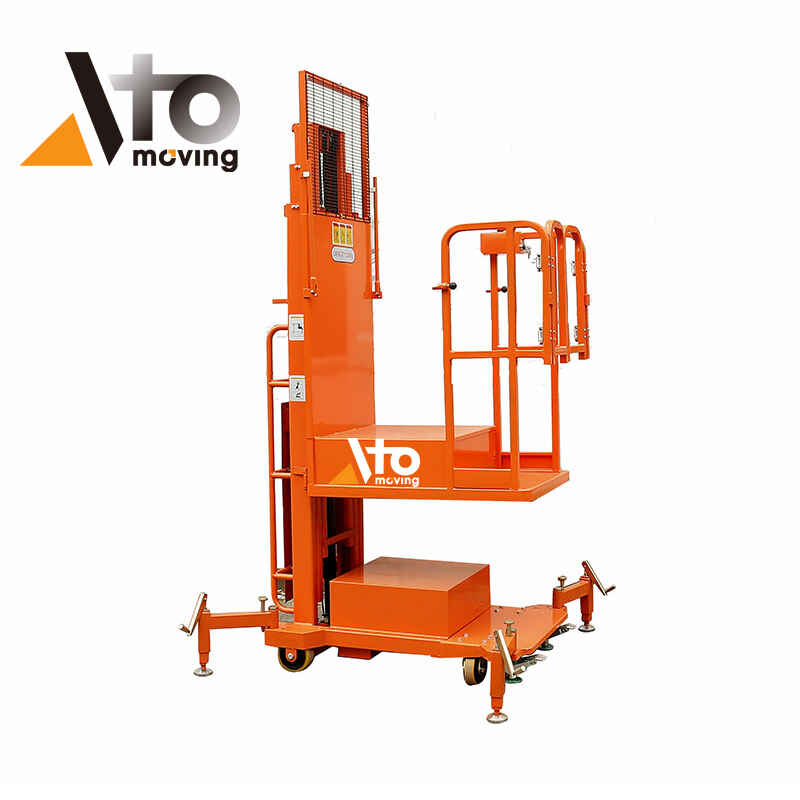
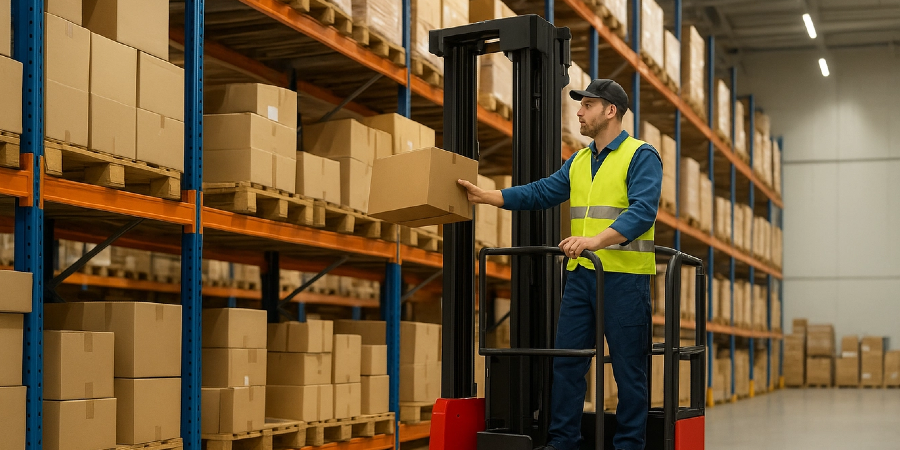
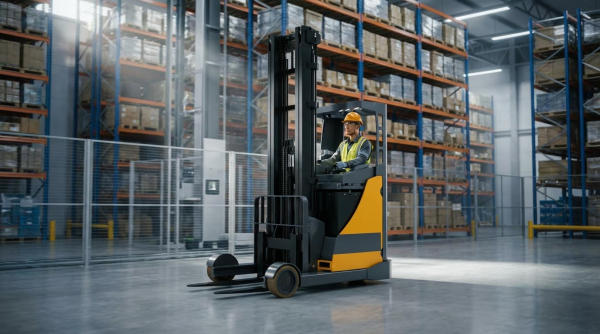
Wave parameters also needed to reflect the mix of manual, conveyor-based, ASRS, and semi electric order picker flows. Each subsystem had different response times, buffer capacities, and failure modes. Engineers modeled these as parallel or sequential resources and set wave rules so that no single technology became a persistent bottleneck. For example, ASRS and warehouse order picker zones could feed high-frequency SKUs, while manual zones handled irregular or bulky items.
Coordinating wave release with ASRS and order picking machines cycle times maintained stable queue lengths at induction and dispatch points. Conveyor accumulation limits and sorter throughput defined maximum concurrent waves for certain product families. Cross-training staff allowed temporary reallocation between manual picking, packing, and staging when automation approached saturation. Continuous monitoring of utilization by subsystem, combined with small adjustments to wave size and content, kept overall flow balanced and resilient.
Technology, Control, And Continuous Improvement

Technology governed the stability and performance of wave picking operations. Modern control architectures tied WMS logic, automation, and analytics into a single flow, from order release to manifesting. Engineering teams needed to treat wave design as a closed-loop control problem, not a one-time configuration task. This section focused on how to encode rules, orchestrate subsystems, and institutionalize continuous improvement.
Configuring WMS Rules, Batching Logic, And Exceptions
The WMS defined how orders entered waves, so its rule set directly shaped travel distance, congestion, and packing load. Engineers configured batching logic to group orders by SKU affinity, pick density, temperature class, hazard class, and packaging requirements. They also implemented caps per SKU, per picker, and per pack station to prevent oversized waves from overwhelming downstream capacity. Priority rules allowed expedited or short-cycle orders to bypass standard batching and launch as micro-waves or discrete picks. Exception handling workflows in the WMS routed shorts, substitutions, and late-arriving orders to separate waves or manual lanes, avoiding disruption of in-flight waves.
Effective rule sets reflected real constraints, not idealized assumptions. Teams mapped carrier cutoffs, dock door availability, sorter throughput, and pack-station cycle times, then encoded these as wave release windows and maximum wave sizes. They used WMS simulation or test environments to validate new rule combinations before deployment, checking for queue buildup and missed cutoffs. Governance processes controlled who could change parameters such as wave frequency, batch size limits, and zoning rules to avoid uncontrolled drift in system behavior.
Integrating Sortation, Pack Stations, ASRS, And Cobots
Wave picking performance depended on tight integration between picking, sortation, packing, and storage technologies. Engineers synchronized wave release volumes with sorter rates, accumulation conveyor capacity, and pack-station staffing to maintain a stable work-in-process level. Layouts placed induction points, put-walls, and pack stations in line with sorter discharge to minimize manual touches. Buffer sizing between pick and pack reflected measured variability in pick rates and carrier cutoff spikes.
ASRS integration changed the nature of waves by decoupling picker travel from storage locations. The system sequenced tote or bin presentations to match wave priorities and zone assignments, while the WMS ensured that ASRS output did not exceed downstream sortation limits. Cobots or goods-to-person workstations supported high-density waves by handling repetitive transport and presentation tasks, freeing human operators for exception handling and quality checks. Interface standards, such as API-based integration and event-driven messaging, allowed WMS, ASRS controllers, sorters, and cobots to exchange status data in real time.
Commissioning teams validated end-to-end flows with controlled test waves. They measured dwell times at each interface, verified barcode or RFID read rates, and tuned routing logic. Alarms and dashboards highlighted mismatches between planned and actual flow, such as sorter lane saturation or underutilized ASRS aisles, enabling rapid correction.
KPIs, Digital Twins, And Experiment-Driven Optimization
Continuous improvement in wave picking relied on precise, wave-level performance measurement. Core KPIs included lines and units per hour, order cycle time, on-time shipment rate by wave, pick and pack accuracy, and utilization of sorters and pack stations. Engineers segmented these metrics by wave type, batch size, zone, and shift to identify structural bottlenecks rather than isolated incidents. They also tracked re-handling rates and exception volume as indicators of poor batching rules or constraint violations.
Digital twins of the warehouse, built in simulation tools, allowed teams to test alternative wave sizes, release cadences, zoning schemes, and equipment configurations without risking live operations. These models used historical order profiles, travel distances, and equipment performance data to approximate reality. Experiment-driven optimization followed a plan–do–check–act cycle, where controlled A/B tests adjusted parameters such as batch caps, wave start times, or pick-path strategies. Results informed permanent configuration changes in the WMS and control systems.
Feedback loops closed at multiple horizons. Real-time dashboards supported intraday adjustments, such as pulling forward an additional wave before a carrier cutoff. Weekly and monthly reviews focused on structural redesign, including slotting revisions and staffing models. Over time, this systematic experimentation improved throughput, reduced variability, and stabilized service levels.
Safety, Training, And Cross-Functional Staffing Models
Technology-intensive wave picking environments introduced new safety and human factors considerations. Engineers and safety managers assessed interactions between people, conveyors, cobots, and ASRS interfaces, defining clear pedestrian routes and exclusion zones. Lockout–tagout procedures, emergency-stop accessibility, and visual signals for wave status reduced risk during maintenance and peak activity. Ergonomic design of pack stations and put-walls limited repetitive strain during high-volume waves.
Training programs covered WMS workflows, scanning standards, exception handling, and equipment interaction rules. Staff learned how wave priorities, batching logic, and cutoffs influenced their daily tasks, which improved adherence to process. Cross-training allowed pickers to support packing, staging, or exception processing during demand peaks, smoothing utilization across functions. Standard operating procedures documented responses to common issues such as lane overflow, short picks, and mis-sorted totes.
Cross-functional staffing models treated the warehouse as an integrated flow system rather than isolated departments. Team leaders monitored live KPIs and redeployed workers between picking, consolidation, packing, and loading to maintain target queue lengths. This flexibility complemented automation and WMS control, ensuring that human resources absorbed variability that fixed equipment could not handle. Over time, combined focus on safety, skills, and adaptability sustained high-performance wave operations without sacrificing compliance or worker well-being.
Summary And Practical Implementation Roadmap
Wave picking was a structured way to group orders into timed waves that synchronized picking, packing, and shipping. It increased throughput and accuracy when engineers sized waves to real constraints such as dock capacity, pack-station throughput, sorter limits, and carrier cutoffs. The most effective designs coupled intelligent batching rules in the warehouse management system with slotting optimization, pick-path control, and appropriate use of technologies such as ASRS, conveyors, and mobile automation. Operations that monitored KPIs by wave, such as lines per hour, order cycle time, and on-time ship rate, maintained stable performance and reacted faster to demand shifts.
From an industry perspective, wave picking sat between fully real-time, order-by-order fulfillment and large-lot batch picking. It suited high-volume, relatively stable order profiles, particularly e-commerce and retail replenishment, where planners could pre-build waves around carrier schedules. Future trends pointed toward hybrid models that blended wave, waveless, and dynamic batching, orchestrated by WMS and warehouse execution systems using real-time data from ASRS, sorters, and automation. Digital twins and simulation tools increasingly supported off-line tuning of wave size, timing, and zone assignments before changes reached the floor.
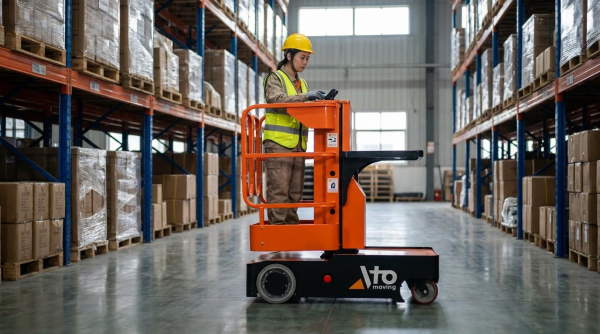
Practically, implementation worked best in staged steps. Teams first mapped end-to-end flow capacity, including pick zones, sortation, pack, docks, and carrier cutoffs. They then piloted wave rules in a limited zone, right-sized batches to avoid overwhelming pack and sortation, and configured WMS constraints for SKU families, temperature, and hazard classes. After stabilizing performance, they layered in slotting changes, pick-path optimization, and, where justified, ASRS or automated transport. A balanced roadmap retained flexibility for urgent orders, enforced data-driven reviews of KPIs, and institutionalized continuous improvement so that wave logic evolved with order profiles, rather than degrading as volumes and mixes changed. To enhance efficiency, tools like warehouse order picker, scissor platform, and manual pallet jack were often integrated into workflows.