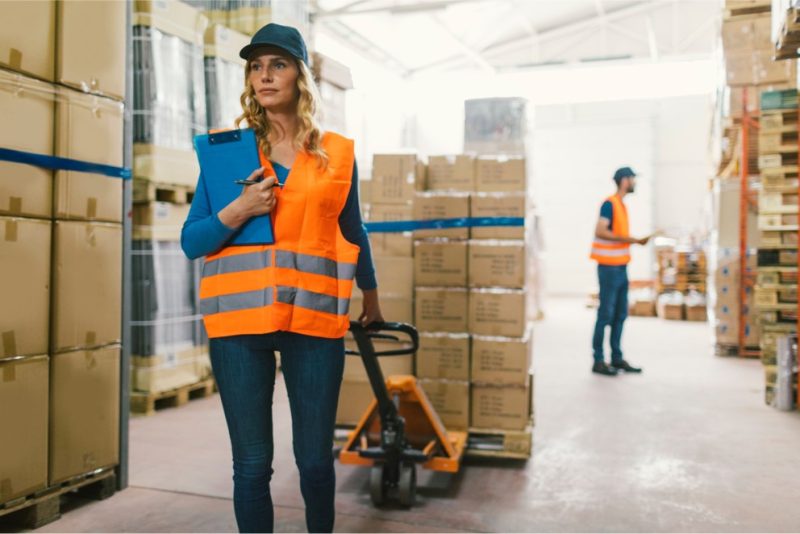
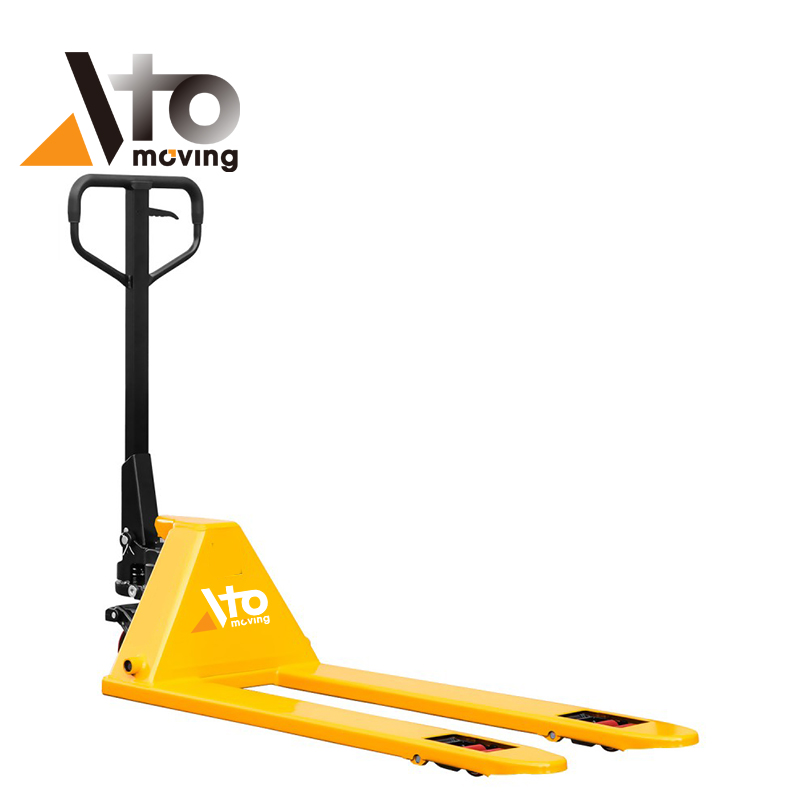
Whether a pallet truck is classed as lifting equipment depends on how far it raises the load, how it is used, and which regulations apply in your country. This guide explains when the law treats pallet trucks as lifting equipment, and what that means for inspections, design standards, and operator duties. You will see how OSHA, LOLER, PUWER and EU rules link to everyday issues like risk assessment, maintenance, and training. If you have ever asked “is a pallet truck classed as lifting equipment?” in a safety meeting or audit, this article is built to give you a clear, practical answer.
How Regulations Class Pallet Trucks As Lifting Equipment
Definitions In OSHA, LOLER, PUWER And EU Rules
To answer “is a pallet truck classed as lifting equipment?”, you first need to map how major regulations define both “lifting” and “work equipment”. Each framework uses slightly different language, but the practical triggers are similar: raising a load, carrying people, or creating a significant mechanical risk.
Below is a simplified view of how key regimes treat pallet trucks in general (manual and powered):
| Regime / Law | Core Focus | How Pallet Trucks Typically Fit | Implications |
|---|---|---|---|
| OSHA (US) – Powered Industrial Trucks rules | Safe use of powered industrial trucks (PITs) | Powered pallet trucks are PITs; manual trucks usually treated as general handling aids | Training, daily inspections, maintenance, documented operator competence for powered units |
| LOLER (UK) | Safe lifting operations of loads and people | Pallet trucks count as “lifting equipment” when used to raise loads to a significant height or hold them suspended | Thorough examinations, planning of lifts, safe working loads, records |
| PUWER (UK) | Provision and Use of Work Equipment | All pallet trucks (manual and powered) are “work equipment” | Suitability, maintenance, inspection, training, safe use obligations |
| EU Machinery Directive / Regulation | Design and construction safety of machinery and lifting accessories | Pallet trucks with mechanical or powered lifting fall under “machinery”; high‑lift or stacker types fall under “lifting” machinery | Risk assessment, essential health and safety requirements, technical file, CE marking for machinery placed on the EU market |
Under EU rules, manufacturers must perform a formal risk assessment, identify hazards, and design controls before placing pallet trucks on the market. This includes mechanical crush and lift risks, stability, and maintenance access as part of the essential health and safety requirements.
Key legal concepts that affect pallet trucks
When you decide if a pallet truck is classed as lifting equipment, regulators typically look at:
- Whether the equipment raises or lowers a load using mechanical power or stored energy.
- Whether the load can be held or left in a raised position (suspended load risk).
- Whether people could ride on, under, or within the load area.
- Whether failure could cause serious crush, fall, or impact injuries.
These criteria are embedded in lifting‑specific rules (like LOLER) and in broader machinery safety frameworks in the EU which define the scope of “machinery” and “lifting accessories”.
When A Pallet Truck Becomes “Lifting Equipment”
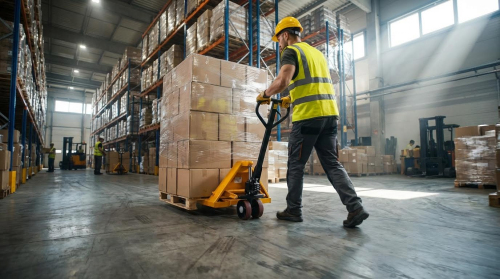
In many operations the practical question is not “what does the law say in theory?”, but “in this use case, is a pallet truck classed as lifting equipment?”. The answer depends on both design and how you actually use the truck.
Typical trigger points where a pallet truck moves from being treated as simple work equipment to being treated as lifting equipment are:
- Lift height and suspension time – the higher and longer a load is held off the ground, the more it fits lifting‑equipment rules.
- Powered lifting functions – electric or hydraulic systems that raise loads bring extra duties, similar to other powered industrial trucks under PIT regulations.
- People exposure – if people work under or close to raised loads, regulators treat the truck more like a lifting appliance.
- Duty cycle and environment – intensive use, slopes, confined spaces, and mixed traffic increase risk and push regulators to apply stricter lifting standards.
For powered pallet trucks, daily pre‑use inspections, defect reporting, and removal from service until repair are already mandatory practice in several jurisdictions as part of powered industrial truck rules. Where a pallet truck is treated as lifting equipment, you then add periodic thorough examinations and more formal documentation on top.
Practical examples of classification in real sites
To make the classification decision consistent, many safety teams use simple rules of thumb such as:
- Low‑lift manual pallet trucks that only raise a pallet just enough to roll are managed under general work‑equipment and manual‑handling rules.
- High‑lift pallet trucks, scissor‑lift pallet trucks, and pallet stackers that raise loads to working or storage height are managed as lifting equipment, with planned inspections and stricter load‑control procedures.
- Powered pallet trucks used like small forklifts (ramps, docks, trailers, tight aisles) are treated as powered industrial trucks, with full operator training, certification records, and refresher training at set intervals to prove competence.
Whichever category you choose, you must document the risk assessment, training, and inspection regime for that type of pallet truck and its tasks. This is what regulators expect when they ask why you did or did not class a given pallet truck as lifting equipment.
“”
Choosing The Right Pallet Truck For A Compliant Operation
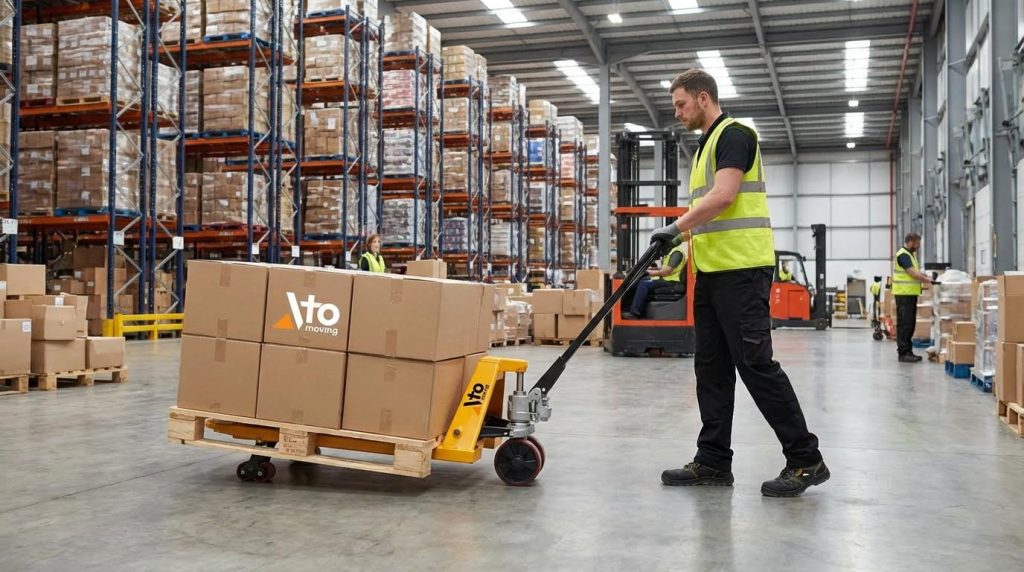
When you ask “is a pallet truck classed as lifting equipment”, the answer drives what you are allowed to buy and how you are allowed to use it. The right choice depends on load, environment, duty cycle, and how tightly you must align with lifting-equipment style rules, operator training, and documented risk assessments. The sections below break this into clear engineering and compliance trade‑offs.
Manual Vs Powered: Risk, Duty Cycle And TCO
The manual vs powered decision is not only about ergonomics. It changes whether the truck is treated more like simple handling gear or like a powered industrial truck with higher regulatory expectations, especially for training and inspections. This has a direct impact on lifecycle cost and on how you answer “is a pallet truck classed as lifting equipment” in your risk assessments.
| Factor | Manual Pallet Truck | Powered / Electric Pallet Truck |
|---|---|---|
| Typical load range | Light–medium, intermittent use | Medium–heavy, frequent use |
| Primary power source | Operator muscle (hydraulic lift, push/pull) | Electric traction and lift motors, battery powered |
| Regulatory treatment | Often treated as basic work equipment; still subject to PUWER‑type rules and local risk assessment | Classed as powered industrial trucks in many jurisdictions, triggering specific operator training and inspection duties for powered industrial trucks |
| Training expectations | Task‑specific instruction and safe manual handling techniques; often shorter courses | Formal operator training and evaluation on truck‑related and workplace‑related topics for PIT operators |
| Inspection regime | Regular visual checks and periodic maintenance as work equipment | Daily pre‑use inspections required before being placed into service for powered industrial trucks |
| Ergonomic risk | Higher risk of strain from pulling, pushing and pumping, especially with heavy loads or slopes | Lower manual effort but higher kinetic energy and collision risk |
| Capex | Low | Medium to high |
| Opex (energy & maintenance) | Very low; mainly wheels, hydraulics, occasional repairs | Battery, chargers, electronics, scheduled servicing and more complex repairs |
| Best‑fit duty cycle | Short distances, low hours per shift, good floors, lighter pallets | Longer runs, high‑throughput operations, slopes, docks, heavy pallets |
From a compliance and TCO perspective, you should map your operation against three lenses: risk level, duty cycle, and regulatory overhead.
- Risk level: High pedestrian interaction, tight aisles, slopes or heavy loads usually justify powered units with better control and braking, but also demand stronger governance.
- Duty cycle: If operators move pallets all shift, manual trucks quickly become an ergonomics and productivity bottleneck.
- Regulatory overhead: Once a unit falls under powered industrial truck style rules, you must budget for formal training, evaluations and documented inspections.
Compliance and training implications for powered pallet trucks
Where powered pallet trucks are treated as powered industrial trucks, only trained, competent and authorized operators may use them, and operators must be at least 18 years old. Formal training must cover truck controls, capacity, stability, maintenance, and workplace hazards, and must include both theory and practical exercises followed by an evaluation of competence for PIT operator training. Employers must also keep written certification records for each operator, including training and evaluation dates and the trainer’s identity for certification records. Refresher training is required periodically or after incidents or changes in equipment or conditions.
When you decide “manual vs powered” you are also deciding how closely your pallet truck will resemble other equipment that is clearly classed as lifting equipment in law. As the level of power, lift height, and complexity increases, the argument that your pallet truck is a simple handling aid becomes weaker, and your duty to apply lifting‑equipment style controls becomes stronger.
Emerging Tech: Li-Ion, Telematics And Predictive Safety
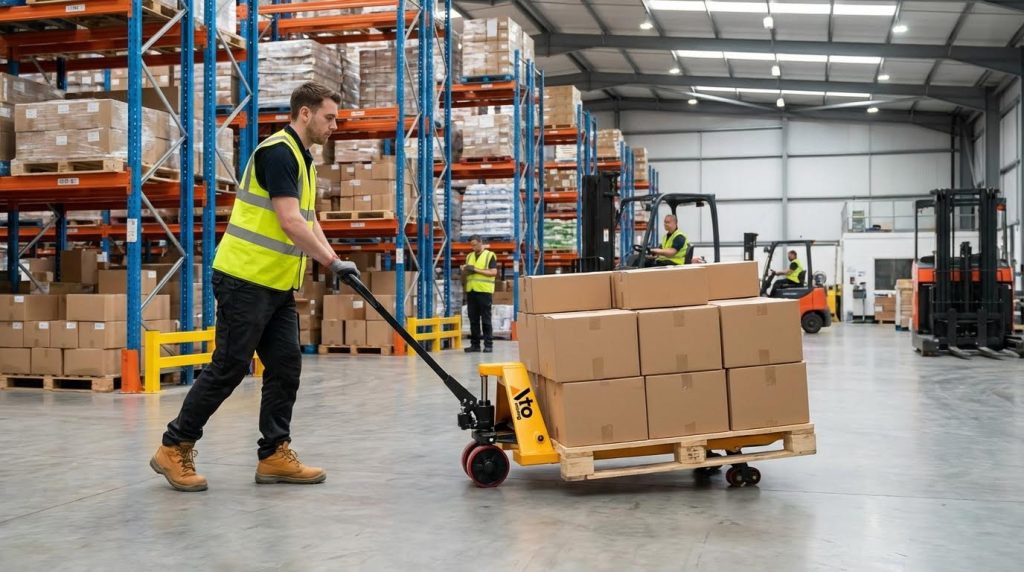
New technology changes both how pallet trucks work and how regulators and insurers look at them. Higher energy density, data connectivity and smarter control systems all push a pallet truck further into the territory where “is a pallet truck classed as lifting equipment” becomes a compliance question, not just a semantics debate.
- Li‑ion batteries: Enable longer runtimes, opportunity charging and compact designs, which encourages heavier use and higher average speeds.
- On‑board diagnostics and telematics: Allow remote monitoring of impacts, speed, usage hours and fault codes, which supports more rigorous maintenance and safety management.
- Predictive safety functions: Can include speed zoning, automatic slowdown in high‑risk areas, overload detection and access control tied to operator authorization.
These features do not remove your legal duties; they raise the bar for what “reasonably practicable” control looks like. If technology can automatically limit speed or prevent overloads, it becomes harder to justify running high‑risk tasks on basic equipment with no such controls.
| Technology feature | Engineering impact | Compliance / safety impact |
|---|---|---|
| Li‑ion battery systems | Higher energy density, stable voltage, fast charging, reduced downtime | Supports longer shifts and higher utilisation; may require updated risk assessment for fire, charging, and emergency procedures |
| Telematics / data logging | Continuous capture of hours, events and faults | Provides objective evidence for maintenance, inspections and operator behaviour management; supports incident investigations |
| Access control (PIN / card) | Only authenticated users can operate | Helps enforce “authorized operators only” rules and links use to training records for PIT operator authorization |
| Integrated pre‑use checklists | Prompts operators to confirm condition before use | Supports daily inspection requirements and creates digital logs for daily inspection requirements |
| Overload / stability monitoring | Measures load and dynamic stability in real time | Helps enforce rated capacity limits and reduce overturn and dropped‑load incidents where load limits and stability are critical |
How to integrate new tech into your safety system
When you introduce Li‑ion, telematics or predictive safety, update your risk assessment and safe‑system‑of‑work. Training should cover new controls, indicators and alarms, as well as revised emergency procedures for training and emergency procedures. Use telematics data to target refresher training where unsafe behaviours or near misses appear, and to prove that inspections and maintenance are being carried out as planned.
In modern, high‑throughput sites, the combination of powered drive, Li‑ion energy and connected safety functions makes it much more realistic to treat pallet trucks as part of your core lifting‑equipment inventory. That means aligning them with the same discipline on operator competence, documented inspections, and risk‑based selection that you already apply to more obvious lifting machines.
Final Thoughts On Legal Duties And Best Practice
The way regulators class pallet trucks flows directly from engineering reality. Lift height, suspension time, power level and human exposure all change the risk profile. As lift and duty cycle rise, pallet trucks behave less like simple handling aids and more like lifting equipment, so the law expects tighter controls.
Design choices such as hydraulic circuits, stability margins, braking and overload protection set the technical safety baseline. But safe performance only holds if you pair the right truck with the right task, keep it maintained, and prove that operators are trained and authorized. New features like Li‑ion power, telematics and access control strengthen your safety case, yet they also raise expectations for what a “responsible” operation looks like.
The most robust strategy is simple. Classify each pallet truck type in your fleet using clear criteria. Document the risk assessment, inspection regime and training standard you apply. Then buy and deploy equipment, including Atomoving pallet trucks, to match that plan. Treat grey‑area units as lifting equipment rather than taking shortcuts. This approach protects people, meets regulators’ expectations, and keeps your material‑handling system reliable and defensible over the long term.
Frequently Asked Questions
Is a pallet truck considered lifting equipment?
Yes, a pallet truck is classified as lifting equipment. It is designed to lift pallets just off the ground to move them from one place to another. This qualifies it under regulations like LOLER (Lifting Operations and Lifting Equipment Regulations) when used in workplaces HSE Guidelines.
What are examples of lifting equipment?
Lifting equipment includes machinery and devices used to lift, lower, or move heavy objects. Examples are hydraulic jacks, cranes, hoists, winches, scissor lifts, forklift trucks, and pallet trucks. These tools are essential in industrial settings for safe load handling Construction Lifting Guide.
What regulations apply to pallet trucks?
Pallet trucks fall under PUWER (Provision and Use of Work Equipment Regulations) and LOLER in certain scenarios. These regulations ensure that equipment is inspected regularly for safety compliance. Businesses can seek professional services to keep their pallet trucks compliant with these standards PUWER Inspection Guide.
Why is proper inspection of pallet trucks important?
Proper inspection of pallet trucks ensures they remain safe and compliant with workplace safety regulations. Regular checks help identify wear and tear, reducing the risk of accidents during material handling operations. This is especially critical in environments where pallet trucks are frequently used Lifting Equipment Safety.