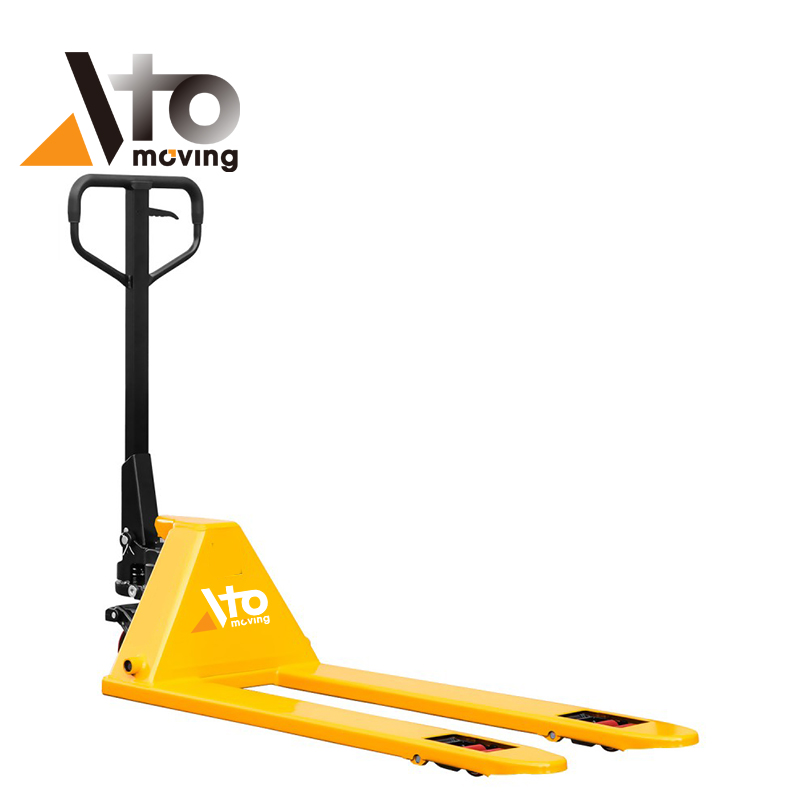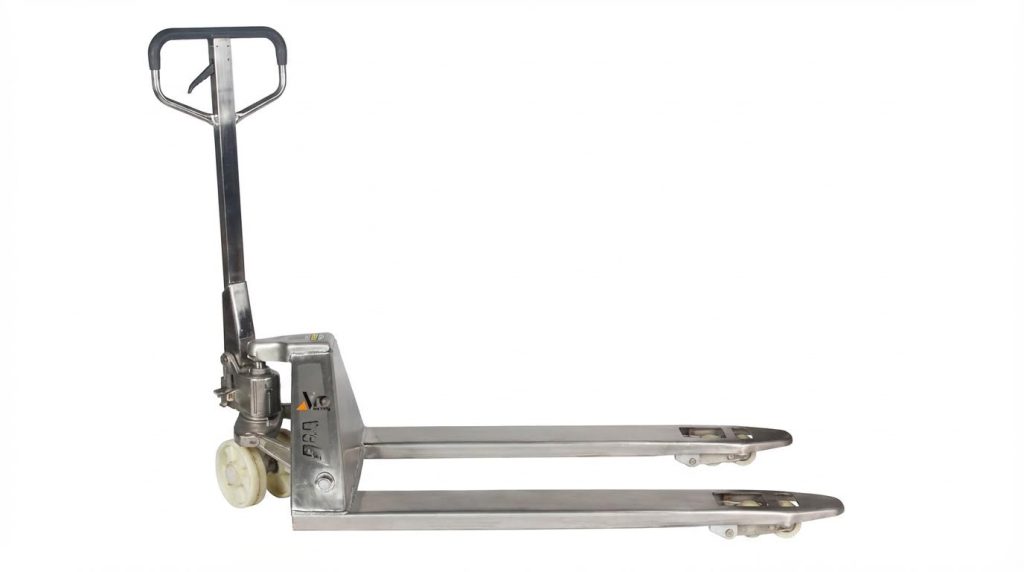
Knowing whether you need a license to operate a pallet jack depends on one key factor: whether it is powered or manual. This article explains how OSHA classifies pallet jacks, when certification is legally required, and what training applies to each type. You will also see engineering best practices for safe, efficient operation and how to align with OSHA and ANSI standards. If you have ever asked “do you need a license to operate a pallet jack,” this guide gives you a clear, practical answer for both compliance and risk reduction.
How OSHA Classifies Pallet Jacks And Licenses
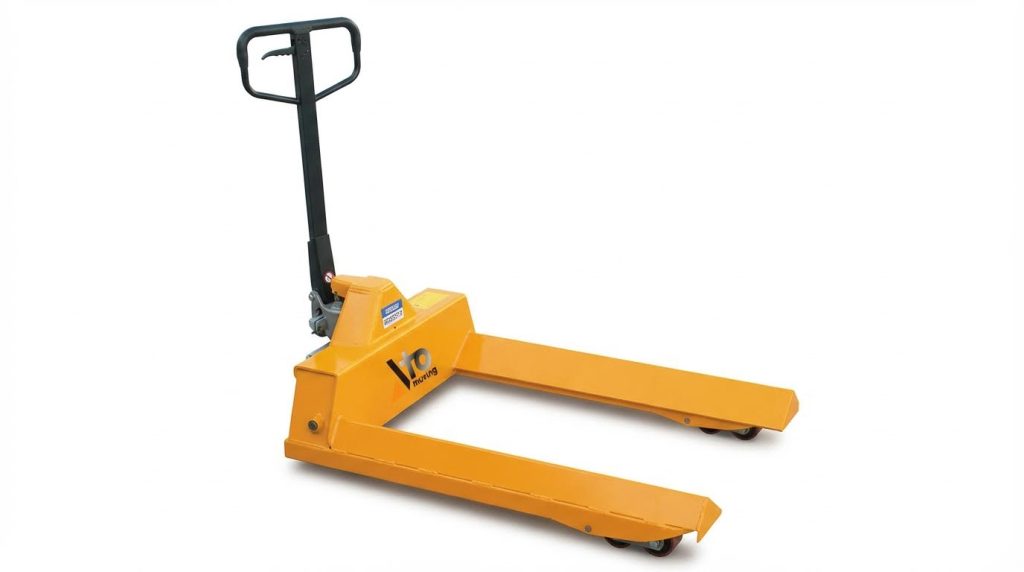
Class III forklifts and pallet jack types
OSHA treated pallet jacks as a subset of powered industrial trucks. Most electric and powered pallet jacks fell under Class III forklifts, which included low‑lift and high‑lift trucks with the operator walking or riding. This classification triggered the powered industrial truck rules in 29 CFR 1910.178 for electric pallet jacks. Manual pallet jacks, moved only by human force with no power unit, were not classified as powered industrial trucks, so they sat outside the formal PIT licensing rules, even though OSHA still expected safe-use training. Electric pallet jacks were Class III forklifts while manual units were not
- Electric / powered pallet jacks = Class III powered industrial trucks.
- Manual pallet jacks = non‑powered handling equipment, no PIT classification.
- Class III status determined whether “do you need a license to operate a pallet jack” was answered yes or no.
When certification is legally required
For electric pallet jacks, OSHA required full powered industrial truck training and evaluation before an operator could use the equipment. That process combined formal instruction, hands‑on practice, and an on‑the‑job performance evaluation conducted by the employer or a designated evaluator. Certification was mandatory for powered pallet jacks under 1910.178. In contrast, OSHA did not mandate PIT certification for manual pallet jacks because they were not powered industrial trucks, but it still expected employers to train workers on safe use and site‑specific hazards. Manual pallet jack operators needed training but not formal certification.
| Equipment type | OSHA classification | Certification legally required? |
|---|---|---|
| Electric / powered pallet jack | Powered industrial truck, Class III | Yes – PIT certification and evaluation |
| Manual pallet jack | Not a powered industrial truck | No – training strongly recommended |
This distinction sat at the core of “do you need a license to operate a pallet jack” from a compliance point of view.
Age limits and who can operate what
OSHA and federal child labor rules tied powered pallet jack operation to adult workers only. Operators of electric pallet jacks had to be at least 18 years old and complete the full certification cycle before independent operation. Electric pallet jack operators were required to be 18 or older. Manual pallet jacks could be used by workers under 18, provided the tasks and loads met youth‑employment limits and the employer supplied appropriate safety training. Younger workers were allowed to operate manual pallet jacks with training.
- 18+ and certified: may operate electric / powered pallet jacks.
- Under 18: limited to manual pallet jacks, subject to child labor rules and supervision.
- Employers remained responsible for verifying age, training status, and competence for every operator.
From a risk and compliance standpoint, the answer to “do you need a license to operate a pallet jack” depended on both the power source and the age of the operator.
Certification, Training, And Safety Requirements
OSHA 1910.178 and ANSI/ITSDF B56.1 basics
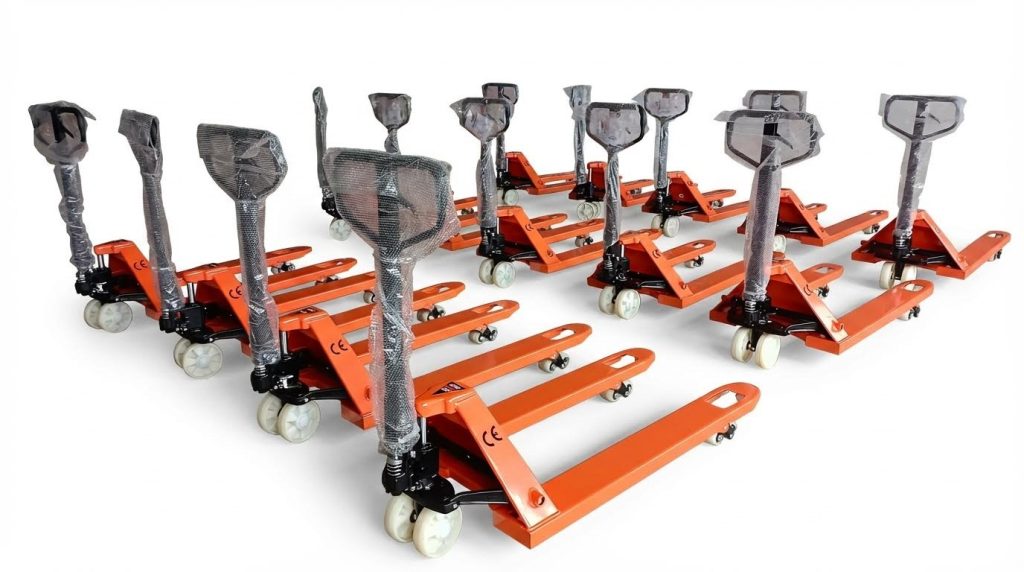
When people ask do you need a license to operate a pallet jack, OSHA 1910.178 is the core regulation for powered industrial trucks, which includes electric pallet jacks. It requires employers to provide formal instruction, hands‑on training, and an operator evaluation before allowing independent operation of powered pallet jacks. Online or classroom courses are acceptable if they follow 29 CFR 1910.178 and related material handling standards, and many programs are designed specifically to align with these requirements OSHA standards, including 29 CFR 1910.178. ANSI/ITSDF B56.1 complements OSHA by defining engineering and safety guidelines for industrial trucks, which employers use to shape site rules, safe‑use limits, and maintenance practices ANSI/ITSDF B56.1 guidelines for industrial truck safety.
Electric pallet jack certification workflow
For electric pallet jacks, the “license” is an OSHA‑compliant operator certification tied to a specific employer and equipment type. The workflow typically follows three stages: formal instruction (often a 2–3 hour course), practical on‑site training, and an employer‑led performance evaluation to confirm competence formal instruction, hands-on training, and an employer-led performance evaluation certification process includes formal instruction, practical training, and operator evaluation. Many online courses require operators to score at least 80% on a final exam of about 20 questions, with unlimited retakes until they pass minimum score of 80% on a 20-question final exam. Employers must then conduct site‑specific evaluations, document the operator’s name, training dates, and equipment type, and keep these records for at least three years to satisfy OSHA and internal audit needs records of operator certifications retained for a minimum of three years.
Typical electric pallet jack certification steps
- Enroll the employee in an OSHA‑aligned formal course.
- Deliver hands‑on practice on the exact pallet jack model and loads used on site.
- Complete and document an operator performance evaluation.
- Issue site authorization and schedule re‑evaluation within three years.
Manual pallet jack training and risk controls
For manual pallet jacks, the answer to do you need a license to operate a pallet jack is different: OSHA does not require formal certification, but it does expect employers to train workers on safe use and site hazards OSHA does not require certification for manual pallet jack operators. Effective programs cover ergonomic pulling and pushing techniques, correct fork placement, and how to manage slopes, docks, and congested areas. Risk controls should include pre‑use checks, even for manual units, focusing on wheels, handle return, forks, and any visible damage, along with rules for even load distribution, securing unstable loads, and maintaining clear travel paths to reduce slips, trips, and tipping events pre-use inspections, load distribution, and securing loads; hazards such as overexertion, slips, and load instability. Employers should integrate manual pallet jack training into general material‑handling orientation so that younger or new workers understand that “no license required” does not mean “no risk.”
Engineering Best Practices For Safe, Efficient Use
Load limits, stability, and narrow aisle operation
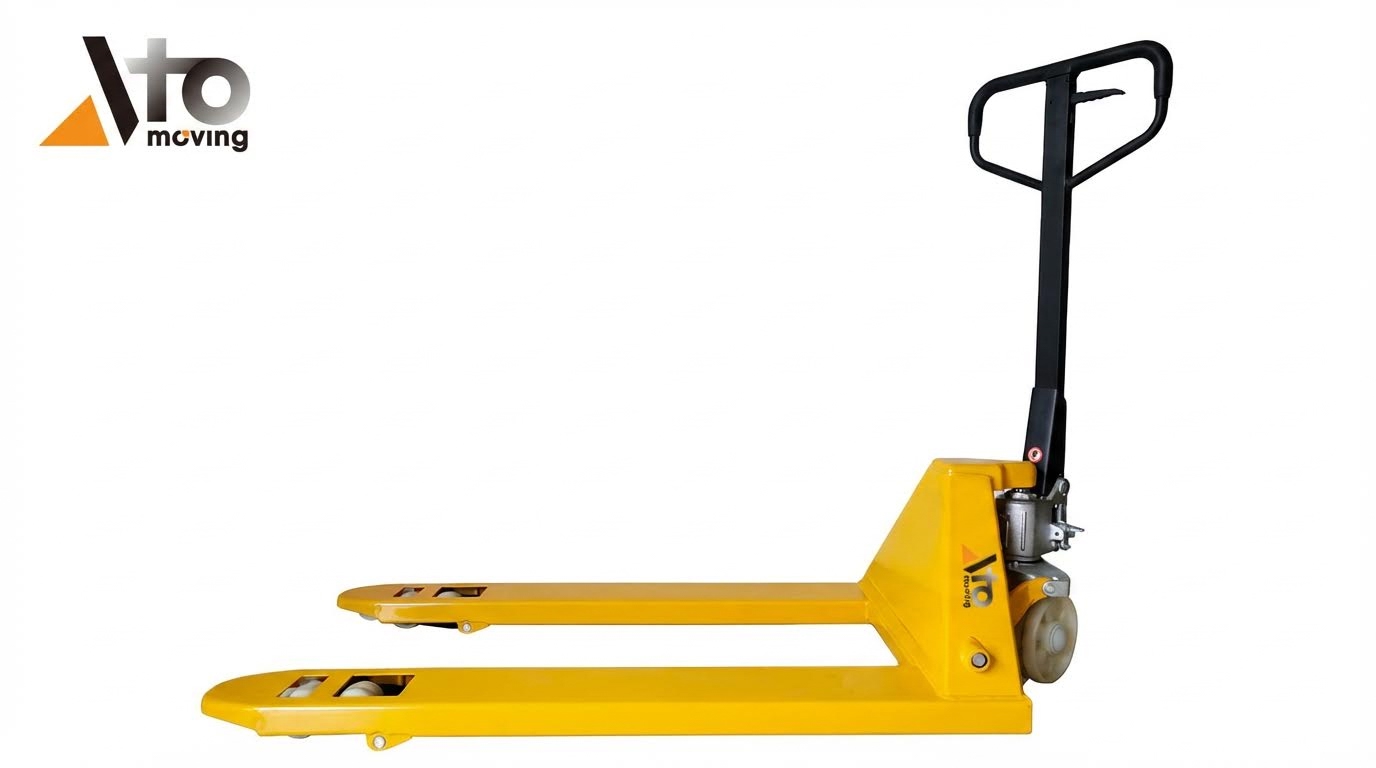
Safe pallet jack operation starts with respecting the nameplate capacity and understanding how load position affects stability. Training for operators should stress that they must never exceed the manufacturer’s rated capacity and must distribute weight evenly across the forks to reduce tipping risk and steering effort load capacity compliance. In narrow aisles, plan travel paths so the operator has clear sightlines, keeps speeds low, and avoids sharp steering inputs that can shift the center of gravity outside the wheelbase. Whether you are asking do you need a license to operate a pallet jack or not, the engineering controls are similar: keep the load low, forks fully under the pallet, and use cornering speeds that keep lateral forces within stable limits.
- Keep the heaviest part of the load over the fork heels, not at the tips.
- Do not move with damaged or unwrapped pallets that can shift suddenly.
- Travel with forks just high enough to clear the floor to reduce overturn risk.
- Use one‑way systems or staged passing bays in very narrow aisles.
Why stability margins matter
Pallet jacks have a small wheelbase and a relatively high combined center of gravity when loaded. Sudden stops, ramps, dock plates, and tight turns can create overturning moments that exceed this stability margin, especially with tall or off‑center loads. Good engineering practice is to treat narrow aisles as reduced‑speed zones and to design rack layouts that leave enough clearance for the jack, the load, and safe steering angles.
Inspection, maintenance, and battery management

Daily pre‑operation inspections are critical for both manual and electric pallet jacks, even when certification is only required for powered units. Operators should check steering, brakes, controls, hydraulics, forks, wheels, and for electrics, the battery condition and charging connector before each shift, and they must remove defective units from service until repaired daily inspection and maintenance guidance. Employers should follow the manufacturer’s maintenance schedule, including lubrication, hydraulic checks, and electrical inspections, and document all work to support compliance. For electric pallet jacks, proper battery management—charging in ventilated areas, avoiding deep discharge, and securing cables—reduces breakdowns and fire risk.
| Task Type | Key Checks | Frequency |
|---|---|---|
| Pre‑use inspection | Forks, wheels, steering, controls, hydraulics, visible leaks | Every shift |
| Electric system | Battery charge, cables, connectors, charger condition | Every shift and at each charge |
| Planned maintenance | Lubrication, hydraulic fluid, structural cracks, fasteners | Per manufacturer schedule |
Manual vs. electric: inspection focus
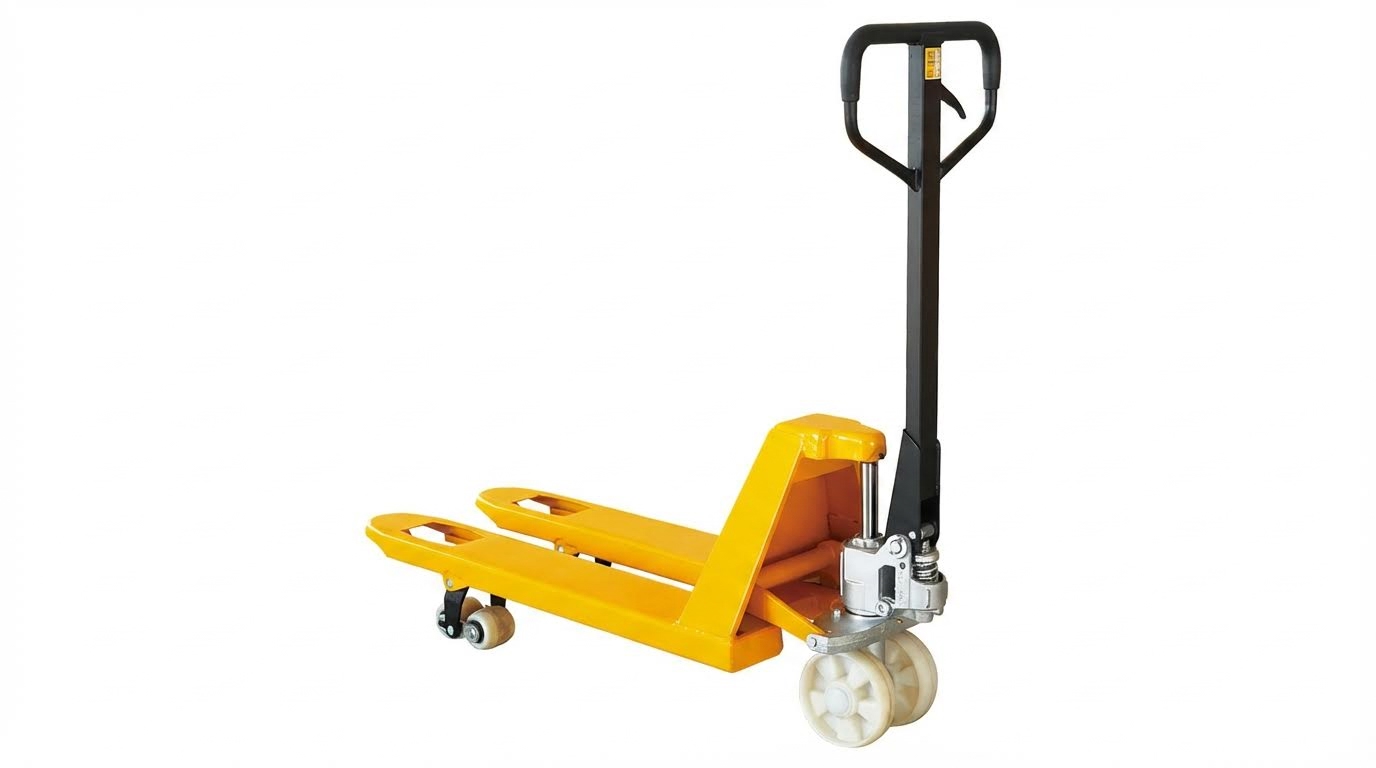
Manual pallet jacks rely on mechanical linkages and a small hydraulic pump, so wheel condition, fork straightness, and pump leaks are priority checks. Electric pallet jacks add drive motors, braking systems, and batteries, so engineering controls extend to verifying interlocks, emergency stops, and charge procedures. Even though do you need a license to operate a pallet jack is answered differently for manual and electric units, the expectation for documented inspections and defect tagging should be the same.
Integrating pallet jacks with site traffic plans
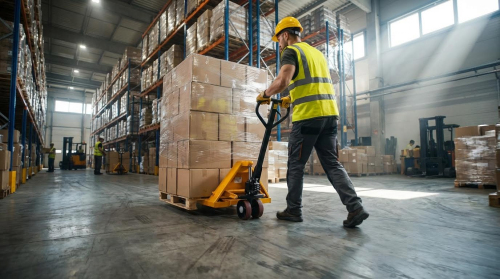
Safe operation depends on how pallet jacks fit into the overall facility traffic design, not just on individual operator skill. Effective traffic management uses marked travel lanes, right‑of‑way rules, and clear signage to separate pedestrian routes from powered equipment paths wherever possible traffic management protocols. High‑risk interfaces—dock doors, blind corners, intersections with forklifts, and staging areas—should have added controls such as mirrors, stop lines, and speed limits. When you decide who needs certification or training and do you need a license to operate a pallet jack in each zone, align that decision with the site’s traffic risk profile.
- Define and mark one‑way routes for pallet jacks in congested areas.
- Set low speed limits and mandatory stops at pedestrian crossings.
- Use visual cues (floor tape, signs) to indicate “no pallet jacks” zones.
- Coordinate pallet jack rules with forklift and truck dock procedures.
Linking traffic plans to training
Operator training should include a walk‑through of the actual traffic plan so drivers understand lane markings, priority rules, and restricted areas. Near‑miss and incident reports involving pallet jacks should feed back into route redesign, added markings, or revised procedures. This engineering‑driven loop between layout, rules, and training is what turns basic compliance into measurable risk reduction.
Key Takeaways For Compliance And Risk Reduction
Use the core OSHA question—“do you need a license to operate a pallet jack”—as your starting point for risk control and training design. Electric pallet jacks (Class III powered industrial trucks) require full operator certification and a documented evaluation, while manual pallet jacks require structured training but not formal licensing. Align your policies with OSHA 1910.178 and ANSI/ITSDF B56.1, then layer in site‑specific rules, traffic plans, and inspection routines to keep incidents and regulatory exposure low.
- Clarify your internal rule for “do you need a license to operate a pallet jack”: certification is mandatory for electric units, while manual units still require documented safety training and supervision, even if OSHA does not demand formal certification. Electric pallet jacks are treated as powered industrial trucks; manual pallet jacks are not.
- Build a compliant training and evaluation program around OSHA 29 CFR 1910.178 and ANSI/ITSDF B56.1, using a three‑step workflow for electric pallet jacks: formal instruction, hands‑on practice, and an employer‑led performance evaluation, with re‑evaluation at least every three years or after any incident or unsafe behavior. This structure mirrors OSHA’s powered industrial truck requirements.
- Control engineering and operational risks by enforcing manufacturer load limits, pre‑use and pre‑shift inspections, and scheduled maintenance for all pallet jacks, while treating battery care, hydraulic leaks, steering/brake defects, and damaged forks as “do not use” conditions until repaired. Daily checks and manufacturer‑based maintenance intervals are specifically recommended.
- Integrate pallet jacks into your traffic management plan with marked aisles, right‑of‑way rules, speed expectations, and pedestrian‑interaction controls, then support this with incident reporting, near‑miss analysis, and refresher training targeted at the most frequent hazards such as overexertion, unstable loads, and poor visibility. Common pallet jack hazards and controls are well documented.
Key Takeaways For Compliance And Risk Reduction
Electric pallet jacks sit inside OSHA’s powered industrial truck rules, while manual units sit outside them. That legal line drives who needs certification, who may operate which jack, and how you design your training program. But the engineering risks do not change just because a unit is manual. Load limits, stability, visibility, and traffic conflicts still control whether work stays safe.
To keep risk low, treat certification as the baseline for powered units, not the finish line. Back it up with short, focused refreshers after incidents, near misses, or layout changes. Give manual pallet jack users structured training that covers ergonomics, slopes, and load security, and document it like any other safety‑critical task.
Engineering practice should guide your rules. Respect nameplate capacity, keep loads low and centered, and design aisles, rack clearances, and one‑way routes that give operators room to steer without sudden corrections. Use daily inspections, strict “tag‑out” of defective jacks, and disciplined battery care to stop failures before they become injuries.
The best practice for operations and engineering teams is clear: build one integrated pallet jack program that links OSHA and ANSI rules, site traffic design, and Atomoving equipment limits into a single, documented system for control of risk.
Frequently Asked Questions
Do You Need a License to Operate a Pallet Jack?
No, you do not need a formal driver’s license to operate a manual pallet jack. However, proper training is essential for safe use. For electric pallet jacks, OSHA standards require operators to be at least 18 years old and certified. Certification involves formal training, on-the-job practice, and passing an evaluation. Pallet Jack Safety FAQs.
What Should You Never Do with a Pallet Jack?
Never exceed the pallet jack’s weight capacity, as this can cause equipment failure or injury. Avoid using a pallet jack on uneven or steep surfaces where it may become unstable. Never attempt to lift objects other than pallets, such as cars, as the equipment is not designed for such tasks. Always ensure the load is balanced and secure before moving. Pallet Jack Safety FAQs.
Are You Supposed to Push or Pull a Pallet Jack?
It is generally safer to push a pallet jack rather than pull it. Pushing provides better control and reduces the risk of strain or accidents. Ensure your path is clear and use smooth, deliberate movements when maneuvering the pallet jack. Pallet Jack Safety FAQs.