Electric pallet jacks bridge the gap between simple floor-level transport and true vertical handling, but their real value depends on how high they lift, how far they travel, and how they match your layout and loads. This guide breaks down lift heights, operating ranges, and core specs so you can answer “how high will an electric lift pallet jack lift” for your application, not in theory. You will see typical ranges for height, capacity, speed, and aisle space, then map those numbers to real-world use cases like dock work, racking, and ergonomic workstations. Use the data to specify equipment that is safe, efficient, and correctly sized for your warehouse or plant.
Key Lift Heights And Operating Ranges
Typical lift heights by pallet jack type
When people ask “how high will an electric lift pallet jack lift,” they are usually comparing low‑lift transport jacks with high‑lift and stacker styles. The answer depends strongly on the jack type and its geometry. Use the ranges below as a practical engineering guide rather than absolute limits.
| Pallet jack type | Typical lift height range | Approx. max working / lift height | Best‑use case |
|---|---|---|---|
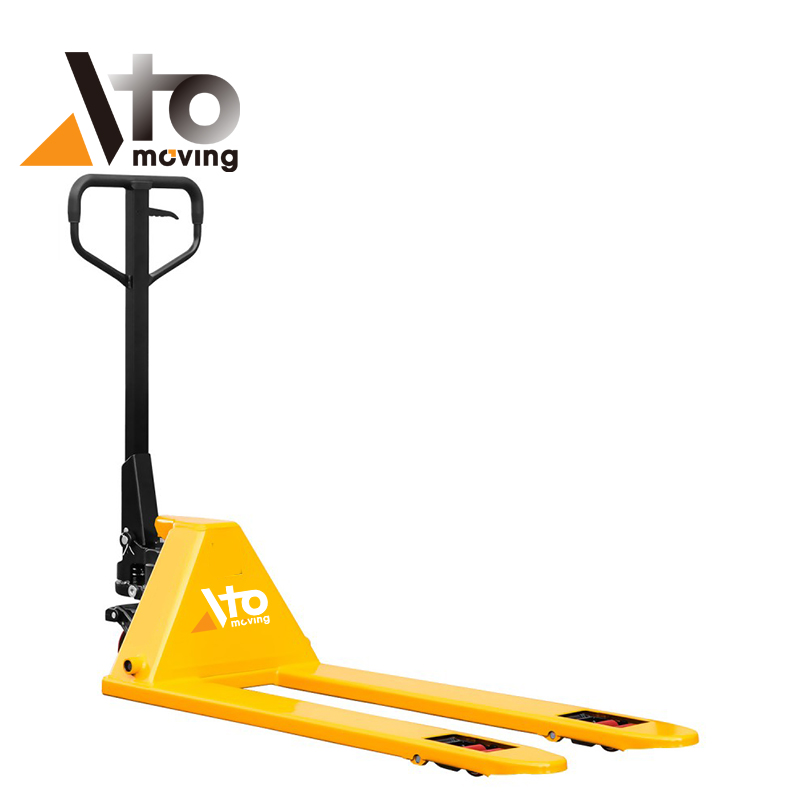
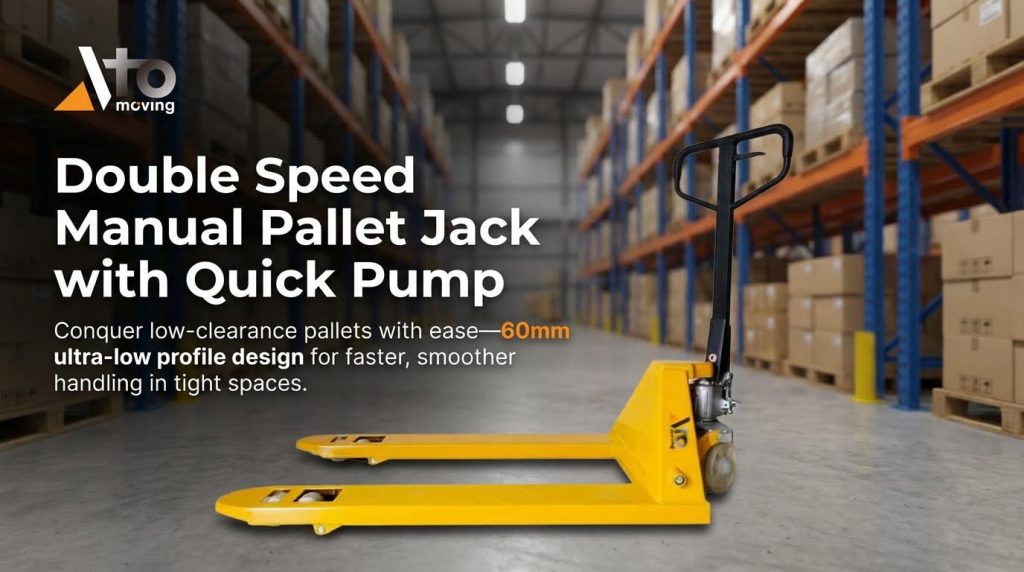
| Low‑profile pallet jack (manual or electric) | 55–90 mm lowered to about 160–225 mm raised (low‑profile: 55–165 mm) (standard: up to 225 mm) | Ground‑level transport only | Dock work, floor‑level moves, tight trailers |
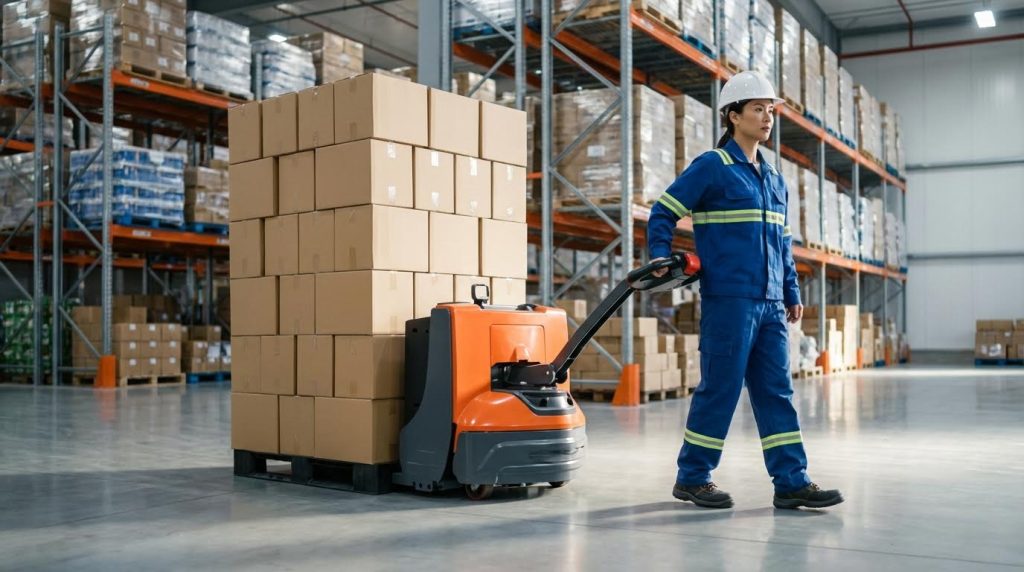
| Standard electric pallet jack (walkie) | Typically up to 200–225 mm (e.g., 225 mm) | Just enough to clear pallet skids and dock plates | Horizontal transport, loading/unloading, order staging |
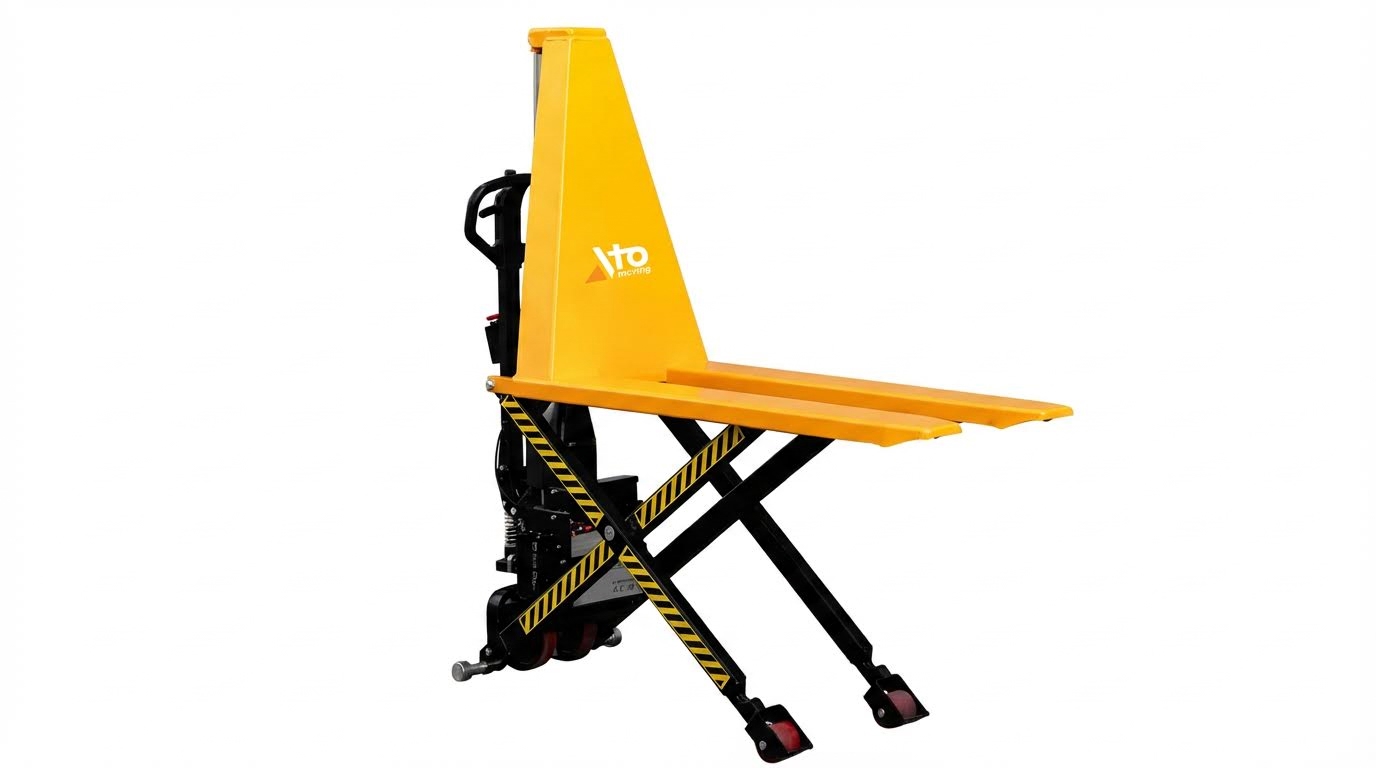
| High‑lift / scissor pallet jack | Up to about 800 mm platform / fork height (800 mm) and ~810 mm working height (81 cm) | Ergonomic waist‑high work position | Feeding machines, packing benches, light assembly |
| Electric pallet lift (mast‑type, compact) | Up to about 1,600–3,500 mm depending on model (1,600–3,500 mm) | Roughly 63 in (~1,600 mm) on low‑range models (63 in) | Feeding low to mid‑level racks, mezzanines, workstations |
| Electric pallet stacker (walkie stacker) | About 1,400–5,800 mm standard lift height, with some up to 6,300 mm max extended (1,400–6,300 mm) | Roughly 3–6 m racking height, depending on model | Stacking in racking, multi‑level storage, narrow aisles |
| Reach‑type electric pallet lift / stacker | About 1,600–5,000 mm lift height with up to 500 mm reach extension (1,600–5,000 mm + 500 mm reach) | Access to deeper or double‑deep racks up to ~5 m | Dense storage, double‑deep racks, narrow aisles |
| Counterbalanced electric pallet lift | Up to about 5,000 mm mast height with 500 mm load center (5,000 mm) | Fork‑truck‑like reach without outriggers | Handling machinery, odd‑shaped loads, mixed pallets |
In simple terms, a “plain” electric pallet jack usually lifts only high enough to move pallets safely, while electric pallet stackers and pallet lifts can raise loads from roughly 1.4 m up to about 6.3 m depending on the mast design and capacity rating. When planning how high will an electric lift pallet jack lift in your facility, always check that the rated lift height exceeds your top rack beam by a safety margin and that capacity at that height matches your heaviest pallet.
Why higher lift often means lower capacity
As lift height increases, the load’s center of gravity moves further from the drive axle. This increases overturning moment and reduces the allowable rated load. That is why many high‑mast electric pallet stackers have lower capacities at maximum height than at low lift, even though the base truck looks similar.
Travel speed, gradeability, and duty cycles
Lift height is only half the story. To size an electric pallet jack correctly, you also need its travel speed, gradeability, and how long it can run between charges. These factors determine hourly throughput and whether the truck will keep up with your shifts.
| Parameter | Typical range for electric pallet jacks / stackers | What it means in practice |
|---|---|---|
| Travel speed – unladen | About 4.0–5.0 km/h (4–5 km/h) (up to 5 km/h) | Sets maximum walking‑pace productivity on long runs |
| Travel speed – laden | About 3.5–4.0 km/h under load (3.5–4.0 km/h) | Lower speed improves control and stability with heavy pallets |
| Gradeability – unladen | Typically around 7% on stackers (7% unladen) | Suitable for gentle ramps and dock plates |
| Gradeability – laden | Typically around 5% under load (5% laden) | Short, shallow inclines only; not for steep ramps |
| Lift speed – unladen | Roughly 0.09–0.23 m/s on stackers (90–230 mm/s) and 0.040–0.215 m/s on pallet jacks (0.040–0.215 m/s) | Faster when empty for quick repositioning between picks |
| Lift speed – laden | Typically 0.04–0.145 m/s with load (0.040–0.145 m/s) and about 90–130 mm/s on stackers (90–130 mm/s) | Controls time to raise pallets into racking |
| Lowering speed | About 80–130 mm/s laden and 170–230 mm/s unladen on stackers (80–230 mm/s) | Controlled descent to protect product and forks |
| Battery system | Commonly 24 V with up to ~280 Ah capacity on stackers (24 V, up to 280 Ah) | Defines duty cycle and run time per charge |
For a given route, travel speed and gradeability dictate how many pallet cycles you can complete per hour, while lift speed and maximum lift height determine how quickly you can access upper rack positions. When selecting equipment, match your top rack level to the real lift height range and verify that the battery capacity and duty cycle can support your peak shift demand without excessive charging downtime.
- If your operation is mostly floor‑level transport, prioritize travel speed, maneuverability, and moderate lift (around 200–225 mm).
- If you regularly store above 3 m, focus on electric pallet stackers with 3,000–6,000 mm lift and adequate lift speed at rated load.
- For frequent ramp use, choose models with higher gradeability and verify ramp slope against the 5–7% guideline.
- Always check that published lift, speed, and grade specs are valid at your required load, not just at partial capacity.
“”
Matching Electric Pallet Jacks To Applications
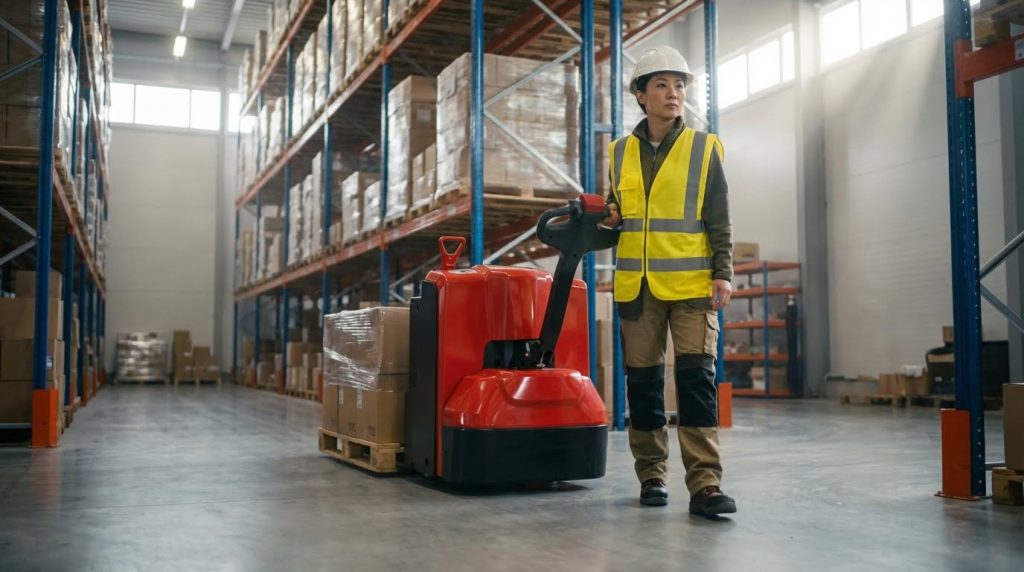
Correctly matching electric pallet jacks to your application starts with one question: what are you moving, and how high does it need to go? From low‑level floor transport to multi‑level racking, the right choice balances lift height, capacity, floor conditions, and safety. The sections below break this down so you can quickly see which truck type fits your use case and understand how high will an electric high lift pallet truck lift for each scenario.
Low‑level transport vs. high‑lift stacking
Electric pallet equipment splits into two broad roles: low‑level transport and high‑lift stacking. The main discriminator is lift height versus capacity and travel efficiency.
| Application type | Typical equipment | Practical lift height range | Typical capacity range | Best for |
|---|---|---|---|---|
| Low‑level transport | manual pallet jack / low profile pallet jack | Approx. 80–225 mm (3–9 in) above floor Low profile jacks lower to 55 mm and raise to 165 mm Electric jacks lift from about 225 mm upward | ≈ 900–12,000 kg depending on model Capacity range 900–12,000 kg | Dock work, horizontal moves, truck loading, low‑level order picking |
| High‑lift stacking | battery-powered stacker / lift stacker | ≈ 1,400–5,800 mm standard; up to 6,300 mm max Stackers lift 1,400–5,800 mm, up to 6,300 mm Reach and counterbalanced lifts reach 1,600–5,000 mm | ≈ 1,000–2,000 kg typical Stackers up to 2,000 kg with 600 mm load center | Racking up to ~6 m, mezzanine feeding, work‑station height feeding |
| Ergonomic high‑lift (workstation) | powered high lift pallet truck / scissor platform lift | ≈ 800 mm (31–32 in) working height Scissor lifts around 800 mm High‑lift jacks give 81 cm working height | ≈ 1,000–2,000 kg or 2,000–5,000 lb Scissor lifts 2,000–5,000 lb | Feeding packaging lines, assembly cells, ergonomic picking from a single pallet |
For most buyers asking how high will an electric high lift pallet truck lift, the answer depends on whether you choose a low‑lift transport jack (under ~250 mm), a high‑lift ergonomic jack (around 800 mm), or a stacker / reach unit that can reach 3,000–6,000 mm and above. Higher lift usually trades off against capacity and speed, so define your maximum required lift height before you specify a model.
Quick selection guide: transport vs. stacking
Choose low‑level electric pallet jacks when:
- You only need to clear dock plates, thresholds, and truck beds.
- All storage is floor‑level or in very low racks.
- Priority is horizontal throughput, not vertical storage.
Choose high‑lift stackers / pallet lifts when:
- You store pallets in racking above 1.5 m.
- You need to stage pallets at operator waist height for picking.
- Space is tight and you cannot bring in a full counterbalance truck.
Environment, flooring, and safety compliance
Even if the lift height is correct, the wrong truck for your floor or environment will create downtime and safety risk. Match wheel material, drive type, and protection level to the actual conditions in your building.
- Floor type and condition
- For smooth indoor concrete, standard polyurethane (PU) or nylon wheels work well and reduce rolling resistance. Low‑profile jacks often use PU, nylon, or rubber wheels
- For rough or uneven floors, use larger‑diameter, softer wheels and check that the jack’s ground clearance and fork heel do not bottom out.
- For wet or dusty floors, prioritize sealed bearings and anti‑slip tread.
- Temperature and special environments
- Cold storage and freezers demand equipment rated for low temperatures. Manual trucks have been designed to operate down to about −25 °C with freeze‑resistant hydraulics, while electric models use insulated batteries to run around −15 °C. Cold‑chain performance data
- For pharmaceutical or clean‑room warehouses, select stainless or easily sanitised electric pallet equipment with sealed surfaces and low‑noise operation to meet GMP and noise rules. GMP‑compatible truck features
- In dust‑prone or explosive‑risk zones, look for sealed bearings, anti‑static tyres, and IP‑rated components to reduce ignition risk and contamination. Dust‑environment guidance
- Aisle width and maneuverability
- Check the turning radius of the jack or stacker against your narrowest aisle. Electric stackers often turn in about 1,580–1,630 mm, which suits many narrow‑aisle warehouses. Typical stacker turning radius
- Manual low‑profile jacks can work in aisles around 1.8 m, while powered pallet trucks typically need about 2.2 m. Aisle compatibility figures
- For tight backrooms or production cells, compact reach or counterbalanced pallet lifts with small turning radii are better than long‑wheelbase trucks. Reach lift maneuverability
- Safety and compliance
- Ensure the rated capacity at the specified load center exceeds your heaviest pallet to avoid overload and tip‑risk. Many electric pallet jacks and stackers list capacities from about 1,000 kg up to 12,000 kg, but high‑lift stackers typically sit in the 1,000–2,000 kg band. Stacker capacity data Capacity range for pallet jacks
- Look for overload protection, automatic braking, and emergency stop functions to meet current safety guidelines. Key pallet jack safety features
- Use ergonomic controls and correct working heights (for example, 81 cm high‑lift workstations) to reduce strain and musculoskeletal injuries. Ergonomic high‑lift data
Environmental checklist before you specify a truck
Walk your route and note:
- Narrowest aisle and doorway width, plus turning spaces at aisle ends.
- Highest rack beam or working height you must reach with a pallet.
- Worst‑case floor condition: slopes, gaps, drains, dock plates, thresholds.
- Temperature range, humidity, dust, and any wash‑down or clean‑room zones.
- Required standards (for example, food, pharma, chemical, or explosive risk).
Use these data points to decide whether a low‑level electric pallet jack, a high‑lift pallet jack, or a full electric stacker is the safest and most efficient option for your site.
Final Considerations For Specifying Electric Pallet Jacks
Safe and efficient pallet handling depends on how well the truck’s geometry, capacity, and environment match your real work. Lift height, load center, and mast design set the safe envelope for vertical handling. Travel speed, gradeability, and battery capacity then decide whether the truck can keep pace with shift demand without overheating operators or draining batteries early.
Fork length, turning radius, and aisle width work together to define how close you can store pallets and how smoothly operators can turn without shunting or risk. Floor type, temperature, and cleanliness further shape wheel choice, sealing, and materials, especially in cold stores and GMP or food sites. If you push any one limit, stability and uptime drop fast.
The best practice is simple but strict. Walk the route, measure top rack heights, narrowest aisles, steepest slopes, and heaviest pallets. Then select an Atomoving electric pallet jack or stacker whose rated lift, capacity at height, and duty cycle clearly exceed those figures. Build in a safety margin, specify ergonomic working heights, and standardize on trucks that operators can control easily in your tightest, worst‑case conditions.
Frequently Asked Questions
How high can an electric pallet jack lift?
An electric pallet jack can typically lift loads to heights ranging from 6 inches to over 20 inches. These machines are commonly used in warehouses and distribution centers where frequent lifting and lowering are required. For more details, you can refer to this Pallet Jack Lift Guide.
What factors determine the maximum lift height of an electric pallet jack?
The maximum lift height of an electric pallet jack depends on the model and its design specifications. Factors such as the type of hydraulic system, the stability of the base, and the intended use in different environments can influence the lift height. Generally, most models offer a lift range suitable for standard pallet heights.