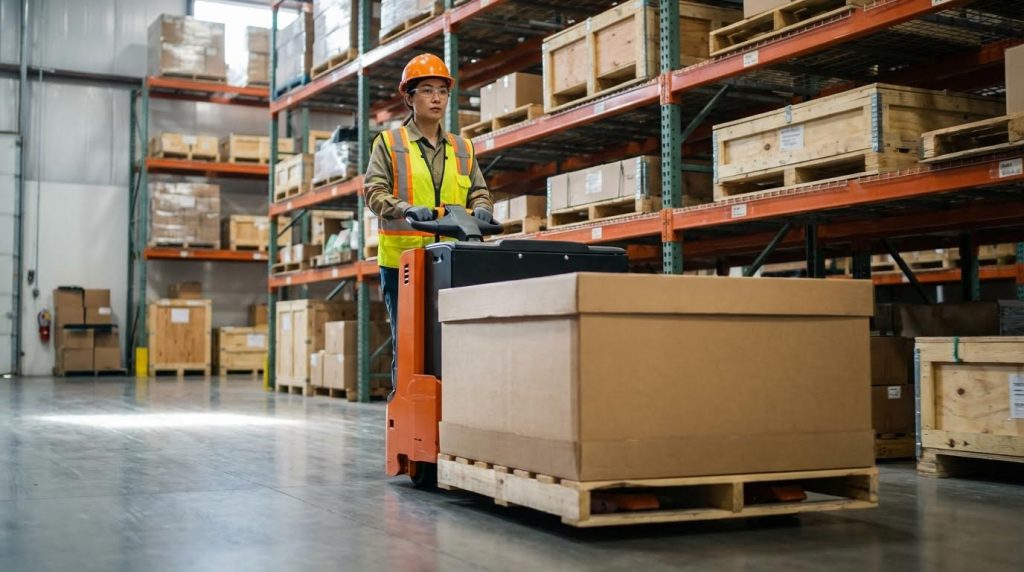
Understanding how a hydraulic pallet truck actually lifts thousands of pounds with a few handle strokes helps you choose, operate, and maintain it more intelligently. This article breaks down the core mechanics, from structural components to the internal hydraulic circuit, so you can clearly answer “how does a manual pallet jack work” in practical, engineering terms. You will see how pressure, flow paths, and safety valves interact, and how common faults trace back to specific design features. Finally, we connect the theory to real-world selection, maintenance, and safe, efficient use in material handling environments.
Core Mechanics Of A Hydraulic Pallet Jack
Key structural and hydraulic components
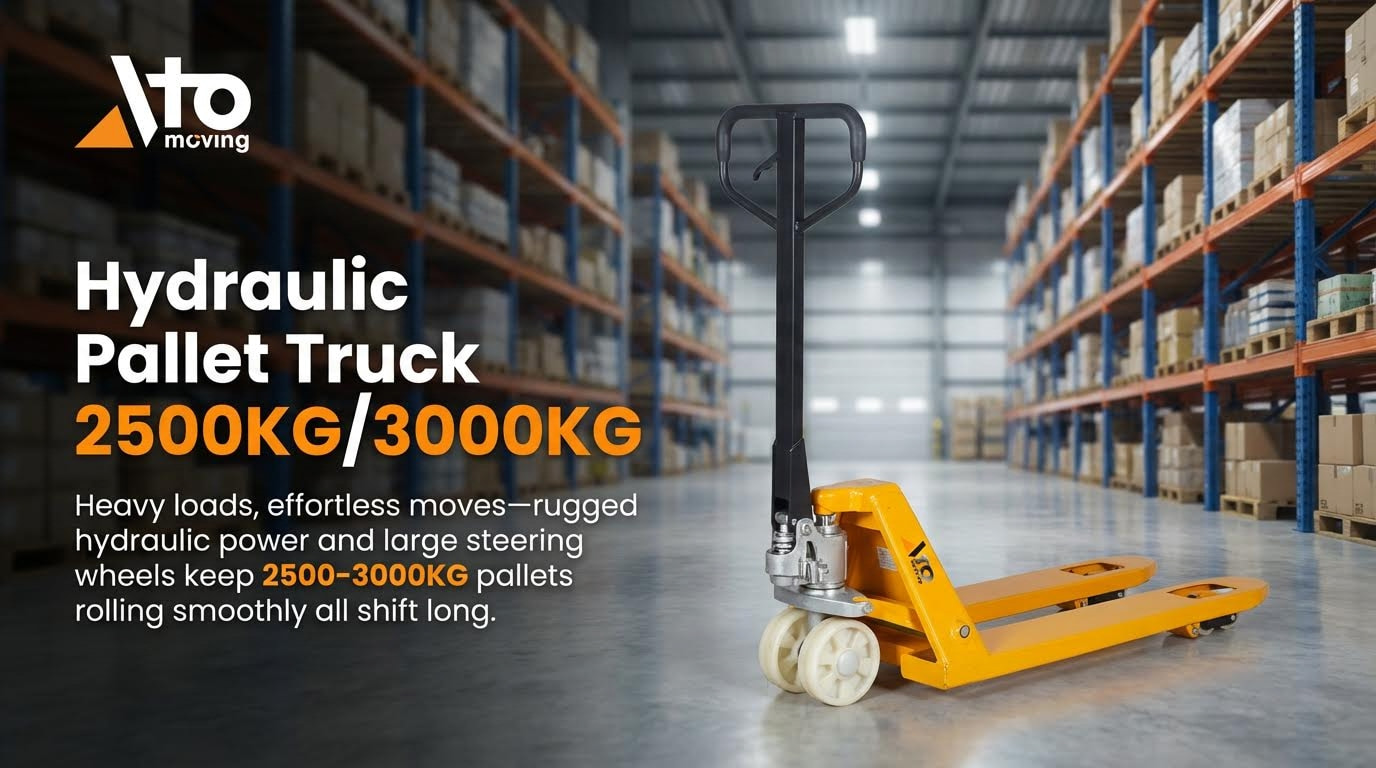
To understand how does a manual pallet jack work, it helps to separate the structure from the hydraulic power unit. The structural frame carries the load and transmits forces into the floor, while the hydraulic group generates and controls lifting force using pressurized oil. Both systems must work together efficiently to lift typical pallet loads safely and with minimal operator effort.
- Main structural components
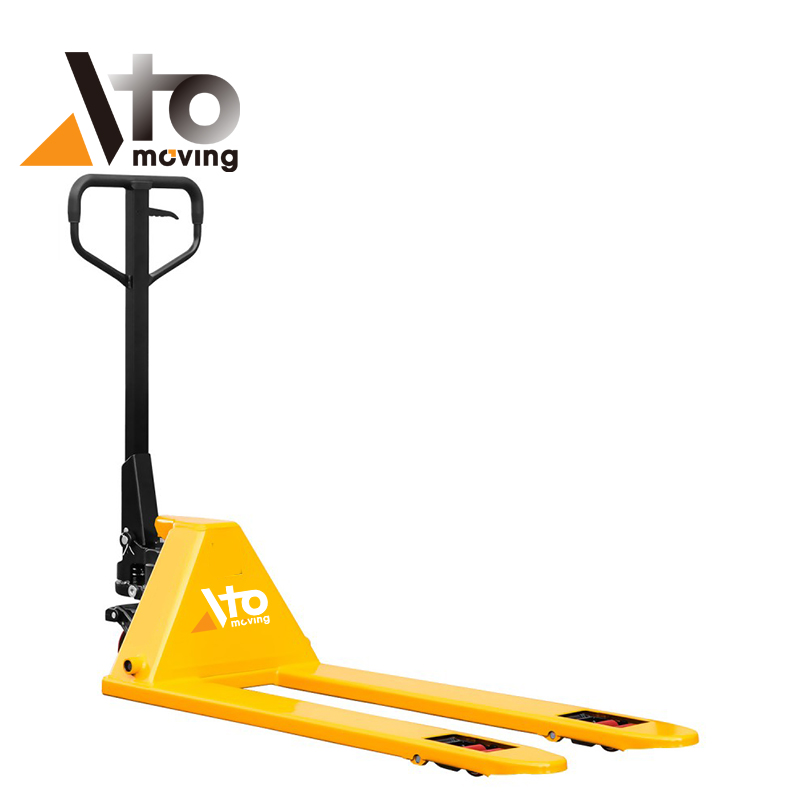
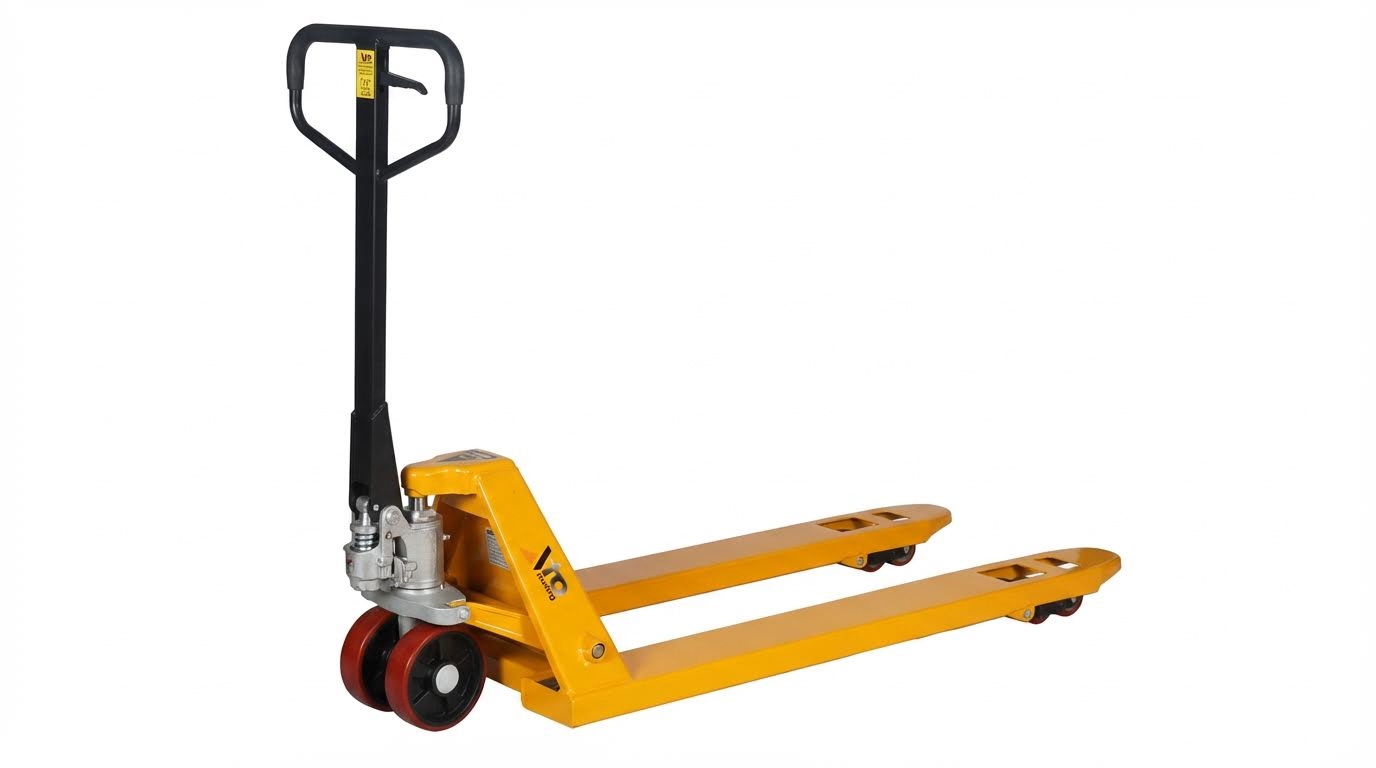
- Fork arms: Two parallel steel forks slide into the pallet openings and support the load. Their length and section geometry determine load capacity and deflection under load.
- Tandem load wheels: Small wheels at the fork tips carry the pallet weight and roll only forward and backward for stability.
- Steer wheels and axle: Larger wheels under the pump unit provide maneuverability and transmit steering input from the handle.
- Frame and pivot points: A welded frame and pivoting links connect the forks to the hydraulic lift mechanism, converting cylinder stroke into fork lift height.
- Hydraulic power unit
- Oil reservoir: A small tank stores hydraulic oil that feeds the manual pump and lift cylinder and also allows air and contaminants to settle out of the fluid.
- Manual pump: The tow bar and handle drive a small piston pump. Moving the handle changes the pump chamber volume, drawing oil in on the upstroke and pressurizing it on the downstroke through one‑way check valves.
- Lift cylinder: A larger cylinder and piston receive high‑pressure oil from the pump and extend to raise the fork linkage, acting as the main actuator in the hydraulic system.
- Valves: Check valves ensure one‑way flow from tank to pump and from pump to cylinder, while a lowering valve and relief valve control return flow and protect against over‑pressure in the circuit.
- Operator interface
- Handle and tow bar: Provide steering leverage and the manual input that powers the hydraulic pump through pumping motions.
- Control lever: Selects lift, neutral, or lower. In lift, it closes the lowering valve; in lower, it opens a flow path back to the tank; neutral isolates the cylinder for travel.
Together, these components explain the basic physics of how does a hydraulic pallet truck work: small manual forces at the handle create high pressure in the pump, which acts over the larger piston area in the lift cylinder to raise heavy pallet loads.
Step‑by‑step lifting and lowering cycle
The lifting and lowering cycle shows in detail how does a drum dolly work from an operator’s perspective and inside the hydraulic circuit. Each handle position changes valve states and flow paths, converting simple motions into controlled vertical movement of the forks.
- Preparation and fork insertion
- The operator sets the control lever to lower so the forks sit fully down, reducing entry height.
- The pallet jack is rolled so the forks slide into the pallet openings until the load wheels are fully under the pallet deck.
- The lever is then moved to the lift position, which closes the lowering valve and seals oil inside the lift circuit ready for pumping.
- Lifting cycle (handle pumping)
- On the pump handle upstroke, the small pump piston retracts, increasing chamber volume and creating a slight vacuum.
- This pressure drop opens an inlet check valve, drawing oil from the reservoir into the pump chamber through the suction path.
- On the downstroke, the piston compresses the oil, closing the inlet check valve and opening an outlet check valve so pressurized oil flows into the lift cylinder.
- Pressure acting on the larger cylinder piston area generates enough force to raise the fork linkage and lift the pallet a few millimeters per stroke; repeated strokes build height.
- Neutral and transport
- Once the forks reach the required height, the lever is moved to neutral.
- In neutral, the lowering valve remains closed, and the pump is isolated so the forks hold position under static load, with only minor leakage over time in a healthy system if seals are in good condition.
- The operator then pulls or pushes the pallet jack using the handle, steering via the larger wheels.
- Controlled lowering
- To set the pallet down, the operator moves the lever to the lower position, opening the lowering valve.
- This creates a return path so oil in the lift cylinder flows back to the reservoir, typically through a restricted orifice to control descent speed and prevent sudden drops.
- The load and fork mass push the cylinder piston back in under gravity, lowering the forks smoothly until they are clear of the pallet.
Why smooth operation depends on hydraulic health
Sluggish lifting, jerky motion, or forks that drift down in neutral often indicate issues such as low oil level, air in the circuit, or worn seals. Regular checks of oil level and condition, plus inspection of valves and seals, keep the lifting cycle predictable and safe over the life of the pallet jack.
Inside The Hydraulic Circuit: Design And Performance
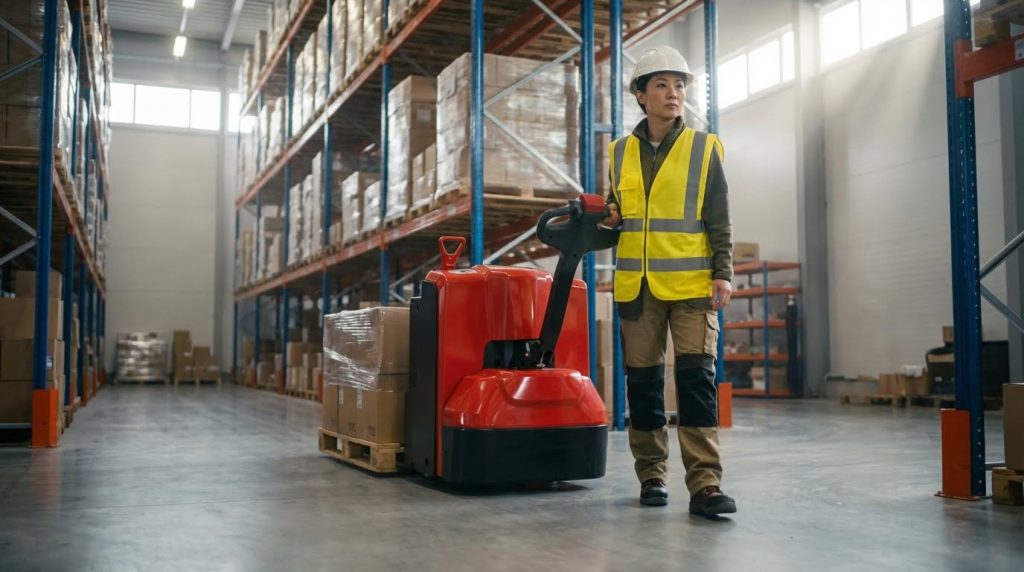
Manual pump, pistons, and check valve operation
To understand how does a manual pallet jack work at circuit level, start with the manual pump group. The handle and tow bar act as a lever that drives a small pump piston inside a cylinder. When the operator pulls the handle up, the piston retracts and increases the volume of the pump chamber, creating a slight vacuum that opens an inlet check valve and draws oil from the reservoir into the pump chamber Hydraulic Principle. When the handle is pushed down, the piston compresses the oil, closing the inlet check valve and opening an outlet check valve so pressurized oil flows into the main lift cylinder Hydraulic Principle.
- The small pump piston generates pressure with modest human input.
- One-way (check) valves make sure oil only flows from tank → pump → lift cylinder during lifting.
- The large lift piston converts oil pressure into vertical force on the fork linkage.
Each pump stroke moves a small volume of oil into the lift cylinder, so repeated strokes raise the forks step by step until the load reaches height Lifting Mechanism. The lift cylinder usually includes a back‑pressure or non‑return valve so oil cannot flow back toward the pump when the handle is in neutral Lifting Mechanism. This simple combination of lever, small piston, and check valves is the core reason a person can lift heavy pallet loads with limited effort.
Pressure control, flow paths, and safety valves
In the lifting position, the control lever closes the lowering valve so oil can only move from the pump into the lift cylinder, not back to the tank Lifting Mechanism. The flow path is: reservoir → inlet check valve → pump chamber → outlet check valve → lift cylinder. In the neutral position, the directional valve isolates the cylinder so the forks stay at height while the jack is moved. In the lowering position, the lever opens a controlled flow path from the lift cylinder back to the tank so the forks descend under load weight Lifting Mechanism.
- Directional or control valves set the operating mode: lift, neutral, or lower Hydraulic System Components.
- Relief valves protect the system if the operator overloads the jack or dead‑heads the pump Hydraulic System Components.
- Filters in the return or suction line remove contaminants from the oil Hydraulic System Components.
From an engineering standpoint, the circuit is designed so that pressure rises only to the level needed to lift the rated load, then the relief valve opens to bypass excess oil back to the reservoir. This limits peak stress on the cylinder, seals, and frame. A predictable, restricted flow area in the lowering valve also gives controlled descent speed, even with varying load mass. These pressure and flow controls are central to both safety and the smooth, precise feel operators expect when they ask how does a hydraulic pallet jack work in daily use.
Common hydraulic faults and engineering fixes
Most hydraulic failures trace back to seal wear, contamination, or misuse of the control valves. External oil leaks at the pump, cylinder, or hose joints usually indicate damaged or hardened seals that must be inspected and replaced Common Hydraulic System Issues and Solutions. Internal leakage across worn pistons or valves shows up as forks that slowly drift down under load. Sticking or jerky cylinders can result from foreign particles in the oil or on the piston rod; cleaning and oil replacement usually restore smooth travel Common Hydraulic System Issues and Solutions.
- Malfunctioning control valves may prevent proper lifting or lowering and often need repair or replacement Common Hydraulic System Issues and Solutions.
- Aging or cracked oil pipes and hoses risk sudden pressure loss and should be replaced on inspection Common Hydraulic System Issues and Solutions.
- Clogged filters restrict flow and must be cleaned or changed at service intervals Common Hydraulic System Issues and Solutions.
Another frequent issue is air trapped in the hydraulic circuit, which causes spongy, slow lifting or uneven lowering. Bleeding the system by repeatedly pumping the handle and, where fitted, opening a bleeder valve until oil flows without bubbles restores solid hydraulic response Bleeding Hydraulic System. Good engineering practice also includes scheduled oil and filter changes and routine inspection of valves and seals, which greatly reduces the chance that operators ever need to ask how does a hydraulic pallet jack work when it fails unexpectedly.
Applying The Mechanics To Selection And Use
Matching pallet jack design to duty cycle
When you understand how does a manual pallet jack work, it becomes easier to match the design to your duty cycle and environment. Manual units rely on a hand‑actuated pump, check valves, and a single lift cylinder, so operator effort rises with load weight and the number of lifts per shift. Electric hydraulic pallet jacks add powered travel and lifting, which cuts labor demand by about 65% in intensive three‑shift operations compared with manual units in three‑shift operations. Facilities moving over 75 pallets per shift often recover the higher purchase price of electric units in roughly 18–24 months through lower labor costs over 18 to 24 months.
- For low‑volume, short‑distance moves, a manual jack is usually sufficient and keeps capital cost low, which can be about 40% less than electric options 40% lower capital expenditure.
- For high‑throughput docks or long aisles, powered models can move 18–22 pallets per hour versus 12–15 for manual units, boosting handling efficiency by up to 30% 18–22 pallets per hour versus 12–15.
- In cold storage, check the hydraulic rating: some manual systems are designed to operate at around −25°C, while typical electric units are optimized closer to −15°C with battery insulation −25°C and −15°C.
From an ergonomics and safety perspective, the way the hydraulic pump and linkage transmit force into the load matters. Designs that keep handle activation force under about 30 lb and use shock‑absorbing handles have been shown to cut musculoskeletal injuries by roughly 27% and reduce vibration exposure by about 41% 27% and 41%. Because the hydraulic system multiplies input force, over‑sizing capacity for your typical load can increase push/pull forces and fatigue without adding real benefit. Matching rated capacity, aisle width, ambient temperature, and shift pattern to how the hydraulic circuit will actually be cycled is the most reliable way to get performance and life out of the system.
Quick selection checklist based on duty cycle
- Light duty (under ~25 pallets/shift, short runs): manual jack, standard hydraulics.
- Medium duty (25–75 pallets/shift, mixed distances): consider improved‑ergonomic manual or entry electric.
- Heavy duty (over ~75 pallets/shift, long runs or ramps): electric hydraulic jack with robust cylinder and pump design.
Maintenance practices that protect the hydraulic system
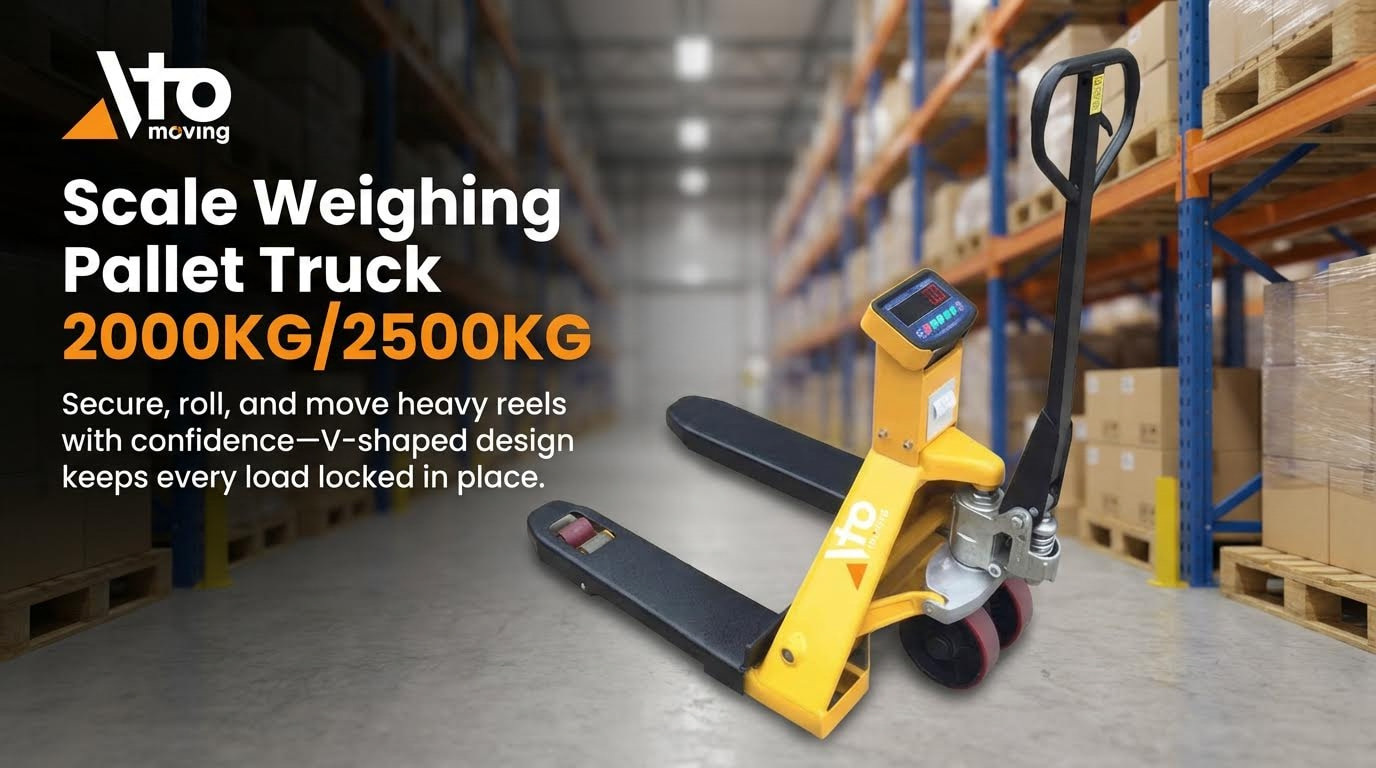
Knowing how does a hydraulic pallet truck work at the circuit level helps you focus maintenance where it matters most: the pump, cylinder, valves, and oil. The hydraulic pump draws oil from a reservoir, pressurizes it, and sends it through directional and check valves into the lift cylinder draws oil from a tank and increases pressure. Contamination and low oil level are the main threats to this system, because they accelerate seal wear, create internal leakage, and cause jerky lifting or incomplete lowering.
- Check oil level regularly and top up with the same oil type, avoiding mixing fluids that can affect viscosity and seal life topping up with the same type of oil.
- Replace hydraulic oil and filters roughly every 6–12 months to control wear particles and moisture every 6-12 months.
- Inspect seals, pipe joints, and hose connections for leaks and replace damaged parts promptly to prevent pressure loss and slipping forks pipe joints and seals require regular inspection.
Air in the circuit interferes with Pascal’s law, so the jack may feel spongy or lift slowly. Bleeding the system by repeatedly pumping the handle until the forks rise smoothly, or by cracking a dedicated bleeder valve until fluid flows without bubbles, restores solid hydraulic response until fluid flows steadily. Routine cleaning around wheels, axles, and the pump body keeps debris from damaging seals or scoring cylinder rods, while targeted lubrication of pivot joints and axles reduces side loads on the hydraulic unit lubricate wheels and pivot joints. By aligning daily inspections, periodic oil service, and quick bleeding procedures with the actual working principle of the pump‑and‑cylinder system, you extend service life and keep lifting performance consistent across the jack’s duty cycle.
“”
Final Thoughts On Hydraulic Pallet Jack Design And Use
The mechanics and hydraulic design of a pallet jack work together to turn small handle forces into safe, repeatable lifting. Fork geometry, wheel layout, and linkage define how loads sit on the frame and how forces flow into the floor. A well‑matched structure reduces bending, keeps wheels loaded correctly, and lowers the risk of tip‑over or frame fatigue.
Inside the circuit, the pump, cylinder, and check valves turn each handle stroke into controlled pressure. Directional and relief valves then shape that pressure into safe motion, limiting overload and capping descent speed. When oil stays clean and air‑free, the jack lifts smoothly, holds height, and lowers on command, not by surprise.
For operations teams, the best practice is clear. Choose pallet jacks whose capacity, duty rating, and ergonomics match real pallet counts, travel distances, and temperatures. For maintenance teams, focus on oil condition, seal health, and valve function as routine checks, not emergency work. When you pair sound selection with disciplined hydraulic care, equipment from Atomoving will deliver long, predictable service, lower injury risk, and more stable material flow across your warehouse or plant.
Frequently Asked Questions
How does a hydraulic pallet jack work?
A hydraulic pallet jack uses a hydraulic system to lift and move palletized goods. The forks slide underneath the pallet, and a hydraulic pump, activated by a handle, raises and lowers the load. The hydraulic ram emerges vertically from the body due to hydraulic pressure provided by a pump on the baseplate. Hydraulic Jacks Explained.
What is the principle behind hydraulic systems in pallet jacks?
The principle of a hydraulic system in pallet jacks is based on Pascal’s Law. This law states that when pressure is applied to fluid in a confined space, it transmits force acting on a small area and generates a proportionally bigger force on a larger area, such as a piston within a cylinder. Hydraulic System Basics.
Do pallet jacks use hydraulics?
Yes, most pallet jacks use hydraulics to lift loads efficiently. A hydraulic pump activated by a handle pressurizes fluid to raise the forks. This system requires less physical effort compared to manual screw-action jacks. Pallet Jack Types.