Facilities searching for how high to manually stack pallets must balance fire codes, insurer rules, and ergonomic limits. This article walks through the full framework, from regulatory height guidance and sprinkler clearances to floor versus rack storage choices and double-stacking center-of-gravity risks.
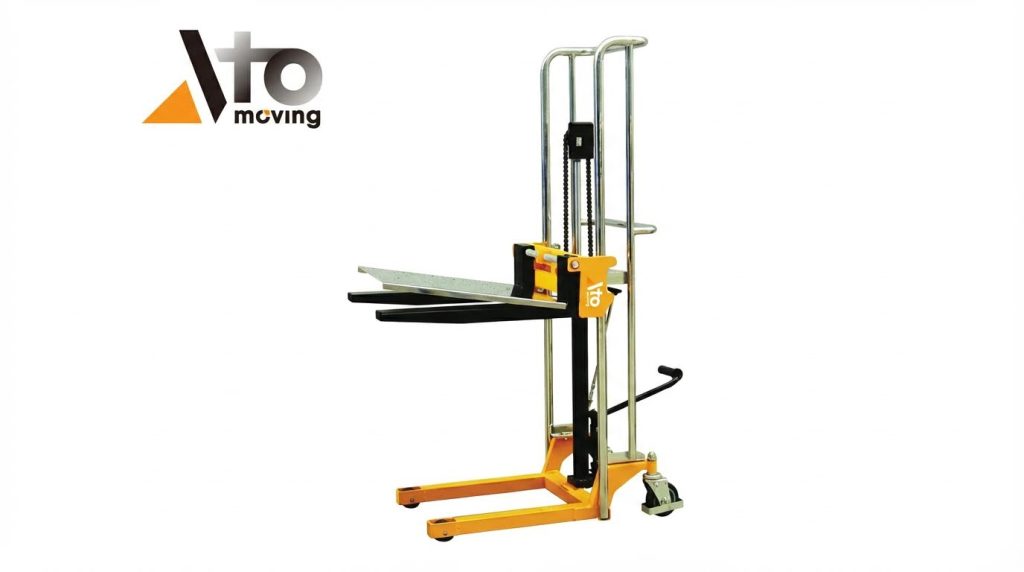
You will see how stack design, pallet condition, and patterns like block or brick stacking affect real-world stability and collapse risk. The article also explains ergonomic lift limits, body mechanics, and when to introduce height-adjustable aids or powered stackers such as Atomoving units.
The final section converts these rules into a practical best-practice checklist and implementation steps for supervisors, safety managers, and engineers. Together, these sections give a clear, defensible answer to how high to manually stack pallets while protecting both workers and assets.
Safe Height Limits And Regulatory Context
Supervisors who ask how high to manually stack pallets must balance fire codes, insurer rules, and OSHA’s general duty requirements. This section explains how height limits, sprinkler clearance, and storage method choices interact. It focuses on manual stacking of idle pallets and light loads, not high-bay automated systems. The goal is a clear, defensible standard that safety, operations, and insurers can all accept.
OSHA, NFPA, And Insurance Height Guidance
OSHA did not publish a fixed maximum height for pallet stacks. Instead, OSHA Standard 1910.176(b) required stored materials to be stable and secure against sliding, collapse, or tipping. This meant each facility had to combine OSHA’s general rule with fire codes and insurer limits when deciding how high to manually stack pallets.
NFPA guidance for idle wood pallets set a typical upper bound of 4.6 metres stack height and 37 square metres footprint per pile. Major insurers often went further and capped floor-stacked wood pallets at about 1.8 metres. Many underwriters also required at least 2.4 metres spacing between pallet stack groups and automatic sprinklers if stacks exceeded 1.8 metres.
For quick reference, safety teams often used a simple decision table.
| Aspect | Typical guidance |
|---|---|
| OSHA pallet height limit | No fixed number; stacks must not create hazards |
| NFPA idle pallet stack height | ≤4.6 m |
| NFPA idle pallet pile area | ≤37 m² |
| Common insurer floor-stack limit | ≈1.8 m for wood pallets |
| Spacing between stack groups | ≈2.4 m clear aisle |
| Sprinkler clearance | ≥0.46 m below sprinkler deflectors |
When deciding how high to manually stack pallets, most facilities stayed within the strictest of these values. They also wrote that limit into standard operating procedures and training so operators had a clear rule.
Fire Protection, Sprinkler Clearance, And Layout
Fire risk usually controlled how high to manually stack pallets more than ergonomics or space pressure. Idle wood pallets had high fuel load and large surface area, so NFPA and insurers treated them as a special hazard. Stacks that grew too tall or too wide could shield fire from sprinklers and delay suppression.
Codes and insurer manuals commonly required at least 0.46 metres vertical clearance between the top of any stored load and sprinkler deflectors. Engineers also had to keep stacks away from lighting, heaters, and electrical panels to avoid ignition and allow access. That meant the real usable height was building height minus sprinkler clearance minus a conservative safety margin.
Layout choices also mattered. Narrow aisles between tall pallet stacks trapped heat and blocked hose streams. Better layouts used:
- Shorter stacks near columns and walls to protect egress paths.
- Wider cross-aisles around higher stacks to let heat and smoke vent.
- Grouped pallet piles with clear separation to slow lateral fire spread.
Facilities with Early Suppression Fast Response sprinklers could sometimes justify higher stacks. Even then, risk assessments still limited manual stacking heights to what staff could safely build and break down without climbing.
Floor Vs. Rack Stacking: When To Use Each
Choosing floor stacking or rack stacking directly affected safe manual stack height. Floor stacking worked well for short, dense pallet piles where operators handled pallets by hand or with pallet jacks. It kept the centre of gravity low and reduced fall distance if a stack failed. However, floor stacking quickly consumed space, especially when insurers capped height around 1.8 metres.
Rack stacking moved pallets up and out of the main traffic lanes. This improved forklift flow and freed floor area for picking and staging. Racks also allowed more precise control of load paths and beam capacities. For manual pallet stacking, though, racks introduced limits. Workers could only safely hand-stack to chest or shoulder height on the lowest levels. Higher levels needed powered equipment, not manual lifting.
A simple selection approach helped planners:
- Use floor stacking for idle pallets that staff must handle by hand.
- Use racks where forklifts place and retrieve pallets at higher levels.
- Keep manual work zones at or below about 1.5–1.7 metres to avoid overhead lifts.
In both cases, operators had to match pallet size to storage footprint to prevent overhang and edge loading. Mixed pallet sizes on racks or floors increased the risk of tilt and collapse when stacks approached their height limit.
Double Stacking And Center-Of-Gravity Risks
Double stacking pallets tempted managers who needed more capacity but lacked extra floor space. However, it raised the combined centre of gravity and narrowed the stability margin. When deciding how high to manually stack pallets in two tiers, engineers first checked pallet condition and load type. Only sound, uniform pallets with light or moderate loads were acceptable candidates.
From a stability view, the lower pallet acted as a support frame. Any damage, warping, or uneven deck boards amplified tilt at the top of the stack. As height increased, even small horizontal forces from pushing, impacts, or floor irregularities produced larger overturning moments. That made manual double stacking risky in busy aisles with pallet jacks and forklifts.
Controls for safer double stacking included:
- Limit double stacking to low-traffic, level floor zones.
- Use stretch wrap or strapping to tie both pallets into a single unit.
- Keep overall height within insurer and NFPA limits and below sprinkler clearance.
Many facilities adopted a conservative rule: allow manual stacking to a single pallet height in main aisles and restrict any double stacking to engineered, marked areas. This approach kept the question of how high to manually stack pallets aligned with both human capability and structural stability.
Stack Design, Stability, And Material Handling Methods
Stack design controls how high to manually stack pallets without losing stability. Good methods start with a flat base, sound pallets, and repeatable patterns. This section explains how surface prep, stacking patterns, damage control, and support systems work together. The goal is safe manual stacking that meets fire rules and protects workers.
Surface Prep, Like-Sized Pallets, And Flat Stacking
Safe manual stacking starts with the floor. The surface must be flat, clean, and free of oil, debris, or broken boards. Uneven floors tilt stacks and reduce the margin before tip-over.
Using like-sized pallets in each stack is critical. Mixed sizes create overhangs and point loading, which shift the center of gravity. Facilities that ask how high to manually stack pallets should first standardize pallet sizes in each storage zone.
Always lay pallets flat, not on edge. Vertical storage acts like a domino line and fails suddenly. Keep edges aligned and corners flush to create a straight column. Operators should check the stack visually from two directions and correct any lean before adding more height.
Block, Brick, Pinwheel, And Plywood Stacking Patterns
Pattern choice affects both stability and maximum safe height. For uniform pallet loads, block stacking is common because it is fast and easy to train. Pallets sit directly over each other in straight columns.
Brick and pinwheel patterns improve interlock. These patterns rotate layers or quadrants to tie the stack together. They reduce shear planes and resist side impact from pallet jacks or forklifts. However, they need more care during manual stacking to keep edges aligned.
Plywood stacking adds sheets between layers. This method helps when loads are irregular or have point contacts. The plywood spreads load and reduces board crushing. It also smooths small pallet defects, which helps keep the stack vertical. Facilities should select one or two standard patterns and document them in stacking work instructions.
Damaged Pallet Control And Load Distribution
Damaged pallets are a primary cause of stack failure. Boards with cracks, missing deck boards, or protruding nails reduce load capacity and create stress points. Workers should pull these pallets out of the flow and send them for repair, recycling, or disposal.
Good load distribution lets stacks reach practical heights with less risk. Loads on each pallet should be even, with heavier items placed low and near the center. Uneven loads move the center of gravity toward one edge and limit how high to manually stack pallets before lean appears.
Supervisors should define simple acceptance rules. For example, reject pallets with broken stringers or more than one missing top board. Visual tags or separate damaged-pallet zones help prevent accidental reuse. Regular audits of pallet condition keep stack performance predictable.
Integrating Racks, Frames, And Digital Inspection Tools
Racks and stacking frames increase stability when floor stacks approach height limits set by insurers or fire codes. Frames guide the stack and resist side loads. They also help maintain gaps between groups of stacks, which supports fire protection rules and equipment access.
Pallet racking moves stacks up off the floor and frees travel aisles. When loads sit in racks, stack design must match beam spacing and pallet size. Pallets should not overhang excessively, and loads must sit fully supported on both front and rear beams.
Digital inspection tools support safe stacking programs. Mobile apps and checklists guide operators through visual checks of pallets, racks, and frames. Photos and timestamps create a record of defects and repairs. Facilities can track recurring issues by location and adjust stack height limits or patterns.
Combining physical controls with digital inspections gives a closed-loop system. Operators follow clear rules on where and how high to manually stack pallets. Supervisors review data and refine limits before incidents occur.
Ergonomic Practices For Manual Pallet Stacking
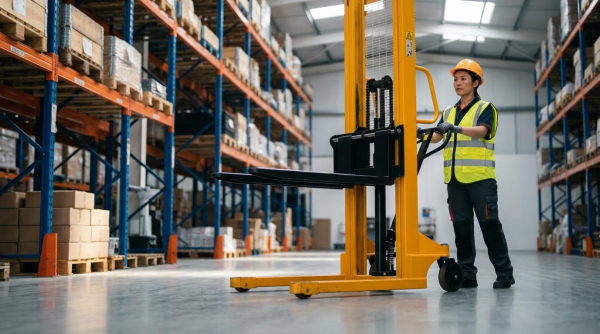
Ergonomics decides how high to manually stack pallets before strain outweighs storage gain. The safest limit depends on load weight, worker reach, and task frequency, not only on regulations. Good practice keeps the active stacking zone roughly between mid‑thigh and shoulder height. Everything above or below that band should use mechanical help, not pure muscle.
Lift Limits, Team Lifts, And Task Rotation
Ergonomic lift limits narrow the practical answer to how high to manually stack pallets. Most facilities cap single‑person lifts around 20–25 kilograms for routine tasks at waist height. Heavier units, awkward shapes, or high reach levels need team lifts or powered aids.
Key controls include:
- Define weight thresholds for one‑person, two‑person, and mechanical lifts.
- Require team lifts for pallets or units above set limits or above shoulder height.
- Rotate workers between stacking, picking, and driving tasks during the shift.
Task rotation reduces fatigue from repeated bending and reaching. It also limits cumulative spinal load from thousands of similar lifts per day. Supervisors should track near‑miss reports and minor strains, then adjust lift limits and staffing patterns.
Neutral Posture, Lift Technique, And Body Mechanics
Neutral posture lets workers stack to safe heights with less stress. The spine stays close to its natural S‑curve. Knees and hips share the motion instead of the lower back taking everything.
Core technique points are simple:
- Stand with feet about shoulder width for balance.
- Keep the pallet or box close to the body during the whole lift.
- Bend at hips and knees, not at the waist.
- Lift smoothly with leg muscles and avoid jerky moves.
Workers should turn with their feet instead of twisting the torso. Twisting while holding a load at arm’s length is a major cause of back injury. Coaching on the floor, short refreshers, and peer feedback keep these habits active, not just theory from a classroom.
Height-Adjustable Aids And Powered Stackers
Height‑adjustable tools change the practical limit of how high to manually stack pallets. They keep the work zone inside the safe band and cut deep bending. Simple methods include stacking a few empty pallets under the working pallet or using scissor‑lift tables.
More advanced options include:
- Height‑adjustable pallet positioners that track load height.
- Powered pallet stackers for building tall empty‑pallet columns.
- Lift tables on pallet jacks for order picking and layer building.
These devices reduce lifts from floor level and above‑shoulder reaches. They also lower the force needed to start and stop heavy loads. Facilities should match aid selection to load weight, cycle time, and aisle width, then train operators on safe approach, travel, and parking.
Maintenance Of Jacks, Floors, And Handling Equipment
Poor equipment and floor conditions turn safe pallet heights into ergonomic risks. Flat‑spotted wheels, stiff handles, and rough floors increase push and pull forces. Workers then use more body weight and awkward postures to move the same stack.
Core maintenance steps include:
- Regular inspection and servicing of pallet jacks and stackers.
- Prompt replacement of worn wheels and faulty brakes.
- Repair of floor ruts, spalls, and transitions at dock plates.
Training should teach workers to spot early signs of mechanical problems. Early reporting avoids sudden failures under load. When equipment rolls smoothly on a flat, clean floor, operators can control tall pallet stacks with lower hand, arm, and back strain, even during peak shifts.
Summary Of Best Practices And Implementation Steps

Facilities that ask how high to manually stack pallets need a clear, defensible standard. The answer depends on fire codes, insurance rules, ergonomics, and stability, not just space pressure. A written pallet storage plan should link stack height, layout, and handling methods into one simple playbook for supervisors and operators.
From a safety and compliance view, treat 6 feet as a conservative manual stacking limit for idle floor-stacked pallets unless a detailed fire protection review supports more. NFPA guidance for idle pallets allowed up to 4.6 metres and 37 square metres per pile, but insurers often capped unprotected wood stacks at about 1.8 metres and required at least 2.4 metres between groups. Facilities also had to keep 460 millimetres clearance to sprinklers and protect taller stacks with automatic systems. These constraints directly shaped answers to how high to manually stack pallets in real warehouses.
Implementation works best in steps: define maximum heights by pallet type and storage zone, standardise patterns and like-sized stacks, and mark limits directly on walls or posts. Train teams on lift technique, team lifts, and when to switch from manual stacking to powered aids or Atomoving stackers. Add periodic inspections that flag damaged pallets, poor floor conditions, and blocked egress routes. Over time, digital tools for rack and stack inspection will support tighter controls, but simple visual standards and conservative heights will stay central to safe manual pallet stacking.
Frequently Asked Questions
What is the ideal pallet stacking height?
There isn’t a fixed national standard for pallet stacking height, but safety guidelines provide clear recommendations. According to NFPA guideline 34.10.3.3, idle pallet stacks should not exceed 15 feet (4.5 meters) in height. Stacking higher than this can create instability and increase risks during handling. Additionally, OSHA requires that storage arrangements do not create hazards, such as obstructing sprinklers—there must be at least 18 inches (45 cm) of clearance between the top of the load and ceiling sprinklers. For more details, refer to CHEP Safety Tips.
How high can you safely stack pallets manually?
Manually stacking pallets comes with physical and safety limitations. The standard packing height for a pallet is typically 48 inches (1.2 meters). This height ensures stability and reduces strain on workers. When stacking manually, it’s critical to ensure the load remains balanced and does not exceed the recommended weight capacity of the pallet or equipment being used. Always follow best practices, like forming a strong base and avoiding overhangs. For comprehensive tips, see CertifyMe Pallet Stacking Guide.