Understanding how to lift a pallet without a forklift requires a structured view of both horizontal and vertical handling methods. This article outlines core options such as pallet jacks, skates, carts, and low-tech sliding techniques, then examines ergonomic lifting tools including lift stacker, stackers, and lever-based devices. It also reviews automated and integrated systems, from gravity rollers and conveyors to autonomous vehicles, vacuum lifters, and digitally monitored equipment. By the end, you will be able to select safe, efficient pallet alternatives that match your facility layout, load profiles, and throughput targets.
Core Methods To Move Pallets Without Forklifts
This section explains how to lift a pallet without a forklift using practical, compliant methods. It compares manual pallet jack, and electric pallet jacks, wheeled platforms, and low-tech sliding or rolling techniques. The focus stays on safe working loads, surface conditions, and operator ergonomics so engineers can match solutions to site constraints and throughput targets.
Manual Pallet Jacks: Capabilities And Limits
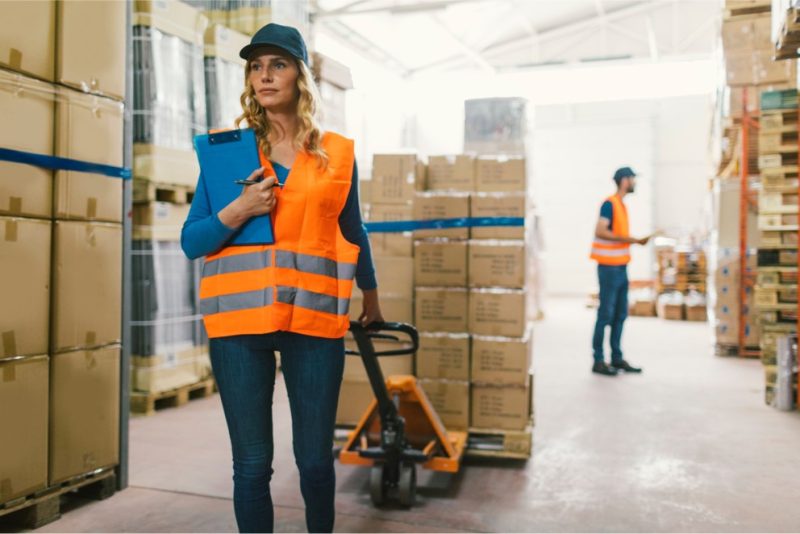
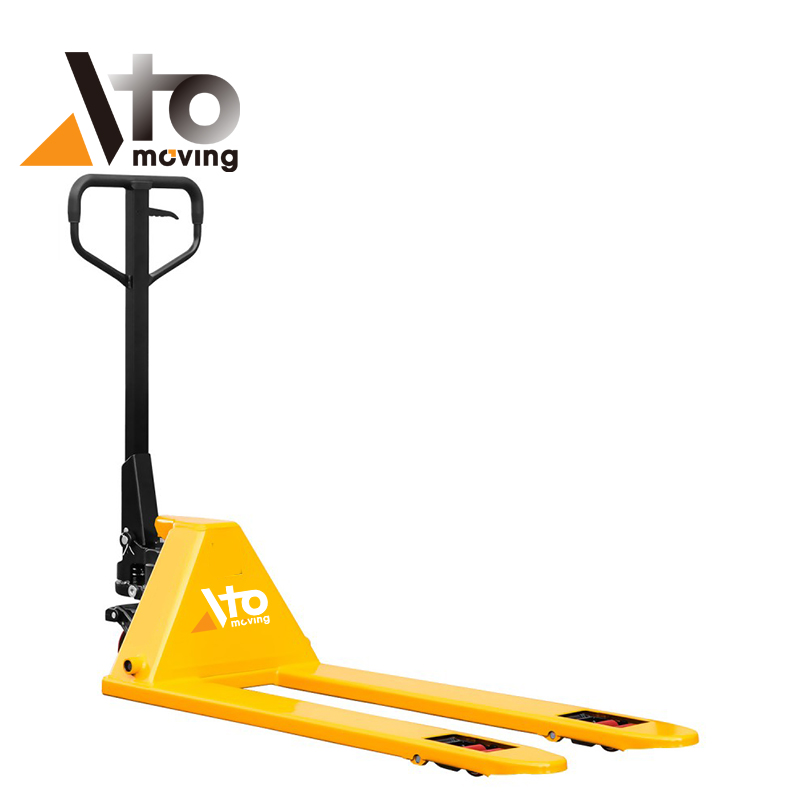
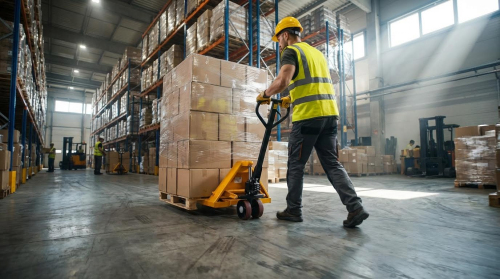
Manual pallet jacks were historically the primary answer to how to lift a pallet without a forklift in tight spaces. A typical unit lifted pallets weighing 2,500–5,500 pounds, or roughly 1,100–2,500 kilograms, using a simple hydraulic pump and lever handle. Operators positioned the forks fully under the pallet, pumped the handle to raise the load about 75–100 millimetres, then pushed the jack along smooth, level floors. Engineers specified wheel materials and fork lengths based on floor type, pallet dimensions, and turning radius constraints. Limitations appeared on uneven floors, ramps, and long travel distances, where push forces, braking control, and operator fatigue increased sharply. Safe use required enforcing nameplate capacity limits, centring the load on the forks, keeping travel height low, and training workers to push rather than pull whenever possible.
Electric Pallet Jacks For Higher Throughput
Electric pallet jacks addressed the same basic question, how to lift a pallet without a forklift, but targeted higher throughput and reduced strain. They used powered drive wheels and electric lift pumps, so the operator mainly steered and controlled speed. Typical models moved similar or slightly higher capacities than manual jacks over longer distances with consistent travel speeds. Facilities used them where daily pallet flows were high or where operators previously walked long routes with manual equipment. Safety engineering focused on acceleration limits, braking distances, horn and warning systems, and battery management. Operators needed training on speed control in congested aisles, safe operation on ramps according to manufacturer limits, and pre-shift checks of brakes, controls, and battery state of charge.
Skates, Dollies, And Towable Pallet Carts
Skates, dollies, and towable pallet carts provided another route for how to lift a pallet without a forklift, especially when vertical lift requirements were minimal. Machinery skates and heavy-duty dollies carried the pallet’s weight on low-profile wheels, often requiring only a small initial lift with a crowbar or jack to position them. These devices worked best on smooth, debris-free floors and for relatively straight travel paths. Towable pallet carts accepted one or two pallets and connected into tugger trains for lean intralogistics layouts. Engineers sized wheels, frames, and drawbar designs according to pallet mass, desired train length, and stopping distances of the towing vehicle. Risk controls included mechanical brakes or wheel chocks, defined tow routes, speed limits, and clear labelling of maximum load and towing capacity.
Sliding, Rolling, Ropes, And Sheet Techniques
Low-tech methods such as sliding, rolling, ropes, and sheet techniques were historically reserved for exceptional situations where no dedicated equipment was available. To answer how to lift a pallet without a forklift in such cases, teams sometimes inserted steel pipes or round bars under the pallet to create temporary rollers. Workers then pushed or levered the pallet along, repositioning rollers progressively, similar to classical heavy-move practices. For lighter pallets, strong sheets or tarps combined with ropes allowed dragging over short distances, provided floor friction and load weight stayed within human capability limits. These approaches demanded rigorous risk assessment, clear team communication, gloves, safety shoes, and strict exclusion of personnel from pinch points. Engineers typically treated these as contingency methods rather than standard processes, preferring engineered devices wherever repetitive pallet handling occurred.
Vertical Lifting And Ergonomic Pallet Handling
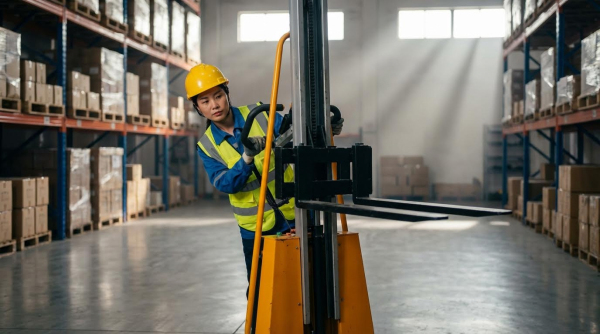
Vertical lifting tools allowed operators to raise pallets without forklifts, reducing bending, twisting, and overhead lifting. These devices showed how to lift a pallet without a forklift while complying with ergonomic guidelines and load limits. When facilities selected lift tables, stackers, or lever tools correctly, they cut musculoskeletal injuries and improved cycle times. Integrating these solutions with floor-level pallet movers created continuous, safe material flows.
Lift Tables And Scissor Lifts For Height Access
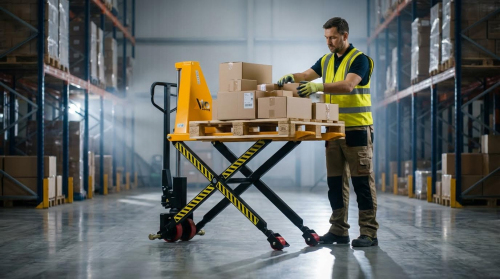
Lift tables and scissor lifts raised pallets from floor level to working height using hydraulic, pneumatic, or electric actuation. They answered a core question in warehouses: how to lift a pallet without a forklift for packing, repair, or line feeding. Typical units handled loads from 500 kg to over 2,000 kg and offered lift strokes between 0.8 m and 1.8 m. Operators positioned a pallet with a jack or cart, then elevated it so they could work with neutral postures and minimal reach distances.
Facilities embedded lift tables into pits for flush floor access or used surface-mounted versions with low-profile ramps. Turntable tops or rotating decks reduced twisting because workers spun the pallet instead of their torsos. Safety practice required respecting rated capacity, using mechanical chocks or maintenance props during service, and keeping feet and hands away from scissor pinch points. Regular inspection of hoses, cylinders, and safety locks ensured consistent performance and minimized unplanned downtime.
Manual And Powered Pallet Stackers
Manual and powered pallet stackers provided vertical lifting and short horizontal moves for unit loads on standardized pallets. They formed a practical answer to how to lift a pallet without a forklift when stacking to rack levels around 1.6 m to 4.5 m. Manual stackers used foot or hand-operated hydraulic pumps and suited lighter loads, typically up to about 1,000 kg. Powered stackers used electric drive and lift motors, supporting higher capacities and reducing operator effort during repetitive cycles.
Operators engaged forks into the pallet openings, confirmed centered load distribution, then raised to the required height before slow travel or precise placement. Stackers were not ideal for long transport distances but excelled in narrow aisles and small warehouses with limited turning space. Safe use required observing maximum rated height and capacity, performing pre-use checks of mast, chains, and hydraulics, and maintaining clear visibility during travel. Facilities often specified parking brakes, emergency stop circuits, and guarded masts to align with regional safety regulations.
Roller Crowbars And Lever-Based Tools
Roller crowbars and related lever tools offered a low-tech method to start lifting a pallet edge so other equipment could engage. These devices combined a steel pry bar with a small wheel or roller near the fulcrum, allowing one operator to raise one side of a pallet by several centimeters. They were useful in tight spaces where larger equipment could not reach, or when technicians needed to insert skates, pipes, or manual pallet jacks under a resting load. In the context of how to lift a pallet without a forklift, they often served as the first step in a multi-stage move.
Operators positioned the tip under a pallet stringer or deck board, then applied controlled downward force on the handle to lift and roll. Best practice limited use to loads within the tool’s specified capacity and only on flat, hard floors that supported the point load at the fulcrum. Users wore safety footwear and gloves and avoided placing hands under the raised pallet while repositioning supports. Regular inspection for bent bars, worn rollers, or cracked welds ensured the lever transmitted forces predictably and did not fail under peak load.
Automated And Integrated Pallet Handling Systems
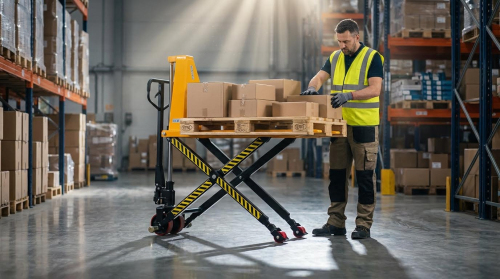
Automated and integrated systems offered structured answers to the question of how to lift a pallet without a forklift in high-throughput environments. These solutions moved pallets horizontally and vertically with minimal human exertion and high repeatability. Engineers combined gravity-driven hardware, powered movers, and intelligent controls to reduce manual handling, lower injury rates, and stabilize takt times. Correct selection depended on layout, pallet mix, flow direction, and desired automation level.
Gravity Rollers, Conveyors, And Pallet Rollers
Gravity roller conveyors used a slight slope, usually 2–5%, to move pallets from loading to unloading points without powered drives. Facilities used heavy-duty rollers and side frames sized for typical pallet loads between 500 kg and 1,500 kg per position. Pallet roller tracks and skate-wheel sections allowed operators to push a manual pallet jack once and then let gravity finish the movement, which reduced how far workers needed to travel with loads. To lift a pallet without a forklift in these systems, operators typically used a pallet jack or stacker only at infeed and outfeed, while gravity handled the intermediate transport.
Engineers had to calculate roller pitch, frame deflection, and impact loads at transfer points to avoid jams and structural fatigue. They installed end-stops, speed controllers, and guarding to prevent runaway pallets on steeper slopes. Routine maintenance included cleaning debris from rollers, checking bearings, and verifying that guardrails and toe boards complied with local safety standards. For pallet accumulation, designers implemented zone brakes or accumulation rollers to prevent back-pressure damage on cartons or stretch wrap.
Autonomous Mobile Robots And AGV Pallet Movers
Autonomous mobile robots (AMRs) and automated guided vehicles (AGVs) transported pallets on flat floors without forks by using integrated lift decks, conveyor tops, or pallet platforms. Typical AMR pallet movers handled loads up to roughly 2,000 kg and navigated with LiDAR, QR codes, or natural feature mapping. They picked pallets from low-height stands or conveyor transfer points, which eliminated the need for traditional forklift mast lifting. This approach answered how to lift a pallet without a forklift in facilities targeting continuous flow and minimal human travel distance.
Engineers mapped routes to avoid congestion, defined speed limits, and integrated AMRs with warehouse management systems for task scheduling. Safety engineering focused on redundant scanners, emergency stops, and clear visual markings on robot paths. Compared with forklifts, AMRs reduced operator exposure to lifting and allowed 24/7 operation with opportunity charging. However, they required upfront investment in fleet management software, standardized pallet interfaces, and change management for operators and maintenance staff.
Vacuum Lifters, Wire Hoists, And Complete Systems
Vacuum lifters used suction pads and a vacuum pump to grip pallet decks or individual loads, then raised them using articulated arms or overhead rails. They worked best for empty or lightly loaded pallets and for repetitive tasks such as feeding pallets into production cells. Wire hoists equipped with fork or hook attachments lifted lighter pallets or partial loads, generally below 120 kg, with precise variable-speed control. These tools demonstrated how to lift a pallet without a forklift in workstations where vertical movement and ergonomic positioning were more critical than long-distance transport.
Complete systems combined vacuum lifters or hoists with roller conveyors, turntables, or lift tables to create ergonomic palletizing and depalletizing cells. Engineers balanced lifting capacity, duty cycle, and cycle time to match line throughput. They also specified overload protection, anti-drop devices, and emergency lowering functions in accordance with machinery safety standards. Preventive maintenance programs covered vacuum filters, seals, hoist cables, and control pendants to maintain consistent lifting performance and avoid unplanned downtime.
Digital Twins, IoT, And Predictive Maintenance
Digital twins represented virtual models of pallet handling systems, including conveyors, AMRs, and lifting devices. Engineers used them to simulate pallet routes, queue lengths, and energy consumption before installing equipment. For operations focused on how to lift a pallet without a forklift at scale, these models helped compare scenarios such as more gravity lanes versus additional AMRs. They also supported layout optimization for minimal manual handling and reduced travel distances.
IoT sensors on motors, rollers, hoists, and vacuum pumps captured vibration, temperature, current draw, and cycle counts. Predictive maintenance algorithms then identified bearing wear, belt slip, or air leaks before failures occurred. This approach reduced unplanned stoppages that could force staff back to manual pallet lifting methods. Dashboards showed key indicators like mean time between failures and overall equipment effectiveness, enabling continuous improvement. Over time, facilities that combined digital twins and IoT achieved safer, more reliable pallet handling without heavy reliance on forklifts.
Summary: Choosing Safe, Efficient Pallet Alternatives
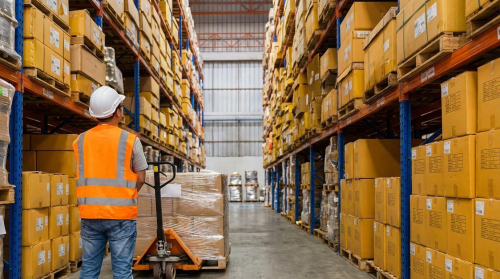
Knowing how to lift a pallet without a forklift required a structured review of horizontal movement, vertical lifting, and automation options. Manual pallet jack, skates, dollies, towable carts, and low‑tech sliding or rope methods covered basic horizontal moves. Lift tables, stackers, crowbars, hoists, and vacuum tools addressed vertical and ergonomic lifting. Integrated systems such as conveyors, gravity rollers, and mobile robots supported high-throughput environments.
From a technical standpoint, the safest answer to how to lift a pallet without a forklift involved matching equipment to load mass, travel distance, and lift height. For short horizontal moves at floor level, a properly rated hydraulic pallet truck on a smooth, clear floor minimized risk. For frequent height changes, lift tables and stackers kept loads within ergonomic reach and reduced musculoskeletal strain. Where flows were repetitive and predictable, gravity or powered conveyors and automated vehicles reduced manual handling and improved cycle-time consistency.
Future pallet handling solutions would rely more on connected devices, digital twins, and predictive maintenance to avoid unplanned downtime and overload conditions. IoT sensors on jacks, conveyors, and lifting devices would monitor load, usage cycles, and component temperatures, triggering maintenance before failures. Facilities planning how to lift a pallet without a forklift should consider not only current throughput but also scalability, energy use, and integration with existing safety systems and regulations. A balanced approach combined low-cost manual tools for flexibility with targeted automation where volume, distance, or injury history justified the investment.