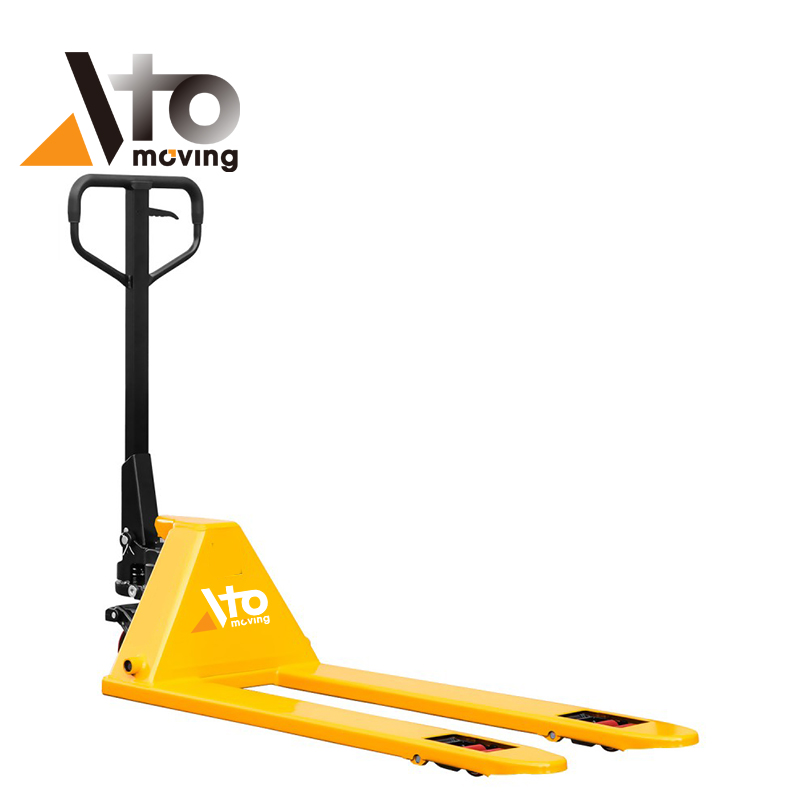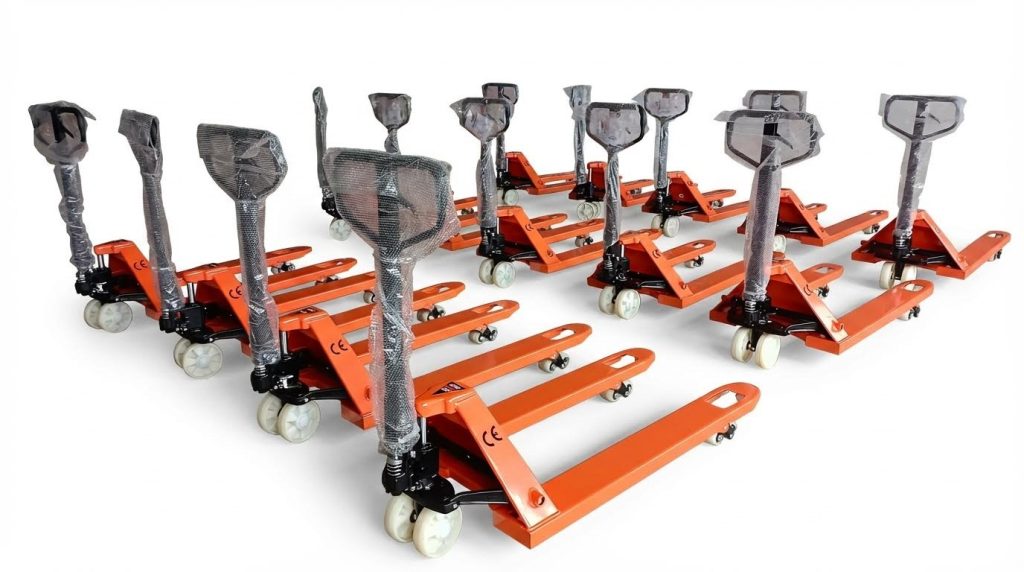
Pallet jacks operated as core material-handling equipment in warehouses, factories, and logistics hubs. Their safe use depended on understanding rated capacity, structural limits, and how real loads behaved in motion. This article outlined how manufacturers defined pallet jack capacity, how frame, hydraulics, wheels, and stability governed that capacity, and how facility engineers selected the right equipment for specific pallets and duty cycles. It also covered maintenance and digital monitoring practices that preserved lifting capability over time, concluding with practical guidance for safe, efficient utilization of pallet jack capacity in industrial operations.
Defining Pallet Jack Capacity And Key Parameters

Pallet jack capacity described how much mass the machine safely lifted and transported. Engineers defined this limit using static strength, stability, and hydraulic performance criteria. Operators relied on the nameplate rating, but real-world limits depended on load dynamics, fork height, and geometry. Understanding these parameters reduced overload risk and extended equipment life.
Rated Load, Dynamic Load, And Safety Factors
The rated load was the maximum mass the manufacturer allowed under specified test conditions. This value already included a design safety factor, typically between 1.25 and 1.5 for warehouse equipment, based on steel strength and hydraulic limits. Dynamic loads during starting, stopping, and crossing thresholds temporarily increased internal stresses above static levels. Engineers therefore sized frames, forks, and hydraulic components so that peak dynamic stresses under rated load still stayed below allowable material limits. Safety factors also accounted for manufacturing tolerances, wear, and moderate misuse, but they did not justify intentional overloading in service. Standards and internal company rules required operators to keep actual loads at or below the rated capacity on the data plate. Overloading increased the risk of fork yielding, hydraulic collapse, or loss of stability, especially on uneven floors or ramps.
Typical Capacity Ranges By Pallet Jack Type
Hand pallet trucks typically had rated capacities between 2000 kg and 5000 kg, as reflected in ONEN’s CBY‑AC range. Industry guidance from Pallet Trucks UK reported common maximum capacities around 2500 kg to 5000 kg for standard models. Low profile pallet jacks from CUBLiFT covered a broader spectrum, from 1000 kg for light-duty designs up to 5500 kg for ultra-low, heavy-duty variants. Stainless steel and corrosion-resistant models usually had lower capacities, often between 1000 kg and 2500 kg, due to thinner sections or different alloys. Electric rider pallet jacks, such as Toyota’s end-controlled units, operated in higher nominal ranges of about 2700 kg to 3600 kg (6000 lb to 8000 lb) on level floors. Facilities therefore matched jack type and capacity band to pallet mass, load density, and duty cycle rather than using a single generic rating.
Fork Height, Clearance, And Load Geometry Effects
Fork height and clearance strongly influenced both capacity utilization and safety. For hand pallet jacks, a fork lift of roughly 25 mm above the floor, equivalent to about 1 inch, typically provided enough clearance to move loads without striking minor floor imperfections. Manufacturers such as CUBLiFT and ONEN specified maximum fork heights between about 165 mm and 220 mm, while electric riders from Toyota reached around 110 mm, because they focused on transport rather than high lift. Operators kept forks as low as practical while traveling to maintain a low center of gravity and higher lateral stability. On ramps, guidelines from Pallet Trucks UK recommended fork tips 100 mm to 150 mm above the surface to avoid catching on transitions, while still limiting the vertical shift of the center of gravity. Load geometry also mattered: long or top-heavy pallets shifted the combined center of gravity toward the fork tips or upward, reducing the effective margin against tipping even when mass stayed below the nameplate capacity. Engineers therefore treated rated capacity as valid only for specified fork positions, load distributions, and lift heights defined in the manufacturer’s test envelope.
Mechanical And Structural Design Drivers Of Capacity
Frame, Fork Section Modulus, And Steel Grades
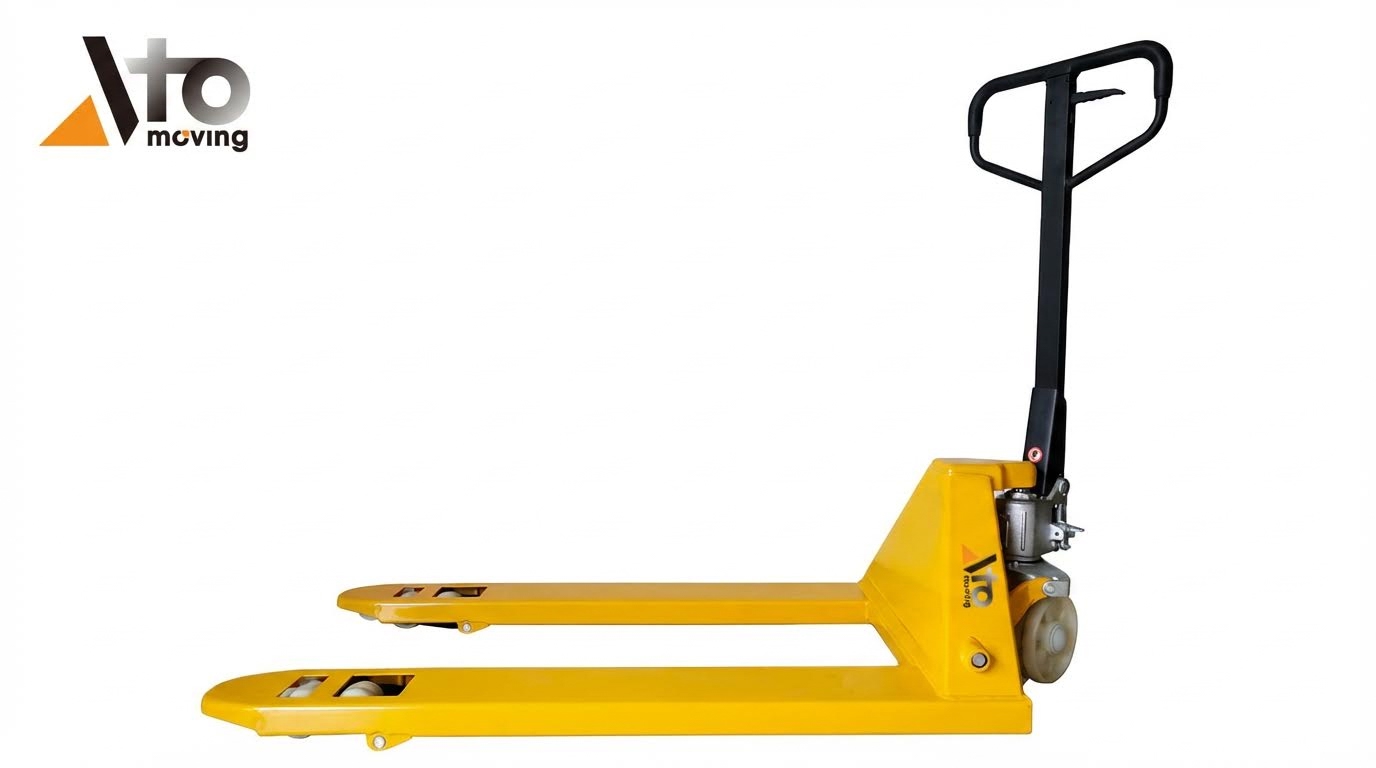
The rated capacity of a pallet jack depends strongly on frame and fork stiffness. Designers size fork sections so bending stress stays below allowable limits at maximum load. Section modulus of the fork profile controls bending resistance; higher section modulus reduces deflection and peak stress. Manufacturers used high‑grade industrial steel, as reported for CUBLiFT low profile units, to achieve 2500 kg to 5500 kg capacities.
Forks experience combined bending and local bearing where they contact pallets. Engineers verify stresses using elastic beam theory and compare with steel yield strength divided by a safety factor. Typical manual pallet jacks with 2000 kg to 5000 kg ratings used structural steels with yield strengths above 250 MPa. Designers also reinforce the pump housing area and handle base to limit stress concentrations under off‑center loading.
Frame torsional rigidity influenced stability and tracking under asymmetric loads. Toyota highlighted torsional rigidity and dual lift cylinders to keep forks level at 6000 lb to 8000 lb capacities. Weld quality and joint design are critical, because fatigue cracks often initiate at weld toes under repeated loading. Corrosion protection helped maintain long‑term capacity by preventing section loss that would otherwise reduce effective section modulus.
Hydraulic System Sizing And Pressure Limits
The hydraulic system set the practical lifting limit even when the steel structure remained stronger. Engineers sized pump pistons, cylinders, and valves so hydraulic pressure at rated load stayed below design pressure with margin. For a given load, smaller piston areas required higher pressure, while larger pistons reduced pressure but increased handle force or motor torque. Designers balanced these factors to keep manual input acceptable and electric motor currents within ratings.
Seal selection and surface finish of pump pistons and rams affected leakage and capacity retention. Guidance from service practices emphasized polished pistons without nicks or pits to avoid oil leakage and loss of lift. Persistent hydraulic leaks or sinking forks indicated pressure loss that effectively reduced usable capacity even if the nameplate rating stayed unchanged. Manufacturers specified compatible hydraulic fluids to maintain viscosity and lubricity across operating temperatures.
Safety factors on hydraulic pressure protected against overload and shock events. Relief valves limited maximum pressure to prevent hose or cylinder rupture when operators attempted to lift beyond the rated 2500 kg to 5000 kg range typical in industry. For electric pallet jacks with 6000 lb to 8000 lb ratings, AC drive systems and battery packs also had to supply sufficient power for continuous lifting cycles without overheating. Periodic inspection of hydraulic units, as recommended in maintenance guidelines, preserved the original design capacity.
Wheel Materials, Contact Stresses, And Floor Conditions
Wheel and roller design controlled how safely a pallet jack carried rated loads over real floors. Manufacturers such as CUBLiFT and ONEN offered nylon and polyurethane (PU) wheels to handle capacities up to 5000 kg and more. Nylon wheels provided low rolling resistance and high hardness, which reduced deformation under high contact stresses. PU wheels offered better damping and noise reduction, but designers had to verify compressive stress limits and heat buildup at higher duty cycles.
Contact stress between wheel and floor depended on wheel diameter, tread width, and load distribution between steer wheels and load rollers. New load rollers with diameters around 76 mm to 83 mm lost capacity margin when worn more than 6 mm in diameter, as guidelines indicated. Flat spots, chips, or embedded metal in wheels created stress concentrations and could increase rolling resistance, effectively limiting safe load handling. Engineers assumed flat, sound concrete floors in rating calculations; rough or damaged floors increased impact loads and local stresses.
Floor conditions also influenced traction and braking performance. On smooth or dusty floors, high loads on hard nylon wheels could reduce friction, lengthening stopping distances. PU wheels improved grip but transmitted higher shear to the tread–hub interface. Designers therefore validated wheel–axle assemblies for both static load and dynamic shock, especially for higher‑capacity low profile jacks up to 5500 kg. Maintenance recommendations to replace wheels in pairs helped preserve symmetric load sharing and design contact conditions.
Stability, Center Of Gravity, And Incline Operation
Geometric stability limited usable capacity before material strength or hydraulics reached their theoretical limits. Engineers modeled the Selecting And Managing Capacity In Real Facilities

Matching Capacity To Pallet, Load, And Duty Cycle
Engineers sized pallet jack capacity from the pallet, not the truck. Standard EUR and ISO pallets concentrated load over fork pairs. Typical warehouse pallets carried 500 kg to 1500 kg, while heavy industrial pallets reached 2500 kg and above. Manufacturers rated hand pallet trucks between 2000 kg and 5000 kg, with low-profile or scale variants between 1000 kg and 3500 kg. Ultra‑heavy designs for specialized use reached about 5500 kg.
Best practice kept normal working loads at 60% to 80% of rated capacity. This margin covered dynamic effects from braking, turning, and floor irregularities. Duty cycle also influenced selection. High‑frequency operations in cross‑dock terminals or 24/7 distribution centers justified higher capacity and more robust frames. Light retail back‑of‑store operations tolerated smaller ratings if operators avoided overloads.
Engineers also considered fork length and pallet overhang. Long forks under short pallets increased bending moment at the fork heel for the same mass. Uneven or top‑heavy loads required derating because center of gravity shifted away from the fork wheel line. Operators needed clear instructions to read the capacity plate and respect any derating tables, especially on ramps or when stacking double pallets.
Manual Vs. Electric: Productivity And Lifecycle Costs
Manual pallet jacks with 2000 kg to 3000 kg ratings suited short, intermittent moves. Operators supplied traction and pump energy, which limited practical usage distance and slope. Manual units cost less to purchase and required minimal infrastructure. They worked well in small warehouses, markets, and low‑throughput areas where utilization stayed modest.
Electric rider pallet jacks, such as end‑controlled models with 2700 kg to 3600 kg ratings, delivered higher throughput. AC drive motors and lithium‑ion batteries supported continuous duty with short opportunity charges. Operators rode on padded platforms and used multi‑function handles, which reduced fatigue and cycle time. In high‑volume facilities, lower labor cost per pallet often offset higher capital and maintenance costs.
Total lifecycle cost analysis combined purchase price, energy, maintenance, downtime, and operator productivity. Electric units introduced battery replacement and electronic diagnostics but reduced musculoskeletal risk and absenteeism. Manual units remained attractive as backup equipment and in tight spaces where powered trucks had maneuvering limits. Mixed fleets were common, with electric riders on main transport routes and manuals in picking aisles or trailers.
Maintenance Practices To Preserve Lifting Capacity
Lifting capacity degraded in practice when hydraulic, structural, or rolling components deteriorated. Routine inspections targeted forks, hydraulics, wheels, and handles. Technicians checked forks for cracks, bent tips, or twisted sections and removed any unit with visible deformation. Worn fork sections reduced section modulus and increased stress, effectively lowering safe capacity.
The hydraulic unit determined available lifting force. Leaking seals, pitted rams, or contaminated fluid reduced effective pressure and stroke. Maintenance teams avoided improvised repairs and followed manufacturer procedures, because incorrect rebuilding often caused chronic leaks. They monitored fork sink under rated static load to detect internal bypass. Persistent sink after seal replacement indicated the need for full unit replacement.
Wheel and roller condition strongly affected usable capacity and safety. New load rollers had diameters near 75 mm to 82 mm; loss of more than about 6 mm signaled replacement. Flat spots, chips, or embedded metal increased rolling resistance and shock loads into the frame. Technicians replaced wheels in pairs to avoid uneven loading. Regular lubrication of pivot points and steering mechanisms kept steering effort low and reduced side loads on the chassis at high capacity.
Digital Monitoring, Telematics, And Predictive Care
Advanced fleets increasingly used telematics to manage pallet jack capacity and health. Electric pallet jacks integrated sensors for travel hours, lift cycles, and fault codes. Fleet management systems logged overload events when measured hydraulic pressure exceeded calibrated thresholds. This data helped engineers identify misuse, refine training, and adjust capacity selection for specific zones.
Predictive maintenance analytics correlated vibration, current draw, and temperature with component wear. Algorithms flagged abnormal trends in drive motors, hydraulic pumps, or controllers before functional failure. Maintenance planners then scheduled targeted interventions during planned downtime. This approach reduced unexpected loss of lifting capability and extended asset life.
Even manual pallet jacks benefited from simple digital tracking. Barcode or RFID tagging allowed facilities to log inspections, repairs, and failure modes. Aggregated records highlighted models or
Summary: Safe, Efficient Use Of Pallet Jack Capacity
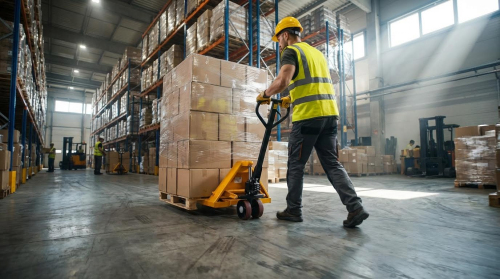
Pallet jack capacity depended on an interplay of rated load, dynamic effects, and structural margins. Manufacturers defined lift limits from detailed calculations on fork section modulus, steel grade, hydraulic pressure, and wheel contact stresses, then validated them by testing. Typical hand pallet trucks operated between 2000 kg and 5000 kg, while specialized low‑profile or rider models reached 3500 kg to more than 8000 lb. Operators needed to treat the capacity plate as an absolute limit, not a guideline, because overloads could trigger fork yielding, hydraulic failure, or loss of stability.
Geometry and operating conditions strongly influenced usable capacity in the field. Low fork heights around 110 mm to 220 mm and clearances near 25 mm under the pallet were usually sufficient on level floors, but inclines and uneven slabs required higher clearances and reduced loads. Center‑of‑gravity position, pallet stiffness, and wheel material determined whether the jack rolled safely or concentrated excessive stress into a small floor area. On ramps, best practice kept forks slightly raised, controlled speed, and respected directional rules: pull on level ground for maneuverability, push on slopes and near obstacles for control.
In real facilities, safe capacity management relied on correct specification, disciplined maintenance, and trained operators. Engineers matched pallet jack ratings to the heaviest pallet, load geometry, and duty cycle, then added conservative margins instead of running at nameplate limits. Maintenance programs focused on hydraulic integrity, fork straightness, and wheel condition to avoid hidden capacity loss over time. Emerging digital tools, including telematics and predictive analytics, allowed tracking of overload events, utilization, and component degradation, supporting data‑driven replacement decisions. As fleets modernized, the core principle remained unchanged: respect the rated capacity, control dynamic loads, and maintain the equipment so engineered safety factors stayed intact throughout the service life.